Monday, April 6, 2026
Home Blog Page 325

PM Tu’i’onetoa loses temper and confronts a female journalist again, but later apologises during press conference

Prime Minister Pōhiva Tu’i’onetoa apologised to Kele’a Voice Chief Editor, Teisa Pōhiva Cokanasiga, after he lost his temper with her while being asked to give a financial statement of  the government’s Covid response budget.

Prime Minister Pōhiva Tu’i’onetoa. Photo/Kalino Latū (Kaniva Tonga)

Tu’i’onetoa grew angry at Cokanasiga after she asked him whether the government could afford it if a TP$50 million budget was required to respond to the pandemic.

“Where did you get your $50 million from?” the Prime Minister answered Cokanasiga back.

“That’s why I told you to stop making assumption”.

He said he was not satisfied to be repeatedly asked to give the financial statement.

He went on to make conflicting and confusing response to the question including saying the government had to draw up the budget before presenting it to the auditors.

He said it was imprudent to make a specific plan.

He said there was no such money.

Later on while he was responding he told Cokanasiga that there was money and that’s enough to answer her question.

By the tone of his voice, the Prime Minister appeared to have been trying hard to compose himself.

Teisa Pohiva Cokanasiga. Photo/Facebook

“If I will give it to you, you will keep on insisting to give what you want”, the Prime Minister said in Tongan during the livestreamed conference from Nuku’alofa on Friday.

He also said it would take up to 12 months until the government could collect the money.

He also let down the media by saying he would not release any figure because they would “spin” it.

Health Ministry CEO Dr Siale ‘Akau’ola told Cokanasiga the Ministry was fine with the Covid response and the government provided anything they asked for.

The Minister of MEIDECC Poasi Tei said the TP$50 million estimate used by Cokanasiga was too much because the government had been covering some costs  required for the response since last year.

He said this had been budgeted for the previous year and a lot of payments were made to cover expenses, including compensation payments.

Journalist Salamo Fulivai

Apology

After Tei’s response the Prime Minister appeared to have regained his composure and he asked to speak again.

He said the government paid for MIQs and the Makeke MIQ upgrades.

Tu’i’onetoa, who holds a Doctorate of Christian Ministry, said he just wanted to clarify that the TP$50 million figure posed by the journalist should have a basis in fact.

“But I apologise to you,” he said in Tongan to Cokanasiga .

Irritation

The Prime Minister’s irritation came after a former Chief Reporter at Tonga Broadcasting Commission, Salamo Fulivai, claimed Tu’i’onetoa harassed, abused and bullied her on the internet several times when she tried to question him about stories she was working on.

Fulivai sent a number of questions to the Prime Minister last year in her capacity as a reporter for the Kele’a Newspaper.

She claimed that instead of focusing on the issues being raised, the Prime Minister belittled and ridiculed her.

An e-mail from Hon. Tu’i’onetoa to Fulivai seen by Kaniva News said: “Stop being nonsense and making questions that were meaningless, your questions showed you were a repeated class six failer.  It wasted my time to answer such meaningless questions.”

Covid-19 update: 206 new community cases reported today

By RNZ.co.nz. Republished with permission.

There have been a record 206 new community cases of Covid-19 reported in New Zealand today, as the total number of vaccinations in this country tops 7 million.

There was no media conference today. In a statement, the Ministry of Health said there were 200 cases in Auckland, four in Waikato and two in Northland.

The Ministry said 159 are yet to be linked to earlier cases, with 623 unlinked cases in the past 14 days.

The two new cases in Northland – which are both close contacts of earlier cases – bring the total number of cases in the region to 17. Two of the four new cases in Waikato have been linked to earlier cases.

The Ministry said the 206 community cases numbers reported today are “a reminder of the infectiousness of Covid-19, and particularly the Delta variant, and the importance of vaccination as the number one protection against the virus”.

There are now 73 people in hospital with the coronavirus, including seven in intensive care. The average age of the people in hospital is 51.

There was also one new case reported at the border today.

There were 163 new community cases reported in New Zealand yesterday, up from 139 on Thursday. There was also a second death of a person with Covid-19 isolating at home reported yesterday.

There have now been 4240 cases in the current community outbreak and 6981 since the pandemic began.

Seven million doses given

The Ministry said 7,007,962 doses have been given – 3,744,702 first doses and 3,263,260 second doses.

“This is an important milestone as we push towards our target of getting 90 percent of eligible people in each DHB fully vaccinated.”

The Auckland DHB only needs 15,284 more people to get their second shot to reach the 90 percent target.

“We urge anyone over 12 who hasn’t yet been vaccinated or have received their first dose at least three weeks ago to roll up their sleeves and get vaccinated – it’s never been easier.”

There were 27,892 doses given yesterday, including 6422 first doses and 21,470 second doses.

See all RNZ coverage of Covid-19

Wastewater testing

The Ministry also confirmed last night that wastewater samples in Gisborne and Napier have tested positive for Covid-19.

It said today that further samples will be collected over the next few days with results expected next week.

“At this stage, the detections are not linked to any known cases of Covid-19 which could indicate that there are undetected cases in these communities.

“We are asking anyone with any symptoms in these places – no matter how mild – to get tested, especially anyone who has travelled outside of these regions recently.”

Porirua tangi

Health authorities are also encouraging those involved in a tangi in Porirua on Wednesday this week to get tested for Covid-19, the Ministry said.

“Their assessment is that the risks to wider public are low following reports of a person who had tested positive in Auckland last month and who travelled from Auckland to Porirua. They are assessed as unlikely to have been infectious as they travelled at the very end of their 14 day quarantine period.”

But Wellington Regional Public Health is recommending those linked with the tangi to be tested, particularly if they have symptoms.

Official testing sites can be found here.

Vaccination sites can be found here.

Tonga name three new caps to face England at Twickenham

By RNZ.co.nz. Republished with permission.

Former Wallabies international Lopeti Timani is among three new caps in the Tonga rugby team named to play England at Twickenham this weekend.

Lopeti Timani will make his 'Ikale Tahi debut against England.
Lopeti Timani will make his ‘Ikale Tahi debut against England. Photo: Supplied/Tonga Rugby Union

The Toulon forward, who last played for Australia in 2017, will make his debut for the ‘Ikale Tahi on the blindside flank.

Former New Zealand and Tonga rugby league international Solomone Kata has been named to start on the left wing, while Perpignan midfielder Afusipa Taumoepeau gets the nod at second five eighth.

Timani and Taumoepeau – a former Australian sevens international – both qualified to represent the ‘Ikale Tahi after playing for the kingdom at the Olympic sevens repechage tournament in June.

Head Coach Toutai Kefu said he opted for an experienced team to complement the three newcomers.

“This is another important step on our voyage to the Rugby World Cup 2023,” he said.

“After a solid showing against England at the RWC in 2019, the whole squad is excited to play England in Twickenham.”

Tonga have made eight changes in all to their starting fifteen from the side thrashed 60-14 by Scotland last weekend.

Veteran props Sigfried Fisi’ihoi and Ben Tameifuna come into the front row, with Mateaki Kafatolu and Sione Vailanu joining Timani in an all-new backrow.

Meanwhile, Telusa Veainu starts at fullback in his first test since the 2019 Rugby World Cup.

There’s also a couple of positional changes, with Tanginoa Halaifonua moving from blindside flanker to lock and Walter Fifita swapping from the right wing to the left, while Ma’afu Fia, Leon Fukofuka and Viliami Fine come onto the bench.

England captain Owen Farrell will start at first five against the ‘Ikale Tahi in his 100th test appearance, including 94 for his country and six tests for the British and Irish Lions.

He kicked 15 points in England’s 35-3 win over Tonga at the 2019 Rugby World Cup.

Sigfried Fisi’ihoi, Ben Tameifuna, Leva Fifita, Sonatane Takulua and Kurt Morath also started that day in Sapporo, while Siua Maile, Ma’afu Fia, Leon Fukofuka and James Faiva were among the reserves.

Tonga squad:

1. Sigfried Fisi’ihoi, 2. Paula Ngauamo, 3. Ben Tameifuna, 4. Halaleva Fifita, 5. Tanginoa Halaifonua, 6. Lopeti Timani*, 7. Mateaki Kafatolu, 8. Sione Vailanu, 9. Sonatane Takulua (c),

10. Kurt Morath, 11. Solomone Kata*, 12. Afusipa Taumoepeau*, 13. Mailetoa Hingano,

14. Walter Fifita, 15. Telusa Veainu. Reserves: 16. Siua Maile, 17. Loni Uhila, 18. Ma’afu Fia,

19. Setofano Funaki, 20. Onehunga Havili, 21. Leon Fukofuka, 22. James Faiva, 23. Viliami Fine.

*denotes new cap

Labour Party to vote on proposal to change system of electing new leader

By RNZ.co.nz. Republished with permission.

Over the weekend, the Labour Party is holding its first conference since its landslide win in the 2020 election.

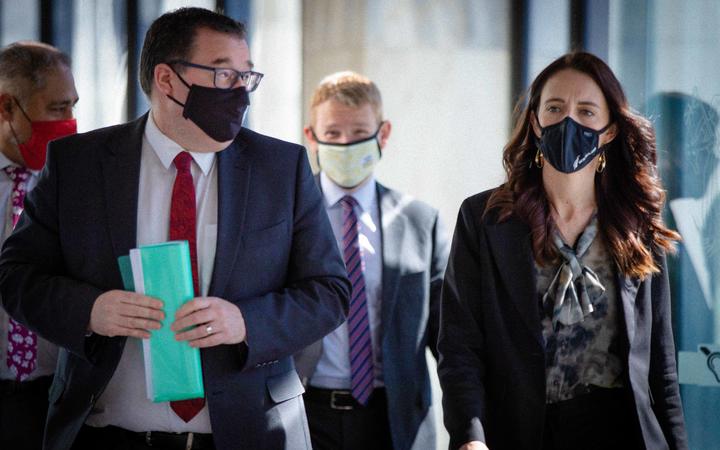
Jacinda Ardern and Grant Robertson arriving the Traffic Light System announcement
Prime Minister Jacinda Ardern will make a speech in the afternoon before holding a media conference. (File image) Photo: RNZ / Angus Dreaver

The virtual event’s main focus is a vote on changing the way the party elects the leader who will replace Prime Minister Jacinda Ardern.

Labour’s governing body, the New Zealand Council, has proposed a new leader be elected by caucus, if more than two-thirds of MPs vote for that person within a week of the job coming up.

If voted in, the proposal would mean the next Labour leader could be elected by the party’s caucus alone, rather than a combination of the caucus, Labour members, and unions.

No caption
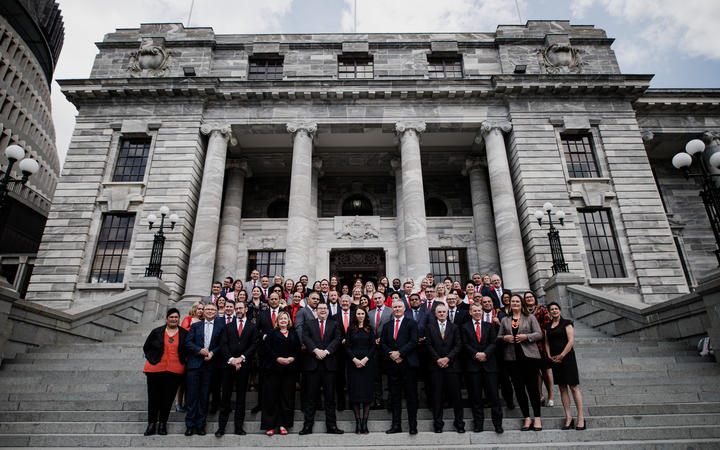
The entire Labour caucus. Photo: RNZ / Dom Thomas

Under the current electoral college system, the party’s caucus and members each account for 40 percent of the total vote while affiliates, mainly unions, make up the remaining 20 percent.

It was voted into the party’s constitution in 2012 by Labour delegates, replacing a voting regime where Labour’s caucus alone elected its leader.

Ardern will make a speech in the afternoon before holding a media conference, where it is expected she will announce the voting results on the proposal.

Pfizer Says Its Antiviral Pill Is Highly Effective in Treating Covid

Pfizer announced on Friday that its pill to treat Covid-19 had been found in a key clinical trial to be highly effective at preventing severe illness among at-risk people who received the drug soon after they exhibited symptoms.

Pfizer plans to submit interim trial results for its pill to the US Food and Drug Administration

The antiviral pill is the second of its kind to demonstrate efficacy against Covid. It appears to be more effective than a similar offering from Merck, which is awaiting federal authorization.

Pfizer’s pill, which will be sold under the brand name Paxlovid, cut the risk of hospitalization or death by 89 percent when given within three days after the start of symptoms.

Pfizer said an independent board of experts monitoring its clinical trial recommended that the study be stopped early because the drug’s benefit to patients had proved so convincing. The company said it planned to submit the data as soon as possible to the Food and Drug Administration to seek authorization for the pill to be used in the United States.

“The results are really beyond our wildest dreams,” said Annaliesa Anderson, a Pfizer executive who led the drug’s development. She expressed hope that Paxlovid “can have a big impact on helping all our lives go back to normal again and seeing the end of the pandemic.”

The treatment could become available in the next few months, though supplies are likely to be limited at first. The Pfizer and Merck pills are both geared toward patients regarded as high-risk, such as those above the age of 60 or with conditions like obesity that make them more susceptible to severe consequences from Covid.

The arrival of a new class of easy-to-use pills that dramatically reduce hospitalizations could help bring the curtain down on the most severe phase of the pandemic, at least in wealthy countries where most adults have been vaccinated.

Pfizer and Merck have said that they have already begun producing pills and plan to ramp up production over the next year.

The U.S. government has been in negotiations with Pfizer for enough pills for 1.7 million courses of treatment, with an additional option for 3.3 million, according to a senior administration official. That is about the same quantity that the United States has ordered from Merck. The government expects to pay about $700 per treatment course for both drugs, the official said.

A number of wealthy countries, including Britain and Australia, have also raced to lock up supplies of Pfizer’s drug.

Pfizer said it planned to offer poorer countries the drug at discounted prices. The company has been in talks with a United Nations-backed nonprofit, the Medicines Patent Pool, to allow the pill to be made and sold inexpensively in such countries; Merck has already reached a similar deal.

The Pfizer and Merck pills, which can be dispensed at pharmacies and taken at home, are expected to reach many more people than monoclonal antibody treatments, which are typically given by intravenous infusion at a clinic.

The treatment consists of 30 pills given over five days. That includes 10 pills of ritonavir, an old H.I.V. drug, which helps Pfizer’s drug remain active in the body longer. (Merck’s treatment course is 40 pills over five days.)

The pills so far have mainly been tested in high-risk patients. But Pfizer is also running trials on low-risk patients and people in the same household as those infected with the virus.

The efficacy results announced on Tuesday included data from more than 1,200 adults in the United States and overseas who received either Pfizer’s drug or a placebo pill after contracting Covid. The volunteers were enrolled between July and September, when the Delta variant was ripping across the globe. They were unvaccinated and had at least one characteristic that put them at greater risk of becoming severely ill from the virus, such as older age or having obesity or diabetes.

Pfizer’s 89 percent efficacy figure came from the group of volunteers who started treatment within three days of developing symptoms. Including people who began treatment on the fourth or fifth day, the pill reduced the risk of hospitalization or death by 85 percent.

By contrast, the Merck pill was about 50 percent effective when given within five days of the onset of symptoms, though the different designs and timing of the Pfizer and Merck trials make such comparisons imprecise. Monoclonal antibody treatments reduce hospitalizations and deaths by at least 70 percent in high-risk Covid patients, but those treatments are more expensive and more cumbersome to administer.

Study volunteers who got the Pfizer pill reported mostly mild side effects at a slightly lower rate than those who received the placebo pill. That was a promising sign for the drug’s safety, indicating that Covid symptoms are probably more bothersome than any of the pill’s side effects.

The origins of Pfizer’s pill stretch back 19 years, to the SARS epidemic. Early last year, Pfizer began modifying the drug’s design so that it could be used to fight Covid and taken as a pill rather than intravenously.

Pfizer’s drug is in the class of so-called protease inhibitors that are commonly used to treat H.I.V. and hepatitis C. The drug is designed to stop the coronavirus from replicating by blocking the activity of a key enzyme that the coronavirus uses to replicate inside cells.

Pfizer also said that its studies showed that the drug was safe and did not cause worrisome mutations. Some scientists have raised that concern about Merck’s pill, which works by inserting errors into the virus’s genetic code to stop it from replicating. Pfizer’s pill doesn’t do that.

Britain, which on Thursday became the first government to authorize Merck’s pill, recommended that it not be used in women who are pregnant, breastfeeding or who could become pregnant during the period.

Carl Zimmer and Stephanie Nolen contributed reporting.

Death of man isolating at home was not vaccine related – Ministry

The Ministry of Health says the death of a 40-year-old man, who had Covid-19 and was isolating at home, was not vaccine related.

The ministry said there had been speculation the death was vaccine related but they could confirm it was not.

The man’s death has been referred to the Coroner who will determine whether it was Covid-19 related, the ministry said.

“The Northern Region Health Coordination Centre and the ministry will undertake an incident review of the public health and clinical oversight of this person with independent input.”

The ministry said it was unable to comment on the specifics as a coronial investigation was underway.

“Following a positive test, a public health assessment is undertaken on a case to determine whether they should isolate at home or at an MIQ facility.

“The ministry’s condolences are with this person’s whānau at this sad time.”

Tonga’s first Covid patient tests ‘weak positive’ again after negative

Tonga’s only suspected patient has tested positive when he took his third test today in Nuku’alofa.

The latest result came after the person was tested positive last week and tested negative on Monday this week.

The Health Ministry chief executive Siale ‘Akau’ola said today the person had recorded a very weak positive result which likely reflects a historical infection.

He described the second positive result as “weaker than the first weak positive result”.

Dr ‘Akau’ola said the result showed what appeared to be a fragment of dead virus from old infections.

He said the Ministry discussed the result with a team from World Health Organisation (WHO) this morning.

He said there is a lot of “technicalities in  the case”.

“We believe the person is not infectious”, he said.

Dr ‘Akau’ola said the result meant there was no need to panic.

“It is not a new virus and the Ministry is highly confident about it.

“The virus is shedding”.

He said the machines Tonga was using for the tests “are very sensitive”.

“Whenever they detected a fragment of a virus they will show it as positive”.

Dr ‘Akau’ola was speaking during a press conference this afternoon attended by the Prime Minister and a team of government officials.

The patient has been transferred to a special quarantine facility in Mu’a after he arrived at the kingdom from Christchurch last Wednesday on a flight carrying 215 people.

They had four contacts in New Zealand – all of whom returned negative tests.

Homicide investigation launched after person found dead in New Lynn, West Auckland

By RNZ.co.nz. Republished with permission.

Police have launched a homicide investigation in the West Auckland suburb of New Lynn after a person was found dead this morning.

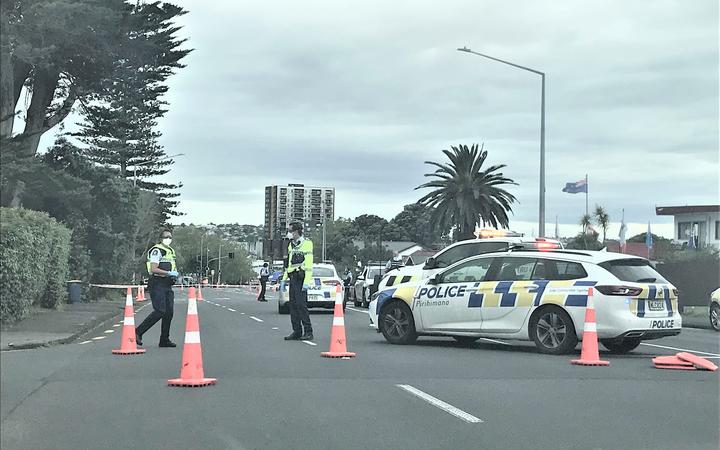
Police in New Lynn, West Auckland, where a homicide investigation has been launched.
A police road block on Great North Road. Photo: RNZ/Leith Huffadine

Emergency services were called around 10am today to an address on Great North Road after reports a firearm had been discharged.

A police spokesperson says upon arrival, a person was found injured in the driveway of the address.

Frontline police staff have tried to provide first aid to this person, however they died at the scene.

Police have also cleared neighbouring addresses.

There are at least 10 police vehicles and a large number of officers at the scene on Great North Road at the intersection with Nikau Street.

Traffic is being diverted and police are speaking to members of the public on the footpath.

The address where the incident took place appears to be a motel.

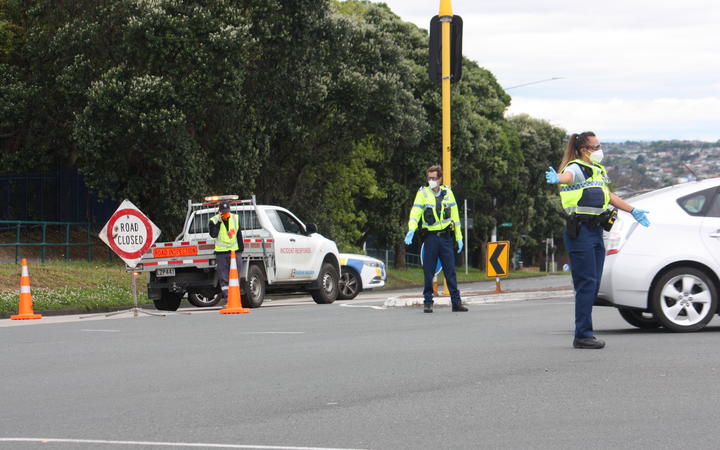
Police at the scene in New Lynn, Auckland where a homicide investigation was launched after a person died on Friday morning.
Police at the scene in New Lynn, West Auckland. Photo: RNZ / Leith Huffadine

Second Covid-19 dies while isolating at home, as 163 new community cases reported

By RNZ.co.nz. Republished with permission.

Deputy Prime Minister Grant Robertson and Director of Public Health Dr Caroline McElnay are giving the latest update on the government’s Covid-19 response.

Watch the media conference here:

Further testing is under way Taranaki after Covid-19 was detected in wastewater at Stratford. South Taranaki iwi health provider Ngati Ruanui said it was notified of a strong positive Covid-19 wastewater test result in the town.

As Auckland’s DHBs grow steadily closer to reaching 90 percent double vaccinated, Covid-19 modeller Shaun Hendy says the 90 percent target could still mean spending about three quarters of next year in the ‘Red’ traffic light setting. But he says vaccinating children would help.

Health CEO: Patient should have been told not to release information; says Ministry held back from commenting to protect his privacy

Health Ministry CEO Siale ‘Akau’ola said yesterday the Ministry of Health had not responded to allegations made on social media to protect the privacy of the suspected Covid patient.

Health Ministry CEO Siale ‘Akau’ola. Photo/screenshot

He said the Ministry had been very careful not to release any information that might identify the person.

He said the patient should have been advised not to release any information.

Dr ‘Akau’ola said information had been released through various channels, which had caused problems.

Prime Minister’s concerns

During yesterday’s press conference a journalist asked why the patient was allowed to contact other people on his mobile phone.

He said this was why there were concerns in the social media that the government should take the situation seriously because what had been leaked from the MIQ included information that was unreliable.

He asked Prime Minister Pōhiva Tuʻiʻonetoa to make a firm decision on the claim.

In his response, Tuʻiʻonetoa said he had just received a message on his mobile phone and was disappointed with what had been revealed in it.

The Prime Minister did not go into details on what he had received, but it appeared it was the video clip which was widely shared on Facebook purporting to show the patient talking to what appeared to be family members on a mobile phone while the conversation was being recorded on another phone.

Associate Professor ‘Amelia Tu’ipulotu, the Minister of Health. Photo / screenshot

Serious accusations 

In that conversation serious accusations were made against the government, including claims they were lying to the public when they said the patient had been taken to the Mu’a MIQ on Saturday. The patient said he was taken on Monday this week.

During the conversation the patient said he had tested negative, but the Ministry kept on telling the public the test was positive.

Dr ‘Akau’ola said two tests must be carried out to confirm a negative result. The patient’s second test would be tomorrow, Friday 5.

Kaniva News reported yesterday that Dr ‘Akau’ola said the patient had returned a weak positive result and had now tested negative.

The Prime Minister said: “I have listened to it (the recording of the conversation) and I did not like the attitude of their conversation and it said the patient was taken to Mu’a MIQ,” the Prime Minister said.

Tu’i’onetoa asked the meeting for his officials to clarify when did they take the patient to the MIQ.

“I want to confirm that”, he said.

Respect for the patient

The Minister of Health and her CEO were looking at each other before the CEO apologised to the Prime Minister and the conference, saying it was true the patient was taken on Monday not Saturday as he was advised, because of some paper work issues.

The CEO said the Ministry highly respected the patient.

“We wanted to protect his identity,” Dr ‘Akau’ola said.

“He is carrying a huge burden and the people’s concerns as well.

“As I look at it there was a weakness as he should have been given proper counselling advice for him not to release any information.

“However we learnt from this”, the CEO said.

Family

This morning some family members of the patient were concerned that some posts on Facebook targeted the patient’s paternal side, whose surname is Pāongo.

The posts included one which said the problem was that the family should have not released the identity of the patient to the public because it would backfire on them.

Another said the whole family could be stigmatised by the situation, something that is extremely common in Tonga.

It said some families or clans were  stigmatised with “kilia”, the Tongan word for leprosy, in the past. Nowadays it was a stigma that people used to identify those families whenever there was any dissatisfaction with them.

Vēili Pāongo contacted Kaniva News and said he was disappointed with the post and wanted to make a response.

He said he contacted the poster and they apologised.