Saturday, April 4, 2026
Home Blog Page 335

Tongan soldier dies as US Army investigating three suspected suicides

The Tongan and army communities in Tukwila, Washington, along with relatives and loved ones, held a funeral for Sika Tapueluelu over the weekend.

Specialist Sika Tapueluelu, 26, was a cannon crewmember from Tukwila, Washington. Photo/Supplied

Tapueluelu, 26, was among the three troops of the Army’s 10th Mountain Division who died in a 48-hour period at Fort Drum, New York.

Tapueluelu died on September 16 before Tyler Thomas, 21, and Angel Green, 24,  died the following day.

“10th Mountain is still investigating the deaths, but spokesman Lt. Col. Josh Jacques said all three are believed to have been caused by self-harm and unconnected to one another”, the military.com reported.

Tapueluelu was assigned to 2nd Battalion, 15th Field Artillery Regiment, 2nd Brigade Combat Team, it said.

“The three deaths in rapid succession underscore the difficulty the military has had trying to reduce the rates and risk of suicide among service members and veterans. Earlier this year, a Brown University study found that more than four times as many troops and veterans who had served in the wars in Iraq and Afghanistan had died by suicide as were directly killed in the conflicts”.

Tapueluelu’s devastated family, friends and kāinga have released video clips of his burial services showing his casket being carried in a horse-drawn wagon while a platoon of soldiers marching behind it.

“Only God knows how I feel right now 😔💔 Rest In Heavenly Love my dear Brother Sika Manuao Tapueluelu,” a tribute on Facebook said.

“Rest in peace and love nephew sergeant Sika Manu’ao Tapueluelu till we meet again. He’s the son of Toa and ‘Alifeleti Tapueluelu”.

Garbage truck driver Tuiniua Fine jailed after fatal hit-run of student

By perthnow.com.au.

A Sydney garbage truck driver who fatally reversed over a student before hiding the body and driving away has been jailed.

Tuiniua Fine, of Lakemba, was sentenced to a maximum of five years and six months in jail by the NSW District Court on Friday.

He must serve at least three years and eight months before becoming eligible for parole.

George Yuhan Lin, 21, was studying a double degree in law and economics after graduating with an HSC score of 99.85.

After Fine killed Mr Lin on February 12, 2020, he hid the body in an alcove and fled.

George Yuhan Lin died at the age of 21 after he was hit by a garbage truck.
George Yuhan Lin died at the age of 21 after he was hit by a garbage truck. Credit: Supplied

Mr Lin’s body was discovered about 1.30am on Central Street in Sydney’s CBD and Fine was identified as the driver through CCTV footage.

Mr Lin’s mother previously told the court she visited his grave every day and would do so for the rest of her life.

Fine pleaded guilty to dangerous driving occasioning death, doing an act to pervert the course of justice, and failing to stop and assist after a fatal collision.

Mandatory vaccinations announced for health, education sector workers

By RNZ.co.nz. Republished with permission.

School staff who work with children and students must be fully vaccinated by 1 January 2022.

Cabinet has also moved to mandate the vaccination of high-risk workers in the health and disability sector by the earlier date of 1 December 2021.

Those high-risk workers include general practitioners, pharmacists, community health nurses, midwives, paramedics, and all healthcare workers in sites where vulnerable patients are treated.

Covid-19 Response Minister Chris Hipkins says the new requirements also cover people who work at aged residential care, home and community support services, kaupapa Māori health providers and Non-Government Organisations who provide health services.

These workers need to receive their first dose by 30 October, Hipkins said.

The Covid-19 Public Health Response (Vaccinations) Order 2021 will be updated to enforce the vaccine requirement.

Vaccine rules for education sector

All school staff, including home-based educators, teacher-aides, administration and maintenance staff and contractors, who come into contact with children and students must be vaccinated by the start of 2022.

Schools and early learning services will need to maintain a register of vaccinated staff from 1 January.

These employees need to have their first dose by 15 November 2021, Hipkins said.

All school staff in Auckland and other regions at alert level three will also be required to return a negative Covid-19 test before returning to work onsite.

Schools in Auckland were due to return on 18 October, however, Cabinet has decided schools in the region will remain closed after the school holidays finish at the end of this week, Prime Minister Jacinda Ardern announced this afternoon.

Staff who are not fully vaccinated before 1 January 2022 will also be required to get a weekly Covid-19 test.

Work is continuing on whether mandatary vaccinations will be required in the tertiary education sector, Hipkins added.

Cabinet has also decided secondary schools and kura will be required to keep a vaccine register for students.

Students who do not produce evidence of vaccination will be considered unvaccinated, Hipkins said.

Under certain circumstances exemptions may be possible.

‘Not an easy decision’ – Hipkins

Hipkins said most people who work in these sectors are already fully or partially vaccinated but nothing can be left to chance.

“It’s not an easy decision, but we need the people who work with vulnerable communities who haven’t yet been vaccinated to take this extra step.

“Vaccinations for children aged 5 to 11 are not yet approved and the health and disability sector includes a range of high risk occupations.

“People have a reasonable expectation that our work forces are taking all reasonable precautions to prevent the spread of disease, and government agencies have been working with them to ensure they are as protected as possible.”

Covid-19 summary: Mandatory vaccinations, 35 cases and no changes to alert levels

By RNZ.co.nz. Republished with permission.

Mandatory vaccinations have been introduced for health and education workers as 35 new community cases are reported and the government confirms there will be no immediate changes to alert levels.

Prime Minister Jacinda Ardern, Covid-19 Response Minister Chris Hipkins and Director-General of Health Dr Ashley Bloomfield held a press conference this afternoon after Cabinet met to review alert levels.

Ardern announced that Auckland would remain at its current setting until 11.59pm next Monday, 18 October, while Waikato and Northland would stay in level 3 until 11.59pm on Thursday. Settings for Auckland will be reviewed next Monday, while Cabinet will meet on Wednesday to discuss Waikato and Northland.

“New Zealand is at one of the trickiest and most challenging moments in the Covid-19 pandemic so far,” Ardern said.

“However, there is a clear path forward in the coming months in which New Zealanders should be able to move to living with fewer restrictions and more freedoms as a result of higher levels of vaccination.”

Ardern says restrictions are extremely important in controlling the virus while we get the population vaccinated.

“These measures, when followed, make all the difference.”

She said the r-value has crept up to between 1.2 and 1.3, and this meant cases are likely to grow in the coming days.

“If followed, our alert level restrictions can help control that spread.”

Mandatory vaccinations for education sector workers

Auckland schools will not be reopening after the school holidays on 18 October. Instead, distance learning will resume.

Public health officials say robust safety measures need to be in place before schools reopen.

Hipkins said the government would be assessing the possibility of reopening schools week by week. He told Checkpoint there was a “good chance” they might open before the end of the year, and not opening until term 1 next year would be a “worst case scenario”.

All staff, including teachers and support staff, will be required to receive their first dose by 15 November 2021 and be fully vaccinated by 1 January 2022.

If schools resume before the end of year and teachers are not fully vaccinated, those staff will be tested for Covid-19 every week.

All teachers will need to be tested before returning to work, he said.

The move has been welcomed by Post Primary Teachers Association and NZEI Te Riu Roa.

Mandatory vaccinations for health workers

Cabinet has also moved to mandate the vaccination of high-risk workers in the health and disability sector by the earlier date of 1 December 2021.

Those high-risk workers include general practitioners, pharmacists, community health nurses, midwives, paramedics, and all healthcare workers in sites where vulnerable patients are treated.

Hipkins said the new requirements also cover people who work at aged residential care, home and community support services, kaupapa Māori health providers and non-government organisation which provide health services.

These workers need to receive their first dose by 30 October, Hipkins said.

Epidemiologist Michael Baker said there are still holes in the plan for the mandatory vaccination of health workers and the government needs to plug them quickly. Baker said all visitors should undergo rapid anti-gen testing.

Thirty-five new community cases

All 35 of the new cases reported today are in Auckland. Ministry of Health said in a statement 14 have known links to existing cases (including four household contacts) and 21 remain under investigation.

There are 16 epidemiologically linked sub clusters and 14 epidemiologically unlinked sub clusters.

There were no new cases at the border and no new cases to report in Waikato.

  • Thirty-three people are in hospital, including seven in ICU
  • There are a total of 1622 cases in this outbreak
  • There are 2310 active contacts being managed
  • There were 15,349 tests processed in the last 24 hours.
  • Yesterday, there were 42,226 vaccines administered
  • In total, 5,832,277 vaccines have been administered

Earlier today, Ardern revealed the positive case identified in Katikati in Bay of Plenty over the weekend has been retested, as have their family, and results have come back negative.

Bloomfield said the locations of interest relating to the case are being removed from the Ministry of Health’s website.

Meanwhile, two staff members at North Shore Hospital have returned positive results as has a fully vaccinated person working at Auckland Hospital. It was also revealed tonight a patient at Middlemore Hospital has tested positive, and 40 patients are considered close contacts.

Northland contact urged to come forward

Speaking at the press conference, Ardern said the “easiest” thing for the person in Northland who travelled with a positive case, is to come forward and get tested.

Ardern said officials were using every tools and means they had to locate the person, and she has asked health authorities and police to consider naming her.

Genomic sequencing of the positive case she travelled with has confirmed they are linked to the Auckland outbreak. She remains in an Auckland quarantine facility, while 21 close contacts have been linked to her.

Because the woman has been uncooperative, health officials do not clear information on where she travelled to, so they are relying on high testing rates in the region to give the confidence needed that there aren’t undetected cases, Ardern said.

Bloomfield said testing rates in the region needed to increase. He urged anyone who was in contact with the positive case and her companion to get tested, whether they are symptomatic or not. He also urged anyone else in the region who is symptomatic to get tested.

Te Pāti Māori calls for tougher restrictions

Ardern said she disagreed with Te Pāti Māori, which is describing the low vaccination rate of Māori as a modern form of genocide.

Te Pāti Māori is calling for Auckland to be returned to level 4 until Māori are 95 percent vaccinated.

It also wants the rest of the country returned to alert level 3.

The party’s co-leader Rawiri Waititi said the government’s Covid response has failed to deliver for Māori.

Māori urged to get vaccinated

The National Iwi Chairs Pandemic Response Group said how the outbreak is tackled in the next few days and weeks will determine how the rest of the year pans out.

Data from last week shows 58 percent of Māori have had their first dose and only 35 percent are fully vaccinated.

The group’s co-leader Mike Smith is asking rangatahi to help protect their whānau by getting vaccinated.

“We need you, just like our young warriors in the past, to be our young warriors in the present to protect the tribe.”

Meanwhile, Māori health providers in the Auckland suburb of Manurewa are introducing 44 vaccine campervans to help reach people.

Manurewa marae chief executive Natasha Kemp said they want to prioritise those who are most vulnerable, so are taking vaccines right to the community.

Ardern said she will announce the framework for New Zealand’s next steps as vaccination rates lift over the coming weeks.

Lord Fohe loses fight to remove tenant he said he ‘did not know where he had come from’

Lord (Sione) Fohe has failed in his attempt to kick out a man who had built a house and was living on the land of his Puke estate.

Lord Fohe. Photo/TBC

The king’s noble told the Land Court he did not know where Ve’etutu Mahe “had come from” or who allowed him to occupy the land.

Mahe was served an eviction notice but refused to vacate it. Sione sought damages of $2,000.

Mahe told Justice Niu he had asked the Late Lord Samiuela Fohe for a town allotment, and gave him $1,000 before Samiuela showed him the piece of land in March 2007.

He also gave $6,500 to Samiuela as well as presenting to him 20 yams and the traditional large pig in appreciation of the allotment given to him, the court judgment says.

He said he also carried out free repair works and painting of Samiuela’s residential house at the noble’s request.

He said that Samiuela had assured him that he would arrange for the grant and registration of the allotment in his name to be carried out. He said after Samiuela died in 2009 he then proceeded to clear the land. He built a house and started living there in 2014.

He said that “he has an equitable right to possession and the right to be granted and to be registered as lawful holder of the allotment”.

When Samiuela died in April 2009, his daughter Lupe took care of the estate until Sione was appointed in 2016 as Lord Fohe.

Lupe told the court  that after Samiuela gave the piece of land to Mahe she negotiated a land surveyor to sub-divide the whole area of land so that the piece of land allocated to Mahe could be registered. She was told that they would work on it, but that her father died before that could be done.

Justice Niu said Mahe had already become “lawfully resident” in the hereditary estate of Puke after Lord Sione was appointed in 2016.

“Accordingly, I have come to the conclusion that the plaintiff estate holder cannot evict or seek an order to evict the defendant and his family as he has sought in this action, or to seek damages for their occupation of his estate”.

New Zealand signs deal to purchase new Covid-19 treatment

By RNZ.co.nz. Republished with permission.

New Zealand is one of the first countries in the world to secure a deal for the new Covid-19 treatment molnupiravir.

Molnupiravir is the first oral antiviral treatment for Covid to report clinical trial results.
Molnupiravir is the first oral antiviral treatment for Covid to report clinical trial results. Photo: Merck

Pharmac and Prime Minister Jacinda Ardern announced the agreement this morning. Pharmac said the oral antiviral drug would be used to treat New Zealanders with mild to moderate Covid-19 symptoms.

The agreement with supplier Merck Sharp & Dohme (MSD) is subject to the drug being approved by Medsafe. An initial supply of 60,000 courses will be sent to New Zealand after Medsafe approves the drug, Pharmac chief executive Sarah Fitt said in a statement.

“MSD recently announced trial results showing that molnupiravir considerably reduced hospitalisations and deaths from Covid-19. While these are interim results, they are very promising,” Fitt said.

Ardern said New Zealand was among the first countries in the world to sign an advanced purchase agreement for the drug.

“Antiviral medicines are an additional tool the government is adding to our toolbox to fight Covid-19,” Ardern said.

“The most important thing people can do to prevent themselves, children and vulnerable people getting Covid is to get vaccinated. However it’s important we have medicines to help those who pick up the virus to avoid having to go to hospital.

“We are continuing to use a stamp it out strategy. But this purchase of 60,000 courses is based on the same population basis as the likes of Australia and Singapore, and is not an assumption about the level of Covid we may have in the future.”

Australia’s government announced last week it had purchased 300,000 courses of the drug.

Ardern said it was thanks to the “speed and hard work” of Pharmac’s team that New Zealand was able to secure the treatment so quickly.

Fitt said Pharmac is proactively engaging global pharmaceutical companies to secure access to treatments.

“We have changed the way we operate, using separate funding allocated by government, to make sure that New Zealand can access new Covid-19 treatments,” she said.

“Covid-19 is a unique health crisis and for this reason we are doing things differently.”

Pharmac was working on securing other Covid-19 treatments, Fitt said.

Ardern said she was hopeful there would be further announcements soon as Pharmac’s negotiations conclude.

The Week in Politics: Transition confusion and Auckland’s road to nowhere

By RNZ.co.nz and is republished with permission.

Analysis – The government’s move away from its Covid-19 elimination strategy causes confusion, the roadmap for easing Auckland’s restrictions is described as a road to nowhere and vaccinating the population becomes the top priority.
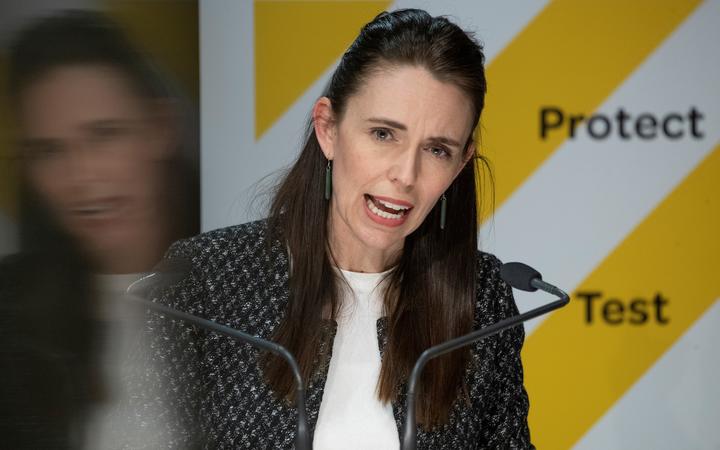
-POOL- Photo by Mark Mitchell: Prime Minister Jacinda Ardern arriving during the the post-Cabinet press conference with director general of health Dr Ashley Bloomfield at Parliament, Wellington. 04 October, 2021.  NZ Herald photograph by Mark Mitchell

On Monday Jacinda Ardern changed the game in New Zealand’s response to Covid-19, writes Peter Wilson. Photo: POOL / NZME

The government’s elimination strategy, which kept the country safe for many months, was simple and easily communicated.

When cases appeared there were lockdowns until no new ones emerged and alert levels were brought down until life returned to a mask-wearing “new normal”.

On Monday Jacinda Ardern changed the game.

“The prime minister has not explicitly called time on the elimination strategy but the government’s plan marks a clear move away from it,” RNZ reported.

Ardern explained it this way: “With Delta the return to zero is incredibly difficult and our restrictions alone are not enough to achieve it quickly. In fact, for this outbreak it’s clear that long periods of heavy restrictions has not got us to zero cases”.

During the last few weeks the term “zero tolerance doesn’t mean zero cases” has been creeping into the daily briefings, although Ardern says the goal is still to stamp out the virus.

Her team of five million isn’t sure what game it’s playing, or what the rules are.

“Confusion on Covid strategy” said a Stuff headline on Wednesday.

Political reporter Thomas Manche said the shift away from the elimination strategy had created more questions than it answered, and he set out some of them.

Had the government’s aim now become suppression or containment of the virus? What level of community spread and sickness would be tolerated before restrictions were deployed? What did it all mean for the summer?

Getting the population fully vaccinated has become the government’s top priority, and it is putting huge emphasis on it. Ardern said vaccinations had given the government the opportunity to do things differently. “Elimination was important because we didn’t have vaccines,” she said. “Now we do, we can begin to change the way we do things.”

She said the change was always going to happen. Delta and vaccinations had accelerated it.

Opposition leader Judith Collins didn’t have any doubts about what was going on. “New Zealanders are not children, we no longer believe in Santa,” she said. “It’s time we were told the truth – the elimination strategy is quite clearly dead.”

National Party leader Judith Collins presenting the party's plan for reopening New Zealand, Wellington, 29 September 2021.

Judith Collins says it’s time we are told the truth. Photo: RNZ / Samuel Rillstone 

The New Zealand Herald’s Thomas Coughlan had this take on it: “Having so successfully tied itself to the success of the elimination strategy, Labour is now trying to explain why its abandonment is both not a failure and not its fault,” he said.

Ardern also announced a new plan for Auckland, the epicentre of the outbreak. It would stay under alert level 3 but restrictions would be gradually eased in three stages. The first stage started on Tuesday but there are no dates for the second and third stages.

It seemed to please no-one and upset nearly everyone.

“Jacinda Ardern releases unclear roadmap, experts say community transmission new normal,” the Herald’s headline said.

The main problem was seen as the lack of certainty about the second and third stages.

“The Beehive’s roadmap for Auckland is a bit like taking them on a road to nowhere,” said Newstalk ZB’s Barry Soper. “It has no finite end. The city could still be on the road at Christmas.”

That was echoed by others, including Auckland Chamber of Commerce chief executive Michael Barnett. He said business had been completely left out when the plan was being worked out.

The bottom lines in all this appear to be that while the aim remains to stamp out the virus, lockdowns can’t get rid of the Delta variant. Cities like Auckland can’t be shut down for long periods because public support could crumble and the economic impact is devastating, so a level of transmission has to be accepted as restrictions are eased.

The big gamble is that vaccinations, testing and contact tracing will keep case numbers at levels the health system can cope with. If there’s a big surge and it can’t be contained, Auckland and possibly other cities could look like Sydney and Melbourne.

Epidemiologist Professor Michael Baker said looser restrictions would make it easier for Aucklanders to live with Level 3 but the city could be in that level indefinitely. “Below that you have very few constraints on the virus.”

Director-General of Health Dr Ashley Bloomfield, speaking after the prime minister had announced the Auckland roadmap, said the next four to six weeks would be critical.

By the end of the week new Auckland cases were still being reported daily, the cluster in Waikato was spreading and the alert level 3 boundary had been extended.

On Friday, Stuff reported the government had been quietly consulting on a new “traffic light system” which would replace alert levels when high vaccination rates were reached.

It would end the practice of locking down regions, the report said. A green light would mean almost no restrictions, an orange light would mean face masks and capacity settings and red would be used when the health system was threatened. It was not yet policy.

Stuff political editor Luke Malpass, under the headline “Troubled Waters”, said Covid-19 could be here for Christmas.

“The certainties of the past 18 months have given way to anxiety about what comes next,” he said. “It is now a waiting game on what the government will do next … everything is now geared towards keeping the virus in check until full vaccination rates are driven up as high as possible.”

The good news, and there wasn’t much of that this week, was a surge in vaccinations as people became alarmed by what was happening around them and what could happen if the virus spread to other regions.

Covid-19 Response Minister Chris Hipkins promised that all the stops would be pulled out and announced a nationwide Super Saturday on 16 October when testing sites would be open all day and into the evening.
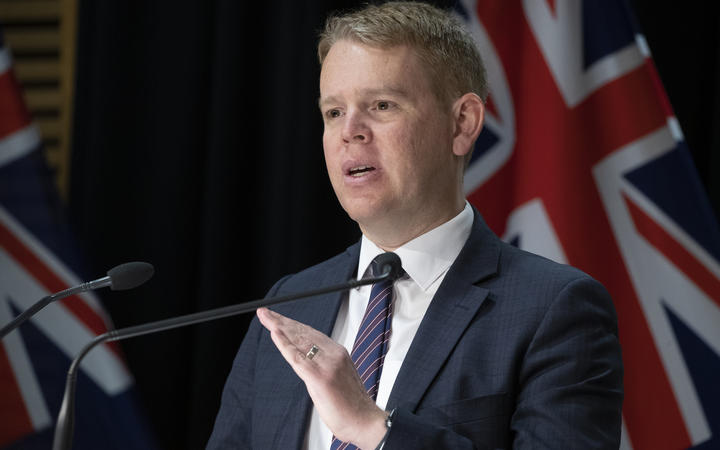
Covid-19 Response Minister Chris Hipkins during the Covid-19 and vaccine update at Parliament on 29 September 2021.

Chris Hipkins. Photo: Pool / NZME / Mark Mitchell

He wanted New Zealand to be the most vaccinated country in the world. Portugal had vaccinated about 98 percent of its eligible population, he said. “If they can do that, we can do it too.”

On Friday morning Ministry of Health figures showed 51 percent of the eligible population (those aged 12+) were fully vaccinated, 80 percent had been given a first dose and 82 percent were booked in or vaccinated with at least one dose.

During its hectic week the government also announced that vaccination passports would be rolled out in November. Entry to festivals and other big events would be restricted to people holding passports.

A new, more rigorous testing regime was revealed and RNZ reported there would be meetings with companies wanting to import rapid antigen tests.

There wasn’t much mainstream media space for other political events this week, but among those that made it were:

Minister of Justice Kris Faafoi announced a major review of electoral law. Among the issues considered will be the voting age, political party funding and the length of Parliament’s term, currently three years.

There could be referendums if big changes are proposed and they won’t come into force until the 2026 election. The intention is that some changes, including transparency around political donations, will be in place before the 2023 election.

An independent panel will be appointed to conduct the review.

RNZ’s political editor Jane Patterson said any fundamental changes would end up in the hands of politicians. Her analysis explains why that will be so, it’s on the website.

Winston Peters was in familiar territory, sticking up for seniors. The NZ First leader called for an urgent law change to avoid pensioners having their superannuation stopped while they were stranded overseas because they couldn’t get MIQ slots.

“This is not a difficult matter to solve,” Stuff quoted him as saying. “It begs the question, why some bureaucrat or politician has not got off their backside to see that there is obviously a fault that can be fixed.”

Under the law, superannuation can’t be paid to a person after they have been out of the country for 26 weeks. Peters said a bill could be introduced and made retrospective, which would solve the problem.

The government announced that from 1 November all non-New Zealand citizens would have to be fully vaccinated before entering the country. They would still have to go into MIQ for 14 days.

On the same day, Air New Zealand said it would introduce a “no jabs, no fly” policy for international travellers from 1 February. The delay would give people plenty of time to get vaccinated, it said.

*Peter Wilson is a life member of Parliament’s press gallery, 22 years as NZPA’s political editor and seven as parliamentary bureau chief for NZ Newswire.

Fury floors Wilder with 11th round KO

By RNZ.co.nz and is republished with permission.

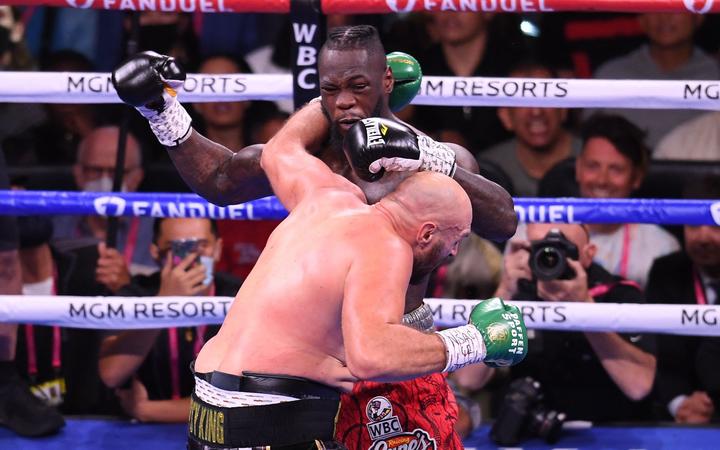
Tyson Fury won a slugfest with Deontay Wilder with an 11th round knockout to retain his WBC heavyweight title in Las Vegas on Saturday.

WBC heavyweight champion Tyson Fury of Great Britain (L) and US challenger Deontay Wilder (R) exchange punches during a fight for the WBC/Lineal Heavyweight title at the T-Mobile Arena in Las Vegas, Nevada, October 9, 2021. (Photo by Robyn Beck / AFP)

Photo: AFP or licensors

Fury knocked Wilder down in the third round but the American responded in the fourth, sending the Briton to the canvas twice thanks to his powerful right hand.

But Fury ultimately overwhelmed Wilder to remain undefeated.

The victory didn’t come easily, the 33-year-old Fury admitted afterwards.

“I was down a couple of times, I was hurt, Wilder is a strong puncher,” he said.

“It was a great fight tonight. I will not make any excuses, Wilder is a top fighter, he gave me a run for my money. I always say I am the best fighter in the world and he is the second best.”

With the win, Fury (31-0-1) has now taken two of the three meetings between the rivals, following on from a controversial draw in 2018 and a stunning seventh round TKO to Fury in February last year.

– Reuters

Covid-19 wrap: 60 new cases, scramble in regions over positive case visits

By RNZ.co.nz and is republished with permission.

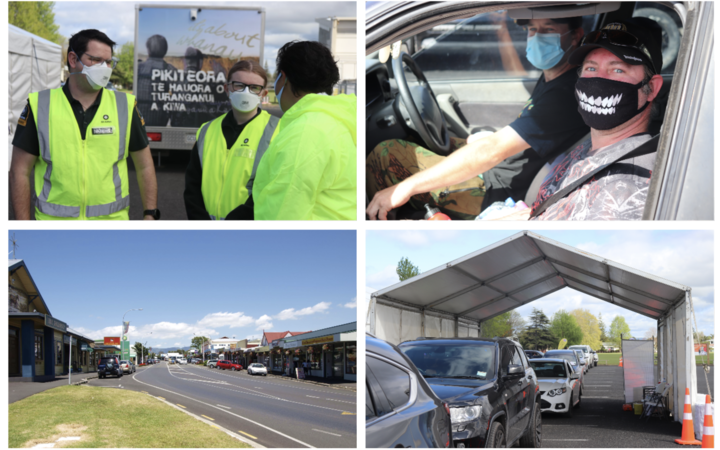
The Ministry of Health announced 60 new community cases of Covid-19 today, the most in nearly six weeks, while Northland and the Bay of Plenty continued to deal with positive cases visiting their regions.

No caption

Photo: RNZ/Tom Kitchin / Google Maps

Of the 60 new cases reported today, 56 were in Auckland, three in Waikato and one in Bay of Plenty that was announced last night.

It’s the most new cases reported since September 1, when 75 cases were revealed.

In a statement today, the Health Ministry said 41 of today’s new infections have been linked to earlier cases.

There have been no cases reported yet in Northland after a positive case visited there, but the region remains on edge.

The ministry said there are 29 infected in hospital, including seven in intensive care.

The ministry also reported that a person receiving treatment at North Shore Hospital dialysis unit yesterday tested positive for the coronavirus.

The unit closed yesterday afternoon for a deep clean.

There were 20,421 tests carried out in New Zealand yesterday, including 7071 in Auckland.

There have now been 1587 cases in the current Delta outbreak, and 4265 Covid-19 cases in total in New Zealand.

Scramble in regions over positive case visits

Outside of Auckland, officials continue to follow up details of the positive case who visited Northland and the other case revealed in the Bay of Plenty last night.

Authorities have now contacted a woman who travelled in Northland with another woman who later tested positive for Covid-19, but they still don’t know her location.

It’s not known if this second woman has Covid-19.

The woman who tested positive remains in an Auckland quarantine facility, the Ministry said in a media statement. That woman had not been “forthcoming” in providing information to contact tracers, Prime Minister Jacinda Ardern said, complicating efforts to track down any possible cases.

The Bay of Plenty town of Katikati is also on high alert after a person tested positive yesterday for Covid-19, with new locations of interest in the region named by the Ministry of Health this morning. The infected person was tested in Auckland, but are moving to the Bay and were in the region when the result arrived.

Western Bay of Plenty mayor Garry Webber said Katikati is hoping to prevent further infection. He said the result was a weak positive.

“But regardless of what it is, it is here in one shape or form and we just have to get into preventative mode.”

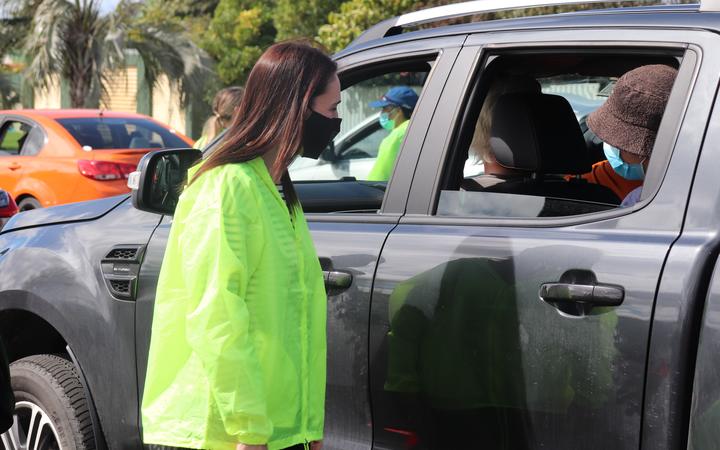
Prime Minister Jacinda Ardern speaks to people in Gisborne after they got their vaccine and are waiting in observation.

Photo: RNZ / Tom Kitchin

Vaccination push continues

Nearly 82,000 doses of the vaccine were administered yesterday.

This includes 18,000 people receiving their first shot, and 65,000 people completing their course of both vaccines.

Prime Minister Ardern continued her visit to East Coast communities to encourage vaccination with a trip to Gisborne this morning.

Turanga Health’s clinic was in high demand, with many people in cars lining up to be vaccinated.

Parts of the city have some of the lowest vaccination rates in the country.

This was the last stop on the Prime Minister’s four-day tour of East coast communities, and she returned to Wellington today. She visited Rotorua, Murupara, Hastings, Wairoa, Gisborne and Ruatōrea.

Ardern said she was trying to support people.

“There’s not too much that’s useful I can do at a vaccination centre, other than distract people when they get injected, or provide a coffee.”

In the last seven days 115,000 people have received their first shot.

Another 9700 Māori were vaccinated, after yesterday’s record of just over 10,000.

Auckland now has 86 percent of people with at least one dose.

NSW prepares to reopen

New South Wales Premier Dominic Perrottet says the state’s residents have “earned” the easing of COVID-19 restrictions which will come in effect tomorrow.

The state recorded 477 new Covid-19 infections and six deaths in the 24 hours to 8pm yesterday, while Victoria recorded 1890 new locally acquired cases and five deaths.

A large number of restrictions will be eased on Monday in NSW for those who are fully vaccinated after more than 100 days in lockdown.

Cafes, restaurants and bars will reopen, 10 people will be allowed to visit a home and the caps on numbers at weddings and funerals will increase dramatically.

Perrottet said it would be a “big day” for the state.

“You’ve earned it. We’re back in action tomorrow after more than 100 days making enormous sacrifices,” he said.

Police seek white car after alleged murder in Auckland

By One News, TVNZ / Republished with permission

Police are asking for information about a white car possibly linked to the alleged murder of a man in Auckland’s Avondale on Saturday.

Mars Rakeem, 28, was found on October 2 at Saintly Lane with a gunshot injury. He was taken to hospital in a serious condition but died a short time later.

Two people have been arrested and charged in relation to the incident.

A 24-year-old man is facing murder and firearm-related charges, and the 20-year woman is facing charges of attempting to dissuade witnesses from giving evidence with threats of violence.

Detective Inspector Lloyd Schmid said police they were making further enquiries and were unable to rule out further charges on other people.

Police want information about sightings or the whereabouts of a white Mercedes C-63 Saloon with registration NGQ689.

Police are seeking sightings or information about this white Mercedes C-63 Saloon – registration NGQ689.
Police are seeking sightings or information about this white Mercedes C-63 Saloon – registration NGQ689. (Source: NZ Police)

Schmid said police think the car may be at, or may have been taken into, a vehicle painting or vehicle wrapping company.

He said Rakeem’s death was being treated as an “isolated incident”.

Anyone with information is asked to contact police on 105, quoting file number 211002/1241.

People can also call Crime Stoppers anonymously on 0800 555 111.