Sunday, April 5, 2026
Home Blog Page 339

Covid-19 briefing: ‘We must not get complacent’ – deputy PM

By RNZ.co.nz. Republished with permission.

Covid-19 case numbers may be “relatively stable”, but the country can not afford to get complacent, says the deputy prime minister, who is urging Aucklanders to get tested this weekend. Watch the latest government briefing live here.

Watch the update here:

There were 19 new community cases reported today, with just one still to be linked to existing cases.

Grant Robertson and Director of Public Health Dr Caroline McElnay have held the latest briefing on case numbers, testing and vaccines.

There were 19 new community cases reported today, with just one still to be linked to existing cases.

At this afternoon’s briefing, Robertson said that low number of unlinked cases remained encouraging, and that case numbers had been relatively stable, as they represented expected cases such as household contacts.

“But we must not be complacent,” said Robertson.

“One of the things I’m urging people in Auckland this weekend to do is get tested. We saw 19,000 tests across New Zealand and that’s an excellent number, and we want to keep that level of testing up over the weekend.”

He said getting the level of testing needed to get an accurate picture on whether the outbreak was contained will be one of the things Cabinet will be thinking about on Monday when it makes a decision on level changes.

He said the first thing that will be looked at on Monday by Cabinet is the public health advice given.

Robertson said everyone would have seen in the past 18 months that the government has been cautious, methodical and careful in its decision making.

“We listen to the advice, we update that advice as close as possible to the time and that would include looking at any mystery cases.”

Yesterday, 19 community cases were reported, with one in Upper Hauraki, a fall from 45 Auckland cases reported on Wednesday.

Robertson also spoke about the government’s plan for financial assistance during the outbreak, saying the fourth round of the Wage Subsidy Scheme opened this morning.

He said more than 652,000 applications so far has been approved, worth $3.3 billion.

Robertson said he was confident the economy will bounce back.

“A strong public health approach has delivered strong economic outcomes,” he said.

Church ministers in Fiji quit over refusal to vaccinate

By RNZ.co.nz and is republished with permission.

A group of church ministers in Fiji have resigned because they do not want to be vaccinated against Covid-19.

There has been pressure on the clergy to get the injections since the Fiji Government’s ‘No jab, no job’ policy for public servants was announced in June.

no caption

Photo: Fiji Methodist Church

The Christian Mission Fellowship Church said 10 of its pastors had tendered in their resignations.

The church’s media director, Joe Kurulo, said the ministers were not forced to resign but had done so of their own free will.

He said the church respected their decision.

“If they feel they want to tender their resignation, we will respect that,” Kurulo said. “Since the policy came into act, the church is now looked at as a workplace and, therefore, all of its office holders need to be vaccinated or else the church would cop heavy fines.

“Ministers are being given until November to get vaccinated but their decisions not to be vaccinated or to be vaccinated would be respected by the church.”

The president of the New Methodist Christian Fellowship Pastor Atu Vulaono said all their ministers were fully vaccinated.

The Methodist Church’s secretary for communications and overseas mission, Rev Wilfred Regunamada, said they had not laid off any of their ministers nor had anyone been forced to resign.

“Currently, we are carrying out awareness for our ministers and they are being given time, until November, to get their vaccines,” Regunamada said.

“The church’s stand is mainly to ensure the safety of its members which means that its ministers, who are servants of the people, need to be vaccinated first.

“At the moment, those that have not been vaccinated have been requested not to partake in any church services but have been advised to stay in their own homes and they are still being paid.”

According to the Health Ministry, 592,242 people had received their first dose of the vaccine, and 448,128 have had both jabs.

“Based on our updated total population of 618,173, people aged 18 years and over, the revised vaccination coverage rates are 95.8 percent for adults who have received at least one dose, and 72.5 percent are now fully vaccinated nationwide,” Health Secretary Dr James Fong said.

“As for children, 17,996 of them have received their first dose of the vaccine as of September 24. We will be tracking our vaccine coverage rates once we have firmed up our 15 to 17-year-olds.”

Government offers one-off visa to fast-track skilled migrant residency

By RNZ.co.nz. Republished with permission.

Thousands of migrant workers stuck in visa limbo will soon have the chance to apply for fast-tracked residency.

Kris Faafoi

The government has confirmed it is setting up a one-off resident visa, that could see about 110,000 people already in New Zealand apply.

Immigration Minister Kris Faafoi told Morning Report about 55,000 of their family members already here in New Zealand would be covered.

He said it’s difficult to say how many family members are not already here and will come into the country under the scheme but gave a rough estimate of several thousand people.

The one-off 2021 Resident Visa includes over 5000 health and aged care workers, around 9000 primary industry workers, and more than 800 teachers.

Faafoi said some construction and manufacturing workers would also be eligible.

“We are providing a way forward for our migrant families who have been long disrupted by Covid-19, while ensuring businesses have the certainty they need to plan into the future and continue driving the economic recovery.”

“The changes give migrants certainty about their future here, allowing them to continue putting down roots, and will help reunite many families who were separated by the border restrictions that prevent Covid-19 entering the community.

He said the government wanted to make sure it could process the applications in a timely manner.

“There’s obviously been a fair degree of frustration about delays in the residency queues and I have had a focus on ensuring that Immigration New Zealand is very customer focused here.”

He said the process will be streamlined and online rather than paper-based.

Expressions of interest from skilled migrants for residence visas have been paused since March last year.

Hundreds of doctors and nurses were caught up, with the Association of Salaried Medical Specialists (ASMS) raising concerns of a “mass exodus” with Faafoi’s office in June.

Migrant workers fed up with the lack of a residency pathway in the rural sector were also considering leaving the country.

The 2021 Resident Visa would be available to most work-related visa holders, including Essential Skills, Work to Residence, and Post Study Work visas and their immediate family members.

The applicant must have been in New Zealand on September 29 2021 and must hold or have applied for (and subsequently be granted) a work visa.

They must also meet one of the following criteria:

  • lived in New Zealand for three or more years, or
  • earn above the median wage ($27 per hour or more), or
  • work in a role on the Long Term Skill Shortage List, or
  • hold occupational registration and work in the health or education sector, or
  • work in personal care or other critical health worker roles, or
  • work in a specified role in the primary industries.

The visa will also be available for those who entered New Zealand as critical workers for roles six months or longer until July 31 2022.

Partners and children could be included in the application and Faafoi said the majority of applications would be granted within a year of applications opening.

Faafoi said people who are already in the queue for a residence application will be prioritised when the applications for this visa open.

“Anyone who has put in an expression of interest, who have dependent children 17 years or over will also be prioritised in the first wave.”

“This initiative addresses that immediate issue while work on the immigration rebalance looks longer term at preparing for the eventual reopening of New Zealand’s borders.

“But our message to industries and employers remains clear; they need to look for ways to build resilient workforces and to attract, train and retain local workers and reduce their reliance on low-skilled migrant labour.”

Federated Farmers immigration spokesperson Chris Lewis described the policy as a “sensible solution”.

“There will be big smiles in cowsheds and tractors across the country after this announcement.”

He said many migrant workers had been eyeing up opportunities overseas which had a greater chance of residency.

“We have been losing people to Australia and Canada. New Zealand farm employers know what a threat these countries and their initiatives are to retaining our experienced agricultural workforce.”

Lewis said despite the news it remained imperative that the industry get access to more migrant workers.

“There remains a significant shortfall of agricultural workers in many regions.”

‘Signficant announcement’

Aged Care Association chief executive Simon Wallace told Morning Report of its 20,000-strong caregiver workforce, about a quarter are migrant workers and this would provide certainty.

The real challenge was getting enough nurses into the country because of difficulty getting spots in managed isolation, rather than an issue with visas.

There were around 5000 nurses across the 670 care homes, he said.

“This is a signficant announcement and will make a big difference to our workforce.”

College of Intensive Care Medicine vice president Rob Bevan said few care intensive staff would be affected by the inital announcement, as the pressing issue was getting workers into the country, given there were 90 unfilled posts.

But the overall visa provision for 5000 health and aged-care workers was welcome, he said.

Applications for the 2021 Resident Visa would be rolled out in two phases.

From 1 December 2021, people who have submitted a Skilled Migrant Category (SMC) or Residence from Work application can apply, as well as those with dependent children 17 years or older who currently have an SMC expression of interest submitted.

From 1 March 2022, all other eligible applicants, including any others in the SMC expression of interest pool, can apply.

Person shot by police after a pursuit in Auckland

By RNZ.co.nz. Republished with permission

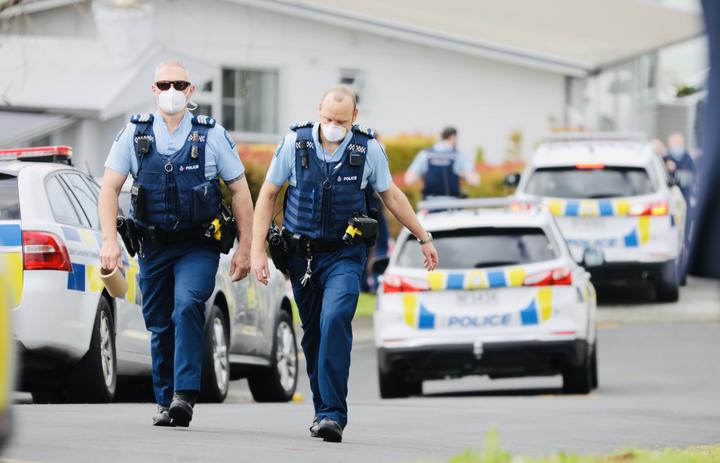
A person has been shot by police after a pursuit in Auckland.

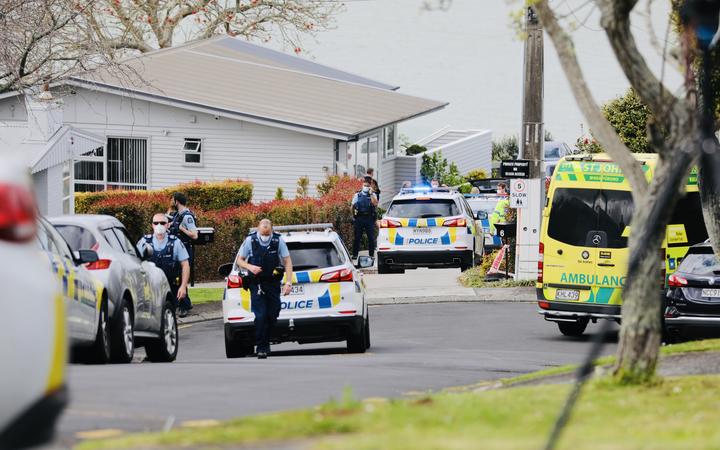
One person in possession of a firearm has been shot by police and is in a serious condition after a chase in  Auckland this morning that ended on Lilac Grove, Hillsborough.
Photo: RNZ / Marika Khabazi

Police said officers shot an armed offender and the person is in a serious condition in hospital.

Armed police and paramedics were deployed to the scene.

One person in possession of a firearm has been shot by police and is in a serious condition after a chase in Auckland this morning that ended on Lilac Grove, Hillsborough, Auckland.
Photo: RNZ / Marika Khabazi

In a statement, police said a driver in a suspicious vehicle failed to stop in Ōtāhuhu and then stopped in Lilac Grove, Hillsborough.

At that point, police said an armed person was shot and a second person – who was also in the vehicle – was arrested.

Earlier, a woman who works in the area said she could also hear a helicopter above the area.

An RNZ employee said the police Eagle helicopter and the Westpac helicopter were hovering over Hillsborough.

Hillsborough resident Jordan Harris said it was an intense situation with a lot of armed police on the street.

“I’ve never seen a helicopter so low around here before – he was over above the water and the noise was almost deafening while he was that low.

“They were talking about him trying to land or getting the Westpac choppers to land for an extraction so that was all pretty nailbiting.”

St John said two ambulances, a rapid response vehicle and a manager were at the scene, treating and transporting the injured person to hospital. Another person who was in the vehicle was treated at the scene for minor injuries.

Missing Marokopa family found safe and well

By RNZ.co.nz. Republished with permission.

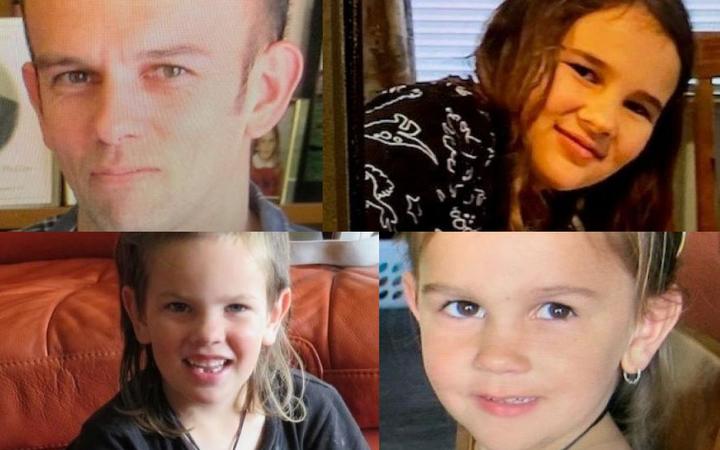
Police say Tom Phillips and his three children Jayda, Maverick and Ember have all been located safe and well this morning in Marokopa today.

Clockwise from top left, Thomas Phillips, Jayda Jin, Ember Phillips and  Maverick Callum-Phillips.
(clockwise from top left) Tom Phillips, Jayda Phillips, Ember Phillips and Maverick Callam-Phillips Photo: Supplied / NZ Police

Phillips, 34, and his three young children, Jayda Jin, 8, Maverick Callum-Phillips, 6, and Ember Phillips, 5, were last seen by family at Marokopa on 11 September.

The alarm was raised after Phillips’ vehicle was found on a beach the following day.

In a brief statement, police said they had been found and further information will be provided this afternoon.

Searchers combed the area for the King county family for almost two weeks before police suspended the search last week.

While there were concerns the family might have been all swept off the beach as the sea was particularly wild, the Phillipps family said that they hoped Tom had taken the children camping somewhere and that they were safe – but that they had no knowledge that he planned to do this.

– more to come

Covid-19: 45 new community cases today – all in Auckland

By RNZ.co.nz. Republished with permission.

There are 45 new community cases of Covid-19 today – all in Auckland.

Of the new cases, 33 are known to be household or contacts of existing cases, Director-General of Health Dr Ashley Bloomfield said. All have been isolating at home or in quarantine during their infectious period.

There are 12 cases that are unlinked; for six of those, there are potential links visible.

Dr Bloomfield said everyone in Auckland must stay within their bubbles and wear face masks.

Many of today’s cases were linked, and in some sense “they were expected”, he says.

In a statement, the Ministry of Health said that of the household contacts, 12 come from two households, with six in each.

Twelve of the 45 cases are unlinked, but the ministry said for six of those cases potential links are visible. Four of the cases were infectious while in the community.

There continue to be three active sub-clusters, down from four on Monday.

There are now 16 Covid-19 patients in Auckland hospitals with three of them in either ICU or a high dependency unit.

Bloomfield said the ministry was asking workers in construction, hospitality and retail, who were working in level 3, to get two tests at least five days apart over the next couple of weeks, whether they had symptoms or not.

“I would like to emphasise, this testing is voluntary,” Bloomfield said.

In addition to GPs and urgent care clinics, there are 21 testing centres open around Auckland.

As it is part of surveillance testing, Bloomfield said staff did not need to isolate while awaiting a test result.

It was announced yesterday that a positive wastewater test was returned from Tauranga, with the sample taken on 23 September.

The results of further wastewater samples which have been taken are not expected until tomorrow. People in the Bay of Plenty are urged to get a test if they have any symptoms of Covid-19.

Bloomfield says since then the Bay of Plenty DHB has seen about 400 people get a test.

He also encouraged everyone in New Zealand to get vaccinated.

On the Waitākere hospital case, Bloomfield said the individual “who attended the emergency department at Waitākere Hospital on 25 Saturday for a non-Covid related condition they became unwell the next day with Covid-related symptoms and were subsequently tested, with a positive result returned yesterday afternoon”.

“As part of the usual precautions as the person’s infectious period included Saturday a small number of staff have been stood down and the public health unit up there is following up directly with a small number of patients who were in the vicinity of this person when they were in ED.

“That person is now no longer requiring hospital level care and is going to a managed isolation facility.”

The ministry said there have now been a total of 1230 cases in the current Covid-19 outbreak.

During the last 24 hours, 15,437 Covid-19 tests taken and 8537 of them were in Auckland, the ministry said.

There were 44,649 doses of the vaccine administered nationwide yesterday and 48 percent of Aucklanders have now received two doses of the vaccine.

Yesterday eight new community cases of Covid-19 were reported in Auckland and six of them were in isolation during their infectious period.

Satuala family deny relative involved in assault; Utah lawyer says accuser admits fabrication

Claims and counter-claims continue to swirl around allegations surrounding a supposed court case in Salt Lake City involving an alleged assault on a Tongan woman.

Sita Lomu (L), Taufa’ahau Katalina Tau’atevalu

As Kaniva News reported recently, Taufa’ahau (Katalina) Tau’atevalu claimed Mele Finau Satuala,  Siulolovalo Fotu and Sapina Fahamokioa were jailed for attacking her.

She alleged Satuala and Fotu were sentenced to 17 years imprisonment while Fahamokioa was sentenced to eight years.

Despite the number of attackers, she claimed she only received an injury to one hand.

In the latest development the Satuala family has denied a family member was jailed in Salt Lake City after the alleged attack.

Sita Lomu from the Satuala family said they considered taking legal action against Tau’atevalu after it appeared her story was fabricated.

Lomu told Kaniva News when they heard the rumours last week they were really concerned. She said his brother in the United States  researched their family lineage and could not find anybody called Mele Finau Satuala.

Lomu’s brother Sione Satuala, who lives in the United States, took to Facebook this week and denied the allegations.

Last night the Tongan lawyer supposedly involved in the case, Filia Uipi, told  Setita Tu’i’onetoa of Tnews that Tau’atevalu came to his house on Saturday and apologised for making up the story.

Uipi said he pardoned Tau’atevalu and told her to go and do a live video like the one where she made her fabricated claims and apologise to the public about what she had done.

The lawyer said the sentences Tau’atevalu had claimed were imposed on the three alleged attackers were “far beyond” the one to five year sentence normally handed down for first degree felonies.

“To me her story was wrong,” Uipi said.

He said he had not physically been to any court in Salt Lake City for a year because of the Covid-19 restrictions.

There appears to be nothing in the Salt Lake City online court records to show Mele Finau Satuala as being the subject of an arrest warrant or appearing in court or being jailed in Salt Lake City.

UFC champ Israel Adesanya off to US

By RNZ.co.nz and is republished with permission.

New Zealand mixed martial arts world champion Israel Adesanya is planning a move to the US.

Israel Adesanya celebrates his successful title defence against Marvin Vettori.

Israel Adesanya celebrates his successful title defence against Marvin Vettori. Photo: Photosport

The UFC middleweight champion’s decision came amid the ongoing impact of the Covid-19 pandemic and New Zealand’s MIQ system on the careers of the country’s leading MMA athletes.

Adesanya announced the news in a statement posted to social media.

“Cat’s out the bag… I’m moving to America,” he said. “When faced with obstacles, we adapt and overcome.

“We built this legacy at City Kickboxing ourselves and the support of the people. No govt handouts or backing and became the number one winning gym on earth!

“Four walls and a roof don’t make a martial arts gym. The people who toil day in and day out make it what it is. So wherever those four walls and a roof is located, it’ll still be City Kickboxing!!”

The announcement came less than a week after a frustrated Adesanya said he would never fight in New Zealand again.

The 32-year-old was not only unhappy with the MIQ difficulties he and his team-mates had encountered relative to several major codes, but also decisions to shut down makeshift bubbles they had created to prepare for overseas events.

“You will never see me fight in New Zealand ever again,” he said.

“All that money, they can get it from somewhere else. Their rugbys, their crickets and all the others they’re giving exemptions to, but you will never ever see me fight on these shores [again].

“That was one of my dreams, to headline a stadium in my backyard. That dream’s dead in the water … that’s just the way I feel right now”

Adesanya was set to be joined in the US by other top New Zealand MMA fighters.

MMA fighter Dan Hooker

Photo: RNZ / Marika Khabazi

Prior to his win at UFC 266 in Las Vegas on Sunday, City Kickboxing team-mate Dan Hooker said it was inevitable he would make the move.

Hooker confirmed discussions at the Auckland gym, home to seven of New Zealand’s UFC athletes, had begun.

“A lot of people have been talking about it, thinking about it – I definitely have been thinking about it myself – making a move Stateside.

“Now we’re just planning the logistics of it. It’s going to be left up to our coaches and not a decision we’ll make, but it looks like me and the family will be moving Stateside with the team.

“This last one was just getting a bit crazy. The fights before that, the same thing: lockdowns during fight camp, staying after for two months, then this one just took the cake.”

How do Covid vaccines change your risk of infection? And are you less likely to pass it on?

By RNZ.co.nz and is republished with permission.

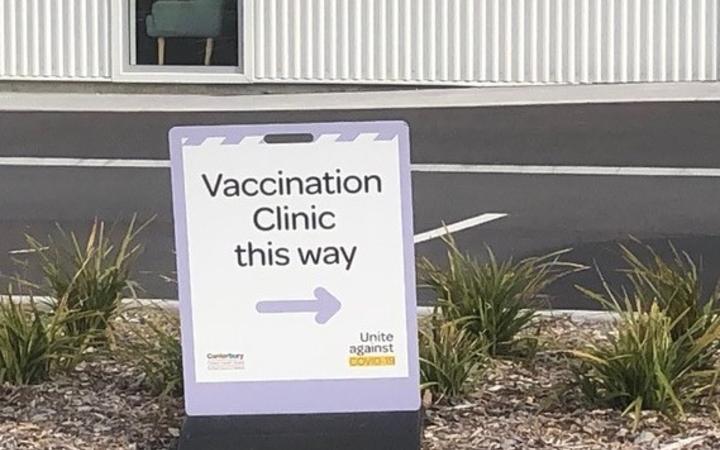
Explainer: Reports of vaccinated people getting infected with Covid-19 might have you wondering how well the vaccines protect you against coronavirus, and how long that protection lasts.
No caption

Photo: RNZ

Health authorities in the UK have begun offering a third dose of the Covid-19 jab to people over the age of 50, and those at an increased risk of being infected or getting seriously ill, in a bid to improve their protection.

Similarly, in the US, an FDA advisory panel has recommended booster vaccines be given to all Americans over the age of 65 and those at high risk of severe disease.

So, how well are the Covid-19 vaccines working at preventing people from getting sick?

And if you do get infected after being vaccinated, how likely are you to pass the virus onto someone else?

Vaccines highly effective at preventing death

Research shows Covid-19 vaccines remain highly effective at preventing severe disease and death six months after vaccination, including against the highly transmissible Delta variant.

“Consistently, all of the vaccines seem to be doing that with more than 90 per cent effectiveness, including with time,” said Peter Collignon, an infectious diseases physician and microbiologist at the Australian National University.

“[They’re] even better at reducing your risk of dying – probably a 95 to 98 per cent decreased risk.”

A recent study of more than 44,000 people in Los Angeles found unvaccinated people were 29 times more likely than vaccinated people to end up hospitalised from Covid-19.

The rate of hospitalisation among vaccinated people was 1 per 100,000 people.
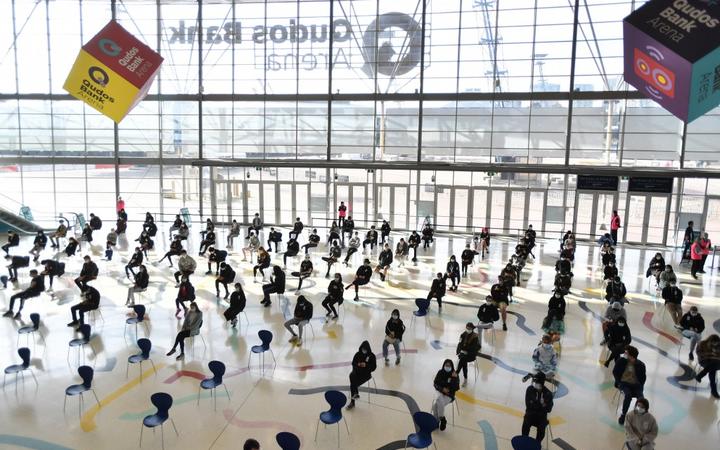
Students wait for their turn to receive their first dose of the Pfizer Covid-19 vaccine in Sydney on August 9, 2021, as Year 12 students in their final year of secondary school are inoculated ahead of their Higher School Certificate (HSC) examinations.

Photo: AFP

In Australia, we’re seeing a similar pattern: the vast majority of hospitalisations and deaths from Covid-19 are occurring in unvaccinated people.

“This is currently an epidemic of the unvaccinated,” Professor Collignon said.

“They’re the main people getting infected, and spreading it. That’s why vaccination is so important.”

What about breakthrough infections?

While vaccination is our strongest weapon against Covid-19, no vaccine is 100 per cent effective, and some fully vaccinated people will become infected.

These are known as breakthrough infections.

Estimates vary, but UK data suggests 0.2 per cent of the population – or one person in every 500 – experiences a breakthrough infection once being fully vaccinated.

Fortunately, most people who get Covid-19 after being vaccinated won’t become very sick, and even fewer will require hospitalisation, said epidemiologist and biostatistician Adrian Esterman from the University of South Australia.
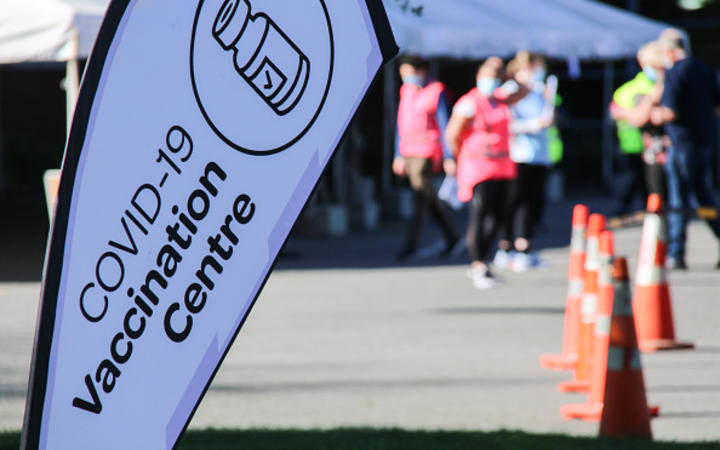
CHRISTCHURCH, NEW ZEALAND - 2021/08/25: Officials are seen at a vaccination centre in Christchurch.

Photo: Getty Images

“The vast majority of people will only have very mild symptoms, if any at all,” he said.

The people most at risk of serious illness from a breakthrough infection are adults over 65 and people with compromised immune systems.

That’s because they tend to generate a weaker immune response to vaccines, and is why they’re being prioritised for booster vaccines overseas.

Data from the Centers for Disease Control and Prevention (CDC) shows that between April and June this year, fully vaccinated people accounted for 7 per cent of all Covid-19 hospitalisations in the US.

As the Delta variant surged in June and July, this figure jumped to 14 per cent – but experts say this increase is to be expected.

As vaccination rates grow, the proportion of fully vaccinated people who get infected – and the very small proportion who get seriously ill – will also increase, especially with the surging spread of Delta.

In Israel, rates of hospitalisations and ICU admissions have increased among vaccinated people (predominantly among the elderly), but their risk of being hospitalised is still reduced 40-fold compared to those who are unvaccinated.
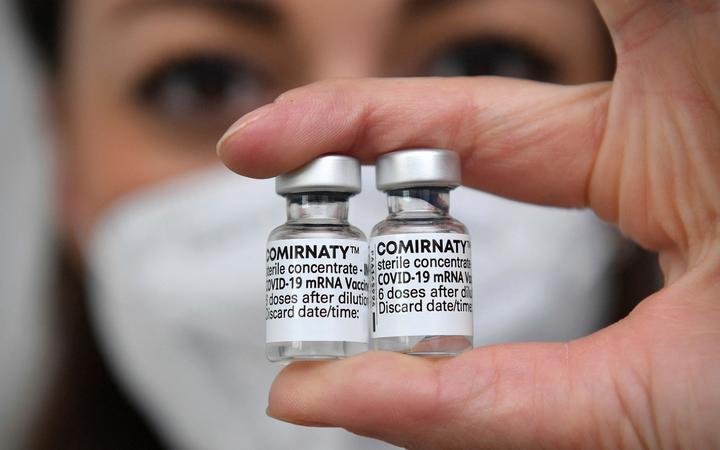
Topic picture - vaccination with the Comirnaty mRNA vaccine from BionTech Pfizer. Vaccine doses with vaccine for injection with a cannula. Close up.

Photo: AFP

How likely am I to get infected?

According to the UK’s Office for National Statistics, the AstraZeneca vaccine is 67 per cent effective against infection with Delta, while the Pfizer jab is 80 per cent effective.

Other preliminary research suggests there isn’t much difference between the two, and that they both reduce the risk of infection by 80 per cent.

Estimates for vaccine effectiveness against infection vary considerably from country to country, and depend on the type of vaccine, the prevailing Covid-19 variant, and the time elapsed since the second vaccine.

Estimates vary from around 55 to 80 per cent, with most hovering around the 60-70 per cent mark.

While experts agree that vaccine-induced immunity against infection is likely to wane over time, breakthrough infections may also be the result of looser Covid-19 restrictions and increased socialising.

We also know early vaccine recipients tended to be older, have underlying health conditions, or work in high-risk professions – putting them at higher risk of getting infected.

What’s clear is that vaccinated people still have a considerably lower chance of getting infected than unvaccinated people, which in turn, cuts their risk of passing the virus on.
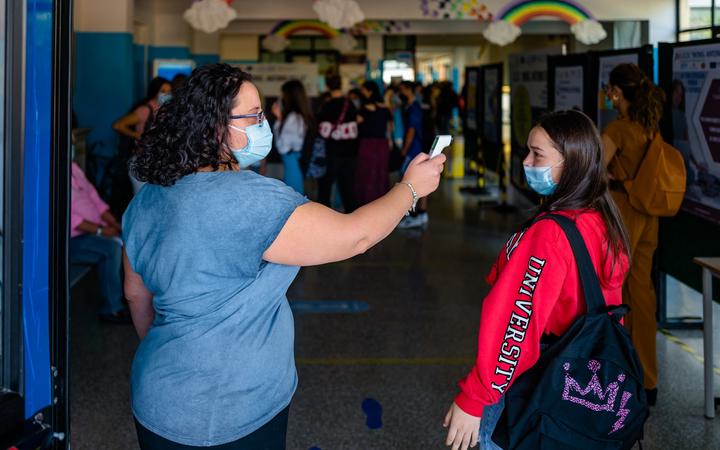
A scholastic collaborator of the Higher Institute Mons. Antonio Bello in Molfetta measures the temperature of students on the first day of school in Molfetta, Italy on 14 September 2021.

Photo: AFP

Vaccinated people less likely to spread virus

Real-world evidence shows vaccinated people are able to transmit Covid-19 to others, but it’s thought their risk of doing so is substantially reduced.

“For starters, [vaccinated people] have decreased their risk of giving Covid-19 to others because they’ve reduced their risk of getting infected in the first place,” Professor Collignon said.

“Secondly, [if they do get infected], they tend to have milder disease and have it for a shorter period of time, which also decreases their risk.”

In July, a study published by the CDC found vaccinated people infected with the Delta variant carried roughly the same viral load in their noses and throats as unvaccinated people, sparking concern they could spread the virus just as easily.

But subsequent research has found this genetic material declined faster in vaccinated people, meaning they likely spread the virus for less time, Professor Esterman said.

“There’s also more recent data now that shows if you’re fully vaccinated, you’re likely to have a lower viral load,” he said.

According to the CDC, it’s still not clear whether fully vaccinated people with asymptomatic infections can transmit the virus.

What is clear, however, is that unvaccinated people are still the major drivers of transmission.

In the US, infection rates in the least vaccinated states are roughly four times as high as in the most vaccinated states.

Professor Esterman said the benefits of vaccination went well beyond the individual.

“If you’re fully vaccinated, you’re less likely to pass Covid-19 onto others, including your own family and the general population.”

– ABC

Two Tongan brothers shot, killed in Oakland, US

Police are investigating after two Tongan men were fatally shot early Sunday morning near Oakland’s Laurel District.

‘Atiai and Suiti Mēsui. Photo/Facebook

Officers responded to reports of a shooting at 1:55 a.m. to the 3700 block of High Street, according to a release from Oakland police, Oakland media reported.

The brothers’ family have shared the sad news to Facebook this morning.

They have been identified as ‘Atiai and Suiti Mēsui.

The two men, ages 21 and 26, were found with gunshot wounds and officers provided aid to the victims until emergency crews arrived.

Both men died at the scene, police said.