Saturday, April 4, 2026
Home Blog Page 347

No repeat of Akosita Lavulavu scandal as amendment means serious convictions will lead to immediate exit from Parliament

After months of using Clause 23 of the Constitution to justify doing nothing against jailed Cabinet Minister Akosita Lavulavu, Prime Minister Tu’i’onetoa has voted to change the clause.
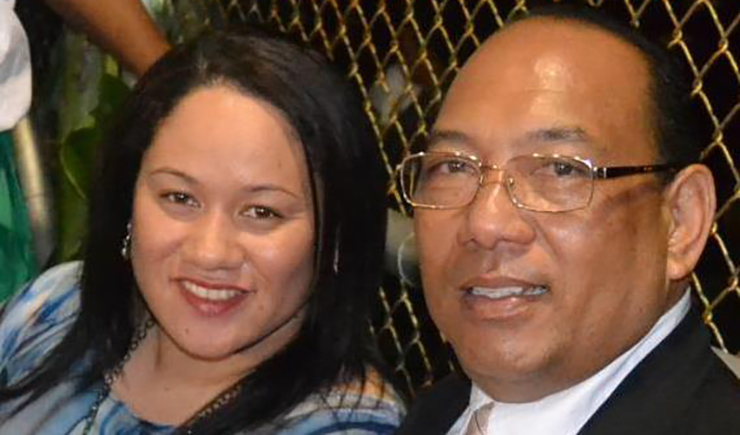
Former Cabinet Ministers and MPs Akosita Lavulavu and husband ‘Etuate Lavulavu

The amendment means that scenes of the Prime Minister refusing to action against a Cabinet Minister convicted of a serious crime cannot be repeated.

The Speaker, Lord Fakafanua, submitted the bill to change Clause 23 to the House.

The amendment  was to stop allowing any convicted civil servants, government representatives and MPs from retaining their office after being convicted by the court for more than three years or sending them to prison as the 2013 amendment allowed.

Lavulavu and her husband ‘Etuate were jailed for six years on three counts of obtaining money by false pretences.

The Supreme Court was told the Lavulavus had committed a carefully executed fraud over several years.
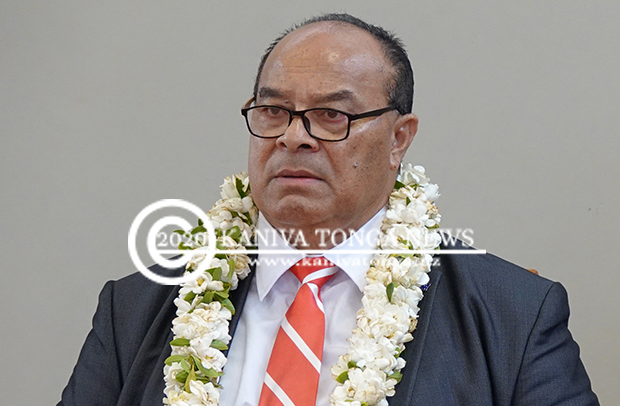
PM Pōhiva Tu’i’onetoa. Photo/Kalino Lātū (Kaniva News)

Judge Cooper, presiding, said the Lavulavu’s conduct “would be disgraceful in anyone, but for a member of cabinet, and a man who used his political connections and position to facilitate these frauds, goes beyond just criminally reprehensible.”

Akosita Lavulavu stayed in Cabinet on full pay during her trial. A scandal rapidly developed as the Prime Minister repeatedly defended her and said he would not take action against her until she was found guilty by the court.

Akosita and her husband ‘Etuate Lavulavu were found guilty by the Supreme Court on June 4 and sentenced on July 2. After her conviction Hon. Tu’i’onetoa announced that Clause 23 barred him from removing her from Cabinet until her appeal was heard.

She eventually resigned.

Veteran Tongan journalist Kalafi Moala told the AUT journalism student publication Te Waha Nui the Prime Minister has used Clause 23 “as an excuse for his non-action on his criminal Minister, Akosita Lavulavu.”

He asked why the Prime Minister had suddenly accepted her resignation before her appeal.

In his speech to support the bill, Lord Fakafanua said he did not want an MP to retain their seat in Parliament after they had been convicted by the court.

Lord Fakafanua said convicts should not remain in the House until their appeal was heard. He said this would tarnish the reputation of the king, the Prime Minister and Parliament.

He said that in some circumstances, a person who had their conviction quashed or set aside by the court could apply for compensation for the time they spent in prison as a result of that wrongful conviction

The only addition made to the amendment was to raise the period of more than two-year’s imprisonment to more than three-year’s imprisonment.

Lord Fakafanua said the more than three-year imprisonment term meant serious crimes that could only be dealt with by the Supreme Court and a jury. Criminals convicted and sentenced to two years or less for light offences like traffic offending should be exempted from Clause 23.

The government, including Prime Minister Tu’i’onetoa, supported the Bill and he voted for it when it was put to the ballot at the end of the month.

FAKAMATALA FAKATONGA

He’ikai toe hoko e kupu 23 ‘o e konisitūtone’ ke ne fakangofua ke kei minisitā, mēmipa Fale Alea pe fakafofonga pule’anga ha taha kuo fakahalaia’i ‘e he Fakamaau’anga Lahi ke ngāue pōpula ta’u ‘e tolu pe laka hake kae tokua ke nofo ‘o tali ki ha’ane tangi ‘i hono tautea’. Kuo paasi ‘e he Fale’ ha lao ke fakalelei’i ‘a e kupu 23 pea ke ne fakamahino  ko e mōmeniti e halaia ‘a ha taha he lao’ ni ko ‘ene ‘i tu’a ia mei hono lakanga fakapule’anga’ tatau ai pe ‘oku toe hoko atu ia ‘o tangi’. Na’e fakamahino ‘i Fale Alea ‘e he Sea Looti Fakafanua ‘a ia ko ia ne ne fakahū ‘a e lao fakatonutonu’ ni ko e laumālie ‘o e kupu ko eni ke tuku leva ki tu’a ha taha kuo halaia. Pea ka toki tangi ia ‘o tali pea  ‘oku faka’atā ‘e he lao ke ne ‘eke ‘e ia ‘ene totonu mo ha huhu’i mei he pule’anga’ pea ‘oku fea pe ia pea ko e me’a totonu pe ia ke fai.  Ka ‘oku mahu’inga ke malu’i e ngeia ‘o e Fale’ mo e Tu’i mo e pule’anga’ ke ‘oua na’a nau faifai ange kuo nau  malu’i mo kei fakalaloa’i ha taha kuo fakahalaia’i. Ko e hili foki ‘eni hano fakaanga’i lahi ‘o e palēmia Pōhiva Tu’i’onetoa he’ene ngāue’aki ‘a e kupu’ ni, ke fakatonuhia’i ‘aki ‘ene malu’i ‘a Akosita Lavulavu hili hono fakahalaia’i ‘e he Fakamaau Lahi’ ki hono kākaa’i e pa’anga ‘ova he vaeua miliona ‘a e pule’anga’. Ka ne iku ‘o holomui ‘a e palēmia’ mei he’ene taukave ko ia’ ‘o ne fakahā kuo fakafisi ‘a Akosita pea ‘asi kuo ‘ikai ke ne kei muimui ki he kupu 23 ki mu’a hono liliu ko ‘eni’.

 

NZ and Tonga police investigate drugs allegedly found in shipping container : PM Tu‘i‘onetoa

Tonga and New Zealand polices are investigation after what appeared to be illicit drugs discovered in a shipping container from Tonga in Auckland.

Prime Minister Pōhiva Tu’i’onetoa has confirmed the investigation this afternoon during a government sponsored livestream show released by FM 87.5 Broadcomm.

The Prime Minister was responding after he was asked to clarify the allegations regarding the drugs.

“It has been alleged the drugs were imported from Tonga but let’s leave that to police to work together with New Zealand Police to confirm it,” Tu’i’onetoa said in Tongan.

Reports on social media since last week claimed the New Zealand Customs and Police siezed the alleged drugs after the container arrived at the Ports of Auckland recently.

Kaniva News contacted New Zealand Customs Department.

The drugs allegations came after an estimated 14kgs of cocaine washed up on beaches in Vava’u.

Tongan police seized the haul and an ongoing investigation has seen 21 people charged so far including three foreigners.

The recent arrests included a 49-year-old man and his 23-year-old wife from Ta’anea, Vava’u on August 23.

The couple are in police custody charged with engaging with others in the supply of illicit drugs.

Ignorance key to Fiji Covid-19 crisis – NGO

By RNZ.co.nz. Republished with permission

The ignorance and blatant refusal to acknowledge science and facts on Covid-19 is the reason for the spike in cases in Fiji, the founder and director of a civil society organisation in the country said.

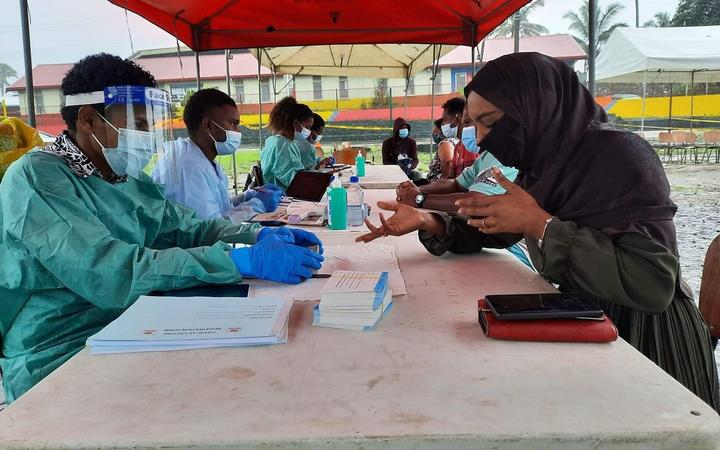
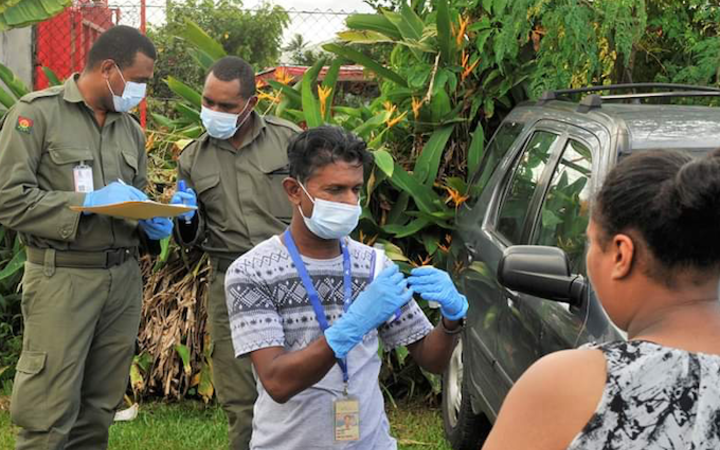
Health checks are ongoing in Fiji in an effort to combat Covid-19.
Health checks are ongoing in Fiji in an effort to combat Covid-19. Photo: Facebook / Fiji government

Sulique Waqa, of the Haus of Khameleon, believes the reluctance of Fijians to ‘admit mistakes or accept the scientific findings’ that have proven to save lives ‘need to be addressed holistically by the populace’.

Waqa said majority of the Fijian people were ‘deeply unwilling to change their minds’ about the pandemic including vaccination.

“It’s playing out during the pandemic among the many people in Fiji who refuse to be vaccinated, wear masks or practise social distancing.

“And when the facts clash with their pre-existing convictions they are jeopardising not only their health and well-being, but the lives of others as well.

“We should accept new information or admit to being wrong regarding the misconceptions surrounding the Covid-19 vaccine.”

Waqa said it has been endorsed by the World Health Organization that the vaccines can save lives against the coronavirus outbreak.

“We are experiencing a national health emergency that is severely straining our health system, putting our front-line health workers at risk and crippling the economy.

“No doubt, there will be more deaths within the coming weeks and months unless Fijians get vaccinated with both doses.

“They should refrain from opting for herbal remedies like vevedu or choosing religious interventions.”

Waqa said the Covid-19 vaccine was not ‘bullet-proof’ against a killer virus.

But the vaccine offered 92 percent protection against getting seriously ill, hospitalisation or death by Covid-19, Waqa said.

Sulique Waqa.
Sulique Waqa. Photo: Supplied/Haus of Khameleon

128 new cases, 12 more deaths reported

The Government confirmed 128 new cases of Covid-19 Monday night – six of them from the outer islands.

Twelve more people have died, bringing the death toll to 520.

Health Secretary James Fong said a 28-year-old woman was the youngest among the latest fatalities.

She presented to the Lautoka Hospital in severe respiratory distress on 27 August. She died eight days later.

The oldest victim was a 93-year-old man who died at home.

Dr Fong said there were 19 other deaths of Covid-positive patients.

“However, these deaths have been classified as non-Covid deaths by their doctors. The doctors have determined that these deaths were caused by a serious pre-existing medical condition and not Covid-19.

“Please note that due to the time required by clinical teams to investigate, classify and report deaths, a 4-day interval is given to calculate the 7-day rolling average of deaths, based on the date of death, to help ensure the data collected is complete before the average is reported.

“As of 1 September, the national 7-day rolling average of Covid-19 deaths per day is 4. The 7-day rolling average of deaths per day in the Central Division is 1 and in the Western Division is 3.”

Dr Fong said a total of 338 positive patients had died from the serious medical conditions that they had before they contracted Covid-19, these are not classified as Covid deaths.

There are 195 patients in hospital – 82 are admitted at the Lautoka Hospital, 14 at the FEMAT field hospital, and 99 are at the Colonial War Memorial, St Giles and Makoi hospitals.

Dr Fong said 24 patients are in severe condition, with six critical.

Fiji has 14,404 active cases in isolation with 1687 patients recovered.

,,
,, Photo: Red Cross

‘Delta 2’: What’s changed with alert level 2

By RNZ.co.nz and is republished with permission.

The government has announced New Zealand will move to alert level 2 from 11.59pm tomorrow, excluding the Auckland region.

Contact tracing app COVID-19 pandemic coronavirus. People wearing masks using phones.

Photo: 123rf / Elizaveta Galitckaia

At alert level 2, there are no restrictions on who can be included in your household bubble, businesses can open and you can go to work while kids can go off to school.

With the change in alert level to ‘Delta 2’ as the prime minister called it, schools will be given 48 hours to reopen from Thursday morning.

Essential workers crossing the alert-level border will be required to have weekly tests.

People who transit between Auckland will need to come through without stopping if they’re moving from south of Auckland to Northland.

But it won’t be the ‘normal’ alert level-2, as some of those settings have been changed in light of how much more transmissible the Delta variant is.

Here are the major changes to the rules.

Face coverings mandatory

Face coverings are now mandatory at level 2 in most public venues.

You can take your mask off in venues like restaurants and cafes.

Staff at public facing businesses in level 2 must wear face coverings.

In general, the government is asking you wear a mask if you visit any indoor venues.

Masks are not being mandated in schools, but it is being recommended.

Record keeping

The government expects the public to scan in using the Covid-19 tracer app everywhere they go.

It is mandatory at bars, restaurants, cinemas, churches, and close-contact venues like hairdressers. Customers must scan or have record keeping.

Mandatory record keeping comes into effect from 11:59 pm, 7 September.

Gatherings

Indoor hospitality venues now have a limit of 50 people, while outdoor venues will have a limit of 100 people.

This limit includes things like weddings, civil union ceremonies, birthdays, funerals and tangihanga.

Event and entertainment facilities including cinemas, stadiums and concert venues can open but again, if it’s an indoor venue the capacity limit will be 50, and 100 if it’s an outdoor venue.

If there are seperate ‘defined spaces’ at an event facility, you can have more than 50 people total in the venue, but there should not be any direct airflow between the defined spaces which have up to 50 people.

Indoor public facilities like gyms, which under the old level 2 did not previously have limits on people inside and required one-metre distancing, will now be required to enforce 2m distancing.

You can go to a bar or club, but there can’t be a dancefloor, the limit of 50 people still applies and there can be seated service only.

Cocaine, geography and Covid-19, drug trafficking in the Pacific

By RNZ.co.nz and is republished with permission.

The Pacific Islands Chiefs of Police network says one of the biggest challenges countries in the region face with drugs washing up on their shores is geography and that Covid-19 could be making recruitment easier for drug traffickers.

No caption

Photo: RNZ Pacific / Koro Vaka’uta

In July, an estimated 14kgs of cocaine washed up on beaches in Vava’u.

Tongan police seized the haul and an ongoing investigation has seen 21 people charged so far including three foreigners.

At the end of August, Acting Deputy Commissioner of Tonga Police Halatoa Taufa told Matangi Tonga the recent arrests included a 49-year-old man and his 23-year-old wife from Ta’anea, Vava’u on August 23.

The couple are in police custody charged with engaging with others in the supply of illicit drugs.

Previously, 19 people had been arrested and charged in relation to the cocaine seizure, which is estimated to have a street value of over $US2.2 million.

Of the 21 arrested so far, three were in Tongatapu and the rest in Vava’u.

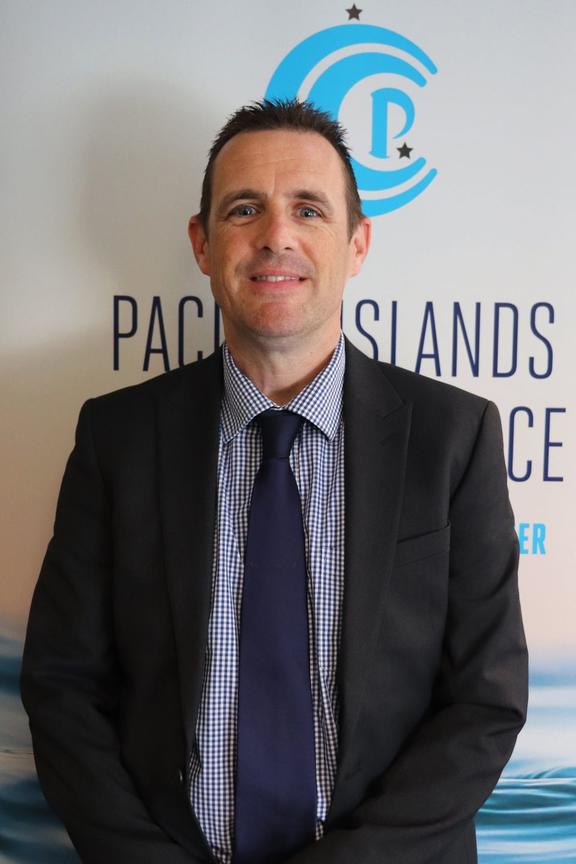
Glyn Rowland Executive Director of the Pacific Islands Chiefs of Police Secretariat

Glyn Rowland Executive Director of the Pacific Islands Chiefs of Police Secretariat Photo: Supplied / PICP

But Tonga is far from the first Pacific country to have to deal with drugs turning up on their shores.

In 2019 authorities in French Polynesia stumbled on a massive haul of cocaine aboard a yacht, which had only come into dock because it had developed engine problems.

Cocaine has also been seized by authorities in Fiji in 2018 and also in 2018 a multi-national sting operation saw the seizure of cocaine aboard a yacht originating in South America.

The unique geography of the Pacific region creates a significant challenge for drug enforcement, according to the Pacific Islands Chiefs of Police network.

Its executive director Glyn Rowland said the sheer size of the Pacific Ocean makes it difficult to detect the movement of illegal drugs, which can be easily concealed and transported in small vessels.

Mr Rowland said the Pacific is a transit route from South America to the lucrative drug markets of Australia, and to a lesser extent New Zealand.

He believes the cocaine that washed ashore in Vava’u could have come from this supply chain.

Mr Rowland also said the Covid-19 pandemic has had an impact on drug routes in the Pacific.

“Certainly, for our young people, unemployment and poverty is a challenge right now because of the pandemic and that makes them quite vulnerable to recruitment into organised crime gangs and facilitating drug movements,” Mr Rowland said.

He said the Chiefs of Police are mindful of what is going on in the region and there needs to be a concentrated effort to address the issues.

He said this has led to the establishment of the Pacific Transnational Crime Network.

“The network is made up of 20 countries that are working together, sharing information about drug trafficking, money laundering and organised crime gangs,” said Rowland.

“We are also working together with our partners like the immigration and customs to address some of these issues.”

Glyn Rowland said drugs destroy the real fabric of family life.

“The social harm that drugs can cause is pretty immense at every level of society.

“It then leads to the membership of organised crime gangs, that can lead to the gang lifestyle and then that can lead into the mistreatment of women and children.

“We also know that drugs can impact domestic policing, so dishonesty offending such as burglary and acts of violence, so it really does damage one’s way of life,” Rowland said.

Covid-19 update on 6 September: 20 new community cases in New Zealand today

By RNZ.co.nz. Republished with permission

There are 20 new community cases of Covid-19 in New Zealand today.

In a statement, the Ministry of Health also said there were three new cases in managed isolation and one historical case.

Of the 20 new cases announced, only five were infectious while in the community, the remaining 15 were all in isolation throughout the period they were infected, it said.

All the new cases are in Auckland.

There are 40 people with Covid-19 being treated in hospital today, eight at North Shore, 18 at Middlemore and 14 at Auckland.

Six of these people are either in intensive care or in a high dependency unit.

A full update on today’s cases:

No caption
Photo: Ministry of Health

There have been a total of 38,058 contacts identified so far. Of these, 86 percent have received an outbound call from contact tracers and 91 percent have at least one test result.

The number of Covid-19 tests done yesterday fell to a new low of 4750, just under half of these done in Auckland.

There are no unexpected wastewater detections in the past 24 hours.

The government will announce later today if Covid-19 alert level restrictions will be loosened for regions outside of Auckland.

Cases linked to the current outbreak have so far been detected only in Auckland and Wellington.

And Auckland has been told to get testing to get out of level 4.

Covid-19 swabbing numbers have been falling so fast in the city, some centres closed early at the weekend.

Aotearoa has its warmest winter on record, with warm spring forecast

By RNZ.co.nz and is republished with permission. 

The country has just had its warmest winter on record – beating the record set just last year.

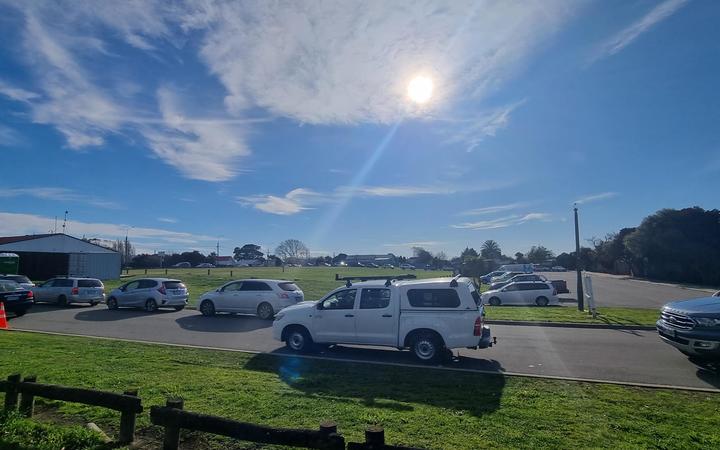
The queue for the Pages Road Covid-19 testing centre in Christchurch.

People queueing at a Covid-19 testing centre last month on a sunny Christchurch day. Photo: RNZ / Kim Moodie

Official climate data from Niwa shows June to August was 1.32C above average.

Meteorologist Nava Fedaeff said in a statement that the last time a consecutive year beat its previous winter temperature record was in 1971.

She said there were 76 locations across the country that experienced a record or near-record warm winter.

Fedaeff said record-breaking temperatures 50 years ago are now considered near average, as seven of the 10 warmest winters have been since 2000.

Fedaeff delved into historic weather records and found that the last time New Zealand experienced a similar sequence of events was 50 years ago. The winter of 1970 was at the time New Zealand’s warmest winter on record only to be beaten by the winter of 1971.

“What was considered to be unusually warm at the time is no longer considered unusual. The winter of 1971 now stands in 13th place of the temperature rankings while the winter of 1970 is 18th.”

Fedaeff said what may have been considered record-breaking in 1970 is now considered near average.

“For instance, the once record-breaking winter 1971 is 0.75C cooler than the winter we have just experienced.”

The years 1970 and 1971, as well as the winters of 2020 and 2021 were influenced by La Niña featuring warm coastal waters, frequent high pressure and more northerly and north-easterly winds than normal.

“These similar winters, decades apart, show us that there are key natural ingredients to getting a warm winter but adding climate change to the mix is like taking the same recipe and swapping plain flour for self-raising,” Fedaeff said.

Warmer spring than usual forecast

A warmer than usual spring is being forecast by Niwa.

Niwa predicts that unseasonably warm conditions at times this spring, particularly in the east of both islands.

It said despite this, cold spells and frosts may still occur occasionally, especially early in the season.

Niwa says spring rainfall is most likely to be below normal in the east of the North Island, near normal in the west of the South Island, and about equally likely to be near normal or below normal in all remaining regions across Aotearoa New Zealand.

Auckland supermarket terrorist: Government unsuccessfully tried to strip his refugee status

By RNZ.co.nz and is republished with permission. 

The government spent more than four years trying to deport the man responsible for the west Auckland supermarket terrorist attack.

03092021 PHOTO: ROBERT KITCHIN/STUFF
L-R: 
Prime Minister Jacinda Ardern and Police Commissioner Andrew Coster hold a press conference with the details of the Auckland supermarket terror attack in the Beehive Theatrette on Friday evening.

Jacinda Ardern made inquiries about Samsudeen’s refugee status and deportation options in May 2018. Photo: POOL / Stuff / Robert Kitchin

But repeated attempts to have him stripped of his refugee status were ultimately unsuccessful, hamstrung by what Prime Minister Jacinda Ardern has called a “frustrating process”.

Last night, suppression orders that prevented the publication of details about the terrorist’s identity, background and immigration status lapsed.

He can now be named as 32-year-old Sri Lankan national Ahamed Aathill Mohamed Samsudeen.

It can also be revealed immigration authorities were trying to have his refugee status revoked, because it was believed it was fraudulently obtained.

But Samsudeen himself had claimed in the courts that he could be arrested, detained, mistreated or tortured if he was ever sent back to Sri Lanka.

The terrorist’s refugee status

Samsudeen was a Tamil Muslim. He left Sri Lanka, arriving in New Zealand on a student visa in 2011.

He sought refugee status, saying he and his father experienced serious problems with the Sri Lankan authorities due to their political background.

His initial application was declined in 2012, because Immigration New Zealand found his claim lacked credibility.

An appeal was lodged, and Samsudeen was recognised as a refugee by the Immigration and Protection Tribunal in December 2013.

But in May 2018 he was notified that authorities wanted to revoke his refugee status, which would mean he would be deported.

Samsudeen appealed again.

He was already on the radar of the police and the Security Intelligence Service – he had received a formal warning in 2016 for posting violent, extremist, pro-Islamic State content online.

Ardern said it was over the course of those investigations that Immigration New Zealand was made aware of information that led them to believe Samsudeen’s refugee status was fraudulently obtained.

At the time he was notified about the intention to revoke his refugee status, Samsudeen was before the courts.

He was arrested in 2017 at Auckland Airport, when it was suspected he was on his way to Syria.

When police searched his apartment, they found a large hunting knife under the mattress on the floor and secure digital cards containing fundamentalist material, including propaganda videos and photos of the man posing with a firearm.

Samsudeen ended up pleading guilty to distributing restricted publications and was sentenced on that offending in September 2018 to supervision.

In July 2018, he had been granted name suppression by Justice Wylie.

In his decision on that, Justice Wylie said Samsudeen said he “has been attacked, kidnapped and tortured, that he went into hiding in response to those incidents, and that he came to New Zealand in 2011 to seek refugee status”.

Samsudeen told the court: “I’m very afraid of returning to Sri Lanka because I’m afraid of the authorities there and the same risks and fears [that] I had when I left my country are still there in Sri Lanka.

“Also young Tamil men face many serious problems in Sri Lanka from the authorities. We face arrest, detention, mistreatment and torture as we’re always under suspicions by the authorities because of the [Liberation Tigers of Tamil Eelam].”

Justice Wylie said that there was a “real and appreciable possibility” that in the event Samsudeen did have his refugee status revoked and was deported, his safety could be in danger.

The involvement of the highest levels of government

Prime Minister Jacinda Ardern made inquiries about Samsudeen’s refugee status and deportation options in May 2018. Yesterday she gave a media briefing which provided some more details on the man’s situation.

In February 2019, Immigration New Zealand cancelled his refugee status and he was served with deportation liability notices.

But in April 2019, he appealed the decision to the Immigration Protection Tribunal.

At the time, he was remanded in custody, awaiting a High Court trial on a second set charges relating to offending committed while he was on bail for the first set of charges in August 2018.

He had been arrested after buying another hunting knife and a second search of his room found a large amount of violent Isis material.

Samsudeen’s appeal against his deportation could not proceed until the conclusion of those court proceedings.

In May this year, a jury found him guilty of two charges of possessing Isis propaganda that promoted terrorism and one charge of failing to comply with a search.

He was acquitted of a third charge of possessing objectionable material and a charge of possessing a knife in a public place.

After spending three years remanded in custody, Samsudeen was sentenced in July to 12 months’ supervision.

In the meantime, Ardern said agencies were concerned about the risk Samsudeen posed to the community.

“They also knew he may be released from prison, and that his appeal through the Tribunal, which was stopping his deportation, may take some time.”

Immigration New Zealand looked at whether the law would allow them to detain Samsudeen while his deportation appeal was heard.

“It was incredibly disappointing and frustrating when legal advice came back to say this wasn’t an option,” Ardern said.

Extensive police surveillance and monitoring of Samsudeen began as soon as he was released from prison.

On 26 August, Samsudeen’s hearing in the Immigration and Protection Tribunal was rescheduled.

At the time of the terrorist attack, the question of whether or not he could be deported was unresolved.

“This has been a frustrating process,” Ardern said.

“Since 2018, ministers have been seeking advice on our ability to deport this individual.”

Ardern said in July this year she met with officials in person and expressed her concern that the law could allow someone to remain here, who obtained their immigration status fraudulently and posed a threat to national security.

“I asked for work to be undertaken to look at whether we should amend our law, in the context of our international obligations,” she said.

All Blacks banish Perth demons

By RNZ.co.nz. Republished with permission

The All Blacks have completed a three-nil sweep of the Wallabies in this year’s Bledisloe Cup series, despite being reduced to 14 men in the third test in Perth.

They have beaten Australia 38-21 after leading 18-0 at halftime to move atop the Rugby Championship standings after two of six rounds.

The All Blacks completed the sweep without new captain Ardie Savea, who along with hooker Codie Taylor was unable to play any part in the second-half after they failed head injury assessments at halftime.

The Wallabies won 47-26 the last time the two sides met in Perth, where lock Scott Barrett was red carded.

This time around fullback Jordie Barrett was sent off after being deemed to have kicked Wallabies winger Marika Koroibete in the face when he was catching a high ball.

He was given his marching orders in the 28th minute, 10 minutes after he had scored New Zealand’s first try, after a clever grubber kick from older brother Beauden Barrett.

The All Blacks led 13-0 at the time, with Beauden Barrett having kicked a couple of penalties and a conversion.

The Wallabies weren’t able to capitalise on their numerical superiority and they ended up trailing by 18 points at the break when David Havili scored from a well worked lineout drive on the stroke of halftime.

The All Blacks kept Australia scoreless until the 50th minute, when Wallabies hooker Folau Fainga’a crashed over, moments after New Zealand were back to 15 men.

Damian McKenzie replaced Jordie Barrett under a new law being adopted in the Rugby Championship.

Lolesio converted the try to give the Wallabies hope at 18-7.

That hope quickly evaporated when the All Blacks scored two tries in six minutes to take a 28-7 lead.

Will Jordan scored the first in the right corner after some individual brilliance from Akira Ioane, who beat three players on halfway and then drew in the fullback to send Jordan over.

Havili then intercepted a wayward Australian pass to run 70 odd metres to score his second to the left of the uprights.

Replacement halfback Nic White grabbed a try back for Australia in the 66th minute before Anton Lienert-Brown and George Bridge scored two great team tries for the All Blacks to stretch the lead to 38-14.

Fullback Tom Banks scored a late consolation try for the Wallabies to cut the deficit to 17 points, that would have been far greater if it wasn’t for some wayward goal kicking from Beauden Barrett and Damian McKenzie.

The All Blacks and Wallabies will now fly across Australia to Queensland, where the remainder of the Rugby Championship will be played.

Gold Coast will host a double-header next Sunday, with the All Blacks to play Argentina before the Wallabies square off against the world champion Springboks.

Minister says Tongans must learn to keep their community safe as he opens Language Week

Minister for Pacific People Aupito William Sio said this afternoon the Tongan community had to concentrate not just on formal education, but on learning to keep their community safe.

Hon Aupito William Sio MP for Māngere Minister for Pacific Peoples, and Courts Associate Minister of Foreign Affairs, Education (Pacific Peoples), Justice, and Health (Pacific Peoples)

The theme of this week’s Tongan Language Week is Fakakoloa ‘o Aotearoa ‘aki ‘a e Ako Lelei, which means enriching Aotearoa with holistic education.

Hon. Sio, who is also the Member for Mangere, said young people should also feel comfortable learning their language, culture and geneaology.

Speaking from his backyard, the Minister said Language week was being launched online as a way of keeping the community safe from Covid-19.

He said the government would encourage Island communities to be vaccinated over the next four months.

He said this included children over 12.

The Minister emphasised that vaccination was safe and effective and urged people to become educated about the facts rather than being misled by misinformation.

He said vaccination and support was available to everybody, regardless of status. Nobody would be asked to provide ID or a passport.

The Minister was launching Tongan Language week, which will run until September 11.

The launch was preceded by a blessing from the Rev. Setaita Kinahoi Veikune.
Following  the Minister’s speech, members of the community spoke online and presented musical and cultural items.

While this afternoon’s launch was a serious affair, an apparent mistake by the organisers of the Tongan Language Week caused amusement this morning.

The promotional banners and postings shared online included a static banner which mistranslated the English phrase Good Bye as ‘Alu ā (to those staying) while in fact, it should be ‘Alu ā to those leaving. They correctly translated Good-bye’s other meaning as Nofo ā, for those staying.

The Dr Maxwell Tongan-English dictionary translates Good-Bye as ‘Alu ā (to person going) and Nofo ā (to person remaining) which are also correct versions of  English translations of the phrase.

The apparent mishap  attracted some jests on social media with some saying this type of mistake should not come from organisers as a small mistake could cause a lot of confusion especially to the majority of Tongan children living in Auckland whose Tongan is not fluent.

Prof. Tevita ‘O Ka’ili of the Taulanga Tufungalea Facebook group (Tongan Words World) posted a correction to the group with a red line crossing the mistake and a written correction on top of the mistake.