Samoa’s Court of Appeal has ruled that the country has a new government after it judged the impromptu swearing-in by the newcomer FAST party on 24 May was legitimate under the doctrine of necessity.
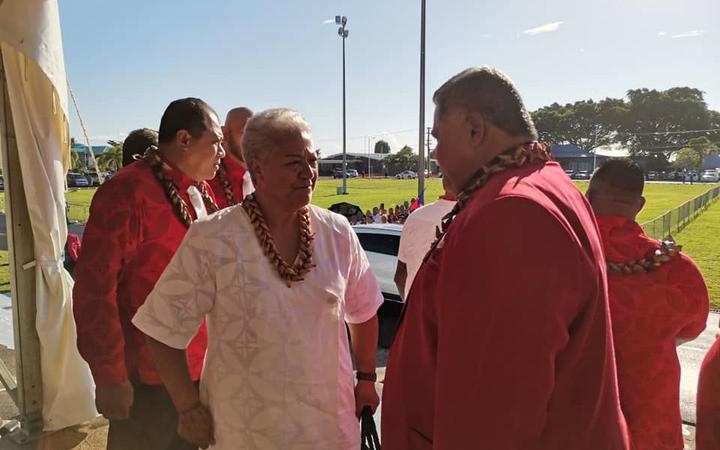
FAST leaders, Fiame Naomi Mataafa and Laauli Leuatea Schmidt Photo: Ame Tanielu
The ceremony came on the 45th day following the general election, the last day allowable under the country’s Constitution.
It has been more than 100 days since the 9 April election.
Party founder and deputy leader La’aulialemalietoa Leuatea Polataivao Schmidt says the party are celebrating with prayers and a church service this evening.
La’auli said they will work through the weekend to ensure a smooth transition of government on Monday.
“Today the court of Samoa has declared the FAST Party the new government. And the doctrine of necessity has now been honoured and the new government starts from the 24th of May since we had that swearing-in.”
Fiame Naomi Mata’afa, the daughter of Samoa’s first prime minister, becomes the country’s first woman in the role.
The Court of Appeal found the 24 May swearing-in satisfies the requirements of the Constitution as a legitimate convening of the Legislative Assembly.
It added that the previous ruling of the Supreme Court, which did not recognise FAST’s swearing in, relied upon the good faith of other actors who are obligated under the Constitution.
The court’s findings regret that reliance on that good faith was misplaced.
The ruling concludes with a recognition of “the swearing in carried out on 24 May 2021 at the Tiafau Male of elected members of parliament, to be consistent with the terms of the Constitution, the Supreme law of Samoa, and therefore lawful.”
It continues in its recognition of FAST as government since the ad hoc May swearing in which casts doubt on any actions as government by the caretaker HRPP since that date.
The judgement was signed by Chief Justice Perese, Justice Tuatagaloa and Justice Tuala-Warren.
By Andrew McRae of RNZ.co.nz and is republished with permission
A former student of Wesley College has spoken emotionally of physical abuse, including severe beatings, bullying and extreme violence at the boarding school near Pukekohe.
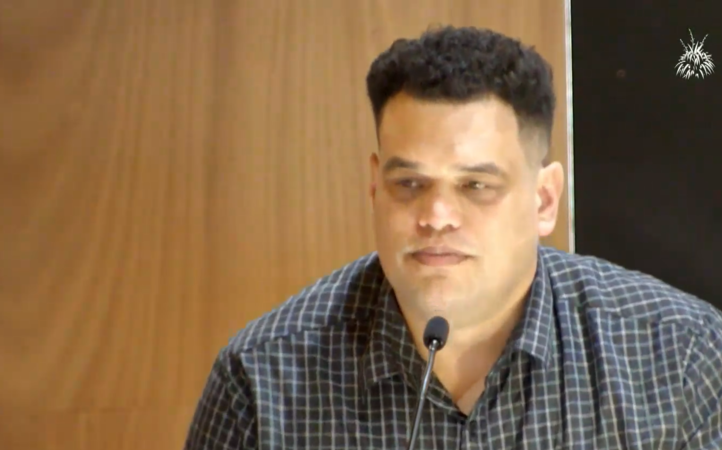
William Wilson. Photo: RNZ
William Wilson, who is now 43, and of Scottish and Samoan descent, was at the school in 1991 and 1992.
He came forward to the Royal Commission into Abuse in Care’s Pacific inquiry being held in Auckland.
Wesley College is one if this country’s oldest schools, founded in 1844 by the Methodist Church.
It caters for predominately students of Pacific and Māori descent.
Wilson came forward to share his experience in the hope it will help prevent the abuse he went through from happening to anyone else.
When he was 13, he found out that his father was actually Samoan and not Māori.
”On my first day at Wesley College it was me, mum, grandad and grandmas. I will never forget that moment. As we turned into the school driveway, my grandfather told my mum to tell me the truth.”
”My mum then told me that the school was for Pacific Islanders and that I was an Islander. A Samoan. I didn’t want to believe her,” he said.
”When I jumped out of the car all I could see was these big, giant island guys. They were giants. I was only small and short. I cried to my grandma I didn’t want to stay here. I knew something was going to happen. I just could feel it.”
He spoke of a ritual called the night parade, where prefects dragged the new boys out of bed at 1am.
A few of the students were picked on and made an example of in front of the others.
”They made me do lots of things, 100 press-ups and I got hit with a broom stick if I couldn’t. This was done to keep others in check. I was the main one to be picked on.”
Other abuse included being whacked with sticks and taiaha, nipple twisting and being brutally kicked.
The violence then took on an extra dimension.
It was called Island Respect, where the student was physically and mentally beaten.
The victim would stand between three other boys on either side.
The prefect would order each side to beat the guy in the middle, until he fell.
”And you have to stand back up. The prefect would tell you what you have done wrong and then he would call another one from each side to beat you until you fall down again. They would also verbally abuse you when this was happening. That Island Respect hiding that I suffered was over two hours. I kept standing up and telling them they were wrong.”
”The Island Respect hidings didn’t happen that often because they were dangerous. They could kill someone, but they happened to me.”
On another occasion, after being accused of something he did not do, he was beaten so badly he could not stand up.
”They bashed me for two and a half hours. The prefects carried me to the main prefects flat after that. That was the prefect who beat me. Took me to his flat. He cried over me and wiped my head with a cloth and said he hadn’t seen anyone get a beating like that ever. I told him that I would never forgive him. He had ordered people to beat me during that hiding.”
He said the whole school seemed to be in on the abuse.
”The school staff gave the prefects the powers they had and they encouraged this abuse.”
His beatings at Wesley College resulted in hearing loss, depression, PTSD, among other things and also affected his education.
”Waking up every morning at Wesley College, I lived in fear. I was expecting torture and abuse in the morning before our shower, at lunch time or prep time. This meant I couldn’t focus on school.”
Wilson told the inquiry all he now wanted was for no one to suffer like he did.
”I want those who made me suffer to be made responsible. I don’t want them to suffer like I did. I just want them to be aware of what they did and accept that they were wrong. This includes the school. The school. That was so wrong.”
He said, as for redress or compensation, he is not sure he can put a price tag on what he went through at the school.
”I feel like I never had a chance to be a child and that I lost my youth and future.”
”I think a genuine meaningful apology from Wesley College acknowledging what happened to me while I was in their care and an apology from those who abused me would make a lot of difference.”
Wilson said he knows and accepts that everything that he is today is because of what happened to him.
”I accept that I can evolve and be something more and I hope this process will help me do that.”
Before meeting with the Royal Commission, he had tried to see lawyers about his case.
”When I told them what happened, they would no longer want to be part of a case against Wesley College. I have been through so many different lawyers.”
Cabinet ministers have convened a special virtual meeting this afternoon to discuss the trans-Tasman bubble, including a potential pause of the entire arrangement.
(file photo) Photo: RNZ / Samuel Rillstone
The Prime Minister’s office said the meeting had been planned for “several days” given the developing situation in Australia.
Any announcements are not expected until tomorrow, but RNZ understands a range of possibilities are being canvassed, including a total pause.
The meeting is being held virtually as it is one of Parliament’s recess weeks, meaning ministers are spread across the country.
Quarantine-free travel is currently paused for three states: Victoria, New South Wales and South Australia.
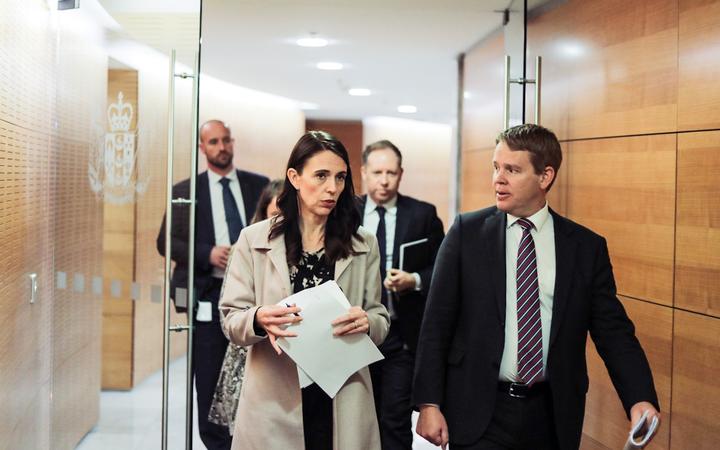
At yesterday’s vaccine update, Covid-19 Response Minister Chris Hipkins told reporters the trans-Tasman arrangements were under “constant review”, but also that the pauses would be reviewed on 27 July.
“We will continue to make adjustments and make decisions as we need to, to make sure that we are reducing, as much as is possible, the risk to New Zealand.”
Asked directly whether the entire bubble should be closed, Hipkins said he had nothing further to add.
“Every day we get updates from Australia, and we share our updates with them, and we keep everything under review.”
New South Wales recorded 124 new Covid-19 cases in the last 24 hours, its worst day yet in the outbreak, and officials are warning the outbreak will get worse.
Victoria has recorded 26 new local cases, but only two were infectious in the community. South Australia has also reported two new cases.
Queensland, which reported no new cases overnight, also announced it would close its border to people coming from NSW from 1am tomorrow.
Currently only New Zealanders returning from New South Wales have to undergo a 14-day stay in managed isolation.
All other returnees must get a negative pre-departure test 72 hours before their flight and monitor their symptoms. Only people who are normally resident in New Zealand are allowed to return.
New Zealand and Australia have officially withdrawn their teams from this year’s Rugby League World Cup in the UK.
A joint statement released this evening by the Australian Rugby League Commission (ARLC) and New Zealand Rugby League (NZRL) said they had informed the International
Rugby League (IRL) and Rugby League World Cup (RLWC) organisers neither will compete in a 2021 World Cup because of player welfare and safety concerns.
“The safety and wellbeing of our people is the main priority, and unfortunately, that cannot be guaranteed to our satisfaction,” NZRL CEO Greg Peters said.
“There are stark differences between how the pandemic is being managed in the UK compared to Australasia and recent developments have highlighted how quickly things can change.
“The tournament organisers have moved heaven and earth to make this work, so it is not an easy decision, but the Covid-19 situation in the UK shows no sign of improving, and it’s simply too unsafe to send teams and staff over.
“We understand how disappointing this is for fans and those involved; however player and staff safety remains paramount.”
Organisers said earlier this month the tournament will go ahead as planned in October despite Covid-19 still posing an issue in the UK.
Adding to the complexity is the fact this year’s World Cup is the first time three different competitions are all being held at the same time as one giant event, with world champions set to be found in the men’s, women’s and wheelchair tournaments.
Combined, 61 matches were expected at the World Cup prior to tonight’s announcement.
However, ARLC Chairman Peter V’landys insisted player wellbeing and safety must come first.
“Not participating in this year’s World Cup is not a decision the Commission has taken lightly, but we must put the best interests of our players and officials first. Protecting them is our absolute priority,’’ V’Landys said.
“In the current environment, the risks to the safety, health and wellbeing of the players and officials travelling from Australia to participate in the tournament this year are insurmountable.
“The majority of NRL players are currently living away from home under difficult biosecurity protocols. They would then be required to remain under protocols and away from home for the duration of the tournament before again quarantining on return to Australia. This is too much to ask our players and officials to do.
“We have again requested the IRL and Rugby League World Cup consider postponing the event until 2022 to enable all players to participate.”
This year’s tournament was scheduled to kick off on October 23 when England faced Samoa.
By Andrew McRae of RNZ.co.nz and is republished with permission
A life of abuse from an early age has been outlined to the inquiry into abuse in care by a woman of Tongan and Palagi descent.
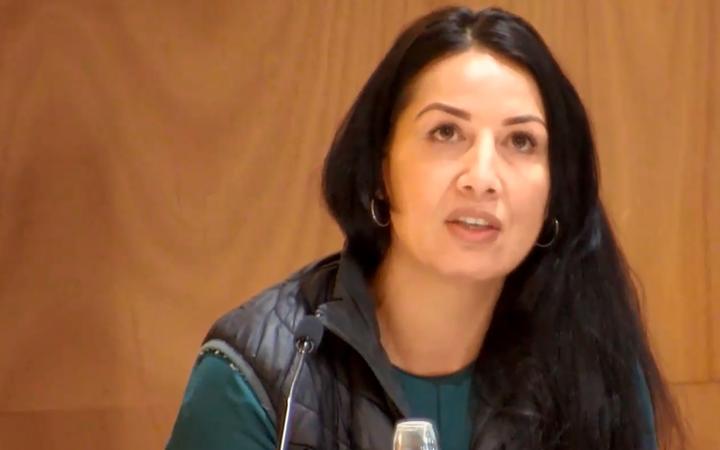
Joanna Oldham. Photo: RNZ / Andrew McRae
The Royal Commission is focusing on the historical abuse in care of Pacific people at its hearing in South Auckland.
Joanna Oldham was unaware of her Tongan ethnicity or culture growing up.
Her father was Pākehā and her mother Tongan.
She remembers, as a child, not knowing what her culture was or where she came from.
”I just knew that whatever I was, I was different and that whatever I was, was wrong. My father, grandmother and the whole side of my Pākehā family was extremely racist toward Māori and Pacifica people, including me.”
The Pākehā side of her family, including her grandmother, referred to her as that black bitch.
When she was first taken into state care, her ethnicity was listed as half European, half Tongan.
”Despite Social Welfare getting my ethnicity correct the first time, throughout my records, Social Welfare subsequently mistook me as Māori, Samoan, Cook Island Māori and Niuean.”
She was born in 1974, first lived with her drug dealing, violent, gang member father who, when she was 11, was convicted of murder.
Her life started to spiral at the age of about eight when she was sexually abused by an Anglican minister, who has since died.
The then-Social Welfare Department were made aware of what was going on, but were told the Anglican minister was looking after the family and welfare help was not needed.
Oldham only learned of this recently.
”It’s not surprising,” she said.
Documents show that Social Welfare had also been aware friends of her father were sexually abusing her, but again nothing happened.
”Of course I feel angry.”
She went through a series of foster placements and welfare homes – being abused in most of them and running away on numerous occasions.
She said she felt safer on the streets.
”I wasn’t safe at home, I wasn’t safe with my Dad, my Dad’s friends. I wasn’t safe with my grandmother, I wasn’t safe in church. You know, where was I safe? I was safe with those people who were other kids like myself, who I guess happened to be living on the streets.”
While she felt the streets were a better place, it was not long before she was abused there too.
”[As] a young woman, I guess I became more of a target. You know just like all the other girls who were with me, as we matured we became a target for strangers.”.
The pattern continued with welfare knowing what was happening, but again not reacting.
”My initial thought is, I hope they are still not doing that. I hope they are not treating children that way now. I hope something has changed, like are we still treating children this way, I hope not.”
Oldham said she has now come to terms that what happened to her was not her fault.
”I am very aware when control has been taken away from you, by people stronger than you, the power that we do have is in our words. I don’t know what the lessons are and I don’t know what the answers are. I know that there are people like myself and you know one of the coaches in my boxing gym [says], you know we don’t have degrees but we’ve got some answers.”
She said early intervention could have made a difference to her life.
”There were opportunities missed. Right through this there were many times when interventions could be done and different things could have happened. We need to be better recognising and acting.”
Oldham said survivors have a role to play in finding solutions so abuse of young people in care ends.
”I have slowly built a life for myself. I have built a career. For many years I was too afraid to talk about my childhood or seek help and so I have had to work to change my life on my own.”
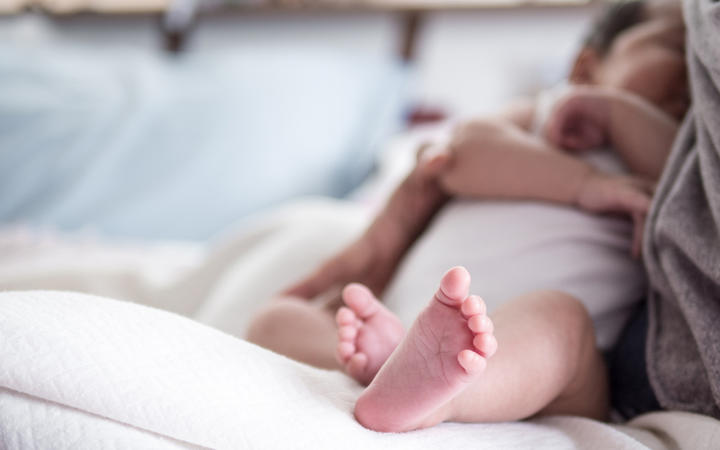
Two pregnant women are among Fiji’s latest victims of Covid-19, health authorities said.
Doctors were able to save both women’s newborns, the Health Ministry announced last night.
Photo: Supplied
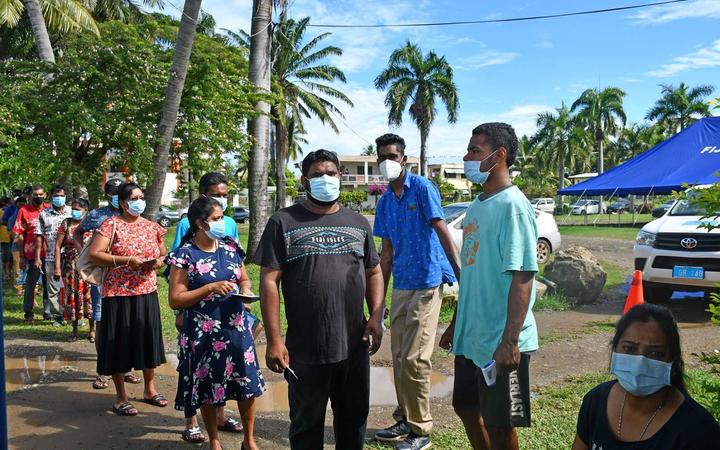
The ministry reported a record number of 21 deaths from the virus, along with 1091 new cases in the 24 hours to 8am on Wednesday. The deaths occurred between 14 July and 20 July.
Health Secretary Dr James Fong said while the outbreak was contained to the main island Viti Levu, primarily in the Lami-Suva-Nausori corridor, the ministry had seen increasing cases in the Western Division over the past week.
“Both pregnant women had been unwell with Covid-19 symptoms at home before presenting to our health facilities in severe respiratory distress.
“In both cases, our physicians made the decision to conduct emergency caesarean operations to rescue the newborns and assist with the care of the mothers.
“Sadly, despite the best efforts of their attending physicians, both mothers passed away. The fast actions of the obstetric team saved both babies.
“Maternal deaths at any time are a tragedy, and maternal deaths due to Covid-19 are a clear indication of the severity of this outbreak.”
It was not known at which stage of pregnancy the mother’s were at.
It was the sixth day out of the last seven that the daily figure of cases had topped 1000. The previous day, 1054 cases and 12 deaths between 13 July and 19 July were reported.
Dr Fong said given the rapidly evolving covid situation in Fiji, health teams were working around-the-clock to reprioritise and “focus our efforts to ensure we are protecting those most at risk of severe Covid-19 and dying”.
“Our elderly, people with existing medical conditions, and pregnant women are most at risk.
“These shifts include changes to our testing services, home quarantine guidance, ensuring we are providing life-saving medical care to those people who are most at risk and establishing vaccination for pregnant women.”
Fiji now has more than 15,000 active cases in isolation. It has recorded 146 deaths, 144 of them from the latest outbreak that began in April.
.. Photo: Fiji govt
Call to return to normal antenatal care
An Australian health expert says Fijian women who have contracted Covid-19 should return to normal antenatal care as soon as they are no longer infectious.
Addressing a virtual discussion on Fiji, Professor Michelle Giles of Melbourne’s Monash Univeristy said as a general rule a woman’s standard antenatal care should not be compromised because she has Covid-19.
And she said this did not have to be done face to face.
Giles told the panel said she would encourage pregnant women not to stay away from hospitals or healthcare settings beyond the 14 days for fear of infecting other people because that was not likely to happen.
“What we actually know is that some people can shed the virus for a longer period of time, and it may not equate to them being infectious to others,” Giles said.
“I think if you have other infection control measures in place and they’ve had their 14 days, I would not demand or require a negative test before they have their return for antenatal care.”
Fiji’s Health Ministry has begun administering about 150,000 doses of the Moderna vaccine to pregnant women.
More data was showing that Moderna is safer for pregnant women and their unborn babies, Giles said said. Thousands of pregnant women in the US had received the Moderna vaccine and studies showed babies were not seen to be born pre-term or with abnormalities nor were their mothers more likely to experience side-effects.
“Women should get vaccinated as soon as they can, but I think if there are women who have particular concerns about one vaccine, I think we have a lot of accumulated safety data for the Moderna vaccine which is also very reassuring.”
The head of Fiji’s vaccination taskforce Dr Rachel Devi said from next Monday, pregnant women would be given the choice of the AstraZeneca or Moderna vaccine.
“We will not be cross-vaccinating anyone. If anyone out there has already got their first dose of AstraZeneca during their pregnancy, they will get their second dose of the AstraZeneca.
“For those who have not been, they will be offered the Moderna, but of course the choice is theirs,” Devi said.
The Auckland man charged with the alleged murder of 23-year-old Hiko Lynch has been denied bail.
Hiko Fungavaka. Photo/Supplied
The 34-year-old accused with interim name suppression had been jointly charged with murder. He appeared in the High Court before Justice Francis Cooke on July 16.
He is also charged with wounding with intent to injure and failing to help detectives with a search.
Lynch was in New Zealand as an RSE (Recognised Seasonal Employer) worker before he died in an alleged stabbing on Market St on June 20 in central Blenheim.
Police believe the fatality came after an altercation between the Tongan RSE workers and some Rebel gang members from outside the region.
Lynch had been out celebrating a friend’s birthday. Two other Tongan men were wounded and hospitalised at Blenheim’s Wairau Hospital.
Lynch body was sent back home to Tongan where it was buried early this month.
Tonga’s sports laws are up for reform and interested people can have their say on proposed changes to the new Act.
Known as Sports and Recreation Bill 2021, it will override the Tonga Sport Council Act 1989.
The Parliament yesterday Tuesday 20 said its Standing Committee is set to conduct meetings with members of the public in the House starting tomorrow Thursday 22 and Friday 23.
“It is open to the public to join in and submit proposals,” it said.
It said the laws were clarified to the public during radio talkback shows which gave people an opportunity to understand the impacts of the proposals and provide feedback.
It also said it received 24 calls with feedbacks from the public during the shows.
The proposed new laws list 22 sport associations which it said are the governing bodies for respective sport in the kingdom.
One of them was the controversial Tonga National Rugby League Incorporated (Kautaha Liiki ‘Akapulu Fakafonua ‘a Tonga) (TNRL) which was listed as the country’s ruling body for Tonga’s rugby league sports.
It is unclear at this stage, whether the structure and officials of the current Tonga National Rugby League Incorporated will continue under the new law when it will come into force in about a year from now – the normal time span it takes for a bill to be processed before it became law, or that the government will restructure it to suit the current situation in which there was a rival rugby league body, the Tonga Ma’a Tonga Rugby League (TMTRL).
The Court of Arbitration for Sport (CAS) dismissed Tonga National Rugby League’s (TNRL) appeal against its expulsion from the global governing body early this year.
The TNRL was expelled from the International Rugby League (IRL) in March 2019, after a long-running battle over governance, money and a threatened player boycott.
The CAS decision came after the Asia-Pacific Rugby League Confederation has already endorsed the bid by TMTRL, which has the support of the current Tongan players and coach.
You can find the copy of the new Bill in this link:
China’s embassy has summoned New Zealand foreign officials to a meeting after the government voiced criticism of Chinese state-funded hacking, raising industry concerns over trade implications.
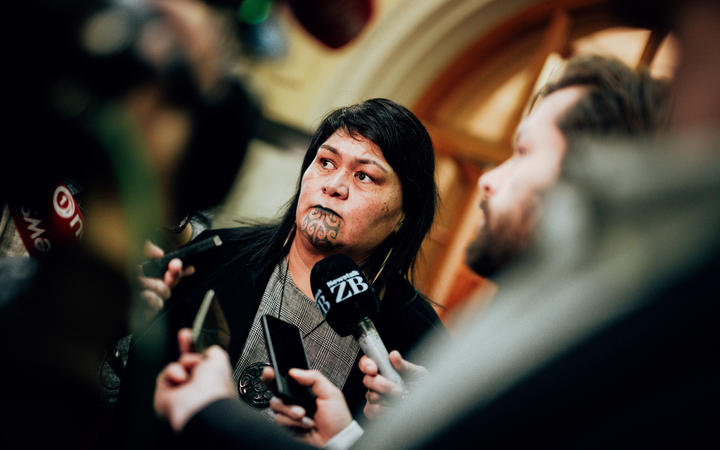
Local Government Minister Nanaia Mahuta Photo: RNZ / Dom Thomas
The meeting came after the embassy issued a statement yesterday saying the accusations from the minister of New Zealand’s spy agencies Andrew Little were “totally groundless and irresponsible”.
The statement said such accusations should be backed by clear evidence, and doing so without was a malicious smear.
“We urge the New Zealand side to abandon the Cold War mentality, adopt a professional and responsible attitude when dealing with cyber incidents, and work with others to jointly tackle the challenge through dialogue and cooperation, rather than manipulating political issues under the pretext of cyber security and mudslinging at others.”
In a statement this afternoon, Foreign Minister Nanaia Mahuta’s office said officials had met with representatives of the embassy at their request.
“Areas of difference need not define our relationship, but we will continue to promote the things that we believe in, and support the international rules-based system,” she said.
“Our relationship with China is one of our most significant, impacting a wide range of sectors and groups across Aotearoa New Zealand.”
New Zealand China Council chair Sir Don McKinnon said the country had to be prepared after calling China out.
“Once you reach a stage where you feel you have to criticise China publicly – which is what’s happened more recently – well that escalates it to a new level and you’ve got to be prepared for the consequences of that,” he said.
“Trade with China means money in people’s pockets in New Zealand from one end of the country to the other.”
Sir Don, who is also a former deputy prime minister and foreign affairs minister for New Zealand, said it was a natural commercial decision make the most of a good opportunity but some of the vulnerability of New Zealand’s trade with China came down to individual exporters and companies.
“They’ve got to make the ultimate judgment how … vulnerable do they wish to be given the nature of whatever they are producing,” he said.
“Let’s accept the fact that the last 20 years the consumption of dairy products and red meat in China has grown tremendously strongly.
“They may look back in a couple of years time and say ‘well, we were pretty smart’, on the other hand they may look back and say ‘well we might have got it wrong for a while’.”
University of Auckland economics lecturer Robert Scollay said it was up to such companies to assess risk, but the government also had a huge and difficult role to play in managing the trade relationship.
“The major players are not necessarily always acting in a reasonable way so navigating a path through those tensions is actually a really major task for the government and you need to rely on them to manage that extremely competently and carefully.”
“In general I think they need to avoid taking actions which can be seen as gratuitously taking sides.”
“I just wonder whether that’s really a prudent thing to do in the circumstances.”
Sir Don was more hopeful, saying he saw no signs of real retaliation yet.
“The consumption market in China’s not going to change and, yes, there might be a bump – but you wait it through.
“The main thing is New Zealand’s policies overall with China should always be straightforward, be transparent, be open and honest. It’s when you deviate from that you get into bigger problems.”
He said the government’s role was to create the environment for producers, manufacturers and service providers to maximise their returns, and there were other opportunities to explore including trade deals with the EU and UK, difficult as those might be to achieve.
“We’ve clearly got to work very very hard at getting good deals, even with the United Kingdom.”
Tonga is struggling to find enough players to take on the Cook Islands in Saturday’s Rugby World Cup qualifying match in Auckland.
The ‘Ikale Tahi capped 17 new players during tests against the All Blacks and Samoa this month, with most of their European based stars unavailable because of Covid-19 travel restrictions.
Thirty players were in camp ahead of last weekend’s second test against Samoa – a World Cup qualifier – in Hamilton, but injuries and unavailability have depleted their squad further, with just 27 players in the mix to play on Saturday afternoon.
Hooker Siua Maile, lock Harrison Mataele and number eight Nasi Manu picked up a knock during Saturday’s 37-15 defeat in Kirikiriroa, joining Solomone Funaki and Zane Kapeli on the sidelines.
Meanwhile, Maama Vaipulu has returned to his day job as a builder, Kali Hala has a family bereavement and Aisea Halo is back with the North Harbour NPC team.
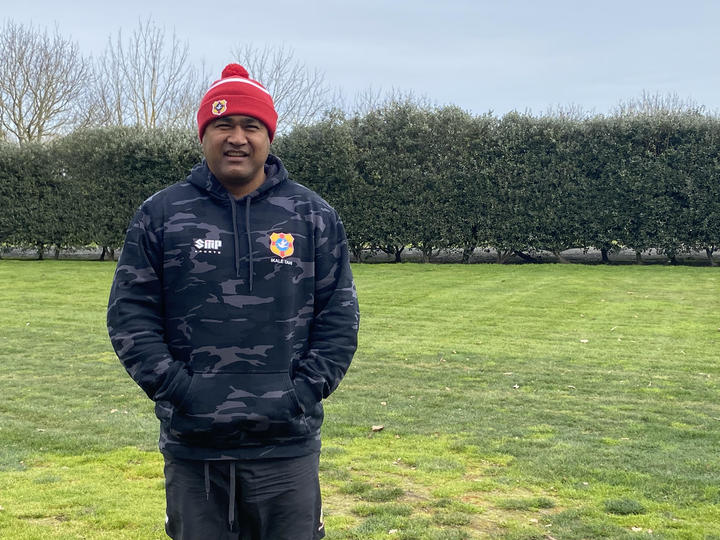
Coach Toutai Kefu said the management staff were still trying to find extra players to join the squad on four days before kickoff.
“There’s a list of players that you have and we’ve all gone through those – we’ve gone through probably 50, 60, 70 players I’d say. It’s just basically ringing agents, ringing coaches, club coaches – even asking players…’does anyone know any Tongans’ basically,” he laughed.
“We were whiteboarding names last night and counting how many props turned us down – it was nearly 25 (over the last couple of months).”
The global pandemic hasn’t helped Tonga’s recruitment efforts, with the cost of MIQ facilities in New Zealand forcing them to focus on locally based players, the bulk of whom have not played above club rugby.
“It is what it is. We give players a choice. We actually confirmed probably a group of players coming and by the time they had a chat to their agents the next day they reversed the decision,” Kefu said.
“It’s very easy to have a depth chart but if those players don’t want to come play for you, well, that changes everything. It doesn’t really become a depth chart because those players are not on the chart.
“That’s something we will do straight after this campaign is take a close look at where all our players and and just investigate and see if we can change the thinking of those players.”
There is some good news, however. Tonga’s only fit lock, Don Lolo, who also had to return to work this week, will rejoin the camp on Thursday and is available to play on Saturday.
Former Tonga Under-20s lock Kelemete Finau and ex New Zealand Under 20s number eight Tovo Faleafa have joined the squad this week, while Waikato Development centre Paula Mahe and Bay of Plenty based lock Semisi Paea have been elevated to the full squad after training with the team in recent weeks.
Waikato Development hooker Anton Milnes is also training with the squad in Cambridge.
While the off-field distractions made for a disjointed training sessions on Tuesday afternoon, Toutai Kefu remained confident Tonga would be able to name a competitive team for the weekend.
“I mean we’re in no position to be taking anyone for granted – just in the last three weeks we’ve probably been beaten by 200 points aggregate so we’re in no position to be taking anyone lightly, and that’s why we’re abosolutely concentrating on winning this game.”
FAKAMATALA FAKATONGA NOUNOU
Kuo fakahā ‘e he faiako’ Toutai Kefu kuo faingata’a’ia e ‘Ikale Tahi he feinga ke ma’u ha kau va’inga ke fakakakato e timi ki he tau mo Kuki’ailani’. ‘Oku ‘i ai e ngaahi fakitoa lahi ‘oku tupu ‘eni mei ai. Ko e tamaiki va’inga Tonga tokolahi ‘oku nau kei loka ‘i ‘Iulope tupu mei he Kōviti’. Ko e timi fo’ou ne ala ma’u ‘i Nu’u Sila ke nau va’inga he tau kualafai ki he Ipu ‘a Māmani’ kuo toe lavelavea ai ha ni’ihi ia pea ‘ikai ‘atā ‘a e fa’ahinga. Ne lavea ‘a Siua Maile mo Harrison Mataele pehē ki he fika 8 ko Nasi Manu lolotonga e tau ne fo’i ai ‘a e ‘Ikale Tahi ‘i Ha’amoa he uike kuo ‘osi’ pea kau atu ki ai mo Solomone Funaki pehē kia Zane Kapeli. Taimi tatau kuo foki ‘a Maama Vaipulu ia ki he’ene ngāue’ ‘ana, pea mama’o mo Kali Hala he mole taha hono fāmili’ pea foki ‘a ‘Aisea Halo ia ki he’ene timi North Harbour NBC.