The ‘Ikale Tahi are hoping to pin Samoa back on the field and on the scoreboard in this afternoon’s decisive Rugby World Cup qualifying match in Kirikiriroa Hamilton.
Manu Samoa won the first leg 42-13 in Auckland last weekend, with the aggregate winner from the two games sealing their spot in France in 2023.
Tonga only trailed by three points at half-time and prop Ben Tameifuna said they need to sustain their performance over 80 minutes.
“There was some bloody good things that happened last week and it was just towards the end there the boys folded a little bit but this week’s just being able to do what we did but for much longer.”
James Faiva is back at first five, having recovered from an ankle injury suffered against the All Blacks two weeks ago.
With rain forecast throughout the match, he believed it was crucial Tonga’s kicking game and on field management is up to scratch.
“What I can offer the boys, driving the boys and saving their energy in some part of the field,” he said.
“Last week I think we tend to play a bit more rugby in our own half, rather than kicking the ball and trying to save our energy and just try to play a territory game.”
There’s no denying Samoa is in the box seat, with Samoa coach Vaovasamanaia Seilala Mapusua adamant they will playing to win on the night and not just protect their 29 point buffer from the first leg.
The Manu announced a late change on Saturday morning, with debutant hooker JP Sauni coming onto the bench after Seilala Lam picked up an injury during Friday’s captain run.
The losing team will have to back up against the Cook Islands next weekend and Tonga captain Sonatane Takulua said they will give it their best shot.
“29 points we have to beat but we’ve just got to come up and put everything we’ve got into the game and we come out the end with it,” he said.
“We’ve just got to take every point we can and get a lot of points.”
Fiji has recorded a daily record 1405 new cases of Covid-19 in the 24 hours to 8am on Friday.
That compares to 1220 cases and 10 deaths in the previous 24-hour period.
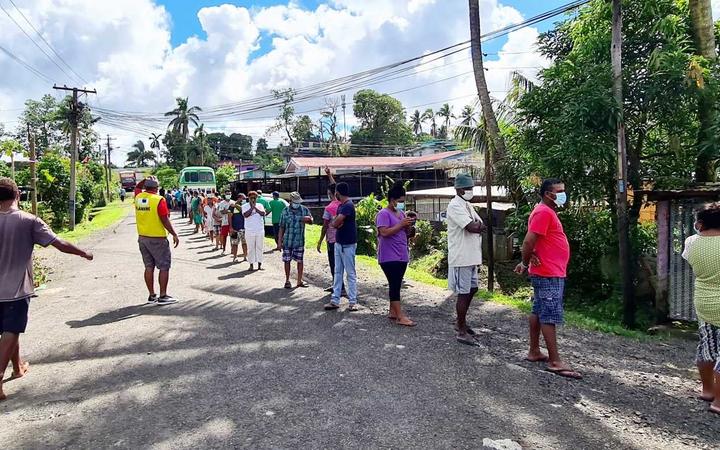
.. Photo: Fiji govt
The government also confirmed six more deaths last night, taking the death toll to 80 – 78 of these from the latest outbreak that began in April.
Health Secretary Dr James Fong said all six patients were unvaccinated.
“A 58-year old man from Tacirua presented to a medical facility on Wednesday with severe Covid symptoms including shortness of breath. His condition worsened at the health centre and he died on the same day.
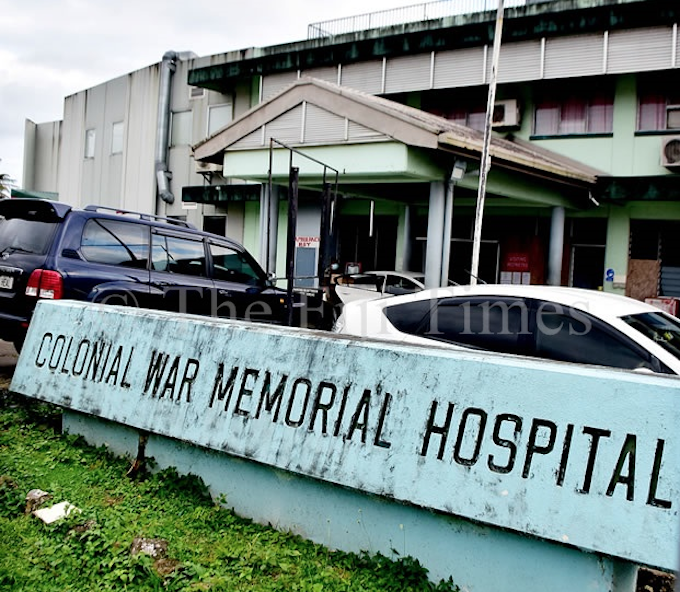
“An 82-year-old man from Waila presented to a health facility in severe respiratory distress. He was retrieved by a medical team to the Colonial War Memorial Hospital.”
Dr Fong said the man’s condition worsened at the CWM Hospital and he died two days after admission on 12 July.
His family reported that he had been unwell with symptoms that included fever, and cough, Dr Fong said.
“The third Covid-19 death to report is a 34-year-old man from Koronivia also presented to a health facility in severe respiratory distress on 12 July. His condition worsened at the centre and he died on the same day.
“A 68-year-old man from Valelevu presented to the CWM Hospital with Covid symptoms on 14 July. His condition worsened in the hospital and he died on the same day he was admitted.
“The fifth death is a 76-year-old woman from Narere who presented to a healthcare facility with severe Covid symptoms including shortness of breath. She was retrieved by a medical team to CWM Hospital on 12 July where her condition worsened and she died on the same day.
“A 92-year-old man from Ba was retrieved by a medical team from an isolation facility and transferred to Lautoka Hospital. His condition worsened in hospital and he died four days after being admitted on 15 July.”
Dr Fong said three other people, who tested positive to the virus, had died but their deaths have been classified as due to serious pre-existing medical conditions and not caused by Covid-19.
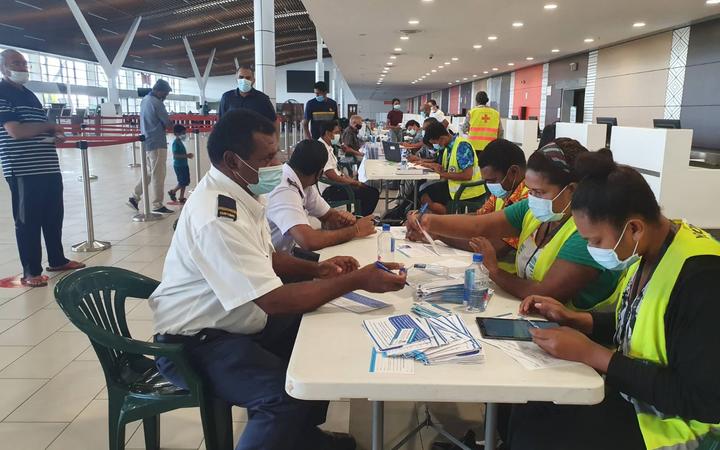
.. Photo: Fiji govt
Over 11,000 positive-people in isolation
Six other deaths are under investigation, he said.
“We also recorded 34 Covid-19 positive patients who died from the serious medical conditions that they had before they contracted the virus; these are not classified as Covid-19 deaths.
“There have been 470 new recoveries reported since the last update, which means that there are now 11,959 active cases. There have been 15,221 cases during the outbreak that started in April 2021.
“We have recorded a total of 15,291 cases in Fiji since the first case was reported in March 2020, with 3,218 recoveries.”
There are six more deaths currently under investigation, Dr Fong said.
He said a total of 10,356 individuals were screened and 1,893 swabbed at stationary screening clinics in the last 24 hours, bringing the cumulative total to 312,572 individuals screened and 52,386 swabbed todate.
“Our mobile screening teams screened a total of 4,197 individuals and swabbed 435 in the last 24 hours. This brings our cumulative total to 712,328 individuals screened and 60,855 swabbed by our mobile teams to date.”
Dr Fong said a total of 216,869 samples have been tested since this outbreak started in April 2021, with 259,734 tested since testing began in March 2020.
“3678 tests have been reported for July 14. Testing number data for one lab is pending for July 13-14. Based on available testing numbers, the national 7-day daily test average is 3943 tests per day or 4.5 tests per 1,000 population.
“These numbers are expected to increase once all lab testing number data is received. The national 7-day average daily test positivity is 19.2 percent and continues on an upward trend.”
The World Health Organisation’s test positivity threshold is five percent.
As of the 15 July, 384,480 adults in Fiji have received their first dose of the vaccine and 75,448 have received their second doses, Dr Fong said.
“This means that 66 percent of the target population have received at least one dose and 12.9 percent are now fully vaccinated nation-wide.
“Fijians can check the Ministry’s vaccine dashboard to find real-time data on first-dose and second-dose numbers at the national, divisional and sub-divisional levels at http://bit.ly/3h2JfCZ
“The 7-day average of new cases per day is 824 cases per day or 932 cases per million population per day. Average daily case numbers are increasing, together with cases of severe disease and deaths.”
By One News / TVNZ and is republished with permission
A car has been set alight and shots fired in South Auckland in the early hours of this morning amid tensions between the Rebels and King Cobra gangs.
Armed police at shooting in Favona, Auckland. Source: 1 NEWS
Authorities were called to an address along Favona Road following reports of gunfire in the area at 12.37am.
“Police attended and located a number of items including an empty shotgun cartridge,” Detective Inspector Chris Barry said.
Shortly after, a car was set alight on Raglan Road in Māngere.
“Police do not believe these incidents are random and are investigating the possibility they are linked to the recent ongoing tensions between the King Cobras and Rebels gangs.”
No one was injured in either incident but an investigation is ongoing into the circumstances around both.
Police presence in the area has been increased for the rest of the day.
This comes after a series of shooting in the past days.
Yesterday a man in Penrose, Auckland pointed a gun at the heads of two people while being chased by police. He was later shot and injured by police.
On Wednesday night, a man was shot dead by police in the Hamilton suburb of Hillcrest after the man opened fire.
A police officer was hospitalised over the weekend after being shot during a traffic stop, also in Hamilton.
By Giff Johnson, Editor, Marshall Islands Journal / RNZ Pacific correspondent. It’s republished with permission
The testing of a solar powered outboard engine for a locally-built catamaran in Majuro this week is part of a large-scale sustainable ocean transport program underway in the Marshall Islands that could lead to multiple vessel use of this sustainable energy technology for sea transportation.
“We are developing systems that work for different types of boats in the Marshall Islands,” said Waan Aelon in Majel (Canoes of the Marshall Islands) Director, Alson Kelen of the trial of a solar powered engine on the “WAMCat” vessel, a twin hull sailing boat designed and built by the canoe program for carrying passengers and cargo.
The solar-powered outboard engine project is part of a sustainable transport program that WAM and others are engaged in locally to develop low-carbon vessel options for the Marshall Islands.
It is supported by multiple funders, including the German Agency for International Cooperation, known as GIZ, the Marshall Islands National Energy Office, and others.
For over 20 years, Kelen’s program has trained groups of young people in a range of life and vocational skills, including how to build and sail outrigger canoes.
Over the past year, the canoe program has stepped up its work in sustainable sea transport options for remote outer islanders, many of whom are dependent on engine vessels that rely on high-priced fuel.
A locally designed and built catamaran for use on remote outer atolls in the Marshall Islands is this week trialing use of a solar-powered 15hp engine. Photo: Giff Johnson
In the past year, the canoe program designed and built three types of boats – and is now training outer islanders to build them in an effort to spread the boat building skills and low-carbon technology to remote islands.
“Our goal is low-carbon, sustainable sea transport,” said Kelen. “We’ve designed and are building three different boats.”
These boats include a Marshallese canoe, 18-foot length, that can carry three men and limited cargo; a 20-foot catamaran that is designed to carry a family and half a ton of cargo; and a “proa,” a larger canoe vessel for lagoon passenger and cargo use as well as for fishing.
The lagoon trials are testing solar equipment that is running a 15hp engine powered entirely by the sun. “We’re testing the speeds at which we can maintain battery levels while using the engine,” Kelen said. Later, they will be testing using both sails and engine together.
In line with its new mission, the catamaran has been named Kõto im Al (Wind and Sun).
Kelen said the current trials of the solar-outboard engine technology is the first step to looking at applying this to other vessels.
“Next year, we aim to get a (a 10-passenger) boat and trial the solar-engine,” he said of the type of boat currently in use around Majuro Atoll. The aim is to develop solar-engine options for canoes, boom-boom inboard engine boats, and outboard engine boats of various kinds.
This technology can help people and businesses save a lot of money,” he said.
The partnership with GIZ has provided this program with an electrical engineer from Germany who has provided expert advice and worked on the design of the solar-engine equipment in support of the canoe program.
“We’re experts on boats,” said Kelen. “And we’re putting their expertise on power with our knowledge of boats to develop a solution that works here. We are transitioning to a low-carbon future.”
FAKAMATALA FAKATONGA NOUNOU
Lolotonga tesi’i ha vaka katamalani pe pōpao fōua ka ‘oku fakalele ‘e ha misini fakaivia mei he ivi ‘o e la’aa’ ‘i he ‘Otu Motu Māsolo’ he uike’ ni. Pea ka ola lelei ‘eni ‘e hono ia ke fo’u ai ha ngaahi vaka pehē lahi ki he fetu’utaki ‘i tahi’. Ko e vaka ‘eni fōtunga tatau mo e vaka ne fakatau ‘e he kāinga Niua’ ne fakahuafa ko e ‘Utuma’atu. Ka ko e vaka ‘a Niua’ ‘oku fōtolu ia pe tulaimalani pea ‘oku fakafalala pe ia ‘i he ivi ‘o e matangi’.
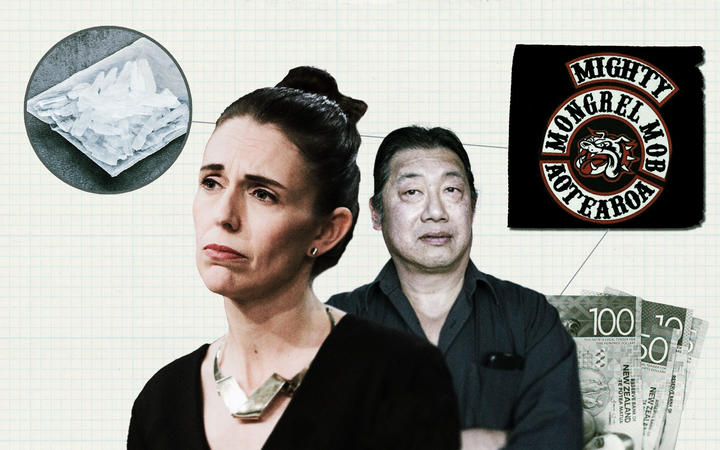
Explainer – One of National’s current lines of attack against Labour is an accusation that the governing party has funded the Mongrel Mob to the tune of $2.75 million.
A methamphetamine rehabilitation programme with close ties to the Mongrel Mob has received money from the Proceeds of Crime Fund. Photo: RNZ / Vinay Ranchhod
The money, from the Proceeds of Crime Fund, was signed off by those at the top of Labour, including Prime Minister Jacinda Ardern.
It was for a methamphetamine rehabilitation programme called Kahukura in the central Hawke’s Bay.
But the organisation running the programme has gang connections, some of the property it is held on has gang connections, and some of those taking part do too.
However, that organisation has its aim in its name: Hard to Reach. It’s trying to help “Māori and marginalised communities” and help them to rebuild.
And those applying for that $2.75m had to jump through a lot of hoops before it was approved.
So what’s going on? RNZ is here to clear it all up.
What is Kahukura?
A Ministry of Health (MOH) spokesperson said “Kahukura is a live-in marae-based programme using a mix of Te Ao Māori and western methodologies”.
“It aims to address past trauma and drug-use, instil better coping mechanisms, and prevent relapse.
“It is a 10-week course, consisting of eight weeks of a live-in programme and two weeks of intensive reintegration.
“Participants are then provided with wrap-around support for a six-week period following this.
“Re-engaging with Te Ao Māori and tikanga is a key component, and aims to build identity and resilience.”
There would be up to 10 participants, plus their partners and family, with up to 30 participants on each course (120 people in total per year), for three years, the spokesperson said.
“It’s a marae-based programme that yes, the participants … are gang affiliated participants, who have been involved in meth related crime and activity, who have this meth addiction.
“The programme is designed to try and reduce down criminal activity and meth addiction.”
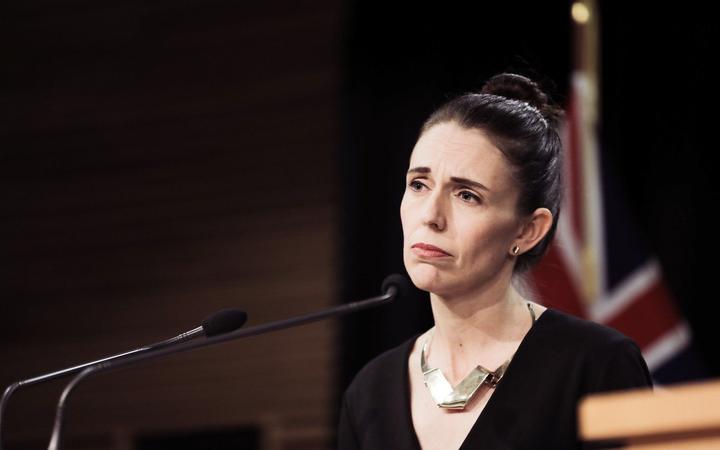
Prime Minister Jacinda Ardern Photo: RNZ / Samuel Rillstone
Are there gang members involved?
Ardern said “there are individuals who have had gang related backgrounds are involved in running the programme, that is true, but also it is designed to try and address drug use within gang membership as well [so it is] not unexpected that those with a background would be involved in the programme.
“It’s a marae-based programme that is residential, and the question and the choice we have … is we either accept that we want drug rehabilitation programs to involve those who have criminal backgrounds, or we exclude them.
“My view is if they are involved in crime and victimisation, I want to address meth addiction with those groups. They are perpetuating a problem, if we choose not to do that, then I don’t see how we solve that problem.”
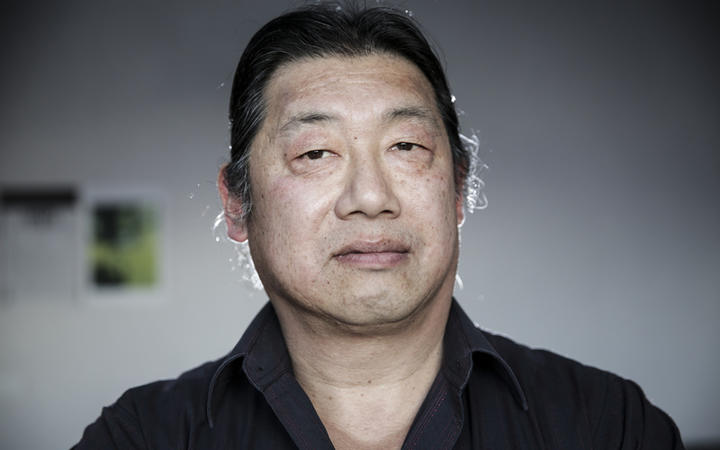
The organisation involved in running the programme – Hard to Reach – is run by co-director Harry Tam, a former Mongrel Mob member.
Harry Tam. Photo: RNZ / Rebekah Parsons-King
And Stuff has reported “The programme involves participants working on a ‘community garden’ on the property of the president of the gang’s ”Notorious” chapter.
“The garden is on a Waipawa property that is home to Sonny Smith and his wife Mahinaarangi Smith, who is a programme facilitator.”
Stuff described Sonny Smith as “a lifelong Mongrel Mob member”.
How did the funding approval process work and where does the money come from?
The MOH received a proposal from Hard to Reach in late 2020.
Money for the programme comes from the Proceeds of Crime fund.
The fund’s purposes include addressing organised crime and drug-related harm, testing innovative solutions to complex issues relating to crime-related harm, and “enabling agencies to build an evidence-based case of what works in addressing crime-related harm”.
Initiatives supported by the fund must align with one of four criteria set by Cabinet.
While an organisation may make an application for funding, it must be supported by a government department to do so.
A panel then considers the initial proposals for shortlisting, weighing them against a range of factors.
That panel is made up of senior representatives from the Ministry of Justice, Ara Poutama Aotearoa (Department of Corrections), Te Puni Kōkiri, Ministry of Health, Ministry of Education, New Zealand Police, The Treasury, Oranga Tamariki and the Chief Science Advisor.
If an application is shortlisted, it then has to submit a more detailed funding proposal for the Panel to consider.
The panel will then provide recommendations to the prime minister, minister of finance and minister of justice, who determine which proposals should be approved and funded.
In this case, those were Jacinda Ardern, Grant Robertson and Andrew Little.
As has been reported, Ardern has stood by signing off on the funding.
“The Ministry of Health supported the proposal because the initiative filled a gap in service provision. We are committed to reducing the impact of drug-related harm for New Zealand communities,” the spokesperson said.
“To do this effectively, it requires a variety of approaches to support individuals to work through past trauma and drug-use.”
As noted earlier, Ardern said she wanted to address meth addiction for those with criminal connections. “If we choose not to do that, then I don’t see how we solve that problem,” she said.
Funding was provided for a three-year period.
The contract was signed in the last week and funding for the programme will start next week.
How will the programme be measured and monitored?
The programme will be externally evaluated, the MOH says.
“Governance of the initiative includes the Ministry of Health, Hawke’s Bay DHB and iwi and will be overseeing progress, risks and issues.
“There will also be regular reporting as per Ministry of Justice requirements.”
In addition, if an initiative is approved for funding by the Proceeds of Crime Fund, a six-monthly performance report must be provided for transparency and accountability.
This information may be incorporated into a report for the minister of finance and the minister of justice.
What do police say?
Police as a whole have backed the funding.
A statement by assistant commissioner Sandy Venables was quoted by Stuff as saying “Police recognises the need to work with different groups in our communities to develop lasting solutions that will reduce harm…. it is clear that the programme has strong support locally”.
But the Police Association – the union for police officers – has released a statement saying it “totally rejects” the funding, which has “riled a growing number of police officers, particularly those involved in organised crime investigations”.
President Chris Cahill said the association’s criticism was not directed at drug rehabilitation initiatives.
“We know only too well the crisis that exists in this area. Our members are left to cope every single day with people who need assistance and rehabilitation from drug use. New Zealand is so short on rehab resources that it falls to officers to do the caring, often in police cells, which are no place for a person who requires expert medical help.”
What was concerning was the money going to a group so closely linked to the Mongrel Mob, he said.
“It is difficult to understand how those who promote the need for drug rehabilitation seem blind to the dreadful optics of this Mongrel Mob scenario – let alone have faith in this multi-million-dollar scheme to do anything but line the pockets of key gang leaders.”
RNZ contacted Hard to Reach for comment, but a spokesperson declined the request.
FAKAMATALA FAKATONGA NOUNOU
Ko e pa’anga ‘eni ‘e $2.7 miliona ‘oku fakapa’anga ‘aki ‘e he pule’anga Leipa’ ‘a e polokalama fakaakeake mei hano mo’utāmakia ‘e he faito’o konatapu’ ‘oku ‘i he nima ia ‘o ha kautaha kuo ‘i ai ‘a ‘ene felāve’i mo e kakai ko e kau taki ‘o ha kau keingi hangē ko e Mongrel Mob pea mo e ni’ihi kehe pe. Ka ‘oku fakatonuhia’i ‘eni ia koe’uhī fakatatau ki he palēmia’ Jacinda Ardern he ‘oku fiema’u ‘a e polokalama fakafokifoki ‘o e mo’ui’ ko ‘eni mei he nunu’a ‘o e faito’o tapu’ ni ke kau mai ki ai ‘a kinautolu ‘oku ‘i ai hanau puipuitu’a faihia. ‘A ia ko e tāketi’ ‘oku fai ki he kakai ‘oku fihia he hia ko ‘eni pea ko e ‘uhinga’ ia.
By One News / TVNZ. It’s republished with permission
The Nurses union has called off strike notices and will take an improved pay offer to their members.
Source: 1 NEWS
Health Minister Andrew Little described it as a “positive move towards settling district health board nurses’ pay claims”.
“It’s encouraging that the discussions between NZNO and DHBs over the nurses’ employment agreement have resulted in a new offer that will go out to nurses, and that the union has lifted strike notices for July 29 and 30.”
Nurses were fighting for a 17 per cent pay increase, having declined a previous offer of 1.38 per cent.
“Nurses have been under-paid for years, largely because it’s a female-dominated profession,” he said.
“Now that DHBs no longer have to spend time preparing to deal with the major disruption a strike would cause we can focus instead on resolving the main issue, which is the nurses’ pay-equity claim.”
Nurses call off planned strikes, will consider better pay offer
Little said separate to pay negotiations, “I have been driving officials hard to put together a comprehensive and principled offer on pay equity and we are a month away from tabling something that means we can address the long-standing historical unfairness that nurses have faced”.
“Settling the pay-equity claim means that for the first time, their work will be recognised and valued as much as comparable professions.”
Earlier this week, New Zealand Nurses Organisation (NZNO) delegate Diane McCulloch told Breakfast medical professionals have been “trampled over the years” and that “enough is enough”.
“Our nurses are so tired, they are so burnt out.”
Today, NZNO lead advocate David Wait said he was “glad negotiations had reached this point after talks broke down earlier in the week”.
“The DHBs had shown a willingness to move on a number of issues important to our members, but did not have an offer ready by close of business on Wednesday, which was the two-week deadline for issuing the strike notice.”
District Health Boards spokesperson Dale Oliff said today their fourth offer to nurses, midwives and healthcare assistants was a “package of measures addressing the issues raised by the NZNO and follows a meeting with the mediator in Wellington”.
“Nurses, midwives and healthcare assistants are an important part of our workforce, and key to delivering to the needs of our communities, this offer acknowledges the value of their role.”
Samoa and Tonga have finalised their line-ups for tomorrow’s decisive Rugby World Cup qualifying match in Hamilton.
The Manu beat Tonga 42-13 in Auckland last weekend, with the aggregate winner over two legs sealing a spot at the 2023 World Cup in France.
Samoa have named an unchanged forward pack, with Jonathan Taumateine coming in at halfback in place of Auvasa Faleali’i and Ed Fidow promoted from the bench to start on the right wing. That means Tomasi Alosio shifts to his preferred fullback slot in place of Ahsee Tuala.
The ‘Ikale Tahi have made two changes in the tight five, with Siua Maile replacing Sam Moli at hooker and Harrison Mataele in at lock for the injured Zane Kapeli. Former Chiefs number eight Maama Vaipulu will provide cover for the second row and loose forwards off the bench.
In the backs, James Faiva is fit again and starts at first five after being a late scratching from the first test. That forces another reshuffle, with Kalione Hala returned to fullback and Nafi Tu’itavake dropping to the reserves.
Both teams are also in line to cap some more test rugby debutants at FMG Stadium.
Grammar Tech hooker Jay Fonokalafi and North Harbour scrumhalf Aisea Halo have been named on the Tongan bench, while Bay of Plenty wing Losi Filipo is among the reserves for Samoa.
The winner of the two-legged Oceania 1 playoff will join England, Japan and Argentina in Rugby World Cup Pool D. The loser will face the Cook Islands in Auckland next weekend for the right to keep their qualification hopes alive.
Samoa squad:
1.Tietie Tuimauga, 2. Ray Niuia, 3. Michael Alaalatoa (c) , 4. Benjamin Nee-Nee, 5. Samuel Slade, 6. Olajuwon Noa, 7. Alamanda Motuga, 8. Henry Time-Stowers, 9. Jonathan Taumateine, 10. Rodney Iona, 11. Neria Fomai, 12. Henry Taefu, 13. Stacey Ili, 14. Ed Fidow, 15. Tomasi Alosio. Reserves: 16. Seilala Lam, 17. Jonah Aoina, 18. Kalolo Tuiloma, 19. Theo McFarland, 20. Jack Lam, 21. Dwayne Polataivao, 22. D’angelo Leuila, 23. Losi Filipo*.
Tonga squad:
1. Jethro Felemi, 2. Siua Maile, 3. Sila Puafisi, 4. Don Lolo, 5. Harrison Mataele, 6. Sione Tu’ipolotu, 7. Mateaki Kafatolu, 8. Nasi Manu, 9. Sonatane Takulua (c), 10. James Faiva, 11. Hosea Saumaki 12. Nikolai Foliaki, 13.Fine Inisi, 14. Penikolo Latu, 15. Kalione Hala. Reserves: 16. Jay Fonokalafi*, 17. Duke Nginingini, 18. Ben Tameifuna, 19. Maama Vaipulu, 20. Viliami Taulani, 21. Aisea Halo*, 22. Nafi Tu’itavake, 23. Walter Fifita.
Fiji has recorded 1220 new cases of covid-19 as at 8am today — the highest daily record so far — and five more deaths.
Fiji’s Colonial War Memorial Hospital in Suva … people with severe covid-19 are dying at home or going to a medical facility in the late stages of severe illness. Image: Atu Rasea/The Fiji Times
Health Secretary Dr James Fong said the five people who had died from the virus were all aged over 60 and were not vaccinated.
He said the first death was a 61-year-old woman from Kinoya who died at home after being sick with generalised body pain, weakness, and sore throat for 10 days.
“The second covid-19 death to report is a 62-year-old man from Tacirua. He presented to the CWM Hospital emergency department in severe respiratory distress,” Dr Fong said.
He died in hospital on the same day (July 13). His family reported that he was unwell with fever, cough, and generalised weakness for three days prior,” he said.
“The third covid-19 death to report is a 66-year-old woman from Nabua who died at home on July 13. Her family reported that she was feeling unwell with a cough and shortness of breath for 3 days.
“The fourth covid-19 death to report is a 60-year-old woman from Verata who died at home on July 13.
Fifth death
“The fifth covid-19 death to report is a 78-year-old woman from Nauluvatu village. She was retrieved from home by a medical team and transferred to a healthcare facility. She was noted to be in severe respiratory distress. She died in the healthcare facility on the same day (July 13).”
The total death count has increased from 69 to 74 since yesterday morning, however, there are eight deaths of covid-19 positive patients that are still under investigation to determine if they had died due to the virus or other medical problems.
There are now 11,033 active cases of people who have been infected with covid-19, either at home or in dedicated facilities around Viti Levu.
Fiji has recorded 13,816 cases of the virus during the outbreak that started in April this year.
Dr Fong said people with severe covid-19 were dying at home or going to a medical facility in the late stages of severe illness.
“Severe covid-19 is a medical emergency, and a delay in receiving appropriate medical treatment reduces your chance of recovering from the disease,” he said.
With 213 people reported to have recovered from the virus, the ministry is more concerned that the daily test positivity rate continues on an upward trend.
Positivity rate 18pc
The country’s daily test positivity rate is at 18 percent — more than three times the World Health Organisation (WHO) threshold of five percent.
This means that there is widespread transmission of the virus.
“Based on available testing numbers, the national 7-day daily test average is 3772 tests per day or 4.3 tests per 1000 population. These numbers are expected to increase once all lab testing number data is received,” Dr Fong said.
“As of July 14, 377,090 adults in Fiji have received their first dose of the vaccine and 73,127 have received their second dose.”
Fiji’s covid-19 case count stands at 13,886 since the first case was reported in March 2020, with 2,748 recoveries.
This story by Asia Pacific Report is republished with permission
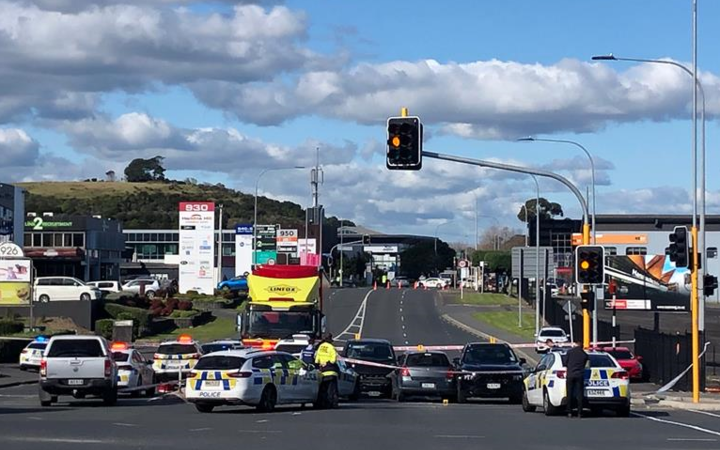
A witness has told RNZ a man was shot by police at the intersection of the Great South Road and the south eastern highway.
The scene of the shooting. Photo: RNZ/Kate Gregan
Other witnesses have said a man stole car in Greenlane, crashed, and there was a “shootout” with the police.
Two people are injured, one seriously after the incident at Penrose in Auckland.
Police are at the incident just off Auckland’s Southern Motorway, where a busy intersection has closed for an investigation.
Witnesses have told RNZ a man stole a BMW car in Greenlane, crashed, and there was a “shootout” with the police.
A man who was driving a work van at the time said he saw a car driving past him, going the wrong way.
He said police told him a man stole a BMW car from Greenlane, crashing at an intersection near a KFC.
He said police told him a woman in a Suzuki Swift was then car-jacked at gunpoint, and the gunman then crashed a short time later in Penrose, where there was a shootout.
The intersection of Great South Road and the south-eastern highway is cordoned off.
At least 10 police cars are at the scene.
St John Ambulance says they were called just before 11am and took the person with serious injuries to Auckland Hospital and another with moderate injuries to Middlemore Hospital.
Auckland Transport initially said it was a crash just after 11am, but then 15 minutes later said it was a police issue at the crash site, and now a police investigation.
Police have been asked for details.
One woman in a business off Great South Road told RNZ she heard a loud bang but dismissed it as a car backfiring. Shortly after she heard a lot of sirens.
Claims by Prime Minister Pohiva Tu‘i‘onetoa that the ruling People’s Party was inspired by the Chinese Communist Party have been condemned by Democrat supporters and community leaders.
PM Pōhiva Tu’i’onetoa. Photo/Kalino Lātū
Critics have asked why the government of a democratic, Christian nation, appeared to be embracing communism.
The Prime Minister told a function held to mark the 100th anniversary of the CCP that members of his party had drafted their manifesto after a visit to China.
Matangi Tonga reported him as saying “In our Manifesto we described governance in Tonga as a fish. The government and party are the fish’s head and body, the people are the fish tail. The tail controls the head and the body, as well as maintains the direction of the head,” he said. “The fish theory unifies the whole body in driving forward our work. Practice has proven that when you put your people in your heart, your people will in turn will hold you up.” said the chairman Tu‘i‘onetoa.
“We look forward for further on going technical and economic cooperation. Let us also wish great success in marching toward the second centenary goal in building China into a great, modern socialist country.”
His comment has been heavily criticised on social media with many asking why, when Tonga is advocating for democracy and Christian doctrines, the government is supporting a Chinese doctrine that is anti-Christian and anti-democracy.
Staunch Democrat supporter Ikani Taliai described the Prime Minister’s comments as “astounding.”
“This statement – if the reporting is true- highlights a staggering confusion and lacking of mental capacity in the Prime Minister,” Taliai said.
“Prime Minister Tui’i’onetoa stated that he and members of the political party visited China in 2019. They returned to Tonga and based the constitution of PAK on the communist political principles of the Chinese communist political structure.
“Here we are in Tonga advocating for and progressing a structure of democracy to protect the human dignity of all Tongans and the head of this government declares that!
“The Deputy Chairman of PAK who is the Prime Minister’s closest advisor has just been convicted, sentenced, and jailed for one of Tonga’s largest fraud crimes.
“Despite this, the Prime Minister appears to still be advocating for his associate’s freedom. Not only is the Prime Minister fighting against the country’s Judicial system, but he has just declared communist tendencies.
“The remaining Cabinet Ministers are silent. One could draw conclusion they are complicit in the Prime Minister’s authoritarianism.”
Tonga established diplomatic relations with the People’s Republic of China in 1998 and since then has become collaborated with the Asian giant in many areas, including agriculture, infrastructure, education, health, tourism, fisheries and Covid-19.
However, it has also become catastrophically indebted to China and now owes US$115 million.
The late Prime Minister ‘Akilisi Pohiva, who came to power after most of the debt was accumulated, warned that China might seize strategic assets in Tonga or demand other forms of compensation if it could not repay its debts.
In one of his last acts before he died, Pohiva tried unsuccessfully to persuade other Pacific nations to stand up to China over their debts.
In 2019 the then United States ambassador to Australia, Arthur Culvahouse Jr., called China’s lending in the Pacific “payday loan diplomacy.”
“The money looks attractive and easy upfront, but you better read the fine print,” he told The Diplomat.
However, China’s ambassador to Tonga at the time, Wang Baodong, said China was the only country willing to help Tonga financially.
Graeme Smith, a specialist in Chinese investment in the Pacific, said Tonga’s financial mismanagement was as much to blame for its financial position.
China’s continued crackdown on Christians in that country has long been a cause of concern in the west. Earlier this year Chinese authorities arrested a Vatican-appointed Catholic bishop, his seven priests and 10 seminarians.
Protestant churches, including so-called house churches, have also come under attack and there have been concerted campaigns against Buddhists in Tibet and Muslims in Xinjiang province.
The Chinese government has attacked democracy several times in the past, calling it divisive and comparing it unfavourably with what is describes as the smooth co-operative political system in China.
Reuters reported that when President Jinping took office in 2014, many Chinese hoped for political reform, but he soon implemented a crackdown on civil society, jailing human rights lawyers and activists who authorities regard as threat to national security and social stability.
Lawyer Nalesoni Tupou in New Zealand said the Prime Minister’s comments were “very sad.”
He said it brought shame on the efforts of people of the past in Tongan history.
FAKAMATALA FAKATONGA
Kuo fakahā ‘e he Palēmia ‘o e fonua’ na’e fakalotoa ‘e he’ene paati pule’ ‘a ia ‘oku ‘iloa ko e Tonga’s People Party ‘ehe Paati Kominiusi ‘a Siaina’. Na’a’ ne pehē ne ‘i ai e ni’ihi mā’olunga ‘i he’ene pāti’ ne nau ‘i Siaina ‘i he 2019 ‘o ako ‘i ha’anau tua ne fai pea ‘i he’enau foki mai pe ko ia’ ‘o fa’u e tohi ke ne tataki ‘a e PAK pe manifesto ‘aki e me’a ne nau ma’u mei he Paati Kominiusi ‘a Siaina’. Ko e me’a eni ‘a Pōhiva Tu’i’onetoa ‘i Nuku’alofa lolotonga hono faka’ilonga’i ‘o e ta’u 100 ‘a hono pule’i ‘e he Paati Kominiusi’ ‘a Siaina’ hili ‘enau liukava ‘i he 1921. Na’a’ ne pehē ‘oku ‘i ai e fakana’una’u ‘a hono pule’anga’ ki ha ngaahi tokoni faka’ekonōmika mo fakasōsiale ki Tonga ma’a Siaina. Ka kuo fakaanga’i ‘eni ‘e he kau tui Temokalati ‘i Tonga mo ha kau taki komiuniti ‘o makatu’unga he ‘oku fepaki mamahi ‘a e kominiusi mo e lotu Kalisitiane’ mo e tui fakatemokalati kuo tali ‘e he Fale ‘O e Tu’i’ mo e kakai ‘o e fonua’ ke hoko ko ha lotu ia mo ha sisitemi ke fakalele’aki ‘a e pule’anga Tonga’. Ko Siaina ‘oku kei hokohoko atu ‘enau faka’auha ‘a e ngaahi fale lotu Kalisitiane’, puke ‘a e kau taki mo e kau muimui lotu Kalisitiane’ ‘o e fakahū mo fakapoongi he ‘oku ‘ikai ke nau tui ko ha fa’ahinga lotu lelei ia.