Convicted Minister of Infrastructure Akosita Lavulavu had to take her seat shortly after she took the floor in parliament to announce her ministries’ new budgets for financial year 2021/2022.
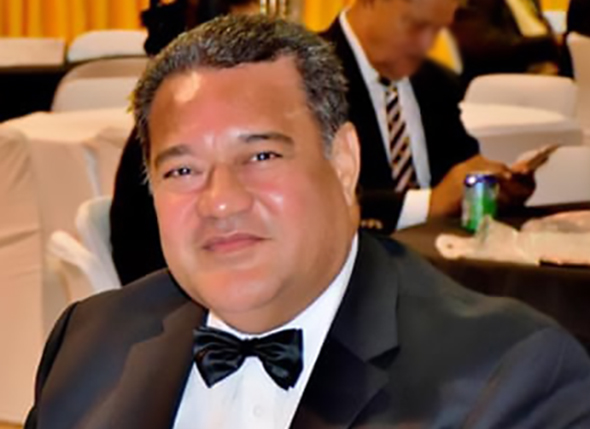
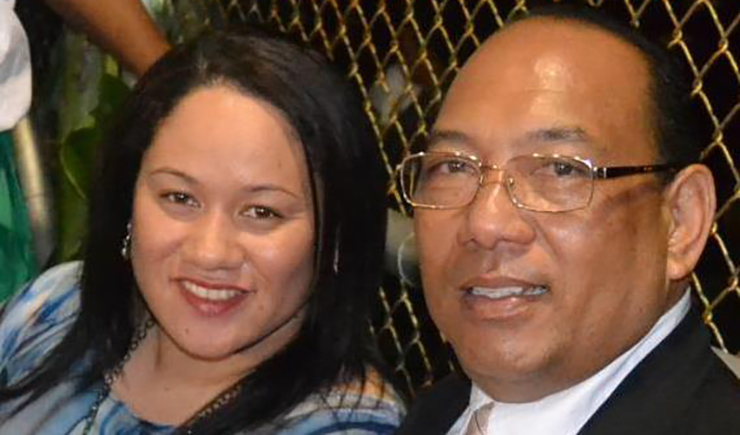
Minister of Infrastructure ‘Akosita Lavulavu and husband ‘Etuate Lavulavu. Photo/Akosita Lavulavu (Facebook)
She was skipped over during a parliament debate on the national budget before the Minister of Finance Tevita Lavemaau stepped in and announced the Ministry of Infrastructure and Tourism budgets on her behalf.
Akosita began addressing the House with the normal practice of fakatapu before she was interrupted by nobility MP Lord Tu’iha’angana.
The king’s noble said Akosita was convicted by the court and it was not appropriate for her to deliver a speech on her budgets in the House.
He said the House was debating on important matters relating to the national budget and law.
Lord Tu’iha’angana said it was not easy for him to raise his concerns in front of Akosita but he thought he must say it because all MPs have oaths to maintain the constitution and the law of the country.
The MAFF Minister Lord Tu’ilakepa spoke in support of Lord Tu’iha’angana.
House proceeds
The House then proceeded with the announcements of three budgets from the Public Service Commission, Department of Statistics and MEIDECC before the Minister of Finance announced Akosita’s budgets.
Lord Tu’iha’angana. Photo/ Facebook (Salote Sisifa)
Lord Tu’iha’angana’s concern has sparked heated debates in the House with the defiant Prime Minister reading out the clause 23 of the constitution saying he cannot do anything against Akosita until the day of her sentencing because the clause allowed her to stay in office if she will seek a leave to appeal her sentencing within 42 days.
But Lord Tu’iha’angana was worried and asked whether Akosita will seek leave to appeal her sentencing or not.
The exchange also sparked a debate in the House about the importance of conscience approach.
Lord Tu’iha’angana said the Prime Minister’s stance on Akosita according to the constitution was clear but it was important for him to speak up because he wanted to have his heart and conscience cleared out of his concern.
Akosita and her disgraced husband ‘Etuate Lavulavu was found guilty of defrauding more than half a million pa’anga of the government school grant scheme.
They are set to be sentenced on July 2.
In full pay
Akosita’s failure to perform her duty in parliament came after the Prime Minister has remained silent when he was asked to explain why the government paid thousands of pa’anga to Akosita during the six weeks she was out of her office and in court. She will continue to be paid for another estimated three months.
There have been calls for the Prime Minister to come clean and explain this situation to the public and tell them who will pay back that money if Akosita is denied an appeal and will be sent to jail next month.
The budget
The Minister of Finance told the House the Ministry of Infrastructure’s budget for 2021/2022 was $39.6 million. It included $1.7 million budget support and $13.7 funded by the government.
He did not give the total amount of the budget for Tourism but he said $1.5 million was allocated for the new tourism board of directors.
The House later passed the National Budget for 2021-2022, of $618.4 million pa’anga.
Lavemaau told the House that the deficit budget will be financed 60 percent by government, and 40 percent by Tonga’s foreign development partners.
A formal Government apology for the dawn raids will be delivered later this month, Prime Minister Jacinda Ardern has announced.
Immigration officials targeted the homes of people from the Pacific Islands in the early hours of the morning, beginning in the 1970s in a crackdown on alleged “overstaying”.
The policy followed a boom in jobs after World War II, where many people from the Pacific Islands were encouraged to come to New Zealand to fill roles in growing industries.
As revealed by 1 NEWS earlier today, the apology will be made on June 26 at the Auckland Town Hall.
“The dawn raids period is a defining one in New Zealand’s history,” Ardern said.
“To this day, many members of our Pacific community still struggle to talk about their experiences during that period.
“They were routinely severe with demeaning verbal and physical treatment.
“To this day Pacific communities face prejudices and stereotypes … an apology can never reduce what happened, or undo the decades of disadvantage experienced as a result, but it can contribute to healing for Pacific peoples.”
Social justice group the Polynesian Panthers protested the raids conducted nearly 50 years ago, this year still calling for an apology.
Reverend Alec Toleafoa, who joined the panthers as a 16-year-old, told 1 NEWS earlier this year that “part of the apology is putting to right the injustice that was done, what we’d like to see is recognition of that injustice. We would also like to provide something that is sustainable for our people, following an educative process…”
NZ Herald reported the open letter by Benji Timu said the raids had caused generational trauma.
“The past is implied as forgiven and forgotten; however, the effects of the past still linger in the fabric of our identity 50 years on,” it stated.
RNZ reported last month the Ministry of Pacific Peoples responded to the open letter, saying Pacific People’s Minister Aupito William Sio was receiving advice around an apology.
ANALYSIS: The Prime Minster has accused the king, Parliament and former governments of ill-intention (“loto tāngia”) and breaking the Constitution when they sacked former Speaker Lord Lasike and former Cabinet ministers.
Hon. ‘Akosita and her husband ‘Etuate Lavulavu
In July 2012, Lasike was convicted and fined for illegally possessing ammunition. As a result, he automatically forfeited his seat in Parliament.
Prime Minister Pōhiva Tu’i’onetoa claimed these dismissals were unjustified.
He said leaders “kau taki” of those days did not live by the Constitution and it had cost some MPs their jobs.
The Prime Minister made the remarks in a livestreamed programme last week as he attempted to defend convicted Cabinet Minster Akosita Lavulavu and her husband ‘Etuate Lavulavu who have plundered more than half a million pa’anga of the government school grant scheme.
It was during the same radio talk show on Friday that he likened the church schools’ overpayments and misspending of the government school grant scheme to the Lavulavus plundering TP$558,600.
Many criticised the Prime Minister for making such comparisons against the churches.
The Lavulavus are set to be sentenced on July 2.
Prime Minister Pōhiva Tu’i’onetoa. Photo/Kalino Latu
In justifying his use of Clause 23, which allows a convicted government representative to stay in office for another 42 days after their sentencing if they seek leave to appeal, the Prime Minister said he could not make any decision which went against the Constitution.
He then gave examples of previous dismissals and a court case he claimed were unjustified to support his stance on the Lavulavus.
Tu’i’onetoa cited the incident in which former Minister of Finance Dr ‘Aisake Eke was asked to resign in 2017.
He also mentioned other ministers and MPs who he said had resigned, but did not identify them. He said he was almost forced to resign after he refused to sign a government deal.
But what are the realities about these ministers and Lord Lasike’s dismissal?
Lord Lasike was dismissed in 2012 after an advice from the then attorney general was approved by King Tupou VI. At the time, the Office of the Legislative Assembly said the decision was made by the king under Clause 61(2) (c) of the Constitution. The noble’s title was also removed after he committed an offence under section 4(2)(b) of the Arms and Ammunition Act.
In 2017 the then Minister of Finance Dr ‘Aisake Eke was told to resign. The Late Prime Minister ‘Akilisi Pōhiva announced that Dr Eke had to go after a no confidence vote against him was defeated. Dr Eke abstained from voting. It was the King and Prime Minister who processed Dr Eke’s resignation according to their prerogative under Clause 51.
Although Tu’i’onetoa did not name two of the other ministers he alleged were unlawfully forced out of office, it appears he was talking about Education Minister Hu’akavameiliku and Finance Minister Tevita Lavemaau.
The King revoked their ministerial positions after a recommendation by ‘Akilisi Pohiva. It was announced that the reason for the revocation included the duo paying gift money without the prime minister being made aware of it. The dismissal was made according to Clause 51.
Is Tu’i’onetoa’s comment misleading, and untruthful?
The Prime Minister appears to have confused the Court of Appeal decision to overturn Lord Lasike’s sentencing with his dismissal by the King according to the Constitution. These were two different incidents and should not be mixed up.
The Court of Appeal overturned Lord Lasike’s guilty verdict on the grounds that there had been a miscarriage of justice while the Supreme Court dealt with his charges of possession of ammunition without a license.
There was nothing to suggest that the quashing of the Supreme Court’s decision had anything to do with the King’s decision to sack Lord Lasike.
Tu’ionetoa was wrong again when he claimed that Dr Eke’s dismissal was unjustified and that the Constitution had been disregarded. It was in fact made based on reasonable grounds because, among other things, the then Prime Minister ‘Akilisi Pohiva was not happy with Dr Eke’s refusal to support the government by choosing to abstain in the vote of no confidence. In fact, his resignation was approved by the King under the Prime Minister’s recommendation under Clause 51.
Prime Minister Tu’i’onetoa, who appeared to have read his response to media from a written document, and often stopped to correct his mispronunciation on Radio FM 87.5 on Friday, failed to identify which clauses of the constitution His Majesty, former prime ministers and Parlianment had breached.
He also failed to prove that the king, the parliamentarians, and former governments were ill-intentioned when they made the dismissals.
Should the Prime Minister stop trying to confuse the media and the public?
The Prime Minister’s attempt to drag in Lord Lasike’s dismissal to justify his defence of the Lavulavus was wrong because Lord Lasike was elected by the Nobles to the House after he was found not to have committed any offence prohibited under the election acts.
Tu’i’onetoa’s re-appointment of Akosita as Minister of Infrastructure while knowing she was facing serious fraud charges that could send her to prison for seven years has raised many serious questions. The Prime Minister and former Auditor General should have been aware of the implications of Clause 23 in her case.
It has to be made clear that Lord Lasike did not initially take legal action against His Majesty or Parliament for dismissing him. He was appealing his conviction by the Supreme Court after he was prosecuted for breaking the ammunition acts and was finally acquitted.
Lord Lasike’s compensation from government was justified because there was a miscarriage of justice in his court case.
What has the Prime Minister kept from the media?
The Prime Minister has remained silent when he was asked to explain why the government paid thousands of pa’anga to Akosita during the six weeks she was out of her office and in court. She will continue to be paid for another three months.
The Prime Minister should come clean and explain this situation to the public and tell them who will pay back that money if Akosita is denied an appeal and will be sent to jail next month.
The Prime Minister should apologise to His Majesty, Parliament and the nation for his failure to take appropriate action against Akosita. He should stop making wild accusations and unfounded claims in an attempt to divert criticism from his refusal to sack Akosita. He is the only one to blame for this situation since he appointed her in the first place.
If Akosita’s appeal is denied or if her appeal goes ahead and fails and she and her husband are jailed, the only decent path the Prime Minister can take is to resign to save the reputation of Parliament and the kingdom.
EDITOR’S NOTE: This story was updated to reflect the fact that the king dismissed Lord Lasike following an advice from the then attorney general.
Former Minister of Finance Dr ‘Aisake Eke who was one of the witnesses for the convicted Lavulavu couple has pledged to fight to clear his name after the Supreme Court judge said he was not telling the truth.
Dr Eke had given evidence that non government schools were allowed to set their own fee system and that it was acceptable to write a cash receipt of the value of the barter item tendered.
Justice Nicholas Cooper said Dr. Eke provided no proof for his claims and that all his credibility was gone.
“It was obvious he was not desirous of telling the truth.”
Dr Eke also claimed that bartering services or labour for school fees was used world wide.
Under cross-examination by the prosecutor the former Minister of Finance claimed it was perfectly legitimate for the Institute to record a monetary value for the barter in the receipt book.
He said one student had brought a pig as part payment and the value of the pig had been recorded despite it contradicting the pro-forma words on the receipt.
Dr Eke also claimed he “knew of under payments and over payments” but “do not know any institutions that were prosecuted for overpayments.”
He said non-government schools were allowed to set their own fee system and that it was acceptable to write a cash receipt because of the value of the bartered item tendered.
He said during the trial which convicted Cabinet Minister Akosita Lavulavu and her husband ‘Etuate Lavulavu that enrolment figures were manipulated when there were differences between first and second semester.
The couple are set to be sentenced on July 2 after they have plundered more than half a million pa’anga from the government school grant scheme.
Dr Eke said during the trial there had been an assumption that audits were being held annually and that money was only released to the Institute after an audit had been made.
However, government officials were very busy and there was a lack of co-ordination, despite calls for improvements in the process in 2016. Staff conducting audits were told to follow earlier Cabinet decisions.
Dr Eke stands by his claims
His lawyer, Tongan-Auckland based Amelia Schaaf told Kaniva News Dr Eke was subpoenaed by the Lavulavu to appear as a witness in their trial.
Dr Eke said what he provided to the Court was true and he stands by those statements.
“Non-government educational establishments in Tonga are free to formulate their operations and policies and how school fees are paid.
Their school fees can be paid by cash or “in kind”, with Tongan mats or tapa pieces being provided in lieu of cash.
“This reflects the reality of poverty in Tonga as some parents are unable to pay school fees.
“This was the practice at ‘Atenisi and ‘Unuaki ‘o Tonga institutions.
“For government schools, school fees must be paid in cash.
She said the conclusion by Justice Cooper has greatly damaged Dr Eke’s reputation.
“Dr Eke is seeking legal advice whether there is any avenue for him to challenge the damaging conclusion made by Justice Cooper.
“He has worked in various institutions with integrity and has not had his truthfulness questioned. He hopes that people reach their own conclusion about his character, and not on the conclusion by the Judge”.
In kind or barter school fees
As Kaniva News reported, the Lavulavus claimed students did not pay fees in 2013 and 2014 and said they were given the option of making handicrafts or working for the Institute.
“They were able to work in services in buffet dinner services,” Etuate said.
“They were also able to work in tour guiding services. Also do some cleaning up of rubbish at school”
These types of payments were described in court during the trial as barter or payment-in- kind.
Auditor General
Auditor General Sēfita Tangi told the court Cabinet had made no decision to allow these kinds of payments.
“Auditor General made the point that UTRI did not have a record system to prove ‘ in kind’ payment system”.
“Cabinet decision only allows school fees; the reciprocated monetary receipt. Which means pay in cash,” Tangi said.
“This has been procedure probably more than a century for schools in Tonga”.
Payment-in kind or barter had never been accepted.
Attorney General Linda Simiki Folaumoetu’i has confirmed that one witness has been identified for potentially committing perjury during the Lavulavu trial.
She said she could not release any details because police were still investigating and charges had not been laid.
Police from the Serious Crimes Unit, which led the investigation against the Lavulavus, were present in Court throughout the trial.
“No doubt they would have been alerted to the fact that a witness may have potentially committed perjury during the course of giving evidence or even from the judgment,” the Attorney General told Kaniva News.
She said her office would work with the police if charges were going to be laid.
If there was a suggestion that a witness in a criminal case had deliberately given false evidence under oath, the matter would be referred to Police to collect the relevant evidence, such as the official transcript of the trial.
“We cannot use a specific judgment and the views and findings of a judge in relation to the credibility of a witness to conclude that a witnesses has committed perjury,” the attorney General said.
“Evidence must be independently obtained by Police so that there is evidence to prove a charge of perjury.”
The guilty verdict
The Supreme Court has found Cabinet Minister and MP Akosita Lavulavu and her ousted husband former Cabinet Minister and MP Etuate Lavulavu guilty of defrauding $558,00 of the government school grant scheme.
‘Etuate, 62, and Akosita, 36, were charged with knowingly dealing with forged documents and obtaining credit by false pretenses, after irregularities in an audit of the ‘Unuaki ‘o Tonga Royal Institute in 2016. Akosita was the director of the school while ‘Etuate was the president.
They have been released on bail ahead of their sentencing on July 2.
What were the reactions against the PM?
The Prime Minister’s repeated refusal to penalise Akosita has sparked a huge uproar with many calling on him to resign.
In Parliament last week the noble MPs led by Lord Tu’iha’angana along with Opposition Party took side with the public and told the prime minister he had to do something against Akosita.
There were calls for him to use his common sense and stand her down to maintain the government’s reputation and the king’s dignity.
Tu’i’onetoa has been slammed for using the Holy Bible and Clause 23 of the Constitution to defend his decision to keep Akosita in office while at the same time the constitution clause 51 has given him a prerogative power to force her to resign.
The Prime Minister is now facing another backlash over revelations about her pay. Critics have lashed out, saying that he has repeatedly changed his justification for taking no action against her.
In a series of startling comments this morning Prime Minister Pōhiva Tu’i’onetoa compared the serious defrauding of the government grant scheme by convicted Cabinet Minster Akosita Lavulavu and her husband ‘Etuate Lavulavu to alleged overpayments made to church schools.
Speaking on radio, Tu’i’onetoa claimed more money had been paid to church schools than the institution plundered by the Lavulavus.
He said prosecuting the Lavulavus without taking any legal actions against the church schools baffled him.
He claimed the church schools used the money to pay for things which were not in accordance with the laws and regulations.
Tu’i’onetoa said the law was breached and the government made a decision to deduct those monies from the following year’s payments from the grant to those particular schools.
Imprecation
Tu’i’onetoa then referred to the Lavulavu case and said: “This is the only case which was taken to the court.
“And I do not know what was the intention behind it.
“Why were other schools not included?
He then paused and appeared to have attempted to compose himself before he began cursing and warning the Lavulavu’s critics.
The Prime Miniser was visibly emotional and tearful while defending the Lavulavus this morning on Radio Broadcomm FM87.5 livestream.
“If you are a Christian and made a serious judgement on this case do it and remember it was a judgement made by a sinner against his brother or sister who was also a sinner.
“Do not look down on your brother or sister as that was not Christian like.
“Do not shout out crucify as you may be the one next.”
The Prime Minister reconfirmed his stance on using Clause 23 of the constitution to defend his refusal to take immediate action against Akosita.
He never mentioned anything about clause 51 of the constitution which gives him an exclusive power to sack his ministers at his pleasure. it was the same clause Late Prime Minister ‘Akilisi Pōhiva used to force Akosita to resign in 2018 when she was charged by Police. At the time Akosita did not use clause 23 to challenge her dismissal. She was reappointed by Tu’i’onetoa in 2019.
Analysis
The Lavulavus’ serious case which was described by the judge as “an example of the worst sort of dishonesty” has plunged the kingdom and its international community into a crisis of confusion.
In a small community like Tonga where there is lack of professional news media and the influence of the government on local news outlets became normal, it is important for authoritative figures like the PM to show professionalism, civility and respect.
The Prime Minister must stop responding to the media in a way that makes it look as if he is trying to spin the Lavulavu story to support his opinion and disregard the facts.
Tu’ionetoa has made the same claims that former Finance Minister Dr ‘Aisake Eke made in court in support of the Lavulavus. However, the Supreme Court did not believe Dr Eke when he said he “knew of under payments and over payments” but did “not know any institutions prosecuted for overpayments.”
Comparison
The Prime Minister’s comparison of the church schools’ alleged overpayments to the Lavulavus’ fraud case could be interpreted as telling the public the church schools had defrauded the government school grant scheme in exactly the same way as the Lavulavus.
Questions could arise from Tu’i’onetoa’s comment, including asking whether the church schools used hundreds of fake student names to claim money from the government as the Lavulavus did.
Did those schools really plunder funds and use nothing for the school or the teachers as the Lavulavus did?
If the Prime Minister was so concerned about the alleged misuse of funds by the church schools, why did he not consult the Auditor General and the Office of the Crown Law about the issue?
Church schools payments
We previously reported that Australian and New Zealand funds for non-government high schools in Tonga had been withheld by the Tongan Ministry of Education and Training.
We were told by the New Zealand Ministry of Foreign Affairs and Trade (MFAT) the money was misspent.
MFAT said the grants were being diverted into school operational budgets, which was not their intended purpose.
MFAT told Kaniva News in March 2016 the money had been cleared and it was released after two years.
We reported in April this year that some church schools funds had been withheld after the auditor found the schools had used them to pay for expenses not covered by their contract agreements.
The Free Wesleyan Church and Catholic Schools have told the media no one defrauded the grant, but they used the money to pay for school activities for which they did not have funds.
It is understood the government auditors became involved, but there were no reports that the church schools defrauded the grant scheme or dishonestly applied for it.
FAKAMATALA NOUNOU FAKATONGA
Ne māfana mo tangi ‘a e ‘Eiki Palēmia’ lolotonga ‘ene polokalama mai he feinga holo ke ‘aofi ‘a e ongo Lavulavu ‘aki ‘a e mafai ‘o e fakamaau’anga ‘i he kupu 23 hala ha’ane lave ‘e taha ki hono mafai tonu mo aoniu ‘oku foaki ‘e he kupu 51 ke ne tuli ha minisitā ‘i ha fa’ahinga taimi pe. Na’e ‘osi tuli ‘a Akosita he 2018’ lolotonga pe ‘oku laumālie ‘a e kupu 23 hā na’e ‘ikai ngāue’aki ai ia he taimi ko ia? Ka ne toki ngāue’aki ia ‘e ia? ‘Ikai ne ‘ilo e Akosita ‘oku mafai lahi pe PM ia he kupu 51 ki hono tuku ia ki tu’a? Kaekehe kuo ‘alu ‘eni e palēmia’ ia ki hono talatuki’i e kau fakaanga ‘o e ongo Lavulavu’ mo fakatokanga ‘oua te nau kaila kalusefai’ na’a ko kinautolu ia ‘e hoko’. Kuo ne toe toho mai ‘eni mo e totongi hulu hono fakamoleki ‘ o e pa’anga ‘a e ngaahi ako siasi ia ki he ‘ū me’a kehe pe ia ma’a e ngaahi ako’ ni ke ne fakatatau’aki ‘a e fu’u mātu’aki kākā fakalilifu mo ta’efaitotonu ‘a Sita mo ‘Etu. Na’e ‘osi fai ‘e Dr ‘Aisake Eke ‘a e fo’i fakamatala tatau ‘i fale hopo ke malu’i’aki ‘a e ongo Lavulavu ka ne ‘ikai tali ia ‘e he fakamaau’anga’. Toe kehe ange hono fakalahi’i ‘e he palēmia he ‘oku ne ‘eke’i pe ko e ha ‘oku faka’ilo ai pe ongo Lavulavu’ kae hā ‘a e ngaahi ako siasi? Ko e fehu’i ‘eni ke tokoni mai e palēmia ‘o fakamahino? ‘A ia ko ho’o ‘uhinga’ na’e kākaa’i ‘i he ‘ilo’ilopau ‘e he ngaahi ako siasi’ ‘a e pa’anga tokoni ‘a e pule’anga’ ki he ngaahi ako’ ‘aki ‘enau fakafonu loi’i e ngaahi hingoa ‘e lau ngeau tupu’ ‘o ma’u mai ‘aki ‘enau pa’anga hangē ko e ongo Lavulavu? ‘A ia na’e ngāue’aki tavale pe ‘e he kau pule ‘o e ngaahi ako siasi’ ‘i he founga hala ‘a e pa’anga tokoni’ hala ke nau faka’aonga’i ki he kau faiako’ mo e ngaahi ako’anga’ hangē ko e ongo Lavulavu? Ne ‘osi tala mai ‘e he fakamaau’anga ne ‘ikai pe ha momo’i seniti ‘e taha ne ‘ave ‘e he ongo Lavulavu ki hona ‘apiako’ na ngāue’aki pe naua ki he’ena fiema’u pe ‘a kinaua. Pea na’e ‘osi fakahā ne ‘i ai e tōnounou he ngaahi pa’anga tokoni ki he ngaahi ako siasi’ ka ko e lea ne ngāue’aki ko e misspent pe overpayment pe fakaTonga ko hono fakamoleki ki he me’a ne ‘ikai fai ha alea pe ‘ai ki ai pe totongi hulu. Na’e ‘ikai ko hano kaiha’asi hangē ko e lea ne ngaue’aki ‘e he fakamaau’anga ko e plunder pe ma’u ‘i ha founga mātu’aki kākaa’i hangē ko e ongo Lavulavu. ‘A ia ko me’a ne hoko’ ko hono ‘ave ‘e he ngaahi ako siasi’ e silini’ ki he’enau operational budget, pe patiseti ngāue ‘o fua ‘aki pe ia ngaahi fakamole ki he ako’ koeuhi ko e ‘ikai ha’anau pa’anga ki ai’ kae me’apango’ ne ‘ikai kau ia he’enau aleapau mo e pule’anga’. Ko e fakamatala ia kuo ‘osi fai mei he ako’anga siasi’ tautefito ki he Katolika’ mo e Uēsiliana’. ”Oku ‘ikai mama’o mei he feinga taki hala’ leva ‘a hono fakatatau ‘e he palēmia’ ‘a e natula e fehalaaki ‘o hono ngāue’aki ‘e he ngaahi ako siasi’ ‘a e pa’anga’ mei he fu’u mātu’aki kākā tō ki tu’a ne fai ‘e ongo Lavulavu’.Ne ‘omi e fakamatala tonu ki he Kaniva’ mei he Potungāue ki Muli ‘a Nu’u Sila’ he taimi ne mau lipooti ai ‘a e keisi ko eni ‘a e ngaahi ako siasi’ pea ne iku puke tu’u ai ‘ e Nu’u Sila o ‘Aositelēlia ‘a ‘enau tokoni ‘o toki tuku ange he ta’u hoko ‘osi hono fakapapau’i kuo lava solova e palopalema ko ia’. Neongo ne te’eki tuku ange ai e pa’anga’ ia ki he ngaahi ako siasi ni’ihi tu’unga he palopalema ne hoko’. ‘Oku hangē kuo hange ‘e he palēmia’ ia ‘o lī ki lalo ‘a e ‘Atita Seniale’ mo e ‘Ofisi ‘o e Kalauni he ngali ‘i he’ene fakamatala tokua ‘oku na fakasiosio kehe pe kinaua mei he ngaahi ako siasi’. Pea ko e hā ‘oku ‘ikai ke ne fai ai ‘a e tu’utu’uni ki he ongo potungāue ko ‘eni ke fakatotolo’i mo faka’ilo e ngaahi ako siasi’ kapau ne nau ma’u e pa’anga’ he founga tatau mo e ongo Lavulavu’ he ko ia tonu ‘a e ‘ulu ‘o e ongo potungāue’ ni. Ka ne fai ‘a e fa’ahinga fakamatala anganga taki hala ki he ngaahi ako siasi’ ke fakatonua’aki ‘ene ta’efiefai ha me’a kia Akosita’. ‘Oku toe ‘asi mo e hangē ‘oku ‘ikai ke ne faka’apa’apa’i ‘a e tu’utu’uni ‘a e lao mo e ngeia ‘o e Fakamaau’anga Lahi’ kuo fai ki he ongo Lavulavu’.
Former All Blacks midfielder Malakai Fekitoa is switching his international rugby allegiance to Tonga.
Malakai Fekitoa has signed on with Toulon for two years. Photo/All Blacks (Facebook)
The 29 year is one of four former New Zealand and Australian internationals who will represent the kingdom in next weekend’s Final Olympic Sevens Repechage tournament in Monaco.
The others are former Wallabies forward Lopeti Timani, ex Australian sevens international Afusipa Taumoepeau and Tasman winger Tima Fainga’anuku, who is a former New Zealand sevens representative.
Fekitoa will link up with the Tonga sevens squad already in Monaco after playing in Wasps’ final English Premiership match against Leicester Tigers this weekend.
The former Auckland and Highlanders star, who was born on Hihifo in the Ha’apai Islands, made his test debut in 2014 and played the last of his 24 tests for New Zealand against the British and Irish Lions four years ago.
He represented Tonga in sevens before moving to New Zealand as a 17 year old, after earning a scholarship to Wesley College.
Players can switch their international allegiance by playing in an Olympic qualifying event, provided they have a passport for the second country and have completed a stand down period of three years.
By playing in 50 percent of Tonga’s matches at the Olympic qualifying tournament in Monaco, Fekitoa will become eligible to play for the ‘Ikale Tahi national team.
However a mouth-watering debut against the All Blacks in Auckland next month is a no-go, with a test debut pencilled in for November.
Global travel restrictions, which including a lack of available places in New Zealand’s Managed Isolation Quarantine facilities, means Fekitoa will not be available for the ‘Ikale Tahi’s July tests against New Zealand and Samoa.
RNZ Pacific understands two-test All Black halfback Augustine Pulu had also been keen to represent Tonga but did complete the required paperwork in time to be eligible.
Tonga internationals Cooper Vuna, Atieli Pakalani, Nafi Tuitivake and Sam Vaka, as well as Manu Samoa international Tim Nanai-Williams have all previously utilised the Olympic loophole to switch their international allegiance from Australia and New Zealand to represent their Pacific heritage.
Extended Tonga sevens squad for Monaco:
Fotu Lokotui, Jack Ram, Alaska Taufa, Roy Lolesio, David Halaifonua, Saia Fekitoa, Afusipa Taumoepeau, Malakai Fekitoa, Daniel Kilioni, Atunaisa Manu, Lotima Fainga’anuku, Vaea Vaea, Lopeti Timani, Ofa Fono, Violeti Kolo, Sunita Palu Fihaki.
Police are looking for three people who were in the van an Auckland man fell from while it was moving, leading to his death.
Police say this man who was in the same vehicle 28-year-old Kimleang Youn was thrown from may be able to provide valuable information into the case. Photo / Police
On April 28, Kimleang Youn fell from a vehicle he was travelling in on Robertson Road in Māngere and sustained critical injuries. The vehicle then fled the scene.
About three weeks later, the 28-year-old died in hospital.
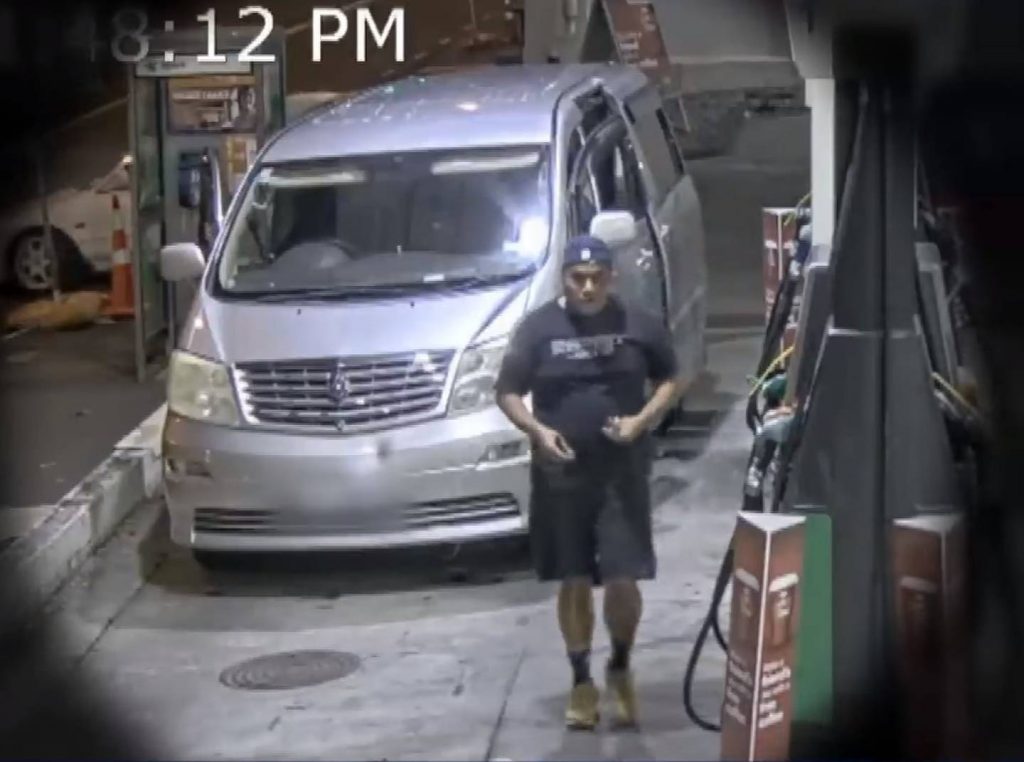
On Police Ten 7 last night, Detective Sergeant Robert Kerr revealed the van, a silver Toyota Alphard, had been recovered by police and is being examined.
Kimleang Youn Source: Supplied
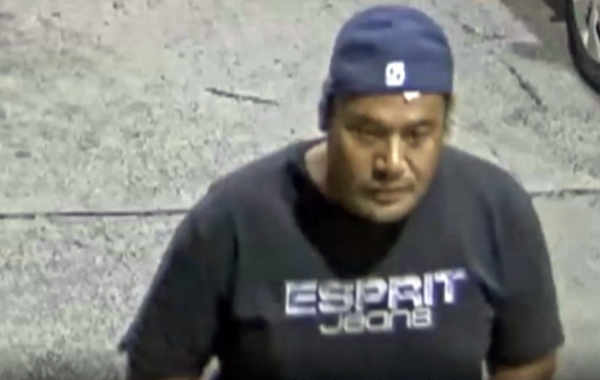
Police also revealed new CCTV footage captured about three hours after the incident. It shows at least three people in the van at the BP Connect on Fanshawe Street in central Auckland.
The footage clearly captured one male passenger’s face, and shows the height and build of the van’s driver. Another passenger remained in the vehicle.
Kerr said police were “very interested” in speaking with the trio because they may have “crucial information” about what had happened to Youn.
Police are treating the circumstances surrounding Youn’s injuries as suspicious.
Police are asking witnesses or anyone with information to come forward.
Kerr said there may have been young people who filmed the incident from a nearby bus stop.
Police say this man who was in the same vehicle 28-year-old Kimleang Youn was thrown from may be able to provide valuable information into the case. Photo / Police
Anyone with information can contact the Operation Kinley team on (09) 261 1321. People can also call Crimestoppers on 0800 555 111 to give information anonymously.
The Climate Change Commission has released its final report laying out the roadmap for the country to slash emissions and become carbon neutral by 2050.
Photo: RNZ / Dom Thomas
The commission received more than 15,000 submissions in response to its draft advice released in late January.
The plan outlines sweeping changes to society, laying out proposals for the first of three emissions budgets for Aotearoa.
These set the maximum amount of greenhouse gas emissions over five-year blocks: 2025, 2026-2030 and 2031-35.
It calls for progressively deeper emissions reductions. From 15 percent by 2025 for long-lived greenhouse gases – up to 63 percent by 2035.
And for biogenic methane – a 8 percent cut by 2025, 12 percent by 2030 and 17 percent by 2035.
By 2050 the target range for biogenic methane is set between 24 and 47 percent.
New Zealand made international commitments in 2006 to cut total emissions to 30 percent of 2005 levels by 2030.
However, the report said if New Zealand was to play its part as a developed nation its Nationally Determined Contribution needed to be much more than 36 percent – but that was a decision for politicians.
The government has until the end of the year to respond with its own plans.
Some Climate Change Commission final report recommendations
Transport
Nearly all cars imported by 2035 must be electric vehicles
Road transport can be almost completely decarbonised by 2050
By end of 2022 set targets to get more people walking, cycling and using public transport
Agriculture
To get to the higher 47 percent reduction range for agriculture would require cutting agricultural production from livestock unless new technology came online.
Set a farm emission carbon pricing scheme, or look to bring agriculture into the emission trading scheme (something the government must make a decision on by next year)
Energy
Phasing out coal as soon as possible
Phase out the use of boilers that burn fossil fuels
A major expansion in the electricity system needed to start immediately
Forestry
Establishing a comprehensive plan for new native forests.
These can be on steeper, less productive land. Its plan assumes assumes 300,000 hectares of new native forests and 380,000 hectares of new exotic forests are to be established between 2021 and 2035.
Just transition
Supporting workers to transition from high-emissions sectors to low-emissions sectors
Key changes in the final report compared to the draft
Deeper cuts needed in the first two budget periods – about three times the draft’s target in 2025, but the curve smooths out after that. This will make meeting the 2050 targets harder.
Fewer EVs to be in the fleet in early budget periods than first projected
Herd numbers may need to drop as assumptions about potential farming efficiency improvements were too optimistic
It had under estimated how much land would be converted to horticulture, it has now revised this up from 2000 hectares a year to 3500 hectares a year
Native reforestation will take some grazing land
Increase in the ambition around cutting waste
Revised upwards the amount of methane emitted from landfills that will be captured
More paths laid out to get to emissions targets
Deeper integration of Treaty of Waitangi principles
It said the government needed to change the emissions trading scheme to make it fit for purpose.
Government responds
The government said the report showed meeting the climate targets were achievable and affordable with existing technology, and delaying action will end up costing more.
It said the commission had revised up the cost of inaction to about 2.3 percent of GDP by 2050 – almost double the cost to the economy compared to acting now.
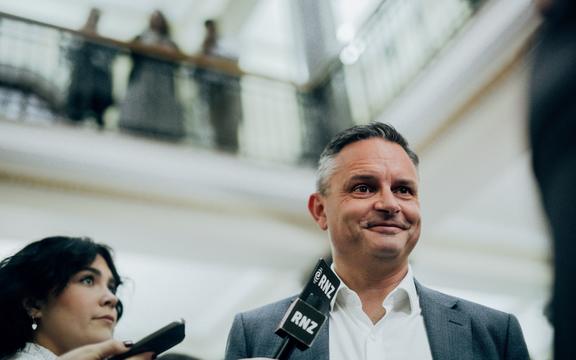
Climate Change Minister James Shaw said this government had done more to fight the climate crisis in the last three-and-a-half years than the combined efforts of governments over the last three-and-a-half decades.
Climate Change Minister James Shaw. Photo: RNZ / Dom Thomas
“However, we are yet to see a sustained decline in the pollution we put into the atmosphere,” Shaw said.
“And even when we do, we need to ensure that decline continues and, in fact, picks up pace, every year until we hit net-zero. The commission’s advice makes clear that this is possible, but only if we act now.”
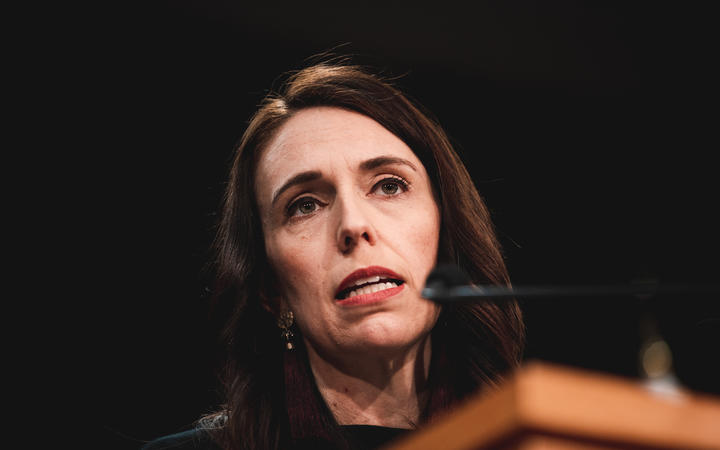
Prime Minister Jacinda Ardern reiterated her statement that climate change was this and the next generation’s nuclear-free moment.
“I view the commission’s report as one of the most significant documents I’ll receive in my time as prime minster.”
The government has until the end of the year to respond to the commission’s climate roadmap with its own Emissions Reduction Plan.
Australian actress Rose Byrne is set to play Prime Minister Jacinda Ardern in a film about the week following the 15 March Christchurch mosque attacks, according to US media reports.
‘Bridesmaids’ actress Rose Byrne. Photo: AFP / 2020 Getty Images
New Zealand screenwriter and producer Andrew Niccol will write and direct the project, They Are Us, which focuses on the week following the 2019 attacks, the Hollywood media outletDeadline reports.
Glen Basner’s FilmNation Entertainment is shopping the project to international buyers at the upcoming Cannes Virtual Market, according to the report.
“They Are Us is not so much about the attack but the response to the attack … how an unprecedented act of hate was overcome by an outpouring of love and support,” Niccol toldThe Hollywood Reporter.
Prime Minister Jacinda Ardern (file). Photo: RNZ / Samuel Rillstone