Home Blog Page 401

Tonga to face ultimate test against All Blacks 7s

This RNZ news is republished with permission

The Tonga men’s sevens team is embracing the chance to face off against the world’s best over the next two days.
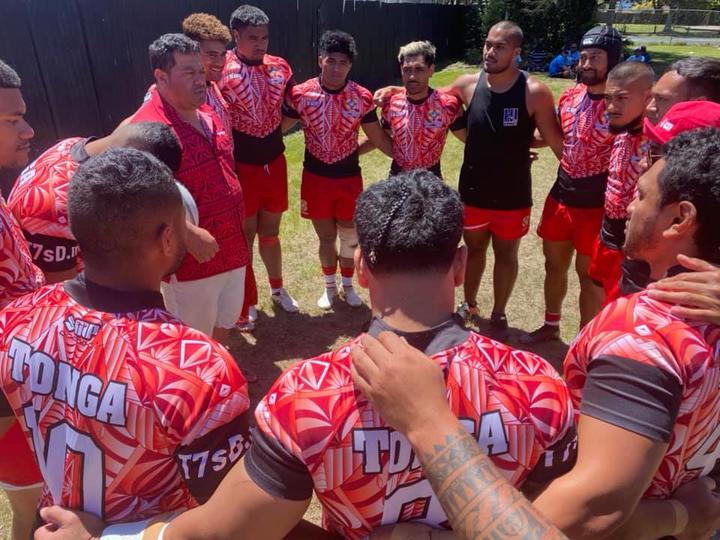
The Tonga men's sevens team reached the semi finals at the Tailevu Sevens in January.
Tonga coach Tevita Tu’ifua issues instructions at last month’s Tailevu Sevens. Photo: Supplied

The kingdom will play five matches against the All Blacks Sevens and a Fiji Barbarians team in Mount Maunganui as they step up their preparation for the final Olympic Qualification tournament in June.

It’s the third straight year Tonga’s New Zealand-based squad have tested themselves against the World Series champions and coach Tevita Tu’ifua is grateful for the opportunity.

“It is quite a blessing that we are able to base here in New Zealand with Covid and we have this opportunity,” he said.

“It’s a blessing for the group and also for the country as well, especially to have the relationship with New Zaland is quite a great blessing for us prior to the main event.”

Tonga will kick off their weekend against Tim Mikkelson’s All Blacks Sevens ‘Black’ at 2:30 this afternoon before backing up against Scott Curry’s All Blacks Sevens ‘Orange’ two hours later.

They’ll get a second shot at both teams on Saturday before wrapping up their campaign against the Fiji Baabaas.

Tonga reached the semi finals at the Tailevu Sevens in Auckland three weeks ago and Tevita Tu’ifua says the All Blacks will give them a clear idea of exactly where they’re at.

“These games are more for me of testing the players the level they’re at in regards to New Zealand being on the top [to] test themselves with the best, against the best, and I’m sure that’s what we expect in the qualifying in Monaco.”

It’s been over a year since Tonga last competed on the world stage, finishing sixth in the Sevens Challenger Series in South America before Covid-19 intervened.

An extended 30 man squad will feature in Mount Maunganui this weekend, including a handful of players from outside of Auckland who have travelled north at their own cost.
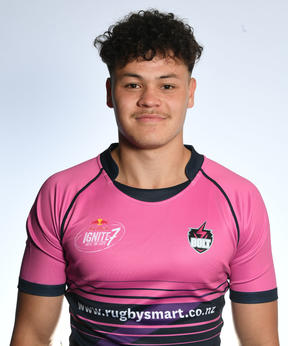
Auckland teen Caleb Tangitau impressed at December's Red Bull Ignite7.
Auckland teen Caleb Tangitau impressed at December’s Red Bull Ignite7. Photo: www.photosport.nz / Photosport Ltd

There’s also the prospect of an intruiging match-up between 17 year old Auckland flyer Caleb Tangitau, who’s been included in the All Blacks Sevens Orange line-up, and his 41 year old father Vaea Meesi Tangitau, who is a part of the Tongan squad.

“Not sure if Vaea get a second onfield but its more for son’s benefit,” admitted Tevita Tu’ifua, who also backed Tangitau the younger to impress in the black jersey.

“We all in full support of those young Tongan kids (who choose to play) for New Zealand.”

Tevita Tu’ifua says the next two days are a chance for players to push their case for selection in the Olympic Qualifier in Monaco.

“Some of the boys have been on our database and be able to make it through to sacrifice to be a part of the tournament. It’s an opportunity for them to trial out and see where they’re at for finalising our squad.”
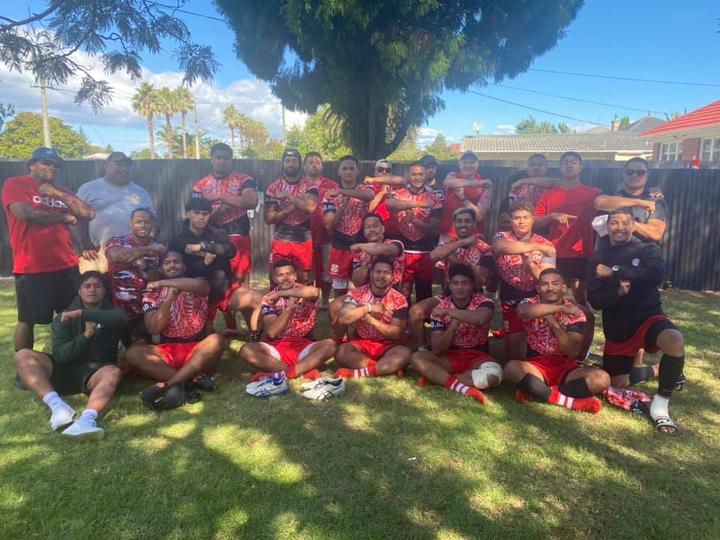
Tonga are building towards the final Olympic Sevens Qualification Tournament in June.
Tonga are building towards the final Olympic Sevens Qualification Tournament in June. Photo: Supplied

Covid-19 has played havoc with the sevens calendar over the past 12 months, with the Oceania Sevens among a host of tournaments to be cancelled and the World Series on indefinite hiatus.

Tevita Tu’ifua says they have no other tournaments scheduled before flying to Monaco in four months but discussions are ongoing about a possible hit-out between Oceania countries if the border situation improves.

“We still plan on going ahead in Monaco in mid June, the third week of June, so nothing has changed at this stage.”

Border workers receive first Covid vaccinations

This RNZ.co.nz story is republished with permission

A woman who organises support for families at the Jet Park Hotel says she feels “privileged and honoured” to be the first border worker to receive the Covid-19 vaccine in New Zealand.

New Zealand’s first 70 border workers have now been vaccinated for Covid-19 under strict infection prevention measures.

Jet Park Hotel worker Lynette Faiva was the first border worker to be vaccinated today.

She works in the hotel’s family team, organising support for families.

She said she felt “privileged and honoured” to receive the vaccine – and felt fine after having the shot in the arm which she described as “a tiny little prick”.

Faiva said the vaccination was no big deal.

“For me it’s not about being first, it’s all about you know having this opportunity to be able to get vaccinated, so I think for me that was important, so you know we’re in it together and we all got done at the same time, so I think we’re just very fortunate to be able to have that done.”

Watch a media conference with Dr Ashley Bloomfield and the vaccinated border workers here:

Director-General of Health Dr Ashley Bloomfield said today’s vaccinations were a “milestone that protects those at highest risk of getting the virus and helps to reduce the risk of it spreading into the community”.

“Today’s vaccinations reinforce the value of what we’ve all been doing for the past 12 months to keep Covid-19 at bay.”

He said today was the start of the “largest immunisation programme in our history”.

He said the vaccine roll out to MIQ and border workers will be staggered so that not all workers at each facility receive the jab on the same day.

People should expect mild symptoms after receiving the jab, he said.

The nurses vaccinating the border workers got their jabs yesterday but today is the first day of the government’s roll out plan.

Vaccine jabs are being given to the country’s border and managed isolation and quarantine workers, starting today and continuing for several weeks. They will need a second shot of the vaccine within 21 days.

The immunisation of 12,000 people begins in Auckland, then Wellington on Monday and Christchurch on Wednesday, before the rest of the country.

Dr Bloomfield said once they had been vaccinated, members of their household contacts would be next.

“The finer details of the wider public roll out later in the year are being finalised and information on when and how people can get their vaccinations will be announced soon.”

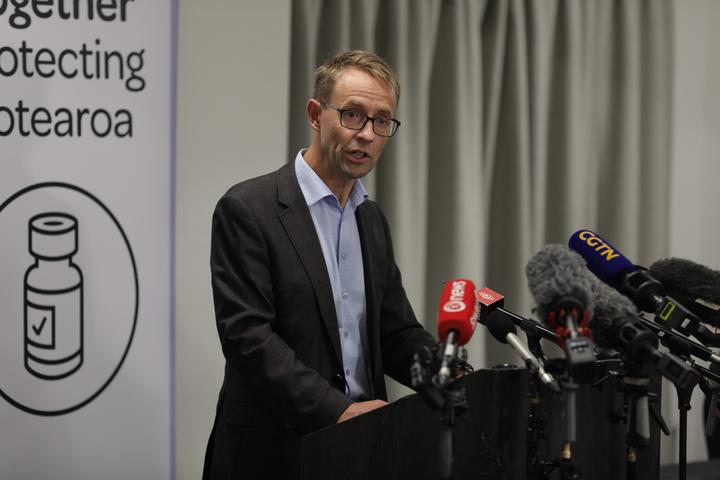
Some of the border workers to be vaccinated against Covid-19 and Director-General of Health Dr Ashley Bloomfield (right) at a media briefing.
A group of the border workers who were first vaccinated and Dr Ashley Bloomfield (right) at a media briefing. Photo: RNZ / Simon Rogers

Immunisation Advisory Centre director Dr Nikki Turner said they are confident the vaccine is safe.

Dr Bloomfield said the research, good science and technology behind the vaccines was highly sophisticated.

“We can have confidence in both the science and the processes that New Zealand has in place to ensure any vaccines we use are safe and effective.”

He said while today was the start of a new chapter in the fight against the coronavirus, there was still a long way to go.

“We need to remember that this pandemic is the most significant global public health challenge in a century and managing it will require all our efforts for some time to come.

“So, even though vaccinations have begun, it’s important everyone stays vigilant and sticks to the basics: staying home if unwell and getting advice about having a test, washing hands, coughing and sneezing into the elbow, and wearing masks or face coverings on all public transport.

“In the end, our success with this campaign will be achieved in the same way we have achieved success with our response – by acting collectively and in each others’ interests.”

Ashley Bloomfield speaking at a media briefing after the first group of New Zealand border workers were vaccinated.
Dr Ashley Bloomfield said people should expect mild symptoms after receiving the jab. Photo: RNZ / Simon Rogers

Yesterday 29 of the nurses who are giving the vaccines were immunised with their first dose.

Auckland University vaccinologist Helen Petousis-Harris said today is a key point in the pandemic fightback.

But she said that while it is a momentous day, the country still has some distance to travel before the pandemic is over.

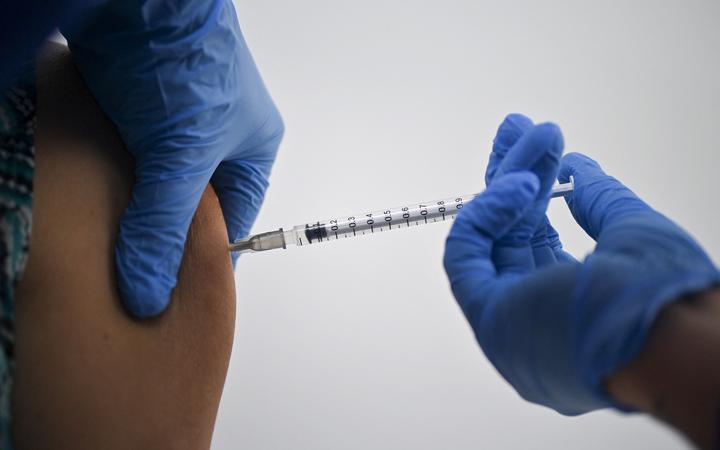
A dose of the Pfizer-BioNTech vaccine is administered.
A dose of the Pfizer-BioNTech vaccine is administered. Photo: AFP

Associate Professor Angela Ballantyne from the University of Otago said rolling out a national Covid-19 immunisation program is a “major clinical, ethical and logistical challenge”.

“This will be New Zealand’s largest immunisation campaign. But New Zealand is in the lucky position of having no or minimal community spread of Covid-19 and therefore has been able to formulate a careful and robust sequencing and distribution plan.”

Ballantyne said distribution needed to balance ethical values such as getting vaccines to the right people in the right order and pragmatic considerations, such as how to simplify and streamline delivery.

“So for example, we shouldn’t be trying to identify high risk individuals because this is too burdensome and slow. Instead we need to identify high risk groups – for example, border workers, MIQ workers, front line health workers, or people over the age of 80.”

Covid-19 vaccinations underway in Auckland

This RNZ.co.nz story is republished with permission

The country’s Covid-19 vaccine roll-out is officially underway, with some of the 100 vaccinators getting their first of two Pfizer jabs today.

The 25 crew – mostly nurses – received their inoculation at Auckland’s Jet Park hotel, so they can vaccinate frontline border staff from tomorrow.

Some vaccinators may be sporting a slightly tingly arm tomorrow when they turn the tables and start vaccinating border workers.

Experts say the shot in the arm to protect against Covid-19 will feel similar to the flu jab.

Immunisation Advisory Centre’s medical advisor professor Peter McIntyre said: “Some people will get fevers, some will get muscle aches and headaches those kinds of things which are unpleasant but very short-lived and able to be dealt with by simple medications”.

But the benefits were tangible, he said.

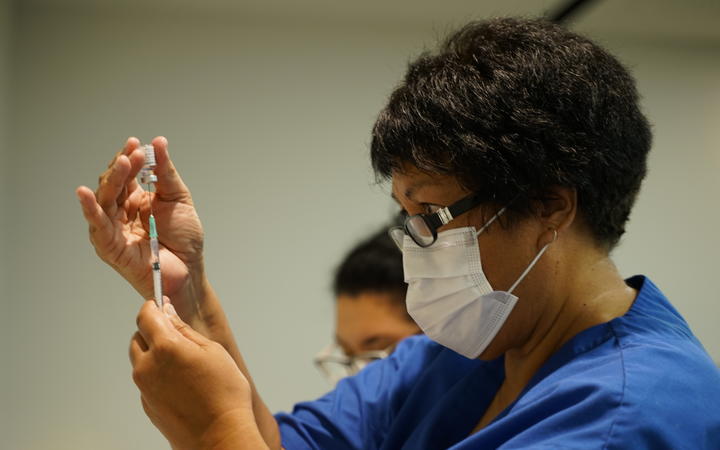
A vaccinator prepares one of New Zealand's first Covid-19 vaccinations on 19 February.
A vaccinator prepares one of New Zealand’s first Covid-19 vaccinations on 19 February. Photo: Supplied / Ministry of Health

“On the one hand that’s not so pleasant. On the other hand it’s telling you that your immune system is responding appropriately to the vaccine and your immune system is going to be ready should you encounter the actual virus in the future,” McIntyre said.

“That’s a whole lot better than wondering if you’re going to catch the virus tomorrow.”

Nurses Organisation professional nursing advisor Kate Weston said the vaccinators were ready to be first in line to receive their jabs today.

“It’s a very significant day for Aotearoa, marking the start of a programme. We are not dealing with a community outbreak so for us it’s a very proactive, strong place to be starting a vaccination programme from.”

The Ministry of Health had a trial run in Auckland, Wellington and Christchurch this week to trouble-shoot and stress-test the immunisation programme.

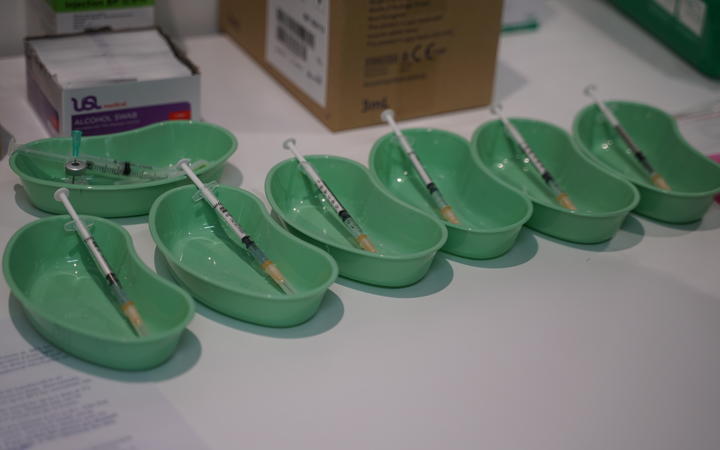
NZ's first Covid-19 vaccinations ready to be administered.
Twenty-five vaccinators were immunised on Friday. Photo: Supplied / Ministry of Health

From tomorrow, border workers will be vaccinated, starting in Auckland.

It’s expected to take several weeks before all 12,000 workers and their families are covered and they will need a second shot of the vaccine within 21 days.

The Vaccine Alliance is working alongside government on its Covid-19 immunisation strategy.

Clinical director Dr Fran Priddy said it was an important step in Aotearoa’s defence against the pandemic.

“People can feel very confident that this vaccine is going to protect them against symptomatic Covid.”

It would be important for the government and experts to encourage people to get the jab, Priddy said.

There was confidence the vaccine would work despite some unknowns, she added/.

“We don’t really have data yet on whether this vaccine or any of the Covid-19 vaccines can prevent spread of the virus but this will definitely have a high efficacy against preventing disease.”

Ministry of Health planning scenarios showed if there was a Covid-19 outbreak, the population at risk would be next in line to receive the vaccine after healthcare and border workers.

The vaccine is expected to be available to the general public in the second half of this year.

Comanchero gang leader Pasilika Naufahu jailed for 10 years

This RNZ.co.nz news is republished with permission

Comanchero gang leader Pasilika Naufahu has been sentenced to 10 years in prison.

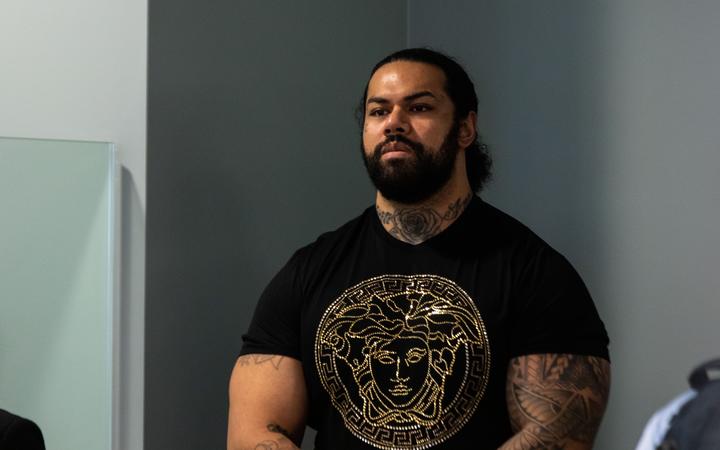
Comanchero Motorcycle Club president Pasilika Naufahu and a number of his associates and alleged associates have pleaded not guilty to drugs and money laundering charges.
Comanchero Motorcycle Club president Pasilika Naufahu at the High Court in Auckland. File photo Photo: RNZ / Dan Cook

A High Court jury found Naufahu guilty in October of money laundering and conspiring to supply the class B drug pseudoephedrine.

He was sentenced to 10 years imprisonment by Justice Graham Lang in the High Court in Auckland today.

The public gallery was filled with supporters, including Naufahu’s wife.

Naufahu, president of the gang’s New Zealand chapter, was arrested in 2019 after a large scale police operation.

He was found guilty last year of money laundering and conspiring to supply pseudoephedrine.

Naufahu had previously pleaded guilty to participating in an organised crime group, four charges of money laundering and unlawful possession of ammunition.

He was arrested following the 2019 police raids, as part of Operation Nova, that netted millions of dollars of property, cars, motorbikes and cash.

During sentencing, Naufahu’s lawyer Ron Mansfield said he was a 501 Australian deportee, who had struggled on his arrival to New Zealand.

“In my submission, as this court will see routinely, there is a lack of support for those who are returned to New Zealand under these provisions by the Australians.”

Mansfield said Naufahu had difficulty opening a bank account, obtaining accommodation and could not find employment.

Crown prosecutor David Johnstone said the defence had tried to unreasonably minimise Naufahu’s culpability as the leader of an organised criminal group.

Later, Justice Lang detailed a report describing Naufahu’s life in Australia.

He said the report disclosed Naufahu had a difficult upbringing, featuring financial stress and hardship.

It described how he had suffered with developmental difficulties, which lead to Naufahu being builled and isolated.

He was also teased because of his skin colour, and resorted to acts of violence against people who picked on him.

“Ironically this finally won you the approval of your father,” said Justice Lang.

“Prior to that point, your relationship with your father had been strained and had been marked with acts of violence by your father, towards you.”

Naufahu was expelled from school when he was 15 and later came into contact with Sydney gangs, before finding a brotherhood with the Comancheros, the report said.

He was surprised to be deported, and when Naufahu arrived in New Zealand he was isolated from family and social networks.

Justice Lang said it was unsurprising Naufahu had sought the company of others in a similar situation to himself, which had ultimately led to him establishing the New Zealand chapter of the Comancheros.

It had also ultimately led to the offending, which Justice Lang accepted had been committed in the hope Naufahu’s family would not suffer the same financial depravation of his upbringing.

Justice Lang said the report also hinted Naufahu was considering a change of lifestyle, but he said the chances of this were remote.

Covid-19 update: One new community case, linked to existing Auckland cases

This story by RNZ.co.nz is republished with permission

There is one new community case of Covid-19 in New Zealand today, linked to the existing Auckland cases.

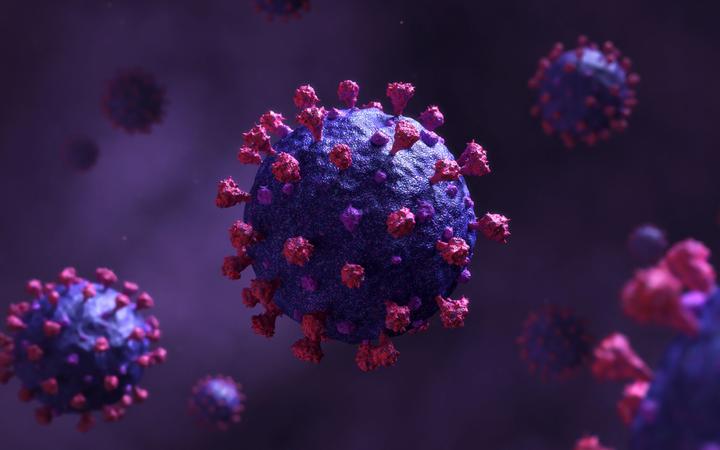
Covid-19 corona virus macro 3d illustration
Photo: 123rf.com

The update was provided in a statement from the Ministry of Health.

The new case is a household contact of the three community cases announced on Wednesday, the ministry said.

“This person had previously returned a negative test, taken on Monday 15 February, and has been isolating at home and is in the process of transferring to the Auckland quarantine facility.

“There is one additional member of this household, who has returned a negative test result, but is also being transferred to the Auckland quarantine facility.”

There are also three new cases in managed isolation. One of the cases in managed isolation is classified as historical and deemed not infectious.

The total number of active cases in New Zealand is 50. The total number of confirmed cases is 1992.

The ministry said other than known cases which had been reported, all close contacts associated with the cases households, school and travel group to New Plymouth have returned negative results.

“Contact tracing has identified 128 close contacts associated with all cases in this cluster, aside from the positive cases which have previously been reported. Of these, 112 of the close contacts have returned a negative test result.

“We are awaiting test results for 16 people. Seven of these people are from the medical clinic and relate to Case C, which is considered a low risk exposure event, and nine are workplace contacts of Case E. All of whom are in isolation and have been or are being tested.”

A total of 31 close contacts and 1476 casual plus contacts had now been identified at Papatoetoe High School.

“The number of casual plus contacts has decreased as these people were not at school at the time of exposure.

“We do remind all students and staff at the school to please stay home and have a test if they haven’t already. School is expected to return on Monday 22 February. Close contacts at the school will not return until they have been advised by public health that they can.”

LSG Sky Chef staff have also been tested and all nine contacts in the laundry have returned negative results.

The ministry said all possibilities for potential infection sources were being thoroughly investigated, including the school, the workplace and a managed isolation facility.

Previous cases have been reviewed for a similar genome and no direct matches have been found.

“A possible genomic similarity – but no direct match – involved a guest at the Four Points by Sheraton managed isolation facility in Auckland.

Guests and their household contacts who were at the facility in late December are being contacted.

There will be nine community testing centres available for testing across Auckland this weekend – Takanini, Wiri, Otara, Botany, Balmoral, New Lynn, Henderson and Northcote, as well as the dedicated testing site at Papatoetoe High School.

The ministry has also received the results from ESR’s wastewater testing for 17 February and found no evidence of Covid-19 in wastewater from the seven sites sampled in Auckland and in three other centres – Hamilton, New Plymouth and Wellington.

Today is the first day of Covid-19 vaccinations in New Zealand.

There were no new community cases of Covid-19 yesterday and Cabinet agreed to make face coverings on public transport a requirement for all of New Zealand

Facebook to restrict sharing or viewing Australian and international news content

ABC via RNZ news

Facebook will restrict publishers and people in Australia from sharing or viewing Australian and international news content.

Facebook app on iPhone.

Photo: 123rf

The announcement comes in response to proposed new laws in Australia that would force tech companies to negotiate with media companies over how much to pay them for news content.

The move would also prevent people overseas sharing Australian content on the social media site.

Facebook said the law fundamentally misunderstood the relationship between their platform and publishers who use it to share news content.

It said it faced the stark choice between attempting to comply with a law, or banning news content on its services in Australia – and “with a heavy heart” it was choosing the latter.

The move came a day after Nine and Seven West Media reportedly made multi-million-dollar deals with Google for use of content.

“We understand many will ask why the platforms may respond differently,” the Facebook statement said.

“The answer is because our platforms have fundamentally different relationships with news.

“Google Search is inextricably intertwined with news and publishers do not voluntarily provide their content.”

The social media giant said it had explained for months that “the value exchange between Facebook and publishers runs in favour of the publishers – which is the reverse of what the legislation would require the arbitrator to assume”.

“Last year Facebook generated approximately 5.1 billion free referrals to Australian publishers worth an estimated AU$407 million.”

The company said what it gained from news content was “minimal”, and made up about 4 per cent of what people saw in their newsfeed.

– ABC 

Pasifika leaders in South Auckland reassure constituents

This RNZ story is republished with permission

A government MP in South Auckland is calling on constituents to be kind and compassionate following the latest community outbreak of Covid-19 in the area.

No caption
Jenny Salesa Photo: RNZ Pacific / Sela Jane Hopgood

Three cases of coronavirus were confirmed over the weekend, plunging Auckland into Level 3 lockdown and the rest of New Zealand into Level 2 until midnight Wednesday, 17 February.

Panmure-Otahuhu’s Labour MP Jenny Salesa is reminding constituents that they defeated the virus last year by pulling together.

She wants to avoid any bullying or harrassment of sufferers.

“Targeting those particular families. And so, it was really just a reminder to our people in South Auckland that we have addressed Covid-19 successfully in the past,” said Salesa.

“We’ve done it collectively and together by uniting to fight against this virus, a very tricky virus, but that we can do it best when we’re kind and compassionate with each other.”

Meanwhile, an Auckland city councillor says Pasifika people in his Manukau Ward are often front-line workers who may be concerned about job security in the latest outbreak.

Many people lost their jobs in the area following last August’s community cases, said Fa’anana Efeso Collins.

Social services, union representatives and Community Law are working to help people gain confidence and knowledge with employment issues, he added.

“Our people are often the essential workers and a lot of them feel disempowered in their work places,” said Fa’anana.

“So it’s important those of us who are community leaders and involved in employment issues are able to stand alongside them and give them the necessary encouragement that they’ll need to be able to raise issues with employers.”

Otara Health chairperson Efeso Collins.
Fa’anana Efeso Collins Photo: RNZ / Jessie Chiang

Live: Lockdown is lifted! Auckland moves to alert level 2 at midnight tonight, rest of NZ to level 1

This RNZ story is republished with permission

Auckland and wider New Zealand will drop one level each – to levels 2 and 1 respectively – from midnight tonight, Prime Minister Jacinda Ardern has announced.

There is one exception to the alert levels: Papatoetoe High School. Students and their families are being asked to stay home, and return a negative Covid-19 test before returning to school on Monday.

“As ever, if you are sick, please stay home,” Ardern said. “This continues to be one of our most important restrictions.”

She said Cabinet will review the alert levels again on Monday.

“There is every chance we will find further cases.

Auckland went into alert level 3 and the rest of the country to level 2 at midnight on Monday morning after three community cases in South Auckland were found over the weekend.

Two more cases of Covid-19 in the community were reported today, both of them students at Papatoetoe High School. School principal Vaughan Couillault confirmed they were siblings, and one was a classmate of the existing case.

Dr Bloomfield has said a further member of those students’ household has also tested positive since then.

Cases D and E – the siblings reported earlier today – were not infectious when they were at school, Bloomfield said.

Covid-19 Response Minister Chris Hipkins told the Health Select Committee today it was still too soon to say what impact the new cases would have on Cabinet’s alert level decision this afternoon.

Director-General of Health Ashley Bloomfield told the select committee the siblings were isolating already as they were classed as a close contact and casual-plus contact.

This afternoon he said we should be encouraged that all five of the community cases remained in a tight formation with clear epidemiological links.

He said testing of the household contacts would take place and exposure events would be looked at. People linked to any exposure event would also be asked to isolate.

He said family members for the two siblings were also isolating.

Dr Bloomfield has noted that health appointments are essential and has advised anyone with an appointment in Auckland to ensure they go.

Live: Alert levels decision with Prime Minister Jacinda Ardern, Dr Ashley Bloomfield

This RNZ.co.nz story is republished with permission

Prime Minister Jacinda Ardern is speaking at a briefing after a Cabinet meeting to discuss the alert level settings.

Auckland went into alert level 3 and the rest of the country to level 2 at midnight on Monday morning after three community cases in South Auckland were found over the weekend.

Two more cases of Covid-19 in the community were reported today, both of them students at Papatoetoe High School.

School principal Vaughan Couillault confirmed they were siblings, and one was a classmate of the existing case.

Covid-19 Response Minister Chris Hipkins told the Health Select Committee today it was still too soon to say what impact the new cases would have on Cabinet’s alert level decision this afternoon.

Director-General of Health Ashley Bloomfield told the select committee the siblings were isolating already as they were classed as a close contact and casual-plus contact.

He said testing of the household contacts would take place and exposure events would be looked at. People linked to any exposure event would also be asked to isolate.

He said family members for the two siblings were also isolating.

Covid-19: two new cases found

This RNZ.co.nz story is republished with permission

Covid-19 Response Minister Chris Hipkins says there are two new cases in the community – both are students at Papatoetoe High School.

The news comes as Cabinet are deciding whether to lift Auckland out of the level 3 lockdown and the rest of the country out of level 2.

Prime Minister Jacinda Ardern is expected to make the announcement at 4.30pm.

Director-General of Health Dr Ashley Bloomfield told the Health Select Committee this afternoon that one of the new Covid-19 cases was a classmate of the original case.

He said the case was being treated as a close contact and was isolating, as were their family members.

“Her brother, who also tested positive, is categorised as a casual-plus contact because he’s student at the school.

“But in this case it’s most likely that the chain of transmission is from our original case to her classmate, who’s then passed it on to her brother.”

Dr Bloomfield said they’ll be looking very carefully at whether there were any other positive tests coming out of the high school.

“So far two thirds of them, over 1000, have been negative which is encouraging,” he said.