This article by One News is republished by the Kaniva Tonga News with permission under its partnerships with TVNZ.
A hotel lift has been identified as a possible point of transmission for the Auckland managed isolation employee who has been confirmed to have Covid-19.
It was revealed on Tuesday that the man, a maintenance worker at Rydges in Auckland, was confirmed to have the virus – with genome sequencing ruling out a link to the Auckland cluster.
Health officials earlier said he hadn’t had any physical contact with potentially infected guests, though Air Commodore Darryn Webb yesterday said it could have been passed on by a nurse.
But today, Dr Ashley Bloomfield said the nurse link was “unlikely”, as all nurses had been tested and posted negative tests.
The Director-General of Health revealed there had been a “strong” new lead in identifying the mode of transmission – the hotel’s lift.
The maintenance worker had used the lift mere minutes after a person already confirmed to have the virus had been in.
“There’s been some further very good investigation work by Auckland Regional Public Health that has identified that the maintenance worker used a lift, the same lift as the case from the 31st of July.”
He said the timeframe between lift use of each person was “a matter of minutes”.
“Not at the same time but very shortly after that person and so this is now a new and strong line of investigation.”
Transmission through surfaces is possible, Dr Bloomfield said.
“We have seen before and we know that the virus can be passed on contaminated surfaces.”
Papua New Guinea’s Stephanie Sageo-Tapungu … “a closed economy … did a lot of good when it comes to climate change, but I think it put a lot of strain on people and that can lead to a lot of social problems.” Image: Sri Krishnamurthi/PMC
By Sri Krishnamurthi, reporting for the Pacific Media Centre
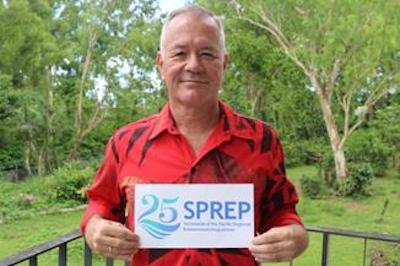
“Climate change may be slower but its momentum is enormous.” – Stuart Chape, Acting Director-General, South Pacific Regional Environmental Programme (SPREP).
Does anyone remember Greta Thunberg, the young Swedish environmentalist who caused a worldwide climate change stir – particularly among the neoliberal believers – but was voted Time magazine Person of the Year 2019 for her actions before the coronavirus pandemic struck?
It all seems so long ago now that we have a new age of covid-19, but wait, her pleas last year in front of the United Nations served as a warning as does the call from Stuart Chape, Acting Director-General of SREP, late in June 2020 that climate change is still a stark reality – especially for the Pacific.
The momentum for climate change might have slowed, but it still looms larger than life as economies open up again producing greenhouse gases.
As Stephanie Sageo-Tapungu, a doctorate candidate from the seaside town of Madang in Papua New Guinea, says:
“THE SEA LEVELS ARE STILL RISING, AND THE CLIMATE IS UNPREDICTABLE NOW, SO WE CANNOT BE REALLY SURE OR PREDICT ‘LIKE THIS IS WHAT IS GOING TO HAPPEN’.
“THE SEA LEVELS ARE GOING REALLY HIGH; PARTS OF THE ISLANDS ARE UNDER THE SEA AND I’VE SEEN THAT FIRSTHAND BECAUSE IT IS HAPPENING IN MY MADANG PROVINCE.”
Sageo-Tapungu adds: “Having a closed economy and other activities did a lot of good when it comes to climate change, but I think it put a lot of strain on people and that can lead to a lot of social problems such as the crime rate going up.”
Illegal logging
Laurens Ikinia, a West Papuan masters student, studying in Aotearoa New Zealand, says that while covid-19 has slowed climate change, his major concern is the illegal logging going on back home in his Indonesian-ruled province.
“A year ago, the governors of his province were invited to attend events held in Florencia, the capital of Caquetá department in the Colombian Amazon, for the civil society, indigenous and local communities, national governments, and international donors for the 2019 annual meeting of the Governors’ Climate and Forests (GCF) Task Force,” Ikinia says.
“We have forests that are the second-largest producers of oxygen in the world.
West Papua’s Laurens Ikinia … “We have forests that are the second-largest producers of oxygen in the world.” Image: Sri Krishnamurthi/PMC
“However, I would say because they have been given special autonomy to logging with regulations – and it is still happening in West Papua – so you have to say authorities are not really committed to the climate change agreements,” he says.
“In terms of covid-19 we don’t really know the outcomes or the impacts it has had on climate change because it is just too early to see any reports done on it even though you are aware that covid-19 would bring some good results of in terms of carbon dioxide sinks.
“But when it comes to the economy, from reports I’ve heard in recent days people are being affected by this pandemic and the local communities, unfortunately, cannot survive without help from the government,” he says.
However, SREP’s climate change advisor Espen Ronneberg maintains work is ongoing to address the issues which were thrashed out at the Conference of Parties to the 1992 United Nations Framework Convention on Climate Change (COP23) in Bonn, Germany.
Pledge to phase out coal
Countries pledged to phase out the use of coal and bring global temperatures down by 1.5 degrees centigrade.
However, the Nationally Determined Contributions (countries) (NDCs) continued working against the smaller fragile nations.
SPREP’s Espen Ronneberg … covid-19 has impacted on the Pacific “dramatically so – on economic, social, and environmental levels, and it is what we have been saying about climate change for decades”. Image: SPREP
Ronneberg says work is still needed, and is going at present in spite of no face-to-face meetings, and technical support is being done remotely – or in some cases where there is in-country expertise (like consultants) they are able to assist SPREP which also faced challenges to get equipment shipped.
He adds that covid-19 has demonstrated a new global phenomenon which has impacted not just on climate change but on social and environmental structures.
“Dramatically so – this has impacted on economic, social, and environmental scales/levels, and is what we have been saying about climate change for decades,” he says.
“Even though the most conservative estimates anticipate historic declines in carbon emissions this year because of the pandemic, the atmosphere continues to be loading up on too much carbon,” he says.
Claims backed up by lab reports
Ronneberg backs up his claims from lab reports such as that in Hawai’i.
“Atmospheric observations and measurements from labs such as that in Hawaii are observing that we are not seeing dramatic reductions in road transport emissions, nor from electricity generation, only flights and some maritime. Recall, the atmosphere takes quite some time to react to emissions – it’s a fairly turbid system, and gases can linger for many years as well,” he says.
Andrea Ma’ahanua, a Solomon Islander and the education chairperson at the University of the South Pacific (USP) Students Association in Fiji, says she personally believes that covid-19 has impacted on climate change initiatives in her country in various ways.
Solomon Islands’ Andrea Ma’ahanua …”funding initially allocated to climate change initiatives would most likely be diverted to covid-19 related initiatives and activities.” Image: Andrea Ma’ahanua/FB
“Climate change initiative proposals would have to be put on hold due to the current COVID-19 situation. Due to travel restrictions, expatriates with technical knowledge in this area cannot travel into the country to help facilitate climate change initiatives,” she says.
“Furthermore, movement of locals has been restricted due to the imposed lockdown and in addition, funding initially allocated to climate change initiatives would most likely be diverted to covid-19 related initiatives and activities,
“That is evidently a priority under current circumstances. Therefore, this would result in the decline in climate change initiatives within the country.”
The world’s dependency on each other had greatly impacted on people she went on to say.
Rapid covid-19 spread
“The rapid spread of covid-19 around the world and its impact on our way of life, social structures and economies indicate how globalisation has created interdependency between world states,” she says.
“This global phenomenon has altered our way of life in terms of loss of jobs, a decline in economic activities and restrictions on people’s freedom of movement.
“All activities have ultimately come to a standstill or been changed accordingly to align with current covid-19 regulations.
“This is apparent in the Solomon Islands, where government revenue has substantially decreased as a result of the decline in economic activities. Furthermore, locals struggle to support their families under the current situation and there has been a noticeable movement of people from urban areas to rural villages in face of this economic hardships,” she says.
“In regard to the re-opening of borders to keep climate change down, I personally believe governments should continue to impose movement restrictions.”
In order to keep the Solomon Islands economy afloat, the government must allow technical staff specialised in the field of climate change or other key economic areas to enter the country, she believes.
And, yes, she thinks climate change has been pushed into the background by covid-19.
Less focus on climate
“I personally observed less focus on climate change initiatives in the Solomon Islands under the of covid-19 situation. More and more stories being published in the Solomon Islands in previous months have been centred on covid-19 regulations and the state of emergency [SOE].
“In previous meetings, climate change was regarded as the utmost priority on the discussion table. However, given the covid-19 phenomenon, there has been a major shift of government attention toward covid-19 preventative measures. This means that climate change would be viewed as the last item of priority on the discussion table,” she says.
However, Richard Clark, who is the Special Assistant to the President (David Panuelo) and Public Information Officer for the Federated States of Micronesia, says climate change initiatives have continued to grow but at a slower pace.
“An example of continuing accomplishments is that in July 2020, President David Panuelo signed Public Law 21-76 which formally prohibited the importation of styrofoam and one-time-use plastic bags,” he says.
“However, the nations’ Blue Prosperity Micronesia programme – which intends to protect 30 percent of the nation’s marine resources – has delayed its scientific expedition until 2021.”
FSM’s Richard Clark … “covid-19 pandemic doesn’t play a significant role in fixing the world’s issues with climate change.” Image: FSM
The Federated States of Micronesia is less dependent on air travel and therefore affected less in climate change pollution from that source, as they are from shipping, he says.
“The short answer is that air travel makes up an an incredibly small footprint in global greenhouse emissions. The global shipping industry – on which the FSM is reliant – and the energy sector at large make up the overwhelming majority of emissions,” he says.
Covid-free daily life remains
“As the FSM remains covid-19 free, daily life and structures remain largely the same. However, the pandemic has crippled the tourism sector with approximately 70 percent of formal employees in the sector either unemployed or at significantly reduced hours,” he says of the impact of the coronavirus pandemic globally on daily life.
“The FSM’s largest sources of revenue are through fisheries and through the Compact of Free Association, so from a purely government perspective the economic impacts have not been felt as hard – yet,” he says
“The price of tuna has decreased substantially, which will affect the Pacific region’s fisheries revenues in the next fiscal year. The nation projects a substantial economic decline,” he says.
However, Clark has an opinion too to offer those who would weigh up re-opening the economy as opposed to staying covid-19 safe as a way to keep climate change down?
“The covid-19 pandemic doesn’t play a significant role in fixing the world’s issues with climate change.
“President Panuelo is of the view that economies can die and be revived but human beings cannot be.
“The broader public opinion in the FSM is that the nation ought to keep its borders closed until a vaccine is prepared, but the focus there is on human health. environmental health, by contrast, has not yet arrived in the discussions in either the National Covid-19 Task Force or in the president’s meetings with his Cabinet,” he says.
Backward step? – yes and no
And has he seen evidence of climate change initiatives taking a backward step in the face of covid-19?
“In some respects, yes – and in some respects, no,” he says.
“In the answer of yes: covid-19 has delayed the construction and implementation of the integrated coconut processing facility in Tonoas, Chuuk, which beyond adding significant economic growth to the nation as arguably its most promising development opportunity, would also power Tonoas with sustainable energy,” he says.
“In the answer no: in July 2020 the nation prohibited the importation of styrofoam and one-time-use plastic bags; other climate change related initiatives remain ongoing.”
So, while Pacific countries remained constrained by covid-19, their ambitions to curb climate change remains a very large factor at the back of their minds.
This is the third of a series of articles by the Pacific Media Centre’s Pacific Media Watch as part of an environmental project funded by the Internews’ Earth Journalism Network (EJN) Asia-Pacific initiative.
This Pacific Media Centre article has been republished by Kaniva Tonga News with permission.
Vava’u residents are asking why the Ministry of Infrastructure did not use an experienced local driver to operate the road roller which went into the sea yesterday.
As Kaniva news reported yesterday, the road roller overturned and fell into the sea at Vaipua bridge in Neiafu yesterday morning.
The driver was unharmed.
Questions have emerged about whether the driver, who was sent from Tongatapu by the Ministry of Infrastructure to operate the road roller, was familiar with the area’s steep roads.
Neiafu Town Officer Vāvā Lapota said there were also allegations the roller’s brakes were unsafe.
He said about nine Ministry employees, including the driver, arrived from Tongatapu on Tuesday.
Lapota said he was surprised when he found out the roller went to Kauvai Talau through the Vaipua bridge.
He said that route included a very steep street to Hihifo and if the driver was from Vava’u he would have taken the route through Leimātu’a and Tefisi instead.
Social media
A video taken at the scene has been posted to Facebook.
Some Facebook users expressed confusion about how the incident could have happened.
Critics of the government’s multi-million roading project used the incident to criticise the government.
“What goes around comes around,” one critic wrote in Tongan.
Critics of the roading project claim it was engineered by politicians who defected and voted for the Tu’i’onetoa government. They argue the multi-million budget should have been spent on something more important.
The Minister of Infrastructure has been contacted for comment.
Tonga’s massed Tupou College Choir and Mia Kami featured in Saturday’s Pacific wide concert to promote the fight against Covid-19.
The concert featured contributions from 12 Pacific island countries, including musical performances from the Solomon Islands, Tonga, Kiribati and New Zealand.
UN Deputy Secretary-General Amina Mohamed said that working together was the only way to overcome COVID-19.
“Much remains to be done and no one person, island or country can do it alone,” Mohamed said.
The UN deputy chief said the global community had a responsibility to ensure fair access to vital medical equipment, supplies and – when they become available – vaccines.
She said the global community must also help the hard-hit economies of small island developing States through debt relief and rapid support that stimulates inclusive and resilient growth.
The Covid-19 pandemic has increased levels of domestic violence, unemployment, food security and mental health issues.
Pacific leaders said that while the region faced numerous challenges brought on by Covid-19, it was important not to lose focus on combating climate change.
“This new normal should not be the same old story, but with face masks,” said the President of Palau, Tommy E. Remengesau Jr.
“The Pacific has been pushing for big changes in travel, in tourism, in fishing, in plastic use and in energy production. In a strange way, Covid-19 has cleared paths to those objectives.
“If we manage this challenge the right way, we can build a stronger system than we had before.”
Saturday night’s concert was broadcast on local television networks and streamed online.
The concert featured video messages of support from international leaders and celebrities, including Britain’s Prince Charles, Oscar-winning actor Forest Whitaker and New Zealand’s Prime Minister Jacinda Ardern.
The concert was supported by the Auckland-based Pacific Cooperation Foundation.
The main points
Tonga’s massed Tupou College Choir and Mia Kami featured in Saturday’s Pacific wide concert to promote the fight against Covid-19.
The concert featured contributions from 12 Pacific island countries, including musical performances from the Solomon Islands, Tonga, Kiribati and New Zealand.
A road roller overturned and fell into the sea at Vaipua bridge in Neiafu this morning.
The driver was unharmed and made his own way to shore, Neiafu town officer Vāvā Lapota said.
The cause of the incident is not yet known.
it is understood the roller was on its way from Neiafu to Taoa, Hihifo.
No reports of attempts to recover the equipment but apparently it will remain there overnight and will be covered by another high tide.
It is also understood this was the only road roller in Vava’u owned by the government and its loss could delay the current government’s new roading project scheduled for the islands.
Junior Fa and Joseph Parker could meet in the ring as early as November or December.
According to Newshub, Parker’s management has offered $500,000 plus a share of the income.
However, last month the New Zealand Herald reported that Fa had turned down the same amount for a fight.
Media reports said Fa had previously been offered $300,000 and a share of pay-per-view earnings.
The two heavyweights have been haggling over the fee for months.
Parker’s promoter David Higgins said the offer was serious.
“We know the numbers,” Newshub quoted Higgins as saying.
“We’ve done the biggest shows in New Zealand and we know the values. The offer on the table is better than fair, and if they run the time down we’ll take the offer on the table again.
“There really is no excuse now other than to step up and bank the money.
“It is the final offer. It’s over the odds. It’s probably 20 times Junior Fa’s biggest ever pay day.”
Fa’s American promoter Lou Di Bella told the media in July he was after a split percentage deal, conceding that Parker’s global profile would warrant a higher cut.
However, Newshub reports Di Bella as saying the two sides are finally on the same page and that a deal was close.
A fight with Parker has been a long time coming.
In 2018 Fa said a bout with heavyweight champion Joseph Parker was inevitable and something he wanted to happen sooner rather than later.
However, Fa’s manager, Mark Keddell, said there were no immediate plans for Fa to fight Parker.
Fa became New Zealand heavyweight champion in 2017.
The former WBO champion Parker (27-2) is currently ranked No 2 in that organisation, No 7 with the IBF and No 6 with the WBA and has on a three fight winning streak after losing his belt in 2018.
Fa has risen to No 6 with the WBO and also sits at No 14 with the IBF after building up an unbeaten 19-0 record.
The main points
Junior Fa and Joseph Parker could meet in the ring as early as November of December.
According to Newshub, Parker’s management has offered $500,000 plus a share of the income.
Pasifika live and breathe community – we interact widely with each other, we share, we are big churchgoers, we live in intergenerational homes – and 40 percent in overcrowded conditions.
Unlike most other communities, Pacific families do not live in isolation.
To not share the information that the affected family was one of our own and interacting in our community circles for days before being tested was unfathomable.
My business is not to keep information hidden or censored because people might be upset or feel targeted. People’s lives are at risk, there is too much on the line for tippy toeing around people’s sensitivities.
Barbara Dreaver reports. Video TVNZ
Keeping Pasifika families safe
The information was given not to victimise Pasifika – but to give our vulnerable community crucial information they were entitled to to keep them safe. It is about helping people living near a new covid-cluster to make life-saving decisions.
And it was important that information be given as quickly as possible so Pasifika could be extra vigilant and be aware that unlike the first wave, covid-19 is being transmitted within our circles.
In the first wave, Pasifika had low infection rates – only 85 cases, five percent of the total number. They were easily traceable.
This situation is not. It is different and unless immediate action is taken we are looking at an unfolding tragedy in our community.
We hear about how covid-19 does not discriminate. Well it doesn’t in terms that anyone can be infected.
But it is the Pacific community who are most at risk because of the way we live, interact, work on the frontline and have high rates of underlying health issues contributing to covid-19 deaths.
In the US, Pasifika are infected at ten times the rate of white Americans in many states and we are not pretending otherwise. The people there are facing an unravelling situation for many reasons – we do not want to be in that place.
The family of six have connections all around the locked-down city – and outside of it. Video: TVNZ
It was not their fault
It was important to me not to reveal the ethnicity of the affected family despite knowing it from the get go as it would have likely identified them. It was not their fault, they didn’t magically contract covid-19 from Tinkerbell. It came from somewhere and any of us could have been in that same position.
Their ethnicity is not relevant as they had no overseas travel, but the fact they interacted in the Pasifika community, in ways which are just now becoming clear is.
It is unfortunate that the government of the island country the family originated from put out a media release confirming their ethnicity and that information was put to air in that country, is all over social media and other media outlets.
That island government got its information from the New Zealand Ministry of Health.
Despite this 1 NEWS chose not to reveal the family’s ethnicity and will continue not to despite it being public information.
South Auckland community ‘hugely disappointed’ after local family contracts Covid-19
The very thing – community interaction – which makes Pasifika vulnerable to covid is also a huge strength. Pasifika know how to look after each other and work together.
Leaders inspiring hope
Add to that a team of leaders who have been working on the frontline such as Dr Collin Tukuitonga, Pakilau Manase Lua from the Pacific Response Coordination Team, Taleiai Edwin Puni from the Pacific Leadership Forum, Auckland counsellor Efeso Collins and the many outstanding health professionals, church, community and political leaders who inspire hope.
But make no mistake… there are grim times ahead. If you feel upset over “Pasifika” being used as being the centre of this covid cluster, it’s time to have a long think and work out what’s more important.
Pacific lives matter.
Barbara Dreaver is of Kiribati and Cook Islands descent. This TVNZ News column has been republished by Pacific Media Centre with permission. Kaniva News has a shared content agreement with Pacific Media Centre.
The Tongan National Rugby League continues to claim its expulsion from the International Rugby League was illegal as it heads towards a hearing before the Court of Arbitration for Sport.
The CAS will meet in Lausanne, Switzerland, on September 22.
Tonga was suspended from the IRL following a tumultuous period that began in September last year with a player revolt over the sacking of national coach Kristian Woolf.
The TRNL was expelled in February this year.
As Kaniva News reported earlier this month the Asia-Pacific Rugby League Confederation recommended that Tonga Ma’a Tonga Rugby League be considered for full membership of the International Rugby League.
The TNRL appeal is separate from any approval of Tonga Ma’a Tonga as a member of the IRL.
The TNRL is appealing its expulsion, arguing that the IRL investigation was flawed, based on dubious grounds, and did not follow its own rules.
TNRL secretary William Edwards said the expulsion was triggered by a complaint from the –that it was concerned that the mismanagement of Tongan Rugby League could damage the commercial success of the British Rugby League Lions tour of New Zealand in late 2019.
Edwards was appointed to the TRNL board in March last year following the removal of the previous board by the Tongan Supreme Court,
Edwards argued that the complaint was invalid because it was about an anticipated breach, not something that had actually happened.
TNRL officials have complained that while their appeal is underway the IRL was working to help establish a new governing body for Tonga.
They claimed this is outside of the international body’s constitutional mandate.
The TRNL initially co-operated with the IRL, but this stopped after its lawyers wrote to the IRL last November claiming the international body had no power to suspend a member pending an investigation.
The IRL said it had been working with members of the Tongan rugby league community who it deemed to be acting in the best interests of Tongan rugby league.
“IRL has not imposed nor tried to impose structural reform on one of our members.”
Tonga has qualified for next year’s Rugby League World Cup (RLWC) by making the semi-finals at the 2017 World Cup. It has to regain membership of the IRL before it can compete in the UK in 2021.
New Zealand went back into lockdown again this week after the discovery of a new cluster of Covid-19 infections.
Nobody yet knows where the virus came from or how it got into the country.
As a result, the government has put Auckland back into level three and the rest of the country into level two.
Unfortunately, the reappearance of the virus also led to the reappearance of something just as bad – stupidity.
Swarms of shoppers nearly overwhelmed some supermarkets.
There have been reports of supermarket staff being abused and people panic buying because of rumours they had heard or things they had seen posted on the internet.
At Countdown in Henderson on Wednesday morning one woman approached the counter with a trolley piled high. When asked why she had so much, she replied that her husband had told her that he had heard that Countdown was going to close on Wednesday and not re-open.
That wasn’t true.
Nor was the story – believed by some other shoppers – that Countdown was going to close at midday on Wednesday.
Fortunately we haven’t seen the mass idiocy that happened when we went into level four. This time, nobody is trying to buy a year’s supply of toilet paper.
Unfortunately, crazy rumours have still been spread on the internet.
Now there have been reports of online abuse aimed at people who tested positive in the new outbreak.
Health Minister Chris Hipkins has rightly described the abuse as “disappointing and dangerous.”
He said people needed to be able to come forward for testing without worrying about being attacked.
The Minister said people should not believe everything they read on social media. His comments came as rumours swirled online about where the Auckland cluster originated.
Nobody wants to be back at level three or, if you are outside Auckland, level two.
It means restrictions.
Tomorrow we cannot go to church in Auckland.
In Dunedin, which is now under level two, the super rugby clash between the Hurricanes and the Highlanders will go ahead in front of an empty stadium.
But let’s remind ourselves that when the new infections were discovered, we were still at level one, which meant that we weren’t completely clear.
We had also been warned that the virus could come back.
And now it has.
Nobody wanted this, but now we have to get through it again and hope that with all the experience and knowledge that has been gained the virus will be brought back under control.
Nobody enjoys being in lockdown, whether it’s level two or three and nobody wants to go back to level four.
The best way for us to do that is to stay safe.
That means wearing masks, staying home and working from home if you can.
It also means not shouting at supermarket staff or anybody else trying to do their job.
It also means listening to what the government and medical authorities are saying and ignoring gossip and crazy talk on the internet.
Let’s stay safe, be sensible, ignore the rumours and get through this together.