Home Blog Page 433

Kaniva mediawatch July 10, 2020

Pope Francis

Pope Francis has told Catholic bishops around the world they should report cases of clergy sex crimes to police even when not legally bound to do so.

While the Vatican has had rules in place for the past 20 years, some bishops have ignored the rules and continued to protect priests.

His comments come in the same week as Archbishop Peter Ching apologized for sexual abuse of minors in Fiji.

There have been claims that it was common practice to move abusive clergy from new Zealand to the Pacific.

Last year Vice President of the Federation of Catholic Bishops Conferences of Oceania Charles Drennan said the Pope wanted to ensure bishops learn that protection of minors is of paramount importance.

Bishop Drennan represents bishops from Papua New Guinea, Fiji, Tonga, Noumea, Solomon Islands, Guam and the Marshall Islands.

Scammers 

Pacific residents are being warned that online scammers are targeting people in the Pacific who might feel financially vulnerable during the COVID-19 pandemic.

“If people are feeling anxious and spending more time inside, online and on their phones, that’s a perfect opportunity for someone to take advantage of you,” Australian academic Dr Barnet told Radio Australias’ Pacific Beat.

She said it was important to be extra vigilant for online scams during the current health-crisis.

Be cautious, particularly right now. Be very sceptical of any offers you see.”

Cremations

Tongan MP Dr Saia Piukala has proposed cremation as an alternative to burial as climate change and rising seas threaten grave sits on the coast.

Dr Piukala raised the issue after Tonga’s Minister for Lands and Service said the Government was looking for land to relocate the burial sites for the cemeteries close to the coastline.

But the suggestion has stirred debate online, with many divided on the idea because of Tonga’s cultural and religious beliefs.

Drugs

Two people have been charged with possession of illicit drugs.

Police arrested a 51-year-old man from Tokomololo and seized from inside his vehicle 25.9 grams of methamphetamine, TP$16,000  in cash and drug utensils.

The Drug Taskforce also arrested a 28-year-old woman from Mataika and seized 0.59 grams methamphetamine, TP$100 pa’anga cash and drug utensils.

Many alternatives to dealing with the dead as we face the challenge of climate change

Kaniva News commentary

The suggestion by former Minister of Health Dr Saia Piukala that cremation be considered an alternative to burial deserves consideration.

As Kaniva News reported yesterday, Dr Piukala, made the suggestion because of the potential damage to graveyards along the coast from rising seas caused by climate change.

He raised the issue after Tonga’s Minister for Lands and Service said the Government was looking for land to relocate the burial sites for the cemeteries close to the coastline.

It is certainly time to think ahead like this to plan for the problems of climate change, but are there other alternatives worth considering?

While cremation might seem to be a way to overcome the advances of climate change, there have been claims that cremation actually adds to the problem of global warming.

According to the National Geographic, cremation uses a great deal of fuel and results in millions of tonnes of carbon dioxide being released into the atmosphere each year.

This will depend on what method is used. In western countries cremation generally takes place within what are essentially giant ovens burning gas.

While laws generally require crematoria to install filters on their chimneys to capture poisonous gasses that may come from the bodies, there have been questions about how well they work.

It has also been claimed they do not stop carbon dioxide or heat being released into the atmosphere.

According to research by Virginia University, emissions from crematoria may include carbon dioxide, carbon monoxide, nitrogen oxide, sulphur dioxide, hydrogen chloride gas, hydrogen fluoride, mercury vapour and organic compounds that may produce carcinogens.

All cultures have different ways of burying the dead. Muslims are usually buried within 24 hours of death. In Tibet, local tradition includes what are termed sky burials, in which bodies are left out on a mountain for vultures.

In India, Hindus burn bodies on an open-air pyre. This practice means millions of trees are cut down every year. Because the cremations are held to rivers, it also contributes to air and river pollution.

In the United States and the United Kingdom there has recently been an increasing push for processes that essentially dissolves the body.

US firm Recompose puts bodies in a closed vessel with woodchips, alfalfa and straw grass. The body is slowly rotated to allow microbes to break it down.

The company’s head, Katrina Spade, claimed the process prevented 1.4 tonnes of carbon being released into the atmosphere, compared with cremation. She said there was a similar saving compared to traditional burial when transportation and the construction of the casket were taken into account.

The other method on offer uses a machine called a Resomater, a pressurised canister in which corpses are submerged in a mixture of water heated to 150C and potassium hydroxide for three to four hours until the flesh is dissolved, leaving behind only soft, greyish bones.

After being dried in an adjacent oven, these are ground down into paper-white powder, while the fluid is sent to a water treatment plant for disposal.

The technology was initially developed in the US to dispose of cows during a decade-long foot-and-mouth epidemic.

Dr Dean Fisher, a doctor at the University of California, said everything was recyclable.

The 946 litres used on each body could be used as fertiliser because of the nutrients in it, he said.

Dr Fisher acknowledged that some people found the idea of dissolving a loved one’s body distasteful.

Even without the repugnance some people might feel about the process, the fact is that processes like these require infrastructure Tonga does not have.

Even a crematorium requires fuel that would need to be imported and this would reduce any benefit it might have to the environment.

There is another alternative that could be seen as posing no harm to the environment: Burial at sea

There is a partial precedent for this in the funeral service for the victims of the Princess Ashika tragedy in 2009 when a fleet of boats gathered offshore to remember the dead and lower a grave marker onto the wreck.

Acceptance of burial at sea may require a significant change in some people’s attitudes and practices in remembering their dead.

However, burial at sea rather than in the ground need not necessarily affect customary rites of mourning, funeral or church services and alternative sites of mourning to graves could be established on land.

It is also possible to designate particular areas of the sea for this purpose so that the practice is carefully controlled.

In New Zealand burials at sea have to take place in one of five designated areas and the Environmental Protection Agency lays down rules on how the procedure should take place.

It is likely that in finding a solution to burying bodies in the traditional way there will have to be changes in attitude and perhaps in practice. For some people this may not be easy.

Whatever solution is finally chosen, Dr Piukala has done a service to Tonga in raising the issue of how the kingdom takes care of its dead as it faces the challenge of climate change.

The main points

  • The suggestion by former Minister of Health Dr Saia Piukala that cremation be considered an alternative to burial deserves consideration.
  • It is certainly time to think ahead like this to plan for the problems of climate change.

Family of Covid-19 quarantined flight passengers allowed to drop off care packages at Tanoa Hotel isolation facility

Family members of 57 people repatriated from Fiji on Monday amid Covid-19 crisis had been temporarily granted permission to deliver care packages for the passengers at the Tanoa International Hotel today and next week.

The Ministry of Health has described the permission as to provide the passengers’ urgent needs.

Only two family members were allowed to drop off the care packages at a tent for members of His Majesty’s Armed Forces outside the hotel

The parcels must be labeled with the names of the passengers, according to MOH in a statement said to be from the Hotel’s Guard Centre.

The items must be checked and inspected by the army officers.

The officers will then pass them on to the passengers.

All visitors can only visit the hotel from 12pm to 2pm on Friday 17 July 2020, Monday 20 July 2020 and Wednesday 24 July 2020.

Tonga remains CoViD-19 free after tests carried on the passengers after they arrived in the kingdom, the Minister for Health, Hon Dr ‘Amelia Tu’ipulotu has announced.

MOH CEO Dr Siale ‘Akau’ola has described the performance by a government coordinated team which tasked with welcoming and processing of Tonga’s first repatriated flight as successful and pleasing.

The passengers were initially tested for CoViD-19 in Fiji last Friday and the results received on Saturday were all negative.

They will be tested again on the 14th day of quarantine and if all still received negative results, they will be released to return to their homes where they will self-quarantine for a further seven days.

Housebreaker convicted after judge accepts police evidence over TP$34,000 burglary

The Supreme Court has convicted a man who represented himself before the bench of serious housebreaking.

Lafitani Mahe, who represented himself in court, was accused of breaking into the house of ‘Ana Kama at Houmakelikao on February 19, 2019.

During the break-in he was accused of  and stealing property belonging Kama, including a fihu mat, a paongo mat, several ngafingafi ta’ovala, ngafingafi drapes, tapa, two Bluetooth speakers, an iPhone and iPad and TP$500 cash.

The total value of the stolen property was TP$34,000.

He pleaded not guilty and elected trial by judge alone and to represent himself in court.

The Crown called five police offices as witnesses.

Among other evidence they said they had found Mahe’s fingerprints in the house.

The Crown also called a witness who said the accused and a girl had sold him a speaker.

He witness said he then advertised the speaker on the internet and shortly thereafter its owner and the police arrived.

Mahe gave no evidence and called no witnesses. In his statement to the Court he argued that the officers who presented evidence against him were not properly qualified.

However, Judge Niu, presiding, said he was satisfied with the police evidence and that the case had been proven to the standard required.

“I am satisfied beyond reasonable doubt that the accused committed the two offences with which he is charged in this trial and I convict him of both offences,” Judge Niu said.

Public concern: Tonga Police warn against risky sea cucumber harvesting after three deaths

The police in Tonga are urging sea cucumber divers to take extra care after a third diver drowned this week.

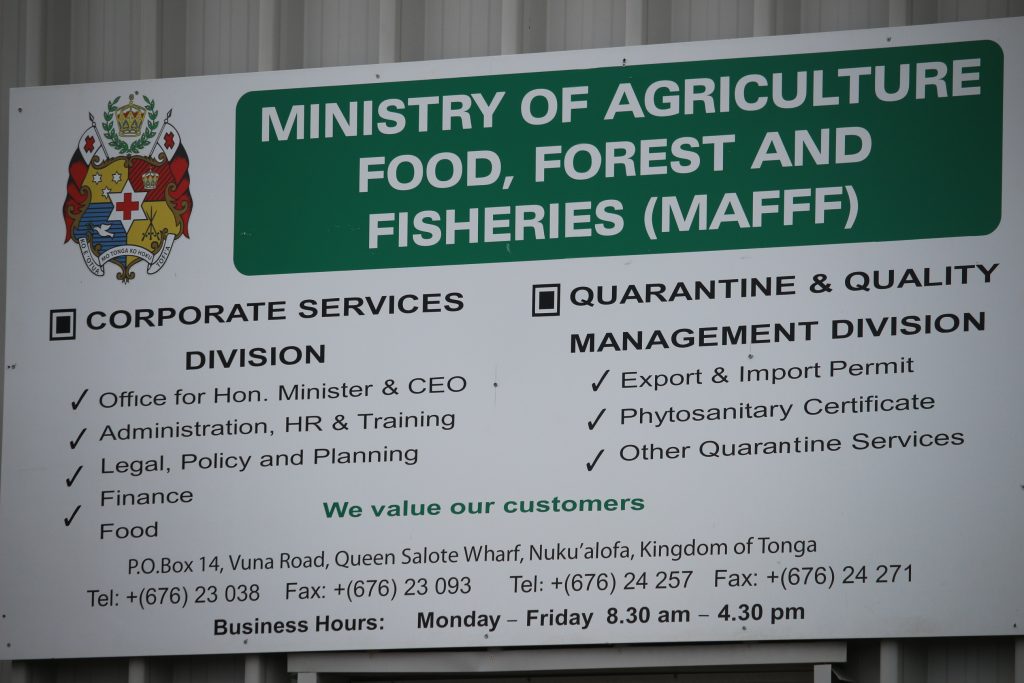
MAFF. Photo/Kalino Lātū

Police said they were concerned after a 60-year-old man died on Monday night while diving for sea cucumbers at Koloa, Vava’u.

As Kaniva News reported on Tuesday morning the fisherman went diving with a group of divers. He was rushed to hospital.

The deceased was the third within a week after two sea cucumber divers died in Tongatapu on July 6.

How these divers died was still unknown.

But critics have argued on social media that authorities haven’t done enough after it was clear death while diving for sea cucumbers has been reported from time to time since sea cucumber fishing began in 1980s.

In 2012 a diver died after using a method known as hookah diving while diving for sea cucumbers in Ha’apai.

That deceased was the third fisherman to die in a week.

Hookah diving uses an engine on a boat pumping compressed air to a diver below the surface.

Police said at the time the method was dangerous and illegal.

New research project will investigate how Pacific children with asthma manage their condition; NZ rates among highest in world

Massey University is launching a three year programme to investigate asthma in Pacific children.

The University has received $971,541 from the Health Research Council of New Zealand to look into how Pacific children manage their asthma

One in nine adults and one in seven children in New Zealand have asthma, one of the highest rates in the world.

It is a disproportionately high among Pacific people and Māori.

According to the Health Quality and Safety Commission, Pacific and Māori children were more likely to be admitted to hospital with asthma than other groups.

Pacific children had the highest admission rate.

Pacific and Māori were three times more likely to be admitted into hospital with asthma than other adults.

Principal investigator Dr Sunia Foliaki from Massey’s Centre for Public Health Research said the study would assess the availability and use of asthma self-management plans.

“Despite the availability of established and effective asthma self-management plans, asthma outcomes and control continue to be poor among Pacific populations in New Zealand,” Dr Foliaki said.

“Pacific people are three times more likely to be hospitalised with asthma than Europeans or other New Zealanders”

She this could be because of poor levels of knowledge about how to manage asthma in its early stages and how to obtain the right  medication.

The study findings would help develop ways to help Pacific people manage their asthma better.

About asthma

According to the Ministry of health, asthma is twice as common in boys as in girls.

Triggers for asthma can include tobacco smoke, wood smoke, house mould, perfumes, paint, chemicals and gases from heaters.

Sufferers can also be allergic to dust mites and pollen.

Asthma episodes can occur quickly and vary in severity and range from mild discomfort to life-threatening episodes where breathing may stop.

Symptoms may include  persistent coughing, particularly at night and after exercise,  breathlessness, wheezing and tightness in the chest.

Symptoms are often worse when it is cold or at night.

Treatment is normally with inhalers.

The main points

  • Massey University is launching a three year programme to investigate asthma in Pacific children.
  • One in nine adults and one in seven children in New Zealand have asthma and it disproportionately high among Pacific people and Māori.

House destroyed in third house fire in Kāmeli in six months

A house has been destroyed after a large fire ripped through it early this morning

Children were spotted in the house before the blaze erupted but no injuries reported, Neiafu Town Officer Vava Lapota told Kaniva News.

The Fire Service was at the scene before the blaze was contained.

This was the third house fire in Kameli within six months, he said.

The first house fire was reported in January and another was reported in May.

A fourth blaze was also reported in February but that was a house in Leimatu’a.

Tribunal orders deportation, says enormity of crimes outweighs interests of family

The New Zealand Immigration and Protection Tribunal has ordered a Tongan born New Zealand resident to be deported.

The man was convicted and sentenced to 10 years’ imprisonment for four offences of sexual violation by rape.  The offences were committed between 1 August 2014 and 8 December 2014.

He was also convicted of an indecent act upon a girl 12–16, for which he was sentenced to three years’ imprisonment, which was served concurrently.

The minimum term of imprisonment imposed by the judge was five years; the appellant is therefore first eligible for parole on  May 29, 2022.

He has also been convicted of a number of drink driving offences.

A Deportation Liability Notice was signed by a delegated decision maker on  May 14 2018 and served upon the appellant on 2 August 2, 2018.

The appellant lodged an appeal on 24 August 2018.

The appeal required the Tribunal to consider whether the man exceptional circumstances of a humanitarian nature that would make it unjust or unduly harsh for him to be deported from New Zealand.

The Tribunal found that the appellant had exceptional humanitarian circumstances, arising out of his settlement in New Zealand and the interests of his partner and New Zealand-citizen children.

However, the Tribunal found that the deportation would not be unduly harsh or unjust given the seriousness of his offending.  The appeal was declined.

The Tribunal ordered the removal of the period of prohibition on entry to New Zealand that would otherwise apply following the appellant’s deportation.

This would help him apply for a temporary visa in order to visit his children periodically, should they remain in New Zealand.

The Tribunal stressed that the decision on any such visa application would be entirely a matter for Immigration New Zealand and/or the Minister of Immigration.

Third sea cucumber death within a week as searchers recovered body of ‘Oneata diver

A diver in Koloa, Vava’u died last night while allegedly diving for sea cucumbers, the Neiafu Town Officer Vāvā Lapota told Kaniva News this morning.

Lapota said the man went with a group of divers before his death was first reported at around 9pm.

An autopsy is expected to be held this afternoon to decide the deceased’s cause of death.

The victim was the third within a week since the ban on sea cucumber fishing had been lifted.

The first two deaths occurred in Tongatapu on July 6 after two divers Ualeni Pomana, 20, and a 37-year-old man went diving for sea cucumbers near ‘Oneata island.

Yesterday Police said a search team found Pomana’s body on Saturday 11, a week after the body of the 37-year-old was found.

Sea cucumber fatalities were highly reported in the past.

“It’s hard when they close the casket”; Covid-19 victim Lelea Tu‘akalau laid to rest

Lelea-‘I-Vailahi Tu‘akalau’s family held burial services for his body on Sunday 11 at the Redwood Memorial Estates Cemetery, West Jordan, Salt Lake City.

The 59-year-old father died after weeks of fighting against Covid-19 in Utah.

His wife Lotomo’ua Tu’akalau posted a heartfelt message this morning on her Facebook after the viewing ceremony at Jenkins-Soffe Funeral Home.

““It’s hard when they close the casket,” she wrote.

Lelea was born on February 03, 1961 in Veitongo, Tongatapu, Tonga while his parents Tēvita Kata Tu’akalau and Mele ‘Olive Tuiono Tu’akalau were currently serving a mission for the Church of Jesus Christ of Latter-day Saints, his obituary said.

Lelea served a mission for the LDS Church from 1979-1982. He began his missionary work in the Kingdom of Tonga and two years in Fiji.

He married his wife on August 11, 1994 in Otahuhu, Auckland, New Zealand before they moved to the US.

He is survived by his wife and six children.

As Kaniva News reported previously, his wife Lotomo’ua along with three of their children contracted Covid-19 but they recovered after they were put in isolation.