
Home Blog Page 461

Tonga gov’t 3-day quarantine of “All international Cargo” stirs online debate

A decision by the Tu’i’onetoa government to quarantine all international cargo which arrived in the kingdom has fuelled a debate among Tongans on social media.

The sudden restrictions came into effect yesterday November 16.
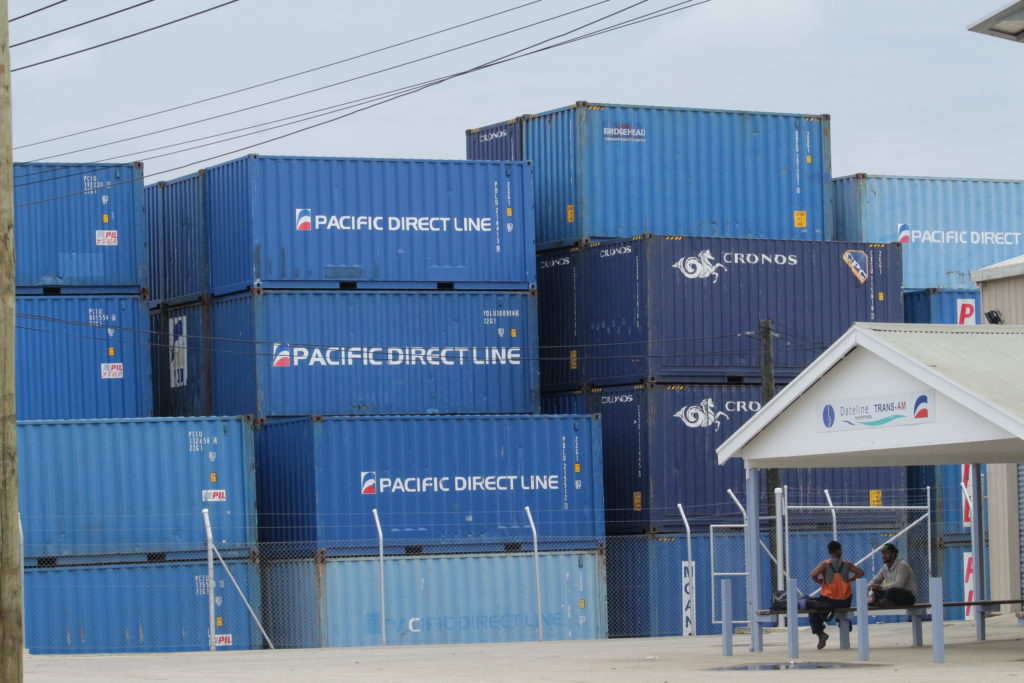
Shipping containers at Queen Sālote Wharf. Photo/Kalino Lātū

“3 Days Quarantine of International Cargo unloaded at Queen Salote International Wharf and Halaevalu international wharf,” a press release by the Minister of Infrastructure said.

It said all international cargo arriving in Tongatapu and Vava’u “must be quarantined for three days before releasing to agencies.”

Since there was no further information by the government to explain why the decision was made, online users took to Facebook to share their concerns.

“Don’t know why they do it. If there will be any virus coming with the cargo they will automatically be cleared while the ship was at sea,” a commenter said.

Critics of the decision said they were concerned about the safety and security of their goods sent to their family while they would be controlled at the wharf during this three-day quarantine.

“Why now?” another commenter said implying the government should have done it before and while New Zealand went into lockdown.

Some commenters believed the government made the decision after China has claimed yesterday it’s found Covid-19 on food products imported from New Zealand.

Prime Minister Jacinda Ardern has rejected the claim.

Experts said the virus can survive within refrigerated environments and can live for a time on surfaces outside the human body.

China has reported instances of the coronavirus being detected on the packaging of imported frozen seafood.

“In July China claimed that it had detected the virus in the outer packaging of frozen shrimp from Ecuador, as well as the container walls housing the seafood. However, subsequent tests cleared the food itself of carrying the virus.”

‘Eua man jailed after rock hammer attack on wife

The man who hit her wife with a rock hammer wounding her forehead and back of her head has been sent to jail for  three years.

Judge Laki Niu has suspended the last  two years of his jail terms from the date of his release on the conditions that he committed no offence punishable with imprisonment for three years.

Toio Lauteau, 43, was found guilty of causing serious bodily harm to his wife on 7 May 2018 at their home at ‘Ohonua, of which he was convicted on 15 September 2020 after a two-day trial at Nuku’alofa Supreme Court.

Lauteau denied causing the injuries to his wife at all. His wife has also claimed that her husband did not cause the injuries that she sustained.

“You would maintain that she had fallen and cut her forehead on the corner of the table and had cut the back of her head on the corner of the walls of the hall way and the lounge,” Judge Niu said.

Mr Niu however did not buy it.

He said three things proved that Lauteau caused the injuries to his wife:

“When your wife arrived at the hospital at ‘Eua, she was covered in blood and she had facial swelling and back of the head swelling and two cuts – one “L” cut on the right side of the forehead and a lineal cut on the back of the head.

“She told the doctor that you had hit her with a rock hammer and caused those injuries. She also told the police officer, Viliami ‘Arnone, the same thing and he wrote her statement and she signed it as the truth.

“The doctor required that she see the rock hammer herself to decide whether or not to require your wife to be sent to Vaiola Hospital for Xray of her skull to ensure there was no cranial fracture or indentation or haemorrhage. She inspected the rock hammer, and she was positive that the two cuts to your wife’s forehead and back of the head were caused by the rock hammer. (c) The doctor herself observed that your wife looked scared and shocked.

“I am sure she was scared for her life and that is consistent with her description in her statement which Viliami ‘Arnone wrote down of what you had done to her, namely, hitting her on her forehead and on the back of her head with the rock hammer.”

Lauteau’s counsel Sione Taione said there was big change in his client’s life when he gave up drinking.

“You have now shown maturity and responsibility and respectability, and you have become a good member of the church, abstaining from tobacco, alcohol and drugs. He accordingly submits that it would be appropriate that the imprisonment sentence to be imposed on you be fully suspended.”

Reserve Bank warns Tongans to stay away from pyramid scheme after people lose thousands of pa’anga in fraud

The National Reserve Bank of Tonga has warned people to stay away from a pyramid scheme that has cost its victims thousands of pa’anga.

The alert came as the New Zealand Financial Management Authority warned there had been a rash of scams riding on the back of the Covid-19 pandemic around the world.

Kaniva News understands that an initial group of eight people became involved in the scheme which lured them into paying hundreds of dollars with promises they would to make hundreds of thousands in return.

A Tongan accountant told Kaniva News some people had lost thousands of pa’anga.

The Reserve Bank said  people should not take part in what it said was a pyramid scheme.

It said if people took part they did so at their own risk.

People have complained online that they had fallen into a trap and lost money.

However, not everybody was sympathetic, with some saying those who were defrauded should have known better.

The Reserve Bank said various unlicensed investment schemes were being introduced around the country.

“A pyramid scheme is an unsustainable business model that involves promising participants payment, services, or commissions, primarily for enrolling other people into the scheme or training them to take part,” the Bank said.

It said pyramid schemes promised profits which depended entirely on the number of participants or the size of their contributions.

Pyramid schemes were illegal. Anybody running such a scheme was liable to a fine of up to $TP1 million or 30 years in jail or both.

Global fraud

The New Zealand Financial Management Authority said today authorities around the world had warned about a rise in frauds.

It said scams included money transfer fraud, fake investment schemes, often involving crypto-currencies, fake websites, callers pretending to be from official bodies, including the World Health Organisation and phishing schemes

The NZFMA said it had issued 38% more warnings about scams than this time last year.

In June Kaniva News reported on the case of a Tongan woman in New Zealand who lost NZ$5300 in a crypto-currency scam after being lured into it by a friend.

The NZFMA said scammers often took advantage of people’s desire to achieve financial goals such as owning a home, promising to help them ‘get rich quick’ with little or no risk of losing their money.

It said Pacific communities in New Zealand were more at-risk from investment scams.

“Scammers often take advantage of close-knit community groups such as churches, convincing one member who then helps them convince others in the group,” the FMA said.

Samoa

There have been reports of fraud in Fiji and in August Samoa’s Ministry of Commerce, Industry and Labour issued a warning against illegal pyramid schemes or “get rich quick” scams.

The Ministry’s Chief Executive Officer, Pulotu Lyndon Chu Ling, said pyramid schemes were prohibited.

“Such pyramid schemes are illegal and get rich quick scams that may cost our friends and family their hard earned tala,” he said.


Seasonal workers who leave legal employment unlikely to get back in, new report says, as rogue recruiters use lies and deception to lure workers away

Pacific Islanders workings in Australia under the Seasonal Workers Programme are unlikely to get  another work visa if they leave their legally approved job.

Australian National University researcher Rochelle Bailey said leaving an employer was a breach of an SWP worker’s employment contract and visa conditions.

And she warned that illegal recruiters were lying to workers and misleading workers in an attempt to lure them way from their legal work employment.

Her comments follow a rise in workers absconding from their jobs in recent months.

Tonga has supplied almost half the SWP’s workers since it began in 2008.

According to Australian statistics, two thirds of SWP visas granted to Tongans were to return workers. Return workers are invited back because employees regard them as more productive.

Because of border closures caused  by the Covid-19 pandemic, thousands of SWP workers have been trapped in Australia for months.

While many have been able to keep working, many face severely reduced hours and incomes.

Bailey said some workers were facing financial pressures because they were working as few as 10 hours a week, but still had to pay for deductions and wanted to send money home.

She said Australian farms were short of 26,000 workers as the harvesting season began. As Kaniva News reported yesterday this has led to calls from growers’ organisations for the government to allow more regional workers to be allowed to work.

However, it has also led to a situation where rogue operators were trying to lure legally approved workers away.

These labour hire contractors were not Approved Employers under the SWP.

“Being offered increased hours in a much warmer climate such as Queensland is appealing,” Bailey said.

However, workers were not told about Covid-19 border restrictions and quarantine, or that leaving an employer is a breach of an SWP worker’s employment contract and visa conditions.

“Workers lured by rogue labour hire operators are not covered by the same protections that they are entitled to through an SWP Approved Employer. Employers operating outside the SWP do not have the same level of responsibilities and are not under the same scrutiny. “

Bailey said there had been a significant increase in the amount of misinformation given to workers about their employment and visa conditions, such as who they can work for, taxation information etc.

She acknowledged that some of this advice was given by well-meaning community members who did not understand the terms and conditions of the SWP and visa restrictions.

Workers who had let their visas lapse would follow any work opportunities they heard of, especially if they could be employed under the radar and undocumented.

Slaves

An earlier investigation into worker exploitation by Australia’s workplace watchdog found some foreign workers on Australian farms were “bonded like slaves” to unscrupulous labour hire contractors.

The Fair Work Ombudsman’s Harvest Trail Inquiry reported that some workers were told they would not have their visa extension signed unless they see out the season with them.

It also found cases of workers being taken to their accommodation via ATMs and asked to provide money in advance for bond, transport and accommodation costs.

Death of high-profile woman shocks Tongan community

Tributes are pouring in after the death of Dr Netatua Prescott Taufatofua has been widely reported on Facebook this evening.

Dr Netatua Pelesikoti Taufatofua. Photo/Facebook

Dr Taufatofua’s family could not be reached for comment.

Her sister-in-law Elenoa Koloamatangi Prescott said on Facebook there was plan for Dr Taufatofua and her siblings to meet in Tonga when the border restrictions were lifted.

“‘Ikani (Dr Taufatofua’s brother) was crying and wishing he could kiss you goodbye,” ‘Elenoa wrote in Tongan.

A Tongan community leader in Australia, Uanivā Havea who goes by the name Touhuni Halapuopua on Social Media wrote on Facebook: “Netatua I can’t believe you’re gone. What a shock to learn just now of your passing, here on Facebook.”

“You only responded yesterday to the pictures I posted, suggesting that they’d be good for our Museum in Tonga. It’s as if you’ve now left me a chore to consider.

“Thank you for your leadership and for going the extra miles to ensure that there is a sense of purpose and that people would benefit in significant ways.

“ You’ve left Kolomotu’a, and Tonga for that matter, in a better place with people working together in one spirit of peace and harmony.

“My deepest condolences to the widow, Pita Tāufatofua, and your immediate family. Also to your siblings Lesieli, ‘Īkani, Kolopeaua, and the rest of your family. May God’s peace be with you all during this very difficult journey. Rest in God’s eternal peace dear Dr. Netatua. You’ve finished the race, now receive your crown from our Heavenly Father.”

Dr Taufatofua stood as candidate for Tongatapu One last year in the by-election for Late ‘Akilisi Pohiva, the former Tongatapu One constituency MP. She was defeated by MP Siaosi Pohiva.

She held a PhD Degree in Environmental Science, specialising in Sustainable Coastal Resource Monitoring and Assessment, coastal water quality, coral reefs and sea grass from the Environmental Science Department, University of Wollongong, Australia (2003).

As a scientist, Taufatofua was a Director of the Climate Change Division at the Secretariat of the Pacific Regional Environment Programme (SPREP).

Last year she became a new member of the World Meteorological Organisation (WMO) Scientific Advisory Panel, an elite group of 15 scientists worldwide who are experts on weather, climate and water.

More Pasifika voters took part in this year’s US elections, says Tongan community leader

Pasifika voters in the United States have been active in this year’s dramatic election.

Tongan American Sina Uipi from NGO organisation Empowering Pacific Islander Communities told the ABC’s Pacific Beat there had been an increase in political engagement from Pacific Islanders this election.

NZ MP Carmel Sepuloni, who is of Tonga and Samoan descent, with new US President Joe Biden. Photo/Carmel Sepuloni (Facebook)

“They’re participating, they’re voting, they’re paying attention, they’re watching the news and they are engaged,” Uipi said during the election.

More than 101 million early votes were cast in person and by mail before the polls even opened.

Empowering Pacific Islander Communities said the Asian American and Pacific Islander electorate had risen to more than 22.1 million voters.

In the past Asian and Pacific Island voters have supported Democrat presidential candidates.

In 2012 more than two-thirds of Asian Americans and Pacific Islanders voted for President Obama. Obama won every segment of the Asian American and Pacific Islander populations.

It is estimated that about 3.85 million Asian American and Pacific Islander votes were cast, with a about 2.67 million of them going to Obama.

President-elect Joe Biden was Obama’s Vice President.  The Obama-Biden Administration re-established the White House Initiative on Asian Americans and Pacific Islanders to improve the lives of AAPIs

Man dies in loader accident in Vava‘u

A man has died while driving a loader in Taoa today Tuesday 10.

The deceased was reportedly driving the loader on a steep road between Taoa and Vaipua before the incident occurred.

Kalei Fonua. Photo/Facebook

It was unclear whether the loader was doing roadworks in the area or not before the incident happened.

He has been named as Kalei Fonua of Leimatu’a, Vava’u, according to reports by relatives and family members on Facebook.

Neiafu Town Officer Vāvā Lapota has confirmed the incident to Kaniva News.

Reports on social media said the deceased was working for the Veisiale Construction.

The details of the incident have yet to be released.

It was unclear whether or not Fonua died at the scene.

Judge suspends drug possession sentence after early guilty plea and co-operation with police

The Supreme Court has given a man a suspended sentence for possession of methamphetamine.

Tome Suasau appeared before Judge E.M.Langi on a charge of possession after pleading guilty at an earlier hearing.

The court was told that on January 25 this year, police raided the workplace of Kuliti Tongamoa at ‘Umusi. Tongamoa and ‘Epeli Taione were present at the time of the raid.

The police found a plastic dealer bag containing white powder on top of a small work table next to Tongamoa. The police arrested Suasau and the other two. During questioning he confessed to being in possession of Class A drugs weighing a total of 0.48 grams.

The court heard that Suasau told the probation officer that he was having a few beers with his friends at Tongamoa’s residence before the police raid.

He admitted to taking drugs for his own personal use, but said he did not know about the drugs inside the bag. He said he pleaded guilty because all three of them were inside the house.

The prosecution said that Class A drugs were a scourge on society, but in mitigation the accused had been co-operative and had no prior convictions.

Judge Langi sentenced Suasau to eight months in prison, but suspended the sentence completely  because he had pleaded guilty and co-operated with the police.

The suspension is based on Suasau not committing any further offences punishable by imprisonment for a period of two years and completing the Salvation Army Drugs and Alcohol Awareness Program and Life Skills Course within the first year of his suspension.

He also has to undertake 70 hours of community work.

Mt Maunganui sea death man named as Michael Finekifolau

An Auckland-Tongan based resident who died while swimming at a Mt Maunganui beach has been named as Michael Finekifolau.

Michael Joseph Finekifolau. Photo/Facebook

His body was found about 15km east, on the beach near Karewa Parade at Pāpāmoa by a member of the public who notified Police at about 7am today November 9.

Tauranga Police can now confirm the deceased was aged 22, of Auckland, Western Bay of Plenty area response manager Senior Sergeant Shannon Clifford said.

Mr Finekifolau had not returned from a swim at Mt Maunganui on Saturday 7 November.

Mr Finekifolau’s death will be referred to the Coroner

“Our thoughts are with his whanau at this time and Police continue to provide them with support,” Senior Sergeant Shannon Clifford said.

“Police would also like to thank those involved in the search operation over the weekend including Surf Life Saving New Zealand members from the Mt Maunganui Lifeguard Service and Omanu and Papamoa Emergency Call-Out Squads.”

Growers in New Zealand and Australia say they need Pacific workers to get the harvest in

The resumption of the harvesting season in New Zealand and Australia may open up new opportunities for Pacific seasonal workers.

New Zealand growers want the government to allow workers from countries that are free of Covid-19, like Tonga, back in.

Growers say they are thousands of workers short, even with those who have been stranded by the pandemic.

In fact farmers are adamant that without overseas workers they won’t be able to function.

According to  Tasmanian company Burlington Berrie, if the overseas worker’s programme stopped, so would Australia’s supply of berries.

Burlington hires hundreds of workers, many from Tonga.  Many return year after year.

Tongan berry picker Lavenda Aiseke said she would sign on for as long as the company would employ her.

Like many workers, the 24 year-old is supporting parents and siblings. Workers like her get a minimum 30 hours a week and pay a flat 15% tax.

The Australian government has allowed a trial reopening of its seasonal workers’ programme, with 160 seasonal workers from Vanuatu sent to Darwin for the mango season.

The Northern Territory governmen  and the industry covered the flights and quarantine costs.

Western Australia’s Agricultural Minister said farmers in that state would need thousands of workers to bring in the harvest.

Meanwhile, in New Zealand, growers hope the government will allow workers from virus free countries back into the country.

Pipifruit New Zealand’s Trade Policy and Strategy spokesman Gary Jones said his sector was 3-4000 workers short.

He said growers believed they should be able to bring in workers from Covid-29 free countries.

“I hope all players, including the Pacific Island governments, come together to get a good solution so we can support the Pacific Island economies and the New Zealand economies,” he said.

Cederman Brothers co-owner Peter Cederman said it appeared that New Zealanders were either unwilling or unable to take on the horticultural work.

“I could simply say without the RSE workers, and I think every orchardist would back me up, without them we would not have a business. We could not do the scale or the export we do without them,” he said.