Tonga is drafting a landmark Whistleblower Protection Bill designed to empower civil servants to report corruption and abuse of power without fear of retaliation, Prime Minister Eke announced last week.
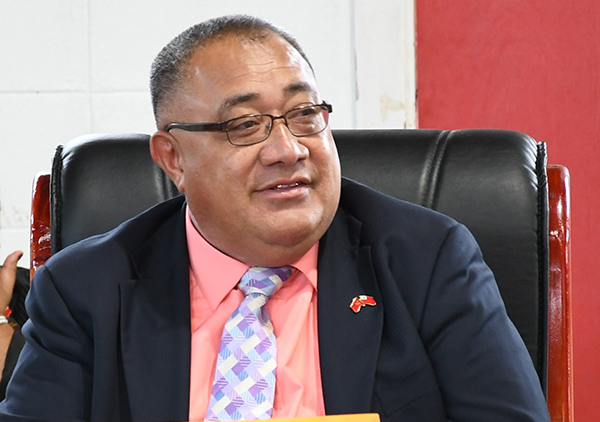
Prime Minister Dr ‘Aisake Eke
The proposed legislation, currently in development, would legally shield government employees who expose misconduct by superiors or colleagues.
“Many civil servants witness potential wrongdoing but remain silent out of fear,” the Prime Minister said in Tongan.
“This bill will give them the confidence to speak up—because corruption can only be stopped if it is first exposed.”
The Prime Minister said the law aims to change the Tongan culture of longo, or the culture of silence, in which individuals fear embarrassment or repercussions for speaking out.
“They must speak openly when they see something wrong, so we can take immediate action.”
While no implementation timeline was provided, he confirmed the draft is being prioritised amid growing calls for government accountability.
If passed, Tonga would join Pacific neighbours like Fiji and Samoa in establishing formal whistleblower protections. Transparency International has long advocated for such measures in the region, where fear of reprisal often silences corruption witnesses.
The bill comes as Tonga’s Public Service Commission investigates several undisclosed allegations of official misconduct.
Authorities say the new protections could help uncover systemic issues while safeguarding those who risk their careers to expose them.
The Tongan government has reviewed longstanding Sabbath laws prohibiting most businesses from operating on Sundays.
The announcement follows remarks from His Majesty the King last week while closing the Parliament.
Prime Minister ‘Aisake Eke said last week that constitutional provisions banning Sunday trade remain in effect, except for life-or-death emergencies.
The review will examine whether restaurants and other public-facing businesses operating on Sundays violate the law.
Current exemptions apply only to essential services like hospitals, police, and emergency services, he said.
Tonga’s Sabbath laws have long been a subject of controversy.
In the late 1970s, the then King permitted fossil fuel drilling, a failed oil exploration project, on Sundays at the Free Wesleyan Church in Kolomotu’a.
The decision sparked criticism, particularly because the drilling occurred just outside the church’s doors, directly contradicting Sabbath observance traditions.
Kaniva News recently published an editorial stating that Tonga’s interpretation of the Sabbath significantly differs from its European origins, where Sunday activities have become matters of personal choice.
Auckland police are investigating after two women reported frightening encounters with a suspicious man in Pakūranga within minutes of each other early Thursday morning.
A terrified woman said she saw a man in the middle of the road waving at her in Auckland. Photo / 123rf
The first incident occurred around 6.05am when a commuter had a man attempt to enter her locked car near Farm Cove Intermediate School.
When unable to gain entry, the man jumped onto her bonnet and remained there as she drove approximately 3km along Glenmore Rd.
“I was trying to dislodge him, but he kept pleading ‘please, please’,” the shaken driver told authorities, according to the NZ Herald.
The ordeal ended when the man slid off the vehicle at the intersection of Tī Rākau Drive and Pakūranga Rd, thanking the driver before reportedly entering another waiting vehicle.
Just 15 minutes earlier at 5.50am, another woman reported seeing a man dressed entirely in black waving at her from the middle of Butley Rd. “I honked and kept driving – it was too scary to stop,” she said.
Police confirmed that they were responding to the incidents but have been unable to locate the suspect, who is described as approximately 5’9″ tall.
No threats or property damage were reported, though both women were left severely shaken.
“This was the scariest thing that’s ever happened to me,” one victim stated, adding she has since changed her work commute route.
Authorities urge anyone with information or dashcam footage from the Pakūranga area between 5:45-6:15am on May 15 to contact police immediately.
Investigations continue as officers work to identify the man and determine the motive behind these alarming encounters.
EDITORIAL – The recent police intervention at Mataki‘eua hilltop, where nearly 100 youngsters were gathered in an illegal party, has ignited a heated debate about youth behaviour, parental responsibility, and Tonga’s moral fabric.
This incident is more than just a breach of public order. It reflects deeper societal concerns about the influences shaping young minds today.
With social media and peer pressure playing significant roles in teen culture, the gathering raises urgent questions: Are parents and guardians doing enough to guide their children?
Are community and religious institutions failing to provide meaningful alternatives to reckless behaviour?
The sheer size of the party suggests a troubling normalisation of underage drinking and disregard for the law, prompting calls for stricter enforcement and parental accountability.
This incident comes at a time when families across the kingdom are already grappling with the devastating effects of drug abuse, which has infiltrated schools, homes, and communities.
The fact that such a large group of teens congregated illegally, potentially with access to alcohol or even illicit substances, highlights a dangerous trend: young people increasingly seeking reckless escapism amid a breakdown of social discipline.
Authorities and community leaders are now questioning whether this party was merely a case of youthful rebellion or a symptom of a deeper crisis, where drugs and delinquency are becoming normalised among Tonga’s youth.
Parents, educators, and policymakers must confront an uncomfortable truth: without stronger guidance, enforcement, and community support, Tonga risks losing an entire generation to the twin threats of substance abuse and moral decay.
The Mataki‘eua incident should serve as an urgent call to action, strengthening drug prevention programs, reinforcing parental responsibility, and providing safe, supervised alternatives for youth.
If Tonga fails to act decisively, such gatherings may become more than just parties. They could turn into breeding grounds for addiction and crime.
The time for passive concern is over, the future of the nation’s youth is at stake.
A group of Tongan Catholics who travelled to Rome for Pope Leo XIV’s election visited significant religious sites in the Vatican, where early apostles and martyrs made history.
Among the sacred locations was the prison where Saint Paul was held before his execution, offering the pilgrims a profound connection to the roots of their faith.
Livestreamed videos shared on the Facebook pages of Ekitino Vaiangina and Malia Lanumata show Fr Dr Tupouniua Tūtoe guiding the Tongan pilgrims.
The Tongans were part of a larger pilgrimage group that arrived before the papal inauguration.
Through Facebook posts, they described how these sacred sites deepened their spiritual connection.
Inauguration
Meanwhile, Pope Leo XIV’s inauguration on Sunday is expected to draw a massive crowd, with over 250,000 people filling St. Peter’s Square.
The ceremony, during which the new pontiff receives the pallium and the fisherman’s ring, will also provide hints about his leadership style.
Vatican observers note that small changes in tradition, like Pope Francis’ decision to ride in an open-top jeep, can signal the direction of the papacy.
Father Francesco Giordano, a professor of theology at the Catholic University of America in Rome said: “Francis was more out there, Leo is more shy and reserved.”
Father Giordano describes the new pontiff as “warm, attentive, and a good listener.”
He sees him as a combination of the previous popes, combining the charisma and emotional expressiveness of John Paul II, the intellectual depth of Benedict XVI, and Francis’s focus on social justice.
World leaders, including royalty, presidents, and prime ministers, will attend the event, underscoring the Vatican’s enduring influence.
As Tongan pilgrims reflect on their spiritual experience, the Catholic world eagerly awaits Pope Leo XIV’s first steps in guiding the Church’s future.
Here is the list of World Leaders who will attend the inauguration:
ALBANIA – President Bajram Bega
ARMENIA – President Vahagn Khachaturyan
AUSTRALIA – Prime Minister Anthony Albanese
AUSTRIA – Chancellor Christian Stocker
BELGIUM – King Philippe and Queen Mathilde, Prime Minister Bart De Wever
BRITAIN – Prince Edward
BULGARIA – Prime Minister Rossen Jeliazkov
CANADA – Prime Minister Mark Carney
COLOMBIA – President Gustavo Petro
CROATIA – Prime Minister Andrej Plenkovic
ECUADOR – President Daniel Noboa
EUROPEAN UNION – Commission President Ursula von der Leyen
FRANCE – Prime Minister Francois Bayrou
GABON – President Brice Oligui Nguema
GERMANY – Chancellor Friedrich Merz
GEORGIA – President Mikheil Kavelashvili
HUNGARY – President Tamas Sulyok
ITALY – President Sergio Mattarella and Prime Minister Giorgia Meloni
IRELAND – President Michael D. Higgins
ISRAEL – President Isaac Herzog
LATVIA – Prime Minister Evika Silina
LEBANON – President Joseph Aoun
LITHUANIA – President Gitanas Nauseda
LUXEMBOURG – Prime Minister Luc Frieden
MALTA – Prime Minister Robert Abela
MONACO – Prince Albert and his wife Princess Charlene
MOROCCO – Prime Minister Aziz Akhannouch
NETHERLANDS – Queen Maxima, Prime Minister Dick Schoof
NIGERIA – President Bola Tinubu
PARAGUAY – President Santiago Pena
PERU – President Dina Boluarte
POLAND – President Andrzej Duda
PORTUGAL – President Marcelo Rebelo de Sousa
SERBIA – Prime Minister Djuro Macut
SLOVENIA – Prime Minister Robert Golob
SLOVAKIA – President Peter Pellegrini
SPAIN – King Felipe and Queen Letizia
SWITZERLAND – President Karin Keller-Sutter
TOGO – President Faure Gnassingbe
UKRAINE – President Volodymyr Zelenskiy
UNITED STATES – Vice President JD Vance, Secretary of State Marco Rubio
Australia is ramping up its presence in the Pacific with a new initiative to train island nations, including Tonga, for United Nations peacekeeping missions.
The program aims to strengthen regional security while reducing China’s military influence in the area.
The Australian Federal Police (AFP) is leading a five-week training course in Brisbane, designed to equip Pacific Island police officers with advanced crisis response and multinational policing skills.
Ten nations are participating, with Tonga playing a key role alongside Samoa, Fiji, and Vanuatu.
The move follows last year’s Police Landmark Pact signed in Tonga and underscores Australia’s efforts to position itself as the Pacific’s primary security partner.
The training, held at the AFP’s Pinkenba Hub, covers critical areas such as crime prevention during crises, mass casualty response, and field search coordination.
Tonga Police confirmed that officers from across the Pacific will be based in Brisbane for 24 weeks as part of the inaugural Pacific Police Support Group (PPSG) program.
The initiative reflects a broader strategy to integrate Pacific nations into global security frameworks while countering China’s growing influence in the region.
Samoa’s Police Commissioner Auapaau Logoitino Filipo joined AFP leaders to launch the program, calling it a “transformative step” for regional stability.
Analysts say the training could lead to future Pacific Island deployments in UN missions, further aligning the region with Western security interests.
The program comes as China expands its military and economic ties with Pacific nations, including the Solomon Islands and Kiribati.
Australia’s response, through increased aid, defence agreements, and now peacekeeping training—signals its commitment to maintaining a strong foothold in the region.
With geopolitical tensions rising, the AFP’s initiative highlights the Pacific’s strategic importance.
For Tonga, participation offers an opportunity to enhance its security capabilities while strengthening ties with traditional allies.
A former public sector employee and her husband have admitted to working together to fraudulently obtain $2 million from Oranga Tamariki, following a Serious Fraud Office (SFO) investigation.
Former Oranga Tamariki Property and Facilities Manager, Neha Sharma (nee Chandrasekaran), has been sentenced to three years’ imprisonment for her offending. Mrs Sharma’s husband, Amandeep Sharma, has now also admitted his role in the offending and a sentencing hearing has been set down for 19 June.
Mr and Mrs Sharma pleaded guilty to charges of obtaining by deception for fraudulently obtaining more than $2 million from Oranga Tamariki. The money was obtained through Mr Sharma’s company without Oranga Tamariki knowing.
The husband and wife team also pleaded guilty to money laundering for transferring just under $800,000 overseas once the offending was discovered, then immediately leaving New Zealand.
Mrs Sharma also pleaded guilty to one representative charge of using a forged document. Mrs Sharma used forged references to gain employment at Oranga Tamariki, and again to gain employment at Waka Kotahi directly after leaving Oranga Tamariki.
SFO Director, Karen Chang says, “These convictions mark an important milestone in the SFO’s prosecution of this case, which reinforces the serious consequences of abusing a position of trust for personal gain, especially when public funds are involved.”
“Offending of this kind erodes public confidence and harms the integrity of New Zealand’s public institutions and our reputation as a safe place to invest. It’s critical we take action to disrupt and deter such behaviour. This case also highlights the requirement for rigorous vetting of public servants especially as they move between agencies.”
The SFO filed charges against Neha Sharma and her husband Amandeep Sharma in June 2023. The SFO alleged at the time that Mrs Sharma provided false references to secure her role at Oranga Tamariki, where she managed aspects of properties in the Canterbury region, including maintenance, upkeep, and modifications.
Once in the role, Mrs Sharma set up her husband’s company, Divine Connection, as a contractor without declaring a conflict of interest. She then ensured work was assigned to his company over other approved suppliers. In total, Oranga Tamariki paid Divine Connection just over $2 million.
Following her resignation from Oranga Tamariki, Mrs Sharma applied for a job at Waka Kotahi. Mrs Sharma again provided a false reference to secure her new role.
The money laundering charges relate to almost $800,000 transferred to overseas bank accounts in India. The Police Asset Recovery Unit, in close co-operation with colleagues in India, has located and restrained these funds. Proceedings are underway to return them to New Zealand.
The High Court has issued a restraining order over the couple’s properties in New Zealand upon application by the Commissioner of Police, pursuant to the Criminal Proceeds (Recovery) Act 2009.
“We would like to acknowledge the Police and Indian authorities for their swift action and assistance in securing the defendant’s assets, as well as the co-operation of Oranga Tamariki and Waka Kotahi in the investigation,” says Ms Chang.
A Tongan national, Paea Teu, has been arrested following a dramatic two-day manhunt after he allegedly attacked two Australian Border Force officers during a transfer from Villawood Detention Centre to Sydney Airport.
The 28-year-old allegedly stabbed a 54-year-old officer in the neck with a makeshift shiv crafted from nail clippers and assaulted a second officer, aged 36, in the early hours of Thursday morning.
Teu then fled the scene, prompting an extensive police search across Sydney’s southwest.
Authorities tracked him down after a tip-off from a vigilant resident who spotted him on Eschol Park Drive. Teu was arrested shortly after on Ballantrae Drive in St Andrews. A 24-year-old woman, believed to have been harbouring him, was also taken into custody.
Teu has been charged with wounding with intent to murder and causing grievous bodily harm, while the woman faces charges for knowingly harbouring an escaped inmate.
The injured officers were treated at Westmead Hospital, with one sustaining serious but non-life-threatening injuries.
Teu was denied bail and appeared in Parramatta Local Court today, while the woman was granted conditional bail and is set to face Campbelltown Court on May 22.
This incident has raised further concerns over detainee transport security, with authorities expected to review protocols in the wake of the attack.
An investigator from the Asian Development Bank (ADB) has arrived in Tonga to conduct an internal review of the Tonga Development Bank (TDB) following growing government concerns over its operations and management.
The move comes after Deputy Prime Minister Taniela Fusimalohi alleged that TDB had breached loan limit policies, while the Minister of Public Enterprises Piveni Piukala claimed that a $14 million investment, intended to support low-income businesses, had mostly been loaned to higher-income individuals.
Emeline Tuita, the CEO of TDB, previously refuted the government’s allegations against the bank.
The Prime Minister said the investigation was important, as the government wanted to ensure that any money it invested in institutions like the bank was secure and beyond doubt.
He confirmed the investigator’s arrival yesterday and stated that the assessment would cover the bank’s overall governance, including the role of its board of directors.
“The government sees this as urgent—to bring the bank back to its proper function,” the Prime Minister said in Tongan.
“The investigator has the experience, skills, and tools needed to assess the situation thoroughly.”
He said the Development Bank is government-owned, and people’s money is invested in it. He said the investigation aims to restore confidence in the bank’s ability to fulfil its core functions.
“The investigator will also examine how the board controls the bank and provide recommendations on any necessary changes,” the Prime Minister added.
The Prime Minister said public concern over TDB’s operations has been mounting, with critics arguing that the current situation could undermine its primary duty to serve citizens.
The ADB’s findings are expected to guide reforms to ensure transparency and accountability in the bank’s future operations.
The government has yet to announce a timeline for the investigation’s completion, but Eke said swift action is a priority to stabilise the institution.
Disputes
The probe follows a recent legal dispute between TDB and the National Reserve Bank of Tonga (NRBT), both state-owned institutions.
The Prime Minister expressed relief after the court allowed TDB to withdraw its lawsuit against NRBT, calling the legal action unnecessary and stating that it should not have happened.
Police are seeking public assistance to locate a 28-year-old man wanted on an outstanding arrest warrant for assault offences.
Paea Teu, a Tongan national, was believed to be at a residence on Duncansby Crescent, St Andrews, prompting a police operation this afternoon.
Officers from Campbelltown Police Area Command, supported by the Dog Unit, established a perimeter and searched the property but were unable to locate him.
Teu is described as being of Pacific Islander/Māori appearance, with a tanned complexion, large build, approximately 180cm tall, and having black hair, dark eyes, and an unshaven face.
Authorities warn the public not to approach Teu if sighted but to immediately call Triple Zero (000) or Crime Stoppers on 1800 333 000 with any information.