Auckland, New Zealand — Tongan New Zealander Vi Hausia, the man behind the historic Papatoetoe Local Board election re‑run, is being praised across the Tongan community for his courage, integrity, and unwavering commitment to fairness.
Vi Hausia pictured in a moment of quiet determination, reflecting his commitment to protecting the integrity of the Papatoetoe community’s vote. Photo/Auckland Council
The former deputy chair of the Ōtara‑Papatoetoe Local Board, took the local board election to court after receiving multiple reports that voting papers had been stolen from Papatoetoe residents and fraudulently submitted without their consent.
Hausia alleged widespread theft and irregularities, prompting a formal petition challenging the integrity of the 2025 Papatoetoe subdivision election.
A court investigation later uncovered at least 79 irregularly cast votes, some in the names of people who confirmed they had never voted.
The judge concluded that fraudulent voting had likely “permeated or infected” the election to a degree that materially affected the result, leading to the election being declared void and a court‑ordered re‑run.
Hausia reportedly said he acted out of concern for democratic integrity, emphasising that if he had remained silent, “nothing would have happened.”
“If I’m not going to do this, who’s going to do it?” he said, reflecting on the decision to challenge the original result.
The phrase has resonated deeply within the Tongan community, many of whom see Hausia’s actions as embodying core Pacific values: courage (lototoa), service (ngaue ‘ofa), and responsibility (fatongia).
Local Tongan families have called it a proud moment, noting that Tongans are often underrepresented in decision‑making spaces. Hausia’s stand, they say, opens the door for others to participate more confidently.
When Hausia brought the case into public view, his actions caught the attention of leaders throughout South Auckland.
Among them was Makalita Kolo, a member of the Māngere‑Ōtāhuhu Local Board, who publicly praised him for his courage.
Kolo described Hausia in Tongan as a proud son of the Tongan community, acknowledging that his stand embodied the values of resilience, service, and collective responsibility cherished by Tongans across generations.
“Ko’etau ki’i foha koia ko Vi Hausia na’ane fai hono fakatokanga’i pea hopo’i ai ‘ae ngaue hala/kakaa ko’eni. Malo Vi Lehops V Hausia e ngaue lahi ko’eni,” Kolo wrote in Tongan when congratulating Hausia.
Cocaine use has hit an all-time high in New Zealand, exceeding MDMA consumption for the first time, according to new wastewater testing data.
The data, released by police on Monday, showed a surge in cocaine consumption in the last quarter of 2025.
An estimated average of 9.4kg of cocaine was consumed nationwide each week, according to results from all locations tested. This was 98% more than the average quantity consumed over the previous four quarters.
All districts in the country recorded higher-than-usual cocaine use over those four quarters.
Meanwhile, methamphetamine use averaged an estimated 34.7kg per week, around 8% higher than the previous four quarters
Record levels of cocaine use detected in wastewater testing
Recreational Class A drug overtakes MDMA has the high of choice in the last quarter of 2025.
Record levels of cocaine use detected in wastewater testing2:19
Recreational Class A drug overtakes MDMA has the high of choice in the last quarter of 2025. (Source: 1News)
NZ Drug Foundation executive director Sarah Helm said the new data was more evidence that our approach to drugs was not working.
‘Prices down, harm increasing’
“The dramatic increases in methamphetamine and cocaine consumption over the last two years are unprecedented,” she said.
“A long-term under-investment in treatment and harm reduction, coupled with an over-reliance on supply side measures hasn’t worked. Consumption is at record levels, drug use is diversifying, prices are down, harm is increasing, and new potent drugs are arriving.”
Helm said every indicator was “screaming at us to change our approach”, although she acknowledged the Government’s recent Action Plan to Prevent and Reduce Substance Harm would go some way in responding to the increase in harm.
“If we could wave a magic wand, we would do two things: Vastly increase the spending on addiction treatment and harm reduction, and change our drug laws,” she said.
“While these things won’t remove all problems, the evidence is clear that it would reduce the worst harms and provide us with more tools to tackle the increase in harm. But if we continue doing more of the same, things will continue to get worse.”
Per capita, cocaine use was highest in the Bay of Plenty police district, while methamphetamine was highest in the Northland police district . The Southern district had the highest MDMA consumption.
Wastewater testing occurred for one week each month across the country, with drug use calculated from the concentration of each biomarker detected.
Nationwide testing began in November 2018, with current testing sites covering up to 77% of New Zealand’s population.
Nearly 180kg of cocaine seized in last quarter of 2025
The bricks featured various brandings, including Volvo, Porsche, and an image of a hamster wearing a crown. (Source: Supplied)
Nearly 180kg of cocaine was reported seized by Customs between October and December 2025 – 107kg at the Port of Tauranga.
In late October, Customs found 35kg of cocaine branded with the Lacoste logo in a shipping container at Dunedin’s Port Chalmers.
An unsuspected worker found 36kg of cocaine stashed inside a container carrying legitimate goods at an Auckland business on November 3.
Two seizures of cocaine totalling an estimated 33kg were seized from in refrigerated containers at the Port of Tauranga on November 20.
In early December, Customs officers at the Port of Tauranga intercepted an estimated 45kg of cocaine – with an estimated street value of $15.75 million – during routine inspections.
The bricks featured various brandings, including Volvo, Porsche, and an image of a hamster wearing a crown.
On Boxing Day, an estimated 8kg of cocaine was uncovered alongside 10kg of methamphetamine in a shipping container at the Port of Tauranga.
Last last year, the Government announced maritime operations led by Customs, the New Zealand Defence Force, and the Government Communications Security Bureau to disrupt drug networks in the Pacific region.
The operations aimed to detect, deter, and disrupt drug shipments originating from Central and South America destined for New Zealand and Pacific nations.
By Kate Newton of rnz.co.nz and is republished with permission
RNZ launched a political poll in April 2025 in partnership with the longstanding and reputable polling company Reid Research.
Photo: RNZ
The poll builds on the former Newshub-Reid Research Poll, which ran successfully from 2009 to 2023.
The polls, which will run about four times a year, involve 1000 online interviews nationwide.
Each poll includes standard questions about party vote preference and preferred prime minister, along with whether respondents feel the current government is taking the country in the right direction.
Responses to these questions will be collated and updated on this page each polling cycle.
Each poll also includes several topical questions. The results of these will be reported as part of that cycle’s news coverage.
Party vote
The crucial question asked in each polling cycle focuses on who respondents would give their party vote to if a general election was held the following day.
These are the results of the most recent poll.
Latest poll results: political parties
How poll respondents would use their party vote if a general election was held tomorrow0%5%10%15%20%25%30%35%
Labour
35.6%
National
30.8%
NZ First
10.6%
Greens
10.1%
ACT
7.0%
Te Pāti Māori
3.2%
TOP
2.0%
Others
0.7%
Results exclude 57 undecided or non-voters and have a maximum margin of error of +/-3.1%, at a 95% confidence level.
And here is how the party vote trend has evolved over time.
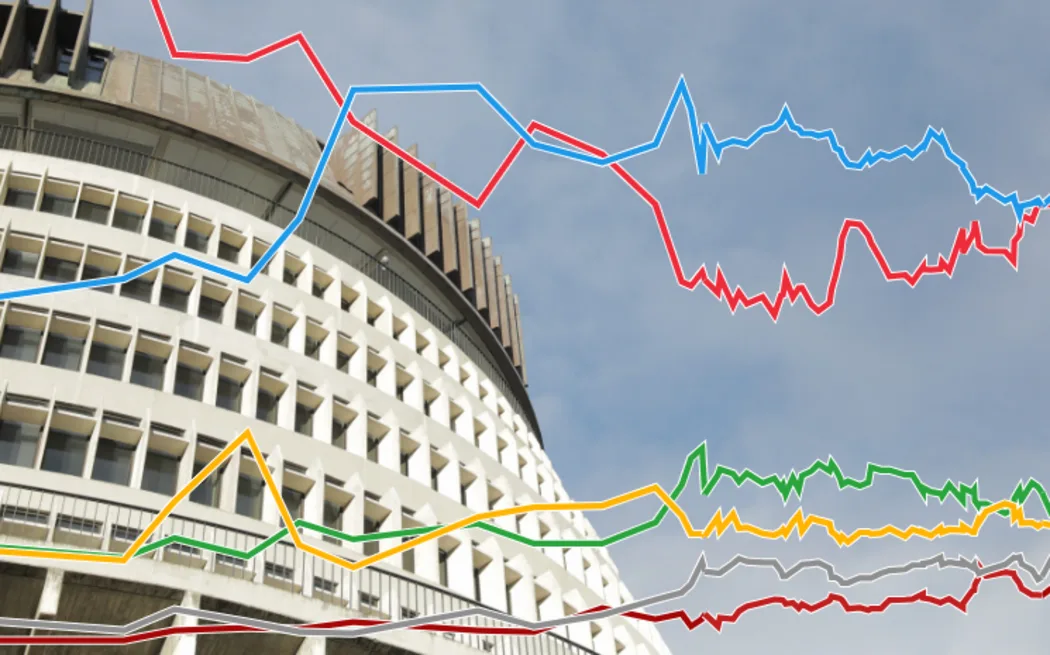
Which party do voters prefer?
How poll respondents’ party vote preferences have fluctuated over timeJan21AprJulOctJan22AprJulOctJan23AprJulOctJan24AprJulOctJan25AprJulOctJan2605101520253035404550%
ACT
National
Greens
NZ First
Labour
Te Pāti Māori
Reid Research did not poll between the 2023 election and March 2025. The dotted line shows a rolling average for all other major political polls carried out during this period.
Chart: Kate Newton / RNZSource: Pre-March 2025 data: Wikipedia | Ongoing data: RNZ-Reid Research poll
RNZ uses these party vote results to calculate the seats each party would be allocated in Parliament.
Under current rules, parties must receive 5 percent of the vote or win an electorate seat to be returned to Parliament.
For the purposes of this poll, if support for a party currently in Parliament falls below the 5 percent threshold, but that party currently holds an electorate seat, RNZ assumes that party will retain its share of the party vote.
New Zealand does not vote for its party leaders but a leader’s popularity or support is strongly linked to party support.
In the most recent poll, this is where the current party leaders and other contenders stood.
Latest poll results: preferred PM
Percentage of poll respondents who named the following leaders as their preferred Prime Minister
Hipkins
20.7%
Luxon
17.3%
Peters
13.1%
Swarbrick
6.8%
Seymour
6.8%
Results have a maximum margin of error of +/-3%, at a 95% confidence level.
Chart: Kate Newton / RNZSource: RNZ-Reid Research poll
And here is how party leaders’ support has changed over the last few years.
Who do voters prefer as prime minister?
Preferred prime minister rankings among poll respondents, for party leaders and MPs with significant results.Jul2021OctJan2022AprJulOctJan2023AprJulOctJan2024AprJulOctJan2025AprJulOctJan2026051015202530%
Seymour
Luxon
Swarbrick
Peters
Hipkins
Reid Research did not poll between the 2023 election and March 2025. The dotted line shows a rolling average for all other major political polls carried out during this period.
Chart: Kate Newton / RNZSource: Pre-March 2025 data: Wikipedia | Ongoing data: RNZ-Reid Research poll
As well as outright preferences, the RNZ-Reid Research Poll also asks respondents how well the leaders of National and Labour are performing in their roles.
The overall outcome (the difference between respondents who believe a leader is performing well and those who believe they are not performing well) is represented in this chart of net favourability.
Major party leaders’ net favourability
The proportion of poll respondents who said the current Labour leader or National leader was performing well, minus those who said they were performing poorly.20162017201820192020202120222023202420252026−200204060%Labour22 May 2016−11.1%Labour22 May 2016−11.1%
Christopher Luxon becomes National leader
Chris Hipkins becomes Labour leader
Favourable
Unfavourable
National
Labour
Chart: Kate Newton / RNZSource: RNZ-Reid Research poll
We also ask how respondents feel about the overall direction of the country under the current government.
How do people feel about New Zealand’s current direction?
Proportion of poll respondents who said New Zealand was heading in the right direction under the current government, the wrong direction, or that they didn’t know.Jan21AprJulOctJan22AprJulOctJan23AprJulOctJan24AprJulOctJan25AprJulOctJan26010203040506070%Neither/Do not know(poll average)5 Oct 20219.6%Neither/Do not know (poll average)5 Oct 20219.6%
Right direction
Wrong direction
Neither/Do not know
Reid Research did not previously poll on this question. The dotted line shows a rolling average for other major political polls carried out prior to March 2025, for questions with similar wording.
Chart: Kate Newton / RNZSource: Pre-March 2025 data: Wikipedia | Ongoing data: RNZ-Reid Research poll
The RNZ-Reid Research poll margins of error (expressed at a 95 percent confidence level) are:
Percentage result is 10 percent or 90 percent: +/- 1.9 percent
Percentage result is 20 percent or 80 percent: +/- 2.5 percent
Percentage result is 30 percent or 70 percent: +/- 2.7 percent
Percentage result is 40 percent or 60 percent: +/- 3.0 percent
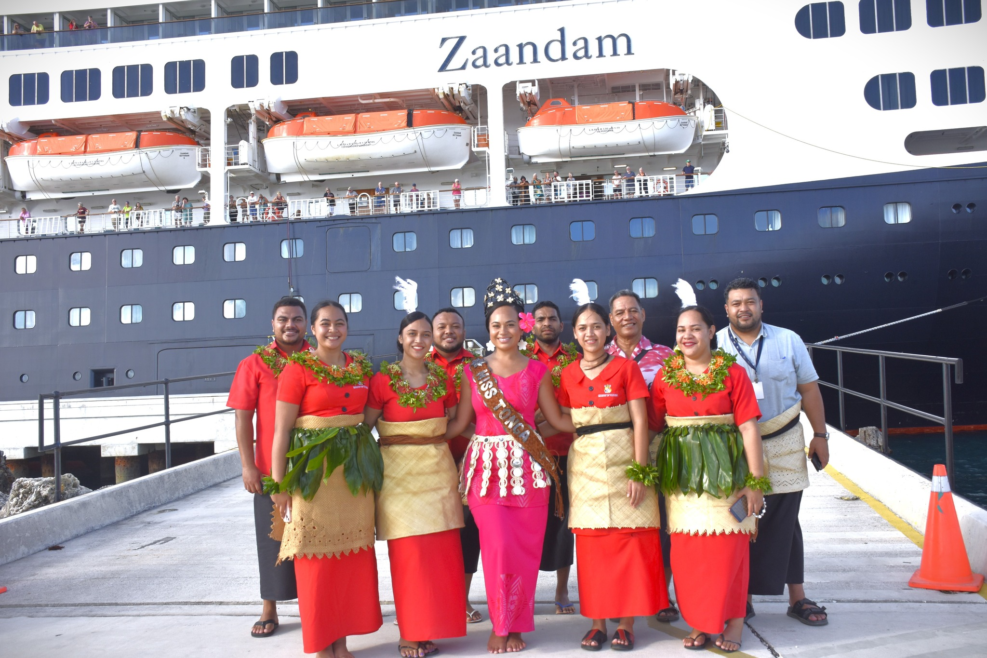
Nuku‘alofa came alive yesterday as the Zaandam cruise ship made a vibrant arrival at Vuna Wharf, bringing with it 1,147 passengers and 619 crew members for a day of cultural discovery and warm Tongan hospitality.
Most visitors were from the United States and spent the day exploring the capital, enjoying local food, handicrafts, tours, and community‑run activities.
The visit marked another positive milestone for Tonga’s tourism sector as cruise travel continues to rebound.
The arrival was coordinated by Pacific Forum Line, while Jones Travel managed passenger arrangements to ensure smooth on‑shore experiences throughout the day.
The Zaandam berthed at 8am and departed at 5pm, allowing guests ample time to immerse themselves in the sights and sounds of Tongatapu.
Adding to the festive atmosphere, the Ministry of Tourism’s performance team delivered a lively floor show and group dance that captivated the cruise visitors.
Their colourful performance highlighted Tonga’s cultural pride, showcasing traditional movement, music, and the warmth that defines the Tongan spirit, Tourism Tonga said.
Tourism officials praised the collaboration that made the visit a success and extended gratitude to staff, partners, and community members who contributed to the day’s activities.
Tonga looks forward to welcoming more cruise visitors in the coming months and continuing to share its rich culture, hospitality, and island beauty with travellers from around the world.
The Tonga Meteorological Service has issued its first Tropical Disturbance Formation Advice for system TD10F, warning that while the disturbance does not currently pose a direct threat to Tonga, it will continue to track south and away from the country over the next 24–48 hours.
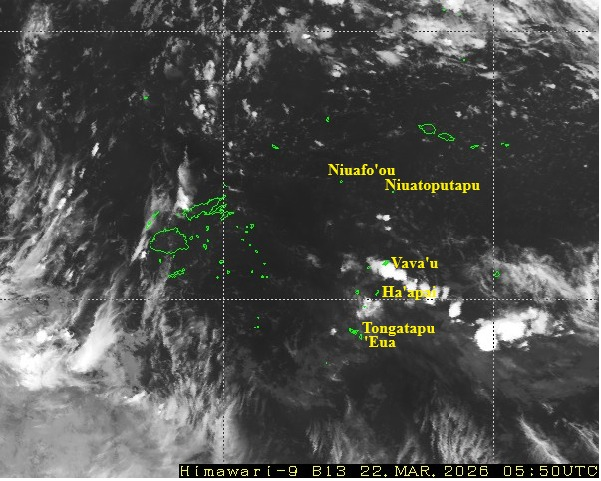
In an advisory released at 8pm on Sunday, 22 March 2026, officials confirmed that TD10F was located near latitude 12.9° South and longitude 160.5° East, positioned approximately 390 km south of Honiara in the Solomon Islands.
The system was also measured at distances of 2,585 km west of Niuafo‘ou, 2,795 km west of Niuatoputapu, 2,810 km west‑northwest of Vava‘u, 2,795 km west‑northwest of Ha‘apai, and 2,745 km west‑northwest of Nuku‘alofa at 4pm Sunday.
According to the advisory, the potential for TD10F to develop into a tropical cyclone within the next 48 hours remains low.
However, the system will continue to move southwestward and is expected to maintain a path that keeps it well away from Tonga’s island groups.
A track map released with the advisory shows the system shifting gradually southwards, with its projected movement keeping it outside Tonga’s forecast zone.
The Tonga Meteorological Service will issue its next update at 8am on Monday, 23 March 2026, and is continuing to monitor TD10F closely for any changes in intensity or direction.
Residents are encouraged to stay informed through official advisories as the system moves further southwest.
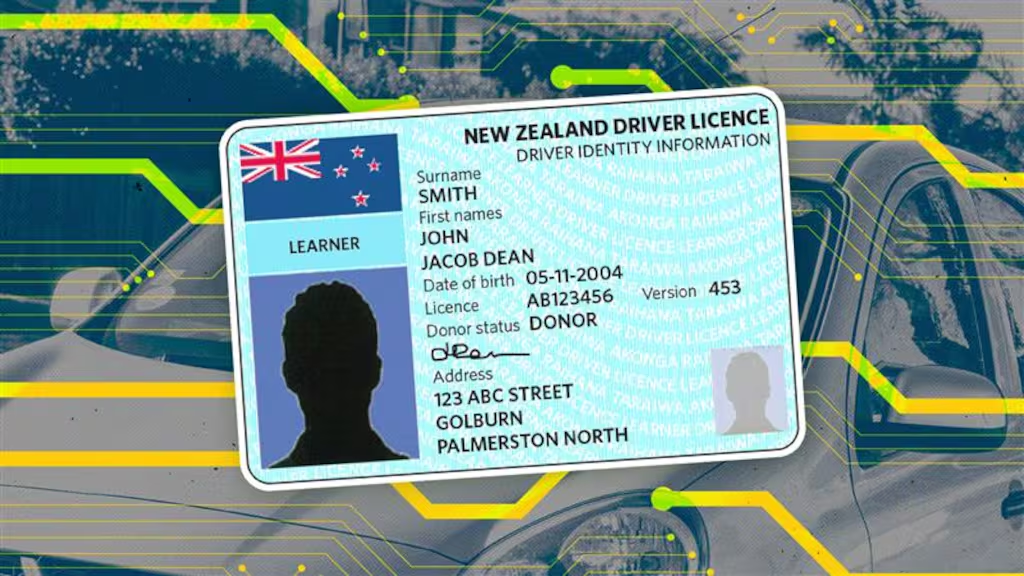
Digital driver’s licences were promised by the Government last year, and the law change required to introduce them is still crawling through Parliament – but ministers say they’re committed to getting the legislation in place before the election.
Composite image by Vania Chandrawidjaja (Source: 1News
The Regulatory Systems (Transport) Amendment Bill, introduced to the house by Associate Transport Minister James Meager, is a piece of omnibus legislation aimed at tidying up New Zealand’s land transport, aviation, and maritime legislation.
It is also intended to modernise some transport laws and bring them up to date with technology.
One of those is to expand the definition of a driver’s licence to include electronic versions as well as the current physical ones. It also creates a framework for the Government to introduce further legislation on digital licences.
But these digital licenses are just one part of the bill, which covers a range of areas. It was passed with the support of all six parties in Parliament following its first reading.
It then went on to select committee earlier this year, with the Transport and Infrastructure Committee suggesting several changes, a large chunk dedicated to the electronic licences.
The next stage is a second reading in Parliament before becoming law. With an election in November creating a hard deadline for all legislation to get through before a potential change in government, the clock is ticking for all proposed legislation.
But the government appears committed this reform, saying it hopes to have the bill passed by the middle of the year.
Digital licences ‘optional’
The select committee which looked at the legislation said it was “vital” that use of electronic driver licences remained “optional”, and that “people remain equally free to use just a physical driver licence”.
“We note that the intention is that electronic driver licences would provide an optional alternative to physical driver licences,” it said. “We recognise that there are many reasons why individuals might prefer to continue using a physical driver licence.”
It recommended the bill add the words: “Different prescribed forms may be prescribed for different types of driver licences, including different formats of driver licences.”
When introducing the bill at its first reading, Meager said it was “important to note” that physical licences would “always be an option”.
James Meager (Source: Getty)
The committee said the amendment would also recognise that electronic licences could take a different form from physical licences while containing the same information.
It recommended changing some of the wording to say a licence must “include” prescribed features rather than stating that those features must be “on” the licence.
“This would allow more flexibility in designing the format of electronic driver licences and reflect that not all information must be displayed simultaneously.”
The committee noted how potential organ donors’ status would be shown on an electronic licence, and said this would be considered during the implementation process.
“Whatever way the status is displayed, it will not change how donor information is accessed for clinical purposes.”
If successful in its second reading, the bill will head to the committee of the whole house to be scrutinised before its third and final reading. Its second reading would be scheduled by the Leader of the House, Chris Bishop.
“The Government does have a busy legislative agenda, so it will occur as and when time permits to do so,” a spokesperson for Meager’s office told 1News.
A spokesperson for Bishop said the Government was aiming to pass the bill “by mid year”.
The bill would also open a pathway for other transport documents, like Warrant of Fitness and Registration stickers, to be digitised.
In December last year, the Government launched the govt.nz app, which allows users to access government information and services from their phones – and will, eventually, hold digital driver licences.
Prime Minister Christopher Luxon said last year that digital driver’s licences are a “common sense thing”.
“We’re all using digital wallets to buy products and services across the country,” he said
Digital licences are already available in Denmark, Iceland, Norway and several US states.
The New Zealand businessman who founded the once‑iconic Lepuhā Nightclub, a major entertainment hub for Tongans in Auckland during the 2000s, has died.
Christopher Yate. Photo/Supplied
Christopher Yate, a former police officer widely known in the Tongan community simply as Chris, passed away last month, and his family held his cremation service last week.
News of his death has stirred memories among Tongans who frequented or benefited from his businesses.
For many, Lepuhā was more than a nightclub — it was a cultural gathering place during a time when Tongan‑run entertainment venues were scarce.
Yate operated the original Lepuhā Nightclub in Panmure from 2000 to 2017, a venue that became a staple of weekend nightlife for Pacific communities across Auckland.
The club later relocated to Karangahape Road and was rebranded as Lebox — a modernised English interpretation of puha, drawn from the original name Lepuhā, which in Tongan refers to a mythical attractive young man associated with the village of Leimātu‘a in Vava‘u.
Under Yate’s ownership, Lepuhā provided opportunities for local Tongan bands, DJs, performers, security guards and bartenders, many of whom built their early careers on its stage.
Community members today recall not only the entertainment but the sense of belonging the venue fostered.
Friends and patrons have taken to social media to share memories of Yate’s support for young Tongan musicians, his approachable nature, and his commitment to running a venue that celebrated Tongan identity through music and nightlife.
One commenter described the gathering at Yate’s cremation service as “beautiful and simple.”
Funeral details beyond the cremation were kept private.
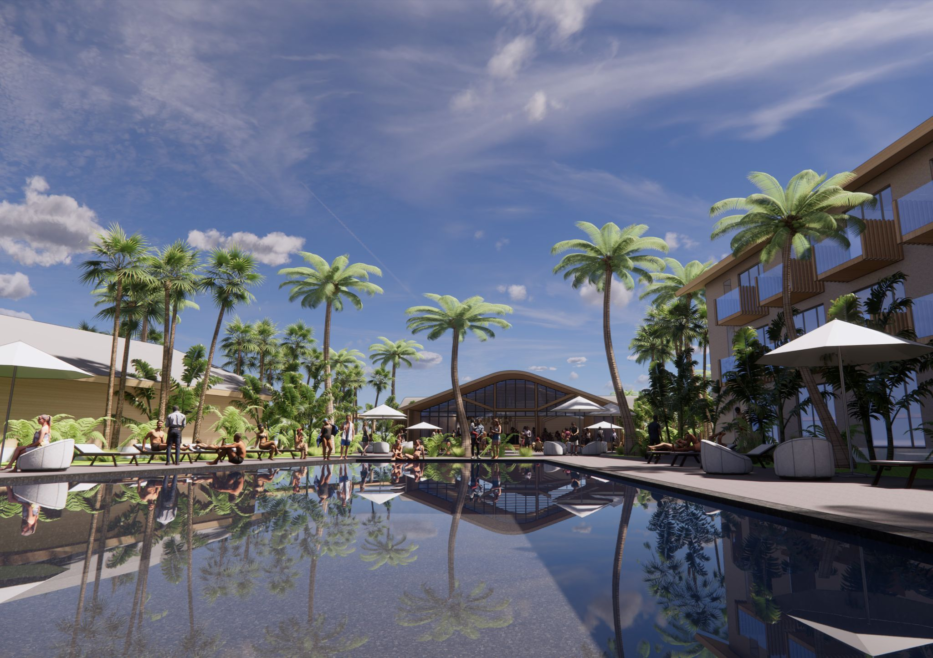
Tonga’s tourism and economic future has received a major boost following the signing of a Memorandum of Understanding between Sudima Hotels and His Majesty King Tupou VI for the development of a new upscale hotel at the King’s Tufumāhina royal estate.
The agreement marks one of the most significant private‑sector investments in Tonga in recent years and stands as a clear example of the strengthening partnership between New Zealand businesses and the Kingdom of Tonga, a statement said.
The project, which will include an upscale resort and convention centre at Tonga’s Parliament precinct, is being developed in partnership with Hind Management and Sudima Hotels.
It is expected to create up to 100 permanent and part‑time jobs, inject around T$18 million a year into the local economy through wages and procurement, and act as a catalyst for further investment in Tonga’s expanding tourism sector.
New Zealand Prime Minister Christopher Luxon highlighted the project during his recent visit to Tonga, noting its importance in meeting rising demand for high‑quality accommodation and business facilities in the Pacific nation.
Tourism remains a cornerstone of both the New Zealand and Tongan economies, and the development signals confidence in Tonga’s long‑term growth potential.
Industry leaders say the collaboration demonstrates how shared expertise and strategic partnership can deliver sustainable benefits for Pacific communities.
Sudima Hotels founder and Hind Management executive chairman Sudesh Jhunjhnuwala, ONZM, said the company is honoured to support a project that will bring meaningful economic and social benefits to Tonga.
“This development reflects our commitment to the region and our belief in Tonga’s future. We are proud to contribute to a partnership that will create opportunity, strengthen tourism and support the wellbeing of local communities,” he said.
Construction timelines and further project details are expected to be announced in the coming months.
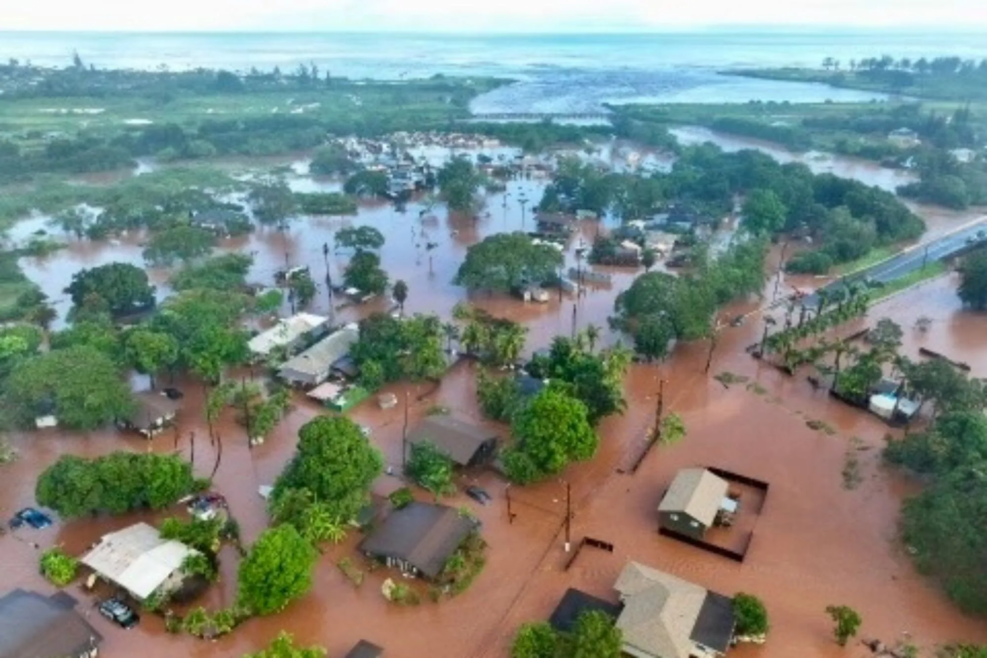
Oahu — where significant numbers of Tongans live — was among the areas placed under urgent evacuation warnings as floodwaters swept through towns and pushed a century‑old dam to the brink of failure.
Hawaii is enduring its worst flooding in more than two decades after back‑to‑back Kona storms unleashed torrential rains across multiple islands.
Authorities ordered thousands to flee as rising waters submerged homes, washed out roads and stranded residents in several communities.
The North Shore of Oahu, home to a large Pacific Islander population including many Tongans, was one of the hardest‑hit regions.
Officials warned that the 120‑year‑old Wahiawa Dam was “at imminent risk of failure,” triggering sirens and urgent orders for families downstream to leave immediately.
Governor Josh Green said more than 5,500 people were under evacuation orders as floodwaters lifted cars, damaged homes and blocked all exit routes from several towns.
He confirmed that no deaths had been reported, though several people were treated for hypothermia. More than 230 residents have been rescued so far, including 72 children and adults airlifted from a spring‑break camp on Oahu’s west coast.
Muddy floodwaters pushed some homes off their foundations and left neighbourhoods buried under debris. A collapsed building was swept into a bridge as water surged through the North Shore.
Much of the destruction was caused by rainfall rates of two to four inches per hour, overwhelming already saturated ground.
Some areas recorded more than a foot of rain in 24 hours, cutting power and stranding motorists on major roads.
Airports, schools, hospitals and homes across Maui, Oahu and other islands have reported significant damage.
Mayor Rick Blangiardi described the damage as “catastrophic,” noting that full assessments could take days.
Governor Green said the flooding could result in more than US$1 billion in statewide damage.
Shelters have opened across the islands as displaced families seek refuge from rising waters.
Officials say unstable weather will continue through the weekend, keeping flash‑flood warnings in place for most of Hawaii.
Residents are being urged to stay on high ground, avoid flooded areas and follow all emergency instructions.
Commentary – In Tonga, rolling outages and sudden blackouts have become an exhausting part of daily life, forcing households and businesses to constantly adapt to an unstable electricity supply—an experience that stands in stark contrast to the near-uninterrupted service relied upon in Auckland, where Kaniva Tonga news is based.
This month alone has exposed the scale and frequency of the problem. A series of notices from Tonga Power Limited indicates that the system is under sustained strain, with both planned maintenance and unexpected faults causing widespread disruption across Tongatapu.
From early March, consumers were warned of load shedding due to “limited generation capacity,” driven by maintenance on key generators and “reduced solar generation” caused by poor weather conditions. What followed was a near-continuous cycle of interruptions.
Planned outages for infrastructure upgrades stretched for hours at a time, while unplanned faults—from transformer issues to “broken HV lines” and “burnt overhead cables”—left entire communities without power with little notice. In some cases, residents were told to expect outages lasting most of the day; in others, they were left waiting indefinitely as repair crews worked to stabilise the network.
Normalisation of Uncertainty
For many Tongans, the issue is no longer the inconvenience of occasional outages—it is the normalisation of uncertainty. Families are now routinely advised to charge devices in advance, limit refrigerator use, and prepare backup solutions for essential medical equipment. The instructions have become formulaic: “charge mobile phones and other essential devices in advance”—a directive appearing verbatim in multiple TPL notices—has become a standard refrain. Businesses, meanwhile, must factor power instability into their daily operations, often at high financial cost.
The repeated need for load shedding points to deeper structural challenges. Limited generation capacity, reliance on weather-dependent solar input, and pressure on ageing infrastructure are combining to create a fragile system that struggles to meet demand. Twice in March—on the 2nd and again on the 16th—Tonga Power Limited issued nearly identical load shedding warnings. Both cited “limited generation capacity.”
Both pointed to reduced solar output from poor weather. Both acknowledged that the Battery Energy Storage System could not fill the gap. The repetition is telling. These are not one-off emergencies. They are the recurring symptoms of a system whose constraints have been known—and unaddressed—for years.
Acknowledgment Is Not Action
Public frustration is growing. While Tonga Power Limited has consistently acknowledged the inconvenience and urged patience, many residents are increasingly asking when a long-term solution will be delivered—rather than temporary fixes that manage, rather than resolve, the problem.
To its credit, Tonga Power Limited does not obscure the problem. Its notices name the constraints plainly. But transparency is not the same as capacity. The question these notices raise—without answering—is whether TPL has the resources to do more than manage decline. A utility that repeatedly warns of “limited generation capacity” lacks the means to expand it.
Margin Makes the Difference
The comparison with places like Auckland underscores the disparity. Here, power interruptions are rare and often unexpected; in Tonga, they are scheduled, anticipated, and, increasingly, endured as part of everyday life. The fragility reflected in Tonga Power Limited’s own notices—”limited generation capacity,” reduced solar output from poor weather, a battery storage system that cannot fill the gap—points to a system designed with little margin.
In Auckland, by contrast, the grid is interconnected across the North Island, drawing on hydro, geothermal, and thermal generation that provides redundancy so that no single weather pattern or generator outage can easily compromise it. The disparity is not merely geographic; it is structural.
Past Time for Answers
At its core, the situation raises a broader question: how long can a modern economy function effectively when something as fundamental as electricity remains uncertain? Until systemic investment and infrastructure resilience are addressed, Tonga’s power crisis risks becoming not just a temporary strain—but a defining constraint on daily life and economic progress.
Given that this month’s incidents are merely the latest in a decades-long pattern of power issues, several critical questions arise that the government must address. How will generation capacity be expanded so that “limited generation capacity” is no longer a recurring warning?
What backup exists for when the weather reduces solar output—and why does the Battery Energy Storage System repeatedly prove insufficient?
And what investment plan exists to replace ageing distribution infrastructure that continues to fail with “broken HV lines” and “burnt overhead cables”?
These are not new questions. They are the same questions Tonga Power Limited’s notices have been raising for years. It is past time for answers.