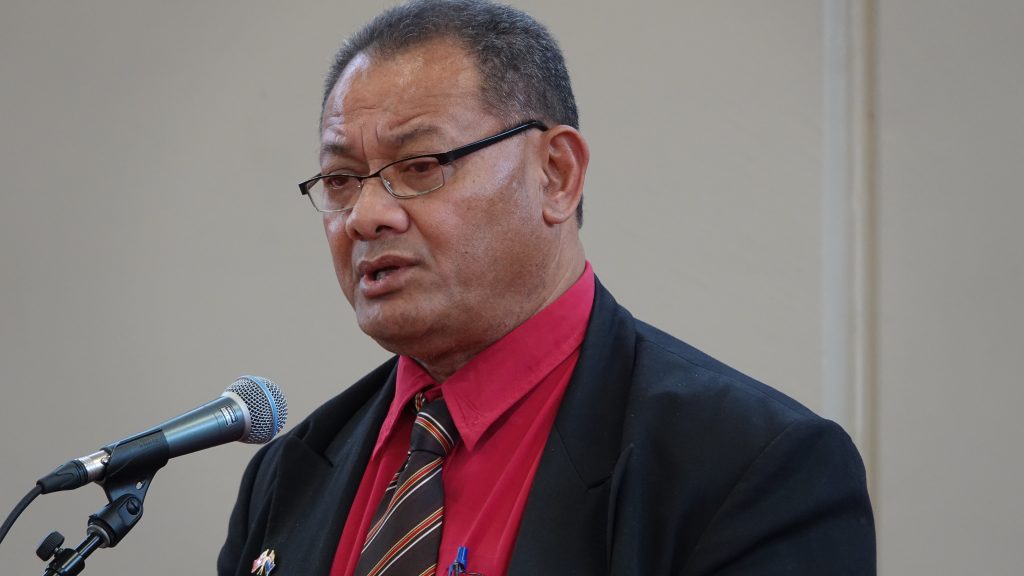
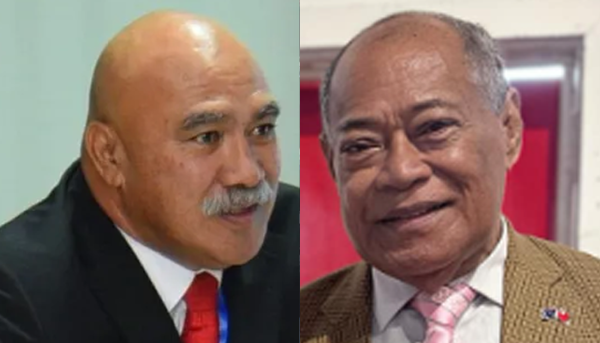
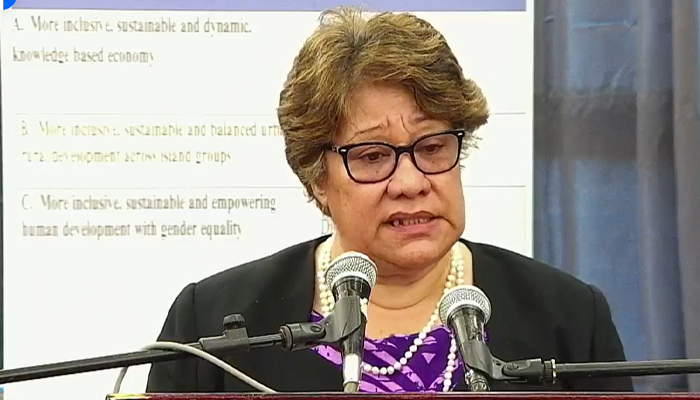
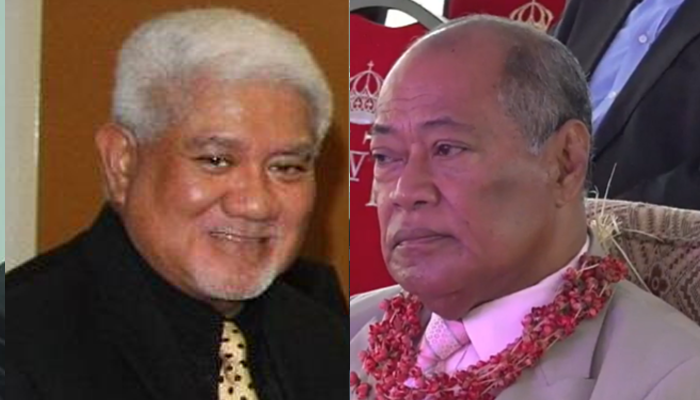
National carrier Lulutai Airlines has been grounded following serious concerns raised by Tonga’s Civil Aviation Division (CAD) over aircraft maintenance and safety standards.
The CAD confirmed to local media that the suspension was in response to aviation-related issues involving the government-sponsored airline’s fleet.
Specifically, the airworthiness certificates for two aircraft—Twin Otter (A3-KLT) and A3-SPV—have been revoked due to non-compliance with required maintenance standards.
Acting Director of Civil Aviation reportedly said that the suspension was necessary to ensure public safety, citing the airline’s failure to meet the conditions of a Part 145 maintenance organisation certificate.
No timeline has been provided for when the suspension might be lifted.
Meanwhile, flight services are continuing through an aircraft previously hired from Chatham Aviation, helping to maintain limited connectivity between Vava’u and Tongatapu while Lulutai remains grounded.
It is understood that the Minister for Public Enterprises and Lulutai Airlines officials have been holding urgent meetings since the suspension was announced.
On Saturday, Lulutai Airlines issued a public notice informing passengers of flight cancellations to and from Vava‘u, Ha‘apai, and ‘Eua. The announcement read:
“Please be advised that due to unforeseen circumstances, all flights scheduled for today on Twin Otter (A3-KLT) and A3-SPV have been cancelled.”
The suspension has disrupted domestic travel across Tonga, with many passengers left stranded or forced to seek alternative arrangements.
Tonga’s Chief Justice Malcolm Bishop KC has warned ANZ Bank over its failure to act swiftly in protecting a customer from a major scam, resulting in the loss of $244,500.
Tonga Airport CEO Edgar Cocker. Photo/Kalino Lātū (Kaniva Tonga)
The case involved Mr Edgar Cocker, an ANZ customer, who received a suspicious email and contacted the bank to verify its legitimacy.
ANZ confirmed it was a scam and advised Cocker to delete the message—but took no further action to secure his account, court documents show.
The problem was that although Cocker had received advice from ANZ, he had already clicked on the link, inadvertently revealing his bank details.
These details were then used to withdraw large sums from his account, which were forwarded to the three defendants—purportedly by a man who identified himself as Daniel Wilson—with instructions to pay third parties overseas, including in Turkey and the United States, the court was told.
How the Scam Unfolded
Between 6 June and 20 June 2023, large sums were illegally transferred from Cocker’s account to third parties via three individuals: Ifalemi Ma’u, Kalolaine Kavaefiafi, and Siua Mafi Kavafono’atu.
Wilson claimed he was the Director of the Human Resources Department for Lina Interiors, and he sent them fraudulent letters of appointment offering them roles in a scheme.
In the email, Wilson claimed:
“Our company is looking for reliable, efficient, and dedicated people in Tonga who will represent the company’s interests and carry out basic objectives, as we have no branch there. The work is flexible, home-based, and can be done by anyone without interrupting their daily activities.”
He also offered a basic salary of US$4,500 starting from the first month, with an increment to US$5,500 after the eighth month of successful transactions.
Unknowingly, the trio received stolen funds and were instructed to forward the money elsewhere.
Call for Bank Accountability
Justice Bishop expressed dismay at the bank’s inaction, stating, “I would have thought that with a valued customer with this substantial credit balance, the bank would have taken immediate steps to freeze the account and then got in touch with Mr Cocker to find out what was going on. But they did neither—in fact, they did nothing, and as a result, a substantial sum of money was removed from the account.”
Judge Bishop said he hopes the bank will reconsider its position so that Mr Cocker does not suffer further loss. He added that the bank should also consider revising its scrutiny procedures to ensure such incidents do not happen again.
It is unclear whether ANZ had offered Cocker any compensation.
Court’s Decision on the Defendants
The three defendants faced charges for receiving stolen funds and money laundering.
The stolen money never belonged to Lina Interiors and was illegally obtained from Cocker’s account, the court documents show.
Justice Bishop ruled that the three defendants could not be convicted, as the prosecution failed to prove beyond a reasonable doubt that they knowingly participated in the scam.
The judge then said: “For the avoidance of doubt, based on the evidence now before me and applying the criminal standard of proof, I find that all three defendants, namely, Kalolaine Kavaefiafi, Ifalemi Ma’u & Siua Kavafono’atu are not guilty of their respective charges and are hereby acquitted.”
The Minister of Public Enterprises, Piveni Piukala, has denied allegations that the New Zealand company, previously contracted to upgrade and manage Vava’u International Airport, has already spent and deposited millions of dollars as an investment in the project.
Minister for Public Enterprises Piveni Piukala (L) and former Interim PM Sāmiu Vaipulu
The revelation comes after the contract between the former interim government and the New Zealand company Green Light Energy (GLE) for upgrading Lupepau’u airport was terminated.
The Eke government revoked the contract with Piukala, stating in Tongan “that signing over the airport, worth $22 million, to a company with questionable status was not a prudent decision.”
TAL Declines to Sign
He said that one reason for revoking the contract was that Tonga Airport Ltd (TAL) had refused to sign it.
During a press conference last week, he said that TAL disagreed with GLE’s business model.
Piukala stated that, in that case, he believed it would be challenging for TAL to collaborate with a company if they disagreed on the business model.
He said it was important for Tonga to “take ownership of its destination”, have a good business plan before “aligning donors and investors” with it.
Airport Money Mystery
The Minister was then pressed during the press conference about GLE’s alleged $2 million deposit and the allegation that it was lost.
Piukala stated that the claim GLE spent $2 million on the airport was untrue.
“There is no record that they had spent two million dollars on anything regarding the airport,” Piukala said in Tongan.
Piukala, who mentioned meeting with GLE, stated that he was informed the company had been instructed to pay for a survey; there were allegations about money being paid for it. However, he had no record of that payment.
Vaipulu’s US$5m Deposit Claims
The recent developments follow claims made by former Interim Prime Minister Sāmiu Vaipulu at a previous press conference, where he alleged that GLE had deposited US$5 million as operational funds.
Vaipulu said that he was unsure whether the money remained with the government or if it had been returned.
In Tongan, he said: “Pea kou manatu‘i ‘e au ki mui na‘e ‘osi transfer mai $5 miliona ‘Amelika ko e pa‘anga ngāue ki he operation ka kuo osi ta‘ofi kātoa pea ‘oku ‘ikai ke u ‘ilo oku kei ‘i heni pe kuo toe fakafoki.”
Three women and one man who were charged in connection with the housebreaking, theft, and arson of the Free Wesleyan Church minister’s residence in Longolongo were sentenced earlier this month for their crimes.
Appearing at the Nuku’alofa Supreme Court, Taniela Matangi, 38, was found guilty of breaking into the complainant’s home in Tongatapu’s Longolongo town on a Sunday in September 2024, stealing items totalling TOP$18,765, USD$4,150, and NZD$8,120.
The notorious offender was apprehended after a child living near the residence provided his description to police.
The child reported that Matangi had left in a neighbour’s vehicle and was dropped off at a residence in Popua.
Matangi’s Separate Offence
The court was told that in a separate offence, Matangi stole from the same residence on his own. On a Sunday in February 2025, Matangi entered the property and stole items valued at a total of $40,600, while Shalina Kumar and ‘Ana Fifita remained in the vehicle.
All the items were cultural tapa and mats of high monetary and cultural value.
Matangi then set fire to one of the bedrooms, exited the house, and once the stolen items were loaded into the vehicle, he told Shalina and ‘Ana to leave. They then drove to Kolomotu‘a.
He made several attempts to sell some of the stolen items but was unsuccessful until he eventually sold two white mats to the fourth defendant, Ma‘ata Ngaue, the court documents show.
In sentencing Matangi, Judge Bishop said he considered the charge of serious arson to be the most severe offence and designated it as the lead charge.
The judge also said Matangi entered an early guilty plea and cooperated with the police, which he considered as mitigating factors. As a result, the judge reduced Matangi’s sentence for serious arson by two years, making a total of five years’ imprisonment.
Receiving Stolen Property
Shalina Kumar, 43, was sentenced for receiving stolen property. Lord Chief Justice Bishop stated that this was a serious matter, as the stolen mats were highly valuable and of cultural significance.
The judge noted that while Kumar was not young and had multiple prior convictions, she had cooperated with police and pleaded guilty at the earliest opportunity in her case.
‘Ana Fifita was sentenced for receiving stolen property. She was the youngest of five siblings, unmarried, and has a five-year-old son. She has no known health issues, is unemployed, but helps out at her sister’s seafood market in Patangata.
Ma’ata Ngaue was sentenced for receiving stolen property. The court heard that she was the fourth of ten children, a mother of three, and is now separated from her second husband due to domestic violence and his involvement in criminal activities.
She is in good health, but did not finish secondary school due to financial difficulties. To support her family, she sells crops at the local market.
All Pleaded Guilty
All four previously pleaded guilty to their respective charges and were sentenced at the Supreme Court on July 8, They are:
Matangi, was sentenced to a total period of eight years imprisonment with the last 12 months suspended for two years on conditions.
Kumar was sentenced to three years’ imprisonment with the last six months suspended for two years on conditions.
Fifita was sentenced to three years’ imprisonment with the last six months suspended for two years on conditions.
Ngaue was sentenced to 16 months’ imprisonment with the last four months suspended for two years on conditions.
The Asian Development Bank (ADB) has finalised its audit of the Tonga Development Bank (TDB), addressing concerns over alleged loan breaches that have raised significant questions about the institution’s lending practices, Deputy Prime Minister Taniela Fusimālohi said.
Tonga Development Bank.Photo/Kalino Lātū
The audit follows criticism by the Eke government of the former Hu’akavameiliku government regarding the bank.
In last year’s proposed vote of no confidence, it stated that the previous administration failed to resolve legal disputes between the two government-owned banks, the TDB and the National Reserve Bank of Tonga (NRBT).
After Prime Minister Eke assumed office in January, he quickly began reforming the TDB.
This included replacing the board of directors, appointing a new chairperson, and resolving the legal dispute with the NRBT that had escalated to court.
The government successfully demanded that the case be discontinued.
Eke said the banks’ customers would ultimately bear the costs incurred.
In response to Eke’s accusation, Hu’akavameiliku previously stated that TDB is a government entity that operates independently.
The decision follows the Public Enterprises Minister’s assertion that a TDB $14 million loan scheme intended to aid low-income earners, including fishermen and weavers, did not achieve its goals. TDB chief executive ‘Emeline Tuita previously denied Piukala’s claim to Kaniva News.
Parliamentary Select Committee
Concerned after a report alleging a breach of loan policy by the TBD, a Parliamentary Select Committee was established to investigate, Fusimalohi said last week.
He stated that the alleged breach involved loans, which would take too long for the TDB to receive repayments.
The Committee recommended that the Eke government appoint a reviewer for the TDB, which led to involvement from the ADB.
The review aimed to clarify what had occurred and which policies and regulations may have been breached, Fusimālohi said.
“The ADB’s assessment has been finalised, and the report has been submitted. The new TDB board has begun following up on the report,” Fusimalohi confirmed in Tongan.
However, he stopped short of disclosing specific findings.
New Zealand Commerce Commission and the Customs Brokers and Freight Forwarders Federation of New Zealand (CBAFF) are urging Tongan shippers to raise diligence in light of a “long-standing shipping scam” outed by Kaniva News last month.
Tongan shippers line up at the Nuku’alofa wharf, eagerly awaiting their turn as goods and shipments are auctioned amid busy market activity. Photo/Ministry of Customs and Revenue
Our reportage described shippers in New Zealand, Australia, and the United States who agreed with freight-forwarders to “pay for freight and clearance” but the payment was not fully or at all passed on to carriers.
As a result, shipping companies and their representatives will withhold cargo release in Tonga until all outstanding fees are settled.
The cargo is then placed in storage, leading to extra charges. According to Tongan Customs regulations, it may be sold at auction after six weeks.
In her response, chief executive Sherelle Kennelly confirmed that such problems were not only affecting Tongan shippers.
“These cases highlight the vital importance of using reputable, transparent and compliant freight forwarding services,” Ms Kennelly told the Shipping Gazette™.
“We strongly encourage Tongan shippers, and indeed all importers/ exporters, to check if a freight forwarder is a CBAFF member. Our members uphold professional standards and are subject to our code of ethics, which is designed to safeguard both the industry and consumers from unscrupulous operators.
“We advocate for greater visibility and accountability across the sector to help identify and shut down rogue operators who exploit vulnerable communities.”
Ms Kennelly highlighted the following as among potential red flags to shippers:
• Lack of a physical business address in New Zealand or a proper company registration.
• Requests for large upfront payments without documentation.
• No transparent tracking or shipment information.
• Poor or no communication once the goods are shipped.
• Promises that seem too good to be true, especially around price or delivery timelines.
The Gazette reported that the Commerce Commission for competition, fair trading, and credit is aware that a Tongan company involved in the alleged scam was a subject of their inquiries in 2021 and 2022.
The Commerce Commission confirmed to the Shipping Gazette that the company was not currently under investigation by the agency.
At this stage, we have decided not to disclose the identity of that company.
Consumer Protection Guidelines Essential
According to Ms Horne, any form of consumer deception in marketing is generally a key focus for the Commerce Commission and may be considered a Fair Trading Act violation.
“All traders must ensure any representations made regarding a service, including the costs associated with the provision of that service, are accurate,” Ms Horne was quoted by the Gazette as saying.
“Before dealing with a company you haven’t bought from before, take a minute to research the business – look at online reviews and feedback on external websites to see if other people have had issues with delivery or with contacting the business.
“Remember that it can be hard to confirm if reviews on the company’s website are authentic and unbiased – a seller could promote false reviews or select only positive reviews to display on their website.”
Ms Horne said it was also important to take the time to read any terms and conditions relating to payment and delivery.
“Terms and conditions should detail what you can expect from a service and outline any additional fees.”
Affected consumers could seek remedy under the Consumer Guarantees Act (CGA), added Ms Horne.
“The CGA is self-enforcing, which means you can take your own action. If a guarantee is not met, you have the right to insist that the seller or service provider puts it right. For more information, go to the Consumer Protection website.
“While the Commission’s role is to enforce the Fair Trading Act, the Commission can take action if a business misleads consumers about their rights under the CGA.
“We encourage anyone who believes a business has breached the Fair Trading Act or one of the other laws we enforce to report it using the ‘report a concern’ form on our website.”
Tonga’s Ministry of Health is relieved after hackers infiltrated its National Health Information System (NHIS) last month, leading to a temporary return to paper-based processes.
MInister of Health Dr ‘Ana ‘Akau’ola
Two weeks after the cyberattack, a response team from Australia successfully restored the system, Health Minister Dr ‘Ana ‘Akau’ola confirmed.
The swift recovery was made possible by an existing backup system, countering earlier reports that the NHIS had no data protection measures in place.
“I just wanted to correct that information. No, there was indeed a backup system, and it helped make the recovery quicker,” Dr ‘Akau’ola said in Tongan.
The hackers had demanded a $1 million ransom, but the Tongan government refused to pay.
Instead, authorities worked with cybersecurity experts from Australia to isolate the breach and restore operations.
While the attackers leaked some data onto the Dark Web, the minister confirmed that only four documents had been exposed so far.
“As of last week, the hackers have not released any further stolen patient information,” she said, though investigations are ongoing to assess the full extent of the breach.
The Minister said the major recovery work had been completed before the Australian team left, leaving only minor tasks for the Ministry’s IT team to handle.
She expressed deep gratitude to the Australian team for their assistance.
The incident has prompted calls for stronger cybersecurity measures across Tonga’s public sector, with the government now reviewing its digital safeguards to prevent future attacks.
By Sam Sherwood of RNZ and is republished with permission
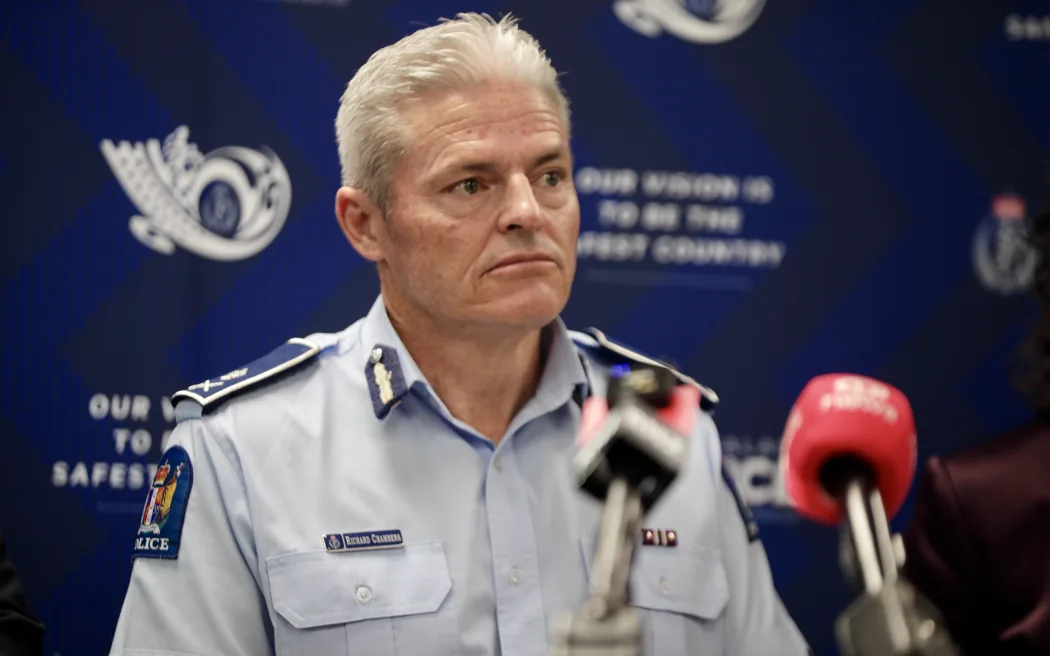
The police commissioner has emailed staff saying he is aware there are many who are “angry and feel let down” following revelations that child exploitation and bestiality material were allegedly found on the former deputy commissioner’s work devices.
Police Commissioner Richard Chambers. Photo: Calvin Samuel / RNZ
“I feel the same,” Richard Chambers told staff in an email.
Jevon Skimming resigned as the country’s second most powerful cop in May amid separate investigations by the Independent Police Conduct Authority (IPCA) and police.
His resignation came a week after RNZ approached him, via his lawyer, with allegations about material found on his work devices.
RNZ earlier revealed pornography found on McSkimming’s work devices was being investigated as alleged objectionable material.
On Friday, an interim injunction that prohibited publishing the nature of the allegedly objectionable material lapsed after Justice Karen Grau declined McSkimming’s application to continue the order.
Do you know more? Email sam.sherwood@rnz.co.nz
Police Commissioner Richard Chambers said he was unable to comment at this time on Friday.
He has since sent an email to staff, seen by RNZ.
In the email Chambers addressed the media reports “in relation to an individual”.
“I am aware that there are many who are angry and feel let down. I feel the same.
“It is important to let you know at this point I am unable to comment on the matter, but I do intend to do so when I am able to.
“As I have said before, I have high expectations of all Police staff and will act if standards are not met, irrespective of rank or role.
“These are the actions of an individual, and I will do my best not to let it distract from the job we are all here to do.
“However, I am aware there may be reactions from some that do not sit easily with you.”
Chambers said if any staff wanted to talk they could contact him or their manager.
RNZ has spoken to several police officers after the order lapsed on Friday evening, each of whom on the condition of anonymity.
A senior police officer told RNZ the news was “a sad time for New Zealand police”.
If the allegations were found to be true the officer felt “he’s betrayed us all”.
Former Deputy Police Commissioner Jevon McSkimming. Photo: Getty Images
Another police officer said they were “very disappointed” to hear of the allegations.
“Especially someone at that level of leadership. I hope all details of his alleged offending will be revealed as soon as possible. At police college we got a talk about how much the historic sexual abuse allegations from Rotorua tarnished our image. They would stop someone during a routine traffic stop and be told ‘just don’t rape me’ many years after the allegation came out people were still talking about it.”
A former police officer told RNZ the allegations would have a “significant impact” on frontline staff.
They had spoken to several serving police officers following the news, many of whom were “gutted”.
He said one former staffer told them McSkimming would not be welcome near a police station again, others expressed frustration at the reputational damage to police.
Police Minister Mark Mitchell declined to comment on Friday.
Following McSkimming’s resignation, Mitchell accepted trust in the police could take a hit. But he told reporters he hoped the public realised New Zealand had a “world class police force”.
“The public are savvy enough to know that you are going to have isolated cases of bad behaviour, but they also recognise the fact that our police act very quickly to deal with that,” Mitchell said.
As an ex-cop, the police’s reputation was very important to him, Mitchell said.
“I hope that the public see through and realise that we have got an outstanding police force, we’ve got incredible police officers.
“Yes, like any big large organisation, if there’s bad behaviour, or you get people who don’t hold to the values … then quick action is taken.
“In this case, even though it involves one of our most senior police officers, you’ve seen that action was taken very quickly to make sure that that public confidence can be maintained.”
The injunction
McSkimming’s lawyer Linda Clark was earlier granted a rare “superinjunction” by Justice Grau that prohibited reporting the existence of the injunction itself as well as the nature of the allegedly objectionable material.
Following a teleconference held by Justice Gwyn, the order prohibiting publication of the nature of the allegedly objectionable material was continued – but the order prohibiting the existence of the injunction was not continued, meaning RNZ could report the fact of McSkimming’s application and the interim result.
On 3 June, a hearing was held in the High Court at Wellington before Justice Karen Grau in relation to the injunction. RNZ, NZME and Stuff were jointly represented by Robert Stewart KC.
On 11 July, Justice Grau released her judgement, declining McSkimming’s application, but her reasons for doing so were suppressed and the existing interim injunction was continued to allow McSkimming time to consider his appeal options, should he wish to do so.
No notice of appeal was filed, and RNZ can now report the type of objectionable publication purportedly found on his work devices.
In November last year McSkimming was placed on “special leave” as the IPCA and then police carried out their separate investigations. RNZ understands it was during police’s investigation that the alleged objectionable material was found on his work devices. A second criminal investigation was then launched.
At the injunction hearing, Clark alleged information deemed “essential” to the investigation had been leaked to the media, who were intending to publish the information.
The information gathered during the police investigation was “confidential”, she said.
She said that every time police had provided some substantive piece of information to McSkimming, it had appeared within the media “in a day or two days without exception”.
Clark said there was public interest in McSkimming’s situation, but that interest had been served by the reporting to date.
Stewart KC said there were two sorts of harm that could be considered, one of which was harm to the police investigation. He said the police had no concern that further disclosure of the material would impact their investigation.
In relation to privacy, Stewart KC said McSkimming was “quite clearly” a public figure.
“There is a huge public interest in these investigations into Mr McSkimming’s abrupt resignation from office, first working day after he had been provided with the material by the Public Service Commission.”
Stewart KC said his clients submitted that, if the interim restraint should be continued, then “matters should be left to take their course, if there is to be any restraining at all, it should be as limited as possible for as short as possible”.
At the time of McSkimming’s resignation Police Minister Mark Mitchell said he was recently informed of allegations of a “very serious nature”, separate to the investigation that led to him being suspended.
“When Mr McSkimming was invited to respond to these allegations he chose to resign. Mr McSkimming’s resignation has confirmed my view that his continuation in the role was untenable.”
It is also conducting an investigation into if there was misconduct or neglect of duty by any other police officers or employee in responding to the allegations.
The investigations were being given priority, but no timeframe for their completion date could be given.
McSkimming was one of the final two candidates for New Zealand’s top cop job last year, with Chambers eventually appointed police commissioner.
McSkimming was promoted to statutory deputy commissioner in 2023 on the recommendation of then-prime minister Chris Hipkins.
Late last year he was overseeing road policing and operational services, which include strategy, media and communications, risk and assurance, and firearms regulation and reform.
During his appointment process, it was noted he had a “relatively unique career path”, working at police headquarters since 2010 across a range of areas: strategy, service delivery, resolution, financial planning, arms admin, ICT and infrastructure.
McSkimming joined the police in 1996 and worked on the frontline in Auckland and Southland.
He had also been responsible for large restructures – as well as managing police IT systems, property portfolio, vehicles, and launching the 105 non-emergency number.
The previous interim government pushed ahead with a decision to hand over control of Lupepau’u International Airport in Vava’u to New Zealand’s Intelligent Green Energy (IGE) company.
This move went ahead despite strong objections from the Tonga Airport Authority (TAL), Kaniva News can now reveal.
Former Interim Prime Minister Samiu Vaipulu (right) and former TAL Chair Dr Sione Ngongo Kioa (left) refused to sign the contract, fearing that the due diligence process had not been completed.
Documents suggested the Cabinet had greenlit the transfer of control to IGE under a public-private partnership.
However, Kaniva News can now reveal that TAL refused to sign the contract, raising serious concerns over the lack of due process and potential risks of privatising a critical national asset.
Violent Threats, Legal Reversals, and Government U-Turn
This led to a dispute that escalated into alleged violent threats, including an incident where the former TAL Board chief Dr Sione Ngongo Kioa was allegedly threatened with death and gun violence over the contentious deal, Kaniva News has learnt.
Reliable sources claimed the matter was serious enough to warrant police intervention, though no formal complaint was filed.
Kaniva News has chosen not to disclose the identities of those involved at this stage.
Months later, the incoming government of Prime Minister Dr ‘Aisake Eke revoked the deal, citing legal challenges.
Public Enterprises Minister Piveni Piukala confirmed last week that TAL’s refusal to sign was a key factor in the collapse of the agreement.
Questions Over Due Diligence and Transparency
When Vaipulu responded to reporters’ questions during a December 20 press conference about the deal with the NZ company, he said negotiations were still ongoing to ensure compliance with civil aviation, Tonga Airport safety, and security regulations.
However, IGE’s controversial background, including one of its directors’ prior legal disputes in New Zealand, has further fueled scepticism over the deal.
With the contract now scrapped, the focus shifts to whether an investigation will be launched into the Cabinet’s defiance of due process and the alleged threats that marred the dispute.
In a monumental clash at Wembley Stadium, Oleksandr Usyk of Ukraine solidified his legacy as one of boxing’s all-time greats by knocking out WBO champion Daniel Dubois to claim the undisputed heavyweight crown for the second time in his career.
The showdown, held in front of a roaring crowd of 90,000, pitted the WBA (Super), WBC, IBO, and The Ring titlist Usyk against the hard-hitting Brit Dubois, who entered the ring as the WBO champion.
From the opening bell, Usyk’s masterful footwork, precision, and ring IQ proved too much for Dubois, culminating in a decisive knockout that sent shockwaves through the boxing world.
Dubois’s promoter, Frank Warren, was full of praise for the victor, calling Usyk a “modern-day legend” in his post-fight interview with DAZN.
“Oleksandr Usyk is an unbelievable fighter—in any generation, he would be a great. I take my hat off to him tonight,” Warren said.
“Daniel was ready, he trained hard. No complaints, no excuses. The better man won, and Usyk is a fabulous, fabulous champion.”
With this victory, Usyk etches his name in history as the first boxer ever to become a two-time undisputed heavyweight champion, further cementing his status as one of the sport’s finest.
The boxing world now awaits his next move—whether it be a potential unification rematch, a move up in weight, or another dominant title defense.
For now, the undisputed king of the heavyweights remains Oleksandr Usyk. And at this rate, his reign shows no signs of ending soon.
Dubois deserves recognition for battling through and later giving his post-fight reaction to DAZN.
“I have to commend him on his performance. I gave everything I had—maybe there were a few things I could’ve sharpened up, but you can’t take any credit away from him,” he said.