Saturday, April 4, 2026
Home Blog Page 79

MPs emotional plea to scrap word in constitution labelling people as ‘foolish thing’ but Lord Nuku warns of potential social disruption 

The Tongan Parliament engaged in a heated hour-long debate over whether to remove the controversial word me’avale from the constitution, a term critics argue perpetuates a dark-age ideology that dehumanises ordinary citizens by likening them to animals. 

The debate triggered personal attacks in the House after revelations that the removal proposal originated from public consultations, during which citizens argued that me’avale should no longer appear in the constitution. 

It follows the recent proposed impeachment proceedings against the Minister of Police after he allegedly referred to Parliament as a “fale e kau vale” (house of fools) and called some Nobility MPs “kulikuli” (smelly).

During the deliberations on me’avale, lawmakers noted the term’s origins in pre-Christian Tonga, when societal hierarchies recognised only kings and chiefs as possessing spirits, while considering common people soulless. 

The debate sharply divided Parliament, with some lawmakers becoming emotional in their arguments while others insisted on retaining the term in Clause 4.  

A third group supported replacing it with kakai, the modern Tongan word for “people”, as proposed to the House, apparently by the Attorney General’s Office.  

Translations 

Tongan linguist Dr Melenaite Taumoefolau previously clarified in a scholarly paper that while me’avale has been translated as “commoner,” it literally combines me’a (“thing”) and vale (“foolish”) – effectively meaning “foolish thing.” 

The contested constitutional clause currently states that laws apply equally to all, including hou’eiki (chiefs) and me’avale (commoners). 

During the parliamentary proceedings, Deputy Prime Minister Taniela Fusimālohi reported that public consultations revealed widespread concerns about the term’s derogatory origins. 

Emotional plea

Police Minister Piveni Piukala emotionally moved to remove the word from the constitution, strongly advocating for its elimination by asserting that “Tonga has evolved beyond such archaic language in our enlightened era.” 

He noted the kau mātu‘a once approved the word, but insisted modern Tonga should discard it.  

MP Johnny Taione defended the word as appropriate and criticised the democratic member of the PTOA and the Police Minister, claiming they were allegedly twisting the meaning to make it appear negative. The Minister dismissed Taione’s claim and pointed out that he was misguided.

Lord Vaea stated that the word me‘avale appears in the Holy Bible, though he failed to specify the exact reference.  

Lord Tu’iha’angana proposed that the House acknowledge the proposal but defer action to a later time. 

Opposition

Lord Nuku opposed the removal, arguing it would damage the social hierarchy (“maumau‘i lahi e ma‘uma‘uluta e anga e nofo”). 

The Speaker then processed a motion by former Prime Minister Hu’akavameiliku proposing to remove me’avale from constitutional language, and limit House debate to only those adjustments meant for Parliament under Clause 23 

While the House approved the motion, the Hansard record left unclear whether this approval authorised actual removal from the constitution or merely advanced the proposal for consideration.  

This ambiguity stemmed from the me’avale only appearing in Clause 4, while the debate concerned adjustments to Clause 23. 

Tongan community in Australia celebrates Labor victory as Albanese poised to become Prime Minister

Tongans across Australia have joined in celebrations as the Australian Labour Party (ALP) moves closer to forming government following Saturday’s federal election.

Many of the more than 40,000 Tongans in Australia shared photos of Labour leader Anthony Albanese, who is now likely to become Australia’s next Prime Minister after significant swings in New South Wales, Queensland, Tasmania, and South Australia and a smaller shift in Victoria.

The mood among Pacific communities has been jubilant, with many expressing hope for stronger ties between Australia and the region under a Labour government.

While Labour has not yet secured an outright majority, the party is within reach, and ABC election analyst Antony Green stated he could see no viable path for the Coalition to retain power. If confirmed, Albanese would become the first prime minister elected twice since John Howard, marking a historic moment in Australian politics.

The possibility of a Labour victory has energised progressive voters, particularly in multicultural communities that have long advocated for policies supporting climate action, fair wages, and better support for migrant families.

Early counts show Labour leading or competitive in several traditionally Liberal-held seats, including Banks, Bass, Bonner, Bowman, Braddon, and Deakin. The party is also performing strongly in Forde, Hughes, Leichhardt, McPherson, Menzies, and Petrie. One of the most closely watched contests is in Peter Dutton’s seat of Dickson, where the Opposition Leader is at risk of losing his position—a result that would send shockwaves through the Liberal Party.

Meanwhile, Labour has consolidated its hold on marginal seats, including Aston, Bennelong, Blair, Boothby, Chisholm, Dunkley, Gilmore, Lyons, McEwen, Paterson, and Werriwa.

With over half of polling places reporting first preferences and a third processing preference counts, officials urge caution due to the large volume of early and postal votes still being tallied.

However, the trend strongly favours Labour, and a change in government now appears highly likely. For many in the Tongan-Australian community, the result signals hope for progressive policies on climate action, cost-of-living relief, and stronger engagement with the Pacific. Social media has been flooded with celebratory posts, with some dubbing Albanese a “friend of the Pacific.”

As counting continues, all eyes remain on Dickson—where a potential defeat for Peter Dutton could mark a dramatic end to his political career—and on whether Labor secures an outright majority or governs in a minority or coalition arrangement.

Final results are expected in the coming days, but for now, the mood among Labour supporters, including Australia’s Tongan community, remains one of optimism and celebration.

Tongan missionary from Utah killed in North Carolina after car veers onto sidewalk

A young Tongan missionary from Utah died Thursday after a car veered onto a sidewalk and struck him while he was walking with two companions, The Church of Jesus Christ of Latter-day Saints confirmed.

Elder Aleki Langi, 18, died Thursday, May 1, 2025, after the driver of a car apparently lost control and struck him on a sidewalk. The Church of Jesus Christ of Latter-day Saints

Elder Aleki Langi, 18, of Magna, Utah, was killed in the accident.

A second missionary sustained minor injuries, while a third was unharmed, said church spokesman Sam Penrod in a statement.

The driver of the vehicle apparently lost control before hitting the missionaries, Penrod said.

Authorities are investigating the incident.

“We extend our deepest condolences and love to Elder Langi’s family, friends, and fellow missionaries during this difficult time,” Penrod said. “We pray that they will each feel the Saviour’s comfort and peace as they mourn his passing and honour his dedicated missionary service.”

Elder Langi, a member of the Magna 2nd Ward in the Salt Lake Utah West Stake, had served in the North Carolina Charlotte Mission since March.

He was temporarily reassigned there while awaiting a visa for his original assignment to the Jamaica Kingston Mission.

Friends and community members in Magna remembered Langi as a devoted young man with a strong faith and a desire to serve others. His family, of Tongan descent, has been active in their local congregation, where Langi was well-loved.

The Church supports Langi’s family and his missionary companions as they grieve the sudden loss. Funeral arrangements are pending.

Toddler’s heartbreaking words—’Mum is dead’—As family bids farewell in viral video

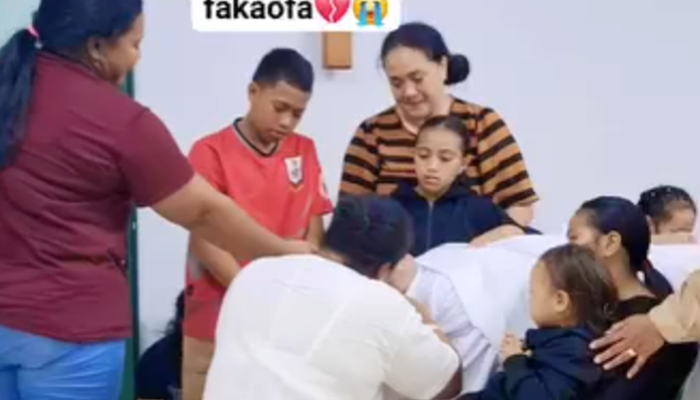
A devastating video circulating online has left social media users in tears, showing children kissing their mother’s body after her unexpected passing.  

Kaniva News understands that the footage was recorded in Tonga. However, the details remain unclear.  

The toddler, who seemed to be over one year old, was heard in another video saying in Tongan, “Mum is dead.”

The emotional footage, shared widely on Facebook, captures the raw grief of the family, with a man believed to be the husband also seen kissing the deceased woman goodbye. 

One tribute indicated that the husband had just returned from overseas for the funeral.

Tributes flooding in for the mother describe her as a devoted churchgoer and loving parent, with many expressing shock over her sudden death.  

“What a pity that she died while her children are still very young,” one commenter wrote.  

Another added, “She has gone too soon.” 

Friends and online mourners have rallied around the family, offering prayers and condolences.  

Many highlighted the woman’s faith and kindness, with one post reading, “Heaven has gained an angel, but her babies have lost their world.” 

The cause of death has not been disclosed, but the outpouring of grief underscores the profound impact of her loss.  

As the video continues to spread, viewers are left heartbroken by the sight of her young children clinging to their mother one final time. 

“No child should have to say goodbye this soon,” wrote one emotional viewer.  

“May God comfort them.” 

Viral video of patient neglect surfaces after Tonga’s Health Minister appeals for an end to attacks on hospital staff

Tonga’s Minister of Health, Dr ‘Ana ‘Akau‘ola, has made a heartfelt request to the public, asking them to stop demeaning and disrespecting hospital staff.

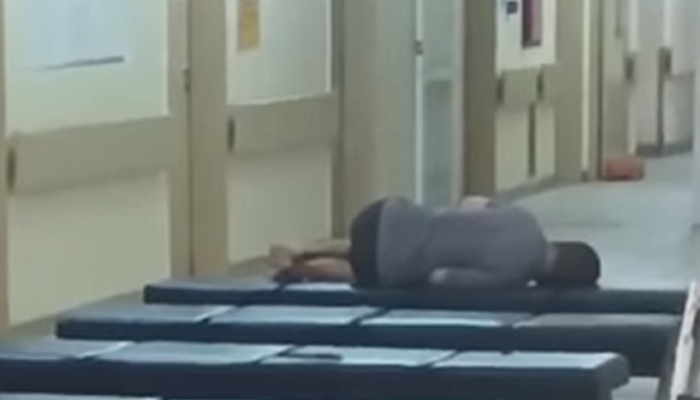
The viral spread of a video showing a shivering patient lying on a chair in a hospital

The plea came just hours before a video of what appeared to be a shivering patient lying unattended in a hospital chair circulated widely on Facebook, amplifying public outrage over healthcare standards.  

Kaniva News could not verify the authenticity of the footage, and the hospital could not be reached for comment.

Some commenters claimed that the patient was recorded on video after being admitted to Vaiola Hospital.

Dr ‘Akau’ola emphasised during a press conference in Nuku’alofa this afternoon that harsh criticisms demoralise healthcare workers, with some nurses threatening to quit (“litaueli”).  

“I urge the public to stop these comments—they do not help patients or those treating them, she said.  

Her appeal comes after years of social media backlash against the ministry, which has faced accusations of negligence, long wait times, and unprofessional conduct.

The Minister acknowledged that some patients first seek care from local healers, only arriving at hospitals in critical condition, a factor she says exacerbates challenges for staff.  

However, public frustration persists.  

The Ministry faced intensified scrutiny following a high-profile allegation involving the death of a mother due to alleged medical negligence.  

Viliami Takau, CEO of Tonga Tourism, publicly confronted the Minister during a national summit, stating, “You cannot bring my wife back to life.”  

He revealed he has launched legal action against the ministry, claiming her death resulted from their actions.  

Takau also shared a separate incident involving his son, whose severed fingers required surgery.  

After a Tongan doctor recommended an operation, he sought a second opinion in New Zealand, where physicians advised against it, warning of nerve damage.  

“The advice here differed entirely,” he alleged in Tongan.  

Viral video revives interest in taulalo, Tonga’s overlooked male solo dance tradition  

A recent viral video featuring a Tongan male dancer has reignited global fascination with taulalo, a traditional solo dance often overshadowed by the more widely recognised female tau‘olunga.  

The dancer, known on Facebook as Manatau, is said to belong to a troupe of choreographers from Tatakamotonga—the birthplace of the iconic lakalaka dance

The electrifying performance, marked by vigorous footwork, rhythmic clapping (pasi), and dynamic full-body movements, has drawn praise for highlighting a lesser-known but culturally rich aspect of Tongan dance.  

The video has amassed over 130,000 views and 170 comments, capturing widespread attention. 

The footage appears to have been recorded at a reception event, showcasing the dancer known as Manatau Tu’ifua on Facebook.

Sources indicate he hails from a family of choreographers in  Tatakamotonga, the ancestral home of the traditional lakalaka group dance. 

While tau‘olunga emphasises elegance, showcasing fluid arm gestures, delicate head tilts, and poised upper-body movements, taulalo is all about power and energy.  

Traditionally, a man can perform a solo dance as a background accompaniment to tau‘olunga known as tu’ulāfale, but the viral clip demonstrates taulalo as a potential standalone spectacle. 

Taulalo vs Tau’olunga

Tau’olunga refers to a dance performed while standing, with the choreography primarily focused on the upper body movements (‘olunga).

Taulalo is the opposite, which means the male dancer must dance while lowering his body by bending his knees as low (lalo) as possible.

In Tongan culture, men typically perform in group dances like lakalaka, mako, ma‘ulu‘ulu, and sōkē, emphasising synchronised storytelling and choral singing.  

The solo taulalo performance in the video, however, breaks from convention, offering a fresh take on male expression through dance.  

It incorporates jumps, rapid side-to-side steps, seated sequences, and forceful clapping to create a captivating rhythm. 

Viewers have praised its athleticism and creativity, with many calling for greater recognition of taulalo as an independent art form.  

The resurgence of interest in tulāfale comes at a time when Tongan communities worldwide strive to preserve and revitalise traditional practices.  

This renewed attention aligns with recent cultural celebrations, including the 50th anniversary of the Pacific Polyfest in New Zealand, where traditional Tongan dances took centre stage. 

Tonga drops to 46th in global press Freedom Index amid political interference and legal challenges 

Tonga’s commitment to press freedom has slipped in the latest global rankings, falling one spot to 46th in the 2024 Reporters Without Borders (RSF) Press Freedom Index.  

The constitutional monarchy, which saw significant media reforms after its first democratic elections in 2010, is now grappling with political interference, restrictive laws, and economic instability that threaten independent journalism. 

With its scattered Pacific islands, Tonga lacks a robust print media sector, leaving state-owned Tonga Broadcasting Commission (TBC)—operating Television Tonga and Radio Tonga—as the dominant broadcaster.  

RSF said that online outlets like Matangi Tonga and New Zealand-based Kaniva Tonga provide alternative voices, but journalists face increasing obstacles. 

 Press freedom has become entangled with Tonga’s political shifts. After the 2017 re-election of the late Prime Minister ‘Akilisi Pōhiva’s party, tensions rose with journalists, particularly at TBC, where editors were sidelined under government pressure.  

Hopes for reform under Prime Minister Siaosi Sovaleni, elected in 2021, have dimmed due to King Tupou VI’s growing influence over government affairs, raising fears of further media restrictions. 

Though Tonga’s constitution guarantees press freedom, enforcement remains inconsistent. Laws have grown harsher since 2010, including a 2015 internet regulation allowing site blocking without judicial oversight and a vague 2020 cybercrime law imposing three-year prison terms for “cyberharassment.”  

Recently, the government quietly imposed eight restrictive media regulations, penalising the spread of “sensitive” information and shielding politicians from scrutiny. 

Media outlets struggle in Tonga’s fragile economy, where self-censorship is common to avoid losing advertisers, including the government. The situation worsened after the 2022 Hunga Tonga-Hunga Ha’apai volcanic eruption and tsunami, which devastated infrastructure amid the economic fallout of COVID-19. 

While Tonga has advanced in gender representation in media, critical issues like police brutality, the death penalty, and child marriage remain largely off-limits for journalists. Though reporters face no physical danger, self-censorship persists in the close-knit society. 

The Media Association of Tonga continues advocating for journalists’ rights, but with legal, political, and economic pressures mounting, the kingdom’s press freedom outlook remains uncertain. 

Meanwhile, neighbouring Pacific nations show mixed trends, with Fiji rising while Samoa suffers a dramatic fall. 

Pacific Press Freedom: Gains and Losses 

Among island nations, Fiji (40th, up four places) performed best, overtaking Samoa (44th, plummeting 22 places) from its traditional lead. New Zealand (16th, up three places) also improved, reinforcing its position as a regional leader in media freedom. While most Pacific countries fared well, the Asia-Pacific region overall had a troubling year, with authoritarian regimes continuing to suppress independent journalism. 

At the bottom of the index, North Korea (179th) remains the world’s worst environment for press freedom, where media serve solely as propaganda tools for the totalitarian regime. China (178th) and Vietnam (173rd) also maintain tight control, with nearly all outlets either state-owned or run by Communist Party-aligned groups. The only independent reporting comes from freelance journalists working underground, who face constant threats and financial instability. 

Ha’apai clinic faces relocation as land lease dispute escalates – Minister perplexed by 500% rent hike

The future of Lotofoa, Ha’apai Islands’ vital health clinic hangs in the balance after the Minister of Health revealed it may be forced to relocate due to a staggering 500% increase in land lease costs.

Health Minister Dr Ana ‘Akau’ola expressed shock at the sudden jump, from just $60 per year to $3,000, warning that the free community health centre cannot sustain the new rate.

The landlord, His Serene Highness Prince Tu’ipelehake, allegedly demanded that the Ministry pay 30 years’ rent upfront by June, according to the Minister. The Prince could not be reached for comment.

She acknowledged that the Ministry had previously failed to pay the lease.

Dr ‘Akau’ola said negotiations are underway, but if no agreement is reached, the ministry will have no choice but to move the facility elsewhere.

“I felt we had been hijacked to pay this money”, she said.

An upgrade to the centre was conducted, but the Minister halted it until negotiations with the Prince are settled.

“This clinic serves the people at no cost.”

She emphasised that the ministry’s budget prioritises healthcare, not inflated land leases.

She said that the Ministry’s annual budget has been depleted and that she had requested additional funding from the government before the end of the fiscal year in June.

It is understood that locals fear losing easy access to medical care if the clinic is forced to move.

Locals contacted FM 87.5, expressing concern about the clinic’s possible relocation.

The Minister said she hoped reason prevailed and emphasised that the Ministry’s duty is to the people, not to unreasonable financial demands.

Dengue fever outbreak claims three lives in Tonga, minister warns of escalating crisis

Tonga is grappling with a deadly dengue fever outbreak that has already claimed three lives, the Minister of Health confirmed this afternoon. With cases rapidly escalating, authorities are urging the public to take immediate action to eliminate mosquito breeding sites and protect themselves from the disease.

Minister of Health Dr ‘Ana ‘Akau’ola

Health Minister Dr ‘Ana ‘Akau’ola issued a stern warning today, stating that the outbreak is far from under control. “The situation is serious and worsening,” she said.

“We urge everyone to clean their surroundings, remove stagnant water, and use mosquito repellents to curb the spread.”

Dr. Ana ‘Akauola, a leading health official, revealed that dengue type two has been the most common strain detected in patients so far. However, she suspects another strain may be circulating.

“The only confirmed serotype in Tonga at present is dengue type two,” Dr. ‘Akauola told Pacific Waves.

“But after these tragic deaths, I’ve instructed my team to retest newly diagnosed patients, especially those hospitalised, to rule out other strains.”

Dengue fever, transmitted by Aedes aegypti mosquitoes, causes high fever, severe headaches, and joint pain.

In severe cases, it can lead to fatal complications. Health officials emphasise the importance of:

  • Removing stagnant water (in tires, containers, gutters) where mosquitoes breed.
  • Using mosquito nets and repellents, especially during peak biting times (dawn and dusk).
  • Seeking medical care immediately if symptoms appear.

With hospitals on high alert, the government is ramping up fumigation efforts and public awareness campaigns.

As fears grow over a potential new strain, health experts warn that the outbreak could worsen if preventive measures are ignored. “This is not just a health issue—it’s a community fight,” the Minister stressed.

“We must act now to save lives.”

Tonga’s cyclone season officially ends, but unexpected cyclones still possible

The Tonga Meteorological Service has officially declared the end of the 2024-2025 Tropical Cyclone (TC) season, which typically runs from November to April.

However, authorities caution that cyclones can still develop outside this timeframe, so residents are urged to remain vigilant.

This year’s cyclone season was marked by average activity, aligning with predictions made in October 2024.

A total of 11 tropical disturbances formed in the Southwest Pacific region, with four strengthening into cyclones:

  • TC ‘Pita’ (Category 1)
  • TC ‘Rae’ (Category 2)
  • TC ‘Seru’ (Category 2)
  • TC ‘Tam’ (Category 1)

While the forecast anticipated 1–2 cyclones and a 50% chance of a severe cyclone (Category 3+), no severe cyclones materialised.

Most systems, including Pita and Rae, affected Tonga’s western and southwestern waters.

Despite the season’s official closure, the Meteorological Service emphasised that cyclones can occasionally form before or after the typical November–April window.

Such systems would still be included in the annual tally.

Residents are encouraged to stay informed through official channels. For updates, contact the Meteorology Division at 35355 or visit www.met.gov.to.