Documents obtained by Kaniva News show that the Disputes Tribunal has ordered Mele Hea to re-pay $10,000 to Tionly Fatukala.
Hea has accused Kaniva News of lying in a story we ran about the dispute.
Fatukala paid the money to Hea to invest in a pyramid scheme she said would produce a triple return.
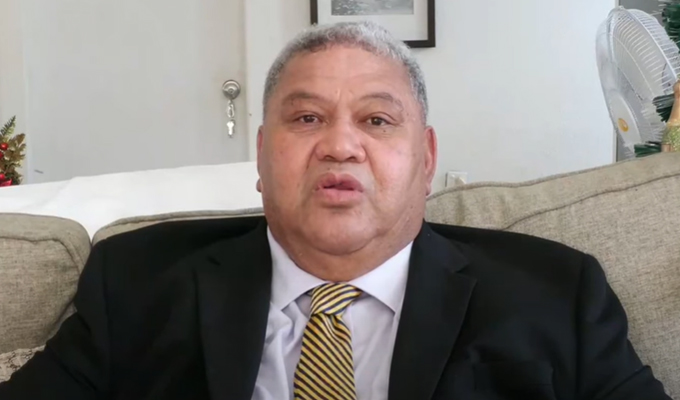
Mele Hea
Fatukala told the Tribunal that when she realised the investment was a pyramid scheme, which is illegal under New Zealand law, she asked for her money back. She originally asked to be paid all of the money she believed would have been owed to her. It is understood the scheme was reported to the Commerce Commission.
On May 24, the Tribunal said it had established that Fatukala had paid Hea the amount and ordered a repayment of the outstanding amount.
“As payments of $18,000 have been established . . . . and $8000 has been refunded already, I find that Mrs Hea is liable to pay $10,000 to Mrs Fatukala,” the referee ruled.
The Tribunal ordered Hea to repay the outstanding amount on or before June 21 this year.
However, Hea has not re-paid the money.
She told New Zealand Heraldshe could not afford to pay everybody who wanted a refund.
“If I pay one person a refund, I have to pay all people a refund,” she said.
Hea appealed the Tribunal’s decision, claiming that the referee, J.Perfect, conducted the proceedings unfairly and in a manner which prejudiced the outcome of the proceedings.
Tionly Fatukala
“Mrs Hea writes in her notice of appeal that the decision was not fair, that she does not agree to pay any money back and that there was false information,” Prefect said in a response sent to both parties.
“The decision was made after hearing the submissions of all parties and considering all the evidence available. I cannot comment on Mrs Hea’s statement about false information because I do not know what she is referring to specifically — there was certainly evidence that was disputed and this was fully canvassed during the hearing.
“Should other matters relating to the procedure of the hearing be raised . . . I shall be willing to provide a supplementary report.”
Since Kaniva News reported on the story, Hea has told her followers on Facebook that our story was untrue. She said she was “baffled” by our story and accused us of lying.
Kaniva stands by its story, which was originally covered by the New Zealand Herald. It followed our expose earlier last week of renewed concerns about pyramid schemes targeting members of the Tongan community in Auckland.
Fatukala and Hea will meet in the District Court on February 2 next year after Fatukala asked the court to enforce the tribunal order against Hea since the Tribunal did not have that jurisdiction to do that.
As legal authorities warn of the dangers of bogus financial schemes, an Auckland woman has managed to recover some of the money she lost through the courts.
The Disputes Tribunal ordered Mele Hea to pay Tionly Fatukala $18,000 she invested in a pyramid scheme.
However, only $8000 has been repaid and Fatukala is taking Hea to court in February to recover the remaining money.
Tionly Fatukala wants the money she invested into the scheme back. Photo / Facebook
Hea promised Fatukala a three-fold return for her investment. Details of how this was going to happen were vague and it was described as a “gifting programme.”
Fatukala asked the Disputes Tribunal to order Hea to pay back the amount she was promised, but the court declined, arguing that pyramid selling schemes were inherently unfair and that most people involved were likely to lose money.
In April last year the Commerce Commission issued a warning to the Pacific Island community in Auckland after it noticed a marked increase in the number of pyramid schemes targeting them.
It said some suspected pyramid schemes appeared to be targeting the Tongan community. Pacific communities were the most commonly mentioned group to be affected by pyramid schemes.
Hea was reported by theNew Zealand Heraldas saying that she did not know what she was doing was illegal.
“If I’d known it was a pyramid scheme I wouldn’t have done it,” she said.
She claimed to have paid back Fatukala about $15,000 and has appealed against the Disputes Tribunal’s ruling that she still owes closer to $10,000.
Mela Hea said she stopped running the scheme when she found out the damage it was doing. Photo / Facebook
She said she could not afford to pay everyone who had demanded a refund.
“If I pay one person a refund, I have to pay all people a refund,” she said.
As Kaniva News reported earlier this week, New Zealand and Australian financial authorities have warned people not to have anything to do with pyramid schemes, with Validus identified as a key concern.
The Commerce Commission said it would continue to assess any information regarding Validus or any other suspected pyramid schemes.
When Kaniva News exposed Validus’s activities in September, we reported that the New Zealand Financial Markets Authority had warned people not to trade or invest with the company.
We also reported that the Tongan community had already been affected by scams, including pyramid schemes in which people have lost hundreds of thousands of dollars.
A woman has been jailed after her sentence was altered after the court discovered she had a criminal record.
Kolonia Latu ‘Ekuasi, 32, appeared in the Supreme Court on September 1 on charges of fraud arising over her half-sister’s wedding in 2021.
‘Ekuasi defrauded family members of several thousand pa’anga by falsely claiming to have booked the Vakaloa Beach Resort and then created false receipts, fake e-mail accounts and pretended to be the owner of the resort.
At that original trial she was sentenced to 18 months in prison, fully suspended for two years on condition that she did 80 hours community service. She was convicted on one count of obtaining money by false pretenses and two counts of forgery.
Her sentence was based on the Crown’s submission that she had no previous convictions.
However, the court was later informed that the woman, who is also known by two aliases, Nia Latu and Seini Koionia Latu, had just pleaded guilty in the Magistrate’s Court to three counts of fraud totalling TP$20,500. She was convicted on all counts for schemes which centred on the fraudulent sale of vehicles.
In 2021 she was sentenced on two counts of fraudulent conversion totalling TP$15,000.
Her sentence in the case heard on September 1 this year date was withdrawn and she appeared before the Supreme Court for sentencing.
The prosecution told the Supreme Court that ‘Ekuasi was in a position of trust and abused that trust when she misused her sister’s money. Her actions were highly deceptive and dishonest; the offending was pre-meditated and she had previous convictions of similar offending.
In his sentencing, the Lord Chief Justice said he had considered the level of premeditation and contrivance, and the fact that the offending was not just a single event but was orchestrated over a period of at least two months. For those reasons, imprisonment was necessary.
“The circumstances of the offending, including the various stories the Defendant made up to the victims, tend to indicate a certain level of emotional immaturity; something more than mere selfishness, as if she has been obsessed with trying to gain the attention of her family members or others she may have been trying to impress with displays of (others’) money,” Lord chief Justice Whitten said.
“I agree with the probation officer’s suggestion that the Defendant is likely to benefit from the support and guidance offered by rehabilitative programs such as a Life Skills course.”
‘Ekuasi was re-sentenced to a total of three years in prison with the final year suspended for two years on condition of good behaviour.
An epidemiologist just honoured for his role as a pandemic evidence-broker is urging Kiwis to avoid becoming part of a summer wave that could push daily Covid-19 cases to 11,000.
Professor Michael Baker is being awarded the Royal Society Te Apārangi’s Callaghan Medal for science communication for his work on Covid-19. Photo: University of Otago Wellington / Luke Pilkinton-Ching
The University of Otago’s Professor Michael Baker, who’s become one of New Zealand’s most visible and trusted experts, tonight received the Royal Society Te Apārangi’s Callaghan Medal for science communication.
Speaking to the New Zealand Herald before a Wellington ceremony, Baker said he wanted to see the government itself communicate better about Covid-19 – especially when it came to advising people about how to protect themselves.
“Right now, the numbers are telling us that, with every 100 cases, one person is going to hospital; with every 1000, someone’s dying; and with every 20 cases or perhaps fewer, someone is going to get Long Covid, which may be quite debilitating.
“What I’d say to people is that this could be you – and that we all need to avoid becoming infected or reinfected, because it can mean running a gauntlet of risks.”
Last week, health officials warned cases over summer could peak at more than 11,000 cases a day and 100 hospital admissions a day, mirroring infection rates recorded in July during the Omicron second wave.
As Kiwis began planning social gatherings and holiday trips, Baker said people needed to keep basic precautions in mind.
For individuals, that meant taking obvious steps like ensuring they were up to date with their vaccinations, getting tested if they displayed any symptoms, and isolating if they tested positive.
“If you’re organising the office Christmas party, it’s a good idea to have a testing policy for what may be quite a high-risk event,” he said, adding well-ventilated venues were ideal.
“We’ve now had a lot of experience with this, having organised a few events, and there’s always a handful of people who unexpectedly test positive.”
Kiwis needed to be just as vigilant at family functions – particularly when visiting elderly or vulnerable people – but also be aware of potentially life-saving tools like anti-viral tablets.
“I think there’s now enough evidence to say that mask mandates are needed back on public transport,” he said.
“From the government, we also need clear, detailed guidelines for the public about how to use these tools.
“So far, we’ve had very anodyne, high-level messages; I think we do need more detail for people around how to run safe workplaces, schools and social events.”
Honour recognises public awareness work
Baker’s latest honour – which followed his Prime Minister’s Science Communication Prize and Wellingtonian of the Year in 2021 – acknowledged his contribution to raising public awareness to the value of science.
That included his strong scientific advocacy for the elimination strategy and other measures that contributed to an initial Covid-19 response estimated to have saved thousands of lives.
“This award is strong acknowledgement that communication to policymakers and the public is an essential part of scientific research and knowledge translation,” said Baker, who’s given more than 5000 media interviews on Covid-19, while leading or co-authoring more than 40 peer-reviewed publications.
“This requirement is particularly important for infectious diseases where rapid action is critical for responding to serious outbreaks and pandemics.
“Because infectious diseases are transmitted between people, the behaviour of individuals really matters. This reality means that it is even more important than usual to really engage with the public.
“We need to explain to people what they need to do to protect themselves and those around them, and also why their actions are important.
“And we need to make sure no one is left behind, so health equity is vital.”
* This story was first published on the New Zealand Herald’s website.
A local mainstream radio station in Tonga has complaint after Parliament reportedly canceled a much-anticipated live coverage session this morning.
The Kele’a Voice radio station Manager Teisa Pōhiva claimed all radio stations tasked with the Parliament’s live coverage had been cancelled.
However, there had been also unconfirmed reports on social media that the Parliament Live was aired on another AM radio station this morning.
The unexpected shutdown has confused many listeners who anticipated listening to the swearing-in of four new MPs on Kele’a Voice radio station, which was regularly shared on Facebook live.
Tonga Parliament
Concerned listeners took to Facebook just before midday to ask what was happening.
“Transparency in this country is a bloody joke”, the Kele’a Voice manager, Lawyer Teisa Pōhiva said.
Commenters on Facebook wanted answers from Parliament saying this was a highly awaited session for the people to listen to the first speeches by their MPs in the House.
The Parliament’s website said last week that the “Legislative Assembly will reconvene next Wednesday, November 23”.
It said the adjournment until further notice it previously announced was, “a decision reached during its last sitting on 1 November 2022”.
“The Hon. Prime Minister Siaosi Sovaleni sought the House’s approval for an adjournment to enable him and some Cabinet Ministers to accompany his Majesty King Tupou VI who led Tonga’s delegation to the COP 27 Egyptian meeting at Sharm-el-Sheikh”.
A new MP and Minister of Finance, Tiofilusi Tiueti was expected to be sworn in as well as three newly elected MPs Dulcie Tei, Māteni Tapueluelu and Piveni Piukala.
Tiueti was elected by Prime Minister Hu’akavameiliku as Minister outside the Legislative Assembly to replace Tatafu Moeaki who had been unseated for bribery.
Financial authorities on both sides of the Tasman have warned people not to have anything to do with pyramid schemes, with Validus identified as a key concern.
Australia and New Zealand have warned people about joining Validus
The company, which was the subject of a Kaniva News expose in September, is described by the Australian Securities and Investment Commission as displaying the classic signs of a pyramid scheme which makes exorbitant and unrealistic promises to would be investors.
ASIC said Validus did not have an Australian Financial services license.
It said investors who have dealt with Validus should report it to their bank or other financial institution.
The Australian authority’s warnings have been echoed in New Zealand by the Commerce Commission, which said while it had not opened an investigation into Validus at the moment, it would continue to assess any information regarding Validus or any other suspected pyramid schemes.
Vanessa Horne, General Manager, Fair Trading, said anybody who became associated with a pyramid scheme should stop their involvement immediately.
“Do not encourage other people to join,” she said.
Under New Zealand laws, courts can fine individuals and companies up to $600,000 per offence if they are found guilty of breaching the provisions of the Fair Trading Act relating to pyramid schemes.
When we reported on Validus in September, we said that the New Zealand Financial Markets Authority had warned people not to trade or invest with the company.
The FMA said Validus was not registered as a financial service provider as required by the Financial Service Providers (Registration and Dispute Resolution) Act 2008.
“We strongly recommend that investors do not trade or invest with entities that are not registered and/or licensed in New Zealand,” the FMA said.
As we reported at the time, the Tongan community had already been affected by scams, including pyramid schemes in which people have lost hundreds of thousands of dollars.
Validus launched its operations with an event at the Trusts arena in West Auckland on August 5.
Validus went quiet after the FMA’s warning and Kaniva’s expose of their activities, but it appears the company is back with the same Tongan leaders and palagi representatives flying into Auckland from Australia.
They have held meetings and seminars and denied on Facebook that Validus was a scam. They invited people to join them for what they described as “an opportunity.”
Some promoters shared photos of what appeared to be an e-gift card and told their followers this was what they could get if they joined. One person promoted what she described as “Validus Active Wallets.” She praised a member who had eight accounts with Validus and received $2,337.65. The promoter said the member later had 24 accounts.
Promoters pushing the Validus scheme on social media appear to have become more cautious. In contrast with what they were saying before the FMA warning, they have now said there is no need for investors to register.
After the FMA warning and our expose, some Tongan promoters attacked Kaniva News, saying our report was malicious and an attempt to stop what had been created to help the Tongan people.
Some promoters changed their tactics and instead of claiming Validus would help people make money, began saying it was “an educational platform for cryptocurrencies trading not a financial advisor or investment company as clearly mentioned by its disclaimer.”
While it appears that the FMA warning affected Validus’s operations, it seems they are now determined to make a comeback after what they regard as a lack of further action by the Authority.
Pyramid schemes
Pyramid selling schemes are illegal in New Zealand. They make money by recruiting people rather than by selling goods or services and often mislead recruits about the likely financial returns.
Because the potential reward offered depends mainly on the recruitment of new people to pay into the scheme, many participants will always be at or near the base of the pyramid and will not achieve the promised return on their ‘investment’.
Members of the public need to be wary of joining schemes where the promotional materials contain testimonials of high earnings from people who are not easily identifiable (for example, “Since I joined this scheme I have made $100,000 without really trying,” RS of Auckland).
Similarly, where schemes make claims such as “this is not a get rich quick scheme” or “this scheme is legal”, the question needs to be asked – why is such a statement necessary? They may be intended to disguise the fact that the scheme is illegal or that the promotional material is misleading.
A Tongatapu woman was given a suspended sentence for injuring her husband by pouring boiling water on him.
The court was told the wife was angry after she learned the husband was having an extramarital affair with another woman.
Tonga Supreme Court
The wife also had an extramarital affair with another man while her husband was away overseas on a seasonal worker programme.
Angelina Davo Latu, 24, was upset when she found out about a conversation between her husband and his lover.
On May, 18, 2022, they had an argument about the victim’s affair before she and their children left their home.
Lātū believed the husband’s lover “was saying that the victim had told her the baby the defendant was carrying was not the victim’s”, a court judgement read.
Latu confronted her husband about it “but he kept lying and that’s when she poured the hot water into a jug and took into the bedroom and poured on the victim’s right upper thigh area”.
The court was told that at around 6am the day after their argument Lātū returned to the home and after a further argument about the whereabouts of the victim ‘s phone, Lātū walked out of their bedroom. She returned with the jug of boiling water.
“When the victim tried to take the jug from her, she poured it on the victim’s thigh and groin area.
“He suffered first and second degree burns to both his inner thighs and right groin with multiple large blisters in that area. About 4% of his total body was burned”.
Seasonal worker programme
The court heard that while the victim was overseas, the defendant conducted an extra marital affair and had borne a child as a result.
When the victim returned from overseas, he embarked on an affair of his own adding more trouble to an already fragile relationship.
At the time of the offending the defendant was six-month pregnant with the couple’s third child.
The Supreme Court judge convicted Lātū for causing serious bodily harm and was sentenced to one year imprisonment to be fully suspended, for a period of one year and six months on the following conditions, the defendant is to:
(a) not commit any offence punishable by imprisonment;
(b) reside where directed by her probation officer; and
(c) complete an anger management course under the direction of her probation officer. 19.
Failure to comply with any of those conditions may result in the suspension being rescinded, in which case, the Defendant will be required to serve her sentence in prison.
Dr Ayyadurai is not a medical doctor and his claims about how Covid-19 can be treated have been shown to be wrong by senior medical specialists and researchers.
Here is what the Harvard Medical School says about vitamins:
“Clinical trials have explored the possibility that supplements may be effective. And, unfortunately, most of the evidence is unconvincing.
For example, a few observational studies link lower blood vitamin levels with a higher risk of testing positive for the virus that causes COVID-19, but studies like these cannot prove that vitamin D protects people against infection. A randomised controlled study of people with moderate to severe COVID-19 who received a high dose of vitamin D showed no benefit.
Similarly, a 2021 study of zinc and vitamin C demonstrated no benefit for people with mild COVID-19. In this study, people whose symptoms did not require hospital admission were randomly assigned to receive doses of Vitamin C and/or zinc.
The researchers found that people receiving the supplements, whether individually or combined, had no improvement in symptoms or a faster recovery when compared with otherwise similar patients receiving neither supplement.”
Here is what Pharmac in New Zealand said about hydroxychloroquine in 2020: It’s great for treating active rheumatoid arthritis, systemic and discoid lupus erythematosus and malaria treatment and suppression. Pharmac cited the World Health Organisation as saying that hydroxychloroquine had not demonstrated an overall benefit in the treatment of COVID-19.
“Using hydroxychloroquine for prevention had little or no effect on preventing illness, hospitalization or death from COVID-19. Taking hydroxychloroquine to prevent COVID-19 may increase the risk of diarrhea, nausea, abdominal pain, drowsiness and headache.”
In other words, Dr Ayyadurai’s claims have long ago been debunked.
However, the video is still being shared by most Tongan anti-Covid 19 and conspiracy theorists. Some of them have tried to oppose Kaniva News’ articles about Covid disease, Covid vaccine and the disease’s existence.
From the outset of the pandemic, Kaniva has attempted to educate our Tongan anti-Covid and conspiracy theorists about why their fears are groundless. Failure to do some background checks on the evidence and the more irresponsible claims means that they fail to understand that most of the claims made by people like Dr Ayyadurai are widely disputed and unfounded.
The claims about treatment are among the most rational claims made on the video. In the video Dr Ayyadurai claimed there was a giant global conspiracy to make everybody have a chip, destroy the American economy, and make everybody the slave of a network of powerful figures including the Chinese Communist Party, Bill Gates, the Clintons and the United Nations.
Ayyadurai was briefly linked to disgraced American President Donald Trump and tried to have Dr Anthony Fauci, who led the US government’s fight against Covid-19, fired for advocating social distancing, vaccinations and masking.
None of Dr Ayyadurai’s claims have come true since he made them two years ago, so it is a fair bet that he was wrong about everything else.
Get vaccinated
Kaniva News believes that the only way to stay safe from Covid-19, especially with the danger of a third wave of infections, is to get immunised. Make sure you keep your booster shots up to date and make sure your family are all vaccinated.
Everyone in New Zealand aged five years or over can get a free COVID-19 vaccination. It does not matter what your visa or citizenship status is. Children under five cannot get vaccinated for COVID-19. You can find out how to get vaccinated here: https://covid19.govt.nz/covid-19-vaccines/get-your-covid-19-vaccination/
‘Oku kei vilohi takai hono ‘e he kau ‘enitivesa pe taaufehi’a ki he huhu malu’i Tonga ‘a e fo’i vitiō kuo ta’u ‘e ua hono motu’a pea kuo fuoloa fau hano fakahalakai ‘a e ngaahi fa’ufa’u ta’emo’oni ‘oku tuku mai ai’.
Ko e vitiō ko eni ‘oku ‘asi ai ‘a e tangata ‘Initia fanau’i ‘i ‘Amelika ko Dr Shiva Ayyadurai, mo ‘ene taukave ‘e lava faito’o’aki e Koviti19 ‘a e hydroxychloroquine mo e vaitamini.
‘Oku ‘ikai ko ha toketā metikolo ‘a Dr Ayyadurai pea ko ‘ene taukave’ kau ki he Koviti 19 kuo ‘osi fakahalaki ia ‘e ha kau sipesialisi mo liseesa mā’olunga.
Ko e lau ‘eni ‘a e ako’anga fakafaito’o ‘a e Harvard ki he vaitamini:
“Kuo ‘ilo ‘i he ngaahi tulaila fakakilīniki ko e faingamālie ke tokoni ‘a e vaitamini pe saplimeni’ ki he ‘e ala ‘i ai hano ola. Pea, me’apango, ko e lahi taha ‘o e ngaahi fakamo’oni ‘oku ‘ikai mālohi fe’unga”.
Hangē ko ‘eni, ko e ngaahi sitati lahi ‘oku ‘ilo ai ko e si’i ‘a e levolo ‘o e toto’ ‘i he vaitamini, oku ne fakatupu ‘e ia ‘a e fakatu’utamaki ke ma’u ai kita ‘e he vailahi ‘oku ne fakatupu ‘a e Koviti 19. Na’e ‘i ai ha sitati pe fakatotolo ‘o ha kakai ne ma’u kinautolu ‘e he Koviti ka ne ‘ikai fu’u totu’a, pea ne huhu kia kinautolu ha ha faito’o ne lahi’aupito ai ‘a e vaitamini D, ka ne ‘ikai hano ola lelei taha.
Me’a tatau pe ‘i he 2021 ne ‘i ai ha sitati ne fai ki he zinc mo e vaitamini C fakamo’oni’i ai ‘a e ‘ikai ha lelei ‘e ma’u ‘e he kakai ne ma’u kinautolu ‘e he Koviti ‘i ha tu’unga vaivai pe, pea ne ‘oange ‘a e faito’o vaitamini Cmo e zinc ke faito’o’aki kinautolu ka ne ‘ikai hano ola.
Ko e lau ‘eni ‘a e Pharmac ‘i Nu’u Sila ki he hydroxychloroquine ‘i he 2020. ‘Oku sai ia ki hono faito’o ‘o e rheumatoid arthritis, systemic mo e discoid lupus erythematosus mo e malēlia. Pehe ‘e he Pharmac ne pehē ‘e he World Health Organisation ‘oku te’eki lava fakapapau’i ‘oku faito’o ‘e he Koviti 19.
‘Oku si’i pe pe ‘ikai hano ola hano malu’i ‘e he hydroxychloroquine ‘a e puke pe tokoto fale mahaki pe mate mei he Koviti 19. Ko hono faka’aonga’i ‘o e hydroxychloroquine ke ta’ofi ‘a e Koviti 19 ‘e lava ke ne fakatupu ‘e ia ‘a e fakalele, tokotokakovi’ia, mamahi e kete ninimo mo e langa’ulu.
I hono fakalea ‘e taha, ko e lau ‘a Dr Ayyadurai kuo fuoloa hono fakae’a ‘ene hala mo ‘ene ta’emo’oni.
Ka neongo ia, ko e vitiō ia ko eni ‘oku kei vilo holo pe ia ‘o tui ki ai ‘a e kakai Tonga ‘e ni’ihi ‘oku nau pipiki ki he takihala ‘a e toketaa’ ni. Kau ai mo e fa’ahinga nau fakafepaki’i ‘a e ngaahi ongoongo ‘a e Kaniva kau ki he mooni ‘o e Koviti pea mo e lelei ‘o e faito’o huhu malu’i, tu’unga pe ‘i he’enau tui ki he fakamatala hala ‘a Dr Ayyadurai.
Talu pe mei he kamata ‘a e panatemiki mo e feinga ‘a e Kaniva ke ako’i ‘a e kakai Tonga ‘enitīkoviti’ mo teolikonisipiulasī ke mahino ‘oku ‘ikai ha ‘uhinga lelei ‘enau hoha’a’. Ikai ke nau fekumi ke ma’u ‘a e fakamatala falala’anga kau ki he Koviti mo e huhu malu’i pea ko e me’a leva ‘oku hoko ko ‘enau fa’u fakamatala hala hange ko e Dr Ayyadurai.
Ko e ngaahi taukave hala kau ki he faito’o ‘oku kau ia ‘i he ngaahi ma’uhala ‘oku ‘asi he vitioo’ ni. ‘Oku pehe ‘e Dr Ayyadurai he vitioo’ kuo ‘i ai ha fa’ufa’u kovi ke ma’u ‘e he taha kotoa ha ki’i chip fakakomipiuta, faka’auha ‘a e ‘ekonomika ‘a ‘Amelika, pea ke ngāue pōpula ‘a e taha kotoa ki he kakai mālohi fau kau ai ‘a e Paati Kominiusi ‘a e Pule’anga Siaina, Bill Gates, Clintons mo e Pule’anga Fakatahataha.
Ne lave foki ‘a Ayyadurai ki he palesiteni kuo tō ‘a ‘Amelika ko President Donald Trump toe feinga ke tuli ‘a r Anthony Faucci mei he’ene poupou’i ‘a e tauhi e va mama’o, huhu malu’i mo e tui ‘a e masks.
Hala ‘atā ke mo’oni ha fo’i taukave ‘a Ayyadurai talu mei he ta’u ‘e ua kuohili’ mahino ai ‘oku ne hala ‘i ha toe me’a pe.
‘O ‘o huhu malu’i:
‘Oku tui ‘a e Kaniva ko e founga pe ki he malum o hao mei he Koviti-19 ko e ō ‘o huhu malu’i. Fakapapau’i ‘oku fakahoko ‘a ho ngaahi huhu pusitaa’ pea m oho famili ke huhu malu’i foki.
Oku ‘ata ke huhu malu’i ‘a e taha kotoa ‘i Nu’u Sila ‘oku ta’u nima pe ‘ova ai pea ‘oku ma’u ta’etotongi pe ‘a honau huhu malu’i. ‘Oku tatau ai pe pe ko e ha ‘a ho’o visa. ‘Oku te’eki ‘atā ke huhu malu’i ‘a kinautolu ‘i lalo he ta’u nima’.
A man has died following an apparent hit-and-run on a notorious road south of Tongatapu.
The incident happened this morning in Nualei.
Ambulance Tonga / Kaniva Tonga
Photos and screenshots shared on Facebook this morning showed what appeared to be a report of the incident by a brother of the deceased.
One screenshot alleged the driver left the crash scene without helping the victim.
A photo also showed what appeared to be a devastated woman hugging the deceased who was lying in a bed covered in blood.
The report said the victim was rushed to Vaiola hospital by another vehicle. A livestreamed video showed some people picking up what appeared to be a body on the road before placing it into the back of a van.
Police in Tonga have yet to make a statement.
It is estimated that about 10 people had been reportedly killed in the last 10 years on this notorious section of the Taufa’āhau main road.
This morning’s hit-and-run death brings the road toll for 2022 to 13.
The news came after two people died in the early morning of September 21 on the road. In that fatality, the deceased were the driver, a 28-year-old man from Veitongo, and a passenger a 19-year-old woman from Pātangata.