Home Blog Page 284

Shocking video shows man hitting and punching woman while dancing

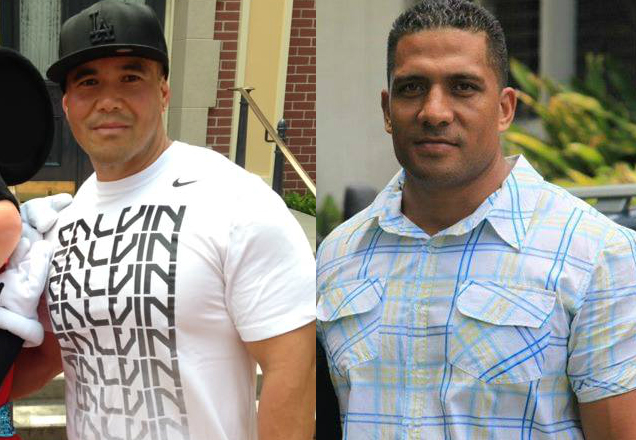
A Tongan man has been caught on camera slapping a woman’s back before uppercutting her face with his left hand on a dance floor.

A man caught on camera punching a woman

A woman who was dancing with the accused immediately grabbed the man’s hand and led him out of the dancing floor, a video clip seen by Kaniva News showed.

Bystanders and dancers closed to the incident appeared shocked by the attack.

It has been reported the incident happened in Maui, Hawai’i last night during an alumni function.

It appeared the victim was joyfully dancing by herself around the dance floor before she passed the man who was dancing with his partner.

The reason behind the attack was unknown.

The video was shared on Facebook by a person who recorded it onFacebook live.

Many Facebook users were outraged by the man’s action.

“How on earth a man could do this to a woman who was just like his own mother,” a commenter wrote.

“That’s terrible and it was disrespectful to beat the woman like that,” another wrote.

However, some commenters defended the man’s action.

They alleged there was what appeared to be a long feud between the victim, the man, and the man’s wife. 

“The man was fed up with the victim for spreading gossip and making fun of the couple’s marital relationship. What her problems with the couple”, a commenter who supported the man wrote.

Ukraine forces retake areas north of Kyiv as Russians look eastward

Ukrainian forces have advanced into areas north of Kyiv as Ukrainian President Volodymyr Zelensky accuses departing Russian soldiers of leaving behind mines.Ukrainian servicemen walk next to destroyed Russian tanks and armored personnel carriers in Dmytrivka village, west of Kyiv, on 2 April, 2022.

Ukrainian servicemen walk next to destroyed Russian tanks and armored personnel carriers in Dmytrivka village, west of Kyiv, on 2 April, 2022. Photo: AFP

Ukrainian presidential adviser Okeksiy Arestovych said Ukrainian troops had retaken more than 30 towns and villages in the region since Russia announced this week it would scale down operations around the capital to focus on battles in the east.

British military intelligence said Russian troops had abandoned Hostomel airport in a northwestern suburb of the capital, where there had been fighting since the first day of the invasion.

In the east, a Red Cross convoy was again seeking to evacuate civilians from the besieged port of Mariupol after abandoning an attempt on Friday because of a lack of security guarantees. But that renewed mission was not expected to reach the port until at least Sunday.

Russia has depicted its drawdown of forces near Kyiv as a goodwill gesture in peace negotiations. Ukraine and its allies say Russian forces have been forced to regroup after suffering heavy losses.

“In the north of our country, the invaders are leaving. It is slow but noticeable. In some places they are being kicked out with fighting. Elsewhere they’re abandoning the positions themselves,” Zelensky said in a video address released on Saturday.

“They are mining all this territory. Houses are mined, equipment is mined, even the bodies of dead people,” he said, without citing evidence.

Russia’s defence ministry did not reply to a request for comment on the allegations.

Reuters could not independently verify the allegations.

In the village of Nova Basan, northeast of Kyiv, which was among those retaken by Ukrainian forces, the body of a man lay next to the carcass of a car. A woman wept as men brought a coffin to remove the body.

The village showed signs of heavy fighting, with collapsed buildings and the wreckage of tanks and armoured vehicles strewn around. Another dead body, apparently that of a Russian soldier, lay near a destroyed armoured personnel carrier.

Fleeing Mariupol

Maksim Levin, a Ukrainian photographer and videographer who was working for a Ukrainian news website and was a long-time contributor to Reuters, was killed while covering the war. read more

His body was found in a village north of the capital Kyiv on 1 April, the news website LB.ua where he worked said on Saturday.

Russia denies targeting civilians in what President Vladimir Putin calls a “special military operation” aimed at demilitarising and “denazifying” Ukraine.

Ukraine calls it an unprovoked war of aggression and Western countries have imposed sweeping sanctions in an effort to squeeze Russia’s economy.

In encircled Mariupol, Russia’s main target in Ukraine’s southeastern region of Donbas, tens of thousands of civilians remained trapped with scant access to food and water.

A convoy of about 54 Ukrainian buses and other private vehicles, accompanied by a team from the International Committee of the Red Cross (ICRC), was renewing its attempt to organise a mass evacuation from the city after turning back on Friday.

ICRC spokesperson Ewan Watson said the team had not yet reached Mariupol, adding they left the city of Zaporizhzhia on Saturday morning and would spend the night en route.

Some civilians who have escaped Mariupol and reached Zaporizhzhia said Russian soldiers repeatedly stopped them to check for the presence of Ukrainian fighters as they fled.

“They stripped the men naked, looked for tattoos,” said Dmytro Kartavov, a 32-year-old builder, adding that the troops paid particular attention to the men’s knees.

“I work, I do repairs, naturally my knees – these are working knees. They say – (you) climbed trenches, dug, and the like.”People walk through a street strewn with several dead bodies in Bucha, northwest of Kyiv.

People walk through a street strewn with several dead bodies in Bucha, northwest of Kyiv. Photo: AFP

Missile strikes

Pope Francis came the closest he has yet to criticising Vladimir Putin over the invasion. He did not name the Russian president but said a “potentate” was fomenting conflicts for nationalist interests.

“Once again, some potentate, sadly caught up in anachronistic claims of nationalist interests, is provoking and fomenting conflicts, while ordinary people sense the need to build a future that will either be shared or not be at all,” he said during a visit to Malta.

Even as Russian forces pulled back from some northern areas, Ukrainian officials reported missile strikes on targets in various parts of the country.

The governor of south-central Dnipro region, Valentyn Reznichenko, said a Russian rocket hit a rail line, badly damaging the tracks and suspending train traffic in the area. He did not say if there were any casualties.

In the early hours, Russian missiles hit the cities of Poltava and Kremenchuk in central Ukraine, Dmitry Lunin, head of the Poltava region, wrote in an online post.

Before dawn, as sirens sounded across Ukraine, the Ukrainian military reported Russian air strikes on the cities of Severodonetsk and Rubizhne in the Luhansk region.

Russia’s defence ministry said high-precision air-launched missiles had disabled military airfields in Poltava and Dnipro. It added later that its forces had hit 28 Ukrainian military facilities across the country, including two depots of rockets and artillery weapons and ammunition.

Alcohol sales in Kyiv

In Kyiv, people started buying alcohol again after Mayor Vitali Klitschko relaxed a month-long ban.

Olena, a psychologist who was buying beer in a supermarket, said it did not mean people had forgotten the war.

“We are just supporting our country in this way. No one will be better off if we are depressed, doing nothing,” she said.

“I’m happy because for two weeks I’ve been walking around thinking ‘I want a beer’,” she said, smiling.

– Reuters

Police launch homicide investigation after South Auckland death

A homicide investigation has been launched following the death of a man in the South Auckland suburb of Favona overnight.No caption

Photo: 123rf.com

Emergency services were called to the Abiru Crescent scene just before 4am.

The man had critical injuries when staff arrived but died at the scene.

In a statement, Police said they were speaking with someone in relation to the incident and a scene examination would start this morning.

One dead following serious crash in Otara

By RNZ.co.nz and is republished with permission.

Emergency services are at the scene of a serious two-vehicle crash on Hills Road in the Auckland suburb of Otara.Unexplained death in Taita, Lower Hutt early on Sunday 26th January 2020.  A Police cordon and crime scene invetsigation tent were in place Monday 27th January 2020.

Police say they were called to the scene about 8.40pm. Photo: RNZ / Patrice Allen

Police said in a statement that they were alerted about 8.40pm and one person had died at the scene.

The road is closed and diversions are in place while the Serious Crash Unit completes its examination.

Motorists are asked to avoid the area if possible.

Power outage hits Auckland City Hospital

By RNZ.co.nz and is republished with permission.

Auckland City Hospital lost power this evening, and back-up generators appeared not to kick in for several minutes.Auckland City Hospital

Auckland City Hospital experienced a power outage of several minutes’ duration this evening. Photo: RNZ / Dan Cook

RNZ understands intensive care and some operating theatres had power restored almost immediately but much of the rest of the hospital’s power was out for longer.

A patient told RNZ he was in the emergency department when the lights went out, leaving it in almost total darkness for 15 to 20 minutes.

“It was like you’d turned off all the lights ready for sleep.”

He said staff remained calm and told patients they were waiting for the back-up generators to kick in.

Staff were still able to treat and discharge him, he said.

Another person in the hospital at the time said the lifts were not working and at least one person had been stuck in one.

She said wifi and some computers were still going.

The cause of the outage is not known.

Supreme Court rejects former Comanchero boss’s application to appeal earlier decision

The New Zealand Supreme Court has rejected an application by former president of the Comanchero Motorcycle Club to appeal a decision of the Court of Appeal dismissing his conviction appeal.

Pasilika Naufahu is on trial for drug, money laundering and organised crime charges. Photo: RNZ / Dan Cook

Pasilika Naufahu, who is of Tongan descent, was jailed in February 2021 by Justice Graham Lang over his role in a money laundering and drugs scheme.

He was arrested following a series of raids across Auckland in April 2019, in which more than $3.7 million in assets was seized along with luxury cars, motorbikes, high-end luggage and jewellery.

Naufahu moved to Sydney with his family when he was one year old. In 2016 he was deported to New Zealand after short prison stints in Australia.

The court was told that police intercepts between Samuel Vaisevuraki and  Mr Sha demonstrated they planned to supply pseudoephedrine valued at $1 million to an unnamed third party, alleged to be Naufahu.

Naufahu was sentenced to 10 years imprisonment, later reduced to nine years.

He appealed his sentence in the Court of Appeal, which rejected his application.

He then lodged an application to overturn the Court of Appeal’s decision.

That application was based on questions of whether certain hearsay evidence given at the original trial was admissible.

The Evidence Act said that in criminal proceedings, a hearsay statement was admissible against a defendant if there was reasonable evidence of a conspiracy or joint enterprise; reasonable evidence that the defendant was a member of the conspiracy or joint enterprise and the hearsay statement was made in furtherance of the conspiracy or joint enterprise.

The Court of Appeal upheld the High Court’s finding that these statements were admissible.

The Supreme Court rejected Naufahu’s appeal.

The Supreme Court ruled that there was enough evidence to suggest that Mr Naufahu was “probably” involved in the pseudoephedrine deal.

There was also insufficient merit in this argument to warrant the granting of leave to appeal.

MPs and Cabinet Ministers alleged campaign finance violations trial delayed by lawyer’s illness

Seven MPs and Cabinet Ministers alleged overspending and bribery trial is adjourned until April 14 after one of the lawyers took ill.

Tonga Parliament. Photo/Fale Alea ‘o Tonga (Facebook)

The delay on Thursday came after unsuccessful candidate Paula Piveni Piukala, who was representing himself in the lawsuit he brought against the Minister of Internal Affairs Sangstar Saulala informed the judge that he needed to seek medical attention.

It was unclear whether the illness was related to COVID-19.

It is understood the court was told the following day Piukala was still sick.

Hon Saulala posted a get-well-soon status for Piukala and asked his followers to pray for him.

“We have different political views but we all Tongans,” he said.

As Kaniva News reported this week, the former Prime Minister and six other MPs had been charged after Tonga 2021 general election.

They appeared in court this week March 31.

The lawsuits had been brought against them by the PTOA Party.

The accused MPs are Tēvita Puloka of Tongatapu 1, MP Dr Pingi Fasi of Tongatapu 2, Minister of Finance and MP for Tongatapu 4 Tatafu Moeaki, MP ‘Aisake Eke of Tongatapu 5, Minister of Internal Affairs and MP for Tongatapu 7  Sangstar Saulala and former Prime Minister and MP for Tongatapu 10 Pōhiva Tu’i’onetoa.

Pacific health leaders urge govt to boost funding for providers

By RNZ.co.nz and is republished with permission.

Frontline Pacific health care workers are on the clock from dawn to dusk responding to the need in their communities through the Covid outbreak.No caption

Photo: RNZ/Marika Khabazi

Now a Pacific health leader is calling on the government to pump more funding into Pacific medical providers to help build the support they need to keep going.

The Fono’s Covid-19 welfare manager Europa Kupu said the pressure has been huge.

“We’re working still seven days a week and our front liners are working from morning to evening, just so we make sure we cover all of the referrals we are receiving because they come through the whole day for urgent support. So it is hectic, it is crazy times but at the same time we are kinda used to it.”

Throughout the outbreak Pacific health providers have been there to help.

The Fono chief executive Tevita Funaki said Pacific peoples are facing ‘chronic challenges’ and the government needs to commit to addressing them.

“The key here is actually building the pipeline for Pacific into health careers, no doubt that the pool of Pacific staff available is limited, we need to look at a whole development strategy workforce for Pacific, not just a band aid solution.”

There is a hefty price tag, but Funaki said inequities need to be addressed imminently.  

“In particular around the Auckland providers. We are looking at a total investment of around over 200 million into core capabilities, including infrastructure support and also investment into the workforce.”

He said the Pacific healthcare workforce alone needs to be increased by half among other urgent changes.

Housing is a clear problem too, and when you have Covid-19 you stay home to stop the spread, a task easier for some than others, Funaki said.

“Because of the overcrowded homes, the economic well-being of Pacific around career, pathway and education   – and then looking at the health reform to focus at the inequities when you look at chronic illnesses, Pacific are highly represented there.”The Fono chief executive Tevita Funaki

The Fono chief executive Tevita Funaki said inequities need to be addressed urgently. Photo: Dominic Godfrey / RNZ Pacific

It is issues like these that push Pasifika into the “vulnerable” category when it comes to Covid-19.

These inequities have been highlighted before – but Funaki said the government simply cannot look away.

At the height of the Omicron surge in Auckland, Pasifika made up 60 percent of hospitalisations and 50 percent of cases.

“There is no doubt in terms of the significant cases in terms of the Omicron outbreak in comparison to Delta. Even when we are looking from last Friday there were 70,000 infections from what was last year to now. Those are significant numbers and part of that is around the impact of the infectiousness of Omicron.”

But a front line worker in Auckland believes that number is even higher.

“We’re probably just scraping the surface, families that we never engage with as a provider, we’re finding more coming through as new families that we haven’t dealt with before. They are not knowing how they can reach out and who they can turn to,” they said.

Auckland District Health Board recorded 3342 positive Covid cases among its Pacific population, for the week ending on the 27 March, a drop from more than 10,000 two weeks prior.

Covid-19 modeller Michael Plank said it looks like the outbreak has passed through the Pacific population earlier than other groups when looking at case numbers.

But he said Covid-19 is here to stay.

“In the short term relatively high levels of immunity means that cases are coming down but unfortunately that protection that you get from prior infection is likely to be relatively short-lived and so over time that immunity will wane. So the Pacific community and other communities in New Zealand will gradually become susceptible to a second wave over time.”

He wants all community members to keep up mask wearing in the short term and tackle long term issues like ventilation.

Māori dying with Covid-19 because of misinformation – health leader

By RNZ.co.nz and is republished with permission.

A Māori health leader says a new international misinformation study confirms the alarm many were desperately trying to raise last year about the impact on Māori during the initial vaccine rollout.National Hauora Coalition clinical director Dr Rawiri McKree Jansen

National Māori Pandemic Group co-leader Rawiri McKree Jansen. Photo: STUFF/ Alden Williams

The article in the Journal of the Royal Society Interface shows misinformation makes it harder to stop illness spreading during a pandemic.

It states conspiracy theories spread through communities already distrustful of authority.

It modelled trusting individuals who seek better quality information and take precautionary measures; and distrusting people who reject quality information and have riskier behaviour.

It found major outbreaks cannot be suppressed once the density of distrusting individuals exceeds a certain threshold.

It says its findings highlight the importance of effective interventions to build trust and inform the public.

Māori ‘exposed to a significant amount of misinformation for longer’

National Māori Pandemic Group co-leader Rawiri McKree Jansen said the Māori population was younger, so many had to wait to be eligible to get their vaccine dose.

“They [were] exposed to a significant amount of misinformation for longer.

“That’s created a problem for us in terms of getting the momentum for the vaccination programme into the right place.”

McKree Jansen said the unvaccinated were being hit hardest by the Omicron wave.

As of Friday, only 88 percent of Māori have had their second dose, and 58 percent their third compared with 95 percent and 73 (72.7) percent respectively of the general population.

As of Friday, 355 people have died with Covid-19 and the seven-day rolling average is now 17.

McKree Jansen said Māori were now dying with Covid-19 because of that misinformation.

He said for Māori and Pacific communities it was particularly troubling because those who were dying with the virus were in their 40s, 50s, and 60s, rather than older people in other populations.

He said Māori and Pacific populations should have been prioritised in the vaccine rollout.

The Waitangi Tribunal has released a scathing ruling of the government’s Covid-19 response and vaccine rollout, saying Māori were put at risk.

The tribunal said Cabinet’s decision to go against official and expert advice and not prioritise Māori breached the Treaty principles of active protection and equity.

Misinformation has disrupted families, but is resolvable

McKree Jansen said misinformation had disrupted social and familial connection but he believed it was resolvable.

“We should actually spend the time and the effort to restore relationships with those people that have been affected by it.

“It is being very clear that health services are here to help people.

“I think it is conversations we’ll have within families to restore mana for people who feel that [they have] been belittled, to ensure that people know that they are loved and that they are cared for.”

He said the focus needed to be on learning the lessons and making sure it did not happen again.

“And making sure that when we say we are committed to equity that we do all the things necessary to achieve it.”

Tonga volcano: NIWA scientists to map eruption’s impact on seabed

By RNZ.co.nz and is republished with permission.

NIWA scientists are set sail to Tonga to survey the seabed around Hunga-Tonga Hunga-Ha’apai volcano in the aftermath of its eruption earlier this year.NIWA research vessel RV Tangaroa is heading to Tonga to assess the undersea impacts of the Hunga-Tonga Hunga-Ha'apai volcano eruption in early 2022.

NIWA research vessel RV Tangaroa is heading to Tonga to assess the undersea impacts of the Hunga-Tonga Hunga-Ha’apai volcano eruption in early 2022. Photo: NIWA / Dave Allen

NIWA’s research vessel, RV Tangaroa, will head over on 9 April to collect video images of the seafloor and another vessel, from British enterprise SEA-KIT International, will conduct further mapping over a month.

NIWA chief scientist of oceans Mike Williams, who is the project leader, predicted they would see massive changes to the underwater landscape around Tonga.

“Before the eruption, much of the volcano was above water but now none of it is and the neighbouring islands of Hunga Tonga and Hunga Ha’apai were reduced in size. We expect similarly dramatic changes to have occurred in the underwater topography.

“Submarine cable breakages show impacts up to 50 kilometres from the volcano caldera, implying changes to the seabed over an area of at least 8000 square kilometres.”

Echosounders – a device which determines the depth of the seabed and detects objects in water – will be used to inform scientists about the thickness of ash deposits and the formation of any new bedforms.

The data will be compared with previous maps to identify areas for sampling, so that further changes to the area, such as impacts to marine life and the seafloor’s chemical composition, can be assessed.No caption

The eruption of underwater volcano Hunga Tonga and Hunga Ha’apai from satellite, on 15 January, 2022. Photo: Supplied / Shane Cronin, University of Auckland

The eruption was unexpected and triggered a large explosion that generated a sonic boom across the world and caused a tsunami that resulted in deaths and damage as far away as South America.

Dr Williams said the lack of knowledge about these types of volcanoes, particularly along the Pacific Ring of Fire, was a risk to society.

The Nippon Foundation – a non-profit organisation based in Japan which has been facilitating projects in the ocean field since 1962 – is funding the project.

Its chairman, Yohei Sasakawa, said NIWA’s research was vital to help protect people from similar natural disasters in the future.

“We hope that this work will help researchers and governments understand and mitigate the risk of future eruptions, which will be of particular benefit to countries that lie within proximity of these threatening natural wonders, like Japan and New Zealand.”

Tonga deputy secretary for lands and natural resources Taaniela Kula said the eruption had catastrophic consequences, and he too hoped the research would help protect nations like theirs.

The research is also supported by The Nippon Foundation-GEBCO Seabed 2030 Project which aims to map the world’s ocean floor by 2030.

Seabed 2030’s South and West Pacific Regional Center head Kevin Mackay said using the knowledge and resources of everyone involved would help build an invaluable picture of the eruption’s aftermath.

“By working alongside and pooling resources with such a multinational team, we’ll be able to gather an incredible amount of information of what happens during eruptions like these, what the impacts are, and how we can be better prepared next time a similar event occurs.”