Fiji has reported two deaths and 372 new cases of Covid-19 in the community.
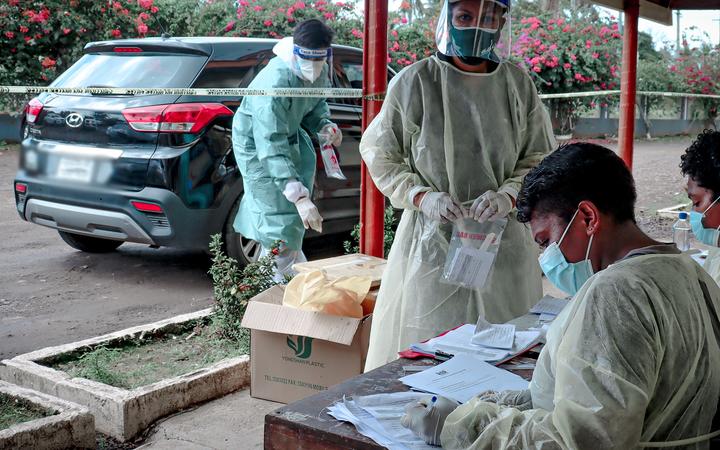
Front-line workers at the swab drive-through in Vunimono, Nausori. Photo: Ministry of Health, Fiji
This brings the total number of active cases in isolation are 3,009.
The Government also confirmed on Wednesday that 113 patients are in hospital.
The two victims included a 75-year-old man from Suva and a 56-year-old woman from Tailevu who both died at home.
Health Secretary James Fong said the man had died on December 31st with significant pre-existing medical conditions that also contributed to his death.
“He received his first dose of the Covid-19 vaccine in mid July and his second dose mid-September.
“The second Covid-19 death is a 56-year-old woman from Korovou in Tailevu who died on January 1st in respiratory distress.
“She had multiple pre-existing medical conditions that also contributed to her death. She had received only one dose of the Covid-19 vaccine.”
Dr Fong said 92.2 percent of Fiji’s adult population were fully vaccinated against Covid-19 while 40,297 children aged 12-17 had also received both doses of the vaccine.
The Minister of Agriculture, Food and Forests, Viliami Hingano is currently in New Zealand for medical tests after the Vaiola hospital’s computerised tomography (CT) scanner stopped working, a government spokesperson has told Kaniva News.
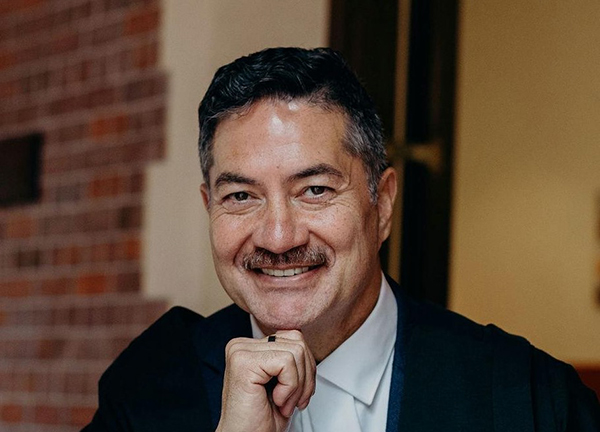
Hon Viliami Manuopangai HIngano
The former government approved his travel last year in his capacity as the Ha’apai governor, he said.
The Minister’s flight to New Zealand was repeatedly postponed by Tonga’s current volcanic eruptions which started in December last year.
“It was important for him to be taken overseas and get his scan done so that his condition could be identified before he was given the right medical treatment,” the spokesperson said in Tongan.
The spokesperson was responding after Kaniva News wanted to confirm that the Minister was in Auckland for medical treatment.
We reported this week that Hingano’s family had sent him love and supports after a photo of him and a cousin was shared to Facebook last week.
The family urged Hingano to be courageous and prayed that God would help him through the doctors here in New Zealand.
The former governor of Ha’apai was elected as MP for Ha’apai 12 on November 18, and appointed by Prime Minister Siaosi Sovaleni on December 29, before he left for Auckland.
Medical issues divide community
Our report earlier this week about Hingano has divided the Tongan online community.
Some were surprised to find out that instead of the Minister being expected to meet his staff as the first thing he should do after his appointment he was sent overseas for medical assistance.
Some criticised the Prime Minister for appointing someone who appeared to be a burden on taxpayers.
Some stood by the fact the Minister’s travel and all costs incurred by his medical needs must be paid by the government because it was his ministerial entitlement.
Others believed it was time to review the overseas medical treatment policy. Many suggested that all candidates who ran for Parliament must show evidence they were healthy and did not suffer from any chronic disease that would be a financial burden for the country.
Some raised the fact that the policy only applied to government senior officers, leaders and the royals. Commoners who become chronically ill can only be treated in Tonga with the limited medical resources and doctors available at the Vaiola hospital.
History of treatment
Most of the public servants, politicians and the royals who have been sent overseas on medical grounds suffered from conditions that were serious and could not be treated in Tonga.
While many were fortunate to be cured in New Zealand or Australia and returned home, some did not.
Two recent former Deputy Prime Ministers Lord Ma’afu and Sione Vuna Fā’otusia were treated in New Zealand, but eventually died from their sicknesses.
A fierce online furore erupted in 2019 after the government hired an air ambulance which airlifted Lord Fusitu’a to a hospital in New Zealand.
At the time, those who opposed the overseas medical policy protested on Facebook, rejecting the payment of costs from taxpayers’ money.
The king’s noble was still in New Zealand and it appeared that he was still receiving medical assistance for his illness.
Former MPs medical expenses
Former Prime Minister Lord Tu’ivakanō was regularly sent to New Zealand for checkups after he suffered a minor stroke while in New York attending the United Nations General Assembly in 2013.
His medical expenses and flights were paid from taxpayers’ money.
The government also sent former Prime Minister Pōhiva Tu’ionetoa to Australia for medical treatment after having an injury while being an MP. He received spinal surgery at the St George Private Hospital in Sydney.
Kaniva News understands a former Prime Minister, who was wheelchair-bound, died after being sick and spending about a year or more in an Auckland hospital. While he was in New Zealand all his expenses, including the staff looking after him, were paid from taxpayers’ money.
A former Minister of Police was flown to New Zealand on a medical flight while he was seriously ill, but died during the flight. All expenses were paid from the taxpayers’ coffers.
Late Opposition Leader and Prime Minister ‘Akilisi Pōhiva was also sent to Auckland for medical treatment a couple of times during his tenure. He later died in an Auckland hospital.
However, he paid for his travel and accommodation expenses in New Zealand with his own money.
FAKAMATALA NOUNOU FAKATONGA
‘Oku lolotonga ‘i Nu’u Sila ‘a e Minisitā Ngoue’ hili ia hano tali ke fakafolau fakafalemahaki mai ‘e he pule’anga ‘o Tu’i’onetoa’ makatu’unga he totonu fakapa’anga mo vāhenga ne ma’u ‘e Viliami Manuopangai Hingano tu’unga ‘i hono lakanga ko Kōvana Ha’apai’. Na’e tautoloi ‘ene folau mai’ tu’unga he puna ‘a e mo’ungaafi ‘i Tonga’ ‘o ne uesia ‘a e fefolau’aki fakavaha’apule’anga’. Pehē mei he pule’anga’ ‘o Sovaleni’ ‘oku lolotonga maumau ‘a e mīsini sikena CT ‘a Vaiola ‘oku’ ne fai ‘a hono faka’ata kakato ‘o e sino’ ke ‘ilo ai ha alangamahaki ke faito’o. Ko e tupu’anga ia e folau mai ‘a Hingano’ ke faka’ata ‘i Nu’u Sila’ ni kae lava ke fakapapau’i ‘a e faito’o totonu ke fai kiate ia.
New Zealand-based Tongan lawyer Nalesoni Tupou believes the prisoner who was jailed for two and a half years by Acting Chief Justice Lord Afeaki should appeal the decision.
Lord Afeaki. Photo/Facebook (Afeaki Chambers)
Tupou said the judge had made two decisions regarding Siu’ivahanoa Tu’ipulotu’s sentence and claimed this was not allowed by law.
Lord Afeaki, who appears to have been judging one of his first court cases in the Supreme Court, sentenced Tu’ipulotu on November 18.
Suspension & removal
He suspended the final nine months of Tu’ipulotu’s sentencing for a period of two years from the date of his release from prison. The decision, along with other conditions for Tu’ipulotu to follow as part of his sentencing, was published by the Attorney General’s Office on November 18.
Another decision was uploaded later on the same day for the same prisoner, but this time, the suspension was removed. There were also minor changes in this second decision to the wording of the original decision.
The varied version was marked as “Corrigendum” or correction and was filed at the website as the third document relating to the sentencing of the same prisoner on November 18. It showed the Attorney General Office’s stamp and an initial on November 22.
“Pursuant to the order of the Court dated 22 November 2021, the following sentencing remarks are to replace those issued on 18 November 202i”, the Corrigendum read.
Unexplained corrections
There is nothing on the website to describe why the corrections were made to Lord Afeaki’s decision.
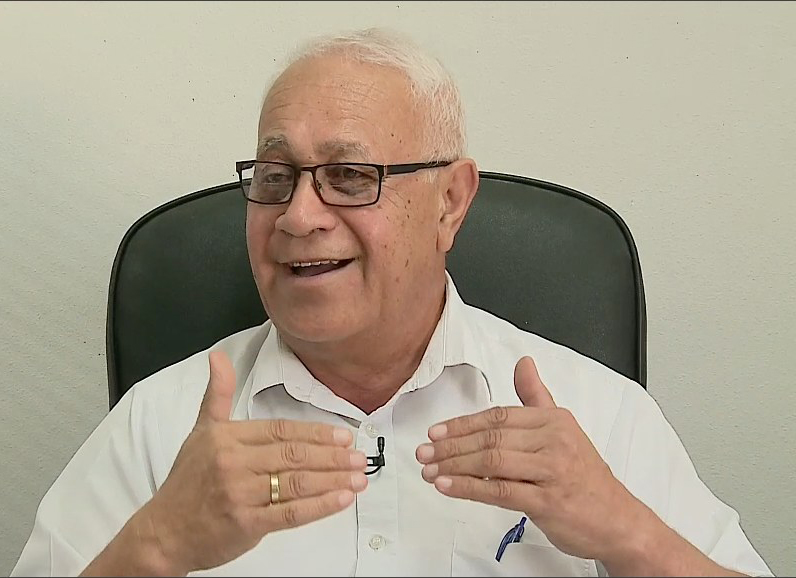
Lawyer Nalesoni Tupou. Photo/Tnews
Lawyer Tupou said in Tongan the law did not allow two separate decisions in sentencing.
He said the case should be appealed.
“A court cannot give two different sentences in one particular sentencing of a case,” Tupou said.
“Courts are to give only one decision of sentencing not two different sentencing.”
The prisoner had no legal counsel and represented himself in court.
NZ corrigendum explained
Normally, a corrigendum can only be issued to correct minor clerical mistakes which do not alter the decision, according to various sources.
It is normal in New Zealand for judges to correct their decision or sentencing if there are typos, but they have to explain why the corrections were made.
For example, there was a corrigendum in New Zealand when its Environment Court corrected a decision it made on October 21, 2021.
In its correction Justice Borthwick said: “Following the release of the decision Otago Regional Council [2021] NZEnvC 164 it has come to my attention that para [384] contains an error”.
After explaining the error in few sentences she then mentioned the law which allowed the correction to be made and said:
“Outcome [6] The error identified in para [384] of decision [2021] NZEnvC 164 is an “accidental slip or omission” that is able to be corrected using the court’s powers under rule 11.10 District Court Rules 2014″.
Hon Borthwick also said: “Paragraph [384] is amended to read: Our findings in relation to the operative regional plan and its unresponsiveness to freshwater management at paragraphs [318]-[321]423 and elsewhere in this decision, apply here. [8] Decision [2021] NZEnvC 164 otherwise remains unchanged”.
Lord Afeaki was the subject of a complaint to the king by senior lawyers in Tonga immediately after he was appointed to fill the gap of the Acting Chief Justice after Lord Chief Justice Michael Whitten went to Australia for holidays.
The lawyers questioned Lord Afeaki’s experience and legal background and expressed doubt that he was the right person for the position.
As we reported previously, the king appeared to have ignored the lawyers’ complaint.
Lord Afeaki was listed in the Find Law New Zealand website as being specialised in Administrative Law, Commercial Law, Company Law, Human Rights, Litigation, Maori Law, Maritime and Mediation. He described himself in a video clip posted on his Facebook page as a barrister with more than 25 years of experience.
Police and maritime officials in the Solomon Islands have found the body of a woman they believe is one of 14 people missing at sea since New Year’s Day.
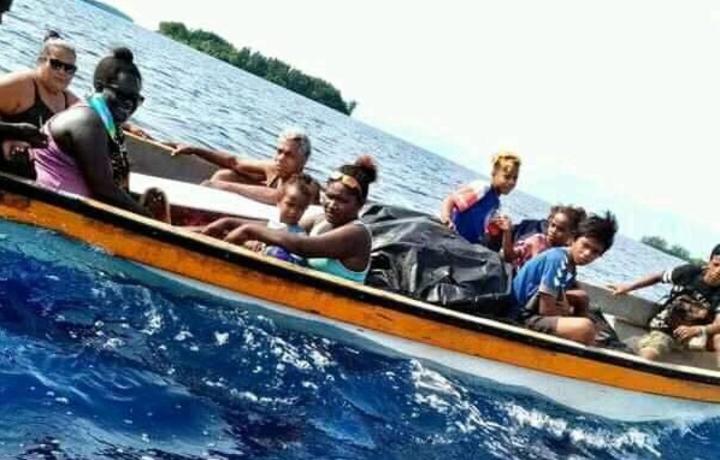
One of the boats that left Gizo for the Shortland Islands on New Year’s Day. Photo: Supplied
Two boat loads of people left Gizo for the Shortland Islands on 1 January, with one vessel drifting near Moli where it was found on 2 January. The other, carrying 14 people, failed to reach its destination.
The woman was found on Tuesday night near Zinoa Island, Vouza in Choiseul Province, and northwest of the Solomons capital Honiara, the head of maritime Thierry Nervale told RNZ Pacific.
This is more than 100 kilometres from the Shortland Islands.
Nervale said her body has been transported to Taro Island by the police and medical team.
Assistant Police Commissioner National Operations Evelyn Thugea said a family member of the woman had identified the body.
Thugea said the relative had also confirmed the woman was among passengers missing at sea after a boat they were travelling in failed to reach its destination on 1 January.
“The dead body started to decompose but a tattoo written at the back and the upper left arm was still visible to identify the body,” Thugea said.
Nervale said two boatloads of people had left Gizo for Harapa in the Shortland Islands to attend a funeral.
Solomon Islands police boat. Photo: Royal Solomon Islands Police Force
One boat had drifted and reached Moli Island, Nervale said.
Among the 14 missing were children including a nine-year-old and a four-year-old.
“On their way, almost reaching the Shortland Islands they met very strong winds, the two boats then somehow separated but only one of the boats managed to navigate and arrive safely in Taro, on January 2,” he said.
Taro Police said a mobile phone belonging to one of the passengers in the missing boat was called, and it rang but no one answered it.
On attempts to track the whereabouts of the phone, they alerted telecommunications provider, Our Telekom, and were informed that the phone was detected within the Sasamunga or within south Choiseul range of Telekom’s mobile network.
“Villages along Sasamunga and south Choiseul were notified of any sightings of the boat or floating objects since police received the report of it missing, but there is still no sighting of anything,” said Sibere Tauroa of Taro Police.
Nervale said bad weather conditions had delayed the search and rescue efforts this morning but he added they would head out once the heavy rain and winds eased.
There are 19 new community cases of Covid-19 in New Zealand today and 43 cases in managed isolation, the Ministry of Health has reported.
In a statement, the Health Ministry said the number of new cases in Auckland had dropped to single figures.
The 19 new community cases are in Auckland (6), Waikato (5), Bay of Plenty (5), Northland (1) and Taranaki (2).
The Emergency Department at Taranaki Base Hospital was identified as an exposure event yesterday, but no staff have been stood down.
A bowling avenue in Tauranga (Tenpin Tauranga 135 Thirteenth Avenue) has been identified as a close contact place after a case was there on 30 December between 10.15am – 2.30pm.
In Auckland, JUMP Trampoline Park in Takanini has also been identified as a close contact place for 3 January between 10am and 1.30pm as well as 28 December between 10.30am and 1pm.
The Ministry said whole genome sequencing of the 43 new imported cases is expected soon, but the likelihood was that Omicron will continue to be “the most prevalent variant at our borders”.
The new cases came from USA, UAE, UK, Australia, India, Qatar, Singapore, Spain, Germany, Fiji and Sri Lanka.
There have now been 11,022 cases in the current community outbreak and 14,092 confirmed cases in New Zealand since the pandemic began.
There are now 38 people with the coronavirus in hospital, including four in intensive care.
The Ministry said there had been an increase in the number of New Zealanders getting first and second vaccinations in the past day, along with a surge in booster shots, with a total of 41,165 booster shots given yesterday.
“The jump in booster shots was of course expected as those who’d had their second vaccine four months ago became eligible for a booster shot from yesterday. There were also more than twice as many My Vaccine passes downloaded in the last 24 hours than the previous day.”
Apple is the first company with a $US3 trillion stock market value, lifted by investor confidence that the iPhone maker will keep launching best-selling products as it explores new markets such as automated cars and virtual reality.
On the first day of trading in 2022, the Silicon Valley company’s shares hit a record high of $US182.88 ($NZ269.50), putting Apple’s market value just above $3 trillion. The stock ended the session up 2.5 percent at $182.01, with Apple’s market capitalisation at $2.99 trillion.
The world’s most valuable company reached the milestone as investors bet that consumers will continue to shell out top dollar for iPhones, MacBooks and services such as Apple TV and Apple Music.
“It’s a fantastic accomplishment and certainly worthy to be celebrated,” said Jake Dollarhide, chief executive of Longbow Asset Management in Tulsa, Oklahoma.
“It just shows you how far Apple has come, and how dominant it is seen as in the majority of investors’ eyes.”
Apple shared the $2 trillion market value club with Microsoft, which is now worth about $2.5 trillion. Alphabet, Amazon and Tesla have market values above $1 trillion.
“The market is rewarding companies that have strong fundamentals and balance sheets, and the companies that are hitting these sort of huge market caps have proven they are strong businesses and not speculation,” said Scott Wren, senior global market strategist at Wells Fargo Investment Institute.
The rapid embrace of technologies such as 5G, virtual reality and artificial intelligence has also helped these stocks become market darlings as investors moved towards cash-rich companies and away from businesses that have been more sensitive to economic growth.
In China, one of Apple’s biggest markets, it continued to lead the smartphone market for the second straight month, beating rivals such as Vivo and Xiaomi, recent data from CounterPoint Research showed.
With Tesla now the world’s most valuable automaker as Wall Street bets heavily on electric cars, many investors expect Apple to launch its own vehicle within the next few years.
“The icing on the cake, which may turn out to be the cake, is the potential for an EV car,” Rhys Williams, chief strategist at Spouting Rock Asset Management said.
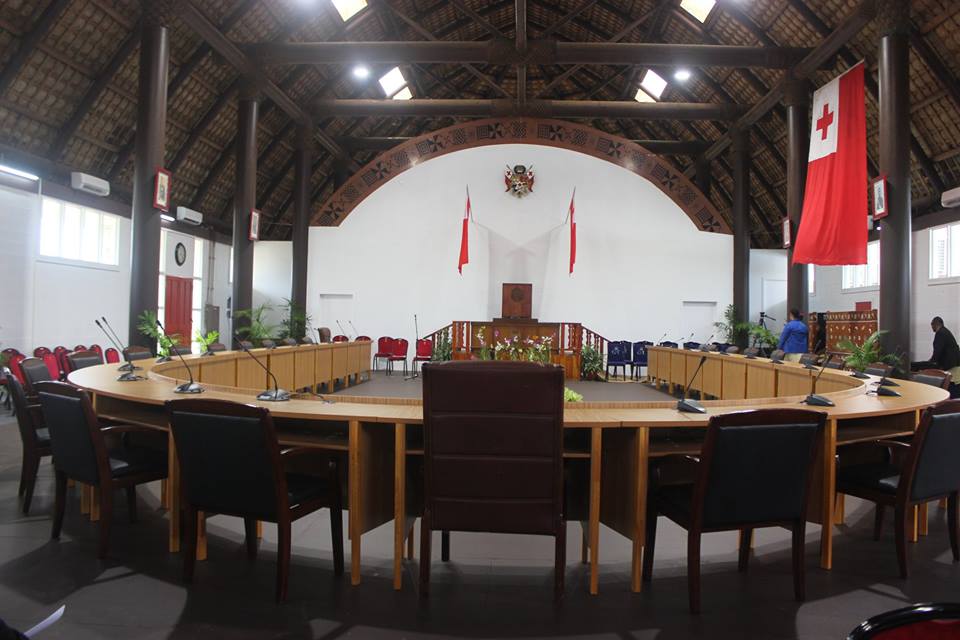
The ceremony to officially open the Parliament is now postponed until Tuesday 11 January, the Parliament said in a statement this afternoon.
“The postponement is due to a technical problem that may affect the livestreaming of His Majesty’s opening address through the internet from the Royal Residence in ‘Eua to the Parliament chamber in Nuku’alofa”.
The delay came after King Tupou VI was expected to open the Parliament via livestream.
The ceremony is expected to swear in all the 27 MPs and to elect the Chair of the Whole House Committee.
Only 24 MPs are expected to officially take their oath next week.
The Speaker Lord Fakafanua, Lord Fotofili and the Minister of Agriculture, Food and Forests were currently in New Zealand.
Baby dies in Samoa after being electrocuted at home
An 8 month-old baby died after being electrocuted at home on New Year’s day.
Deputy Police Commissioner Auapa’au Logoitino Filipo confirmed the death of the toddler and expressed condolences to the family.
The incident reinforced a call by the Ministry of Police and Prisons for parents and guardians to be vigilant when it come to the safety of their children.
Responding to questions from Radio Polynesia, Auapa’au said that losing a child is never easy but this tragic incident could have been avoided.
He said adults in the family home need to make sure young children can’t reach electric sockets, cabinets and shelves are inaccessible, and for a TV stand to be mounted securely to avoid it falling on children.
He said the police are investigating.
Tonga Geological Service warns toxic seawater around volcano may poison fish
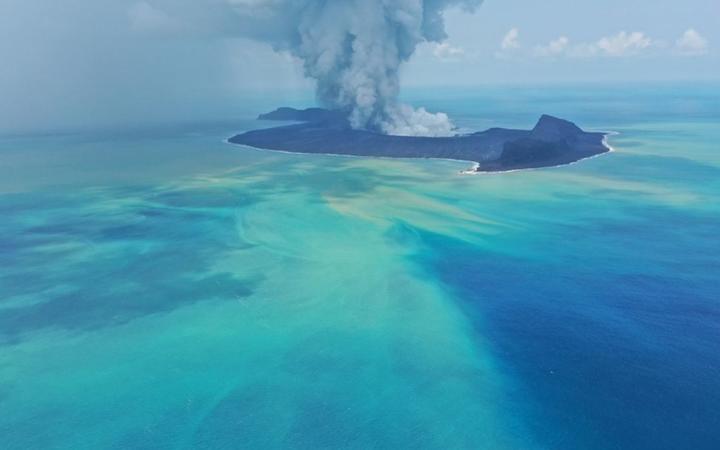
Seawater around the active Hunga Tonga Hunga Ha’apai volcano is contaminated with toxic volcanic discharge and local fishermen should assume that fish in these waters are poisonous or poisonous if consumed, Tongan authorities warned.
“The discoloration of the sea shows a significant discharge of volcanic fluids (steam, condensates laden with chemical elements) into the sea and contaminating the seawater.
The discoloration of the sea shows a significant discharge of volcanic fluids (steam, condensates laden with chemical elements) into the sea and contaminating the seawater. Photo: Tonga Geological Service
It is advised to assume fish in these waters are poisoned or poisonous if consumed,” Tonga Geological Services told Matangi Tonga.
Volcanic activity has decreased significantly since the explosive eruption of December 20, 2021, when gaseous emissions, including acidic dust and ash, reached altitudes of 3-16km.
“It is safe to reconnect your rainwater harvesting systems at this time,” the Tonga Geological Services said.
The volcano continues to be closely monitored for possible renewed increase.
Suspended Samoa police prosecutor reinstated
Samoa’s Ministry of Police and Prisons has reinstated suspended police prosecutor Khamtahn Stanley.
He was due back at work on Tuesday.
This was confirmed in a memo issued by the Ministry of Police and Prisons and obtained by Radio Polynesia.
The internal memo issued on 31 December, 2021 showed acting Police Commissioner, Papalii Monalisa Tiai-Keti approved the resumption of duties for Sergeant Khamtahn Stanley, effective on 4 January, 2022.
Sergeant Stanley and High Chief of Vaiusu Ulugia Lomalasi Laufili https://www.rnz.co.nz/international/pacific-news/417055/suspended-police-sergeant-in-samoa-denies-manslaughter-charge were charged with manslaughter] in relation to the death of a 20 year-old man in 2019.
The charge was reduced to actual bodily harm, which both defendants pleaded guilty too.
Last month Stanley was discharged without conviction.
Cruise ships book to berth at Apia harbour
Cruise ships have booked to berth at Apia harbor in Samoa despite the State of Emergency (SOE) lockdown enforce.
It has been two years since lockdowns were initiated by the Samoan government following the global outbreak of Covid-19.
TV1Samoa reports Chief Executive Officer for Samoa Ports Authority, So’oalo Kuresa So’oalo, confirmed the bookings had been made but they will only be allowed in port if there are changes in the SOE orders.
So’oalo said everything is dependent on the National Emergency Operations Committee (NEOC) especially the number of people that have been fully vaccinated.
The NEOC said 86 percent or 104,827 of the eligible Samoan population have been fully vaccinated against Covid-19 and 117,020 or 96 percent have had first doses.
The number of cruise ship bookings will last three years.
PNG leadership tribunal clears Sir Puka Temu of misconduct
A leadership tribunal in Papua New Guinea has cleared Abau MP, Sir Puka Temu, of the two allegations of misconduct in office.
Tribunal chairman Justice Panuel Mogish said none of the evidence provided supported any element of the allegations of misconduct against Sir Puka.
Sir Puka was charged with two counts of office misconduct in the allegations of awarding a contract for refurbishment and construction of a multi-storey government office complex to Niame Investment Ltd and Central Lands Ltd.
Bad weather in Samoa disrupts interisland ferry service
The cancellation of interisland ferries in Samoa over the last two days due to bad weather has seen the national airline step in to help stranded holiday makers get back in time to start the 2022 working year.
The Samoa Observer reports Samoa Airways started operating flights between Faleolo airport and Maota airstrip on Savaii island on Tuesday as hundreds found themselves unable to travel after the Samoa Shipping Corporation cancelled sailings due to high seas.
But most stranded passengers were unable to fork out the WST$85 one way ticket, with many opting to wait out the bad weather.
The Samoa weather office is forecasting continued strong winds and high sea swells.