Police have launched a homicide investigation after a man died at Middlemore Hospital this morning.
Counties Manukau Police. Photo/Kalino Lātū
He arrived at hospital around 6am with critical injuries and a sadly died a short time later.
Police are in the very early stages of our investigation and are working to establish the circumstances surrounding the man’s death which remain unclear at this time.
We have a scene examination underway at the velodrome in Manukau.
Formal identification procedures are underway and we are working to ensure the man’s family is provided with Victim Support at this difficult time.
There is no further information available at this early stage.
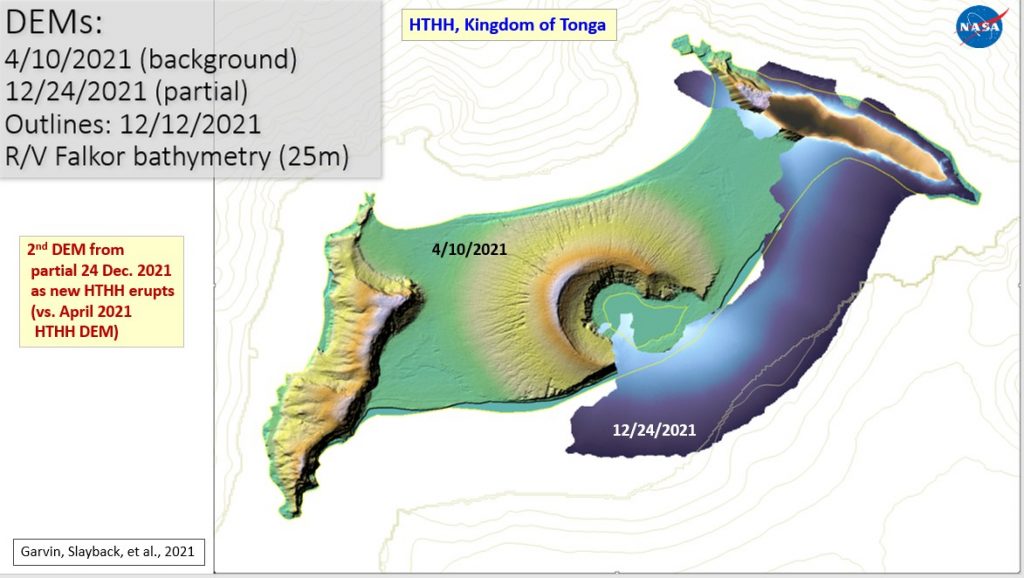
A digitised map released by Tonga Geological Services yesterday shows Tonga has acquired some new territory.
The map of Hunga Tonga Hunga Ha’apai. The dark blue colour with mixture of white colour shows the 600m new extension caused by the current volcanic activity. The green and yellow colours show a satellite image taken on October 2021 showing the original Hunga Tonga Hunga Ha’apai after it was formed in 2015. LEA FAKATONGA: Ko e mape ‘o e ma’olunga mo e fotunga ‘o Hunga-Tonga-Hunga-Ha’apai na’e mapuna he 2015 ‘i hono mape’i mei he satelaite ‘i ‘Okatopa 2021 (‘oku ha lanu mata mo engeenga ‘i he vaha’a ‘o Hunga Tonga ki he tokelau hahake, pea Hunga Ha’apai ki he Hihifo). Ko e ‘ata lanu puluu fakapopo’uli mo maama hinehina ko e konga fonua fo’ou ia kuo tanaki ki he motu Hunga-Tonga-Hunga-Ha’apai. ‘Oku a’u ki he mita ‘e 600m ‘ene tupu ki he fakahahake ‘i hono mape’i mei he satelaite he ‘aho 25/12/2021.Photo/Tonga Geological Services
The image appeared to show the volcanic activity occurred 65km north of Tonga’s main island Tongatapu has formed a 600m extension east of Hunga Tonga Hunga Ha’apai on December 25, 2021, the Services said.
The digitised map was designed based on NASA’s satellite images, it said.
The release of the image came after some spectacular footages recorded from a boat close to the scene by some eyewitnesses. The footages, which were taken by Ioana Sugar Kalo and Bronco Sugarelli on December 28 showed explosive eruption of the volcano continues characterised by what appeared to be dark and dense mixtures of hot volcanic fragments, ash and gas.
NASA described Hunga Tonga Hunga Ha’apai, which are 1.6km apart, as two islands sitting atop a large seamount.
“These volcanic islands stand just 128 and 149 meters (420 and 490 feet) above sea level”, NASA reported in 2014.
Hunga Tonga Hunga Ha’apai, which stands for its locations between Tongatapu and Ha’apai islands, was separated from the sea by a shallow sandbar, forming a lagoon.
“Initially it was believed that the entire island would be eroded rapidly, but scientists now believe that the process may take decades”.
Since the current volcanic activity last month, the Ha’apai residents have been issued with warnings that acid rain from the eruption threatened water tanks and they should remove guttering systems from rainwater tank storage until the eruption finishes. These should not be reinstalled until after the next rainfall, to reduce the risk of contamination.
Seventeen people have been recognised in the New Year’s honours for their services to Pacific communities in Aotearoa New Zealand.
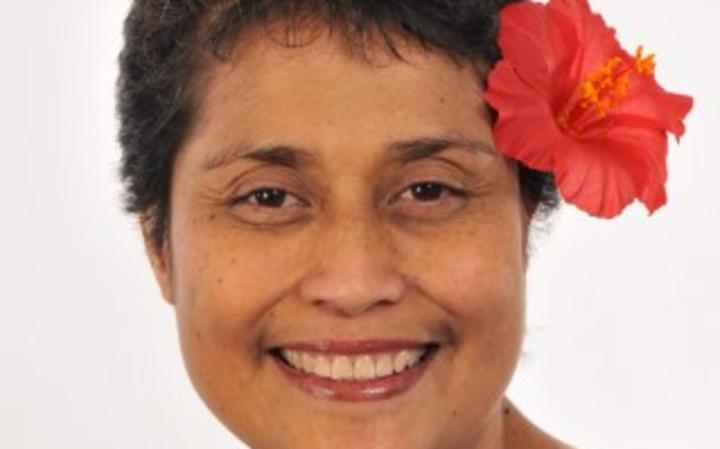
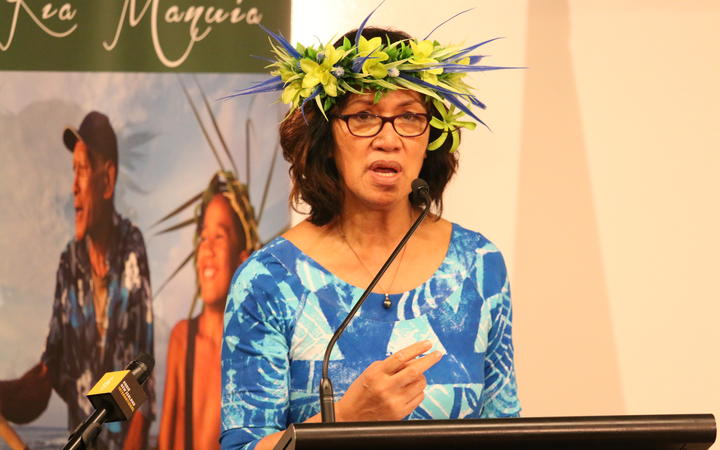
Faumuina Professor Fa’afetai is the recipient of a medal for services to Pacific health and tertiary education in NZ. Photo: Otago University
Faumuina Professor Fa’afetai Sopoaga leads the New Year’s Honours list for Pacific recipients.
She was made a Companion of the New Zealand Order of Merit for her services to Pacific health and tertiary education.
She was the inaugural Pacific Associate Dean, Division of Health Sciences at the University of Otago between 2009 and 2020.
Faumuina has championed medical and public health education for Pacific communities since the 1990s.
Education was always important to her parents, she said.
“This to me is in part a reflection of what my parents had instilled in me the importance of education and service to others. And it is also a recognition of many others I work alongside in the tertiary sector in the community. And our collective efforts to improve our Pacific health and the health of our community.”
She led the development of the Division of Health Sciences’ first strategic plan 2011-2015 and contributed to Otago University’s Pacific Strategic Plan 2013-2020.
Faumuina also advocated for the establishment of additional senior Pacific leadership roles in Health Sciences. There are seven new Pacific Associate Dean roles today at Otago University.
“Professor Sopoaga was also instrumental as the Director of the Va’a o Tautai Centre for Pacific Health, she led the mobilisation of Samoa Doctors World-wide to support relief efforts for Samoa’s 2019/2020 measles epidemic,” said Minister of Pacific Peoples Aupito William Sio.
“And more recently she’s been representing New Zealand to support Samoa’s vaccination rollout.”
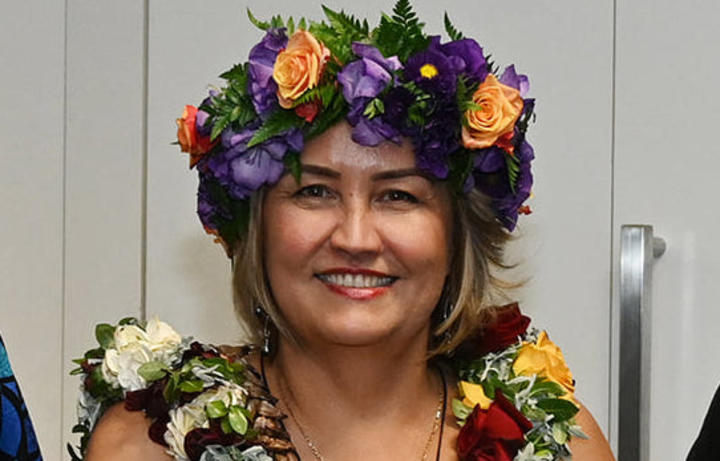
Sina Moana Wendt is being recognised for her services to governance. Photo: Supplied/ Sina Moana Wendt
Sina Moana Wendt is one of two Pasifika Officers of the New Zealand Order of Merit.
Wendt was recognised for her services to governance. She has contributed to the commercial, public and not-for-profit sectors for 25 years through her governance and executive roles.
Wendt has been the Chief Executive Officer of Leadership New Zealand since 2012, an organisation that contributes to the capacity and capability of leaders across public and private sectors, from diverse communities in Aotearoa.
She has worked with people from the Pacific region, the Commonwealth, and with people of all ages and background to encourage, support and embolden all to step into leadership roles.
She helped develop and launch Mana Moana Experience, a leadership programme for Pasifika leaders.
The other Officer of the NZOM is Justice of Peace, Tuita’alili Vaitava’e Su’a Aloese-Moe, who was honoured for her services to the Pacific community.
She has contributed to the health and education sector for the Pacific community for more than 40 years.
She helped establish Malaeola Community Centre which hosts more than 25 Catholic Parishes in Auckland and has been a member of the Parish Pastoral Council since 2011.
Tuita’alili has been a JP since 2012. She was also recognised for her services to education and health by Samoa’s Head of State who bestowed the honour of a matai chiefly title for her contributions.
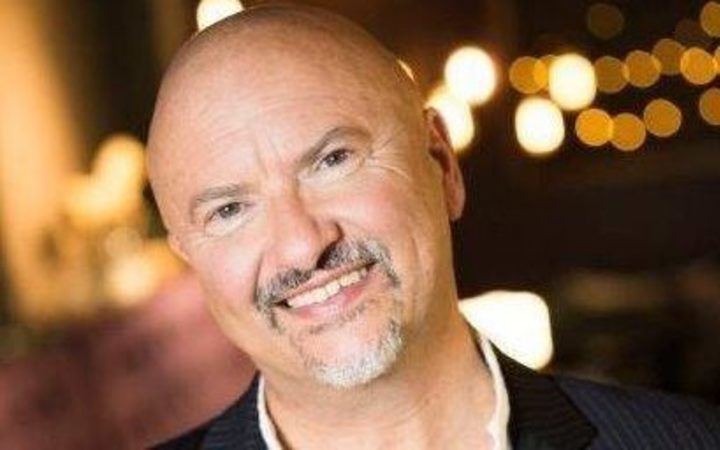
Robert Oliver is being honoured for his services to the food industry and Pacific communities. Photo: Supplied
Renowned international chef Robert Oliver is being recognised for his services to the food industry and Pacific communities.
Oliver was recently appointed board chair of the Pacific Island Food Revolution which he founded.
He is the only non-Pasifika honoured for his work with Pacific communities.
Oliver is also an award-winning author and is the brains behind the regional food show.
Prominent South Auckland local body leader, Alf Filipaina, has been made a Member of the New Zealand Order of Merit.
A former policeman, Alf Filipaina was the first Pacific councillor elected to the Auckland Super City Council.
Pacific Peoples Minister Aupito William Sio described Filipaina as a tireless champion for everyone in South Auckland.
“I am very proud of the calibre and tireless advocacy of our Pacific honours recipients.
“I congratulate all the Pacific People who have shared in these New Year’s Honours and their families for their support and sacrifice over the years,” said Aupito.
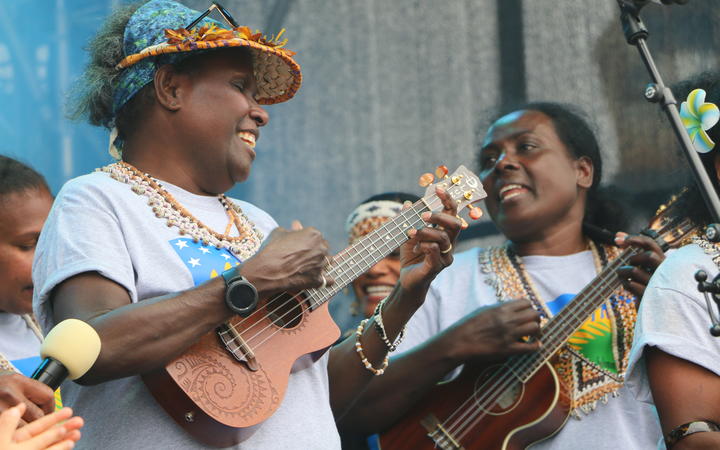
Glorious Oxenham, left, performing with the Solomon Islands community at the Wellington Pasifika Festival in January 2021. Oxenham has been honoured for her services to the Melanesian community in Aotearoa. Photo: RNZ Pacific / Koroi Hawkins
Queen’s Service Medal recipient Glorious Oxenham says the award is an acknowledgement to all the people she works with in the community.
Oxenham has been recognised in the New Years Honours list for services to the Melanesian community in New Zealand.
She has been promoting Solomon Islands and Melanesian culture, language and values for more than 25 years.
She said the Melanesian community in Wellington are really supportive.
“Here in Wellington we work really well with the three Melanesian countries, Solomon Islands, Papua New Guinea and Vanuatu,” Oxenham said.
“These three communities work really well together as soulfully as well as helping each other out in the community things that we do.”
Oxenham has been President of the Lower North Island Wantok Association since 2011.
Last year, 13 people were honoured in the Queen’s New Year’s list. They included playwrights, teachers, reverends, advocates and athletes.
Alf Filipaina is being recognised for his services to the New Zealand Police and the community. Photo: Auckland Council
Pacific recipients in the New Year’s Honours
Companion of the New Zealand Order of Merit:
Faumuina Professor Fa’afetai Sopoaga (Dunedin) for services to Pacific health and tertiary education.
Officers of the New Zealand Order of Merit:
Tuita’alili Vaitava’e Su’a Aloese-Moe, JP (Auckland) for services to the Pacific community.
Sina Moana Wendt (Auckland) for services to governance.
Members of the New Zealand Order of Merit:
Alfred Meredith Filipaina (Auckland) for services to the New Zealand Police and the community.
Dr Rose Namoori-Sinclair (Otaki) for services to the Kiribati community.
Robert Mark Oliver – non-Pacific (Auckland) for services to the food industry and Pacific communities.
Namulau’ulu Taotua Leaoa Joshua James Potoa’e Robertson (New Plymouth) for services to the Pacific community.
Allan Stowers (Auckland) for services to the Samoan community.
Kolokesa Uafā Māhina-Tuai (Auckland) for services to cultures and the arts.
Teremoana Yala (Porirua) for services to the Cook Islands community.
The Queen’s Service Medal:
Nonu ‘Unga Alatini (Auckland) for services to the Tongan community and education.
Vaisamoa Manoa (Auckland) for services to the Tuvalu community.
Taulapu Oliver, JP (Blenheim) for services to the Pacific community.
Glorious Marie Oxenham (Lower Hutt) for services to the Melanesian community.
Ingi Kulesa Sale Tusini-Rex (Auckland) for services to the Niue community.
Honorary:
Tito Daurewa (Auckland) for services to the Pacific community and Pacific rugby.
Falanisesi Fusitu’a Hafoka (Auckland) for services to the Tongan community.
Teremoana Yala is being honoured for her services to the Cook Islands community. Photo: RNZ/Daniela Maoate-Cox
There are 49 new community cases of Covid-19, but no new Omicron cases in the community to report, the Ministry of Health has announced.
In today’s statement, the Ministry said there were 10 Omicron cases to report among recent arrivals at the border, bringing the total at the border to 88.
But it said there were no community Omicron cases to report and all the close contacts to the two cases who were in the community this week have so far tested negative.
The Ministry said microbiologists had advised that the risk of transmission from the Omicron border case announced on Wednesday was low.
The six close contacts of the case who attended the Hidden Lakes festival had all tested negative for Covid-19 and the Ministry said this meant there was no public health risk associated with this event.
“Contact tracing has now identified 88 close contacts for this case. This includes close contacts identified via case interviews and from locations of interest. Eighty of these contacts have been reached, all are isolating and have been tested. All results received to date have been negative. Contact tracers are working urgently to contact the eight close contacts who are yet to be reached.”
All eight close contacts of the border-related Omicron case in an Air NZ crew member have returned negative tests and there are no locations of interest associated with this case.
The Ministry said it was now assuming all recent arrivals who test positive have the Omicron variant, so it will now prioritise whole genome sequencing for any positive cases in border-related workers and their families.
“This is where there is the greatest risk of Omicron entering the community. This new approach will help to ensure the risk of any community transmission of Omicron remains low. These samples will be treated as urgent and tested within 12 hours of being received by the laboratory.”
Community cases and hospitalisations
The Ministry said 46 people with the coronavirus are in hospital, with eight in intensive care. The average age of the patients is 57.
Today’s community cases were reported in Auckland (22), Waikato (3), Bay of Plenty (19), Rotorua (2), Taupo (2) and Hawke’s Bay (1).
The 19 new cases in Bay of Plenty today include 17 in Tauranga and two in Western Bay of Plenty. Ten are linked to previously reported cases, and all cases are isolating at home or in managed accommodation.
The Napier case was first announced by the DHB yesterday and investigations continue into links to any previous cases.
A second case – who is a close contact of the first – was notified after the reporting cut-off and will be included in tomorrow’s figures.
All known close contacts of the cases have been identified and are now isolating and being tested for Covid-19.
The locations of interest in the Wellington region listed on the Ministry of Health’s website yesterday were from a case that travelled from Wellington to Gisborne, the Ministry confirmed today. This case has been previously reported and is included in Tairāwhiti case numbers.
There were also 13 new cases identified at the border today, with travellers arriving from Canada, USA, UK, Australia, UAE, and Singapore.
The ministry also said today that 90 percent of eligible Pacific peoples in New Zealand have now are now fully vaccinated, with 258,713 having had their second dose.
Hawke’s Bay DHB has also reached the milestone of 90 percent of the eligible population being fully vaccinated.
More than 300,000 people have received a booster – about 70 percent of those eligible to get their booster after six months since second dose in 2021. From 5 January, people only need to wait four months since their last dose and will be able to access a booster through walk in clinics.
The number of vaccines given yesterday included 963 first doses; 4916 second doses; 390 third primary doses and 17,116 booster doses.
Corrections to a decision by Acting Chief Justice Lord Afeaki in sentencing a prisoner last month appear to have followed a complaint to the king by senior lawyers querying his legal background.
Tavake Barron Afeaki
Lord Afeaki, whose birth name is Tu’inukutavake Baron Afeaki, sentenced Siu’ivahanoa Tu’ipulotu on November 18.
Three copies of his judgement decision were filed as sentencing remarks and a corrigendum on the Attorney General Office’s website.
One judgement on November 18 read:
“Having considered the reasons provided above; the risk to the community and the need to keep people safe, the need to send the clear message to the public and would-be offenders that violent robberies will not be tolerated, the Defendant’s need for punishment and rehabilitation, and the need to provide some parity in sentences, the Defendant is convicted and sentenced to 2 1/2 years or 30 months’ imprisonment.
“The final nine months’ of his sentence is suspended for a period of two years from the date of the Defendant’s release from prison on the following conditions, namely, that during the said period, the Defendant is to:
a) not to commit any offence punishable by imprisonment;
b) be placed on probation;
c) report to the probation office within 48 hours of his release from prison;
d) complete a course in drug and alcohol awareness as directed by his probation officer; and 14 e) complete 40 hours community service as directed by his probation officer.
Failure to comply with the above conditions may result in the suspension being rescinded, in which case, the Defendant will be required to serve the balance of his sentence”.
A variation of the same decision by Lord Afeaki for the same prisoner labelled “Sentencing Remarks” on the same day, November 18, read:
“Result 61. Having considered the reasons provided above; the risk to the community and the need to keep people safe, the need to send the clear deterrent message to the public and would-be offenders that violent robberies will not be tolerated, the Defendant’s need for punishment and rehabilitation, and the need to provide some parity in sentences, the Defendant is convicted and sentenced to 2 1/2 years or 30 months’ imprisonment. Upon release, he will also:
a) be placed on probation for 12 months;
b) report to the probation office within 48 hours of his release from prison;
c) complete a course in drug and alcohol awareness as directed by his probation officer;
and d) complete 40 hours’ community service as directed by his probation officer.
The varied version was marked as “Corrigendum” and was filed at the website as the third document relating to the sentencing of the same prisoner on November 18. It showed the Attorney General Office’s stamp and an initial on November 22.
“Pursuant to the order of the Court dated 22 November 2021, the following
sentencing remarks are to replace those issued on 18 November 202i”, the Corrigendum read.
Corrigendum means correction.
There is no written document on the website to say exactly why the corrections were made to the Lord Afeaki’s decision.
The corrections
In his first decision he suspended the final nine months of Tu’ipulotu’s sentence for a period of two years from the date of his release from prison.
In his correction version the suspension was removed. There were also minor changes to wordings of the original decision.
The changes came after Tongan lawyers called on the king to revoke Lord Afeaki’s appointment as Acting Lord Chief Justice.
Lord Afeaki was the lawyer and Lord Chancellor of the Privy Council.
His appointment as Acting Lord Chief Justice in October was made to fill the gap left by Lord Chief Justice Michael Whitten’s absence on holiday in Australia.
However, a group of lawyers – mostly members of the Tonga Law Society – were concerned about whether Lord Afeaki had sufficient legal experience to hold such an important position and complained to the king.
“The appointment is tainted with cronyism, personal interest and self-promotion within the Panel,” the lawyers told His Majesty.
“There is a conflict of interest with the Chairperson appointing himself to the position of Acting Lord Chief Justice.
“The Panel is established to consider suitably qualified and appropriate candidates for judicial office and is not established for the promotion of its members to the Judiciary. The decision is not transparent and is wrong”.
The changes have again brought to light the problems which were found in the Pursglove review that the current political system, including the judiciary, courts and the Privy Council, is unworkable and incompatible with the principles of constitutional monarchy and democracy.
Lord Chancellor above the law
According to Pursglove, the office of Lord Chancellor is not a judicial office, but an administrative office akin to that of a Minister and the Lord Chancellor should be answerable to Parliament like any other Minister. However, unlike the Minister of Justice who is answerable to Parliament, the courts and the people for his actions, the “independence” of the Lord Chancellor, under the Constitution, makes him unaccountable and places him above the law.
Good governance requires that there must be complete openness, transparency and accountability on the part of those who administer the Judiciary. The lack of accountability by the Lord Chancellor is incompatible with the principles of democracy and accountability upon which the Constitution of 2010 is founded, the report says.
FAKAMATALA FAKATONGA
Ko hono toe liliu ‘o fakatonutonu ko ia ha tu’utu’uni tautea ne fakahoko ‘e Looti Afeaki ko e ‘Eiki Fakamaau Lahi le’ole’o ia ‘a Tonga’ ka kuo ‘ikai fakamatala’i mai e ‘uhinga ‘o e liliu’ kuo muimui atu ia he tu’a ‘o hano lāunga’i ia ‘e he kau loea Tonga’ ki he tu’i’ ‘o ‘ekea ‘ene taukei fakalao ki he lakanga pelepelengesi ko ‘eni ‘o e fonua’. Na’e tautea’i‘e Looti Afeaki ‘a e tangata ko Siu’ivaha Tu’ipulotu ke ngāue pōpula ta’u ‘e ua mo e konga ‘i Nōvema ‘aho 18 kae toloi ‘a e māhina ‘e hiva fakamuimui’. Ne ‘osi e tu’utu’uni ko ‘eni’ mo hono lekooti fakapepa kuo toe tuku ange mai ‘e he uepi ‘a e ‘Ōfisi ‘o e ‘Āteni Seniale’ ha tatau ‘o e tu’utu’uni ki he tokotaha faihia tatau pe kae hā ai ‘oku liliu e tu’utu’uni ‘a Looti Afeaki’ ‘o to’o e tautea toloi māhina ‘e hiva’. Na’e toe muimui atu ai mo ha toe tatau ‘o ha tu’utu’uni hono tolu ‘a Looti Afeaki ki he taha tatau pe kae fakalea ‘eni ko e fakatonutonu ki he ‘uluaki tu’utu’uni pe ‘oku ‘iloa fakalao ko e Corrigendum. Na’e fakamahino heni kuo to’o ‘aupito ‘a e tautea toloi ‘o Tu’ipulotu’ pea ‘i ai mo e toe fanga ki’i liliu kehe iiki pe mei he fakalea ‘i he ‘uluaki tu’utu’uni ne fai’. Ko e tu’i’ pe ‘oku ne mafai ki hono fakanofo ‘o e lakanga ‘Eiki Fakamaau Lahi ‘i ha fale’i ‘ene pēnolo’. Ka ko Looti Afeaki pe ‘oku sea he pēnolo ko ‘eni’ pea ko hono fakanofo ki he lakanga Sea ko ia’ ne toe fai pe ki he finangalo ‘o e tu’i’. Na’e lāuga’i ‘a hono fakanofo ‘o Afeaki ki he lakanga fakamāu’ ‘e he kau loea ‘o Tonga’ mo ‘ekea ‘ene taukei fakalao ki he lakanga mahu’inga fau ko ‘eni. Taha ‘eni e me’a ne fakaanga’i lahi ai ‘a e mafai kuo ‘oange ‘e he konisitūtone’ fo’ou ‘o e 2010 ki he tu’i he ‘oku ‘ikai ha toe me’asivi ke ne ta’ota’ofi mo fakapapau’i ‘e ‘ikai hao atu ha ni’ihi ta’etaukei ki he lakanga’ni he ‘oku fakatu’utāmaki ia ki he fakamaau totonu’ mo e fonua’ fakalukufua. Oku toe langa’i heni e ngaahi fakaanga ne ‘asi he lipooti ‘a e mataotao he Konisitūtone’ ne ‘omi ‘e he pule’anga ‘o Tu’ivakanoo’ he 2014 ke ne vakai’i e konisitūtone lolotonga ‘a Tonga’. Ne pehē ‘e he mataotao’ ni ko e konisitūtone ma’olalo taha ia he ngaahi fonua Kominiueli. Pea ko e lakanga ‘o e Lord Chancellor a ‘eni ‘oku ma’u ‘e Afeaki ‘oku ma’olunga ia he lao’, ‘ikai lava e lakanga ‘o ngāue lelei mo tau’atāina, ‘ikai ‘ata ki tu’a pe tali ui ki ha taha pea ‘oku fepaki mamahi ia mo e ngaahi tefito’i mo’oni ‘o e fa’unga fakatemokalati’.
The bodies of late Deputy Prime Minister Lord Ma’afu Tukui’aulahi and Roman Catholic Priest Fr Seluini ‘Akau’ola have arrived back in Tonga from Auckland.
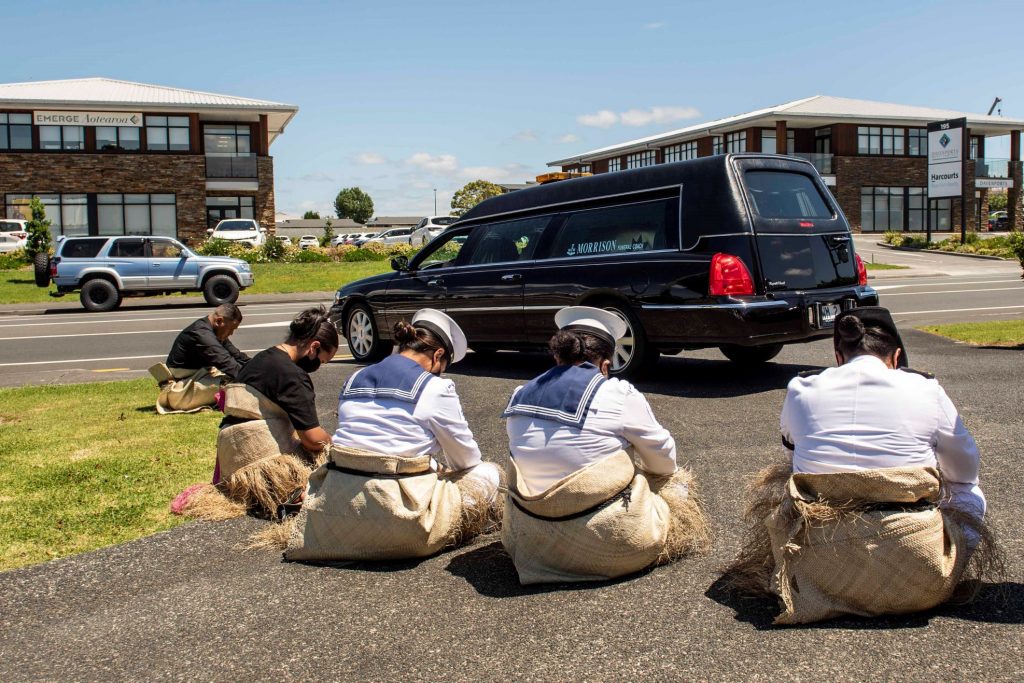
Lord Ma’afu was farewelled in New Zealand from the Morrison Funeral Directors in Auckland by Minister Aupito William Sio and New Zealand Defence Force personnel. Photo/ New Zealand High Commission, Tonga
The initial flight schedule had a few delays due to current volcanic eruption in Tonga.
No family members in New Zealand were allowed to accompany the bodies of the deceased as part of the Covid-19 restrictions.
Lord Ma’afu’s wife Lady ‘Uluakimata Tupou was in New Zealand along with his children from his first marriage to late Princess Mata ‘O Tāone Ma’afu.
His two children with Tupou were in Tonga and they were at the airport today along with Queen Nanasipau’u as well as dignitaries including the Prime Minister and his Cabinet Ministers to welcome their father back home.
It is understood, Cardinal Paini Mafi was at the airport to receive the body of Fr ‘Akau’ola.
The Air New Zealand special flight landed at about 12.30pm. Lord Ma’afu had been receiving hospital treatment in Auckland while Fr ‘Akau’ola was treated medically in Australia. He died there on November 29 before his body was brought to Auckland on December 13.
Lord Ma’afu was the nineth to hold the chiefly Ma’afu title.
Livestream footage showed oncoming traffic stopped by the roadsides to show their respect to Lord Ma’afu’s body as the cortege left the airport and proceeded along Taufa’āhau Road.
As the procession arrived at Lord Ma’afu’s estate of Vainī his residents were seen sitting silently by the roadsides to show their last respect to their beloved noble. The livestream broadcasters described some of these mourners as being emotional and in tears.
The king’s noble will be buried at his Tokomolo estate’s Huelo Hangaitokelau royal cemetery after a state funeral at Vaiola mortuary. However, the date remains in doubt.
The Hunga Tonga Hunga Ha’apai volcano continues to erupt intermittently, and ash has been detected in all directions up to 30km away.
The head of Tonga Geological Services, Taniela Kula, said that the ash cloud had risen to heights of 12km and the direction of ash had varied with the wind conditions.
“On Tuesday, ash was drifting east but shifted directions last night to north east and has continued to drift in a northerly direction today,” he said.
Overall, the amount of ash, steam and gas being spewed from the volcano has reduced, in comparison to last week, Kula said.
He noted that the volcano was about 60km away from uninhabited areas, and that no earthquakes had been detected on their seismometers.
This indicated that the magma chamber, which is feeding the eruption, is unlikely to be deeper than 7km below the ocean floor.
Currently the danger grade for the ash fall is orange, with red being the most severe. While no one has reported ash falling on houses yet, Kula advised that the public should take measures to protect their rainwater catchment and storage systems, should ash make landfall.
Prime Minister Siaosi Sovaleni taking on the police portfolio is to assure the public his commitment to the country’s top agenda of fighting against drug abuses on all level.
Some of Sovaleni’s Cabinet Ministers meeting before the premiership election. Photo/ MP Tevita Fatafehi Puloka (Facebook)
It was to ensure the Prime Minister was there whenever there were communication and urgent requirements involved with tackling of synthetic drugs, sources who were familiar with the formation of the new Cabinet told Kaniva News.
Hon Sovaleni wanted to show the government is “more willing to commit to its war on drugs”.
The Prime Minister earlier this month said the government’s agenda for fighting against illicit drugs was one of his top priorities.
Tonga’s drug abuse situation was said to have infiltrated all level of the society.
A Guardian report described it as the “… country was in the grip of a methamphetamine epidemic that was ripping families apart and overrunning the country’s hospitals and jails”.
Last week’s police drug raids which linked to bust of a property and arrest of a member of the nobility showed police were sending a strong message to drug dealers that they were coming after them no matter who they are.
Cabinet line-up
As Kaniva News reported yesterday, Sovaleni has brought Fekitamoeloa ‘Utoikamanu from outside parliament into the fold, while a former unsuccessful parliamentary candidate Dr Pita Faiva Taufatofua was appointed as new governor for Ha’apai.
The Minister for Lands and Natural Resources was Lord Tu’i’āfitu from the nobility bench.
Meanwhile, MP Tēvita Puloka and MP Veivosa Taka who were ardent supporters of Sovaleni in his successful campaign for the premiership vote decided to remain outside Cabinet.
“It was their own decision not to be given any portfolio”, another source said.
It is understood, MP Puloka was busy with his construction businesses and his parliamentary task was already enough for him. MP Taka wanted to make sure everyone else in the Sovaleni camp got some kind of portfolio assurances before the premiership election.
Taka was previously a Chair of the Whole House Committee.
As we reported previously, here’s what the new government looks like.
Cabinet Ministers
Siaosi ‘Ofa Ki Vahafolau Sovaleni (Hu’akavameiliku)
Minister for His Majesty’s Armed Forces
Minister of Police, Fire Services and Emergency Services
Minister of Education and Training
Poasi Mataele Tei
Deputy Prime Minister
Minister for Meteorology, Energy, Information, Disaster Management, Environment, Climate Change and Communications (MEIDECC)
Minister for Public Enterprises
Tatafu Toma Moeaki
Minister of Finance
Minister of Customs and Revenue
Fekitamoeloa ‘Utoikamanu
Minister of Foreign Affairs
Minister of Tourism
Seventeen Toumoua
Minister for Infrastructure
Saia Ma’u Piukala
Minister of Health
Sēmisi Tauelangi Fakahau
Minister of Fisheries
Viliami Manuopangai Hingano
Minister of Agriculture, Food and Forest
Dr Viliami Uasikē Lātū
Minister for Economic Development and Trade
Lord Tu’iāfitu
Minister for Lands and Natural Resources
Sione Sangster Saulala
Minister of Internal Affairs
Sāmiu Kiuta Vaipulu
Minister of Justice and Prisons
FAKAMATALA FAKATONGA
Ko e loto pe ia ‘o Tēvita Puloka mo Veivosa Taka ke na ‘atā pe kinaua mei he Kapineti’ taimi tatau na kei poupou fefeka pe ki he pule’anga ‘o Sovaleni’. ‘Oku lahi pe ngaahi fatongia ‘o Puloka ki he’ene pisinisi langa’ pea ‘osi fe’unga pe mo hono lakanga faka-Fale Alea’. Ko Taka ne loto ia ke ‘uluaki fakapapau’i kuo ‘i ai ha fa’ahinga fakatotofu papau ‘o e kau fakafofonga kehe ne nau kaungā poupou kia Sovaleni ‘i he ngaahi lakanga’ . Taimi tatau kuo to’o ‘e he PM ‘a e lakanga minisitā polisi’ ke fakapapau’i ‘a hono māteaki’i ‘o e ‘asenitia ki hono tau’i ‘o e faito’o konatapu’ pea ke ne ‘i ai tonu ko e taki ‘o e fonua’ ki ha fiema’u fakavavevave. ‘Oku vāhenga pe ‘e taha a e minisitā kotoa a’u ki he palēmia, neongo ha lahi ‘o ha toe ngaahi potungāue ‘e tānaki kia kinautolu.
Prime Minister Siaosi Sovaleni has appointed his Cabinet Ministers and held his first official meeting with them this morning in Nuku’alofa.
Prime Minister Siaosi Sovaleni and his Cabinet Ministers. Photo/Supplied
During the ministers’ appointment ceremony Mr Sovaleni also appointed Dr Pita Taufatofua as Ha’apai new governor.
The ceremony included a prayer service led by by the Secretary General of the Free Wesleyan Church of Tonga, Rev ‘Alifeleti ‘Atiola.
“The Prime Minister’s Office has the honour of advising members of the public, that His Majesty, King Tupou VI, upon receiving recommendations from the Prime Minister, the Hon. Siaosi ‘Ofakivahafolau Sovaleni, has appointed the new Ministers of Government, with effect from 28th December, 2021,” a Prime Minister’s Office statement said today.
It said the Prime Minister “presented the letters of appointments to all of the Cabinet” today Wednesday 29.
As Kaniva News reported last night, here’s what the new government looks like.
Cabinet Ministers
Siaosi ‘Ofa Ki Vahafolau Sovaleni (Hu’akavameiliku)
Minister for His Majesty’s Armed Forces
Minister of Police, Fire Services and Emergency Services
Minister of Education and Training
Poasi Mataele Tei
Deputy Prime Minister
Minister for Meteorology, Energy, Information, Disaster Management, Environment, Climate Change and Communications (MEIDECC)