Home Blog Page 399

Industries desperate for workers urge government to open borders to Pacific

By RNZ.co.nz and is republished with permission

Fruit, meat works and food processing industries are calling on the government to open Pacific borders to tackle what they’re calling their worst ever labour crisis.

Bruce Mitchell says there just aren't enough workers to harvest his apples for export.
Bruce Mitchell says there just aren’t enough workers to harvest his apples for export. Photo: RNZ / Tom Kitchin

At a media conference in Napier this morning they demanded more help.

Apples are rotting on the ground at many orchards.

Chestergrove Orchards owner Bruce Mitchell said he could not find enough pickers to pick his royal galas.

“The apple crop that you see here represents 10 to 12 months of planning, investment and work and just days before I came to pick it I had 20 pickers sign up, and at induction two pickers turned up, so we went into crisis mode.”

He said it was the worst his family had ever seen.

“My family’s been involved for over five decades and we’ve never experienced a crisis like this, where we’ve had to walk away from whole blocks of export apples. We’ve got export markets that are crying out for this fruit and we just can’t get it harvested.”

No Fruit rotting on the ground at a Napier orchard.
No Fruit rotting on the ground at a Napier orchard. Photo: RNZ / Tom Kitchin

Orchardist John Bostock said the government’s intentions to get Kiwis on board did not work as well as anticipated.

He called for a plan from the government – and said they wanted it sooner rather than later, ideally in the next two months so they could plan their harvest.

“We simply haven’t got enough available New Zealanders to do the job. It’s very very tough and we’re calling on the government to open the Pacific, open the borders for Covid-free countries to come and work in New Zealand for next year.”

Orchardist John Bostock says there needs to be a government plan to tackle the problem.
Orchardist John Bostock says there needs to be a government plan to tackle the problem. Photo: RNZ / Tom Kitchin

In Hastings, Progessive Meats founder Craig Hickson said his company was also short of staff.

“This has been the most difficult and most challenging, worst experience with regard to having sufficient people at work,” he said.

“We in fact have been short of workers right through the peak lamb season which is a little bit longer than the apple season and we still remain short today.”

At the Watties factory in Hastings, agricultural manager Bruce Mckay said he was also facing difficulties.

“We’re having to deal with erratic supply of product coming to the factory,” he said. “We’re having to deal with staff absenteeisms on a grand scale each day.”

After the government announced a trans-Tasman bubble yesterday some have asked why borders to the Pacific Islands are not open.

National Party leader Judith Collins today called for an immediate travel bubble with the Pacific for those reasons.

“These countries are being extraordinarily hard hit by the lack of tourism but also the RSE workers who we have working in New Zealand or have been, they are absolutely crucial to the economy of these countries,” she said.

Prime Minister Jacinda Ardern said the trans-Tasman bubble should open up some space in MIQ.

“Now that we don’t have the trans-Tasman bookings – about 1000 worth – we will be looking at whether or not some of those places can be taken by other low-risk travellers and specifically the Pacific,” she said today.

“So we are working on whether or not that might ease some pressure for horticulture.”

She also said it was not just a case of New Zealand wanting travel. The other side had to agree.

“Other countries, they’re not even allowing in some cases, their citizens to return, so it’s actually not just a decision for New Zealand, there are many Pacific neighbours who are part of the RSE schemes who do not want open borders at this point.”

National Party leader Judith Collins calls for immediate Pacific travel bubble

By RNZ.co.nz and is republished with permission

National leader Judith Collins says there’s no reason Pacific nations can’t form part of the new travel bubble now.

No caption
National leader Judith Collins is pushing for a Pacific travel bubble. Photo: RNZ / Dom Thomas

Collins wants the government to move quicker in allowing quarantine-free travel from Fiji, Samoa and Tonga.

A bubble with Australia had been unnecessarily put off and that shouldn’t now be the repeated with safe Pacific nations, she told Morning Report.

The government announced yesterday it would operate the bubble on a state-by-state basis with Australia from 19 April, but Prime Minister Jacinda Ardern warned if there was a local lockdown tourists should not rely on the government to bail them out.

Collins said the ‘traffic-light’ system announced by the government yesterday was a reasonable way of assessing risk associated with any Covid-19 outbreak in Australia and determining whether trans-Tasman travel needed to be paused at any point.

Collins agreed any decisions on travel had to ultimately be based on health considerations and that business interests couldn’t take priority.

But she said the Pacific islands had proven they could maintain a Covid-free status and delaying a Pacific bubble would hurt those nations’ economies, as well as New Zealand’s horticulture sector, which depended on workers from those nations.

She said a date of 1 May had already been agreed with the Cook Islands, and that she was bemused the government hadn’t announced that publicly.

Collins agreed any decisions on travel had to ultimately be based on health considerations and that business interests couldn’t take priority.

But she said the Pacific islands had proven they could maintain a Covid-free status and delaying a Pacific bubble would hurt those nations’ economies, as well as New Zealand’s horticulture sector, which depended on workers from those nations.

“In the Pacific, Fiji, Tonga and Samoa, there is no Covid-19. If anywhere is safe it is those countries and I don’t understand why we don’t have a Pacific bubble. That is something where the government need to move on this,” she said.

But Pasifika nations should be able to join the system immediately, both to alleviate the economic hardship in those countries and to allow Pacific workers into New Zealand to take up work in the horticultural sector, she said.

“I think it can be done very quickly. I’m very aware that the Cook Islands has been told the bubble with the Cook Islands will be open on 1 May, but for some reason the government isn’t telling New Zealanders that. I don’t understand why that is being held back.

“When it comes to Tonga and Samoa they haven’t had one case of Covid-19 in their countries and they’ve got a record of being able to keep it out altogether.

“I think it is really important that we also look at how these countries are being extraordinarily hit by lack of tourism, but also the RIC workers, who have been working in New Zealand.

“They are absolutely crucial to the economy in these countries. Fiji is another example – they haven’t had any Covid in the community for over a year. These are countries were they are crying out for help.”

Prime Minister Jacinda Ardern told Morning Report she was confident the travel bubble was safe and that there existed a good working relationship between the countries’ health authorities to keep it that way.

She said there was an official communication platform operating between Australia and New Zealand and that system was working efficiently.

“Essentially we’ve been able to share information between us…

“We are confident enough of course and you’ll hear epidemiologists and other experts supporting this decision.

“But what we are saying to travellers is just be prepared. You will have seen that we’ve had a number of pauses in the one-way arrangements we’ve had with Australia thus far and if there are outbreaks it may happen in the future.”

If there are cases connected to border, well identified and well contained it was likely travel arrangements would continue, she said.

“If you have a question mark over what happened and how widespread, we may need to pause the travel arrangement for up to 72 hours while we gather more information. And if it’s a larger outbreak we’re likely to suspend.”

A group of ministers, supported by health officials would decide whether to suspend travel or not in light of Covid-19 outbreaks.

“We’ll be utilising the group of ministers in the same way we have for Covid-related decisions that need to be made with urgency… We will always be informed by the director-general of health for our decisions,” Ardern said.

The Cabinet subcommittee would include Covid-19 Response Minister Chris Hipkins, border-related ministers, and the Minister for Foreign Affairs, Nanaia Mahuta, Ardern said.

Can Tu‘i‘onetoa sack convicted governor Viliami Hingano under his ‘everyone is innocent until proven guilty’ house rule?

The Ha’apai governor Viliami Manuopangai Hingano’s guilty verdict last month in the Supreme Court has put Prime Minister Pōhiva Tu’ionetoa’s leadership to the test this week.

(L-R) PM Pōhiva Tu’i’onetoa, Governor Viliami Manuopangai Hingano, Infrastructure Minister ‘Akosita Lavulavu.

Tu’ionetoa was under pressure over calls for his Minister of Infrastructure ‘Akosita Lavulavu to resign as she is currently facing two separate serious fraud charges in courts.

In response to the calls by the Opposition, the Prime Minister said: “Let the law rule.”

Akosita and her husband ‘Etuate face charges of knowingly dealing with forged documents and obtaining credit by false pretenses, after irregularities were found in an audit of the ‘Unuaki ‘o Tonga Royal Institute in 2016 and a land lease complaint in 2020.

Tu’i’onetoa also said: “Everyone is innocent until proven guilty” implying that this was the only justification for him to sack a Cabinet minister who has serious allegations against them.

READ MORE:

But Tu’ionetoa stopped short of answering a question from Kaniva News asking him if this meant he would sack ‘Akosita if the courts will find her guilty.

“I ask you to please re-read and re-read my first response I gave you previously the answer is there and read the constitution to understand it,” Tu’i’onetoa said in response to a question we expected him to reply yes or no.

The Prime Minister was e-mailed another question.

“Will you sack the Ha’apai governor Viliami Manuopangai Hingano after he was recently found guilty by the court of unlawful possession of (198kg) turtle meat”.

The Prime Minister has yet to reply to that question within the last 36 hours.

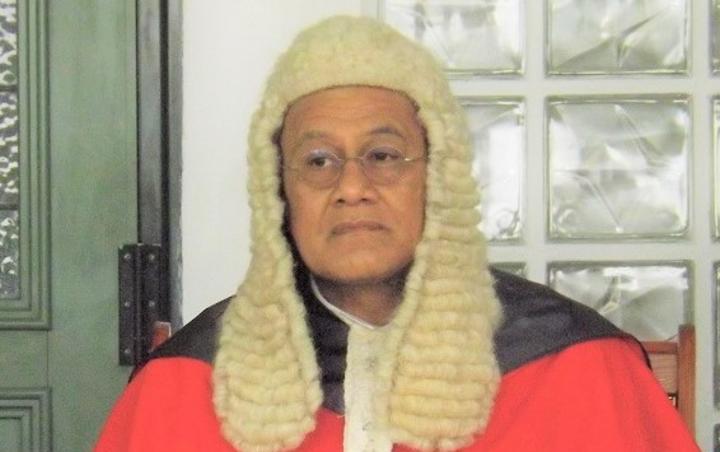
In convicting the governor last month, the Supreme Court judge said:

“Having heard the accused‘s background, he being a director in the Ministry of Public Enterprises, and he had been a member of Parliament representing District 12 of Ha’apai which included Lofanga, and having grown up and living in Ha’apai, I do not believe his evidence that he did not know that an approval was required before a turtle was killed”.

Tongan courts have no power to  order a cabinet minister or the governors to resign. That power rests with the Prime Minister and the king by the constitution.

The two governors and all Cabinet ministers were appointed by the king on the advice of the Prime Minister.

This means, it was the Prime Minister’s prerogative to appoint and dismiss them through the king’s constitutional power at any time at his pleasure.

FAKAMATALA FAKATONGA

‘E fekau nai ‘e he Palēmia’ Pōhiva Tu’i’onetoa ke fakafisi ‘a e Kōvana Ha’apai Viliami Manuopangai Hingano hili ‘ene halaia ‘i he fakamaau’anga’ ki he ma’u mo e kakano’i fonu ta’efakalao? Kuo ‘osi fakamahino ‘e Tu’i’onetoa hili ha ui kiate ia mei he Fa’ahi Fakaanga’ ke fekau ‘ene Minisitā Ki he Ngaahi Ngāue Lalahi ‘a e pule’anga’ ‘Akosita Lavulavu ke fakafisi tu’unga he ongo tukuaki’i mamafa ‘e ua kuo fai kiate ia kuo’ ne lolotonga tu’u ai ‘i he ‘ao ‘o e fakamaau’anga’. Ko e tali mei he palēmia, tuku ke pule pe lao’. Na’a’ ne toe pehē ‘oku tonuhia ‘a e taha kotoa pe kae ‘oua kuo fakamo’oni’i fakalao kuo’ ne halaia. Ko e fehu’i tatau ne fai ki he palēmia’ ‘o pehē kapau ‘e halaia ‘a Lavulavu’ te ne fekau ke fakafisi? Na’e ‘ikai ha’ane tali mahino ‘io pe ‘ikai ki he fehu’i ko ia’.

Tonga rugby coach Kefu ‘grateful’ for second chance

By RNZ.co.nz and is republished with permission

Tonga rugby coach Toutai Kefu believes the future is bright for the ‘Ikale Tahi now the sport finally has some stability off the field.

The Tonga Rugby Union signed a tripartite agreement with World Rugby and the Tonga government seven months ago, after the global governing body pulled its financial support because of governance and administration issues.

Funding had since resumed, with Kefu reappointed until the end of 2023.

With a new administration in place and a fresh three year mandate, Kefu was “grateful” to be back in charge and believed he could build on his previous four years at the helm.

“I thought myself and my staff did a really good job considering the obstacles that we faced along the way, and I think they looked at it from a perspective if I could have proper assistance and guidance, in terms of a governance and administration point of view, they thought that we could go better.”

As part of his reappointment, the Kolomotu’a-born coach would spend at least four months per year in Tonga to act as a technical director for the union, assisting and educating local coaches.

The Kolomotu’a-born coach did not see eye to eye with former CEO Fe’ao Vunipola but believed the new set-up was moving in the right direction.

“That’s all I’m focused on is looking forward, getting to work with a bunch of new boys again and seeing where we can take this team,” he said.

“I think this team, the potential is enormous and if we have a little bit of luck along the way and be able to qualify some players that want to play for Tonga, if we get all those ducks aligned I think we can really take this team to somewhere where it’s never been before.”

The immediate focus was on finalising an ‘Ikale Tahi squad for two Rugby World Cup qualifiers against Samoa in July, which had been moved to New Zealand because of the Covid-19 pandemic.

Tonga were edged 25-17 by Samoa in Apia.
Tonga and Samoa will play two Rugby World Cup qualifiers in New Zealand in July. Photo: World Rugby / Trina Edwards

With the international borders still closed, Kefu remained unsure which players he would have available for selection, but joked that being the coach of Tonga had made him good at adapting to things.

“I’m basically running with two squads: a squad that’s locally based – New Zealand, Tonga, Australia – and an overall squad where those Northern Hemisphere players are able to make it to New Zealand. There’s so much uncertainty: what you’ve got to plan for is plan for that uncertainty and do the best you can.”

There was also uncertainty over plans for a group of former All Blacks and Wallabies players to switch their international allegiance to Tonga.

Players with eligibility for more than one country could switch their international allegiance by participating in Olympic qualifying events provided they had a passport for the second country and completed a stand down period of three years.

The Final Olympic Sevens Qualifier had been earmarked as a chance for former All Blacks Charles Piutau and Malakai Fekitoa to complete their switch from New Zealand to Tonga.

That now looks unlikely, with the Monaco tournament clashing with the semi-finals of the English Premiership on 19-20 June.

“Malakai is probably the only high-profile player that we know that looks like going to the tournament – we’re still in constant discussions with him,” Kefu said.

“It’s unfortunate about Charles. We still haven’t got the exact date of the tournament and there may be an option of maybe flying Charles in just for the day or day and a half to maybe just qualify him and get him on the field…I know he’s got finals time around that time so we still haven’t ruled him out.

“There’s George Moala as well who’s at Clermont and they look like they’ll be in the midst of finals as well (in the French Top 14) around that Monaco tournament.”

Controversial former Wallabies fullback Israel Folau also expressed an interest in switching his rugby allegiance to Tonga, Kefu said.

The dual rugby and league international played 73 tests for Australia before his contract was torn up in 2019 for posting a meme on social media that said hell awaited “drunks, homosexuals, adulterers” and other groups.

He’s back in Brisbane after a year playing rugby league in France and would be welcomed into a Tongan squad, Kefu said, that supported his right to express his personal views.

“He’s Tongan, he’s a bloody good player – we’re more than happy to have him and accommodate him…we’d have no concerns. We all grew up the same way. We all went to Sunday School and then there’s different divisions of religion that we all grew up in. We certainly all support Israel and his views.”

However, any potential switch would not pay immediate dividends. The former Waratahs star, who was also on the radar of the Tongan rugby league team, last played for the Wallabies in November 2018 and would not have completed the required three-year stand-down in time to represent the kingdom at the Olympic Sevens Qualifier in Monaco.

Meanwhile Kefu hoped to finalise his wider coaching team in the coming weeks and said, while there would be a few changes, he was trying to have as much consistency as possible.

New Zealand, Australia travel no-quarantine bubble to start on 19 April – Ardern, Hipkins

BY RNZ.co.nz and is republished with permission

Conditions for quarantine-free travel between Australia and New Zealand have been met, and a bubble will start in less than two weeks, Prime Minister Jacinda Ardern says.

Cabinet met today to put a date on the long awaited trans-Tasman bubble, soon after New Zealand marked a year since the first national lockdown.

New Zealanders and Australians will be able to travel freely between their respective countries from 11.59pm on 18 April.

Announcing the start date this afternoon, Ardern – alongside Covid-19 Response Minister Chris Hipkins – said Cabinet had accepted the advice of the Director-General of Health and was “confident not only in the state of Australia but also in our own ability to manage a travel arrangement”.

She said Cabinet had been told the conditions to start quarantine free travel had been met.

“The Director-General of Health considers the risk of transmission of Covid-19 from Australia to New Zealand is low and that quarantine free travel is safe to commence,” she announced at Parliament.

“While Queensland has recently undergone an outbreak connected to the border, this too looks contained. And Cabinet believes any residual risk can be managed with additional precautionary processes such as pre-departure testing if needed.”

The trans-Tasman quarantine-free travel management system.

The trans-Tasman quarantine-free travel management system. Photo: Supplied / Covid19.govt.nz

However, it will not mean hundreds of spare places in managed isolation will become available, with the government intending to keep 500 aside in case they are needed for the trans-Tasman bubble, and will decommission some smaller facilities.

New Zealand’s bubble will operate on a state-by-state basis with Australia, meaning if there’s an outbreak, New Zealanders in most other states will not be affected.

There will still be an element of ‘flyer beware’ for New Zealanders travelling to Australia, with the government saying it will not be coming to their rescue if they get trapped because of an outbreak.

There are also warnings there will still not be full insurance cover for Covid-19 related travel disruption, even within the bubble.

Ardern had previously said the government had carefully worked through the framework of a trans-Tasman bubble.

But she warned travelling would not be without risk and if there was a community outbreak in Australia, travelling Kiwis may have to stay put, self-isolate or be tested once they returned.

The three-day lockdown in the Greater Brisbane area was lifted over the weekend and there have been no new cases in Queensland for the second day in a row.

In northern New South Wales coronavirus restrictions eased on Monday night after another day of no new community cases.

New Zealand’s tourism industry has been waiting impatiently for quarantine-free visitor flights between the two nations to return, giving a much-needed injection of life into the sector, which could bring an estimated $1 billion into the national economy.

Traffic lights

There will be a traffic-lights system for the bubble: continue, pause and suspend.

‘Pause’ would be a temporary halt to travel, much like the 72-hour suspensions from Australia in response to outbreaks here – namely the Valentine’s Day lockdown.

‘Suspend’ would be a longer term scenario where flights could be suspended for an “extended period” if there was a more serious or widespread outbreak, for example “multiple cases of unknown source… state enters lockdown”.

Jacinda Ardern showing traffic light system for travel.

Photo: RNZ / Dom Thomas

Apart from a handful of suspensions, New Zealanders have been free to travel to Australia without quarantining since last October, in what has effectively been a one-way bubble.

Hipkins said the framework announced today would help give Australia an idea of how New Zealand would make decisions.

Ardern said speed would be “of the essence in an outbreak”.

“There is no requirement for either side to give written formal notice before a decision is made because one of the important things we want to preserve on both sides is the ability to move quickly.

“We accept that … Australia may move quickly on a decision, and whilst actually for the most part they are very good at giving us a heads up that may not always happen, that means that they expect and understand if we do the same.”

The countries had committed to sharing information directly, she said.

“We’ll be on similar calls with one another where we’re discussing new information. We have the ability and power to make decisions in New Zealand’s best interests.”

Managed isolation

While ministers did not make a final decision on this today, Ardern gave a strong signal the bubble would not result in large numbers of managed isolation and quarantine (MIQ) spots becoming available.

The main concern was the potential increase in people coming from high-risk countries still ravaged by Covid-19 and experiencing more infectious variants.

Ardern said the government intended to keep most of the space freed up as a contingency; ready to house people in the event of an outbreak where it was not possible to prevent them arriving – for example an outbreak identified in Australia when a flight was already on its way back to New Zealand.

Hipkins told reporters he had always maintained it would not be a “one for one” swap.

“The fact that there’ll be next to no people coming from Australia going into MIQ potentially frees up between 1000 to 1300 spaces on a fortnightly basis,” he said.

Jacinda Ardern and Chris Hipkins on their way to announce the trans-Tasman travel bubble start date.

Photo: RNZ / Dom Thomas

About 500 of those would be kept as “contingency spaces should they be needed for the trans-Tasman arrangement”.

There are a “small number of facilities” considered to have only been “suitable for travellers in quarantine from low-risk countries”.

“With the opening of travel, we will look to decommission these facilities – but in the meantime we are considering whether they could be used for other low risk countries, such as the Pacific Islands,” Hipkins said.

As a result, it was not expected “a large number of vacant quarantine spaces [would] come on stream … there will, however, still be thousands of spaces in MIQ for Kiwis”, he said.

There has been a huge amount of pressure on MIQs spaces; not only are there still large numbers of New Zealand wanting to return, but also constant calls for them to be used to fill labour shortages, and, for example, reunify migrant families of critical care workers.

Ardern said figures from 2019 showed about 40 percent of tourism arrivals were from Australia.

“They were putting back into our economy over $2 billion worth of spending … the estimates are by the beginning of 2022 we might get to 80 percent of where we were pre-Covid when it comes to Australian travellers.

“What I wouldn’t be surprised we see is that early travellers will likely be those who are travelling to see family and friends. We of course want to encourage people straight off the bat to come whenever they are ready because we are here and ready to welcome them.”

Asked why Australians should come to New Zealand, Ardern said: “We are safe and we cannot underestimate how important that is in this Covid-19 world. We are a safe place to bring your family to come and visit.”

National leader Judith Collins wanted a “reasonable” number of spots freed up for those families once the bubble is up and running – around 20 percent – saying they were “crucial” to New Zealand.

“There’s a lady I saw today whose whose husband is caught in Iran; she and her son are separated from her husband,” she told reporters.

“These are the sorts of things we’re talking about – real people, not just statistics, actually real people – and it’s their lives that are being put on hold.”

Requirements at the border

While arrivals from Australia will not have to isolate at a facility for two weeks, there will be stricter requirements when they land.

Hipkins said travellers “must not have had a positive Covid-19 test result in the previous 14-day period and must not be awaiting the results of a Covid-19 test taken during that 14-day period”.

There will be pre-departure health assessments, obligations on air crew to remain completely separated from crew on any other routes.

“When those in Australia decide to come to New Zealand, they will be making a booking on a green-zone flight.

“That means that there will be no passengers on that flight who have come from anywhere but Australia in the last 14 days. They will also be flown by crew who have not flown on any high risk routes for a set period of time,” said Hipkins.

There will also have to be well functioning green zones in airports to make sure there is no cross contamination between different flights, and contact details for Australian arrivals while they are in New Zealand.

“Passengers will need to provide comprehensive information on how they can be contacted while in New Zealand, complete a pre-departure health declaration and won’t be able to travel if they have cold or flu symptoms,” Hipkins said.

“When they fly, they will be required to wear a mask on their flight, and will also be asked to download and use the NZ Covid Tracer app while in New Zealand”.

There will also be random temperature checks of airport arrivals.

PM still will not confirm whether he will ask Minister Lavulavu to resign if found guilty

Prime Minister Pōhiva Tu’i’onetoa has declined to confirm whether he would ask ‘Akosita Lavulavu to resign if she is found guilty in the two court cases she is facing.

(L-R) Prime Minister Pōhiva Tu’i’onetoa, Infrastructure Minister Akosita Lavulavu and Opposition Leader Sēmisi Sika

“Let the law rule,” he told Kaniva News.

Asking the Prime Minister to make a comment, he was reminded that in the past Ministers have either resigned on their own volition or they were ordered to resign, especially if the accusations laid against them were as those facing Infrastructure Minister  Lavulavu.

None of them went to court to clear their names before they resigned.

These included Minister of Finance Cecil Cocker in 1995, Education Minister Tutoatasi Fakafanua and Minister of Justice Tevita Tupou in 2001, Prime Minister Ulukalala Lavka Ata in 2006, Minister of Justice ‘Alisi Taumoepeau in 2010,  Minister of Finance Lisiate ‘Akolo in 2014 and Deputy Prime Minister Vuna Fa’otusia in 2021.

Opposition Leader Sēmisi Sika said the Prime Minister should advise Lavulavu to resign.

READ MORE:

If he did not, this would reflect badly on the  integrity and values of the Prime Minister’s leadership.

“It is all about what it is in there for him and not for the country,” Sika said.

This afternoon April 5 the Prime Minister said the accusations against Lavulavu had been processed according to the constitution and the law.

“Everyone is innocent until proven guilty,” he said.

“It was the same scenario which applied to the ministers in the past, not what the media said and how somebody hates somebody.”

The Prime Minister questioned whether the Ministers listed above resigned and claimed that the charges made against them were “based on malice, revenge and smear campaigns by some Opposition candidates.”

Records of the resignations are available and as the former Auditor General, the Prime Minister should remember what happened. None of these Ministers who resigned in Tonga had their cases taken up with the courts.

Tongan courts have no power to  order a cabinet minister to resign. That power rests with the Prime Minister and the king by the constitution.

Prime Minister Tu’i’onetoa  also questioned whether the late ‘Akilisi Pōhiva resigned when he was charged with seditious conspiracy after the Nuku’alofa riot on 16 November 2006.

He said he was not on the list of the seven ministers who resigned that we provided to him.

The late Pōhiva was not a member of the Cabinet at the time he was charged.

FAKAMATALA FAKATONGA

Na’e ‘oange ha faingmālie ki he ‘Eiki Palēmia’ ko e hā ha’ane lau ki he ui ko ‘eni’ ke fakafisi ‘ene MInisitā ki he Ngaahi Ngāue Lalahi’ tu’unga he’ene ongo hopo lalahi ‘e ua kuo kamata’. Pehē ‘e he Palēmia tuku ke pule ‘a e lao’ ‘o ne ‘uhinga ‘oku tonuhia ‘a e taha kotoa pe kae ‘oua leva ke fakamo’oni’i kuo halaia ‘i he fakamaau’anga’. Na’e toe ‘eke ange leva ki ai pe ko ‘ene ‘uhinga’ ka iku ‘o halaia ‘a ‘Akosita he’ene ongo hopo ko ‘eni’, te ne tu’utu’uni ke ne fakafisi? Pea’ ne ‘ikai ha tali hangatonu ‘a e PM ki he fehu’i ko ia’. Ko e kau minisitā kotoa ‘a Tonga ne fakafisi ki mu’a’ meimei ne nau fakafisi hili hanau tukuaki’i pea ni’ihi nau fakafisi pe ‘ia kinautolu pe ko hono tu’utu’uni’i ke fakafisi i honau ngaahi tukuaki’i’. Ne ‘ikai ha taha ‘ia kinautolu ‘e iku ‘enau ngaahi keisi’ ki he fakamaau’anga’ tuku kehe ‘a ‘Akosita ne fekau ke fakafisi ‘i he 2018′ hili hono faka’ilo ia tukuaki’i ki hano fa’u kākaa’i ha fakamatala ke ma’u ai ha pa’anga lahi mei he pule’anga’. Ne toe ui ia ‘e Tu’ionetoa ke ne hoko ko ‘ene minisitā ‘o a’u ko ‘eni ke kamata ‘ene hopo ko ia’ he uike kaha’u’.


Tongatapu bus gets stuck in the sand during picnic trip

A tour bus taking a youth group for a picnic trip during Easter Monday at one of the Hahake beaches got into trouble before it landed in a soft sand.

A youth group were off-loaded after the bus they were passenger in got stuck in the sand yesterday in Hahake. Photo/Supplied

It is understood, the driver was attempting to reverse the bus before it went out of control and got stuck in the sand.

The details of the incident remain unknown.

It is also understood the bus was returning  a youth group from Ha’alalo and Ha’akame from the Fua’amotu beach.

Funeral service held for US car crash victim Samuela Malu’amaka Tupola

Friends and family gathered to say goodbye to Samuela Malu’amaka Tupola today Friday 2 (NZ time), almost three weeks after he died in a car crash near Las Vegas in the early hours of Saturday morning March 14.

Samuela Tupola. Photo Courtesy: Facebook/Samuela Tupola

Tupola, 23, was traveling with two of his cousins and two friends northbound on Interstate 15 near the Las Vegas Motor Speedway, on their way back to Utah, when a sedan traveling south in the northbound lanes hit their vehicle head-on, the Nevada Highway Patrol said.

His family alleged the fatal incident involved a driver “driving the wrong way on the freeway, heading straight into their car” before  the vehicle in which the deceased was travelling in was “hit head on, and shortly after a semi behind them couldn’t stop and hit their car as well”.

His obituary said: “Our beloved son, brother, and friend, Samuela Malu’amaka Tupola, passed away at the age of 23 due to complications from a tragic car accident on Sunday, March 14, 2021.

“Samuela was the first of two beloved sons born to father, Viliamu Tupola and their mother, Temutisa Maile who was his heart.

“Samuela was born on February 9, 1998, in Salt Lake City, Utah. He was a loving son to both his parents and best friend to his brother, Soseti Tupola.

As a member of the Church of Jesus Christ of Latter Day Saints, he was called to serve a full-time LDS mission in the Cape Coast Ghana Mission..

“We will miss his kindness, knowledge, and insights in hopes for inclusion for all”.

A Family Service will be held Thursday, April 1st, 2021 from 10:00-11:00am at the SL 2nd YSA Tongan Ward 3805 S Main Street, Salt Lake City, UT 84115.

Fe‘aomoengalu’s injuries still mysterious after police deny responsibility  

Mystery is surrounding a Tongan man’s injuries after Police denied any responsibility supported by a Police Conduct Authority (IPCA) investigation into the matter.

Taniela Feaomoengalu, 37, seen here in Auckland Hospital with injuries he claims were inflicted by police. Photo / Supplied

Taniela Feaomoengalu, 37,  was arrested outside an Onehunga bar after he “entered into a verbal dispute with police officers who were attending a family harm incident nearby,” the NZ Herald reported.

He received treatment for concussion and an eye injury.

Fe’aomoengalu alleged his injuries occurred while he was “in custody after being arrested for disorderly conduct.”

“A police spokesperson said any suggestion of police assault is completely wrong and not backed up by any evidence or witnesses. However, the spokesperson would not comment on where Feaomoengalu’s injuries came from.”

Feaomoengalu was at The Bramble Bar in Onehunga with friends on Friday, March 8, 2019, the Herald said.

“Feaomoengalu, a café catering assistant, claimed he had approached the officers’ vehicle to take images on his phone of how it was parked across the road and footpath, before being told by officers to put his phone away and leave.”

He was arrested after the situation escalated as officers tried to remove Feaomoengalu’s phone.

He was handcuffed and then transported by police car to the Auckland Police Station.

“On the way, Feaomoengalu alleges he was beaten and choked with a metal bar under his jaw by an officer travelling with him.”

Police claim Feaomoengalu displayed “extremely erratic behaviour” during the ride but could not detail how he got his injuries.

IPCA manager Griffyn Gully-Davies said officers denied using any kind of weapon against Feaomoengalu and they claimed Feaomoengalu’s mood was unpredictable, varying from crying to yelling abuse.

Police also claimed Feaomoengalu made allegations that he had been assaulted in a bar earlier that evening. After an investigation, police found no evidence of this.

Tackling Pasifika health challenges head-on

By RNZ.co.nz. This story is republished with permission

A powerhouse on the field in both rugby and rugby league, Mele Hufanga is aiming to tackle the health challenges of Pasifika head on.

Former Black Fern, Mele Hufanga, aims to tackle the health challenges of Pasifika head on.
Former Black Fern, Mele Hufanga, aims to tackle the health challenges of Pasifika head on. Photo: RNZ / Claire Eastham-Farrelly

The 26-year-old was running boot-camp style challenges alongside her brother Patrick Hufanga, founder of Beastmode Fitness.

Over 110 people signed up for the recent six week challenge, all of them Pacific Islanders.

“It’s basically about bettering yourself in life…it’s a challenge for people who come from different forms, shapes and sizes, just for us to push them to have a better life, a healthy life,” she said.

Just over 63 percent of Pacific adults and around 29 percent of Pacific children in New Zealand were classified obese.

Diabetes struck Pasifika at twice the rate of the general population, with a quarter of Pacific people in New Zealand on track to becoming Type-2 diabetics by 2040.

The Tonga women’s rugby league international said watching their mother struggle with diabetes had been the inspiration to helping others live a more active and healthier lifestyle.

“Being a PI, Pasifika person, it’s not fun at all knowing that your own [family] member has diabetes, especially [when] your mum is diagnosed with diabetes type two,” she said.

“That motivates me and my family to get out there and do something like this. The last thing we want is for other people to go through what we’re going through.”

No caption
Photo: RNZ / Talei Anderson

Her brother Patrick hoped these challenges would create awareness of the epidemic Pasifika were facing while helping  prevent obesity and diabetes rates from growing.

“Our Polynesian people are going through obesity, diabetes, you know you walk into any doctors around here in South Auckland, and it’s packed full of our people and it’s mainly because of that,” he said.

“I saw that [struggle] through my mother. She went through diabetes and all that, so it was time for me to start changing people’s lives but that’s my hope of it and that’s the main cause of this training stuff, that’s why it’s very important for me and Mele to do this.”

Mele said it was about doing what was right for the next generation.

No caption
Photo: RNZ / Talei Anderson

“Those are the people that we want to help more and push them to not become diabetic and for the next generation as well. Most of these people in this challenge are married, some of them don’t have kids, some of them do have kids but at least they know that they don’t want their kids or their next generation to go through what they’re going through.”

Participants were expected to attend at least three training sessions per week, with the Hufanga siblings holding sessions six nights a week at Māngere’s Centre Park.

Mele said people had joined for different reasons, but there was one success story which kept her going.

“I had this one girl who told me her and her husband were trying to have kids, but she couldn’t because she needed to lose weight. She was almost at the line of being diabetic. After 10 weeks, she was told she wasn’t on the mark of being diabetic and she fell pregnant as well.”

“One thing that my mum has taught me in life, the saying in Tongan is: ‘ae kataki ke lahi’, and that means even though times get hard, times get tough you know just give it your all. These challenges motivate me knowing the fact that I’ve got nothing in my hands but if I give my all to people, give my time and commitment to them and if I believe in them, anything could happen.

“…that’s why it’s important for me to do this. I’m not a professional. I’m not a personal trainer, I’m not a nutritionist, but I’m helping in a way I know I can.”

The captain of Auckland’s Marist Rugby Club had been involved in a number of campaigns, but she said her time in the Tongan camp highlighted the importance of culture.

She believed the fitness challenges had been a success because they were driven by Pasifika values.

No caption
Photo: RNZ / Talei Anderson

“Usually when I go to camps they talk about culture and values but that doesn’t really get me, but when I went into that camp I walked out with something and it got me knowing culture and values is so important.

“Faith is important, family is important, love is important and kindness. Kindness is everything because what you say to people, some of the words can be with them forever. One thing I know about us PI people is that we know how to share, we know how to care for each other, we know how to be kind, and I guess if we’re all in this together then it is what it is, we’re just helping each other out.”

Patrick said he was overwhelmed with how many people were giving their boot-camps a go.

“To be honest, I had to think about it twice getting her [Mele] to jump on board, but…she’s a bit more famous than me out on the sports-world out here.”

“She’s a really good speaker, especially a good trainer and she brings the vibe to everybody and she pushes people to the limits. That’s the main thing about Mele, she can push you to your limits with no excuses at all.”

No caption
Photo: RNZ / Talei Anderson

He was also stoked to see the South Auckland community come together to work on their health and fitness as a team.

“Me and Mele didn’t expect everyone to come back on the second week, so I guess we’re building the culture around not just training but getting people to vibe together. People are coming from Māngere, from Manurewa, all over South Auckland, so everybody’s vibing together and just making new friends.”

In 2015 Mele Hufanga scored a record 16 tries for the Auckland Storm as they went on to win the New Zealand women’s provincial rugby title.

But the former Black Ferns squad member said there was one record she wanted more than anything.

“I just want to see improvement from everyone. I’m looking forward to proving them wrong because I know a lot of them are doubting themselves, and I want to see them realise they did this, they ran, they did the workouts and they’re putting their health first.

“I know that we all come from different walks in life, but you know that little help that we have put in to this challenge to help others be better, it means a lot to us to witness people that have never trained in their lives, to rock up and try something new, get out of their comfort zone and I think that’s that’s what motivates us to do what we do.”