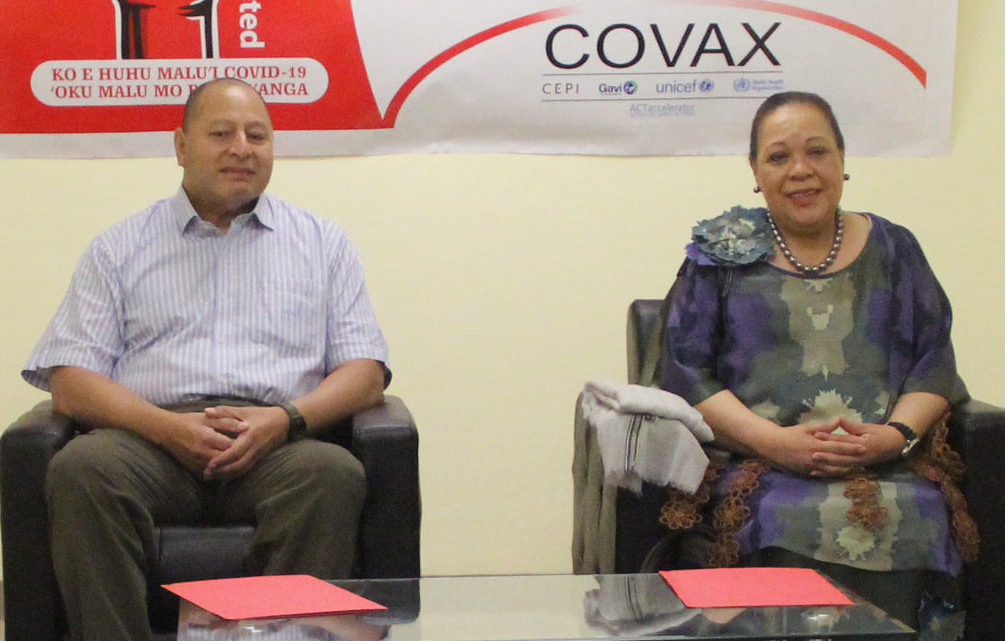
The king and the Queen of Tonga have received Covid-19 vaccinations, the Ministry of Health has said.
Photo/ Ministry of Health (cropped)
It said the vaccinations were administered this morning Saturday 15 by the Ministry’s vaccination team led by the Minister for Health, Honourable Associate Professor ‘Amelia Afuha’amango Tu’ipulotu.
“His Majesty King Tupou VI, reigning King of Tonga and Her Majesty Queen Nanasipau’u received their first dose of the Oxford-AstraZeneca vaccine today, Saturday 15 May 2021, 10am at Vaiola Hospital,” it said.
The team included Acting CEO for Health Dr Reynold ‘Ofanoa, Royal Physician Dr Sione Latu, lead vaccinator Sr Afu Tei and supporting physicians and nurses.
King Tupou VI receives vaccination. Photo/Ministry of Health (cropped)
“This is a historical event for Tonga and the Ministry of Health is proud to have achieved this milestone during the national vaccination rollout here in Tonga. Long may Your Majesties live!”
Meanwhile, New Zealand has promised to top up the amount of Tonga’s Vaccination programmes using vaccines from the global COVAX programme.
“New Zealand is following up its commitment to equitable access to Covid-19 vaccines by donating enough for 800,000 people through the COVAX Advance Market Commitment. These doses will go to developing countries, with a focus on the Pacific,” said New Zealand’s Associate Health and Foreign Affairs minister Aupito William Sio.
Lavinia “Lavi” Mounga had no idea a baby was coming when she went into labour on a flight from her home in Utah to Honolulu last week.
Lavi Mounga, 38, with physician Dale Glenn, 52, after she unexpectedly gave birth to her son, Raymond, on a Delta flight from Salt Lake City to Honolulu. Mounga did not know she was pregnant. (Hawaii Pacific Health)
“I just didn’t know I was pregnant, and then this guy just came out of nowhere,” Mounga said during a video interview with Hawaii Pacific Health.
The baby boy, Raymond Mounga, arrived early at just 29 weeks while mom was traveling to Hawaii for vacation with her family.
Dr Dale Glenn, a Hawaii Pacific Health family medicine physician, along with Lani Bamfield, Amanda Beeding and Mimi Ho — neonatal intensive care unit nurses from North Kansas City Hospital — were also on the plane and helped the new mother and baby.
“Yeah, just overwhelming and just nice that there was three NICU nurses on the plane and a doctor that were able to help stabilize him and make sure that he was OK,” Mounga said.
When deciding on a name, Mounga’s father suggested “Glenn,” in honor of the doctor who helped her during the flight.
“Names are pretty important in our culture,” said Mounga, who is Tongan. “I didn’t really want to name him Glenn.” Instead she asked Dr Glenn, who gave his adopted children Hawaiian middle names, for a suggestion.
He offered “Kaimana,” which is now one of the boy’s middle names.
The child will have to stay in the hospital’s neonatal intensive care unit he is full term, about another 10 weeks, Mounga said.
“The aloha spirit is definitely felt here,” she said about the care she has received in Hawaii.
“It’s very different from the mainland,” Mounga said. “It just feels comforting, and everyone is willing to help.”
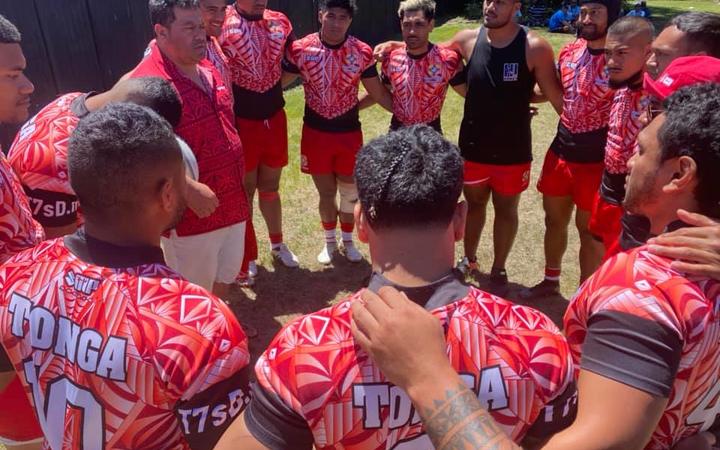
Four New Zealand and Australian rugby internationals have put their hands up to represent Tonga at next month’s Final Olympic Sevens Repechage tournament.
Tonga is among 10 teams vying for the final men’s qualifying berth in Tokyo. Photo: Supplied
The Tonga Rugby Union announced last month it would only select players based in Europe for the qualifying tournament in Monaco, because of travel difficulties caused by Covid-19.
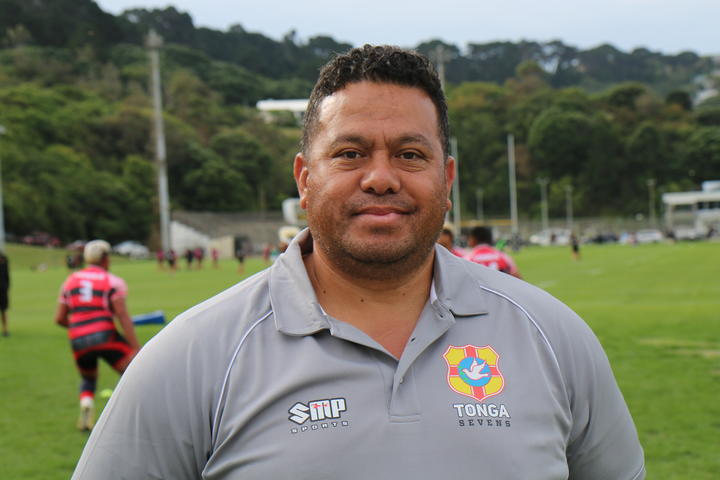
Tonga men’s sevens coach Tevita Tu’ifua said an initial list of 43 names had been trimmed to 23, which includes two ex All Blacks and a former Wallaby.
“We have got a few (high profile) names pop up and we still need to rank our priorities list and then we work from there to finalise our selection,” he said.
“…there’s a lot of things behind the scenes that we all collaborate together on the management side of things and even coaching and playing.”
Tonga men’s sevens coach Tevita Tu’ifua. Photo: RNZ Pacific/Talei Anderson
Players can switch their international allegiance by playing in an Olympic qualifying event, provided they have a passport for the second country and have completed a stand down period of three years.
Tu’ifua said he has been working with ‘Ikale Tahi coach Toutai Kefu to determine which players they can to cap via the sevens programme.
“I still take on board his input for people we need to consider on selection to make them available for Tonga, the guys who need to be capped.
“That’s a priority for us as well for our programme, (players) who need to be available for ‘Ikale Tahi post Monaco.”
As previously reported by RNZ Pacific, former All Black Charles Piutau will not feature in Monaco as the Olympic qualifier clashes with the English Premiership semi finals.
Another two former New Zealand internationals had also indicated their desire to wear red but are likely to be involved in the French Top 14 playoffs on the same weekend.
Tu’ifua said a 15-man training squad will be named shortly, from which the final 12 players will be selected.
“We’re at the stage of cutting down the squad to finalising probably in the next few days or within a week,” he said.
Trying for Tokyo
Tonga has been handed a tough draw in Monaco, with Samoa and Ireland – who are both core teams on the Men’s World Series – also in their pool, alongside Zimbabwe and Mexico.
10 men’s and 12 women’s team will contest the repechage event in Monaco on 19-20 June, where one men’s and two women’s teams will seal the final spots in the main draw.
Tevita Tu’ifua said Tonga will give it their best shot.
“We still need to go in with the mindset of doing well,” he said.
“The result will look after itself if we are able to put a good plan that fits the profile of the players and making sure they prepare well for this tournament.”
The Auckland-based Tu’ifua will not travel to the repechage tournament but said he has already arranged for another coach and team manager who will support the team in Monaco.
He said Tonga’s New Zealand based sevens players are instead focusing on the 15-a-side game, with loose forward Solomone Funaki called into the Highlanders Super Rugby squad this week as injury cover.
While the core squad will miss the Olympic Repechage, Tu’ifua said some of them are in contention to play for the ‘Ikale Tahi during the July window.
“That’s always been part of my goals for the sevens programme since day one is just building that bridge as a pathway to our main fifteen-a-side ‘Ikale Tahi.”
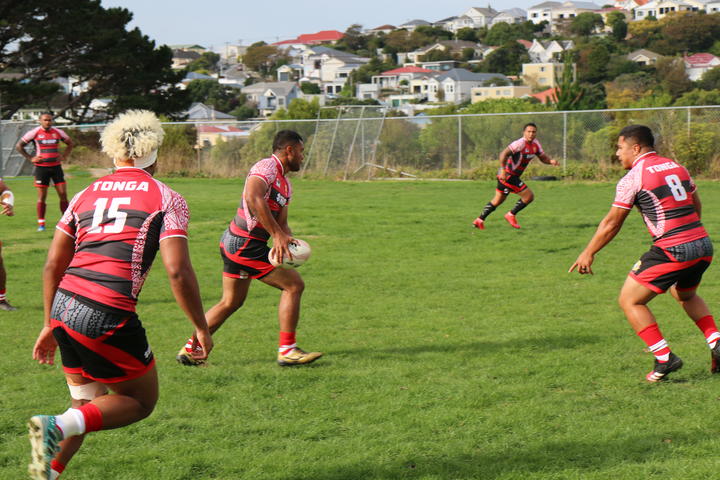
A New Zealand squad recently played against the All Blacks Sevens. Photo: RNZ Pacific/Talei Anderson
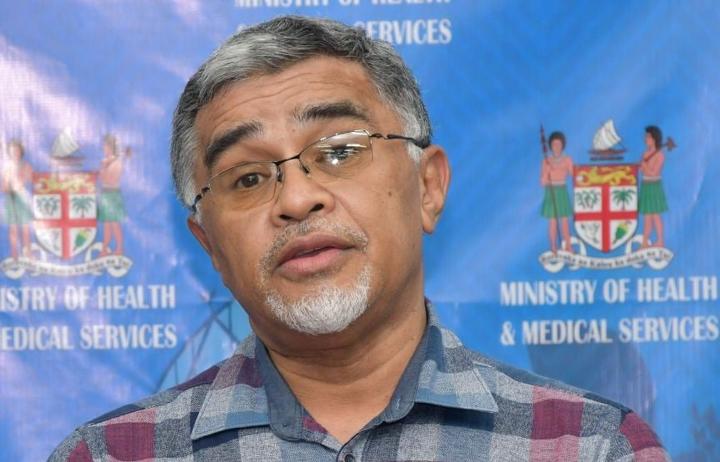
A woman has died of Covid-19 and three staff from Fiji’s Centre for Disease Control have tested positive for the coronavirus.
Dr James Fong. Photo: Fiji govt
In a statement to the nation on Thursday night, Fiji Permanent Secretary for Health Dr James Fong said the latest death was a woman from the recent cluster detected at Makoi, a suburb north of Suva, which has been the centre of multiple cases this week.
Dr Fong said she was taken to intensive care after her condition began deteriorating rapidly.
“Tonight, I offer the nation my ministry’s total commitment to spare as many families as we can from the tragedy of seeing loved ones lost to this terrible disease,” he said.
Dr Fong announced four more new cases: another woman from Makoi and three who are administration staff at the Fiji CDC.
One of the staff members, also a resident of Makoi, had been tested after returning to work this week from annual leave.
Two other Fiji CDC staff had tested negative during routine testing earlier this week, but returned positive results when tested again during contact tracing for their colleague.
“Our investigations so far indicate that this cluster originated outside of the Fiji CDC and the virus was then brought in – as would be an expected consequence of community transmission,” Dr Fong said.
“Apart from these three cases, all other Fiji CDC staff have tested negative so far, including all of the laboratory and medical staff in the centre.
“We know that there was limited contact between administration staff and the lab personnel due to existing protocols, however, as a result of these cases, Fiji CDC has been sequestered, with staff onsite, or placed in quarantine facilities.”
Testing at the facility has temporarily halted while decontamination is conducted and the permanent secretary assured operations would continue after that with frequent testing for staff to follow.
Fiji’s Attorney-General Aiyaz Sayed-Khaiyum and Prime Minister Frank Bainimarama visit Fiji’s Centre for Disease Control (file photo). Photo: Facebook/Fiji govt
This second death of this wave brings the total Covid-19 Fiji death toll to four.
It is the first time a patient has succumbed to community transmission of Covid-19 without having an underlying condition or having imported the virus.
“The war against this virus is still winnable. Many thousands of lives can still be saved. Today, tomorrow, and every day after, for all of the foreseeable future, we will tell you what steps you can take to protect yourself and protect the ones you love. Listen often, listen well, and please adhere to every word of the advice we have to give,” Dr Fong said
The Suva and Nausori corridor, home to three towns and to approximately one-third of Fiji’s population goes into a lockdown from 11pm Friday night to 4am Wednesday.
The government has positioned emergency food rations to be distributed later in the lockdown period.
Professors at Tonga’s Lo’au university have claimed the government’s failure to address the king’s concerns was a result of leaders being educated at the University of the South Pacific (USP) which they claimed did not emphasise critical thinking.
Professor ‘Inoke Hu’akau (L) and Professor Sosiua Lafitani
Professor ‘Inoke Hu’akau of Lo’au University claimed USP only prepared students for vocational employment which was another version of a system of education which did not encourage students to think critically “ako ta’efakakaukau”.
He argued that the king’s strong reactions against Parliament showed there was huge weakness in how the government was operating and the leaders’ lack of critical thinking skills.
Another Lo’au academic, Professor Siosiua Lafitani, said in a joint press release this morning that broken promises had “become flesh with today’s leaders and that was their favorite”.
He also argued that the Tongan government did not understand capitalism and how businesses should be conducted through that economic system.
The professors said critical thinking was the basis of their institution’s philosophical foundation.
The criticisms come after king Tupou VI rebuked the kingdom’s MPs in a public speech to open the Legislative Assembly. It is believed to be the first time a king has openly expressed his anger with the government.
The king said the House gave him the same responses every year after he raised concerns about education, health, the war on drugs and the country’s economy, but they appeared to have made no extra effort to solve the problems.
It appears the Lo’auan professors believed that all Tongan leaders studied at the USP, which is not true.
Prime Minister Pōhiva Tu’i’onetoa was awarded with accounting qualifications from universities in New Zealand and Australia. A number of the government CEOs, ministers and officials went to universities there as well.
The University of the South Pacific
According to the USP official website, the “University is a uniquely placed centre of excellence in a region of extraordinary physical, social and economic diversity”.
It lists about 50 educational programmes and courses which it said have received international accreditations and recognition.
The programmes range from accounting to tourism and hospitality, business administration, law, commercial cookery, journalism, arts law and education.
Most of them are based on Australian and New Zealand curricula.
“The University has set a high standard for quality in its research. Major research commitments include business management, teacher education, Pacific studies, marine studies, agriculture, science and technology,” the USP website said.
“Established in 1968, USP is the only university of its type in the world. It is jointly owned by the governments of 12 island countries: Cook Islands, Fiji, Kiribati, Marshall Islands, Nauru, Niue, Solomon Islands, Tokelau, Tonga, Tuvalu, Vanuatu and Western Samoa.
“The multi-cultural nature of the staff and student body give USP an exceptional character. It is a quality institution producing degrees comparable to those awarded by universities in Australia, New Zealand and the United Kingdom. Graduates from USP are found in important executive positions throughout the public and private sectors in all member countries.
“Because of its strategic position and facilities, USP attracts eminent scholars and staff from throughout the world”.
Lo’au University
Lo’au University describes itself as being “the first full online higher learning system in the Kingdom of Tonga and among other Moanan nations in the region, with its Headquarters in the Kingdom and various branches worldwide”.
It said it was founded at Sydney University in 2011, but was officially launched in Tonga at the University of the South Pacific (‘Atele) in 2014 by the then Minister of Education Hon, Dr ‘Ana Maui Taufe’ulungaki
Its founder, Professor Siosiua Lafitani, was appointed by the Board of Founders of CUAM Foundation University (www.cuam.eu) at Benevento in Italy in January 2014 as one of the 72 partner universities to run its educational and scientific research programs
“Lo’au University runs annual summer classes (post-graduate diploma) on Tongan language and culture in the Kingdom for doctoral and post-graduate students from Stanford University, Hawaii University and other world universities”, its website said.
It claimed it “offers scholarships and financial assistance of approx $10 millions per year to students from around the world to study for their Bridging courses, Diploma, BA, Post-graduate diploma, MA and PhD Degrees”.
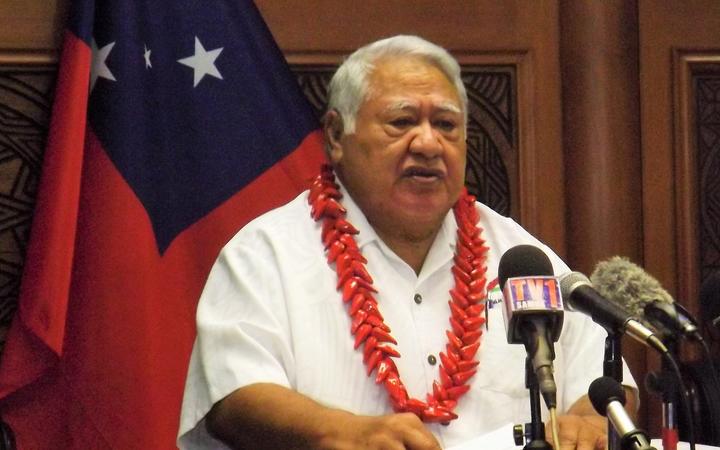
Samoa’s caretaker prime minister has reportedly told local media he was “appointed by God” to lead the country, and the judiciary has no authority over his appointment.
Samoa’s caretaker prime minister Tuila’epa Sa’ilele Malielegaoi Photo: RNZ Pacific / Autagavaia Tipi Autagavaia
He told the Samoa Observer “I am appointed by God” so protests were futile in front of the judiciary whom he said had no bearing on his appointment.
The incumbent governing party HRPP and newcomers FAST have been locked in a deadlock over who can form a government since general elections last month.
Last week the Head of State directed a second election be held, and HRPP immediately launched a political campaign, whereas the FAST party have challenged the legality of the call for a second election.
Tuila’epa said protesters would do better “to protest through prayers on bended knees inside a church”.
Protesters had congregated outside Samoa’s highest court against the snap-election called by the head of state on the advice of Tuila’epa.
The Chairman of the Tonga Ma’a Tonga (TMT) rugby league was concerned after he found out the Prime Minister Pōhiva Tu’i’onetoa has written to the International Rugby League (IRL) in what appears to be an attempt to discuss Tonga’s plan to take part in the Rugby League World Cup later this year.
Tongan fans march down Queen Street after the loss to England in the rugby League World Cup semi-final. Photo: RNZ / Jessie Chiang
The letter was revealed in a report by Radio New Zealand International on Monday this week saying “IRL also received a letter from the Tongan Prime Minister, Pohiva Tu’i’onetoa”.
No details have been revealed about the letter.
In its reporting, RNZ quoted IRL Secretary General Danny Kazandjian as saying “there was a commonality of purpose in what both parties want to achieve” which appears to be a reference to the Tonga government and TMT.
Tu’i’onetoa has been contacted for comment.
Chairman Sēmisi Sika said the issue with the rugby league in Tonga is fragile given the long running battle it has gone through over the sport’s governance and the fact the Tu’i’onetoa government has made it clear last year it did not support TMT.
“I am suspicious and to me this is part of an attempt to hijack our responsibilities,” Sika told Kaniva News.
“Tonga Ma’a Tonga has ownership and is the voice of most of the rugby league clubs in Tonga”.
He said he believed the letter was part of an attempt by the Prime Minister to control Tonga’s participation in the Rugby League World Cup in England in October.
Sika wanted the Prime Minister to keep away from trying to interfere with the sport and leave it to the TMT.
“Our duties included looking for sponsorships to make sure the sport is well funded, and we have a lot of experiences there”.
“The government has its main duties for the people and they should take care of that and leave the rugby league to us”, Sika said.
Tonga must have a recognised governing body with the IRL in order to compete at the Rugby League World Cup.
The revelation of the Prime Minister’s letter comes after last month’s decision by the Court of Arbitration for Sport (CAS) confirming the dismissal of Tonga National Rugby League’s (TNRL) appeal against its expulsion from the global governing body.
After the establishment of TMT last year with the support of the IRL’s International Committee (IC) the Prime Minster’s office released a statement saying the government was not happy with it.
It said: “The Government holds strong reservations regarding the IC including the appropriateness of the proposed governance structure, the composition of its membership and the institutional arrangement”.
“The Government is not confident that the IRL will be neutral and unbiased in the establishment of the IC”.
Autopsy results are expected to be released this weekend for 41-year-old Polikalepo Kefu, the Ministry of Health has confirmed this to Kaniva News this morning.
It is understood his body will be released to his family this Friday 14. It will be followed by a funeral mass for the deceased which will be held at the Sangato Mikaele church in Lapaha at 3pm.
A 27-year-old man charged in connection with his death is expected to appear on May 19, at the Magistrate’s Court in Mu’a.
Kefu was known for his work with Tonga’s Red Cross, the local media association, and as a voice for youth. He is remembered as a fierce humanitarian rights activist and was well recognised for his tireless devotion to a wide range of human rights causes.
As Kaniva News reported earlier this week, the huge flow of tributes to his death not only in Tonga but from overseas has been likened to the proverb which says “you can tell the tree by the fruit it bears”.
Kefu was a true leader in the community especially the youth, said Lapaha Community Leader Kapeli Lanumata.
“He was active in the Catholic church and its groups such as the Divine Mercy and St Vincent de Paul.
Lanumata described Kefu as “humble and a true asset” for the Lapaha community, where he grew up.
“He dreamed for a better Lapaha,” Lanumata said.
“His death was truly felt in the community since he was a leading figure in everything he did”.
Lanumata said Kefu’s older brothers moved overseas, leaving him to take care of his sisters and their children including a sister who was handicapped. Kefu’s parents were dead.
A candlelight vigil was held in south Auckland last week to remember his death.
The Minister of Infrastructure Akosita Lavulavu and her husband ‘Etuate Lavulavu have to defend themselves against allegations of defrauding over half a million pa’anga from the government’s schools subsidiary funding.
The Lavulavus will have to take the stand after the lawyer for ‘Akosita, Lawyer William Edwards, and ‘Etuate, who is representing himself failed to obtain an acquittal after arguing last week there was no case to answer.
Justice Nicholas Copper has made this decision on Monday 10.
He was quoted by the Matangi Tonga Online as saying, ““On the arguments, as analysed and in relation to each defendant and every count they both face, there is a case made out to the required standard, that is to say there is some evidence that a reasonable jury if they accepted it, properly directed on the law, could convict, Justice Cooper said”.
The couple have pleaded not guilty to charges relating to knowingly dealt with forged documents and obtaining credit by false pretences.
The investigation was prompted by the Auditor General’s office claiming hundreds of students supposedly attending the UNTRI could not be identified and that the Institute should repay TP$553,800 to the Technical Vocational Education and Training fund (TVET).
Police charged the couple with using forged documents to support an application to obtain supplementary government funding to assist students at their UTRI private school.
The Opposition Party said the king’s message of dissatisfaction with the Tu’i’onetoa government should be spread and circulated as much as possible in all forms of media which communicate information to the general public.
Ngalu’afe ‘Akau’ola wearing a T-Shirt with the label ‘Oku ‘Ikai Fakafiemālie. Photo/Supplied
News of King Tupou VI’s disappointment dominated the pages of Tongan social media users since last week.
Many have called on government to step down immediately after His Majesty’s statement.
They believed the speech was the first time in the history of Tonga for a king to have rebuked the MPs in a public speech from the throne.
In his speech, the king after making his introduction, began by saying, “’Oku ‘ikai fakafiemālie”.
This translates into English as “It is unsatisfactory”.
Opposition Leader Sēmisi Sika who was behind the T-shirt design said the phrase is catchy.
“It’s a new political slang,” he said.
The king was upset by the Cabinet and parliament’s not doing specific actions to resolve certain national issues he raised with them in previous years.
The king then said: “Taxpayers and people of the country, who elect Members of Parliament, should therefore vote wisely as they were the ones who voted in this government, who is in the House now.”
As Kaniva News reported yesterday, the Prime Minster reportedly said he approved the king’s speech and it was a learning experience for him.
Tu’i’onetoa was reported as saying he regarded the royal speech as a huge blessing.
He said it was important to address the king’s concerns nationally and seriously.
The Prime Minister also wanted His Majesty’s concerns to be part of his controversial monthly national fasting prayer programme.