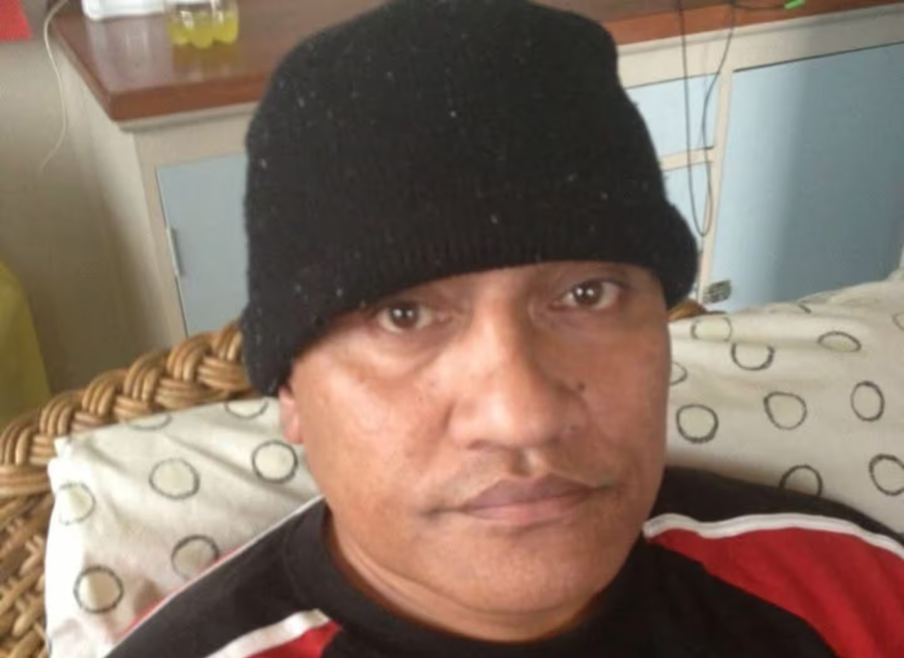
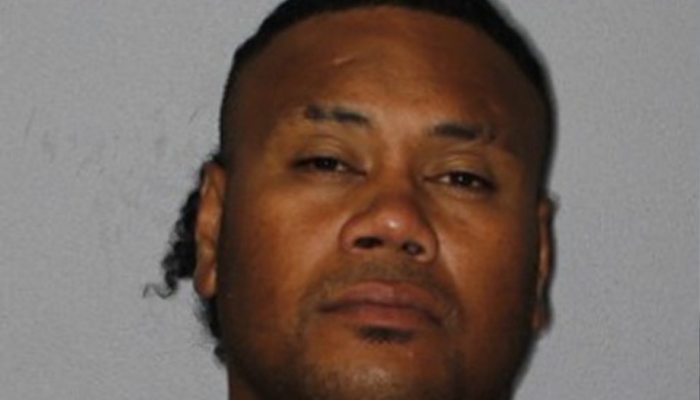
Adrian Soane Patita Pani has been publicly named as the man accused of killing 59‑year‑old Tongan passenger Sosefo Leger during a knife attack on an Auckland bus in December last year.
Sōsefo Ledger
Pani, 36, was arrested on December 9, one day after what police described as an “unprovoked” stabbing aboard Auckland Transport’s number 76 bus as it travelled from Glen Innes toward Ōrākei.
According to court and police records, the bus was nearly empty when Pani boarded at 7.53pm on December 8.
Leger entered moments later and was allegedly attacked as he attempted to exit near Fenchurch Street. He died later that night after being taken to hospital.
A second passenger, aged 51, was also stabbed in a separate attack minutes later and required surgery but survived.
Pani has been charged with Leger’s murder and with wounding another passenger with intent to cause grievous bodily harm.
He pleaded not guilty and is awaiting trial. His identity can now be published following the lifting of earlier name‑suppression orders, the NZ Herald reported.
Kaniva News understands that both Pani and Leger are of Tongan descent. It remains unclear whether the two men knew each other or if the fatal attack stemmed from any prior dispute.
Police have not released information suggesting a motive, and the incident is still being treated as an unprovoked act of violence.
Search efforts in Tonga for a man missing at sea have ended after days of operation yielded no new clues following the rescue of his two companions on 18 February.
Police Deputy Commissioner ‘Atunaisa Taumoepeau confirmed to Matangi Tonga today that the search was formally called off on Friday, 20 February 2026.
He said there were no new developments that could help locate the missing man.
The man had been travelling with two others who were rescued by the New Zealand Navy on 18 February, after being spotted by a Royal New Zealand Air Force P‑8A Poseidon aircraft during an aerial search.
The men were located approximately 105 nautical miles south of Tonga.
Police did not release the names of the men or disclose why they had travelled far out to sea.
“The circumstances surrounding this incident remain under investigation,” Taumoepeau reportedly said.
The 11.5‑metre wooden vessel, Mysterious Wonder, left Tongatapu on 8 February. Authorities were alerted on 17 February that the boat was missing, prompting the multinational search effort.
Police have not indicated whether the search may resume if new information emerges.
Moana Pasifika has cancelled its highly anticipated Round Nine Super Rugby Pacific fixture against the Chiefs in Tonga after being unable to secure the funding and sponsorship required to host the match at Teufaiva Stadium.
The game, originally scheduled for 11 April in Nuku’alofa, will now be relocated to an alternative venue.
The franchise confirmed the decision this week following months of attempts to bring Super Rugby back to Tonga.
According to multiple reports, Moana Pasifika made “every effort” to progress with the event but ultimately could not meet the significant financial demands required to stage a match in the Pacific.
Moana Pasifika CEO Debbie Sorensen said the decision was heartbreaking for players, supporters, and especially families in Tonga.
“We have explored every avenue possible to try and make it work, but unfortunately we were unable to secure the necessary sponsorship to bring this game to Tonga. The challenge we face is that we are not funded to bring any games to the Pacific region, and we believe we should be,” Sorensen said.
She added that despite the setback, the organisation remained committed to developing rugby pathways and hosting future fixtures in the islands.
“While we are heartbroken for our team, our fans, and especially our families in Tonga, we remain hopeful and deeply committed to growing the game in the region. We look forward to opportunities to bring world‑class rugby to Tonga and other Pacific countries as soon as possible.”
The franchise has previously delivered successful matches in the Pacific, including Apia in 2023 and Nuku’alofa in 2024.
However, Sorensen said Moana Pasifika currently receives no dedicated financial support to take games to the region—an issue echoed by Pacific rugby leaders.
Tonga Rugby Union CEO Aisea Aholelei said he understood the challenges Moana Pasifika faced, noting that Tonga itself must rely on major sponsorship to host any financially viable match.
“Whenever we want to play a game here in Tonga, it’s always a loss-making exercise unless a significant sponsor comes our way,” Aholelei said.
Moana Pasifika is now working with Super Rugby Pacific, New Zealand Rugby, and the Chiefs to secure a replacement venue for the Round Nine fixture.
As discussions continue, Pacific leaders and supporters are renewing calls for equitable investment in rugby across the islands.
Many argue that despite producing world‑class players for global competitions, Pacific nations remain underfunded and overlooked when it comes to hosting major events.
A war of words and a heated dispute erupted on social media this week in what appeared to be another suspected pyramid‑scheme controversy that has plunged members of the Tongan community in the United States and the wider diaspora into turmoil and disarray.
Victorine “Polygirl,” the businesswoman at the centre of the investment dispute circulating on Tongan social media. Photo/Video screenshot, Victorine’s Facebook account
A Tongan–US–based businesswoman living in Salt Lake City and identifying herself on Facebook as “Victorine Polygirl,” also known as “Viki,” has been accused by several online users of failing to return investors’ money after allegedly encouraging Tongans to put funds into what she promoted as a high‑return investment scheme.
She operates the Falekoloa Famili Tonga USA Trading store in Tonga, which drew attention from Tongan authorities after allegations surfaced that the business did not hold a licence to import medical items.
According to posts and videos shared widely across Tongan Facebook groups and newsfeeds, Victorine allegedly collected hundreds of thousands of dollars from her investors after claiming they would be able to withdraw large profits within a short period, prompting many to deposit money in hopes of quick financial gain.
While the full details of the investment scheme—and the amounts contributed by complainants—remain unclear, critics have accused Victorine of using investors’ funds to build a luxurious house for her family in Vava’u and to make several personal purchases.
These accusations have not been independently verified, but they continue to circulate widely across Tongan social media platforms.
Attempts to contact Victorine were unsuccessful.
Investors Demand Answers
Tensions intensified when some investors claimed this week that their attempts to request withdrawals were either ignored or delayed, leading to growing frustrations and calls for accountability.
Many outraged complainants and critics of Victorine lashed out at her on social media, calling her a “liar” (loi) and “hard‑faced” (mata fefeka).
They claimed she had failed to deliver the high‑profit returns she initially promised, saying the scheme had now collapsed.
In a Facebook post responding to the growing criticism, Victorine told investors that they “should know” their money had been used to build various businesses in which they would supposedly hold shares and earn profits.
In a separate post, she claimed that while she had been busy “building their businesses,” some of the complaining investors had allegedly been defaming her on Facebook.
Victorine also published several posts on her Facebook page urging investors to be patient, saying she would contact them directly.
In one of the posts, written in Tongan, she told followers: “For those of you who were investors from New Zealand and Australia, I will email you.”
Ongoing Ponzi Prosecutions
The news comes at a time when several Tongan promoters and creators of alleged Ponzi schemes are facing court charges in Tonga, New Zealand, and the United States for their involvement in similar scams.
The Tongitupe Ponzi scheme, invented and operated by Tilila Siolaʻa Walker, allegedly defrauded investors of more than US$10 million before collapsing in 2022, according to FBI court documents.
As Kaniva News reported last week, the Office of the U.S. Attorney General told us that Walker is scheduled to stand trial in the United States in March next year.
In New Zealand and Tonga, several individuals linked to comparable schemes have received hefty fines and been ordered to repay affected investors.
As the dispute continued to spread across social media platforms, supporters and critics of Victorine engaged in heated exchanges, with some defending her intentions while others urged authorities to investigate the matter.
Auckland, NZ — Police are appealing for public assistance to locate 35‑year‑old Tevita Lasa, who is currently wanted in relation to a burglary investigation.
Tevita Lasa. Photo/Police
According to authorities, Lasa has an active warrant for his arrest and is believed to be deliberately avoiding Police.
He is known to frequent the Auckland City area, and officers are continuing efforts to establish his whereabouts.
Police are urging anyone who has seen Lasa, or who may have information that could help locate him, to come forward immediately.
Members of the public can provide information by submitting an update online or by calling 105.
Police advise that anyone who sights Lasa should not approach him and should instead contact them straight away.
MV Otuanga’ofa has been widely praised after a livestream captured the ferry reversing to the wharf to pick up a late passenger.
Moments before boarding: A passenger embraces his family at the wharf while hands from inside the MV Otuanga’ofa reach out to assist him onto the vessel.
The moment, which many Tongans say reflects the vessel’s name and the nation’s spirit of friendliness, has since drawn widespread attention online.
In the footage, a man is seen hugging and farewelling a woman and children at the wharf just moments after the vessel had begun to leave.
As the ship slowly reverses toward the dock, a woman off‑camera can be heard explaining that a request had been made to the captain to turn back and collect the late passenger.
The video then shows the man leaving his family and boarding the vessel, where hands from inside the ship reach out to help pull him safely aboard.
On the livestream, passengers can be heard expressing thanks and relief, with one voice saying the request had been successfully carried out.
Social media commenters responded warmly to the gesture.
One viewer wrote, “That reflects the name ‘Otuanga’ofa,” referring to the meaning behind the vessel’s name — “the friendly islands” — and praising the captain’s willingness to accommodate the latecomer.
The brief, heartfelt moment has been widely shared, celebrated as a reminder of the Tongan spirit of helpfulness and community.
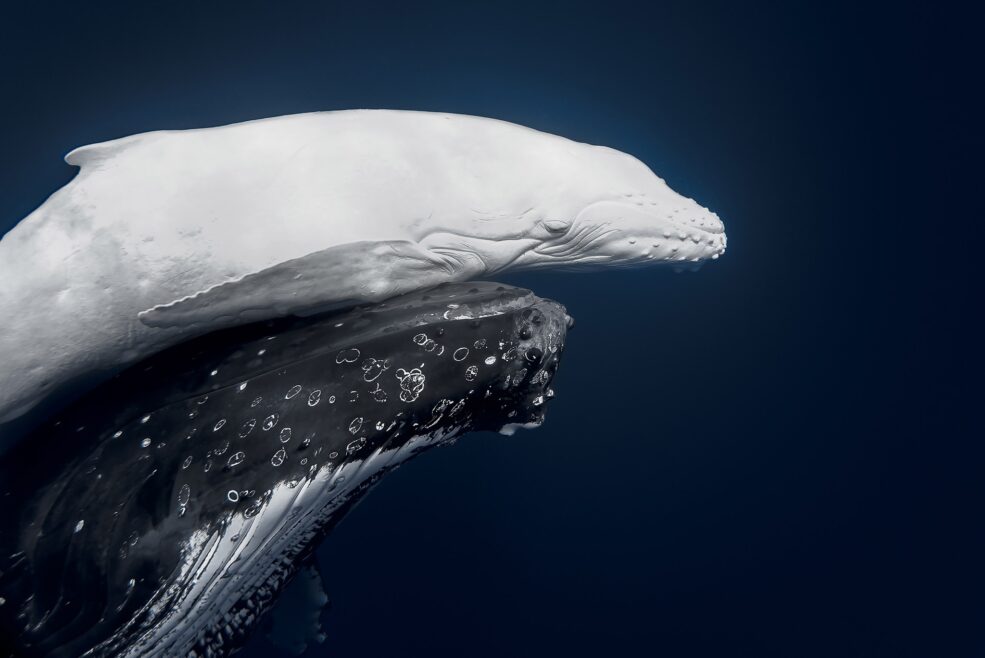
A breathtaking underwater image captured in the waters of Vava’u, Tonga, has been crowned World Nature Photo of the Year.
Mahina, the rare white humpback calf, glows beneath the surface as she swims beside her protective mother in the waters of Vava’u, Tonga. Photo/ Jono Allen/World Nature Photography Awards 2026
Queensland photographer Jono Allen received the top honour for his portrait of the rare white humpback calf named Māhina.
The striking photograph shows Māhina—whose name means “moon” in Tongan—swimming closely beside her protective mother in the crystal‑clear waters of Vava’u.
Allen reportedly said the young whale “glowed like a beam of light through the deep blue,” describing the encounter as one of the most extraordinary moments of his career.
Only one in 40,000 humpback whales is born with this level of depigmentation, making sightings exceptionally unusual and scientifically significant.
Judges praised the image for both its beauty and its emotional depth, noting how the rare calf symbolises resilience within a species that has rebounded from near‑extinction following decades of intensive whaling.
Allen’s winning image also secured gold in the Underwater category, placing him at the top of a competition that attracted entries from photographers across 51 countries and six continents.
The awards’ co‑founder, Adrian Dinsdale, said this year’s entries highlight not only the splendour of the natural world but also the importance of protecting it for future generations.
Reflecting on the encounter, Allen said sharing the water with Mãhina and her mother was deeply humbling:
“Sharing this moment with Mãhina and her protective mother is a memory that will live with me forever.”
The photograph has since become a symbol of both the power of wildlife conservation and the emotional pull of nature photography.
The World Nature Photography Awards is a global competition dedicated to showcasing the beauty, diversity, and fragility of planet Earth.
Founded on the belief that powerful imagery can inspire positive action for the environment, the awards celebrate the world’s finest nature photographers as they highlight the wonders of the natural world.
The competition attracts entries from across six continents and offers a US$1,000 grand prize for the overall winner
New Zealand’s Commerce Commission is appealing to the public to help identify victims of an alleged South Auckland loan shark, saying affected borrowers may be eligible for financial compensation if funds are available.
A promotional banner for Nane Easy Loan Finance Services NZ, used by Ilaisaane Malupo to advertise her loan services before charges were laid.
The call‑out follows charges laid last year against Ilaisaane Malupo and her company, which traded as Nane Easy Loan Finance Services NZ (Nane Loans).
As Kaniva News reported at the time, the Commission alleges Ms Malupo operated as an unregistered lender and targeted vulnerable members of the Tongan community with high‑cost, illegal loans.
According to the Commission, Ms Malupo issued personal loans from March 2024 with weekly interest rates of 15 percent, which doubled after 28 days if borrowers failed to repay their debts.
Additional late fees of $10 per day were also imposed, placing many borrowers under severe financial strain.
‘We need to hear from affected borrowers’
Commerce Commission Deputy Chair Anne Callinan said the Commission is now working to identify victims who may be entitled to compensation.
“Ms Malupo failed to keep accurate records, and destroyed others, meaning we do not have the details of all affected borrowers,” Ms Callinan said.
“This is why the Commission is taking the step of appealing to the public to get in contact with us if they, or someone they know, borrowed from Ms Malupo.
“While Ms Malupo’s financial position is currently unclear, we do need to hear from affected borrowers as they could be eligible for financial compensation if there are funds available for this purpose.”
Unregistered lending and illegal loan terms
One of the charges laid against Ms Malupo relates to the Financial Service Providers (Registration and Dispute Resolution) Act (FSPA), which requires all consumer lenders to be registered.
The Commission said Ms Malupo continued to provide loans despite receiving repeated guidance to cease lending or become compliant.
As well as operating unlawfully, her lending practices included:
Interest rates of up to 15% per week
Interest doubling after 28 days
Late fees of up to $10 per day
“These terms placed significant pressure on borrowers who were already facing financial hardship,” Ms Callinan said.
“Some would sell sentimental possessions or miss rent payments to keep up with repayments.”
There were also reports that Ms Malupo threatened to publicly expose borrowers who were behind on payments, using Facebook or Tongan media platforms.
How to contact the Commerce Commission
The Commission is urging anyone who borrowed from Nane Loans or Ms Malupo to contact them before 5pm on 3 April 2026.
A large fire broke out in central Nuku‘alofa overnight, with livestreamed videos showing firefighters battling towering flames and thick smoke rising from what appeared to be a building in the CBD.
Tonga Fire and Emergency Services crews work to contain a large fire in Nuku‘alofa’s CBD as onlookers gather nearby
Footage shared on social media showed flames shooting high into the air as Tonga Fire and Emergency Services crews worked to contain the blaze.
Reports suggest the fire broke out at the Tonga Hou’eiki Church office in Nuku‘alofa.
A livestreamer could be heard saying the fire was “difficult to kill at this stage,” as the flames continued to spread.
Police officers in full Tongan police uniform were seen directing traffic and keeping crowds of bystanders at a safe distance.
The intensity of the fire prompted people nearby to step back as smoke billowed across parts of the central business district.
The exact location of the burning building and the cause of the fire have not yet been confirmed.
Tonga Fire & Emergency Services has not released an official statement.
No injuries have been reported so far.
Kaniva Tonga News will provide updates as more information becomes available.
The name of a Middlemore hospital nurse jailed for drug dealing has been revealed after more than a year, following developments in the investigation into her father’s fatal shooting at the family home.
Ma’ata Vi, 38, had her identity suppressed in a case that added further strain to the Vi family after her husband Samuela Kuki was sentenced to eight years in prison last year.
Her father, 59‑year‑old Paula Tu‘ipulotu Kokohu Vi, was shot outside the Pakuranga home the family shared. Court documents say Ma’ata rushed out after hearing the gunfire and tried to give first aid.
The injuries were too severe and her father died at the scene.
The shooting occurred while Ma’ata was already before the courts on serious drug charges.
In June, she was sentenced to four years and five months in prison after admitting in late 2024 to importing methamphetamine — an offence carrying a potential life sentence — along with 15 counts of money laundering, the NZ Herald reported.
Her offending was uncovered during Operation Worthington, a long‑running police investigation targeting a major methamphetamine supply network.
Thirty people were arrested when officers executed multiple search warrants in 2021. Among them were Ma’ata and her husband of around 14 years.
More than a year after Paula Vi’s killing, police arrested a 23‑year‑old man and charged him with being a party to the murder. A hearing on the case is scheduled for October.
Suppression lifted despite hardship plea
The suppression lapsed after Auckland District Court Judge Claire Ryan considered several factors, including arguments that the family had already endured significant hardship following the police raid on their home, the fatal shooting of Vi’s father, and the earlier imprisonment of her husband.
She also weighed the potential impact of further publicity on the couple’s five children.
Judge Ryan acknowledged that the couple’s children would face a “devastating” impact from having both parents imprisoned, and she granted Ma’ata a 15 percent reduction in her sentence to reflect that hardship.
However, the judge ruled that the real source of the family’s suffering was the seriousness of the offending itself, not any potential publication of the defendants’ names.
“I can do nothing about that. I didn’t compel these two people to offend,” Judge Ryan said.
“There are consequences for this type of offending, and unfortunately those consequences are imprisonment.”