The Trump administration’s new requirement for non-immigrant visa holders seeking permanent residency or green cards to return home to apply is expected to deepen the difficulties already confronting many Tongans under existing U.S. visa restrictions.
It comes after Tonga was placed on a United States list subject to partial visa suspensions, halting the processing of visitor, business, student, and exchange visas and restricting some immigrant visa pathways, with limited exceptions. These measures, introduced in January 2026, were linked to national security concerns, including relatively high visa overstay rates among Tongan nationals, significantly affecting opportunities for travel, study, and migration.
Under the new rule, individuals in the United States on temporary visas—such as students, seasonal workers, or tourists—will no longer be permitted to apply for a green card from within the country.
Instead, they will be required to leave the U.S. and complete their applications through consular processing in their home countries.
U.S. Citizenship and Immigration Services (USCIS) spokesperson Zach Kahler said the move reinforces the original intention of temporary visas.
“From now on, an alien who is in the U.S. temporarily and wants a Green Card must return to their home country to apply, except in extraordinary circumstances,” Kahler said.
He added that the change would make the system “fairer and more efficient,” ensuring temporary visas are not used as an indirect pathway to permanent residency.
The statement explained that individuals entering the United States on non-immigrant visas—such as students, temporary workers, and tourists—are intended to stay only for a limited period and for a clearly defined purpose.
Impact on Tongan Diaspora
According to the 2020 US Census, there are 78,871 people of Tongan descent living in the United States, including those of partial ancestry.
The Tongan community in the United States is one of the largest Pacific Island populations overseas, with strong ties to the LDS Church, the second-largest denomination in Tonga. Each year, hundreds of students—many from Church-run schools in Tonga—travel to study at Brigham Young University–Hawaii (BYU).
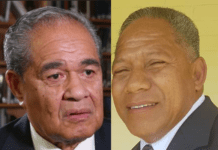
Shortly after the January visa ban on Tonga, Prime Minister Lord Fakafanua revealed at a press conference that around 60 Tongan students due to begin studies at BYU had been unable to secure United States student visas.
He said the situation was a direct result of recent US restrictions affecting tourist and student visa categories.
Many Tongans enter the United States on student visas or temporary work schemes and later adjust their status through employment sponsorship or family-based petitions, eventually securing green cards and citizenship. However, that pathway is no longer available following the new directive announced this week.
Half-Million Domestic Filing Figure
Under previous rules, nearly half of green card applicants—around 500,000 people annually—were able to apply from within the United States, according to former USCIS official Doug Rand.
This pathway allowed individuals to maintain their livelihoods and family stability while their applications were processed.
However, the new requirement could disrupt this process.
The new directive means Tongans returning from the United States to lodge visa applications could face challenges similar to those reported by applicants who travelled to Fiji, where many encountered high costs and, in some cases, visa refusals.
Critics warn policy backfires
Former immigration officials have criticised the policy, saying it could effectively close off legal pathways rather than streamline them.
Doug Rand described the policy as restrictive, arguing that forcing people to leave the U.S. may act as a barrier rather than a solution.
“The purpose of this policy is exclusion,” Rand said. “Forcing them to go abroad for consular processing is no pathway at all.”
Critics also point out that consular processing systems abroad can be slow and unpredictable, often facing backlogs that may take months or even years to resolve.
The impact could extend beyond individuals to affect Tonga itself.