The Supreme Court of Tonga has ruled in favour of ʻEpalahame Lingikoni Taukeiʻaho in a leadership dispute involving the Liahona/Saineha Alumni Association, known in Tongan as Kautaha Kolisi Tutuku Liahoana/Saineha, finding that constitutional amendments used to justify his removal had never been lawfully adopted.
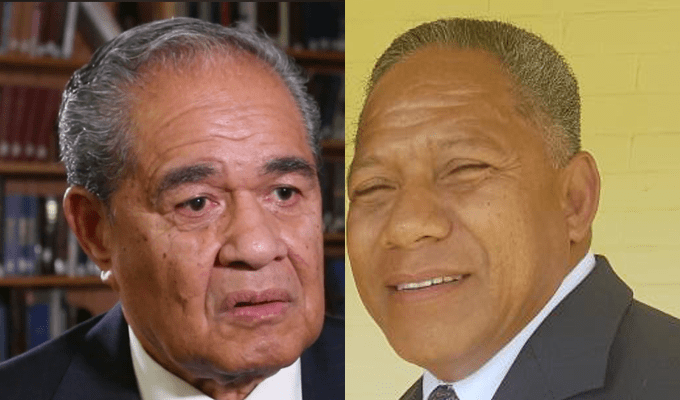
In a ruling delivered on 26 October 2026, Lord Chief Justice Malcolm Bishop KC determined that the association remained governed by its constitution confirmed on 12 July 2018.
The dispute arose after an emergency board meeting on 8 October 2023 purportedly suspended Taukeiʻaho, who had been elected president three months earlier, and appointed Pita Foliaki Hopoate as interim president.
Taukeiʻaho challenged the decision, arguing that the meeting was improperly convened, that he had been denied the hearing required under the constitution and that the defendants lacked authority to remove him.
The case was brought against Hopoate and nine other defendants.
Court finds constitutional amendments invalid
The Court found that the defendants failed to establish that changes to the association’s constitution had followed the required three-stage approval process involving the Executive Committee, Production Committee and General Committee.
Despite relying on different versions of what they described as an amended constitution, the defendants produced no evidence that the proposed changes had been properly considered and approved.
The disputed provisions included changes relating to permanent membership, the removal of officers and mandatory disciplinary hearings.
Justice Bishop found that the purported amendments could not lawfully replace the 2018 constitution.
The ruling also examined the defendants’ reliance on records suggesting that certain members had been elected to permanent positions. The Court found that the minutes did not support those claims.
These findings undermined the constitutional basis on which the defendants had sought to justify the October 2023 leadership decision.
Incorporation did not invalidate legal challenge
Another central issue was whether the association’s incorporation under Tonga’s Incorporated Societies Act on 19 January 2024 affected Taukeiʻaho’s claims.
The defendants argued that the association had previously been registered in October 2002 and that its subsequent incorporation affected the proceedings.
However, the Court found insufficient evidence that the association had been properly incorporated in 2002.
Justice Bishop ruled that the January 2024 incorporation did not retrospectively alter the legal position governing the disputed events.
The Court also recognised that an association’s constitution could create enforceable contractual obligations between its members, regardless of whether it had been formally incorporated.
Consequently, the defendants could not rely on the later incorporation to defeat claims arising from the 2023 leadership dispute.
Defendants’ counterclaim dismissed
The defendants also sought orders concerning the association’s incorporation records, including the removal of its January 2024 registration.
The Court dismissed the counterclaim, finding no sufficient legal basis for the requested orders.
Justice Bishop noted that the Registrar, whose records would have been affected, was not a party to the proceedings.
The Court further rejected the defendants’ argument that Taukeiʻaho had pursued his case against the wrong legal entity.
Plaintiff awarded costs
The Supreme Court ordered that Taukeiʻaho was entitled to the costs of the proceedings, to be assessed if the parties could not agree.
However, the ruling did not expressly order his reinstatement as president or award a specified amount in damages.
In closing, Justice Bishop appealed to both sides to resolve their differences in a spirit of Christian unity.
Citing Saint Paul’s First Letter to the Corinthians, he encouraged the parties to overcome their divisions and become united in mind and thought.
The decision underscores the importance of associations following their constitutional procedures when amending governing rules or making decisions affecting elected officers.