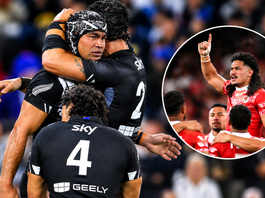
Tonga National Rugby League XIII captain Jason Taumalolo may have played his final Rugby League World Cup match following Saturday’s 34–10 semi-final defeat to New Zealand, raising questions about the international future of one of Tonga’s most influential rugby league figures.
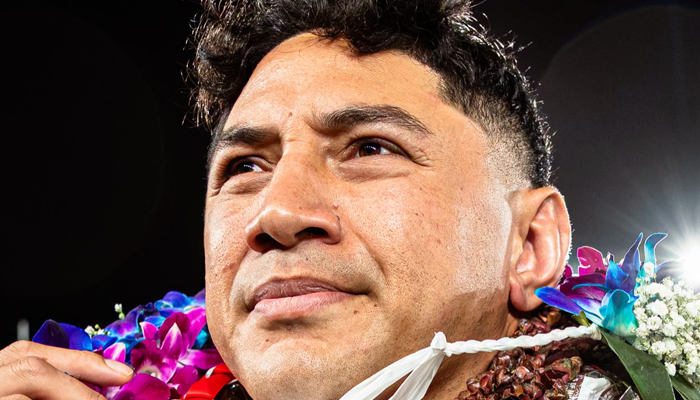
The 33-year-old forward, who will be 37 when the next World Cup takes place in 2030, has not announced his retirement, but Australian Associated Press (AAP) reported that he is unlikely to feature in another tournament.
His uncertain future comes nearly a decade after his historic decision in October 2017 to switch international allegiance from New Zealand back to Tonga, inspiring other established players to represent their ancestral homeland and helping forge an extraordinary bond between the national team, widely known as Mate Maʻa Tonga, and its supporters.
Speaking after the defeat in Newcastle, Taumalolo expressed confidence in the next generation of Tongan players.
“I think with the core group players that we have right now they can really make their mark in the international scene,” he said, according to AAP.
“They’re only going to get better from here,” he added, while praising players who had chosen to represent Tonga rather than New Zealand or Australia.
Although his comments focused on the team’s future, Taumalolo gave no indication of whether he intends to continue representing Tonga in international matches outside the World Cup.
The decision that transformed Tonga
Taumalolo’s historic switch to Tonga in 2017 was initially met with fierce criticism from sections of the New Zealand rugby league community, with some branding him a “traitor” and a “defector” for leaving the Kiwis ahead of the World Cup.
Then-Kiwis captain Adam Blair accused him of betraying the national jersey, while former captain Benji Marshall also criticised his decision.
Taumalolo later acknowledged the accusations, recalling that players had been called “defectors” and “traitors”, but remained committed to representing Tonga.
His decision helped reshape international rugby league. Tonga defeated New Zealand at the 2017 World Cup before recording another historic victory over Australia in 2019, demonstrating its ability to challenge the sport’s traditional powers.
Beyond those achievements, the movement helped create a powerful connection between Tonga’s players and supporters, becoming an expression of national pride and cultural identity.
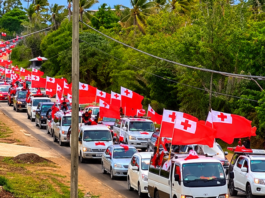
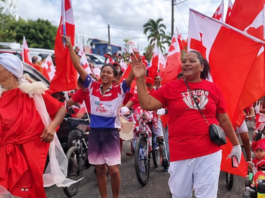
Tongan communities in Tonga, New Zealand, Australia and the United States have since embraced the team through flag parades, vehicle convoys and community gatherings, turning international rugby league matches into celebrations of their shared heritage.
Inspiring a new generation
Taumalolo’s influence on younger players was highlighted in a Fox Sports report published on November 6, in which Tonga halfback Isaiya Katoa acknowledged the importance of Taumalolo and Fifita’s decisions in encouraging other players to represent their heritage.
Former Tonga international Konrad Hurrell also recalled the excitement among players when they learned that Taumalolo had committed to Tonga in 2017.
That influence remains evident in Tonga’s 2026 World Cup squad, where a new generation of players has continued the path established nearly a decade earlier.
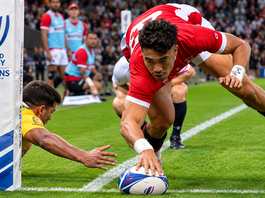
More than half the players used during the tournament were making their first World Cup appearance, with Taumalolo and Tui Lolohea the only remaining members of the 2017 squad.
Uncertainty over Tonga’s leadership
Questions about Tonga’s future also extend to coach Kristian Woolf, who has led the national team since 2014 and has declined to confirm whether he will remain in charge for the 2030 World Cup.
Following the semi-final defeat, Woolf said he would consider his future in due course, describing the loss as a missed opportunity for a talented squad.
While neither Taumalolo nor Woolf has confirmed plans to step away from the national team, their uncertain futures come at a time of generational change for Tonga rugby league.
Whatever Taumalolo decides, his 2017 allegiance switch has left a lasting legacy, inspiring players to represent their heritage and helping transform Tonga national rugby league into a powerful symbol of Tongan identity and unity.