Political analysis – The friction between New Zealand First leader Winston Peters and Opportunity Party leader Qiulae Wong over the Foreign Affairs portfolio could have far-reaching political consequences, with the prospect of another costly general election raising the risk of voter backlash against parties blamed for failing to form a government.
The dispute emerged during the election campaign when Wong ruled out supporting a government in which Peters remained Foreign Affairs Minister, following his controversial remarks telling Chinese-born Green Party MP Lawrence Xu-Nan to “go back to your own country”.
Wong reaffirmed her opposition to Peters retaining the portfolio following the release of the final election results on Friday.
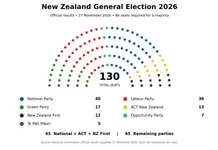
The official results left Prime Minister Christopher Luxon’s governing coalition of National, ACT and New Zealand First with 65 seats, one short of the majority required in the 130-seat Parliament.
Despite repeatedly ruling out working with Opportunity during the election campaign, Luxon has now opened the door to formal negotiations with Wong, whose party holds seven seats. His reversal has already drawn media criticism and prompted questions from reporters, as reported by RNZ, about whether his word could be trusted.
However, should Luxon fail to reconcile their differences, two possible scenarios emerge: another general election or Peters reconsidering his position on working with Labour.
The financial and electoral risks
With the November 7 general election reportedly budgeted at approximately $180 million, another election could impose a comparable financial burden on taxpayers at a time when many New Zealanders are struggling with the cost of living.
The combined expenditure could reach $360 million if a second election costs as much as the first.
The prospect of voters punishing parties they perceive as responsible for forcing the country back to the polls could become a significant consideration in coalition negotiations.
For Opportunity, another election would mean defending its historic parliamentary breakthrough.
The party secured seven seats with 6.06 percent of the party vote, just 1.06 percentage points above the five percent threshold required for parties without an electorate seat to enter Parliament.
Having secured parliamentary representation for the first time, Opportunity would have to clear that threshold again.
National and New Zealand First could also face renewed electoral scrutiny over their handling of negotiations.
Luxon has already acknowledged the importance of avoiding another election.
“Kiwis won’t thank us for rushing to an agreement that falls apart or for sending them back to the polls,” he told reporters on Friday.
Could Peters turn to Labour?
Another pathway to avoiding a fresh election would be for Peters to reconsider his opposition to working with Labour.
Labour, the Greens and Te Pāti Māori collectively hold 58 seats. With New Zealand First’s 12 seats, an alternative arrangement would command 70 seats, four more than the number required for an outright parliamentary majority.
Such an arrangement could also provide Peters with an opportunity to negotiate to retain the Foreign Affairs portfolio.
There is historical precedent for Peters choosing Labour over National.
In 2017, despite National securing more parliamentary seats than Labour, Peters formed a coalition government with Jacinda Ardern, becoming Deputy Prime Minister and Foreign Affairs Minister.
However, both Labour and New Zealand First ruled out working with each other before the 2026 election. An alternative government involving the two parties would require them to reverse their positions and secure agreement with the other parties involved.
There is no confirmed indication that such negotiations are underway.
For Luxon, the challenge extends beyond resolving a dispute over a ministerial portfolio. It concerns National’s ability to remain in government.
For Peters and Wong, the consequences of an unresolved deadlock could extend beyond the negotiating table, potentially returning them to an electorate asked to bear the cost of another general election.