Tonga’s Minister of Lands and Natural Resources, Dr Taniela Fusimalohi, has issued an urgent warning over the country’s water supplies, urging the public to conserve water amid Super El Niño conditions and prolonged drought.
It comes as the World Meteorological Organisation (WMO) warns that the current El Niño could become one of the strongest on record, potentially peaking in December 2026.
The phenomenon disrupts global weather patterns, causing severe drought and water shortages in parts of the western Pacific, including Tonga, while increasing the risk of heavy rainfall and flooding elsewhere. Its impacts could threaten agriculture, food security and public health well into 2027.
The notice, released through the Minister’s Facebook account, highlights concerns about water sources and drinking-water levels in storage tanks.
The Minister said in Tongan: “The Ministry of Lands, through its Natural Resources Division, will issue a notice today concerning the current water situation, water sources and the need to use water wisely because of the Super El Niño conditions and prolonged drought currently affecting us. The notice will also cover the levels of drinking water available in water storage tanks.”
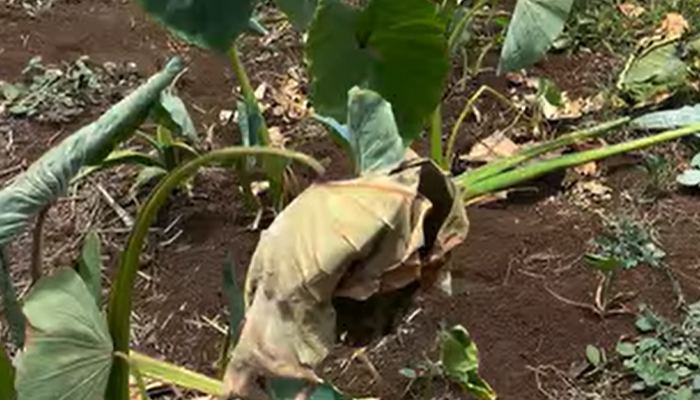
It comes as photographs of withered crops and plants in Tonga have been shared on Facebook, highlighting the damage already caused to plantations by the prolonged drought.
According to the Australian Government’s Smartraveller advisory, drought conditions have been declared in Tongatapu, ʻEua and Haʻapai, while the Niuas are under a drought warning.
The advisory also warns that dry conditions could spread to other island groups.
Strong El Niño raises concerns
International climate assessments indicate that El Niño conditions are intensifying, with potentially significant consequences for Pacific island countries.
The United States National Oceanic and Atmospheric Administration (NOAA) reported in its October assessment a high probability of strong to very strong El Niño conditions continuing into early 2027.
The World Meteorological Organisation has also warned that the event could peak towards the end of 2026, affecting rainfall and temperature patterns across the region.
El Niño is commonly associated with reduced rainfall and increased drought risks in parts of the southwest Pacific, although its effects vary between countries and seasons.
Other Pacific nations face similar threats
Several Pacific countries have already taken measures in response to worsening dry conditions.
In Samoa, authorities have warned about declining rainfall and potential effects on agriculture.
The Solomon Islands has issued meteorological drought warnings, while Palau has activated the first stage of its national drought response plan.
El Niño can influence cyclone activity and tracks across the South Pacific, meaning communities may face both drought and severe storms during the same season.
Editor’s Note: What is El Niño?
El Niño is a natural climate phenomenon caused by unusually warm ocean temperatures in the central and eastern tropical Pacific, disrupting weather patterns worldwide.
It can bring prolonged drought, extreme heat and water shortages to parts of the Pacific, including Tonga, while increasing the risk of heavy rainfall and flooding elsewhere.
The name El Niño, Spanish for “the Christ Child”, originated with fishermen along the coasts of Peru and Ecuador who observed unusually warm ocean waters around Christmas. Scientists later adopted the term to describe this recurring climate phenomenon.