As controversy continues over delays and a reported TOP$7 million penalty on Tonga’s Fangaʻuta Lagoon Bridge project, contractor McConnell Dowell has responded to questions from Kaniva News, clarifying its position on the disputed land issue while declining to discuss key contractual details surrounding the delays and costs.
Eke’s government and McConnell Dowell Constructors Ltd signed the construction contract for the US$97 million project in September 2025 at a ceremony presided over by the King. The project includes a 720-metre bridge across Fangaʻuta Lagoon and 2.1 kilometres of approach roads linking Nukuʻalofa with southern Tongatapu.
The contractor’s response comes amid conflicting accounts from the current and former governments over what caused the delays and who was responsible, as public outrage grows over the lack of clarity surrounding the multimillion-dollar project.
McConnell Dowell told Kaniva News that acquiring land “is not within McConnell Dowell’s scope of work, and we are not party to the Government’s land acquisition processes or negotiations with affected landholders.”
The contractor also confirmed that it had continued working where access was available “and remain focused on delivering the project in accordance with our contractual obligations.”
Government approval required for disclosure
However, the company declined to answer a series of specific questions from Kaniva News aimed at establishing when the costly delays began, what caused them and how the reported penalty accumulated.
Among the questions, Kaniva News asked McConnell Dowell to identify the exact date it considered the project to have entered a compensable delay and what caused that delay.
The company was also asked whether its delay claim or invoice calculated costs from September 2025 and, if so, why September was selected as the starting date.
Another question sought to establish whether unresolved land or access issues at ʻUmusī prevented McConnell Dowell from beginning the main bridge construction between September and December 2025, and whether work carried out during that period consisted only of preliminary works or included construction of the bridge itself.
Kaniva News also asked when the first delay claim was submitted to the Government, how much was claimed and what contractual provision it was based on, as well as whether the Government had provided all land access required under the contract when McConnell Dowell mobilised to Tonga.
McConnell Dowell said it could not disclose those details because of confidentiality obligations under its contract.
“Under the terms of our contract, we are bound by confidentiality obligations and cannot disclose details relating to the contract, including claims, costs, access arrangements or the timing and circumstances of contractual matters, without the approval of our client,” the company said.
The response leaves the exact contractual timeline and financial details unanswered, but indicates that McConnell Dowell could disclose the information with the approval of its client.
Conflicting accounts fuel outrage
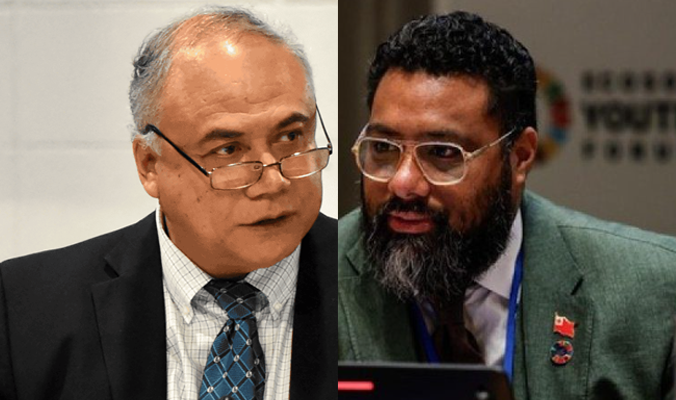
As Kaniva News previously reported, Prime Minister Lord Fakafanua attributed the delays to unresolved land and preparatory issues inherited from the former government, while former Prime Minister Dr ʻAisake Eke rejected that account as untrue and maintained that construction was able to proceed when his administration left office.
The conflicting explanations have triggered widespread outrage among social media users, including a large number of commenters on the Kaniva News Facebook page, many of whom questioned who was responsible for ensuring the land was ready, when the delays actually began and why the country could be left facing millions of paʻanga in additional costs.
Some commenters argued that while Lord Fakafanua and Dr Eke continued to dispute which administration was responsible for the delays, the country was still facing the financial consequences. They said the continuing dispute should not obscure the question of accountability and called for those responsible for the reported penalty to be held to account.
Former Infrastructure Minister Sēmisi Sika previously told Kaniva News that the Government had incurred about TOP$7 million in what he described as penalties between September 2025 and February 2026 because of the prolonged delay.
Lord Fakafanua later confirmed at a press conference that the Government had received a claim from McConnell Dowell for delay-related costs, although he said the amount could potentially be reduced through value engineering.
Dr Eke subsequently challenged Lord Fakafanua’s account of how the problems developed.
Eke said his government had dealt with the land required for the immediate construction work before leaving office on December 18, although he acknowledged that some land and compensation matters remained to be finalised.
He said an unresolved compensation dispute at ʻUmusī involved a demand of about TOP$10 million to TOP$12 million, but maintained that an agreement had been reached allowing construction to proceed while compensation negotiations continued.
Eke also told Kaniva News that McConnell Dowell had made no financial claim against his government for delay-related costs while he was Prime Minister.
He also said that had his government remained in office, the problem would not have occurred.
Lord Fakafanua has yet to respond to Kaniva News’ latest questions seeking clarification following Eke’s challenge to his account.