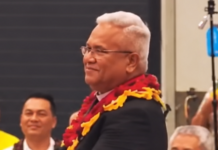
Reverend Simote Vea, who devoted much of his life to Christian ministry and the advancement of democracy, human rights and political reform in Tonga, has died.
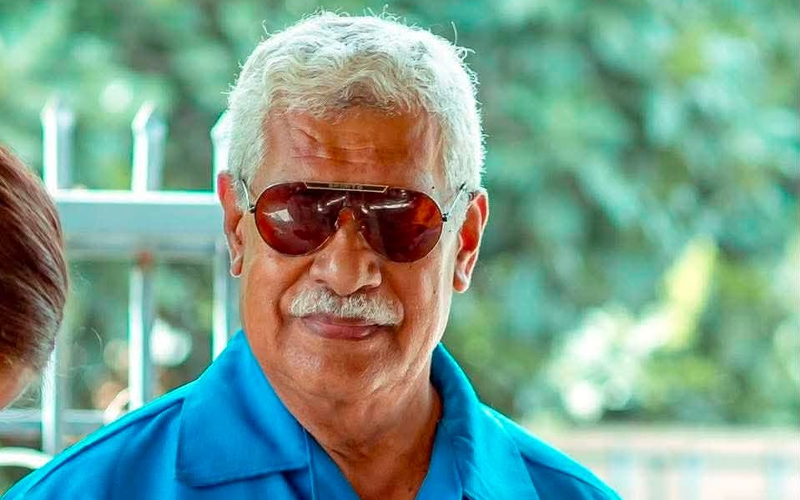
Rev Vea was a prominent member of Tonga’s pro-democracy movement during the decades-long campaign for greater public representation, government accountability and constitutional reform.
He was a founding member of the Human Rights and Democracy Movement and held several senior positions within the organisation, including chairman, general secretary and acting director at different times. He also served for several years as general secretary of the Tonga National Council of Churches.
His political advocacy was particularly visible during the early 2000s, when Tonga remained governed under a system in which the monarch appointed the prime minister and Cabinet and held extensive executive authority.
Following the dismissal by royal command of Police Minister Clive Edwards, Labour and Commerce Minister Masaso Paunga and Justice Minister ʻAisea Taumoepeau in 2004, Rev Vea publicly condemned the manner in which the ministers had been removed.
He described the dismissals as a violation of human rights and an abuse of power, arguing that such action was possible under a political system that vested absolute authority in one person.
Rev Vea also criticised the government’s failure to provide a clear explanation for the dismissals and called on then prime minister Prince ʻUlukālala Lavaka Ata, who was responsible for the government’s information services, to inform the public about the reasons behind the decision.
The Human Rights and Democracy Movement maintained that the three ministers should have been consulted, informed of the allegations against them and given a fair opportunity to respond.
Rev Vea later said a television interview with Edwards had helped clarify some of the unanswered questions surrounding the dismissals. Edwards claimed that tensions had developed over the government’s one-airline policy and the awarding of services to Air Peau, in which the then crown prince reportedly held a major business interest.
Further disagreement reportedly arose after Edwards presented a critical Royal Commission report on the collapse of Royal Tongan Airlines, whose board had been chaired by the prime minister.
Although Rev Vea was a firm critic of the concentration and exercise of political power, he also recognised and welcomed meaningful steps towards reform.
When the Tongan government later presented its own political-reform proposal, departing in several respects from the recommendations of the National Committee for Political Reform, Rev Vea described it as a positive sign of change.
He estimated that the government’s proposal represented between 60 and 70 percent of the reforms sought by the public. He particularly welcomed the proposal for elected members of Parliament to form a majority of Cabinet, describing it as a significant new development for Tonga.
His involvement in the democracy movement was not without personal and institutional opposition. Academic accounts record that Rev Vea and other Free Wesleyan ministers who supported political reform faced criticism from people who regarded their activism as opposition to the monarch, government and established social order.
Despite that resistance, he continued to advocate for social justice, political accountability and the right of the Tongan people to participate more fully in governing their country.
Service to the Free Wesleyan Church
Alongside his public advocacy, Rev Vea devoted much of his life to Christian ministry. He served as a minister and senior leader of the Free Wesleyan Church of Tonga before retiring from active ministry.
Even in retirement, he remained engaged in church and community affairs. In 2024, he participated in interdenominational meetings in Nukuʻalofa, where he joined other Christian leaders in discussing faith, family life and challenges affecting Tongan young people, including drugs, crime, technology and the prolonged separation of married couples caused by overseas employment.
Rev Vea’s life brought together two forms of service that he regarded as closely connected: Christian ministry and the pursuit of justice. His willingness to challenge political authority distinguished him as one of the church figures who gave moral and religious support to Tonga’s movement for democratic reform.
His death marks the passing of an important figure in Tonga’s modern political and religious history—a church minister who spoke publicly for human rights, accountable government and a more representative political system at a time when doing so attracted considerable opposition.
Details of his age, the circumstances of his death and funeral arrangements were not immediately available.