Tongans living in the kingdom and all over the world shared their views with the Land Commission’s public meetings.
They were concerned with land law and practices and wanted changes to make the system more equitable.
The Commission held 79 public meetings, including 13 in the United States, eight in Australia and six in New Zealand (342 attendance).
The proposals received clearly showed concerns regarding the land tenure system and its history, the law of succession, women’s rights, freehold land, mortgaged land, leased land, abandoned land, land belonging to Tongans living overseas and the foreshore.
People residing in the outer islands expressed concerns about the erosion of land by the sea and the right of Tongans to use the foreshores and seek a livelihood from the sea without impediment. People living in rural villages were more concerned with tax allotments and their ability to lease these lands.
People residing close to the foreshores and lagoons such as Fanga’uta were concerned with development projects in these areas that could affect their livelihoods. Tongans living overseas wanted to know how they could contribute to the upkeep of their land in Tonga possibly by payment of taxes that could be imposed on them to contribute to the general revenue of the country.
There was great concern and dissatisfaction with the services provided by the Ministry of Lands.
Two issues that were raised were the role of abandoned land and absentee landholders and the rights of Tongans living overseas.
The Commission report said there were a large number of registered town and tax allotments across Tonga that were not being used for residential or farming purposes, in effect they were abandoned lands. In many cases, the landholders of these abandoned lands lived overseas. Other views expressed by the public were as follows:
Abandoned allotments should be made available to others to use with the landholder’s consent;
The landholder should choose who would work his land;
The Town Officer should be the custodian for abandoned allotments;
Abandoned land should be given to an independent body which would be the intermediary between the landholder and anyone in need of land;
Abandoned land should be returned to the Government and become part of the Crown Estates;
Landholders who abandoned their land should be penalised.
Most Tongans living overseas opposed any move to take away their rights to land in Tonga on the basis that they had acquired foreign citizenship or they had lived overseas for many years.
However, members of the public gave often conflicting views to the Commission meetings:
Land rights of Tongan subjects who had acquired foreign citizenship should not be forfeited as they are still Tongans in their hearts, they helped the economy of Tonga with their remittances and their long term intention was to build a home in Tonga with the money earned overseas and eventually return to live in Tonga;
Land rights of Tongan subjects who had acquired foreign citizenship should be forfeited on the ground that they had benefits and entitlements in the foreign land while they still hold on to land in Tonga, which was needed by those in Tonga who do not own any land.
EDITOR’S NOTE:
This story is based on the Tongan Royal Land Commission Inquiry report released in 2012. When Kaniva News asked the Acting Chief Executive of the Ministry of Lands last week what progress had been made after the report was released, he said the Ministry will consider incorporating the report’s recommendations in the Ministry’s main schedule.
A man whose daughter was killed in a car that fled from police says encouraging more pursuits is madness.
Photo: RNZ / Marika Khabazi
Two years after tightening the rules around pursuing fleeing vehicles, police are now moving to relax them again.
Most drivers who failed to stop for police have not been getting caught – but parents who have had children killed in these high-speed chases said the cost of an arrest was just too high.
Tony Jarvis’ daughter Karleane Magon was a passenger in a car that fled from police. She was killed in 2010, at 20 years old.
“Seventy people have died in that 10-year period since I lost my girl. Which you know that’s not just 70 people have died, it’s been 70 families have died,” Jarvis said.
“Not just my girl died, I died on that day.”
Encouraging more pursuits was madness, Jarvis said, particularly given the death of a fleeing driver in Dunedin just two days ago.
“The police know all these decades of police pursuits, the amount of innocent people that have died, and yet, in the face of a tragedy in the weekend, they’re upping their police pursuits and hoping for a different outcome? That’s insanity.”
Police Commissioner Andrew Coster said the new rules balanced safety and holding offenders to account.
They also factored in the further harm an offender could cause if they were not apprehended, he said.
“Whether we’re pursuing or not, there is a risk to the public,” he said.
“We’re trying to do our job in the best way that we can, meeting public expectation around apprehending offenders for serious crimes, whilst recognising that we don’t want to increase the risk to the public.”
Sunny Kaushal from the Dairy and Business Owners Group agreed police needed to be able to chase offenders who fled.
“If the offenders are doing some crime, if they’re running, then the police have to chase – they have to apprehend them before those offenders end up doing something else,” he said.
“They’re a risk to the whole community.”
Police Association president Chris Cahill said there had been a 106 percent increase in how many people were fleeing since the number of pursuits was reduced.
It was likely the new rules would result in more deaths, but there was no perfect fleeing driver policy, he said..
“The public have been out there demanding police pursue more of these people, well they’ve got to understand the consequence is that there could be people injured or killed.
“If that occurs there needs to be a lessons-learnt approach taken rather than a punishment to police officers who are trying to get that balance right.”
But to Dion Stone, that trade-off was unacceptable.
His daughter Georgina Stone-Te Haara was also a passenger in a vehicle that fled from police in 2010. Like Karleane Magon, she was 20 when she died in a crash.
Stone wanted to see different methods used to catch offenders.
“How much do we want that property back? How willing are we to see that person be locked up for what they’ve done, to kill someone else?
“Either somehow the police pull back knowing who the culprits are and knowing where they’re going to be, or need better tactics.”
Coster said police would be reviewing the outcomes of any pursuits regularly and fine-tuning the new rules as needed.
Tonga has been urged to give women the right to inherit and own land.
At a recent meeting of the United Nations Human Rights Commission in Geneva, delegates from New Zealand, Great Britain, the United States, Australia and Brail said Tonga should give Tongan women the right to inherit land.
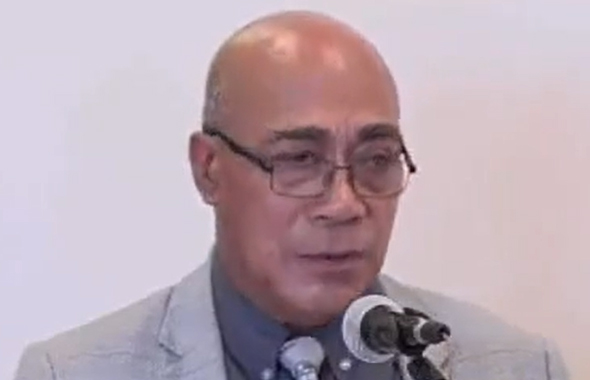
Lord Tu’i’āfitu, the Minister of Lands and Survey
The call came a decade after the Tongan Royal Land Commission recommended women and expatriates be given rights to land.
Tongan law and traditional custom forbids land ownership by women. Only a son can inherit land with rights passed on to other male relatives if parents do not produce a male heir.
Under the current law Tongans are not allowed to own land outright but men over the age of 16 are allowed to hold land by grant or by lease.
Women are allowed to lease land but are not given grants and Tongans who move overseas forfeit their land rights.
Radio New Zealand quoted Brazilian delegate Tovar Nunes as saying the kingdom should ratify the convention on legislation to remove all forms of discrimination against women, in particular the right to own land and inherit it.
The campaign for women to have equal rights in land ownership has been on for several decades.
In 2006 the Privy Council approved a proposal to explore laws to allow women to inherit registered parcels of land if there was no direct male heir.
An official in the Prime Minister’s office, Lopeti Senituli, says at the time it would be the most significant amendment ever made to Tonga’s land laws.
Ofa Guttenbeil Likiliki of the Tongan Women’s Action Group for Change, said women’s groups had long pushed for amendments. She said the government should call nationwide consultations before changing the law.
In 2012, after intensive consultation with landowners and the public, the Royal Commission into land recommended the law be changed to allow women to own land, but still with some restrictions.
Commissioner Lord Tevita Tupou told RNZ it had recommended changing the law so women were given rights to town allotments, which are used for housing, but not larger rural allotments which were used for farming.
“That will give them the right over that piece of land to lease out or to mortgage out for further development of that piece of land,” Lord Tevita said.
“The other allotment we thought would not be appropriate for women because that’s really for men to work, for planting crops and things. It’s not for homes.”
Lord Tupou says he hoped some of the recommendations would be made into law by the end of 2012.
The Commission made a number of recommendations regarding women and land. Among the key ones were that the termination of an unmarried daughter’s right upon proof of her having committed adultery or fornication is repealed.
That the restriction on the inheritance of a daughter when she marries should be removed. Where there is no male heir of the deceased landholder, his daughters shall succeed as follows.
That a widow be allowed to lease or mortgage the land she holds as a widow but only with the consent of the heir.
That the rights of a widow to land that has been newly acquired by her husband should allow her to lease or mortgage the land with the consent of the heir, and where she had no children with her husband, then consent is not required.
That a deserted wife shall have the right to remain on the family land and home with her children until she remarries or dies.
A decade on, there is little if any sign of any change having been made.
When asked by Kaniva News what progress had been made, a senior official at the Ministry of Land and Survey said there had been a little change.
It is understood the Ministry is currently concentrating on dealing with complaints against the Ministry lodged with the Ombudsman and some land court cases.
Kaniva comment
Kaniva News would welcome any move by the Ministry to finally incorporate the report’s recommendations in the main schedule of its work. It would certainly be a chance to upgrade them. There seems no logical objection in this day and age to women having access to agricultural land that could make them financially independent.
A decade ago concerns about rising seas were a concern and as the threat of global warming continues, the loss of land to the sea will continue to be a major concern. How will the government help landowners and leaseholders whose land disappears below the waves?
The Royal Commission made many excellent recommendations. It is Right time the Ministry acted on them.
Long Covid and ME/CFS (formerly known as Chronic Fatigue Syndrome) are effectively the same illness, according to a University of Otago researcher.
Photo: Public domain
Emeritus Professor Warren Tate leads a team at the University of Otago’s Department of Biochemistry that has been examining the similarities in the molecular patterns of long Covid and ME/CFS patients.
Tate told Nine to Noon these similarities were so great that it was “a travesty of justice” that people with the illnesses were treated differently.
“When you get a chronic inflammatory response, which is ongoing, that leads to a cascade of effects which involves the brain’s immune system and inflammatory system and the central nervous system and so then the brain starts to misfunction in terms of its regulation of body physiology.
“What we see with both ME/CFS and long COVID, there’s about over 100 symptoms have been reported by patients and that reflects the fact that the brain and central nervous system are not controlling physiology properly. And amazingly, most of those symptoms are the same in both long Covid and ME/CFS. That’s why I see these are really just names given to the same response in the susceptible people where their immune inflammatory system becomes chronic.”
In 2022, the Association of New Zealand Myalgic Encephalopathy Societies (ANZMES) submitted a 6400-strong petition to Parliament, calling for ME/CFS to be reclassified from a chronic illness to a disability, to help people access benefits and services.
Since then, nothing has happened. ANZMES president Fiona Charlton told Kathryn Ryan the system was not working for people with ME/CFS.
“ME/CFS fits the definition of disability, but not the criteria to access disability support services. And those same support services, while they are available under long-term conditions through the health system. People with ME do not fit the criteria to access them.”
While there were minor differences between how the United Nations, the World Health Organisation and the New Zealand government defined ‘disability’ – Charlton said they all agreed it was “an impairment, be it physical, intellectual, or sensory, that lasts more than six months and limits the ability to carry out day to day activities”.
To access disability support services in New Zealand, the criteria stated that you had to have an intellectual impairment or be on the autism spectrum, Charlton said.
“So, people with ME don’t fit into that. But they do fit into the disability definition, where they have a physical sensory impairment, and for many people that’s lifelong, so obviously is lasting more than six months. And it significantly limits the ability to carry out activities.”
Charlton said a diagnosis of ME/CFS required the person to have lost 50 percent of their usual functionality.
“A lot of us are not able to work, are not able to even leave the house, some are not even able to leave their beds.”
Tom Harris recently got back on his feet after his second bout of ME/CFS. The Christchurch musician’s first experience of the illness was triggered by a gastro bug he picked up at the age of 18, while on his OE.
“I recovered [from the gastro bug], and basically from then until I was 25… I just was tired.”
Harris managed to study and carry on with life to a certain extent, but the constant tiredness made everything hard work. He did not have the energy to meet people or make friends.
“If you picture you’re coming down with a cold, that kind of feeling, you just want to curl up and go home. It was like that for seven years essentially. And while I tried to make the most of it and push it on, it was just incredibly hard.”
Harris then enjoyed “a wonderful five years” in remission where his health recovered.
“I spent a lot of that time playing in a high energy dance band which is the opposite end of the spectrum from ME/CFS, staying in bed.”
A couple of years ago, Harris suffered an intense relapse, where he spent around 18 months unwell. He spent 90 percent of the time sitting in a chair in a darkened room, unable to cope with normal sunlight levels.
Harris said post-exertional malaise (PEM) was crippling for ME/CFS sufferers.
One day he went for a 10-minute walk on the beach because “I was feeling risky”.
“And because of that I had to spend two days in bed. I couldn’t get out of bed just as if I’d run a ridiculous marathon.”
Harris has been in remission from his second bout of ME/CFS since January. He he was grateful for the support of his parents, who he lived with, and for having a flexible job as a music teacher that enabled him to manage his workload. Support from online ME/CFS and long Covid groups was also helpful, but Harris said “sick people caring for sick people” was not the answer.
“We’re having to fight our own battles.”
Tate said changing the definition of ME/CFS to a disability would give sufferers a legitimacy and status that they currently lack. The debilitating symptoms restricted people with the illness from engaging in daily life, so the illness was often viewed as ‘made up’.
“That’s what people have been having to put up with and to fight and so having something that says, ‘this is a disability’ gives them a status. They might not like having that status, but a status which means the medical community and the social services, take them more seriously.”
Tate said more education of the medical community about the international best evidence about these diseases was needed, so people with them could be assured of the same standards of care across the country.
“My concern is that… there’s quite a lot of interests and excitement about doing something for long Covid, but a lukewarm response for connecting ME/CFS people in with it, when they’re basically the same disease. They’re just the response of the susceptible persons bodies to these external stresses. That is a travesty of justice. We have to make sure this consistent treatment of people are suffering from this kind of illness.”
FAKAMATALA FAKATONGA
Oku tatau pe ‘a e Koviti taungaloloa mo e ME/CFS pe ne ‘iloa ki mu’a ko e (formerly known as Chronic Fatigue Syndrome) fakatatau ki ha lau ‘a ha taha fakatotolo fakaako mei he Univesiti ‘o Otago.
Oku tataki ‘e Emeritus Professor Warren Tate ha timi mei he Otago’s Department of Biochemistry a ia oku nau sivi ‘a e ngaahi mata tatau ‘i he peteni fakamolekiula ‘o e kau puke he Koviti taungaloloa mo e ME/CFS.
Ne fakaha ‘e Tate ki he Nine to Noon oku fu’u lahi ‘a e mata tatau ko eni pea ‘oku fakaoli ai ‘a e fakamaau totonu ‘i hono faito’o kehekehe ‘a e kakai ‘oku puke he ongo mahaki ni.
I he 2022 na’e fakahu atu ai ha tohi tangi ‘e ha toko 6400 mei he Association of New Zealand Myalgic Encephalopathy Societies (ANZMES) submitted a 6400 ki Fale Alea o ui ki he ME/CFS ke fakakalasi ia ko e disability, koeuhi ke lava e kakai ‘oku puke ai ‘o ma’u ‘a e penefiti mo e ngaahi sevesi ‘o e disability.
Talu mei ai, ‘ikai pe ha me’a ‘e hoko. Na’e fakaha ‘e he palesiteni ‘o e ANZMES Fiona Charlton kia Kathryn Ryan oku ‘ikai ngaue ‘a e sisitemi ki he kakai ‘oku nau puke he ME/CFS.
Lolotonga ‘oku ‘i ai ‘a e kehekehe si’i ‘i hono faka’uhinga’i ‘e he Pule’anga Fakatahataha mo e Kautaha Mo’ui ‘a Mamani ‘a e lea disability – ne pehe ‘e Charlton ne nau loto taha ko ha mamatea tatau pe fakaesino, faka’atamai pe fakaeongo ‘oku tolonga laka hake ‘i ha mahino ‘e ono pea ‘oku ne fakangatangata ‘a e malava ke fakahoko ‘a e ngaahi ngaue faka’aho.
Oku tuhu’i mai ‘e he kulaitelia’ kuopau ke ‘i ai hao mamatea faka’atamai pe ‘otisimi kae lava k eke toki ma’u ‘a e ngaahi sevesi ‘oku ‘atā ki he disability.
Na’e pehe ‘e Charlton ko ha faito’o ‘o e ME/CFS ‘e fiema’u ‘a e taha ko ia ke mole meiate ia ‘a e peseta ‘e 50 ‘o e angamaheni ‘a e ngaue ‘a hono sino.
Ko e tokolahi taha ‘o kimautolu ‘oku ‘ikai lava ngaue pe mavahe mei he fale pea ni’ihi ‘ikai lava mavahe mei honau mohenga’.
A year after he was shot in Hawaiʻi, the death of former Auckland Detective Sergeant Tuʻiono Liavaʻa (Josh) continues to revive memories of the tragedy that surrounded his marriage to Princess Mele Siu’ilikutapu in 1969.
Liavaʻa, who was 66 when he died, led an adventurous and colourful life. His wedding to Princess Siu’ilikutapu was forcibly annulled by King Tupou IV, in accordance with his constitutional prerogative, after Siu’ilikutapu returned to Tonga.
Several songs were written about the annulment, among them a lament about the pain Liava’a felt as his marriage was torn apart.
Dr Malakai Koloamatangi from Massey University said that after the king annulled the marriage the story became embedded in the Tongan national psyche to the point that Liava’a and the princess become part of Tongan folklore.
Dr Koloamatangi described the story of Detective Sergeant Liava’a and Princess Siuʻilikutapu as a Tongan romantic saga that became a Shakespearean tragedy.
“When the story broke Josh’s father, who was working at the Post Office in Tonga, asked my father, Saimone Koloamatangi, lead guitarist for the Fofo’anga band, to compose a song for Josh, mainly to commemorate what had transpired, but also perhaps as a way of asking the king for forgiveness and offering him an olive branch,” he said.
The song was composed with a relative of his, Pita Vi, who was also a Fofo’anga member. Saimone, Pita Vi and Tongotongo Liavaʻa, Josh’s father, all worked together at the Post Office in Tonga. The song, which was very popular and is still sung to this day was titled ‘Aotearoa,’ which stood for the love and affection that bound Josh and the princess.
Some Tongan expressions like “Ko e foʻui ‘o e tuʻa ko e mamahi pe” or “the commoners deserved to feel pain” were used in the song.
After the marriage was made illegal, Princess Siuʻilikutapu was married to Hon. Kalaniuvalu Fotofili, who was born as Hon. Siosiua Ngalumoetutulu Kalaniuvalu-Fotofili. He died in 1998.
“The songs allegorically speak of the new husband’s genealogy, birthplace, homeland and chiefliness as a way of edifying him while at the same time lowering the princess’ status, metaphorically, as penance for her previous conduct,” Dr Koloamatangi said.
“All three songs were performed and recorded by the Fōfōʻanga band. After its recording at the government-owned radio station, ‘Aotearoa’, was allowed airplay for a brief period before it was taken off the station’s repertoire, never to be aired again.
“I believe it has recently been reinstated. Apparently, the reason for taking it off the air was that it caused a lot of pain to too many people.”
Enigmatic
Dr Koloamatangi described Liavaʻa as an archetypical, enigmatic, Pacific-Polynesian male.
“He was at ease in most situations, at least in his public persona, adept at relating to people, but knowledgeable enough about protocol, custom and social nous not to breach social conventions.
“I was most impressed with the manner in which he could relate to people from all walks of life almost as soon as they met him, even if it was for the first time or during a chance encounter.
“But he was always concerned to do the ‘correct’ thing, for example his long time and, at times intense, involvement with protesting over Tongans’ right to the ‘Atalanga residence in Auckland. In many ways, Josh led a varied and interesting life.
“It was one of these ways, again an ‘acceptable’ Polynesian-Tongan trait in an almost culturally exotic sense, his penchant for female liaisons, both known and covert, that made him such a fascinating figure.
“More so when one considers that he was probably involved in these ‘affairs of the heart’ just to the right degree – not more or less. For example, when (some of) his legendary affairs became known he would increase the public’s sense of mystery by rejecting everyone’s demand and curiosity to hear his side of the story,” Dr Koloamatangi said.
Editor’s note:
I would like to allude to the song ʻAotearoaʻ. Dr Malakai Koloamatangi claimed the song was composed by his late father Saimone Koloamatangi’s relative Pita Vi. Saimone and Pita were both musicians and composers. However during Josh Liavaʻaʻs burial service in Auckland last year, his eldest brother ʻUhila Liavaʻa read out a version of a song called ʻAotearoaʻ as part of Josh’s eulogy. ʻUhila told mourners the song was originally composed by their father, the late Siosifa Tongotongo Liavaʻa, after Tuʻiono’s marriage to the Princess was annulled, and was given to Saimone and the Fofo’anga band to perform. The version read by ʻUhila was similar to the one recorded by Fofoʻanga. The only differences were that the version attributed to Pita Vi and recorded by Fofo’anga consisted of four verses and a chorus, while the one attributed to Josh’s father contained five verses and a chorus.
Dr Koloamatangi told Kaniva News the song was regarded by Fofo’anga members from the beginning as having been composed by Pita Vi. He said there was evidence in the song’s lyrics that Tongan sayings and terms used were common to Pita Vi’s other compositions. However, Dr Koloamatangi said he wanted to respect Josh’s family and give their father the full acknowledgement as composer of the song.
Kaniva understands Josh’s father composed another song to express his grief at what had happened to his son. The song known as ”Ise’isa e ta kuo o’o” or ‘Ise’isa was recorded by his own band, the Uipi ‘o e Halamaumau Koula string band, which was based in the town of Tofoa where he lived.
Censorship
The recording of Tongan songs at the time was made at the government sponsored national radio now known as Radio A3Z. The process was strictly monitored by a committee whose job was to make sure the lyrics aligned with the protocol and ethics of Tongan respect known as faka’apa’apa. Any songs that tended to express complaint and lamentation against the royals and nobles were strictly censored and at times not allowed on air.
This was what happened to the attempts by Josh’s father, who was also a musician and a composer, to lament the tragedy that befell his son. When it was first recorded, the ‘Ise’isa song allegedly failed to meet the approval of the committee and was not allowed on air because lamenting the wedding annulment would be seen as disrespectful to the king and his House.
It was believed this was the reason why Josh’s father asked Pita Vi and Koloamatagi to compose the song ‘Aotearoa’ to see if that song would make it on air. But as reported by Dr Koloamatangi, the songs went to air for only a short time before they were taken off. However, it appeared the Radio A3Z censorship committee has recently been more relaxed and both songs have been regularly heard on air.
(Please note that the translation into English is a mixture of word-for-word and an interpretive translation in which we attempt to render the exact contextual meaning of the songs in such a way that our English readers can comprehend them in their normal daily languages).
“Aoteoroa” (translated)
Let the north wind blows inAnd rest at FangatapuMy longing for what has gone pastTo a love that fell in battle.I try to understand, but cannotThe bond of love that has been brokenI vow to live with it and not to give it awayI am an innocent man made guiltyAotearoa, where the diamond cluster wasMy heart chose it for me to wearIt was given to me through heavenly mercyThe ecclesiastical mystery of the UnknownGoodbye my dear, I have gone astrayOur friendship lasted for only a few minutes.The fable was trueIt is a commoner’s lot to feel painChorusLet’s put the masila in and start rowingAdrift like an empty shell into the open seaLive like a slave day and nightIt is a common man’s lot in life.
Masila: Stick used to catch bonito
Fangatapu: The seafront of the Nuku’alofa royal palace
“‘Ise’isa” by Tongotongo Liava’a (translated)
Alas, the tragedy overwhelms me
Having love brings me a disastrous ending
My love and desire carried me off
I can only part with it when I die
My heart cries, but it was already stricken
After it was made clear it had been torn apart
My love brings me evil
I wish I was a leviathan
So I could face the consequences
The owl and pelican of the desert
Endure suffering day and night
I cannot withstand it
As I now utter my broken love
Let me cry to ease the pain
I wish it was possible
For us to halve my suffering
Let me carry it by myself
Ah my devotedness
A life such as that of a hanger-on
Who went in search for a country to live
His life was full of risks
My innocent heart wished it had never happened
I unknowingly dug my own grave
It was my misfortune, but I insisted
As that was the commoner’s share
Goodbye madam, let’s depart
I would drink in the pain and taste death
The enslaved love has been dissolved
“Aotearoa” (Tongan version)
Angiangi mai mu’a si’i Tokelau
Talolo hono ‘ea ‘i he fangatapu
‘a si’ete fakaanaua ki he kuo’alu
Ki ha ‘ofa lotolu kuo totau
Fiu fifili ka kuo ‘ikai pe
He talite feluteni kuo movete
Tuku keu tauleva ‘o tapu vete
Ko e tonuhia ‘a faiekina pe
Aotearoa moe pupunga taiamoni
Ne te fili loto keu teunga’aki
‘ae meesi ‘oku fakahevani
Ko e ‘ekelesia ‘oe ta’ehamai
Tofa mu’a kuo te si’i he
Si’a maheni kuo lau miniti pe
Pea mo’oni e lau ‘a e fepale
Ko e fo’ui ‘oe tu’a ko e mamahi pe
Chorus
Langa e masila moe tau’a’alo
Hungalu’opea ki he vahamama’o
Nofo hopoate ‘ihe po’uli moe ‘aho
Tufakanga ‘a pe ‘o kita ma’ulalo
ʻIseʻisa (Tongan version) by Tongotongo Liava’a
‘Ise’isa he tā kuo o’o Feohi mo ‘ofa ta koe fakapō Hahamu si’eku ‘ofa moe manako Te u toki mate pea ‘e ngalo Tangi e loto ni ka kuo te’ia ‘Ene mahino kuo vetekina Si’eku ‘ofa ni koe mala ki a kita
Peheange mai ko ha levaiatani Ke ma fe’ao moe nofo ‘amanaki Lulu e toafa mo e pelikani Pō mo e ‘aho he inu mamahi He’ikai te u lava tu’uaki Si’eku ‘ofani kuo manava’aki Tuku pe ke u tangi na’a lelu ai
‘E te faka’amu ko ha me’a ‘e lava Ke ma vaeua si’oto tufakanga Tuku ai a keu fua tokotaha ‘Oi seuke ‘ete ‘osikiavelenga Ha mo’ui kuo kainikavea He kumi fonua mo e hehenga Ha mo’ui ‘oku nofo ‘i lelenga
Ta’e’alo’aloa hoto loto vale Ko si’oto fa’itoka ka te mūnoa pe Ta ko hoto mala kau ‘afungi pe He koe ‘inasi ia ‘o me’avale Tōfā teine ta fai’aki e Kau inu e mamahi ifo moe mate Feluteni e ‘ofa kuo hopoate
“Tapu ange moe kakala ‘iloa” by Princess Melenaite (Tongan version)
A man who injured his neighbour with a machete after becoming annoyed by motorbike noise outside his house has been jailed for more than three years.
Supreme Court Judge Cooper said ‘Alaponi Vaomotou’s sentence without suspension was necessary to protect the community from his repeated offending.
Vaomotou, 46, was found guilty of causing serious bodily harm after a judge-alone trial.
The court was told that on April 2022, Vaomotou was riding his motorcycle along the roads leading to his property in Fo’ui.
A neighbour, Mr. Glen Kaumavae who was on his verandah talking with his site manager and a team of workers, was angered by the noise Vaomotou had been making with his motorbike. He felt it was too loud and that this had been a long-standing problem, a court document said.
Kaumavae went to Vaomotou after he had arrived and parked up.
A confrontation had ensued while Vaomotou’s 11-year-old daughter was with him at the time. She stood a little in front of him and consequently, Kaumavae did not see the machete Vaomotou was holding, as the young girl was obstructing his view.
Vaomotou swung the machete at him. Kaumavae put up his arm to protect himself and was injured.
After visiting the hospital, Kaumavae reported the matter to the Police.
Vaomotou was arrested and taken to the police station and interviewed. He provided police with an account where he admitted the attack:
Vaomotou said: “I had told him four times to leave my property, however I heard someone saying to shoot me to death, as well as another person saying to beat me to death.
Then [Mr Kaumavae] began to walk towards me and then I grabbed the machete and began to strike and injure his hand.”
The court said Vaomotou put forward a different version of events at the trial, one of having been confronted by all the workers who had been with Kaumavae, armed with pieces of timber and a baseball bat, but that account was rejected by the Court.
The Crown called neighbours Rocky Fotu and Kauasi Lomu whose version of events corroborated the complainant’s.
In sentencing Vaomotou, Justice Cooper said: “I adopt a starting point of 3 years”.
Mr Cooper was concerned at the fact that Mr Vaomotou carried out this attack in front of his young daughter and this is his second conviction for a machete attack. Mr Cooper increased his jail terms to four years.
“For the fact he was confronted first, I reduce that by three months”, Mr Cooper said.
“That gives a sentence of 3 years and 9 months.
“I consider Mr. Vaomotou poses a real danger to the public, consequently none of his sentence will be suspended.”
Mr. Vaomotou will serve three years and nine months’ imprisonment, which will be back dated to his remand on 24 April 2023.
Princess Mele Siu’ilikutapu, a first cousin of King Tupou VI has died aged 75 at an Auckland hospital this morning at 7.15am Sunday May 28.
Princess Mele Siu’ilikutapu. Photo/Sreenshot
A vigil has been held in the hospital by Prince Tu’ipelehake and her son’s kāinga, the Palace Office said.
Princess Siu’ilikutapu was deeply involved with the Tongan community in Auckland. She supported Covid-19 vaccinations and recently appealed to her people to get immunised.
“Kāinga Tonga I appeal to you who have yet to do your first dose. It is very dangerous to our family and our people in Aotearoa,” the Princess said.
“I ask the youth and those between 12 to 29 years old to join in so it could encourage your generation to get vaccinated”.
The Princess represented the Tongan community during an event in 2021 in Auckland in which former Prime Minister Jacinda Ardern gave a formal and unreserved apology on behalf of the government for the Dawn Raids which she said left Pacific communities feeling “targeted and terrorised”,
Siu’ilikutapu said she vividly recalled the Dawn Raids and the injustice of the treatment applied specifically to her community.
She said she accepted the government’s gifts which she described as “very significant indeed” saying it signalled the government’s desire to mend the rift.
The Royal Palace in Nuku’alofa said the Princess’ body is expected to be returned to Tonga.
The Princess first married to late Tu’iono Liava’a, a Tongan Police sergeant in Auckland in 1969.
The wedding was forcibly annulled by King Tupou IV the same year, in accordance with his constitutional prerogative, after Siu’ilikutapu returned to Tonga.
After the marriage was made illegal, Princess Siuʻilikutapu was married to Late Hon. Kalaniuvalu Fotofili, who was born as Siosiua Ngalumoetutulu Kalaniuvalu-Fotofili. He died in 1998.
They had two sons. The eldest died in 2010 leaving the youngest a chance for the king to give him two chiefly titles, Kalaniuvalu and Fotofili. He is the current Prince Kalaniuvalu Fotofili.
In 1975 Siu’ilikutapu was elected to the Legislative Assembly, becoming its first female member.
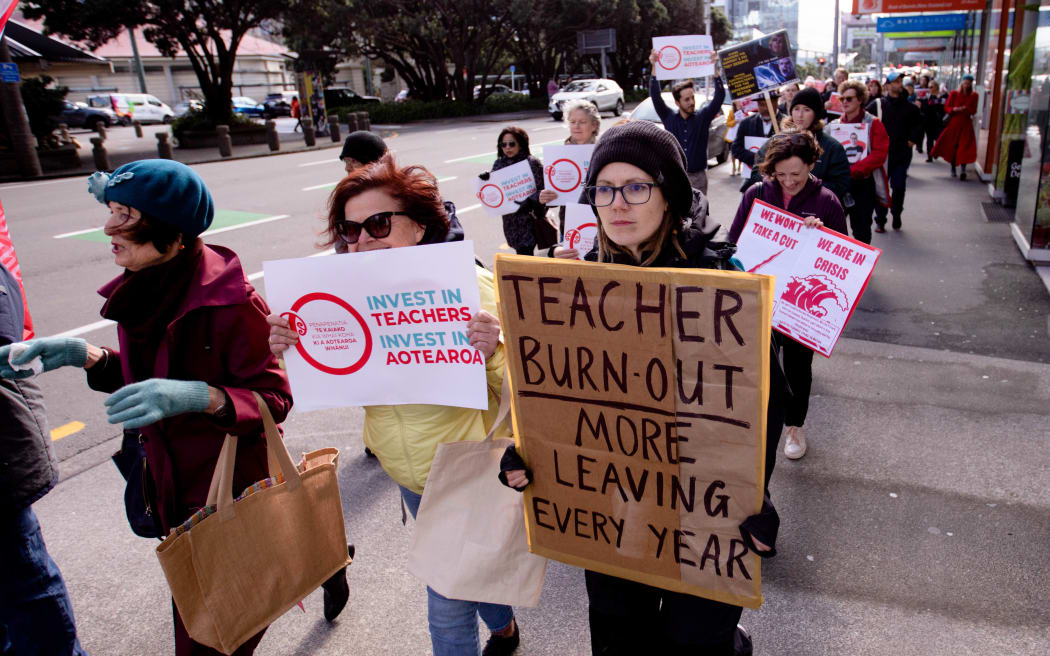
Primary school teachers have called off strike action proposed for Wednesday, as they wait for a revised offer from the government.
A protest by Wellington secondary school teachers in March 2023. Photo: RNZ / Angus Dreaver
In an email sent to teachers, the NZEI said the Minister of Finance Grant Robertson has agreed to meet with the union on Tuesday, to discuss the settlement.
It expected to receive the terms of the agreement later in the day, to take to teachers on Wednesday.
The union said schools may still close on Wednesday afternoon so that staff can attend a paid union meeting.
It said if the offer was rejected, union members will be balloted on whether industrial action should resume, with any new strikes starting in mid-June at the earliest.
Any death, whenever it occurs and whomever to, sends shockwaves through familial and social units who are often completely blindsided by the loss no matter the circumstances of the departure.
But in and amongst the blur of those grey days and weeks spent planning funerals and memorial services, one crucial aspect of the deceased lives almost always gets neglected: namely, what on earth are we supposed to do with their social media?
It’s a sad truth that social media has fundamentally changed the way we live and interact with the world and our loved ones.
Many of us live our life through our phones and when we’re gone we leave behind a vast digital footprint that can seem impossible to control or erase which can cause your loved ones unexpected stress alongside their grief.
Luckily, there are ways to get a hold of your online presence before you kick the bucket. But you’ll need to have a few awkward conversations first!
When a person dies they leave behind an online legacy that can be hard to remove
How to take control of your a dead person’s social media when they’re gone
Facebook, Twitter and Instagram all offer users the option of nominating someone to look after their social media pages once they’ve passed.
Facebook
From your main profile, click your profile photo in the top right of Facebook.
Select Settings and privacy, then click Settings.
Below General profile settings, click Memorialisation settings.
Type in a friend’s name in Choose a friend and click Add.
To let your friend know they’re now your legacy contact, click Send.
To change or remove a legacy contact, follow steps 1-3 above, then click Remove. From there, you can add a new legacy contact if you’d like.
If your main profile is memorialised, your legacy contact will be notified.
Twitter
Twitter are unable to provide a family member or friend access to the deceased’s account for security reasons.
You can request the removal of a dead person’s account.
You will need:
Information about the deceased
A copy of your ID
A copy of their death certificate
Instagram
Instagram allows users to memorialise or delete a dead persons account.
As with other platforms, you will need to provide proof of death.
Should you wish to remove a person’s profile you would use this form.
To memorialise, you would need to use this request form.
She told the MailOnline: ‘Social media can be a positive thing and a hugely negative thing.
‘For some people it isn’t useful to have reminders of the departed person due to a variety of delicate and sensitive reasons.
‘On the other side, there’s a sense of community in grieving together.
‘Of course the level of which you would like to be memorialized is up to you.
‘There are steps people can take before you die to set the boundaries of how you will be remembered.’
Getting access to a person’s social media once they’ve passed can be a strenuous and emotionally exhausting task.
Most platforms now allow people to select a legacy contact to pass control over to in the event of their death but the chosen party will still need to send off a death certificate to be granted access.
Dipti continued: ‘It’s important to talk to your close ones before you pass so they avoid the bureaucracy of dealing with the social media companies.
‘Sometimes it can be hard to get your message across which can cause unnecessary grief.
‘It’s a strange conversation to have but it’s one worth having.’
According to Dipti, whose book Planet Grief touches on a variety of emotional and practical responses to death, there are some instances when having any reminder of a loved one online can be a negative.
She continued: ‘For some, the reminders of the people no longer with us can be untimely and provoke a reaction in a place that we feel is inappropriate.
‘This can affect us when we have not fully accepted the reality of the death or the loss, and we may react by pushing down our emotions quickly so that the grief feels contained.’
One person who knows all to well the comfort social media can bring to those we leave behind is branding expert Sonya Dhillon who was forced to suddenly come to terms with the loss of her close cousin.
When he passed away from cancer, aged just 22-years old Sonya said that his planning ahead had made the grieving process – online at least- far more streamlined.
She said: ‘There are settings involved where you can appoint someone when you pass away who can make it a memorial or deactivate it.
‘When my cousin passed away there wasn’t that option, he had to give his dad his password so he could get it set up.
‘We made him a memorial, we like to have it there so we can talk to him and wish him a heavenly birthday.
‘For me it’s nice to know that your socials will be looked after. Nowadays if someone dies all people do is go there to reminisce.’