Home Blog Page 212

Security guard detained after selling cannabis while police lying in wait

A security guard was arrested on Tuesday night after allegedly selling illicit drugs following a police stake out at a bar in Nuku’alofa

The 33-year-old male bouncer from Ha’ateiho was posted at the entrance to the bar where Police witnessed the exchange of money and drugs before they made their move to arrest.

Found on this person were 147 packs of cannabis (42.10 grams) and cash, a statement said.

He remains remanded awaiting his appearance in court and is charged with possession of illicit drugs.

Tonga Police said it was taking this matter seriously as the nature of this crime is a concern, especially the breach of trust by a security officer, who is employed in a licensed premises that hosts people and youth.

We encourage anyone who may have information about illicit drugs to please come forward or contact Police on phone 740-1660 or 922.

Please help Police keep our families and communities safe from the unwanted harm caused by illicit drugs.

New Auckland train station set to open in 2025 will act as ‘front door’ to city, council says

By Felix Walton of RNZ.co.nz and is republished with permission

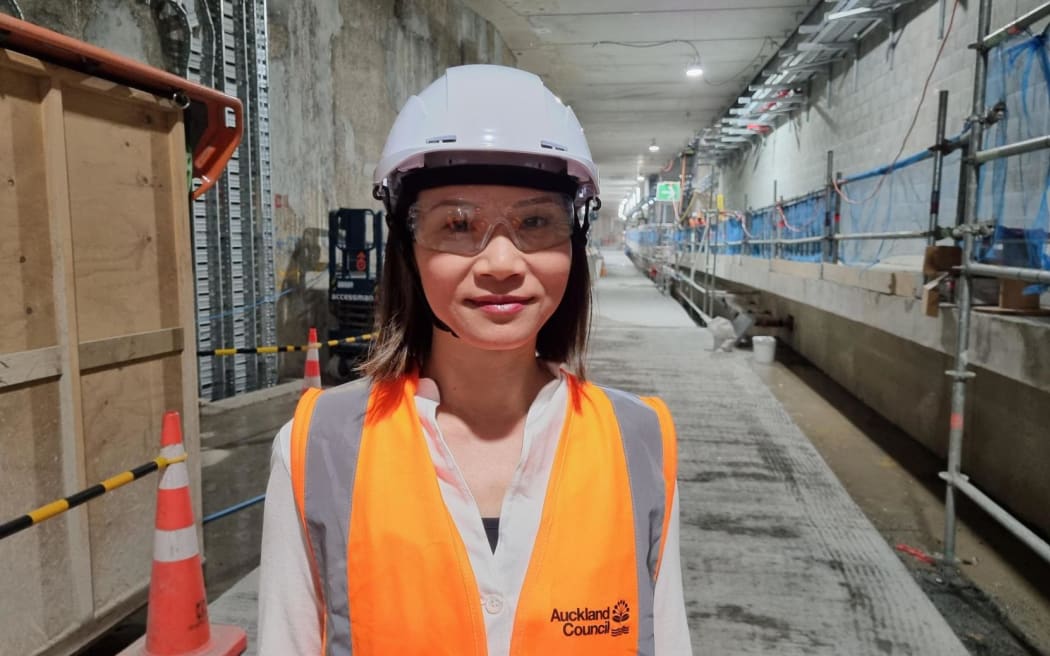
Auckland Council hopes a new train station by the Sky Tower will breathe life into the city centre.

The uncompleted Te Waihorotiu train station tunnel. Photo: RNZ / Felix Walton

Te Waihorotiu is one of the two new stations due to be completed in 2025 as part of the protracted City Rail Link project.

Auckland Council head of city centre programmes Jenny Larking described Te Waihorotiu as a “front door” to the city.

“After almost a decade of construction, we’re almost reaching the end,” Larking said.

“So now, we’re really focused on creating a wonderful experience outside the station, for people to come through it as a gateway into the city.”

Te Waihorotiu’s exit leads passengers directly onto Victoria Street West, with plans to develop the area into a bustling transport hub with connecting buses.

“The work Auckland Transport will be doing on Wellesley Street will create this wonderful transition between bus and train infrastructure,” Larking said.

Auckland Council head of city centre programmes Jenny Larking

Jenny Larking describes Te Waihorotiu as a “front door” to the city. Photo: RNZ / Felix Walton

Underground, the enormous passenger platform was prepared to serve thousands of commuters.

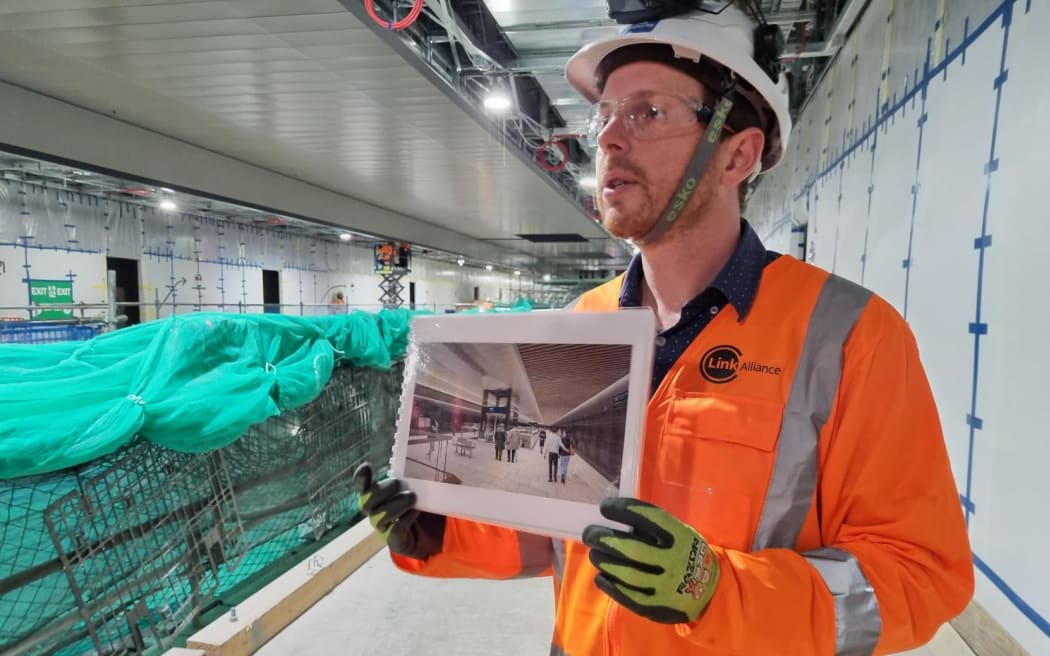
“[It’s] expected to be New Zealand’s busiest station catering for up to 54,000 passengers per hour as population growth continues,” said Shaun Sutton, Te Waihorotiu’s community manager.

The project was still on track, he said.

“We’re tracking really well, the project is planned to be completed in November 2025, so in just a couple of years.”

The uncompleted Te Waihorotiu train station tunnel. Photo: RNZ / Felix Walton

At the project’s peak, as many as 600 workers were building the station at any given time.

The station’s name had both cultural and historical significance, Sutton said.

“Te Waihorotiu is the river that still runs beneath Queen Street,” he said.

“It’s been buried by the roads but hundreds of years ago it was an open river which was a source of life for the people who lived here.”

The seven skylights that lined the ceiling represented Matariki, he said.

Larking said Auckland Council was prepared for a flurry of activity once the station was finished.

“We’re working with WaterCare, which is getting new infrastructure ready to allow intensification around the station,” she said. “So it’ll be a really exciting phase.”

Te Waihorotiu community manager Shaun Sutton says it is expected to be New Zealand's busiest train station catering for up to 54,000 passengers per hour.

Shaun Sutton says it is expected to be New Zealand’s busiest train station catering for up to 54,000 passengers per hour. Photo: RNZ / Felix Walton

Sutton said several projects were already under way.

“Already we’re seeing countless developments in the area,” he said. “Beginning with the development on top of the station called the Symphony Centre, but that’s just one of dozens.”

Recent events in the city centre had already put foot traffic on the mend, Larking said.

“There is a positive trend for the city centre, pedestrian counts have gone up,” she said.

“Once the station opens, it’ll be a completely different city.”

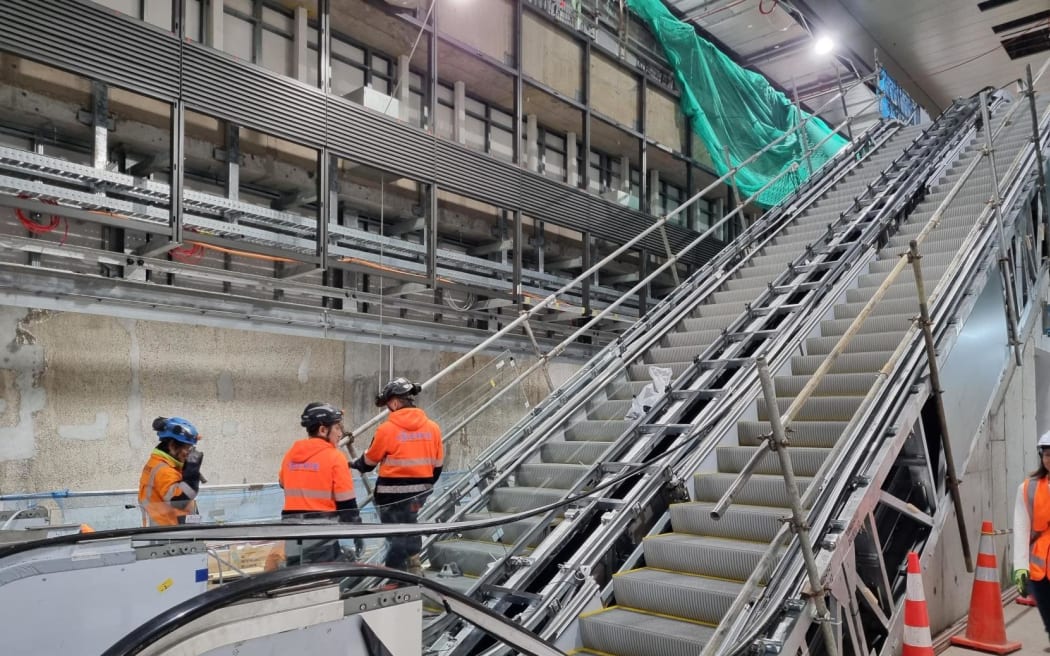
The escalators at Te Waihorotiu train station.

The escalators at Te Waihorotiu train station. Photo: RNZ / Felix Walton

This is the exact time, day and month of the year you’re most likely to die, according to science 

By dailymail.co.uk

Some prefer not to dwell on the exact moment we will depart this Earth, others are morbidly curious.

But science has unearthed several distinct patterns around when people tend to die.

Just as you have a ‘body clock’ which helps to dictate when you wake and sleep, it also influences the time of day when you die – with a distinct ‘spike’ in the morning.

Other studies have shown that certain days of the week are far deadlier – and one day of the year in particular sees more deaths than any other.

Some of this is due to factors such as drug overdoses and firearms – but other ‘spikes’ are more difficult to explain.

What time of day are you most likely to die?

Your body clock doesn’t just make you feel hungry and sleepy – it also influences when you die, according to science.

The time people are most likely to die is 11am, according to Harvard Medical School research published in 2012.

Professor Clifford Saper, the lead author of the paper, said: ‘Virtually all physiological processes have a circadian rhythm, meaning that they occur predominantly at certain parts of the day.

‘There’s even a circadian rhythm of death, so that in the general population people tend on average to be most likely to die in the morning hours. Sometime around 11am is the average time.’

But the picture is actually slightly more complex than that.

Saper’s research, which involved 1,200 healthy people aged 65, found that people with a certain genotype (the genetic variants a person carries) have different sleeping patterns – and a different average time of death.

People with the G-G genotype (guanine-guanine) tend to sleep around an hour later, generally speaking, and die at around 6pm instead of the 11am most people die at.

Saper said: ‘There is really a gene that predicts the time of day that you’ll die. Not the date, fortunately, but the time of day,’

What day of the year are you most likely to die?

One day of the year has more deaths than any other (Shutterstock) 

More people die in the cold winter months than any other time of year, according to statistics from the Centers for Disease Control and Prevention (CDC).

January and December tend to be the deadliest months of the year – but analysis by Professor David Philips of 57 million death certificates between 1979 and 2004 pinpointed one day as the deadliest.

Philips found that New Year’s Day is the deadliest of the year – and the reason isn’t due to celebrations, alcohol or traffic accidents.

‘I died and saw the afterlife, but I was turned away for an unexpected reason’ 

Philips said: ‘This pattern turns up in every natural cause of death, but not for external causes like auto accidents. It’s hard to understand why that would be.’

More recent research highlighted Christmas Day as the deadliest day of the year (when it comes to heart attacks at least), with a significant spike between Christmas and New Year.

Dr Donald Lloyd-Jones, volunteer president of the American Heart Association, said, ‘The holidays are a busy, often stressful, time for most of us. Routines are disrupted; we may tend to eat and drink more and exercise and relax less. 

‘We also may not be listening to our bodies or paying attention to warning signs, thinking it can wait until after the new year. All of these can be contributors to increasing the risk for heart attack at this time of the year.’

What day of the week are you most likely to die?

Analysis of 39 million deaths between 1999 and 2004 found that there is one day of the week where you are most likely to die – Saturday.

Researchers at LiveScience analysed CDC data for all deaths and found a small but significant rise in deaths on Saturdays.

Some of the reasons behind this are fairly simple: deaths from drug overdoses, car accidents and firearms all peak on Saturdays.

More recent research in 2018 found that you are still more likely to die when admitted to a hospital at the weekend.

The research, published in the Journal of the American College of Cardiology, found that, among patients with cardiac arrest, 25.2 percent survived on week days, while 21.9 percent survived on weekends and week nights.

Man hospitalised after being shot by police on West Auckland motorway

By RNZ.co.nz and is republished with permission

A man has been hospitalised after being shot by police following an attempted carjacking on a West Auckland motorway.

In a statement, relieving district commander Waitematā Superintendent Shanan Gray said at about 3.20pm police signalled for a vehicle to stop on Te Atatū Road on the Te Atatū Peninsula, but it failed to do so.

Police pursued the vehicle west towards the Lincoln Road off-ramp, he said.

Gray said on the Lincoln Road overbridge, the driver got out of the vehicle with a firearm, and unsuccessfully tried to steal two other vehicles. One of those vehicles has hit the offender, he said.

Armed police were quickly on the scene and the offender then ran towards a truck and climbed in the passenger side of the cab resulting in the truck driver exiting out the driver’s door, he said.

Police then fired at the offender which resulted in him surrendering, Gray said.

The man was taken to hospital with gunshot injuries but they were not thought to be life threatening, he said. Police later told RNZ they took the man to hospital themselves – St John ambulance was notified around 3.38pm but were stood down by police en-route.

Police are considering charges and will notify the Independent Police Conduct Authority “as standard procedure in these situations”.

A scene examination will be carried out.

Police earlier said no-one had been injured.

The off-ramp to Lincoln Road was earlier closed, but it has now reopened.

Auckland Transport says 110 buses are now returning to their normal route.

Air New Zealand launches bag tracker feature

By rnz.co.nz

Travellers flying with Air New Zealand will be able to track their bags, starting from today.

Air NZ passengers will now have the option of a tracker to help them keep track of the journey their bags are on, alongside their own. Photo: RNZ / Marika Khabazi

The airline is updating its app to include a tracker that keeps customers informed about the status of their baggage.

The feature has already been widely adopted by several international carriers, including United Airlines and Singapore Airlines.

“We’re always listening to our customers to understand how we can make their journey with us as smooth as possible,” chief customer and sales officer Leanne Geraghty said in a statement.

“We heard from them that being able to track their bags’ location would make their experience even more stress-free, so we quickly began making that customer request a reality.”

Geraghty said Air New Zealand had been testing the programme since April, with 25 percent of domestic customers and 5 percent of international customers having access to the feature during the last six months.

“Since April, over 8000 customers have successfully tracked their checked in baggage in our trial phase with the in-app feature,” she said.

“We’ve had overwhelmingly positive feedback from customers who have tested the feature too.”

She hoped the feature would give passengers peace of mind, allowing them to double-check that their luggage was with them on their flight.

After dropping off their bag, customers would see a “check status” option on their app that would update each time the bag was scanned.

Missing or damaged bags could be reported directly from the app, Geraghty said.

Goods ‘tampered with expiry dates’ seized in Tongatapu

Convenience stores in Tongatapu face charges after allegations staff have been tampering with expiry dates on products.

Tampered product. Photo/Consumer Protection & Fair Trade

Tonga’s Department of Consumer Protection & Fair Trade would not reveal the details of the products and stores embroiled in a probe but had confirmed its inspectors had identified the products in question.  

“Dear Consumers, please be cautious of some products with expiry dates tampered”, the department said in a post on its Facebook account.

It said some shops had breached the Consumer Protection Act the items had since been seized.

“We will appreciate if you can contact us if you notice the same behaviours in shops near you.

“Contact our Toll-Free Line 0800600 if you come across such issue”.

University of Auckland bestows honourary doctorate on revered academic ‘Epeli Hau’ofa

The University of Auckland is to bestow a posthumous honourary doctorate on the late Professor ‘Epeli Hau’ofa.

Epeli Hau‘ofa at the Oceania Centre for Arts and Culture, University of the South Pacific, Suva, Fiji, 21 April 2006. Photo by Ann Tarte.

Hau’ofa was described at the time of his death by the Sydney Morning Herald as an “inspirational writer, satirist and scholar  . . . . truly a man of the Pacific, one of the region’s leading writers who promoted a positive vision of Oceanian culture and history.”

Tongan academic Dr Melanaite Taumoefolau said the university would honour Professor Hau’ofa at a graduation ceremony at the Fale Pasifika on Saturday October 14.

The ceremony will be held from 10am to midday followed by lunch.

Dr Taumoefolau said there would be a small kava circle with Dr Malakai Koloamatangi and Professor ‘Okusi Māhina and a few others.

It is expected there will be about 100-150 guests, mostly Tongan academics and family from the community.

The ceremony will begin with a prayer, followed by speakers who are expected to include  Tongan poet and academic Konai Thaman and Sione Tu’itahi.

This will be followed by foaki e mata’itohí, then entertainments from TAUA Tongan students Association. Sione Tu’itahi will be MC.

Hauʻofa was born in Papua New Guinea to Tongan missionary parents. He went to school in PNG, Tonga and Fiji and then attended the University of New England and the Australian National University in Australia and McGill University in Canada. He graduated from the ANU with a PhD in social anthropology.

He taught at the University of Papua New Guinea and was a research fellow at the University of the South Pacific in Suva, Fiji. From 1978 to 1981 he was keeper of the palace records in his role as Deputy Private Secretary to King Tupou IV.

While in Tonga he and his wife Barbara edited the literary magazine Faikava. He became the first director of USP’s Rural Development Centre, based in Tonga, in 1981.

He taught sociology at USP in Suva, eventually becoming Head of the Department of Sociology. In 1997, Hauʻofa founded the university’s Oceania Centre for Arts and Culture. Through the centre he was mentor to a new generation of artists, sculptors, dancers and musicians at the USP in Suva.

Hau’ofa was a noted writer. His books included Mekeo: Inequality and Ambivalence in a Village Society, based on his PhD thesis, a novel, Kisses in the Nederends and probably his best known work, Tales of the Tikongs, a lively satire of contemporary South Pacific life, featuring multinational experts, religious fanatics, con men, villagers and corrupt politicians.

Hauʻofa died in Suva on January 11, 2009. At the time of his death, an academic colleague said “his vision and person were extraordinary.”

Biden makes new pledges to Pacific island leaders

By rnz.co.nz

President Joe Biden met Pacific island leaders for a second White House summit in just over a year on Monday, part of a charm offensive aimed at curbing further inroads by China into a strategic region Washington has long considered its own backyard.

US President Joe Biden, right, stands with Prime Minister of the Cook Islands Mark Brown, middle, and Prime Minister of Papua New Guinea James Marape as they participate in a group photo with other leaders at the Pacific Islands Forum as part of the US-Pacific Islands Forum Summit at the White House on September 25, 2023 in Washington. Photo: Win McNamee

Before welcoming the Pacific Islands Forum leaders, Biden announced US diplomatic recognition of two more Pacific islands nations, the Cook Islands and Niue.

“The United States is committed to ensuring an Indo-Pacific region that is free, open, prosperous, and secure. We’re committed to working with all the nations around this table to achieve that goal,” Biden said at the welcoming ceremony.

Biden pledged to work with Congress to provide $US200 million more in funding for the region for projects aimed at mitigating the effects of climate change, spurring economic growth, countering illegal fishing and improving public health, the US said in a document issued after a working lunch with the group.

“These new programs and activities continue to demonstrate the US commitment to work together with the Pacific Islands to expand and deepen our cooperation in the years ahead,” the document said.

A joint statement said the sides agreed to hold another summit in 2025 and political engagements every two years thereafter.

Cook Islands Prime Minister Mark Brown and Forum chair called the summit “an opportunity … to develop our partnerships for prosperity.”

He urged Washington “to actively engage at the highest level” in the 52nd PIF leaders meeting he would host in a few weeks to endorse its 2050 Strategy.

US wants to help island nations fend off China

Biden hosted an inaugural summit of 14 Pacific island nations a year ago and was to meet them again in Papua New Guinea in May. That meeting was scrapped when a US debt- ceiling crisis forced Biden to cut short an Asia trip.

Last year, his administration pledged to help islanders fend off China’s “economic coercion” and a joint declaration resolved to strengthen their partnership, saying they shared a vision for a region where “democracy will be able to flourish.”

Biden said recognising the Cook Islands and Niue as sovereign and independent states would “enable us to expand the scope of this enduring partnership as we seek to tackle the challenges that matter most to our peoples’ lives.”

He highlighted a personal link to the region – an uncle killed in World War Two after crash landing off the coast of Papua New Guinea. He said the summit, as then, was “to build a better world.”

In Baltimore on Sunday, Pacific island leaders visited a Coast Guard cutter in the harbor and were briefed on combating illegal fishing by the Commandant of the Coast Guard.

They also attended Sunday’s National Football League game between the Baltimore Ravens and the Indianapolis Colts. Dozens of NFL players are of Pacific Islander heritage.

Some skip summit

Representatives of all 18 Forum membners attended the summit, but not all at leader level.

Solomon Islands Prime Minister Manasseh Sogavare, who has deepened ties with China, did not attend and a senior Biden administration official said the US was “disappointed” by this.

Washington appears to have made no progress on offers of substantial infrastructure funding and expanded aid to the Solomons. Sogavare visited China in July, announcing a policing agreement with Beijing that builds on a security pact signed last year.

The White House in 2022 said the US would invest more than $810 million in expanded programs to aid the Pacific islands.

Australia’s Lowy Institute Pacific Island Programs director Meg Keen said that while the US had opened new embassies and a USAID office in the region since last year’s summit, Congress had yet to approve most of the funding pledges made last year.

She added that Pacific island countries “welcome the US re-engagement with the region, but don’t want geopolitical tussles to result in an escalation of militarisation.”

Names of children found dead in suitcases revealed

By RNZ.co.nz and republished with permission

The two children whose bodies were found in a suitcase in a storage facility last year can be named.

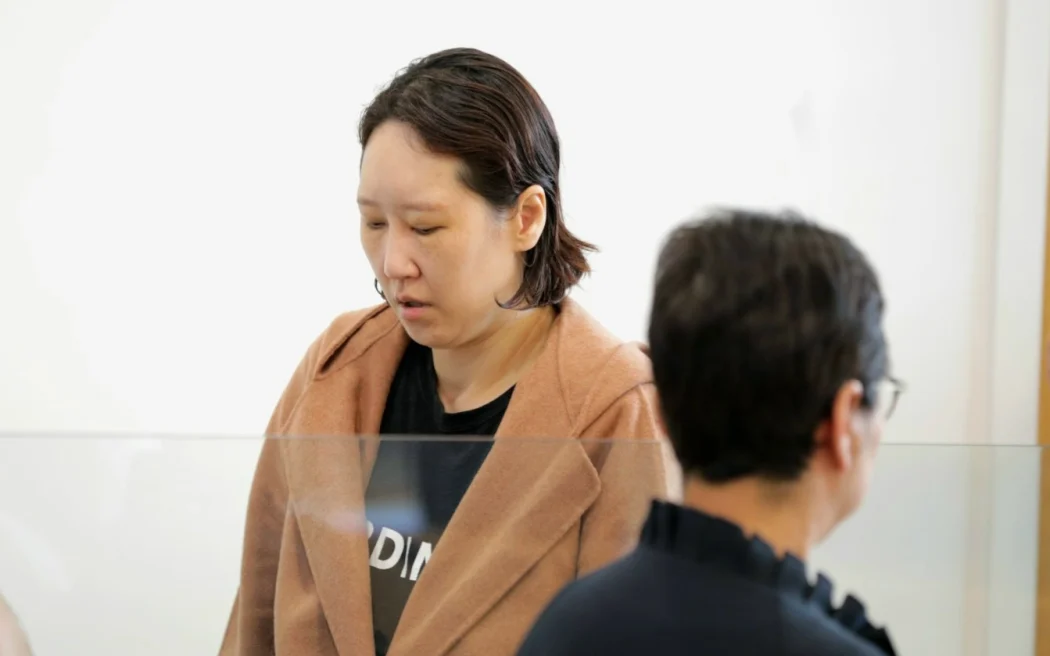
Hakyung Lee appears in the High Court in Auckland in November, 2022. Photo: RNZ / Nick Monro

They were Yuna Jo, who was born in September 2009, and Minu Jo, who was born in March 2012.

Coroner Tania Teitaha ended a suppression order that had been in place since the bodies were found in August 2022.

Their bodies were discovered after a family bought the contents of an abandoned storage locker in Papatoetoe in an online auction.

Haykung Lee, who is their mother, was extradited from Ulsan, South Korea in November last year.

She has pleaded not guilty to two charges of murder and is set to go to trial at the High Court in Auckland next year.

Two bodies loaded into vehicle at Moncrieff Avenue in Clendon Park

Police and forensic experts at the scene where two bodies were found Clendon Park. Photo: RNZ / Rayssa Almeida

Rugby World Cup stars forced to wash their own kit and denied snacks as chiefs sent plea

By Back MCeachen of express.co.uk

Rugby World Cup star Charles Piutau has opened up on how he and his Tonga team-mates have been forced to wash their own kits and practice with replica rugby balls ahead of the tournament in France, dramatically highlighting the stark contrast in resources between teams.

Charles Piutau and some players of ‘Ikale Tahi team. Photo/Tonga Rugby Union

Pitau and his team were defeated 59-16 by Ireland in their opening game, but despite the visibly tight finances they will be hoping to bounce back with a positive result against Scotland on Sunday.

Piutau made 17 caps for New Zealand but has not been picked since 2015, with Tonga taking advantage of the World Rugby eligibility amendment that allows players to switch national teams if they haven’t played for one team for three years and are eligible to represent another country.

Coming from New Zealand to a Tier Two side in Tonga was a culture shock, Piutau admitted, having opened up on how the team sometimes have to pay out of their own pockets to travel for training camps prior to the World Cup and are not always able to replenish their bodies after training sessions.

“It’s a lot to take in,” Pitau told The Telegraph. “It is a different experience coming into a Tier Two nation with the resources that we have, the time we have together as a team. It’s just about helping the guys around me in the environment to get better. The best thing I can do for the team is be at my best and try to perform.”