Sunday, February 22, 2026
Home Blog Page 28

Influencer Siaki Lonitenisi echoes public excitement as Vava’u’s new Mormon temple nears completion

Excitement is building in Tonga’s picturesque Vava’u islands as the long-awaited Neiafu Temple approaches its final stages of construction.

The 17,000-square-foot temple houses two instruction rooms and two sealing rooms. Photo/Sylvester Tonga

Top social media influencer, Siaki Lonitenisi, said in a livestream video last week he couldn’t wait for the day the new temple opens—though his wife, Siutiti, jokingly doubted whether the Church would actually let him inside.

In response, the internet celebrity laughed and said it would be a pity if that were to happen.

Lonitenisi, a member of the church, has gained popularity for his entertaining content—such as picking up a heated pot with his bare hands by gripping its sides directly from a fire, and demonstrating precision shooting with his .22 rifle.

He is so popular that Tongans visiting from overseas often travel to Vava’u just to meet him, bringing various gifts ranging from money and food to even a newly built house.

A Vision Taking Shape

Locals have been eagerly watching the progress of the stunning edifice, with many expressing their anticipation for its opening ceremony, expected in late 2025 or early 2026.

The single-story temple spans nearly 17,000 square feet, featuring elegant architectural details that harmonize with the island’s natural beauty.

Recent updates from the Church highlight significant progress: lush palm trees and vibrant plants now adorn the temple grounds, while workers prepare sections for grass landscaping.

The steeple, a striking feature of the design, has been fitted with stained glass, casting a radiant glow in the Pacific sunlight.

Inside, craftsmen are putting the finishing touches on the sacred interior spaces, ensuring every detail reflects the reverence and devotion the temple will embody.

An ancillary building is also under construction, which will house a distribution centre, an arrival centre, a family history centre, and living quarters for temple missionaries and leaders.

A Second Temple for Tonga

The Neiafu Tonga Temple will be the second LDS temple in the island nation, following the Nuku’alofa Tonga Temple, which was dedicated in 1983.

For members of the faith in Vava’u and surrounding islands, the new temple eliminates the need for long journeys to the capital for sacred ordinances, bringing spiritual blessings closer to home.

Local videos circulating on social media showcase the temple’s rapid transformation, with many residents marvelling at its beauty. “We have been waiting for this for so long,” said one Vava’u resident. “It’s not just a building—it’s a blessing for our families and future generations.”

The temple has been a focal point of community interest since its groundbreaking on September 11, 2021.

The ceremony was graced by the presence of Their Majesties King Tupou VI and Queen Nanasipau’u, underscoring the significance of the project for the nation.

Suspected narco-submarine found near Solomon Islands echoes drug vessel reports in Tonga’s waters

A suspected drug-smuggling submarine discovered in the Solomon Islands has revived concerns about sophisticated narcotics operations in Tonga’s waters, where similar vessels have allegedly been spotted unloading cargo.

A suspected narco-submarine discovered near Solomon Islands’ Isabel Province on July 28, 2025. The fiberglass vessel, fitted with four 85-horsepower engines, matches descriptions of craft used by South American drug cartel. Video Screenshot

The mysterious vessel is believed to have transported tonnes of cocaine from South America toward Australia.

The discovery follows earlier reports of vessel activity near deep-sea locations in Tonga’s Vava’u islands, where witnesses spotted cranes being lowered, an activity the Police Minister Piveni Piukala suggested could indicate illicit drug operations.

The Minister’s concerns echo a 2021 case reported by Kaniva News, when blocks of cocaine from a large shipment washed ashore at ‘Otualea Beach in Vava’u. Eight locals were subsequently sentenced to prison terms ranging from three to 13.5 years for their involvement in handling the drugs.

Reports of rafts, allegedly used to transport drugs, have surfaced in the waters around Tonga’s outer islands. The unverified videos of these sightings by Kaniva News have been shared on social media.

As we reported last week, New Zealand deployed two K9 units to assist in inspecting yachts arriving in Vava’u, amid growing concerns that some operators may be unknowingly or deliberately involved in transporting illicit drugs to the islands.

The move reflects a proactive effort to safeguard Tonga from the escalating threat of drug-related activities.

Solomon Islands Discovery

Ben Maenu’u, Member of Parliament for Lau/Baelelea constituency and an experienced fisherman, made the unusual discovery of the apparent type of stealth craft often used by drug cartels to smuggle tonnes of narcotics across international waters undetected, on Monday, July 28, 2025, during a fishing trip to Isabel Province.

Speaking to Island Sun upon his return to Honiara on Tuesday, Maenu’u described encountering the vessel around 5 PM: “From a distance, we mistook it for an aluminium boat.

“As we approached, its submarine-like design became apparent—a fully enclosed, frightening structure of unknown origin,” he said.

The craft was drifting toward Lord Howe Island at the time of discovery, the report said.

The parliamentarian planned to tow the vessel to Honiara for further inspection.

As of Tuesday, July 29, the Royal Solomon Islands Police Force (RSIPF) had not commented on the discovery, despite inquiries from Island Sun.

This incident highlights growing concerns about sophisticated drug trafficking networks exploiting Pacific maritime routes.

Update: Court clarifies position on sealed judgment in Kolokihakaufisi cocaine case

Kaniva News has learned that the Nuku’alofa Supreme Court has sealed the verdict in the high-profile cocaine case involving Tevita Kolokihakaufisi.

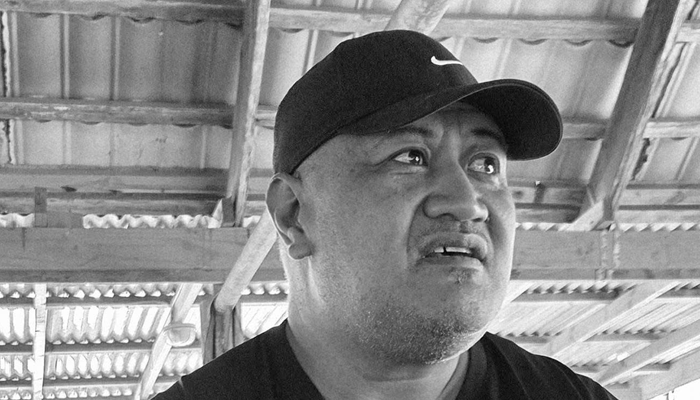
Tevita Nonu Kolokihakaufisi

The 39-year-old was arrested after authorities discovered more than 15 kilograms of cocaine.

The drugs were allegedly found in quantities at both his residence and his workplace—the National Reserve Bank of Tonga.

Following inquiries made by Kaniva News, the Court Registrar confirmed that a court order is in place prohibiting any media publication or public disclosure of the court’s decision.

In reference to our original report, we wish to clarify that the advice from the Registrar did not suggest that the Court would provide an order explaining the reasons for sealing the judgment.

We would like to emphasise the following clarification:

“While the sealed judgment cannot be released, the Registrar advised that Kaniva News may formally request a separate order confirming the non-publication aspect only. This does not include any explanation for the sealing of the judgment.”

Concerns raised over possible exploitation of schoolgirls in Tonga 

A suspected case of internal trafficking involving school-aged girls has raised alarm in Tonga, prompting quiet intervention by school officials and community members.  

Allegations have emerged regarding potential coercive control, including reports of massage requests by a “manager” and the sudden full payment of previously unpaid student school fees.

It follows a concerned member of the public alerting a local high school after spotting female students in uniform entering and exiting a now-closed foreign-owned business in Nuku’alofa, according to sources familiar with the matter.

Acting on the alert, the school’s officials confirmed the students involved and launched an investigation, Kaniva News can reveal. 

This resulted in the discovery that the students had been employed by a foreign business to work as kitchen hands.

The girls were promptly returned to their homes, and their employment was terminated.

Following the investigation, the school reached out to other stakeholders for support.  

The community response included a visit where counselling was offered to the girls to “build trust and assess their well-being.”

Curtained Room Raises Concerns

The workplace where the students were reportedly employed operated across three floors, with the presumed owner residing on the top level, while the girls reportedly stayed there.

They allegedly lived in a single large room separated by curtains, with their employer covering all living costs, according to student accounts obtained by Kaniva News.  

Authorities reportedly grew concerned about potential exploitation after claims the manager had taken the girls swimming and asked them for massages, according to sources.

The business has since ceased operations at its original location and is understood to have relocated to another area. 

Authorities could not be reached for comment, and it is unknown whether any formal complaints have been lodged with police.

Gaps Found, Plans Made

The last known police report of trafficking in Tonga, previously covered by Kaniva News, involved the arrest of a suspect and the recovery of a victim during a human trafficking operation late last year.

The foreign victim was reportedly assisted in returning to their home country, while the accused trafficker faced charges

The U.S. State Department previously raised concern about Tonga’s lack of a comprehensive prevention plan to combat all forms of trafficking and to support and protect victims.

In response, Tonga launched its first national action plan to address human trafficking in 2023.

Tonga’s meth crisis deepens as New Zealand’s role in Pacific drug trade fuels local market, expert warns 

Tonga is facing a deepening methamphetamine crisis, with experts warning that its growing local drug market is being fueled by transnational trafficking networks linked to New Zealand and Australia.   

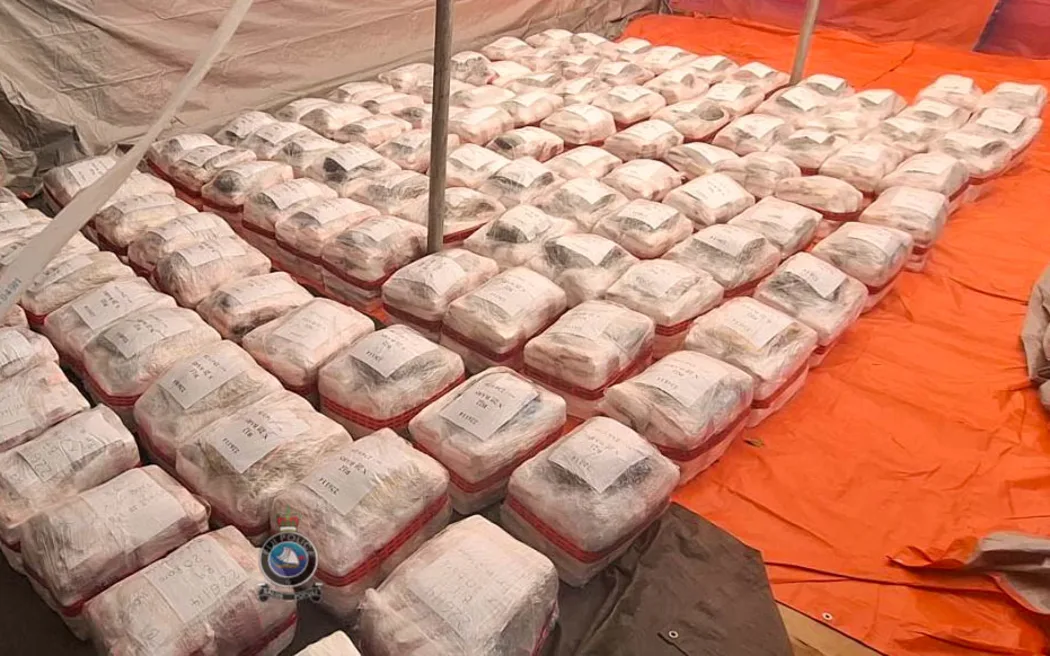
In picture: Drugs seized by Australian and Tongan police from a yacht that had run aground at an uninhabited atol in Vava’u in 2012

Although Tonga’s Minister of Police, Piveni Piukala, recently celebrated a dramatic 98.8% drop in methamphetamine seizures — from over 45 kilograms last year to just 71 grams this year — police continue to arrest individuals involved in drug-related activities, including meth distribution and cannabis cultivation on Tongatapu.  

Recent raids in areas such as Hauloto, Fua‘amotu, and Fasi have led to multiple arrests and the seizure of methamphetamine, cannabis plants, drug paraphernalia, and cash.   

Last week, on July 14, the Supreme Court convicted Penisimani Tuifua Angilau for supplying methamphetamine, threatening a police officer in March 2024, and committing money laundering. 

A leading Pacific crime expert says Tonga, once a quiet transit point for international drug cartels, is now grappling with the social, health, and law enforcement fallout of meth use — a shift driven by traffickers paying local facilitators in drugs instead of cash.  

Jose Sousa-Santos, associate professor of practice at the University of Canterbury’s Pacific Regional Security Hub, told RNZ’s Pacific Waves that Tonga has been used as a transport hub for the flow of methamphetamine and cocaine from North and South America, and Southeast Asia, to Australia and New Zealand. 

Sousa-Santos explained that over the past five years, the dynamics of drug trafficking in the Pacific have shifted — from paying local distributors in cash to compensating them with drugs — due to the increasing failure to prevent the spread of illicit substances into Pacific communities. 

“This is where we started to see the development and the growth of a local market, not just in Fiji, but in Tonga and other Pacific Island countries,” Sousa-Santos was quoted by the Pacific Wave as saying.  

“Because if you’re being paid in drugs, by selling those drugs, you can make more than the agreed upon amount.” 

Sousa-Santos also said that deportees from the US, Australia, and New Zealand were part of the evolving drug trade dynamic.  

While only a small number of these deportees were involved in criminal activity, many struggled to reintegrate due to a lack of understanding of local culture and language, as well as limited employment opportunities.  

As a result, some began reconnecting with criminal counterparts in the countries from which they were deported.  

These individuals introduced new tactics that Pacific law enforcement agencies were unprepared for, contributing to the evolution of drug smuggling and criminal enterprises in the region. 

As Kaniva News recently reported, Koli Moa, a Tongan deportee from the US, was sentenced to nearly two years in prison after pointing a pistol at a hotel staff member’s head and being later arrested in possession of illicit drugs. 

Passport fraud and sham marriage lands man record jail term

By rnz.co.nz and is republished with permission

Bangladesh-born Jahangir Alam – whose true name is not known – was found guilty of 29 offences, which included applying for visas for his wife and mother with his false identity, earlier this year.

A man who pretended to be his brother for 25 years and entered a sham marriage to get citizenship has been handed the longest jail term in New Zealand history for passport fraud.

He was jailed for four years at the Auckland District Court on Friday for producing forged documents, supplying false information and using a false passport, where the judge Peter Winter denounced the two-decade-long passport and immigration fraud.

“The initial identity fraud offending progressed and continued to mushroom from there,” said Winter. “It was complex, premeditated and longstanding. The duration and scale of the offending is considerable.”

His 45-year-old wife, Taj Parvin Shilpi, who was sentenced to 12 months’ home detention, was “fully aware” of the fraud, he said, as they were cousins who had lived in the same village growing up.

The Te Atatu couple have a 21-year-old son, a university student who was ‘entirely blameless’ said Winter, having arrived with his mother as a four-year-old in 2008. He became a citizen as the child of a New Zealander.

Alam went on to become president of the Bangladesh Association of New Zealand Inc (BANZI), in which he helped up to 80 people applying for passports.

Bangladesh had no consulate in New Zealand and Alam, through BANZI, had helped with paperwork, passports and stamps. There was no suggestion any of those passports were false. The judge was asked to take his work in helping others into account as community service when looking at whether Alam’s sentence could be discounted.

Winter said it was a “form of arrogance” that someone who was illegally in the country, and who had standing in the Bengali community, was dealing with other people’s passports. He refused to reduce his sentence for that, or for Alam being of good character.

Sham marriage

Alam’s age and true identity remain unknown, but he is believed to be the 50-year-old older brother of John Alam, who lives in the US.

How he adopted his brother’s identity and came to possess the Bangladeshi passport that got him to New Zealand is not clear, but authorities found he lived in Japan in the 1990s, before returning home and setting off for Auckland.

He became a taxi driver and entered a ‘marriage of convenience’ with a New Zealand woman – they separated shortly after he got his residence. He told a jury earlier this year that they split because of differences over her ‘lifestyle’ but claimed that it was a genuine partnership.

Having become a citizen, married Shilpi and had a son, he could still not complete his fraud, as Immigration New Zealand initially rejected her visa application because of discepancies in the interviews staff had with the husband and wife.

But she arrived in 2008 on the first of a number of visas – her application for residence was rejected as her health was deemed too poor. Alam had also tried to get his mother a visitor visa, but that too had been declined.

Shilpi, who suffers from hypertension and diabetes, was “aware that he was not the person who he claimed to be, and was aware from the very beginning”, said Winter. The jury had not believed her version that the couple did not meet until after his New Zealand marriage failed.

Immigration New Zealand welcomed the record prison sentence, and said it was a complex investigation that took six years to complete.

Shilpi has only been on temporary visas and her last visitor visa has expired. Alam’s case will be referred to Internal Affairs, which is in charge of passports and citizenship.

rnz.co.nz

Lord Tu’ilakepa’s remarks reveal lack of neutrality, gender bias, and disrespect for cultural expression in parliament

Commentary – The recent exchange in Tonga’s Parliament, in which the Chair of the Whole House Committee, Lord Tu’ilakepa, suggested that Acting Prime Minister Taniela Fusimālohi should “wear women’s clothing” in the House, has sparked serious concerns about the use of language, the role of parliamentary leadership, and the need for cultural and gender sensitivity in public discourse.

Lord Tu’ilakepa. Photo/ Fale Alea ‘O Tonga

What appeared to be an unfounded criticism by Lord Tu’ilakepa exposed what seems to be a lack of understanding of his role, a misconception of the traditional language lea heliaki, and an abuse of authority, threatening to eject any MP who attempted to correct him.

At the heart of this controversy is a comment that may breach the expected decorum of parliamentary debate while also invoking outdated and discriminatory gender stereotypes.

It reinforces the notion that femininity is inferior or laughable when applied to men, a sentiment rooted in sexism and misogyny. Such language is not only inappropriate in any professional setting but is especially troubling when voiced by someone in a position of authority within the legislature, like Tu’ilakepa.

Neutrality and Abuse of Authority

Parliamentary chairs are expected to uphold neutrality and foster respectful debate. Lord Tu’ilakepa’s remarks, as reported, crossed the line from moderation into personal insult.

His comment was not only dismissive of the Acting Prime Minister’s rhetorical style—delivered through traditional lea heliaki—but also appeared to weaponise gender as a means of humiliation.

This undermines the dignity of the House and erodes public confidence in its leadership.

Police Minister Piveni Piukala’s intervention was timely and justified. By urging the Chair to ‘hide what was in his heart’ and warning that the public could see the remark as demeaning to the Acting Prime Minister, he highlighted the severity of the breach. Yet the Chair retaliated by threatening to eject him from the House.

His appeal for the Chair to return to a neutral, moderating role was a call to restore the integrity of parliamentary proceedings.

It is also important to recognise the cultural context in which this exchange occurred. Lea heliaki, or the use of figurative speech, is a respected form of oratory in Tongan culture.

Fusimālohi’s use of this rhetorical style to discuss national energy policy was not only appropriate but culturally resonant. To dismiss or mock this approach is to disregard a valued tradition of Tongan political and public discourse.

What is lea heliaki?

But what exactly does lea heliaki mean in Tongan? It is the equivalent of “figures of speech” in English—a classified type of language used to generate effect, enhance expression, or evoke emotion.

The commotion in Parliament on Thursday that led to Lord Tu’ilakepa’s outburst came after Acting Prime Minister Fusimālohi employed lea heliaki to highlight the government’s lack of planning in relation to Australia’s support for Tonga’s electricity energy sources.

Fusimālohi used the type of lea heliaki known in English as analogy, comparing the situation to an “arranged marriage” in which Australia was ready with the bridegroom, while Tonga had yet to provide the bride.

Analogies help us understand complex or abstract ideas by relating them to something simpler or more concrete. They are a powerful tool in writing, speech, and everyday conversation, making concepts more relatable and easier to grasp.

Since lea heliaki is an important form of language used in both formal and everyday communication, the criticisms from Lord Tu’ilakepa raise the question of whether he truly understands the very language that, as a noble of the King, he is culturally expected to uphold.

Gender Discrimination and Public Impact

The apparent use of gendered insults in Parliament sends a harmful message to the public. It perpetuates the idea that femininity is something to be mocked, and it risks alienating women, gender-diverse individuals, and others who do not conform to traditional gender norms.

In a modern democracy, such language has no place.

It is essential that all members of Parliament, especially those in leadership roles, model respectful and inclusive communication.

This incident should prompt serious reflection within Tonga’s Parliament. Upholding the dignity of the House requires more than adherence to rules—it demands a commitment to respect, cultural understanding, and gender equity.

The public deserves a Parliament that debates ideas vigorously but treats all members with dignity, regardless of gender or political affiliation.

TNU to launch new bachelor of oral health program in 2026

Tonga National University (TNU) is finalising a new Bachelor of Oral Health (BoH) program in collaboration with the Ministry of Health’s Dental Division, marking a significant step in advancing dental education in the Kingdom.

 L-R: Ministry of Health’s Dental staff who currently work on the new Bachelor of Health (BoH) Program, Dr. Na’ati Fakatava, Dr. Susitina Piukala, TNU Vice-chancellor, Dr. Giulio Masasso Paunga and Dr. Sisilia Fusi Fifita.)

It follows our recent report that the university is in the process of completing curricula to offer a BA programme in Tongan language and culture.

This week, TNU Vice-Chancellor Dr Giulio Masasso Paunga was briefed on the program’s progress, which is now in its final stages of development with input from the Tonga Qualification and Accreditation Board (TQAB).

The new degree is expected to launch in 2026 under the Faculty of Nursing and Health Sciences (FNHS).

Key stakeholders, including Manila-based Dental Training Coordinator Dr Susitina Piukala, Principal Dental Officer Dr Na’ati Fakatava, and Chief Dental Officer Dr Sisilia Fusi Fifita, attended the discussions.

Dr Paunga expressed gratitude for the collaborative efforts, particularly acknowledging overseas Tongan experts like Dr Piukala for their contributions.

“In addition to the active effort by the Dental Team, the University is very grateful to our dedicated Tongan experts overseas like Dr Susitina Piukala with unwavering spirit of helping Tonga from afar,” Dr Paunga said.

Dr Fifita described the meeting as “constructive in strengthening collaboration and aligning institutional efforts to support the ongoing development and eventual formal recognition of the Bachelor of Oral Health program.”

The Dental Division praised TNU’s commitment to the initiative, which aims to address oral health workforce needs and improve dental care accessibility in Tonga.

Latest Update: Tonga’s leadership unites in alarm over ‘complicated’ US demands as travel ban looms

Although more than a month has passed with the government reluctant to detail the US demands—which could trigger a travel ban against Tonga—the Eke administration has now issued a statement that appears to confirm sustained concerns about the seriousness of the US requirements.

Dr Taniela Fusimalohi

Acting Prime Minister Taniela Fusimalohi, when pressed during a press conference this afternoon, said the American conditions are complicated and demanding, revealing that authorities are still finalising Tonga’s official response. Yet he continues to withhold the details of the demands.

His response follows June’s memo signed by Secretary of State Marco Rubio and sent to U.S. diplomats working with 36 countries, including Tonga.

The memo stated that governments of listed nations were being given 60 days to meet new benchmarks and requirements established by the State Department.

The memo identified varied benchmarks that, in the administration’s estimation, these countries were failing to meet. Some countries had “no competent or cooperative central government authority to produce reliable identity documents or other civil documents,” or they suffered from “widespread government fraud.”

Others had large numbers of citizens who overstayed their visas in the United States, the memo said.

Other reasons included the availability of citizenship by monetary investment without a requirement of residency and claims of “antisemitic and anti-American activity in the United States” by people from those countries.

The memo also stated that if a country was willing to accept third-country nationals who were removed from the United States or enter a “safe third country” agreement, it could mitigate other concerns. 

Warning Gains New Weight

A month after Prime Minister Eke called the US demands “seriously alarming,” Acting PM Fusimālohi’s tone signals that the Tongan government’s unease persists.

In Tongan, Fusimālohi said: “Ikai foki faingofua e ngaahi conditions oku ‘omai ‘e ‘Amelika ke fai ki ai ‘a e ngaue mo e ngaahi tu’utu’uni ko e ‘omai ke tau fai pau ki ai.”

This translates into English as – The conditions set by the United States are not easy to meet, as they require actions and decisions that we are obligated to follow precisely.

Fusimālohi, however, sounded optimistic about the response efforts.

He said the Crown Prince and the Ministry of Foreign Affairs were actively working on it, fully aware of the deadline, and doing their best to meet it.

Fury after House Chair Tu’ilakepa’s ‘wear women’s clothing’ remark to Acting PM; He denies bias amid malice claims

The Chairman of the Whole House Committee, Lord Tu’ilakepa, faced criticism from the government for remarks perceived as disrespectful, biased, and malevolent after allegedly suggesting that Acting Prime Minister Fusimālohi should “wear women’s clothing” in the House.

Chair of COmmittees of the Whole House Lord Tu’ilakepa (L), Acting Prime MInister Taniela Fusimālohi and Minister of Police Piveni Piukala

The exchange in Parliament yesterday followed intense debates over the government’s energy roadmap and the revelation that there had been no previous plan to forecast or provide foresight for one of the government’s most important resources.

Fusimalohi addressed the roadmap and feedback from the Speaker of the House, Lord Fakafanua, using traditional lea heliaki (figures of speech) to illustrate his points.

Comparing Australian energy support to an “arranged marriage” where Tonga had yet to provide the “bridegroom,” and describing electricity pricing inconsistencies in Tongan as ngatupetupe (shaky), his heliaki drew a sharp rebuke from the Chair.

House Erupts Over Dress Comment

Interrupting Fusimalohi, Tu‘ilakepa criticised his rhetorical style, accusing him of ‘changing things too much in the House’ (“lahi aupito ho‘o fulihi ‘etau me‘a he fale‘ ni”).

The Chair then escalated his remarks, stating he had considered ordering Fusimālohi to stop wearing coats to the House and wear women’s clothing instead. He said in Tongan: “Toe si’i pea u tu’utu’uni ke ‘oua te ke toe kote mai ka ke kofu fakafefine mai ki he fale ni.” The comment prompted immediate backlash.

Minister of Police Paula Piveni Piukala swiftly intervened, urging Tu’ilakepa to hide what was in his heart – (“fakapulipuli’i hifo ho loto”), implying the Chair harboured malice toward the government bench.

Piukala argued the Chair’s language crossed into personal insult, telling Tu’ilakepa in Tongan – ‘Oku ‘ata ki tu’a ho’o ‘ai ke ke siosio lalo’i ‘a e palēmia’. This translates into English as – The public may take it as if you were belittling the Acting Prime Minister.

Piukala reminded Tu’ilakepa of his neutral role, urging him to stop lecturing MPs and simply moderate debates.

Denial of Bias Claims

Tu’ilakepa ordered Piukala to stop and warned that if he had to issue a third warning, he would eject him from the House.

The Chair apologised for what he had said about two of the MPs, but he did not identify them.

He told them to speak nicely (“me’a lelei mu’a”).

He also asked one of them to refrain from speaking in English.

He apparently told Fusimālohi to stop using what he had described as the kind of language they used to speak in their youth, in Parliament.

“‘Oku ‘ikai ke u filifilimānako au. Ke mea’i lelei pe,” he said, which is in English, I am not showing favouritism. He continued in Tongan saying – You knew that well.

“‘Oku ‘ikai pe ha’aku vā ‘aku ia mo e feitu’u’na”, he said, which translates as, I have no problem with you.

He argued that the Minister of Police misrepresented his actions as malicious, even though they were not.

He reminded them of the requirement for decorum in the House.