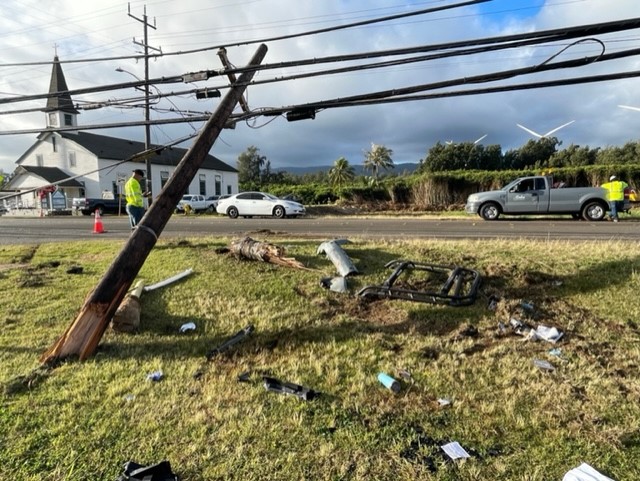
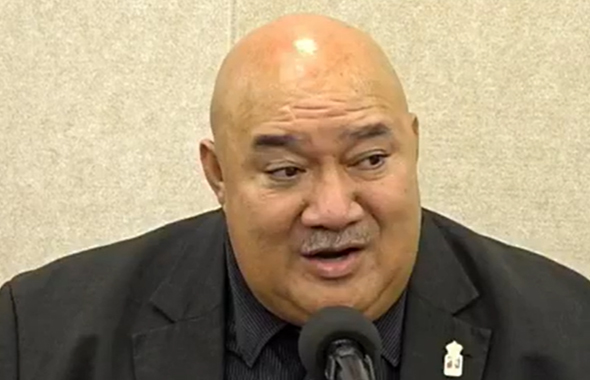
A Tongan man has died after a two vehicle accident on Kamehameha Highway in Kahuku on Oahu at around 10 pm Saturday, Feb 12.
A man died after a two vehicle accident on Saturday, Feb. 12. On Kamehameha Highway in Kahuku on Oahu. Kahuku, Hawaii, Sunday, Feb. 13, 2022
26-year-old Henry Tonga of Kahuku was driving north on Kamehameha Highway when he hit a woman who was driving from a side street onto Kamehameha Highway going south, local news KHON reported.
The woman’s vehicle lost control, went off the roadway and crashed into a pole.
When the Honolulu Fire Department arrived the woman’s vehicle was on its side. HFD used a battery powered hydraulic rescue tool to get Tonga out of his car. HFD said he was unresponsive.
EMS officials treated them both. Tonga was taken to the hospital in extremely critical condition, and the woman was taken to the hospital in serious condition.
Police said Tonga was pronounced dead at the hospital. He was not wearing a seatbelt.
Police said speed appears to be a factor and it is unknown if drugs or alcohol were involved.
Hawaiian TelCom said crews worked on the pole on Saturday, and that Spectrum also uses that pole.
Auckland Council is being asked to finish what it started after a multi-million dollar upgrade of Ōtāhuhu’s town centre was put on the back-burner.
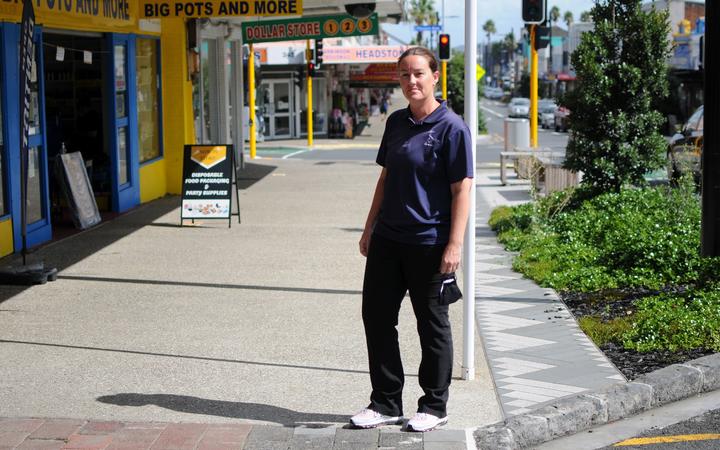
Richette Rodger standing on Great South Rd near the intersection with Mason Ave where the work on the upgrade project stopped two years ago. Photo: LDR
The council first announced plans for the $16 million upgrade in September 2019.
It said the project would make the town centre safer and more connected and would see pathways widened, native trees planted and the installation of new street lighting and stormwater infrastructure.
The upgrade was focused on the main street, along Great South Rd, from Princes St to Atkinson Ave and Station Rd.
However, the project was one of many postponed across the region due to a council revenue slump caused by Covid-19.
The work has stopped just after the intersection of Mason Ave, Avenue Rd, and Great South Rd, and the remainder, which was due to start in July 2020, has been deferred for at least 12 months.
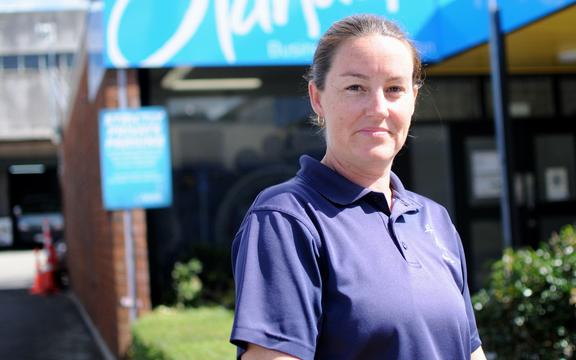
Richette Rodger. Photo: LDR
Ōtāhuhu Business Association manager Richette Rodger said instead of deferring the project, the council appeared to have forgotten about it.
“It’s like the project disappeared and we haven’t heard anything since.”
Rodger said the upgrade was important for Ōtāhuhu.
“There’s no way we will be able to grow like the other town centres in South Auckland without it,” she said.
The council submitted a list of 73 key shovel-ready projects to the Infrastructure Reference Group in April 2020, which included the Ōtāhuhu town centre project. However, it did not get government approval for funding.
Ōtāhuhu Business Association chairman Rajesh Lal, who runs Stonex Jewellers, said the stretch of Great South Rd outside his store has not had a makeover since 1992.
He said upgrading the footpaths, adding new seating, street lighting and trees would help make the area more attractive to shoppers.
Sheraz Dean, who runs Pasifika Barbers, said he liked the improvements the council had done outside his store to date, and was not as concerned about the work being completed.
“I’m not too worried about it at the moment because it’s been a tough time for everybody,” Dean said.
“We can wait.”
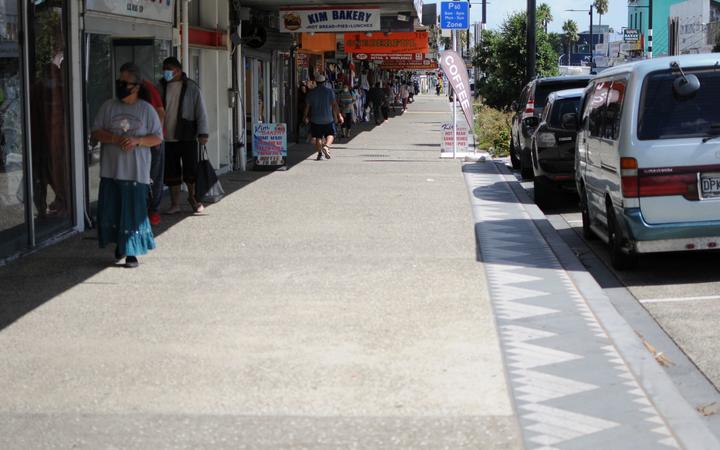
Some of the work that has been completed further down Great South Rd includes wider footpaths, seating, gardens and street lighting. Photo: LDR
In a statement, an Auckland Council spokeswoman said the main street makeover was done in sections so it would only proceed when there was available funding. Finance was not available in the 2020 emergency budget.
“The project team has explored alternative funding options to progress the town centre upgrade, including applying to central government’s shovel-ready initiative. No alternative funding options have been identified.”
Local Democracy Reporting is a public interest news service supported by RNZ, the News Publishers’ Association and NZ on Air.
The United Nations Pacific office is urging the international community to keep up the support to Tonga and help it build back stronger after the January 15 volcanic eruption and tsunami.
Recovery work is being hampered by the Covid-19 outbreak in the country with 139 cases now confirmed across villages on Tongatapu and Vava’u.
Photo: 123RF
The UN resident coordinator responsible for Tonga, Sanaka Samarasinha, said the initial response from the international community has been overwhelming but there still a long road to recovery ahead.
He said today the UN will deploy the first two disaster response experts – a water and sanitation expert and a disaster response co-ordinator – requested by the Tongan government.
“The assistance that has been provided so far by a number of countries has been contact-less. We are mindful of the need to follow very strict Covid-19 protocols they will be in quarantine for 14 days when they get there.”
Samarasinha said they believe there is still a need for more onground personnel but they do not want an unnecessary influx of international personnel into the kingdom.
World Bank puts a figure on the tsunami damage
The World Bank said the violent volcanic eruption, tsunami and ashfall in Tonga last month has caused an estimated US$90.4M in damages.
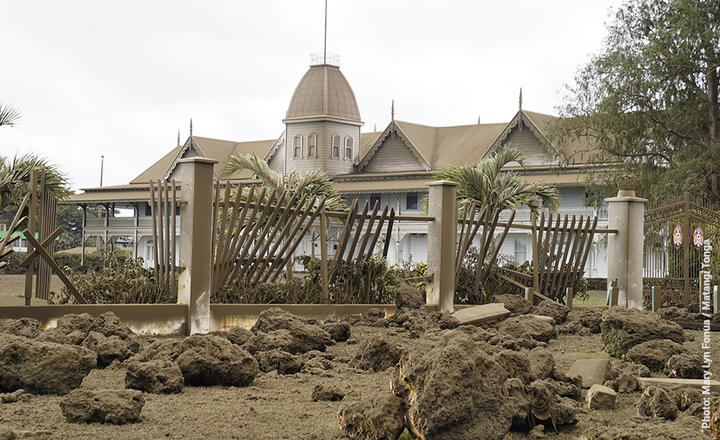
The seafront section of the Royal Palace in Nuku’alofa is blanketed in ash and there’s damage to the fence and grounds from the tsunami that followed the volcanic eruption on January 15. Photo: Matangi Tonga
That’s the equivalent of approximately 18.5% of Tonga’s Gross Domestic Product (GDP) according to a World Bank assessment.
The Global Rapid Post-Disaster Damage Estimation (GRADE) report on the January 15 eruption was prepared by the World Bank at the request of the Government of Tonga and in consultation with other partners.
It is the first assessment published following the Tonga disaster that provides estimated costs of the physical damages caused by the volcanic eruption and tsunami.
The report provided estimates of direct damages to residential buildings, non-residential buildings (including tourism, health facilities, schools, government buildings, and private sector buildings), infrastructure (transport, power and water, sea and air and repairs to the submarine cable), agriculture, forestry, fishing, and ashfall clean up.
The World Bank said broader economic losses, such as ongoing impacts on agriculture and tourism, are not reflected in the report and are expected to significantly increase the overall economic impact.
An estimated 85,000 people across Tonga have been affected by what has been described as a ‘once in a millennium event.
FSM helps out
The Federated States of Micronesia is providing $US100,000 to Tonga to help with recovery from the eruption and tsunami.
The President David Panuelo said “to the People & Kingdom of Tonga,….you are with us in our hearts and minds, and we pray for your swift recovery. In the meantime, we extend to you our Blue Pacific solidarity and unity.”
More than 160 schools, kura, and early childhood centres are managing identified Covid-19 cases in students or staff.
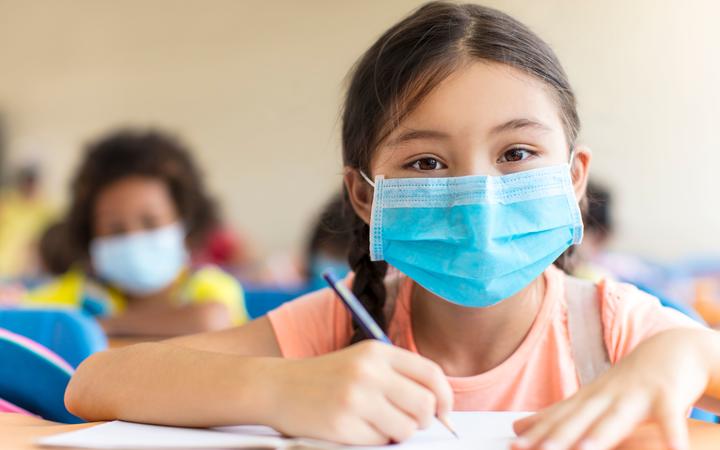
Children in Year 4 and above are required to wear face masks while indoors. Photo: 123RF
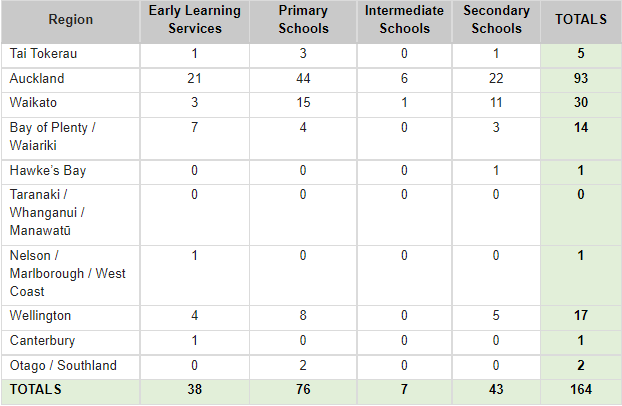
Of the 164 schools and ECEs nationwide with cases, 76 are primary schools.
More than half the educational institutions affected are in Auckland, with 93, followed by the Waikato region with 30 schools and ECEs managing coronavirus cases.
Taranaki, Whanganui and Manawatū are the only regions where none have cases, figures from the Ministry of Education show.
Schools remain open under the Omicron strategy and a mandate requires children in Year 4 and above to wear face masks while indoors to reduce the spread of Covid-19.
For children Year 3 and under, the Ministry of Health said mask wearing was encouraged, but not required.
In Auckland, 21 early learning services, 44 primary schools, 6 intermediate schools and 22 secondary schools have identified cases.
South Auckland primary schools have been [https://www.rnz.co.nz/news/national/461153/south-auckland-primary-schools-consider-onsite-vaccination-clinics
considering whether to host vaccine clinics to help vaccinate the region’s 5 to 11-year-olds]. Principals in the area say Counties Manukau DHB has asked them to allow vaccinations on their sites.
As of Monday, 45 percent of eligible 5 to 11-year-olds have had their first Covid-19 vaccine.
Schools, kura and ECE managing identified Covid-19 cases as of 2.30pm 14 February. Source: Ministry of Education Photo: Supplied / Ministry of Education
Tonga no longer meets the criteria for quarantine-free travel due to increasing Covid-19 cases, Director-General of Health Dr Ashley Bloomfield announced this evening.
Photo: 123rf.com
Tonga now has 139 active cases, 75 of which are from the last three days.
“Following a public health risk assessment, from 27 February travellers from Tonga entering Aotearoa New Zealand will be required to meet some public health requirements, with phased-in changes for travellers from Tonga on flights beginning tomorrow,” Dr Bloomfield said.
People arriving tomorrow will have to take a Rapid Antigen Test (RAT) on days 1 and 5 or 6 but won’t be required to enter self-isolation.
Those who arrive on the 22 February flight and thereafter will have to self-isolate for seven days and take RAT tests on days 1 and 5 or 6.
“During this time, all travellers are encouraged to monitor for symptoms and requested to avoid high-risk settings such as hospitality and large gatherings. They must report any positive RAT and take a follow-up PCR test to confirm their result. If they test positive standard isolation measures will be applied to them.”
Bloomfield said officials would “work through things to minimise disruption for RSE workers and employers under the new settings”.
New Zealand would continue to support Tonga with its Covid-19 response, including through vaccine support, he said.
The Health Ministry has launched a $1 million fund to attract former nurses back to the profession in the pandemic.
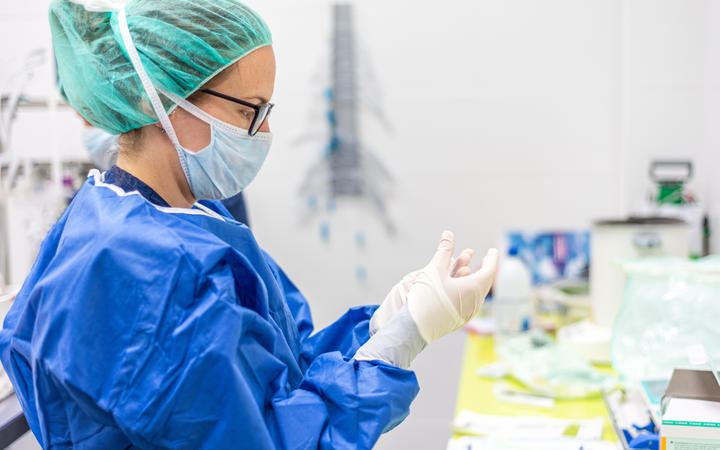
Another 1000 nurses who qualified overseas may also be eligible for payments from the new fund. File photo. Photo: 123rf
Two hundred nurses are eligible for up to $5000 to cover training, English language tests, and personal costs like childcare and transport.
The ministry’s chief nursing officer Lorraine Hetaraka said there are more than 20,000 New Zealand-trained registered nurses who are not currently practising.
“The support fund is to help nurses who are not currently practising to return to a nursing role, to meet increased demand, support safe staffing, and improve access to care.
“Nurses are one of our cornerstones of the health and disability system and we need more across all areas of the health and disability system in Aotearoa. It’s so important we can grow the workforce to help meet demand and to ensure these nurses are experienced and skilled.”
She said another 1000 nurses who qualified overseas and are working in aged care or as health care assistants, may also be eligible.
The first round of applications is open from today, and closes on 14 March. A second round of applications will open in May 2022.
The launch coincides with other campaigns the ministry is running to help bolster the nursing health workforce, including a domestic recruitment campaign, and a campaign focusing on international nurses with a call to come home.
“I’ve said it many times before – nurses are the first port of call for so many patients across the healthcare system and I really do hope nurses will take the opportunity to apply for this funding and return to practise,” Hetaraka said.
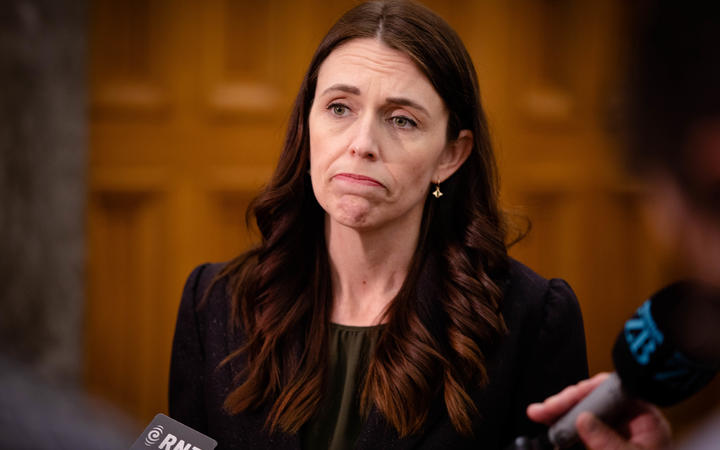
Prime Minister Jacinda Ardern has announced today that New Zealand will move to Phase Two of Omicron plan at 11.59pm on 15 February, when the period of home isolation reduces.
Ardern says the increase in Covid-19 cases is not unexpected and the country will stay in Phase Two as long as daily cases remain between 1000 and 5000 cases.
There is no change to the traffic light system, and schools and businesses remain open, she says.
Bloomfield says Phase Three is not an inevitability, and the objective remains the same – the difference “is simply how much we are able to follow up people, the requirement on people to self-isolate, and the kind of tests we will use”.Covid-19: Next phases of government’s Omicron plan revealed
Phase Two
The move to Phase Two means the self-isolation period for cases reduces from 14 days to 10 days, and for contacts from 10 days to seven.
The period of self isolation also applies to household members.
“We’ve seen that 90 percent of household contacts who were going to test positive do so within those first 10 days,” with Omicron, she says, so there are good reasons for the changes.
She advises people to develop a self-isolation plan, including identifying a buddy who can drop off supplies.
Anyone experiencing symptoms that get worse during isolation – particularly breathlessness – is advised to call Healthline immediately.
Bloomfield says in Phase Two, contacts will also be followed up differently.
People will not be followed up or expected to isolate having been to a hospitality venue unless they were seated at the same table.
“We will be relying on people to notify the people who might have been at the table … we won’t necessarily be asking everybody in that cafe, including the staff, to isolate.”
Ardern says the way to handle this period will be the same as previous times – test, vaccinate and isolate if sick.
“So we are embarking for the first time in the two years since the start of the outbreak into a period where New Zealanders will see more Covid in the community … it will be nothing like we’ve experienced to date but our efforts with vaccination mean we have got to this place without the volume of serious illness and death that so many others experienced.
“And still as always be kind and respectful. I know there is Covid fatigue, but I also know that no one wants to let go of the freedoms we’ve gained from uniting and protecting one another. We need respectful discussion and tolerance as we navigate this next phase together.”
Accessing rapid antigen tests
Phase Two also means the start of the test-to-return-to-work scheme. This would allow critical workers to return to work if they return daily rapid antigen tests.
Employees of businesses signing up to the scheme can go to a provider like a vaccination clinic and get a pack of 10 rapid antigen tests.
In some cases, the tests are being provided directly to workforces.
“We’ve secured enough rapid antigen tests to deal with a widespread Omicron outbreak with 7.2 million in New Zealand now and more arriving over the next week,” Ardern says.
Phase Two will also mean a greater emphasis on digital and automation to speed up contact tracing and other official communications.
“We currently have nearly 5000 active Covid cases, and 39 of those are in hospital, none in ICU … my most important message from this period carries through to the next – get a booster if you haven’t already.”
She says 1.2 million people who are eligible have not yet got their booster.
Anyone who has symptoms or has been in touch with someone who has tested positive should isolate immediately and get a test.
Ardern says the government is trying to ensure it has the supply of rapid antigen tests to meet the needs of the critical workforces first, instead of them being widely available.
Dr Bloomfield says the ministry is working on advice around that but RATs at the moment will be largely confined to the return-to-work scheme. He says some 22.5 million RATs are expected to be in the country by the end of February.
Positive case at Parliament
A member of the Press Gallery at Parliament has returned a positive rapid antigen test (RAT) result for Covid-19.
“We know that they [RATs] are not always 100 percent accurate,” Ardern says.
The individual has taken a PCR test to confirm if they are infected.
This is the first public case of Covid-19 at Parliament.
Anti-mandate protest
The prime minister’s briefing comes in the wake of the protest which built to an attendance of 3000 over the weekend despite appalling weather and a constant stream of loud music and Covid-19 vaccination ads – played at the insistence of Speaker Trevor Mallard.
Asked if it was kind for the Speaker to turn on the sprinklers with the protesters there, Ardern says the Speaker and police have the responsibility of upholding the law and ensuring everyone is safe.
She says in her view the protest has stepped beyond merely a protest, with harassment of others and causing the inability of others in Wellington to move around freely.
She says those on the forecourt of Parliament want to see the removal of all public health measures – the very measures that have kept New Zealand safe. “You’ll forgive me if I take a very strong view on that suggestion.”
Ardern says some sectors have been significantly down on business because of the Covid-19 Protection Framework – the traffic light system – and Finance Minister Grant Robertson is working on “highly targeted, one-off and short term” measures to support those sectors, which particularly includes hospitality.
She says the government will have more to say on that “very shortly”.
There are 981 new community cases of Covid-19 in New Zealand today.
File image. Photo: 123RF
In a statement, the Ministry of Health said the new cases were in Northland (21), Auckland (768), Waikato (82), Bay of Plenty (23), Lakes (12), Hawke’s Bay (5), MidCentral (5), Taranaki (1), Tairāwhiti (6), Wellington (6), Hutt Valley (14), Wairarapa (12), Nelson Marlborough (2), Canterbury (4), South Canterbury (1) and Southern (19).
“Once again, the further increase in new cases today is another reminder that, as expected, the highly transmissible Omicron variant is now spreading in our communities as we have seen in other countries,” the ministry said.
Thirty-nine people with Covid-19 are in hospitals in Whangārei, Auckland, Waikato, Rotorua, Wellington and Christchurch – none in ICU or HDU.
The average age of hospitalisations is 55.
At the border, there are 25 new Covid-19 cases – eight of which are historical. The cases at the border are from India, Malaysia and 14 of them are unknown.
There is now a total of 4960 active community cases. In total, there have been 21,195 cases in New Zealand.
On vaccinations, 20,739 boosters were administered yesterday despite the wild weather.
“The booster vaccine offers a high level of protection against Omicron, so if it’s been three months since you got your second dose, please get your booster as soon as possible,” the ministry said.
There were also 241 first doses given yesterday, 506 second doses and 1268 paediatric doses.
A five-month old baby is the youngest confirmed Covid case so far in Tonga’s Omicron outbreak.
There are 139 active cases of Covid-19 in the community today brining the total number of cases since the outbreak to 140.
Health Minister Saia Piukala. Photo/Screenshot (FM87.5 livestream)
133 people are in Tongatapu while six are in Vava’u.
One case, which was the first recovered case was released from MIQ on Friday.
The Minister of Health Saia Piukala said during a press conference this morning there was one case on a ventilator.
He said the rest of the cases were “mild”.
He said more front line staff tested positive and they were being isolated.
Hon Piukala said some cases at the MIQs had been tested negative and four of them are expected to be released tomorrow February 15, one on February 16 and two on February 17 with more returned negative cases to be released later.
He said more testing was underway in Vava’u today.
The update from the Prime Minister’s press conference this morning comes shortly after MP Tevita Puloka reported 109 Covid cases in his Tongatapu 1 constituency only.
The Tongatapu 1 constituency cases are, two in Halavave, 24 in central Kolomotu’a, two in Tongataeaapa, 65 in Sopu, six in Isileli, five in Tu’atakilangi, four in Kapeta and one case in Tufuenga, Puloka said.
Meanwhile, some local journalists believed the virus was moving quickly and widely spread in Tongatapu and Vava’u.
MP Puloka told radio FM 87.5 this morning the Parliament’s Social Committee met to update the situation.
Puloka, who is also the Chair of the Parliament’s Social Committee, said the Minister of Finance reported the strength of the government’s covid response budget was performing well.
He said if there was any issues with the budget a Parliament meeting was called.
“Go home and take your children” – that’s Prime Minister Jacinda Ardern’s message for protesters remaining at Parliament today.
Prime Minister Jacinda Ardern. Photo: RNZ / Angus Dreaver
Despite being trespassed from Parliament grounds some days ago, protesters remain on the lawn and show no sign of leaving. There were about 3000 present over the weekend.
Ardern told Morning Report today “I think we all want them to leave”.
“What’s become very clear is this is not any form of protest I’ve seen before and we’ve seen a lot, you know, and I think we’ve said time and time again, New Zealand is a place where protest is part of who we are.
“Some of our greatest movements have been born of people movements, many of which have entered the forecourt of Parliament.
“But what I’m seeing, it is some kind of imported form of protest.
“We’ve seen Trump flags, Canadian flags, people who are moving around the outskirts of the area with masks are being abused.
“Children and young people on their way to school are being abused. Businesses are seeing people occupy their spaces.
She did not believe the protest should continue and had specific concern for the children there, saying it was not an appropriate place for them.
“Do I believe that they should be there? No. Should they go home? Yes. Especially, especially the children.
Asked if it was time for a “olive branch” gesture or for politicians to meet and talk with protesters, Ardern said their actions did “not create a space where there’s any sense that they want dialogue”.
“What I have seen down on that forecourt does not suggest to me that this is a group that are interested in engaging in policy development.
“There are signs down there calling for the death of politicians.”
As for the management of the situation, that was for police, she said.
Police today are appealing to protesters to work with them to try to clear the streets of Wellington.
Police “ultimately need to be able to make all of those operational decisions,” Ardern said.
“It is absolutely for the police to determine how they manage any form of occupation or protests. And you can understand why that is a convention we will hold strongly to.
“I would hate to see in the future a situation where you have politicians seen to be instructing the police on how to manage any type of protest – and that extends to not passing judgement on operational decisions that are for them.”
“His job is to, of course, maintain a safe place to work. Right now it is a very difficult place for people to enter and the one piece of context I’ll just give is that it has not been a silent protest.
“What I’ve heard are clear anti-vaccination messages that do not align with the vast majority of New Zealanders.
“Media, when they’ve stepped onto the forecourt, have been abused and chased and called liars.
“So some of the rhetoric and noise coming from the protest has been pretty poor.”
A discussion on Mallard’s tactics was “not a fray” Ardern wanted get into, she said.
As for Covid-19 restrictions, Ardern said “we’ve only used what’s been necessary. That’s why we’re not using lockdowns anymore – because we now have other tools that means we don’t need to use those harsher form of measures, and we will continue to move away from them.
“But when we’re in the middle of a growing pandemic, that is not the time to move away from those things that keep us safe…
“When it comes to everything from the use of vaccine passes to the use of mandates, you’ve seen with other countries that they have been in the position to start lessening the use of those as they progress through the pandemic and got to a place where you see more stabilisation and a steady management within the health system.
“That is what we would move to as well. It is fairly difficult to put timelines or criteria on that when of course we are dealing with different variants that can come anytime. [I am] always loath to set up a situation you then can’t follow through on because of a changing situation, so instead I give the principle: As soon as we can move away, we will move away.
“We’ve done that with lockdowns. We’re opening the borders, we are easing restrictions that have been quite impactful for everyday lives.
“But right now, the ones we still have are going to help us get through Omicron.”