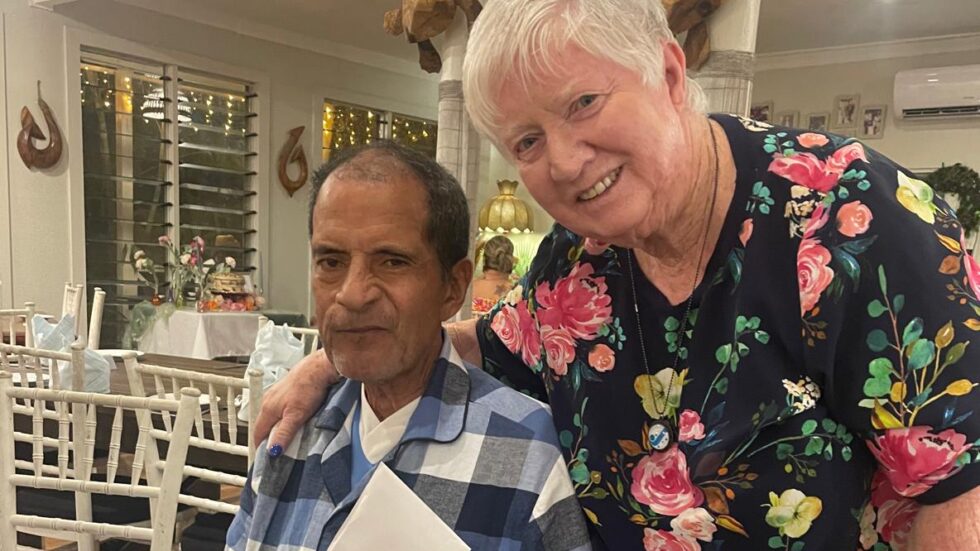
A Supreme Court judgment has revealed that a highly intelligent individual, described as such by the court, who is also a qualified musician, illegally imported hundreds of rounds of ammunition and attempted to mislead Customs officers by presenting an ammunition import licence belonging to one of the nobles of the realm.
Save Mataele
Save Mataele, 46, was fined a total of TOP$2,500 for unlawfully importing hundreds of rounds of prohibited ammunition into the country and repeatedly lying to customs officials in an attempt to conceal the offence.
In a judgment delivered by Justice Paul Garlick KC on 11 November 2025, Mataele pleaded guilty to two counts of unlawful importation of prohibited goods under the Customs and Excise Management Act.
He imported 400 rounds of .22 magnum ammunition and 150 rounds of Hornady Magnum rifle ammunition without a licence.
The court heard that Mataele travelled to a shipping premises to collect a crate he had imported from the United States. When questioned by a customs broker about whether the crate contained restricted goods, he falsely claimed it did not.
After a scan revealed the ammunition, he then lied again, claiming he had declared it and later produced “an import licence for ammunition, which had been granted to Lord Nuku in 2023,” according to the court document.
Justice Garlick said the offending was deliberate and premeditated, noting Mataele’s lack of remorse and his attempts to deceive authorities.
The judgment noted that Mataele’s claim that a conviction would hinder his ability to travel for work could not be accepted as a mitigating factor. The court said he was an “intelligent man” who would have understood the consequences of committing such an offence.
He also expressed concern about the growing prevalence of firearms-related offences in Tonga and suggested serious consideration may be needed regarding sentencing trends for such crimes in the future.
However, the judge acknowledged Mataele’s early guilty plea and the fact that he was a first-time offender.
He imposed a fine of T$2,000 on unlawful importation of prohibited 400.22 magnum ammunition and T$500 on unlawful importation of prohibited 150.22 Hornady Magnum rifle ammunition, to be paid within three months.
Failure to pay will result in six months’ imprisonment. The ammunition is liable for forfeiture under law.
Tonga’s sporting community is mourning the passing of veteran administrator Hiko Fungavaka, who died after a battle with cancer.
Congratulations on being awarded an OHF Life Member in November 2025 to recognise outstanding service.
Widely regarded for his dedication to sport development in Tonga and across the Pacific, Hiko leaves behind a legacy of service, leadership, and commitment to youth and community empowerment through sport.
Hiko was a Life Member of the Oceania Hockey Federation, a recognition shared rarely within Tonga and the wider Pacific for outstanding contribution to the code.
His impact extended beyond hockey, having served the Tonga Association of Sports and National Olympic Committee (TASANOC) as a Sport Development Officer, where he played a key role in delivering and coordinating sport development initiatives across the nation.
In 2016, he transitioned fully into hockey development, bringing the same passion and purpose to strengthening the sport at both grassroots and national levels.
Most recently, he served as Development Manager for the Tonga Hockey Federation, where he was instrumental in driving participation, strengthening structures, and promoting hockey as a growing sport in Tonga.
Hiko also contributed to sports leadership and governance, serving as a Board Member of TASANOC from 2021 to 2025, continuing to advocate for athlete development, opportunity, and sustainability within Tonga’s sports system.
TASANOC and the wider sporting fraternity have paid tribute to his dedication, describing him as a committed leader whose work will be remembered with gratitude and respect.
“Hiko’s contribution to sport will be remembered with gratitude and respect. Our heartfelt condolences go to his family, friends, and the wider sporting community,” the tribute said.
Hiko Fungavaka’s legacy lives on through the athletes, communities, and institutions he supported and strengthened throughout his years of service.
A man already serving a seven-year prison sentence for rape has been given an additional prison term after the Supreme Court of Tonga sentenced him for two further counts of serious indecent assault.
The rapist appeared before Justice Paul Garlick KC and pleaded guilty to two charges of serious indecent assault contrary to section 124(1) and (3) of the Criminal Offences Act.
He had earlier been sentenced in July 2025 to seven years’ imprisonment for rape by the Lord Chief Justice, partly suspended.
Because the earlier rape sentence had already been imposed and the suspended term activated, the Court said it needed to ensure the new punishment was fair, proportionate and reflected the totality of offending.
Offending
The Court was told that in count one, the man touched the complainant’s vagina without consent.
In count two, he kissed the complainant and put his tongue in her mouth. The judge described the behaviour as serious, deliberate and persistent despite the complainant telling him to stop.
The Court identified several aggravating factors, including that the offending was premeditated, involved the use of force and violence, caused both physical and emotional harm to the complainant, and was carried out without any genuine remorse.
The judge also noted that the offender committed these acts while already serving a prison sentence for another sexual offence.
Although prisoner is only 20, had cooperated with police and pleaded guilty early, his previous criminal history included convictions for assault, housebreaking, theft and rape
Justice Garlick KC said that if these offences had been sentenced independently, the appropriate term would have been two years’ imprisonment, partially suspended.
However, because the offender was already serving a seven-year sentence for rape, the Court said it needed to ensure the overall punishment remained proportionate. It therefore imposed six months’ imprisonment on the first charge and three months on the second.
The terms will run concurrently with each other but consecutively to the existing seven-year rape sentence.
The Court also ordered that no material may be published that could identify the complainant, including on social media.
The sentence was delivered in Nuku‘alofa on 8 October 2025.
A man has been sentenced to three years and four months’ imprisonment for a violent machete attack that left his victim with serious and permanent injuries.
Christopher ‘Opeti Tupe, 20, pleaded guilty to causing grievous bodily harm, an offence that carries a maximum penalty of 10 years’ imprisonment.
He entered his plea at the earliest opportunity, had no previous convictions, and fully cooperated with police, factors which the Court acknowledged as significant mitigation.
However, Justice Paul Garlick KC said the offending was extremely serious and demanded an immediate custodial sentence.
Drunken dispute turned into armed attack
The Court heard that the defendant and complainant had been drinking together in ‘Eua Island when an argument broke out.
The complainant became angry after Tupe drove off in his car and later found him at a bar in Tufu, where another fight took place before the complainant returned Tupe home.
Tupe then armed himself with a machete, went to the complainant’s home and repeatedly swung the weapon at him, striking his left arm and other parts of his body.
The victim suffered a deep laceration to his left wrist measuring approximately 6cm by 4cm, with the Court noting the injuries were “very serious and permanent.”
Sentence and Suspension
Justice Garlick said the case clearly passed the threshold for imprisonment, setting a starting sentence of five years, reduced by one third due to the guilty plea and cooperation with police.
While the defence had asked for full suspension, the judge ruled the seriousness of the violence required jail time.
However, he agreed there was strong rehabilitation potential given the offender’s age, remorse, community support and forgiveness from the victim.
The Court suspended the final two years of the sentence for a period of two years, subject to strict conditions, including probation supervision, anger-management and alcohol education programmes, community service, and a requirement not to reoffend.
Tupe must report to probation within 48 hours of release.
The sentence was delivered on 5 December 2025 in Nuku‘alofa.
Analysis – Tonga is facing heightened risk under the United States’ new visa restrictions, announced at a time when the newly appointed Fakafanua administration has yet to provide detailed public clarification of the situation. Analysis of the policy indicates that the Kingdom now sits in a high-risk position, where failure to act could see the current partial restrictions escalate into a full entry ban in the coming months.
Crown Prince Tupouto‘a, Minister of Foreign Affairs and Diplomatic Services, pictured alongside Prime Minister Lord Fakafanua. The image is a cropped section of a photograph originally published on the Australia in Tonga Facebook page.
The review reveals a consistent pattern: countries initially placed under warning or partial restriction often face tougher sanctions if Washington believes its security concerns have not been adequately addressed. In several instances, preliminary restrictions have ultimately expanded into full entry bans.
Countries previously placed in a comparable position to Tonga provide important insight. Laos and Sierra Leone were placed under partial restrictions in June 2025 — the same period Tonga was flagged — but were fully banned last month after US authorities determined that issues had not been resolved. In contrast, Turkmenistan, which was also under partial non-immigrant visa restriction, was removed from the list after US officials said the country had cooperated constructively and demonstrated significant progress.
Based on this pattern, the analysis concludes that Tonga is now at a decisive point. The current partial measures can escalate, and if concerns identified by US authorities remain unaddressed, the Kingdom could face a complete ban as early as June.
Responsibility for addressing the escalating visa restrictions now falls squarely on Prime Minister Lord Fakafanua and his Minister of Foreign Affairs and His Majesty’s Diplomatic Services, Crown Prince Tupouto‘a. The former government had already tasked the Crown Prince with engaging Washington after Tonga was first warned last year, and the expectation is that the current administration must now demonstrate meaningful action to prevent the situation from worsening.
President Donald Trump, who reinstated stricter immigration controls after returning to the presidency in January, has justified the measures as necessary to address weaknesses in overseas vetting systems. US authorities have cited factors including high visa overstay rates, unreliable civil records, corruption concerns, terrorism risks and a lack of cooperation in accepting deportees.
Case-by-case approvals
Despite the restrictions, travel to the United States is not entirely closed.
According to the US Department of State, travellers from Tonga may still be permitted entry in exceptional circumstances if their visit is deemed to be in the US national interest.
These approvals can be issued on a case-by-case basis by the Secretary of State or Secretary of Homeland Security, while the Attorney General may authorise travel where it supports critical US justice or security needs.
Tighter vetting of applications
The US Department of State said that as of 15 December 2025, enhanced vetting now applies to the visa categories restricted for Tonga, including H-1B visas (skilled foreign workers in speciality occupations) and H-4 visas (their dependent family members).
These categories will now face the same level of scrutiny already applied to F student visas, M vocational visas, and J exchange visas.
Applicants are required to make their social media accounts public so consular officers can verify identity, employment and education records, and assess for potential security risks.
US authorities warn that sudden deletion of posts or major last-minute profile changes may raise concerns. Applicants are advised to ensure their online information is accurate, consistent, and free from material that could be interpreted as supporting unlawful activity.
What this means for Tonga
The United States is home to one of the largest Tongan populations in the world, with more than 48,000 people identifying solely as Tongan in the 2020 US Census and over 78,000 identifying as Tongan in combination with other ethnic backgrounds. Any tightening of U.S. travel policy therefore, has significant implications for families, communities and long-standing people-to-people links.
Much of Tonga’s modern connection to the United States has developed through The Church of Jesus Christ of Latter-day Saints, the Kingdom’s second-largest Christian denomination, and through education pathways such as the church’s Brigham Young University–Hawai‘i, which has traditionally enrolled large numbers of Tongan students each year.
That pathway has already been affected. As Kaniva News previously reported, BYU professor Tevita Ka‘ili said visa restrictions have disrupted enrolment, and there are currently no new Tongan students admitted this year.
The potential impact reaches beyond education. Travel restrictions could affect families, church networks, employment opportunities, remittances, community ties and Tonga’s broader diplomatic relationship with Washington.
The coming months will therefore be critical in determining whether Tonga moves toward relief — like Turkmenistan, which successfully engaged the US — or toward harsher outcomes similar to Laos and Sierra Leone, which shifted from partial restrictions to full entry bans.
Clear, proactive communication from government, supported by practical engagement with US authorities, will be essential in shaping Tonga’s future position under the policy.
A 58-year-old Customs officer has been sentenced to four years’ imprisonment, with two years suspended on conditions, after being convicted of importing prohibited firearms and ammunition into Tonga.
Mōsese Kātoa. Photo/Supplied
Mōsese Kātoa was found guilty by a jury on four charges, including two counts of importing prohibited goods under the Customs and Excise Management Act, failing to make a proper customs declaration, and bribing a government servant under the Criminal Offences Act. He had no previous convictions.
According to court documents, a shipment containing firearms and ammunition arrived aboard the Mountain Cameron on 30 August 2023. Kātoa attempted to clear the crate on 11 September, declaring only ammunition and denying the presence of firearms.
Customs officers proceeded to scan the crate and detected both firearms and ammunition, despite Kātoa stating there were no guns and claiming the consignment contained about 500 bullets.
He then attempted to offer a $50 bribe to a Customs officer to stop further inspection, which the court described as especially serious given his role as a serving Customs officer.
A full search revealed nine rifles, two shotguns, one pistol and 27 cases of ammunition.
The court noted that during the process, Kātoa repeatedly changed his explanation and later claimed the weapons belonged to another person and that he did not hold an import licence.
However, Justice Paul Garlic KC noted two mitigating factors in sentencing: the defendant’s previously good character and clean record, and his age.
All sentences were ordered to run concurrently, making a total sentence of four years’ imprisonment, with the final two years suspended for two years, subject to conditions.
The firearms and ammunition were ordered forfeited to the Crown.
In recent commentary, Lo‘au dean Dr Siosiua Lafitani criticised Kaniva News, using the term “cut and paste” — or in Tongan, tuʻusi mo fakapipiki — in a derogatory manner to suggest the outlet lacks originality and journalistic rigour.
Cut and paste or credible journalism? Quotation and attribution are fundamental tools that uphold accuracy, transparency, and ethical reporting.
His remarks follow earlier criticisms he has made of Kaniva News, which arose after our reporting challenged several misleading claims he made in relation to our reports on Tonga’s democracy, raised concerns about the legality of aspects of his Lo‘au online university, and highlighted student complaints about the way Lo‘au delivered its teaching and courses.
Lafitani and his scholars’ “cut and paste” characterisation is inaccurate and reflects a misunderstanding of how professional journalism and evidence-based reporting operate.
In journalism, what is dismissively labelled as “cut and paste” is in reality the disciplined practice of quoting primary sources — including official statements, interviews, court documents, legislation, and expert analysis — with full and transparent attribution. This approach mirrors accepted academic methodology, where direct quotation is essential for accuracy, credibility, and ethical reporting.
In academia, “cut and paste” is in fact the legitimate practice of quotation, attribution, and source citation — essential tools that ensure accuracy, accountability, and transparency. They allow readers to verify claims, assess the credibility of sources, and distinguish clearly between reported facts, direct statements, and analysis.
Far from indicating laziness or a lack of originality, responsible quotation reflects editorial integrity. It shows that a newsroom prioritises factual accuracy over paraphrasing that may distort meaning. In matters of public interest — particularly politics, governance, and accountability — precise wording is often critical, and quoting directly is the safest and most ethical approach.
Original journalism does not mean inventing facts or rewriting others’ words unnecessarily. It means independently selecting, contextualising, verifying, and presenting information in a way that serves the public interest. Editorial judgement lies in what is reported, why it is reported, how it is framed, and what context is added — not in avoiding quotation.
In both academia and journalism, quotations are used to substantiate an argument, claim, or point by providing direct evidence from a reliable source. A quotation is a precise, word-for-word extract from that source and is presented within quotation marks to ensure accuracy, transparency, and integrity in reporting.
This is particularly important when public figures make contentious statements. Quoting their exact words is often the most responsible approach, as paraphrasing can unintentionally soften, exaggerate, or distort meaning. Direct quotation allows audiences to see exactly what was said, in context, enabling them to form informed opinions based on the speaker’s actual words rather than an interpretation of them.
Kaniva News’ reporting is grounded in these principles. Where statements are quoted, they are quoted to preserve accuracy. Where documents are referenced, they are cited to maintain transparency. Where analysis is offered, it is clearly distinguished from reported fact.
Reducing this professional practice to a dismissive label not only misrepresents the work of journalists but also risks misleading audiences about how credible news is produced. In an era of misinformation, the disciplined use of sources is not a weakness — it is a safeguard.
At its core, journalism exists to inform the public truthfully and responsibly. Quotation and attribution — which Lo‘auan critics have dismissively referred to as “cut and paste” — are not shortcuts; they are professional standards.
Iran’s Supreme Leader Ayatollah Ali Khamenei is prepared to flee to Moscow if his regime faces collapse, according to an intelligence report cited by The Times of Israel.
The report claims the 86-year-old leader would leave Tehran with senior aides and family members if security forces fail to suppress the escalating protests, or if elements within the regime abandon him during the unrest.
According to reports, a “plan B” has been prepared for Supreme Leader Ayatollah Ali Khamenei and his inner circle, including his son and designated successor, Mojtaba.
The revelation comes as mounting unrest, driven by worsening economic conditions, continues to place significant pressure on Iran’s ruling Islamic system.
Amid the tensions, U.S. President Donald Trump warned that if Iranian authorities opened fire on their own citizens, the United States would intervene to protect protesters. Iran’s Foreign Minister rejected the remarks, condemning them as “reckless and dangerous.”
The escalating situation unfolds as Tehran is still dealing with the aftermath of Israel’s 12-day offensive in June, along with subsequent U.S. airstrikes targeting Iranian nuclear facilities.
Economic strain has intensified further since September, when the United Nations reinstated sanctions over Iran’s nuclear programme. As a result, the national currency has collapsed, with the rial now reportedly worth around 1.4 million to the U.S. dollar (NZ$1.74).
At the same time, Iran’s regional influence has weakened significantly, with its so-called “Axis of Resistance” — an alliance of states and militant groups aligned with Tehran — severely diminished since the Israel-Hamas conflict erupted in 2023.
Adding to the tension, U.S. President Donald Trump’s warning that Washington would “come to the rescue” if Iranian authorities violently suppressed peaceful demonstrators has gained renewed relevance, particularly after American forces detained Venezuelan President Nicolás Maduro, a key ally of Tehran.
A 33-year-old New Zealand citizen is facing serious drug smuggling charges after Customs officers at Auckland Airport allegedly discovered more than 18 kilograms of methamphetamine concealed in her luggage.
The methamphetamine seized is estimated to produce up to 922,500 doses, with a potential street value of NZ$5.53 million.
The woman arrived in Auckland from Singapore on 4 January and was referred to Customs for further questioning.
During a search of her baggage, officers located 18 individually vacuum-sealed packages containing a white crystalline substance. Subsequent testing confirmed the substance to be methamphetamine.
Customs Auckland Airport Manager Paul Williams issued a clear warning to travellers tempted to smuggle drugs into the country.
“If you try to smuggle drugs into New Zealand, you might not just land here—you could land in prison,” he said.
“The Christmas and New Year period is one of our busiest times, with our officers working tirelessly at the border to ensure a smooth travel experience for visitors and those returning home.
“Our message to anyone considering carrying prohibited items is clear: regardless of whether you know what’s in your bag, if it contains illegal drugs, you will face arrest.
“Customs remains committed to reducing the harm caused by illicit drugs in our communities. No financial gain is worth the serious consequences, which can include life imprisonment.”
Authorities estimate the 18.45 kilograms of methamphetamine seized could produce up to 922,500 doses, with a potential street value of approximately NZ$5.53 million.
Customs said investigations are ongoing.
Anyone with information about suspected drug smuggling is urged to contact Customs confidentially on 0800 WE PROTECT (0800 937 768) or Crime Stoppers anonymously on 0800 555 111.
The woman accused of misappropriating nearly half a million pa‘anga from Tonga’s Retirement Fund Board (RFB) is expected to reappear in court soon, following a postponement of her case from last year.
Meliame Lu’isa Finau Langi, 39, of Longolongo, is alleged to have taken $491,922.52 between 2022 and 2024.
Authorities confirmed that investigations revealed Langi was allegedly responsible for accumulating the funds in question during the specified period.
The case follows revelations last year that the fund’s board dismissed a couple in June 2024.
They were accused of involvement in the embezzlement of the pension funds.
However, there has been no confirmation that the two cases are linked.
That allegation became public after former Prime Minister Dr ‘Aisake Eke confirmed that an investigation was underway into claims of misappropriating “hundreds of thousands” of pa‘anga from the retirement fund.
Eke did not disclose any further information at the time.
Tonga’s RFB is financed through compulsory contributions from public servants, who pay 5 percent of their salaries, while the government contributes 7.5 percent as employer.
The fund also accepts voluntary contributions and holds major investments, including shares in the Tonga Development Bank. It is managed by the Tonga Retirement Fund Board, with the mandate to safeguard members’ savings while investing to grow the fund.