There are 125 new Covid-19 cases in the community today, including two new cases in Christchurch, the Ministry of Health says.
There was no Covid-19 media conference today. In a statement, the ministry said the two Christchurch cases were expected and related community cases, both from a single household linked to the cases identified earlier this week.
The Ministry said 13 close contacts of the four Canterbury cases were isolating and would undergo further testing. Covid-19 was detected in a Christchurch wastewater sample taken on Wednesday.
There was also one new case in Northland and four in Waikato, with the remaining 118 in Auckland. Three of the Waikato cases are still to be linked, but the Northland case was not unexpected, as they are a household member of a case and were already isolating.
Fifty-one of the new cases are still to be linked. There have been 289 unlinked cases in the past 14 days.
There were also three new cases and one historical case identified at the border.
There are 39 people in hospital with the coronavirus, including four in intensive care.
One of the new Auckland cases is a resident at Edmonton Meadows retirement village in Henderson.
“Public health staff are confident the risk of infection is low but, as a precaution, testing is being arranged for all staff and residents. Both staff and residents at the village have very high vaccination rates.
“Investigations are underway to determine the source of the infection and identify close contacts. At this stage, no staff members are required to stand down.”
The Ministry said the rise in case numbers was a reminder of the infectiousness of Covid-19.
“With over 30,000 tests processed nationwide yesterday, these results aren’t unexpected.”
There were 44,779 doses of the Covid-19 vaccine given yesterday, including 12,780 first doses and 31,999 second doses.
One of the four new cases reported in the Waikato today has been linked to existing cases. Three of the new cases were in the Te Awamutu/Kihikihi area and one in Ōtorohanga.
In Auckland, people in the suburbs of Redvale, Rosedale, New Lynn, Wiri, Drury, Henderson and Manurewa are being urged to get tested.
The number of community cases linked to the current outbreak has risen to more than 3000, with 3046 cases in this outbreak – more than half of the 5764 in total since the pandemic began.
The government is awaiting test results of 215 Tongan repatriates who arrived from Christchurch on Wednesday night amid two positive cases of Covid-19 reported in the New Zealand city.
Both cases live together in the suburb of Bishopdale, RNZ reported.
One of the cases had permission to go to Auckland to provide childcare and tested negative before returning to Christchurch.
Both became unwell last week and were tested two days ago.
They returned positive Covid tests on Wednesday night.
Three households with nine close contacts have been identified.
Tonga’s CEO of the Ministry of Communications (MEIDECC), Paula Ma’u, said they had received the report of the Christchurch Covid-19 cases after the passengers arrived in Tonga.
“The passengers were being processed according to the normal procedure at the quarantine facilities and tested for Covid-19,” Ma’u told Kaniva News this evening.
“Precaution measures have been put in place while awaiting the test results which are expected to be available in a day or two”.
“Let’s pray that Tonga still be safe”.
The repatriated flight arrived with passengers including seasonal workers as well as some of Tonga’s Olympic team officials who got stuck in New Zealand after the Olympic Games.
The last repatriation flight for the year is scheduled to arrive on November 23 according to a MEIDECC statement on October 26.
The Supreme Court of Tonga ruled today that the police were not acting maliciously when they prosecuted Lord Tu’ivakanō before he went on trial in February 2020.
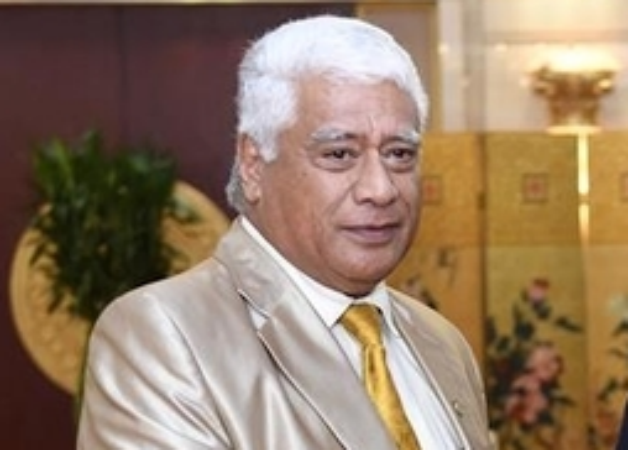
Lord Tuʻivakanō. Photo/Tonga Legislative Assembly
The king’s noble was charged with five counts of accepting a bribe as a government servant, money laundering, perjury, making a false statement for the purpose of obtaining a passport and possession of a firearm and ammunition without a license.
Lord Tu’ivakanō pleaded guilty to the possession of a firearm on March 2020. The jury found him guilty on the perjury, false statement and possession of ammunition charges.
On April 24, 2020 the former Speaker was sentenced on the bribery and money laundering charges to two years imprisonment, fully suspended on conditions including 100 hours community service and fined on each of the firearms and ammunition offences.
However, he appealed against the convictions and on October 30, 2020, the Court of Appeal acquitted him of the perjury and false statement charges and dismissed the appeal in respect of the ammunition.
The lawsuit
In April this year the noble MP commenced this proceeding in which he claimed a total of TOP$5.75 million in damages for malicious prosecution.
He claimed general, aggravated and exemplary damages for “wrongful arrest, imprisonment, conviction and punishment” in consequence of alleged malicious prosecution and misfeasance in public office by the defendants, which included the former Minister of Police, Attorney General and the Commissioner of Police.
The court summarised Lord Tu’ivakanoo’s claims under a number of paragraphs including saying the former late Prime Minister was “largely responsible” for the prosecution of the Plaintiff and he and the former Minister of Police were motivated by malice and had an “active role” in the police charging and arresting the Plaintiff
The defence denied the claims saying that at all material times, they had reasonable grounds and sufficient evidence at the time to lay the charges and to prosecute Lord Tu’ivakanō.
The ruling
The ruling clarifies standards for when wrongly accused individuals can sue for malicious prosecution.
Lord Chief Justice Michael Whitten said “that proof of malice will often be a matter of inference, but it is proof that is required, not conjecture or suspicion”.
“At the forefront of the Plaintiff’s pleaded allegations of malice, and in his evidence, was the Plaintiff’s belief that the police investigation and subsequent prosecution was politically motivated”.
Mr Whitten said, that was based on certain public statements by the late former Prime Minister to the effect that he considered that Lord Tu’ivakanō was involved in the unlawful sale of Tongan passports.
“It was also based on the assertion that the former Minister of Police was responsible for instigating the police investigation which ‘targeted’ the Plaintiff. In closing submissions, the strength of that belief appeared to have waned somewhat when counsel for the Plaintiff wrote that the Plaintiff believed that former Prime Minister Pohiva ‘had something to do with his prosecution’”
Mr Whitten said Lord Tu’ivakanō has failed to establish, on the balance of the probabilities, that the police investigation and criminal prosecution against him was without reasonable and probable cause or that it was motivated by malice.
“Accordingly, the Plaintiff’s claim is dismissed”.
———– FAKAMATALA FAKATONGA NOUNOU ——————-
Kuo ‘ikai tali ‘e he ‘Eiki Fakamaau Lahi ‘a e ‘eke $5.75 miliona ‘a Looti Tu’ivakanō ke totongi huhu’i ange mei he pule’anga Tonga’ he’ene tui na’e fakahoko ‘i he fakalotokovi ‘a hono faka’ilo ia ‘e he kau polisi’ ‘o tukuaki’i ki heni ‘a e Palēmia ki mu’a ‘Akilisi Pōhiva mo e Minisitā Polisi ‘aho ko ia’ Māteni Tapueluelu. Na’e toe faka’ilo foki mo e pule’anga Tonga, Komisiona Polisi’ pehē ki he ‘Ateni Seniale’. Ne ‘ikai tali ‘eni tu’unga he pehē ‘e ‘Eiki Fakamaau Lahi Whitten na’e ‘ikai lava ‘e he nōpele’ ni ke ne fakamo’oni’i ta’etoeveiveiua na’e fai hono faka’ilo’ he funga ‘o e fakalotokovi. Na’e faka’ilo foki ‘a Tu’ivakanō ki he hia ko e fa’u ha fakamatala ta’emo’oni ke ma’u ta’efakalao ai ha paasipooti, tali ha totongi fakafufū, fō e pa’anga ‘uli, fakafe’ātungia’i e ngāue ‘a e kau polisi’ pea mo hono ma’u ia mo e mahafu mo ha me’a tau ‘ikai ha’ane laiseni. Neongo ia ne ne tangi pea ‘i ‘Okatopa ta’u kuo ‘osi’ ne tali ai ‘ene tangi ‘o fakahaofi ia mei he hia ko hono fakafe’ātungia’i e ngāue ‘a e kau polisi’ mo hono fakahoko ha fakamatala loi ke ma’u ai ha koloa. ‘I he ta’u ni leva ne kamata ai ‘ene ‘eke maumau ko eni ki he pule’anga ka kuo ‘ikai tali ‘e he ‘Eiki Fakamaau Lahi
A severe weather warning has been issued for Tongatapu, Ha’apai, Vava’u and ‘Eua, with strong southeasterly winds.
Met Service said a fresh to strong East to Southeasterly wind-flow prevails over the Group.
“A strong wind warning remains in force for Vava’u, Ha’apai, Tongatapu and ‘Eua land areas,” it said.
A strong wind warning and small craft advisory remain in force for all of Tonga coastal waters with East to Southeasterly winds 15-20 knots, rising up to 25 knots at times.
Moderate seas (up to 2.5 meters).
For the Niuas, there are moderate to fresh East to Southeast winds.
“Mainly fine apart from cloudy periods with showers”.
A report by Relief Web last year said the Tropical Cyclone (TC) activity expected in the 2020/21 Tropical Cyclone Season to affect Tonga is likely to be around one to two cyclones on average.
It said any tropical cyclones passing close to the country, associated active cloud and rain bands may occasionally affect Tonga with marked rainfall and possible flooding, including sea flooding of low‐lying coastal areas.
Tonga’s tropical cyclone season normally starts on November until March.
Health authorities are still trying to determine the risk to Christchurch of two new community cases of Covid-19 there, and a snap lockdown is not being ruled out.
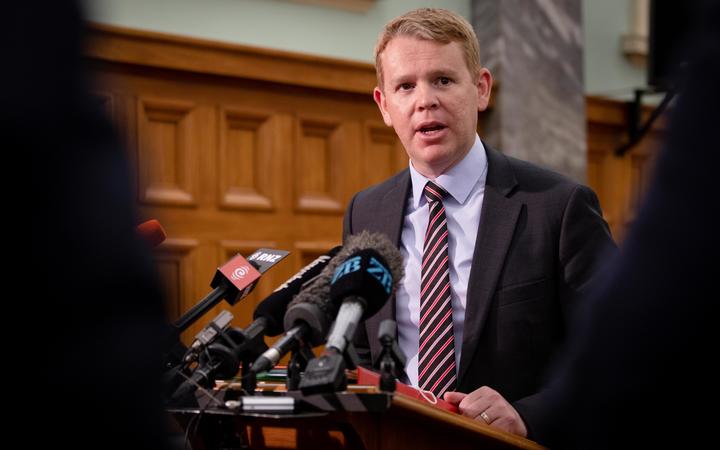
Covid-19 Response Minister Chris Hipkins. Photo: RNZ / Angus Dreaver
Covid-19 Response Minister Chris Hipkins is expecting to receive a public health risk assessment on the cases later this morning, which will allow a quick decision about a potential lockdown, possibly at today’s 1pm briefing.
The two cases are from the same household, are not vaccinated, and their use of the Covid-19 Tracer app has been low.
They have been in Christchurch for up to a week after one travelled back from Auckland. They had a negative test result prior to that travel as required but later tested positive.
At this stage, there are no other known household contacts for the pair.
Hipkins told Morning Report “The nature of their contacts in Christchurch will be established during the morning and then we’ll have a bit more information to share, but you know, these cases came in quite late last night.
“My understanding is that they’ve been unwell for a while so they could have been symptomatic and infectious for a period of time whilst back in Christchurch and so that’s one of the things that the contact tracers will be working on as a as a top priority this morning – to identify exactly what the nature of the potential exposure in Christchurch is.”
It was not yet clear how many locations of interest there might be.
“As of last night that identified one other household so far that the person had had contact with … but we’ll know more within the next few hours, hopefully.”
The impact of their low use of the Covid Tracer app “ultimately would depend on exactly how much they’ve been out in the community, you know if they’ve been unwell, they may well have been staying at home for much of that period of time.
“If they have had a significant amount of movement within the community, and then the fact that they haven’t kept records does make that more challenging because human nature is everybody will forget things.”
The pair seemed to be co-operating with authorities so far, he said.
There was not enough information available yet to make a call on a snap lockdown, Hipkins said.
“We will know by later in the morning this morning what we’re dealing with in Christchurch. At this point we’re still just waiting to get more information there… I’m expecting to receive the public health risk assessment on these particular cases later on this morning, and that will allow us to make it speedy decision about anything any follow up that’s required in Christchurch.
“I couldn’t make a judgement at this point as to what follow up will will be required.”
According to Canterbury DHB figures, 89 percent of people in the region have received their first dose and 68 percent are fully vaccinated.
Hipkins said that was good.
“Once you get up to those sorts of rates, that does start to have an impact on the spread of the virus.”
But the cases illustrated why there were still restrictions in the South Island, he said.
Christchurch Mayor Lianne Dalziel said the two Delta cases were the wake-up call her city was dreading and hoped a snap lockdown would not be needed.
Dalziel told Morning Report it was disappointing the pair were not scanning QR codes and were unvaccinated.
Seeing the damage one case caused in Auckland, people needed to be extremely vigilant, she said.
She wanted tougher border requirements for people leaving locked down regions.
Christchurch-based National Party MP Gerry Brownlee backed a move to a lockdown – if it was the only way to contain a widespread outbreak.
“What we’ve got now is the reality of possibly greater restriction that we’ve enjoyed for a long time and I hope that the Ministry (of Health) in their consideration is sensible, and that the people of Christchurch … continue to use the QR codes, wear masks and where appropriate, (socially) distance,” he told Morning Report.
However, before a lockdown decision was made he would want more information about the movements of the pair.
“I think you’ve gotta be pretty sensible about whether you decide that the whole province or the whole city needs to lock itself down – or just rely on the fact that we have increasing vaccination rates… I just really hope that there is a sensible analysis of what the risks are.”
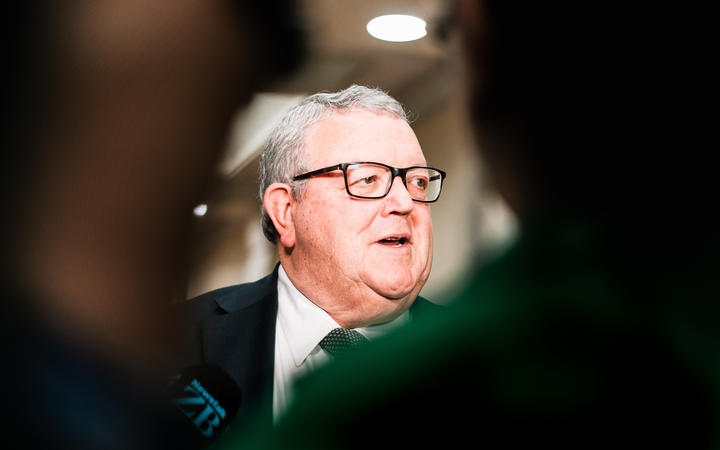
Gerry Brownlee. Photo: RNZ / Samuel Rillstone
Epidemiologist professor Michael Baker said the new Christchurch cases were expected but nonetheless concerning.
“Some people felt there was some inevitability about this virus in this outbreak, spreading all around the country, including the South Island.
“We’ve already seen how easy it is for a case to a travel from the North Island to Blenheim recently, so this is probably expected but obviously quite a shock.
“If there’s only one case in one household member, contact tracing should work very well. The bigger issue is how many other cases are incubating in the South Island given we have very few controls on infected people getting on flights at the moment.
“One of the problems, of course, is that a high proportion of people will be asymptomatic or have only a few symptoms, the occasional person will also be vaccinated now, so it is quite tough to pick up all of these outbreaks very early, so it’s just critical for people to come forward if they’ve got any symptoms at all.
“I think if the outbreak is well defined – so it’s just the person who’s travelled to Christchurch and their household members – that should be very manageable with contact tracing and the usual methods.
“I think there wouldn’t be a need to raise alert levels in Christchurch if the contact tracing puts a really good boundary around it.
“The risk assessment they’re doing now will be very thorough I’m sure, and that will give us an idea for this case. I think the wider question is how many other cases now are incubating the South Island.”
There were “a whole lot of precautions” that could be used to keep the virus out of the South Island, Baker said.
“The first thing is limiting numbers of people travelling to the South Island from infected areas to just essential workers, for example.
“The other thing is at least some basic screening before people go on flights particularly whether they’ve come from an area that’s under level 3 restrictions where there is considerable transmission and potentially there should be a requirement for pre-travel testing, I think increasingly there should be a requirement for vaccination.”
By Amy Williams of RNZ.co.nz. Republished with permission.
A group of principals will meet online with government officials today to discuss what needs to happen for primary schools to reopen in Auckland next month.
Education Minister Chris Hipkins said primary and intermediate schools and kura could reopen on 15 November, depending on Covid-19 case numbers.
That’s just 12 home-school days away, and Auckland Primary Principals’ Association and Pt Chevalier School principal Stephen Lethbridge said there was a lot of preparation to do.
“We have to make sure that we’ve got plans and processes in place that ensure a safe return. We can make it happen, it is doable, we just need to make sure that we get a good plan together.”
He said measures organised by schools could include staggered start times or alternate attendance days for different age groups.
“We’ve got a team of 15 to 20 school leaders from around the region who are going to be working closely with the ministry over the next couple of days to try and iron out some of these issues and see a way forward about how we can make it the best return for all the schools in the region.”
Hipkins said primary and intermediate schools will reopen with educators tested and masked, and the possibility of outdoor learning and alternate attendance days.
Developmental paediatrician Dr Jin Russell said these factors would help ensure schools were safe.
“The staged return will mean that there won’t be as much crowding, it will hopefully be easier to keep children in bubbles and Chris Hipkins also foreshadowed that they may take learning outside as much as possible,” she said.
“These are all recommendations that have been made as part of reopening schools safely so I was pleased to see them.”
Dr Russell said it was understandable if parents felt anxious but the precautions will reduce the chance of catching Covid-19 at school.
“All of these layers together really add up to drive down the risk of transmission within schools. I know it’s not possible to say that there’s zero risk but doing all these things together will really drive down that risk of transmission.”
She said vaccinating eligible family members was the best defence against Covid-19 and school communities could help to reach vaccine stragglers.
Lethbridge said teachers were keen to see their students in person again when it was safe to do so.
“Teachers will be really looking forward to reconnecting with kids and seeing them face-to-face.
“My advice to parents will be sit tight, stick with us, we’re all in this together and we will get to a solution that will get everyone back as soon as possible.”
Chief Secretary and Secretary to Cabinet Edgar Cocker claims a photo showing apparently being restrained after an altercation actually shows him praying.
Chief Secretary is seen kneeling on the floor what some bystanders restrain the Prince.
Photos of the incident have gone viral, but yesterday Cocker told Kaniva News he had been praying and was asking the Prince to kneel down so they could pray together.
Cocker’s version of events appears to contradict the evidence of the video and reports by witnesses on news and social media.
In the video from which the photos were taken, he is seen apparently trying to rise from the floor while Prince Tu’ipelehake is restrained by some bystanders.
Witnesses told Tongan media the young prince “pushed Edgar away” after he had made abusive remarks to girls who were in his company at the Naughty Ruby Night Club.
Kaniva News asked Cocker to assure us he was telling the truth about what happened.
All he said in response was “Malo” (thanks).
Other media have previously been unable to contact him about the incident.
The prince could not be contacted for his side of the story.
As previous media reports have pointed out, irrespective of the details of what happened, many people clearly regard Cocker – one of the closest administrators to the Prime Minister and a senior CEO looked up to by other Government leaders – as having been brought into disrepute.
Members of the public expressed their concerns at what they called an unacceptable behaviour by some of the country’s leaders.
“They let down the government,” a commenter wrote on Facebook.
Cocker has been a controversial figure, particularly during the saga of the government-owned Lulutai airline.
Cocker publicly supported statements by the Prime Minister regarding the appointment and sacking of the airline’s CEO, which were later called into question by documentary evidence.
When asked by Kaniva News whether former Lulutai CEO Maikolo Faasolo had held the position, Cocker aid no. When e-mailed the copy of the contract which showed Fa’asolo was indeed the CEO of Lulutai before he was forced to resign, Cocker said nothing.
An expert panel on Tuesday voted overwhelmingly to recommend the US Food and Drug Administration authorise the Pfizer Inc and BioNTech SE Covid-19 vaccine for children ages 5 to 11, saying the benefits of inoculation outweigh the risks.
An authorisation for that age group would be would be an important regulatory step toward reaching about 28 million children for inoculation, most of them back in school for in-person learning.
The vaccine could be available to the younger age group as soon as next week. The FDA is not obligated to follow the advice of its outside experts, but usually does.
If the FDA authorizes the shots for this age group, an advisory panel to the US Centres for Disease Control and Prevention will meet next week to make a recommendation on the administration of the vaccine. The CDC director will make the final call.
The companies have said their vaccine showed 90.7 percent efficacy against the coronavirus in a clinical trial of children aged 5 to 11.
While children becoming seriously ill or dying from Covid-19 is relatively rare compared with adults, some develop complications, and infections in unvaccinated kids have risen due to the easily transmitted Delta variant of the coronavirus.
“To me, the question is pretty clear,” said Dr. Amanda Cohn, a paediatric vaccine expert at the CDC and a voting member of the panel. “We don’t want children to be dying of Covid, even if it is far fewer children than adults, and we don’t want them in the ICU.”
Pfizer and BioNTech are seeking clearance for a lower, 10-microgram dose of the vaccine in children, versus 30 micrograms for those age 12 and older. The shot has been authorized for ages 12-15 since May after being cleared for those age 16 and older in December.
The advisers paid close attention to the rate of a heart inflammation called myocarditis that have been linked to both the Pfizer/BioNTech and Moderna vaccines, particularly in young men.
If the number of myocarditis cases in the younger age group turns out to be similar to that in 12- to 15-year-olds, the hospitalisations prevented for Covid-19 would outnumber those prevented for myocarditis in most scenarios analysed, FDA staff reviewers said in documents prepared ahead of Tuesday’s meeting.

 Both cases live together in the suburb of Bishopdale, RNZ reported.