An ANZ employee in country Western Australia who withdrew $56,596 from a pensioner’s account has been jailed for two years.
Mary Mercedes Lea’aetoa was sentenced by Judge Belinda Lonsdale in the Albany District Court on Thursday.
The court heard Lea’aetoa, who pleaded guilty to fraud charges last year, made multiple withdrawals from a 63-year-old woman’s account over nine months.
The 26-year-old accomplished the theft by filling out forged withdrawal vouchers.
Her victim did not notice the unauthorised transactions at first but tried to seek help from ANZ when she found larger sums from $600 to $5,000 being frequently withdrawn.
The pensioner, who is known to Lea’aetoa, is in palliative care.
Prosecutors told the court the former teller used the stolen cash to buy a new iPhone, arguing her offending was “greed as opposed to need”.
But defence lawyer Sonia Anderson rejected that claim and told the court her then-23-year-old client was expected to financially support her family by buying food and alcohol for them.
Ms Anderson said her client felt “ashamed” of the crimes and her family had rejected her since her arrest.
ANZ dismissed Lea’aetoa following an internal investigation which ended in a four-and-a-half-hour interview, but she denied her employer’s accusations during the meeting.
The company concluded on the balance of probabilities Lea’aetoa was likely guilty and reported the matter to police.
Judge slams ‘despicable’ conduct
In sentencing, Judge Lonsdale said she had noted the former bank employee also refused to answer questions during her first police interview.
“It’s hard to accept you are sorry for anyone but yourself,” she said.
However the judge did outline there was evidence Lea’aetoa stole money due to being “financially controlled” by her family, who took her salary and left her with $50 each week.
Judge Lonsdale said a defence submission for a suspended sentence was “not appropriate” and the “repeated nature, continual breach of trust and amount of money stolen” warranted an immediate term of imprisonment.
A spokesperson for ANZ said a refund was issued to the victim and the institution took its responsibilities to customers seriously.
Lea’aetoa will be eligible for parole in July 2025.
A police officer has been sent to prison for two years with the last 12 months being suspended after indecently assaulting a cousin of his children.
Vava’u Acting Officer in Charge Mu’a Ki Faleula ‘Otuhouma, 55, pleaded not guilty to a single charge of serious indecent assault.
According to the summary of facts, the victim – who Kaniva is calling Tina – was home alone after her parents left the house on 17 October 2023, to go to their bush allotment.
At about 11am, Tina took a shower and dried herself before sitting on a chair in front of her dresser.
She then messaged a friend to come and stay with her as she was at home by herself.
While she was still sitting naked on the chair, she was taken by surprise when ‘Otuhouma suddenly stood at the door to her room. Tina quickly fumbled around to find something to cover herself but she could not get hold of anything. She put one hand to cover her pubic hair area and one hand to cover her breasts in an attempt to cover her nakedness.
By that time, ‘Otuhouma had walked over to her and mumbled something that sounded like “sitting there like Adam”. He then forcefully pushed her hand away from her breasts and bent his head and sucked her breast. She tried to push him away from her and kept saying “go away”.
‘Otuhouma continued trying to push her hands away and she struggled and tried to kick him. ‘Otuhouma stepped back and she was able to throw a bottle of lotion at him. However, he came back towards her and continued kissing her neck and tried to kiss her mouth.
During his assault she still had her phone in her hand, and she was able to send another message to her friend to come quickly. While ‘Otuhouma was kissing up her neck she heard her friend calling out her name. ‘Otuhouma suddenly let go of her and walked out of the room.
Her friend came into the room and kept asking what had happened, but she was unable to reply as she was shaking and still in shock. After a while she was able to tell her friend what ‘Otuhouma had done. They remained in the room until they heard the toilet being flushed before ‘Otuhouma’s vehicle leaving.
On 24 October 2023, Police interviewed ‘Otuhouma. He did not cooperate and exercised his right to remain silent.
Victim’s impact statement
A counsel was able to talk to Tina on 23 April 2024. As mentioned in her evidence in Court, she said the families used to be so close, and she used to even have sleepovers at ‘Otuhouma’s house. Tina looked up to him as her uncle and that she is the same age as his oldest daughter. Now, the families do not speak to each other, and she would hear or sense people gossiping that she had an affair with ‘Otuhouma. The offending ruined her life.
At times, staying in her room is difficult given the offending occurred in the room. Tina sometimes thought that she was better off dead. She blamed herself for what had happened and how complaining to the Police has ruined their family ties.
At the time, she was taking courses with Pathway Connect and BYU. She was almost done with the courses when the offending happened which it stopped her studies altogether.
She left for New Zealand in 2023 and fears coming back to Vava’u as people will talk and will still feel hurt about it. Tina also received a message on 23 April 2024, through Facebook from what looks to be a fake page telling her she was having an affair with her mother’s sister’s husband.
She would not accept an apology from ‘Otuhouma even if he made one, but if his children reached out to her, she would be delighted to keep seeing them as cousins.
Tina’s mother shared her daughter’s experience. She said both families were quite close prior to the offending. Both parents agreed they trust ‘Otuhouma not only because of their close family bond but because he was a Police Officer.
‘Otuhouma would come to their house even when they were not home and sometimes when he came at night, he didn’t knock or called out or turned on the lights. They would only know that it was him when they heard someone in the kitchen. They would call out then he would identify himself.
Most times when they went to the bush, they left the house unlocked because nothing bad had ever happened in their neighbourhood.
She said: “She no longer feels safe in her own home, and has to lock the door, and feels the need to stay home”.
Both parents stated, if ‘Otuhouma were to apologise, they would not accept it.
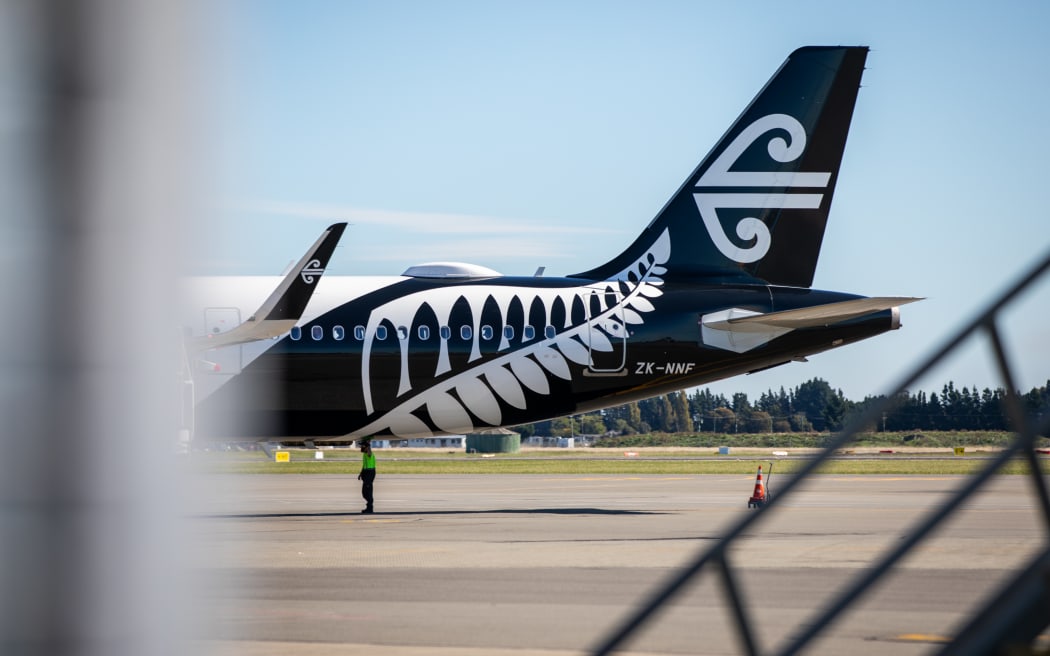
An Air New Zealand plane has been hit by lightning en route to Bali and has been forced to return to Auckland.
File image. Photo: RNZ / Nate McKinnon
The aircraft landed back in Auckland safely, and is now undergoing standard engineering checks.
Air New Zealand Flight NZ64 which was travelling from Auckland to Denpasar was hit by lightning before being diverted back to Auckland, as a result flight NZ65 from Denpasar to Auckland has also been cancelled, Air New Zealand said.
In a statement, the airline’s head of flight operations Huge Pearce said lightning strikes were not uncommon.
Aircraft were designed with this in mind, and pilots trained for this scenario, he said.
Air New Zealand is now working to re-accommodate customers in both Auckland and Bali on the next available flights.
A US citizen died aboard a Fiji Airways flight bound for San Francisco on Saturday despite the plane’s crew’s desperate effort to save the passenger.
The 41-year-old male passenger “encountered a medical condition” about an hour and a half before the flight from Nadi, Fiji, was set to land at San Francisco International Airport (SFO) on Saturday, Fiji Airways wrote in a statement Tuesday.
“Despite the best efforts of our cabin crew and a doctor on board who provided immediate assistance, the passenger unfortunately passed away,” the airline shared.
The Airbus flight crew “declared a medical emergency” before landing safely at SFO at 2:34 p.m., according to FlightAware.
Fiji Airways ground operations personnel and first responders were waiting for the aircraft upon its arrival to remove the already deceased passenger.
The airline praised the Airbus’ “cabin crew and the assisting doctor for their swift and professional response to this emergency.”
“Our thoughts and heartfelt condolences go out to the family and friends of the deceased during this difficult time,” the airline said.
The circumstances around the passenger’s death remain unclear.
The Post has reached out to San Francisco International Airport and Fiji Airways.
The Airbus flight crew “declared a medical emergency” before landing safely at SFO at 2:34 p.m., according to FlightAware.Flightradar24
New York City resident Melissa Arzu claims that the defibrillator that the aircrew used aboard American Airlines Flight 614 from Honduras to Miami to try to save her son, Kevin Greenidge, was faulty.
She also claims the cabin crew was slow to respond to the teen after he lost consciousness and that the crew was not adequately trained on how to use the defibrillator, and the medical device in question has since gone missing, according to the lawsuit filed in Texas.
The airline praised the Airbus’ “cabin crew and the assisting doctor for their swift and professional response to this emergency.”Fiji Airways
“After Kevin died, the equipment went missing,” the heartbroken mother’s attorney, Hannah Crow, said.
“Did someone at American intentionally destroy it? Is it defective? Put back out in service?”
Crowe claims that multiple eyewitnesses also confirmed that the AED machine used to try to resurrect Kevin appeared not to work.
Kevin suffered from asthma and type 2 diabetes. His primary cause of death was listed as “myocardial infarction” — a heart attack.28
A Tongan mental health nurse is fighting for his life at Vaiola hospital after he had been allegedly knocked out and beaten by a mental health patient.
Huʻatolitoli Prison and Correctional Facility
Hu’atolitoli Prison Chaplain Rev Sēmisi Kava has confirmed the incident happened on Saturday evening but provided no other details.
The incident comes in the wake of grave concerns about the country’s biggest prison’s severe overcrowding problem.
The Prison Commissioner told reporters at the time there were 51 cells, which should each hold one person each, however he said sometimes the prison roster was as high as 180.
Reports said that inmates with psychiatric issues were transferred from the main clinic at Vaiola Hospital to the prison and dramatic increase in the prison population made it hard to control them.
The reports mentioned a number of reasons for the overcrowding.
This included people who’d committed drug offences and juveniles.
In another report by the US Department of State in 2021, it said Hu’atolitoli Prison and its psychiatric facility were overcrowded as societal substance abuse and mental illness continued to generate pressure for space in the prison system.
“In 2021 Hu’atolitoli Prison cells built for one individual were holding up to four persons and the prison lacked a facility to house women psychiatric patients separately from other prisoners”.
It’s unclear if these circumstances remained throughout the years.
A police helicopter has been searching the Marokopa area for a man missing and his three children as officers work through the tip-offs they’re received since offering a reward on Tuesday.
Ember, 8, Maverick, 9, and Jayda, 10, have been missing since December 2021, when they were taken by Phillips to an unknown location – though police believe it was in Western Waikato within Marokopa or the surrounding areas.
Police yesterday announced an $80,000 reward for information on missing Marokopa man Tom Phillips and his three children that leads to their location and safe return.
Ember, eight, Maverick, nine, and Jayda, 10, have been missing since December 2021, when they were taken by Phillips to an unknown location – though police believe it was in Western Waikato within Marokopa or the surrounding areas.
Acting Detective Inspector Andy Saunders. Photo: RNZ / Jordan Dunn
In a statement, police said the Eagle helicopter was out in the Marokopa area last night “in support of the operation”.
“Results of their work in the area are being assessed alongside other information.”
Marokopa residents should expect to see an increased police presences in the area over the next few days, they said.
Acting Detective Inspector Andy Saunders told Morning Report this appeal was aimed at the people they believed had been helping Phillips to hide.
“This is targeted at those people with direct information as to the whereabouts of the children.”
Police were also offering the possibility of immunity from prosecution to anyone with information.
“The important aspect of this is the safe return of the children, that’s our main focus,” Saunders said.
He said police had received emails, calls, and had community members engage with them since yesterday’s announcement.
Officers were now sifting through all the information and prioritising it “to see what value it is”.
It was too soon to say whether any of the information was credible, Saunders said.
He said police believed the family were in a dwelling, rather than living rough, but hadn’t been able to find them over the past 2.5 years despite several sightings and a number of locations of interest being identified.
Ōtorohanga’s Mayor Max Baxter. Photo: SUPPLIED/ KCN
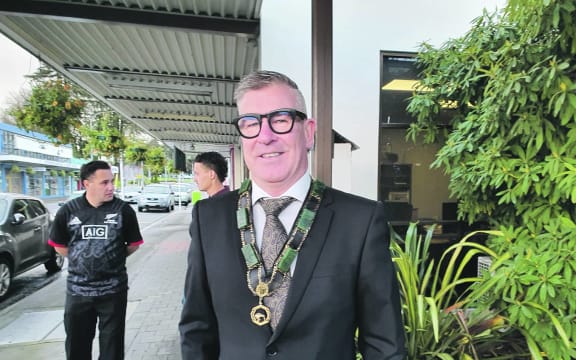
Ōtorohanga’s Mayor Max Baxter told Morning Report he was hopeful this would be enough for someone helping the family to come forward.
“$80,000 is a lot of money for anybody who’s living out at Marokopa, in fact $80,000 is a lot of money for anybody. I’m hoping the reward is enough to change the attitude of those people that may be withholding information.”
The general consensus in the community was that some body must be assisting Phillips, Baxter said.
“Marakopa itself doesn’t need to be identified for this reason alone, so lets just hope people put their hand up and come forward now,” he said.
* Police said people with information could contact the dedicated email address op.curly@police.govt.nz or call on 105 or online at https://www.police.govt.nz/use-105 clicking ‘Update Report’ and referencing file number 211218/5611.
Police have announced a $80,000 reward for information on missing Marokopa man Tom Phillips and his three children that leads to their location and safe return.
(clockwise from top left) Tom Phillips, Jayda Phillips, Ember Phillips and Maverick Callam-Phillips Photo: Supplied / NZ Police
Ember, eight, Maverick, nine, and Jayda, 10, have been missing since December 2021, when they were taken by Phillips to an unknown location – though police believe it was in Western Waikato within Marokopa or the surrounding areas.
Police have concerns for the welfare of the children, who have been living in isolation for the past two-and-a-half years, with no connection to others and without formal education and health care, Acting Detective Inspector Andrew Saunders said.
“Phillips does not have legal custody of the children. He is sought by police and there is a warrant for his arrest.”
Saunders said police believe Phillips and the children were being helped.
“We’re urging anyone who’s doing this to please stop, do the right thing and tell police what you know.”
The commissioner of police will determine the amount of the reward, and will share it out if there is more than one claimant.
Immunity against prosecution will be considered for anyone who has committed an offence in assisting Tom Phillips, if they provide information or evidence which leads to the location and safe return of the children, he said.
The reward was aimed at people who have knowledge of where Phillips and the children might be, giving them a small window of two weeks to contact police if they want the reward.
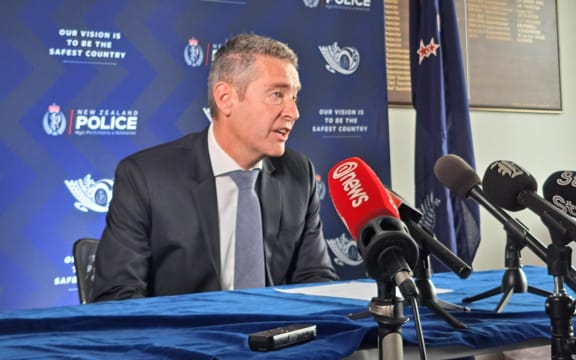
“Over the last two and a half years we’ve issued a number of appeals for information… we haven’t achieved the result we were hoping for,” Saunders told media gathered at the Hamilton Police Station on Tuesday afternoon.
The offer will remain in force until 25 June 2024. Phillips himself was not eligible, Saunders said. The family was notified in advance and supported the offer.
Extra staff have been deployed to the Marokopa area, Saunders said, to act on the “significant amount of information” they expected to receive.
Police said Phillips may be armed and should not be approached. His arrest was of secondary importance to retrieving the children, Saunders said.
Charges faced by Tom Phillips
In November, police appealed for sightings of Phillips riding a red farm-style quad bike.
In May, Phillips was allegedly one of two people involved in the armed robbery of an ANZ bank in Te Kūiti and he was charged with aggravated wounding and unlawfully possessing a firearm.
Phillips and his children had previously disappeared in September 2021.
A large search and rescue operation was suspended after 17 days when he and the children walked into his family’s farmhouse.
Phillips was charged with wasting police resources. But after failing to appear at Te Kūiti District Court for a scheduled hearing in mid-January 2022, a warrant for his arrest was issued.
A new political poll shows the opposition making gains on the government, but not enough to take power if there was an election tomorrow.
The latest Taxpayers’ Union Curia poll put National down 1.9 points on last month to 35.4 percent, while its coalition parties ACT and New Zealand First remained mostly steady on 9.7 percent and 5.6 percent respectively.
Labour slipped 0.6 points to land at 29.4 percent, but the Greens bounced up 2.5 points to 12.7 percent. Te Pāti Māori was up 0.9 points to 4.0 percent.
On those numbers, the three coalition parties would have a majority with 63 seats between them, down three from last month, while the opposition would have 58, up two.
Prime Minister Christopher Luxon took a knock to his personal rating with his net favourability score dropping 13 points to -5 percent.
That was below Labour leader Chris Hipkins who jumped 4 points to hit 3 percent.
The scientific poll surveyed 1000 people over three days last week and has a maximum margin-of-error of +/- 3.1 percent.
It captures the response to the coalition’s first Budget where National delivered its promised tax cuts but broke its commitment to fund 13 cancer treatments from this year.