Tonga is shoring up its digital defences after a cyberattack on last year’s Health Network exposed serious vulnerabilities, with a senior official now selected for a key U.S. digital leadership programme.
Ms. Veahepi Filimone Lilo, Deputy Director/Senior Policy Analyst at the Ministry of MEIDECC – Department of Communication, will represent Tonga in the U.S. Department of State’s International Visitor Leadership Program (IVLP) on Advancing an Open and Secure Digital Economy.Photo/U.S. Embassy Nuku’alofa
Veahepi Filimone Lilo, a Senior Policy Analyst at MEIDECC, will represent Tonga in the U.S. Department of State’s International Visitor Leadership Program (IVLP).
The programme focuses on advancing an open and secure digital economy.
It is expected to help Tonga improve how it shapes digital policy, strengthen online security, and open up new opportunities in the country’s growing digital economy.
Her selection comes amid heightened concerns about cybersecurity in Tonga, following recent incidents including the hijacking of the Ministry of Health’s computer network, which disrupted services and highlighted vulnerabilities within government digital infrastructure.
The incident has underscored the need for stronger policies, skills and international cooperation to protect sensitive data and essential public services.
During the IVLP programme, Ms. Lilo will work closely with U.S. government agencies, technology firms and academic institutions to explore issues such as data privacy, online security, internet governance and digital regulation.
A statement from the U.S. Embassy in Nukuʻalofa said the programme will also examine how the digital economy can support economic growth and resilience.
In mid‑2025, Australia provided crucial support to Tonga following a ransomware cyberattack that compromised the country’s National Health Information System, forcing health staff to revert to manual handling of patient data.
Last month, Tongan authorities reported that the attack on the Ministry of Health in June 2025 was linked to overseas hacker Roman Khubov.
Nukuʻalofa — The Government has launched a sweeping investigation into alleged land fraud within the Ministry of Lands, a historic step toward confronting corruption claims that have shadowed the institution for generations.
Minister of Lands Dr Taniela Fusimālohi. Photo/Fale Alea ‘o Tonga
The move marks a turning point in long‑standing allegations that have included complaints lodged by a senior official with the Public Service Commission, the resignation of a former CEO, and an unprecedented expression of dissatisfaction from the monarchy toward a serving Minister.
The investigation will scrutinise land registry records, leases, and property titles, some dating back many years.
The announcement follows earlier comments by the Minister Dr Taniela Fusimālohi, urging Tongans living overseas to travel to Tonga on land‑related matters only after first reaching agreement with the Ministry.
He said staff are currently focused on clearing a major backlog, including more than 7,000 outdated files and over 3,000 land parcels still awaiting survey and measurement.
Fusimālohi announced today that the investigation carries a clear mandate to hold anyone involved in land fraud accountable—whether they are current or former Ministry employees or individuals acting from outside the Ministry—regardless of where they are.
It aims to address persistent public claims that irregular dealings, abuse of office, and unlawful land acquisitions have undermined trust in one of the country’s most powerful institutions.
For decades, concerns about possible corruption within the Ministry of Lands have circulated within communities, including matters previously reported by Kaniva News, involving alleged leases and land registrations issued through questionable processes, and claims that some staff may have sought personal advantage in dealings with land applicants.
These accusations have often been raised quietly, passed down through families and villages, yet rarely subjected to a full and formal investigation.
That is now set to change.
Forensic Scrutiny of Records
The Minister said the investigation will be carried out by the Legal Division of the Ministry of Lands, operating under the authority of the Minister’s Office, and will include a detailed audit of official land records.
He said the process will utilise forensic auditing methods, examining the authenticity of documents and assessing whether past decisions complied with the law and established procedures.
He also said the inquiry is expected to examine possible “collusion”, defined as secret or illegal cooperation intended to deceive others.
This means the investigation will not shy away from probing past actions, regardless of seniority or position, if evidence suggests wrongdoing.
Promises Without Full Review
Previous governments have acknowledged concerns about land administration but have stopped short of launching a full‑scale review.
As Kaniva News previously reported, mounting corruption allegations within the Ministry led to widespread public dissatisfaction, culminating in the resignation of the former CEO and a pledge by the then Minister to reform the Ministry.
It is understood that the current CEO, Taniela Kula, has initiated a series of reforms over the past several years, including strengthening the Ministry’s legal capacity and undertaking significant internal restructuring.
As we reported earlier, a new dispute‑resolution process has been created to offer landowners a quicker and more accessible path to justice.
Documents previously leaked to Kaniva News indicated that the King was dissatisfied with the then Minister of Lands, Lord Tu‘i‘āfitu. The authenticity of the document was later confirmed to Kaniva News by CEO Kula.
Correcting Wrongs, Returning Land
According to Fusimālohi, the ultimate goal of the investigation is not only to identify wrongdoing but to “correct errors, return land to its rightful owners, and ensure accountability where laws have been broken.”
Other authorised agencies may also become involved should criminal conduct be uncovered, raising the prospect of prosecutions if sufficient evidence is found, according to the Minister.
The Minister said the investigation gives effect to principles outlined in the Speech from the Throne, which called for stronger governance, greater accountability, and respect for the rule of law.
Australia — Brisbane Broncos centre Kotoni Staggs, a proud player of Tongan heritage, delivered a decisive performance to seal the fate of cross‑town rivals the Dolphins as the Broncos claimed a 26–12 victory in the latest instalment of the NRL’s Battle of Brisbane on Friday night, 27 March, at Suncorp Stadium.
The Broncos’ clash with the Dolphins came during the 2026 NRL Telstra Premiership season, which is currently underway and features 17 clubs competing over a 27‑round regular season.
As of late March, the competition has entered Round 4, with teams beginning to shape their early‑season form ahead of the push toward the finals.
Labelled “unstoppable” by commentators, Staggs produced a powerful attacking display, crossing for two vital tries and setting the tone for a Broncos side that secured its second win of the 2026 season.
Staggs’ impact was most evident in critical moments, with his trademark strength and speed carving through the Dolphins’ defensive line and swinging momentum firmly in Brisbane’s favour. His performance drew loud acclaim from the home crowd, underlining his importance to the Broncos’ backline.
Stagg, who made his Tonga debut in 2019, describing it as a proud moment in his career, was well supported by Adam Reynolds, whose composure and kicking game steered the side around the park, while Reece Walsh and Gehamat Shibasaki also crossed the stripe to complete the scoring for Brisbane.
The Dolphins, competing in only their third season in the premiership, showed early resistance but were unable to contain Brisbane’s attacking pressure, particularly down the left edge where Staggs repeatedly threatened.
For Staggs, whose background reflects the strong Pacific presence in the NRL, the standout performance continues a long‑standing tradition of Tongan and Pacific players shaping the modern game through physicality, flair and big‑match confidence.
The win strengthens Brisbane’s early‑season momentum and reinforces their credentials in a tightly contested competition, while the Dolphins will take lessons from the encounter as they continue to develop depth and consistency.
As the Broncos look ahead, Staggs’ form — blending power, precision and pride — will be crucial as the club pushes deeper into the season, with Friday night’s display another reminder of his ability to influence matches on the biggest stage.
The New Zealand Government has confirmed it will replace NCEA with a new senior secondary qualification system, a change expected to directly affect around 100,000 Tongans living across Aotearoa in the coming years.
The new certificate is based on the principle that curriculum defines the knowledge and skills students are expected to learn, and qualifications must accurately recognise that learning.
When the two are not properly aligned, it is students who ultimately miss out, the government said in a statement.
It says the Cabinet has agreed to an initial package outlining the structural framework of a new secondary qualifications system to replace NCEA.
The proposed changes include introducing a two‑year qualification at Years 12 and 13, shifting to subject‑based assessments that evaluate whole curriculum areas, and integrating industry‑led subjects into the senior curriculum to create a single, coherent qualification pathway.
Under the plan, NCEA Level 1 will be removed and replaced with deeper, curriculum‑driven learning in Year 11, alongside a new Foundational Award recognising students’ literacy and numeracy achievement at Year 11 level.
From 2028, all Year 11 students will also be required to study English | Te Reo Rangatira and Mathematics | Pāngarau.
“Students will be able to sit the Foundational Award when they demonstrate the required literacy and numeracy capability, typically at Year 11 level.
“The Foundational Award is designed as a stepping stone into senior secondary qualifications. The basics matter. This award is a strong indicator of readiness to engage with the Year 12 and Year 13 qualification and basic competency in reading, writing and maths.
Next steps
“This is the first tranche in the design of the new qualification system. By taking decisions in two tranches, we have the time to engage with the sector and undertake detailed design work with the new Technical Advisory Group, on the more technical aspects of the proposal.
Tranche two includes achievement requirements for Year 12 and 13, information about grading, the balance of internal versus and external assessments, weighting of exams, moderation, comparability, and complex decisions.
“These questions are interlinked and complex.
“It is important to get the balance right to be aspirational for all students, while making sure we are setting them up for success.
“Also, during the consultation process, it was suggested it be made compulsory for schools and kura to require Year 11 students to take Science | Pūtaiao. I will be seeking further advice on this.”
2028: NCEA Level 1 removed, Year 11 curriculum only, Foundational Award introduced.
2029: New Year 12 qualification and curriculum starts.
2030: New Year 13 qualification and curriculum starts.
“No student will need to switch between NCEA and the new qualifications system during their schooling. The first students to participate are the current Year 9 cohort.
“It’s important that we get the reform of secondary school qualifications right, so we will continue to engage with the sector to ensure we achieve the best outcomes for teachers and students.
“I expect to take advice on these technical design decisions before Budget,” says Ms Stanford.
Curriculum and Assessment Roadshow
To further support schools as these reforms progress, there will be a national curriculum and assessment roadshow for secondary school leaders in June this year.
“The roadshow will help schools prepare for the new subject-based qualification structure and the knowledge rich curriculum.
“These events will support leaders to understand the changes, build capability, and share implementation approaches across the country,” says Ms Stanford.
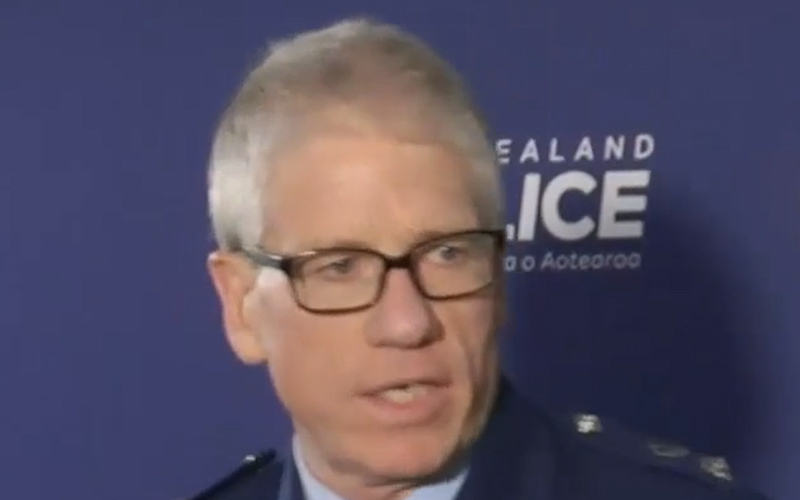
Explainer – When Police Commissioner Geoff Turner recently raised the idea of sewage drug testing, many Tongans questioned why it is needed when police already test for drugs.
Tonga Commissioner of Police Geoff Turner. Photo/Tonga Police (cropped)
Prime Minister and Police Minister Lord Fakafanua has recently indicated support for the Police Commissioner’s move to use sewage testing.
This follows Parliament’s approval of a voluntary drug‑testing measure for Members of Parliament, aimed at demonstrating their commitment to combating illicit drug use.
However, in a country now confronting the emerging realities and risks of illicit drug use and trafficking, any confusion around new approaches demands clear explanation and careful clarification.
The confusion stems from the mistaken belief that sewage testing and police drug testing do the same job — they do not.
Police testing is about catching individuals — people stopped, arrested, or investigated. It is essential for enforcing the law, but it only shows what police can see.
Community Drug Use Revealed
Sewage testing does something different. It measures drug use across the whole population by analysing wastewater.
It does not identify anyone. Instead, it reveals how much drugs are being used in a community — including by people who are never caught.
That is its key advantage: it shows the full picture, not just the visible part.
This kind of information can also make policing more effective.
Wastewater Guides Police Operations
In New Zealand, wastewater results have already been used to guide operations on the ground.
As reported by New Zealand Police in December 2025, unusually high levels of methamphetamine detected in Hawke’s Bay wastewater prompted a six-month covert investigation, codenamed Operation Tukutuki.
According to Detective Inspector James Keene, the operation directly responded to those wastewater findings.
Police then executed search warrants across Central Hawke’s Bay and Hastings, targeting properties linked to supply.
The operation led to the arrest of two gang members and an associate, along with the seizure of methamphetamine, cash, a 3D-printed firearm and stolen goods.
As police noted, wastewater testing had revealed the drug’s “increasingly strong grip” on the region — and helped direct efforts to “crush the supply”.
This example highlights the real value of sewage testing. It does not replace police work — it strengthens it. It tells authorities where the problem is growing, so they can act faster and more precisely.
For Tonga, the issue is not choosing between the two systems. Police testing will always be needed to enforce the law. But without sewage testing, the country is relying on partial information.
Sewage testing fills that gap. It provides a clearer, nationwide picture of drug use — and that is why it is now being treated as an urgent priority.
Two men are recovering at Vaiola Hospital in Tongatapu after sustaining burn injuries when an apparent gas tanker used in road sealing works exploded in Vavaʻu.
The injured men have been identified as Sione Nimo and Maikolo Uhi, both from Neiafu, Vavaʻu, who were working on a government road at the time of the incident.
The explosion reportedly occurred while equipment was being used to heat and melt bitumen — the binding material in asphalt — for roadworks.
The two remain hospitalised at Vaiola Hospital, where they are receiving treatment for burns sustained during the incident.
Further details surrounding the cause of the blast have not yet been officially released.
Photographs obtained by Kaniva News, which reportedly show the injured men, depict two patients confined to hospital beds with visible bandaging covering parts of their bodies, including their faces, consistent with burn treatment.
Authorities have not confirmed whether the incident is under investigation or if workplace safety protocols are being reviewed. No other injuries were reported.
North Queensland Cowboys veteran Jason Taumālolo, one of the most influential forwards of his generation and a proud son of Tonga, has been ruled ineligible for Queensland Maroons selection, extinguishing speculation about a shock State of Origin debut in 2026.
Jason Taumālolo. Photo/Broadcom FM Broadcasting (Facebook)
Despite living in Queensland from a young age and a long‑standing interest from Maroons selectors, reports confirm the NRL has blocked any move on eligibility grounds — a decision rooted in both Taumālolo’s international career history and the strict State of Origin criteria administered by the Australian Rugby League Commission (ARLC).
Born in Auckland to Tongan parents, Taumālolo has consistently spoken about his deep cultural and familial ties to the Kingdom of Tonga.
Those ties eventually became central to his international rugby league identity when he committed to representing Tonga on the world stage.
However, before making that switch, Taumālolo had already carved out a significant international résumé with New Zealand, playing 10 Tests for the Kiwis, a recognised Tier 1 nation under International Rugby League rules.
It is this earlier tier‑one representation that ultimately bars him from Origin eligibility.
Under ARLC regulations, a player must meet residency requirements before their 13th birthday and must not have represented another Tier 1 nation unless they remain eligible for Australia. Taumalolo fails on both counts.
Why the Door Is Closed
According to reports from The Courier Mail and Stuff, the idea of Taumālolo potentially wearing Maroon resurfaced during informal discussions ahead of the 2026 Origin series.
But those discussions ended once eligibility was reviewed.
The NRL confirmed that Taumalolo:
Did not reside in Queensland before turning 13, and
Had already played senior Tests for a Tier 1 nation (New Zealand), making him ineligible under current Origin rules.
While Taumālolo later shifted his international allegiance to Tonga, that change — while celebrated within Pacific rugby league — does not reopen the pathway to State of Origin.
The Australia Rule
Complicating matters further is the long‑standing Origin requirement that players must be eligible for Australia in order to represent Queensland or New South Wales.
As outlined previously by NRL officials and reiterated by ESPN and news.com.au, Taumālolo would need to make himself available for Australia, not Tonga, to satisfy Origin criteria — something he has shown no interest in doing.
Instead, Taumālolo has repeatedly affirmed his commitment to Tonga, valuing cultural identity, family, and national pride over the commercial and exposure benefits that often come with Australian or Origin representation.
A Proud Tongan Path
Taumālolo’s decision to represent Tonga was widely praised as a defining moment for Pacific rugby league, particularly when he captained the nation at the 2017 Rugby League World Cup, helping Tonga reach historic heights and challenging traditional power structures in the international game.
His choice inspired a wave of elite players of Pacific heritage to make similar commitments, strengthening the competitiveness and visibility of Tonga on the global stage.
That same decision, however, has come with trade‑offs.
No Regret, No Maroons Dream
While some Maroons supporters may lament what might have been — envisioning Taumālolo’s power and leadership in Origin football — those close to the Cowboys co‑captain suggest he holds no regrets.
For Taumālolo, representing Tonga has never been a fallback option, but a deliberate and values‑driven choice — one that reflects where he believes his identity and responsibilities lie.
As such, the door to State of Origin appears firmly closed.
The legacy Taumālolo leaves will not be defined by the absence of a Maroons jersey, but by the impact he has had as one of the most prominent Tongan figures in modern rugby league, reshaping conversations about identity, allegiance, and the Pacific’s place in the sport.
The lawyer whose actions contributed to turmoil at the 2025 Miss Pacific Islands Pageant is now facing professional sanctions in what appears to be an unrelated matter.
Leiataualesa Jerry Brunt at Auckland airport on 13 February waiting for his flight back home to Samoa. Photo: RNZ Pacific/Grace Fiavaai
The Samoa Law Society (SLS) has placed prominent lawyer Leiataualesa Jerry Brunt under an interim suspension following the receipt of a serious professional complaint.
In a circular memorandum issued to members on 27 March 2026, the SLS confirmed that its President and Council resolved on 24 February 2026 to suspend Mr Brunt’s practising certificate for a period of six months, effective from 11 March 2026.
The Society said the complaint has been formally referred to its Complaints and Investigation Committee, which will conduct inquiries and determine the matter according to established professional disciplinary procedures.
While the SLS declined to disclose the nature of the complaint, it stressed that the action is interim and does not constitute a finding of guilt, describing the suspension as a precautionary step aimed at protecting public confidence in the legal profession while due process is followed.
Fraud Allegations Follow Confrontation
Shortly after an initial confrontation during the announcement of the winners at the 2025 Miss Pacific Islands Pageant, the Solomon Islands Minister for Home Affairs publicly stated that authorities were considering potential fraud charges against Brunt.
The controversy arose after Tongan judge Mā‘ata Mo‘ungaloa confronted Brunt on the final night of the event, alleging he had tampered with the scorecards to secure the title for the Samoan contestant, Litara Ieremia Allan.
Critics maintained that the official tallies indicated the crown should instead have been awarded to the Tongan contestant, Rachael Guttenbeil.
Following the ministerial announcement, Brunt was prevented from boarding his scheduled flight back to Apia after the Solomon Islands Government intervened, confirming it had issued a “stop notice” against all four pageant judges.
Brunt was later released and strongly denied any wrongdoing, vowing at the time to pursue legal action to clear his name of the allegations.
The pageant organisation has yet to formally resolve the allegations, a situation that prompted the Solomon Islands to withdraw from this year’s competition in Fiji, citing dissatisfaction with the lack of decisive action.
The unresolved dispute also sparked backlash among some Tongan supporters, with renewed protests against the Kingdom’s participation in the event this year.
Several fans vowed to boycott the popular vote, a category won by Miss Tonga in 2025 but taken out by another contestant this year.
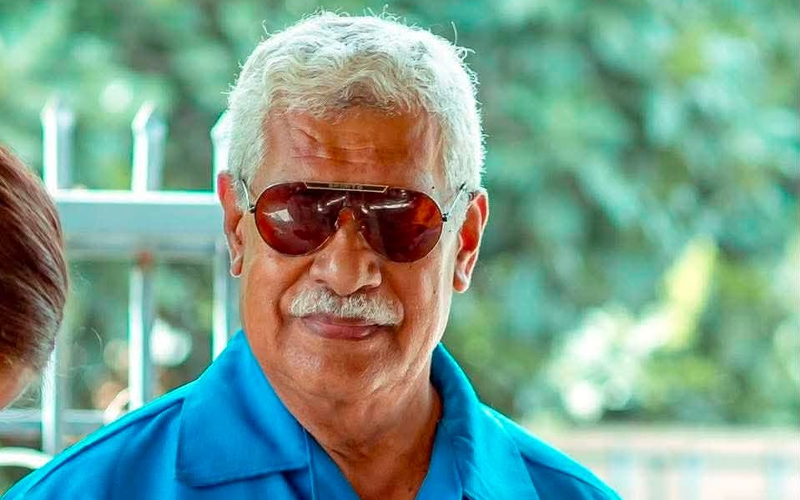
Suva, Fiji – Fiji statesman and former president Ratu Epeli Nailatikau has died at the age of 84 in Fiji.
Former President Ratu Epeli Nailatikau at QEB Barracks
Fiji Live, which first reported Ratu Epeli Nailatikau’s death, said he passed away peacefully on Thursday night after being admitted to hospital earlier that evening.
Nailatikau served as President of Fiji from 2009 to 2015, as well as Speaker of Parliament, senior diplomat, and former military commander.
His passing also marks the loss of a significant figure shared by Tongan and Fijian royal lineages.
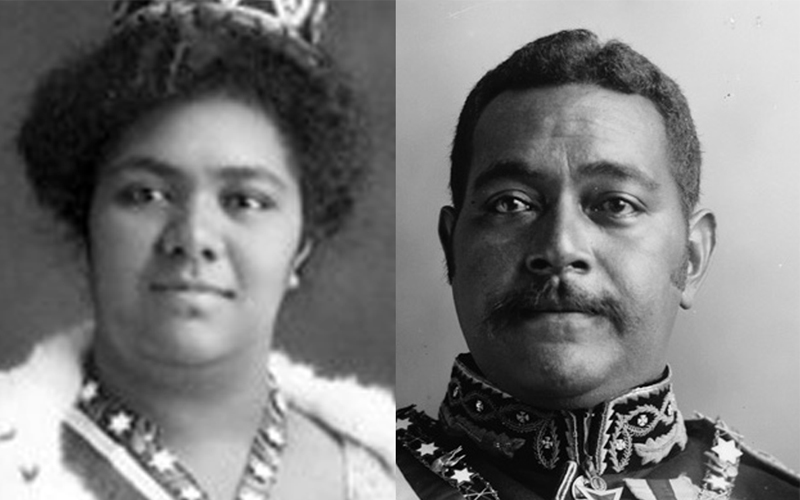
He was the son of Ratu Sir Edward Tuivanuavou Tugi Cakobau, whose parents were King George Tupou II of Tonga and Adi Litia Cakobau, a granddaughter of Seru Epenisa Cakobau, the first King of Fiji.
This lineage meant that King George Tupou II had two notable children whose lives shaped the histories of both Tonga and Fiji.
One was Queen Sālote Tupou III, born within wedlock, who went on to reign as Tonga’s monarch and became one of the most influential figures in the country’s modern history.
The other was Ratu Sir Edward Tuivanuavou Tugi Cakobau, born outside marriage, who rose to prominence as a leading Fijian chief and respected statesman, further cementing the close historical ties between the two Pacific nations.
As a consequence of this lineage, Ratu Sir Edward Tuivanuavou Tugi Cakobau was the half‑brother of Queen Sālote Tupou III.
Queen Sālote’s son, King Tupou IV, subsequently ascended the throne and later became the father of His Majesty King Tupou VI, the current monarch of the Kingdom of Tonga.
King George Tupou II also had two sons, Vīlai and Vuna.
Tributes have begun flowing across Fiji and the wider Pacific, recognising Ratu Epeli’s lifelong service to public life, regional diplomacy, and Pacific leadership.
Funeral arrangements are expected to be announced by his family in due course.
A pattern of online scams long familiar to many Tongans has taken a new turn, prompting fresh warnings after links emerged involving rugby circles.
TheNew Zealand Herald reported on Saturday morning that former New Zealand Under‑20 representative and current Tongan international Tau Koloamatangi has been accused of scamming people out of thousands of dollars through the sale of match‑worn rugby jerseys.
The report alleges that Koloamatangi, who has previously played provincial rugby for Waikato and Otago and competed for Moana Pasifika in Super Rugby Pacific, advertised the jerseys through social media and online marketplace platforms.
According to the allegations, once payments were made, communication reportedly stopped and the buyers were blocked.
The New Zealand Herald contacted Koloamatangi for comment.
Online scams of this kind are not unfamiliar to the Tongan community.
Last year, members of the Tongan diaspora took to social media, particularly Facebook, to voice frustration over what they alleged was an online scam involving the advertisement of Kahoa Heilala Fakatau.
The service claimed it would provide floral garlands for Tongans living overseas who paid deposits online and planned to collect the kāhoa upon arriving in Tonga for cultural events or celebrations.
However, complainants alleged that upon arrival, the promised items were not provided, excuses were repeatedly given, and refunds were never issued.
Kaniva Tonga News also reported on similar online scams last year, including an allegedly fraudulent service that advertised pig‑roasting services for events.
Customers claimed they made advance payments, only to be met with repeated excuses when they arrived to collect the pigs, which were never provided.