Saturday, April 4, 2026
Home Blog Page 349

More than 100 nurses, doctors ready to help Auckland hospitals

By RNZ.co.nz and is republished with permission.

One hundred nurses and doctors from around the country are on stand by to help out in Auckland as the Delta outbreak continues to pile the pressure on the region’s hospitals.

A security guard worked at Middlemore Hospital's emergency department on Thursday last week while symptomatic with Covid-19.

Middlemore Hospital Photo: LDR / Stephen Forbes

However, clinicians warn this may mean patients in other regions get bumped off surgical lists, unless nation-wide workforce shortages are fixed.

Cancer specialist Kate Gregory is in regular contact with colleagues overseas whose patients are missing out on treatment as hospitals overflow with Delta patients.

“For those patients who are affected, it’s a frightening thing anyway to have a cancer diagnosis and be waiting for treatment, but then to have that treatment postponed and to not know when it’s going to happen, that’s really, really hard for people.”

Dr Gregory, who is also co-medical director for the Cancer Society, said sending critical care nurses and other staff to Auckland would inevitably have a flow on effect for other centres.

“It’s really difficult and people will absolutely try as much as possible so those essential services, like those cancer surgeries can get done. But pressure is coming that’s going to make that a bit more difficult.”

Today there were 42 Covid patients in hospital, all in Auckland.

Speaking at a media conference this afternoon, Director General of Health Dr Ashley Bloomfield said six patients were in intensive care, including three on ventilators.

“I do know that the youngest person in ICU is 18 and all are stable, but anyone who is ventilated may be stable but is quite unwell. So that’s another indication that it is not a trivial illness.”

Middlemore Hospital specialist Rob Bevan said while urgent surgery for cancer and heart patients was continuing, the hospital has had to “scale back” on some of the work it would normally do to create capacity.

If intensive care units became too full, health boards could divert nurses from other areas, he said.

“But as we spread those teams thinner, it’s possible that the outcomes, the percentage of patients that we’re able to get through this, would inevitably deteriorate. So that’s why we’re so focused on providing absolutely the best care under the best model.”

Nurses Organisation spokesperson Kate Weston said there were nearly 100 vacancies for ICU nurses outside Auckland and it was a problem before the pandemic hit.

“There’s still unfortunately other things that get people into intensive care units whether it’s trauma or surgery or other medical events. So that’s always going to be a real pressure, particularly when you’ve got gaps and understaffing anyway.”

Delaying elective surgery had big flow on effects for patients, she said.

“It is a real concern because no-one wants anyone to suffer unnecessarily and what we did see last time was that people once they did present for healthcare and felt confident and safe enough to present, they were much more sick than if they had presented earlier.”

Dr Gregory said cancer patients who were worried about new symptoms or others who found lumps or experienced unexpected bleeding should not hold back from getting a medical opinion, whatever the alert level.

“It’s really important that people seek help, it’s still there – because one of the things we’re really concerned about is delays in diagnosis or people getting help when they need it.”

According to Bowel Cancer New Zealand, it took almost a year to clear the backlog of investigations – such as colonoscopies – and treatments that were not done due to the last nation-wide lockdown.
Watch live: Covid-19 update for 2 September Forty-nine new Covid-19 community cases in NZ

By RNZ.co.nz. Republished with permission

The prime minister has confirmed that Northland will move to alert level 3 at midnight tonight as planned.

Jacinda Ardern and the director-general of health are now giving a Covid-19 update.

Watch the update here:

There were 75 new cases of Covid-19 announced in the community yesterday.

Checkpoints will be set up between Auckland and Northland, and the decision will be reviewed on Monday.

The checkpoints will be at SH1 and Mangawhai Road, Mangawhai Road and north of Cole Hill road, Black Swamp west of Rakau Road, and Mangawhai Road and Kings Road, and Mangawhai Road and Ryan Road.

The prime minister said 27 extra wastewater samples were taken across Northland on Monday and Tuesday and none have detected Covid-19.

While the case numbers were moving around a little, Ardern said the important thing was that “we are starting to see some positive trends in the numbers”.

She said the rolling daily case number average is 61, down from about 77 five days ago. Fewer people are infectious in the community than there had been.

Cases of in-household transmission would continue to be found, she said, but lockdown was necessary for extinguishing those last chains of transmission.

“If you are a contact, if you have been at a location of interest and advised to stay home as a result you absolutely must do so. It is such an important message.”

There were 49 new cases of Covid-19 announced in the community today.

– more to come

TOP$22,000 raised in two hours for anti-drugs campaigner sued by Princess Pilolevu after alleged defamation

Supporters of Anti-Drugs campaigner Afimeimo’unga Hola have donated TOP$22,000 to hire lawyers to represent him in his fight against several civil lawsuits brought against him.

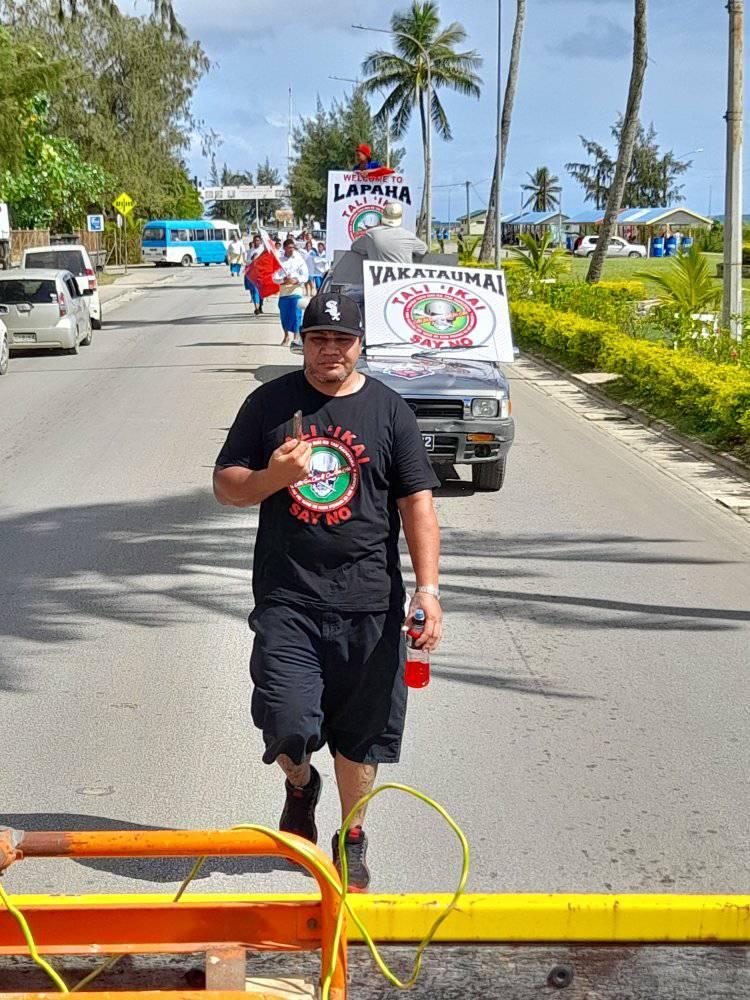
Afemeimo’unga hola leading a protest march against illicit drugs in Tonga. Photo/Facebook

The fundraising which was livestreamed from Tonga at 7pm last night was organised by the PTOA Kolope Foundation.

The organisation which is based in the US and has chapters in Australia, New Zealand and Tonga said the money will pay for Hola’s lawyers and other legal fees.

It said this was part of its supports for Tonga’s war on drugs.

Her Royal Highness Princess Pilolevu Tuita sought TOP$10,000 of damages from Hola after he alleged she was Tonga’s drug lord “’Ulu’ifeke or Head Of The Octopus”). The princess said Hola has defamed her.

It is understood, more civil lawsuits had been filed in the Magistrate Court against Hola including one by Lawyer Clive Edwards Senior.

Edwards sought TOP$10,000 of damages from Hola after he alleged the lawyer has been involved in drug dealings. Edwards has denied this.

Hola appeared in court recently to face charges brought against him by an Indian business owner in Tonga for alleging his company was involved in drug related activities. The company denied Hola’s claims.

Princess Salote Pilolevu Mafile’o Tuita

Hola said on a Facebook livestream watched by Kaniva News he was a former drug dealer and had been working closely with former business people involved with drug dealings.

The anti-drugs campaigner said he decided to quit his life of drug dealing to join Tonga’s war on illicit drugs.

His allegation against the princess came after he made several Facebook live shows promoting his slogan – Say No To Drugs!

Early this year he led a protest march against drugs in Nuku’alofa which attracted nationwide supports from churches and schools.

Pacific Super Rugby teams to finalise squads

By RNZ.co.nz. Republished with permission.

With ‘Super Rugby Pacific’ confirmed to kick off in February, the race is on for Moana Pasifika and the Fijian Drua to sign up their inaugural playing squads.

The Drua also have to decide where they will be based next season, with Fiji’s ongoing Covid-19 problems ruling out plans to play on home soil.

Flying Fijians prop Haereiti Hetet said the Drua was a hot topic of conversation when national squad during their recent test series against the All Blacks.

“It’s just like another platform really for Fijian players to showcase their skills for the world stage, in terms of it’s a step up from just playing their club and comps and stuff in Fiji and playing against the best,” he said.

“Obviously Super Rugby you’ve got Wallabies and All Blacks playing so it will be good for the Fijian players to test themselves against the best.”

The Bay of Plenty loosehead is in his fourth season of provincial rugby in New Zealand but has to juggle his playing commitments with work at the local timber mill in Otorohanga.

The 24 year-old has represented the Māori All Blacks and Fiji and could be among the players to benefit from Super Rugby teams that are dedicated to Pacific Island players.

“Yeah I’ve had conversations about this, it’s an option definitely. I don’t know where they’re based or anything like that but yeah it is a good opportunity.”

Pacific Rugby Players Interim CEO Hale T-Pole said Moana Pasifika and the Drua missed out on some high profile signings because of ongoing delays.

“It would have been a lot easier for both organisations that these were sorted a lot earlier,” he admitted.

“They had a lot of big players in their books when they started the conversations about playing for them – the Moana and the Drua – but then in the last month they had to make decisions and then sign overseas.”

But with Super Rugby Pacific finally confirmed, the former ‘Ikale Tahi flanker was confident both teams would still assemble competitive squads.

“They’ve still got good players around that they’re working with, with their coaches and squad, and I think it will work out pretty quick because of the turnaround to get players sorted out and management…they’re ahead with those discussions and just waiting for the licence agreement to be ticked off and then away they sign off.”

Tonga Rugby Union CEO Peter Harding said at least 80 percent of the Moana Pasifika squad will be eligible to represent Manu Samoa or the ‘Ikale Tahi.

“It’s a 38 man squad…and 31 of them will be Samoan and Tongan qualified, so that’s the way it’s put together,” he said.

“The others are floaters at this stage – I think all new franchises that put teams together, no matter what sport they’re in etc, go through that, so we’re looking to share 31 players.”

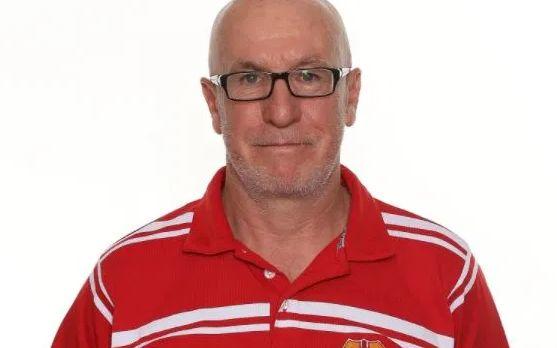
Peter Harding, new CEO of Tonga Rugby Union
Peter Harding, new CEO of Tonga Rugby Union Photo: World Rugby

T-Pole said it was important that Manu Samoa coach Seilala Mapusua and Tonga’s Toutai Kefu were heavily involved in the recruitment process.

“Where they tick off some players or maybe some players they put up and they get to ask the questions themself,” he said.

“I stay in touch with Seilala and Toutai about that and there’s good discussions where they say ‘why is this player there’, ‘why aren’t my 10 in my national teams or my locks’ or whatever, because this is set-up is to help and benefit the home unions.”

Pacific Rugby Players Chair, Hale T-Pole (R) is the Head of Rugby for Carinat Sport and the Asia Pacific Dragons.
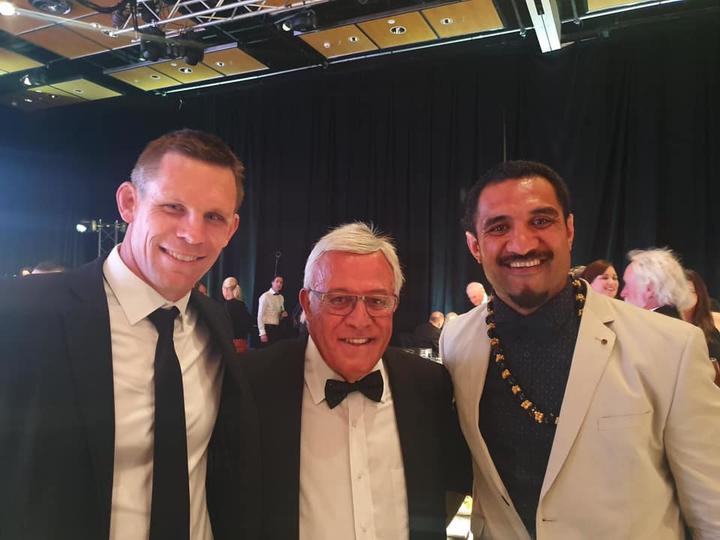
Pacific Rugby Players Interim CEO Hale T-Pole (R) with Josh Blackie and Sir Bryan Williams. Photo: Pacific Rugby Players

Peter Harding said a high performance plan for Moana Pasifika was already in development, which will ensure the team delivers on its promise to strengthen and develop the Samoa and Tongan national teams.

“What we want to do is make sure the pathway is correct and, in effect, that both the Samoan Rugby Union and Tongan Rugby Union, if they don’t own the project, then they’re right up to their neck in it and we will be the ones that will be the beneficiaries out of the project eventually.

“I think that was the way it was conceived by all people who put applications in and I think both Samoa and I are pretty happy with the way that is going.”

The Drua won’t be able to play games in Fiji next year because of the country’s ongoing Covid-19 situation.

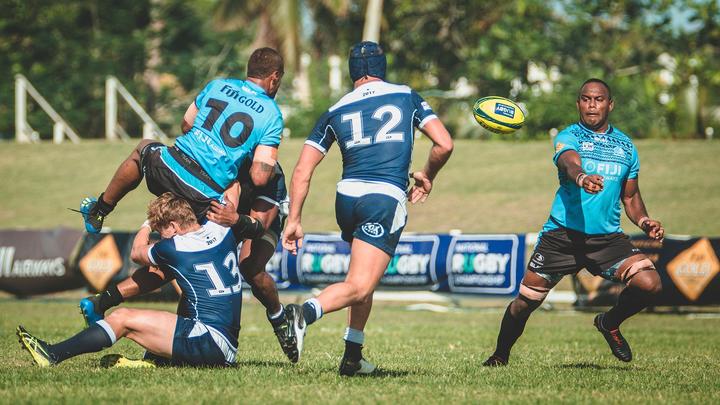
The Fijian Drua are the defending NRC champions.
The Fijian Drua won the Australian provincial competition in 2018. Photo: Supplied/Fiji Rugby

T-Pole said Fiji Rugby is exploring a range of options and a final decision on where they will be based is expected shortly.

“They’ve been working hard on it. We’ve been working across the discussions the whole time, whether it’s going to be in NZ in Whangarei or in Australia on the Sunshine Coast.

“They’re well ahead of their discussions and we’re just trying to work out every detail and what benefits all parties and then we will roll with it.”

Moana Pasifika chair Sir Michael Jones said while the pandemic means their home games will be primarily in New Zealand next season, they were keen to play games in Samoa and Tonga if Covid restrictions allow.

“If that can’t happen in year one, it will definitely be an aspiration for year two,” he told RNZ.

“It is something that’s very much determined by the Covid restrictions. We’re looking forward to playing in front of a really vibrant, colourful and vocal fan base, whether that’s here in New Zealand or back in the Islands.”

Super Rugby Pacific will start next February with 12 teams playing a 15-week regular season with one points table.

Ministry of Health relaxes ban on viewings at funeral homes

By Simon Mercep, ONE News/TVNZ. Republished with permission.

The Ministry of Health has relaxed its ban on families viewing a body at a funeral home before burial or cremation – but there are still teething problems with the new rules.

1 NEWS reported on Sunday that the current Alert Level 4 lockdown has a stricter rule, meaning that once a funeral director collects a body the family will not see their loved one again.

Funeral directors said they had heard from around the country that people were breaking their bubbles and gathering to view a body at home, before it was collected by a funeral director.

On Wednesday, the Ministry of Health website shows the ban on funeral home visits has been reversed.

A range of conditions are attached to the new set of rules. Families must be from one bubble and wear masks but are not allowed to touch the body.

Funeral directors must be in the viewing room with families and also be fully vaccinated.

Funeral Directors Association president, Gary Taylor, said that overall, the relaxed rule was a good move.

But he acknowledged that many would struggle with condition that they not touch a body, particularly for families where “their cultural background requires them to be close to and with the deceased”.

“It’s going to be a challenge, but I think it’s a challenge that’s worth taking on, rather than where we were, where they weren’t allowed to be there at all,” he said.

Taylor added that many funeral directors were not yet fully vaccinated and so were not in a position to carry out viewings under the new guideline.

He said the association had asked the Government over several months to give funeral directors priority for vaccinations. So far, those requests had not been agreed to.

“We’ve been asking for preferential vaccinations since the last lockdown, and we haven’t been given this… and now funeral directors have got to be vaccinated in order to carry out these viewings,” he said.

Following Wednesday’s rule change to funeral home visits, the association renewed its call for members to be vaccinated as essential workers.

“We’ve gone back to the Government again and asked, ‘look, can you get us on that priority vaccination list … so that we’re able once again to allow as many families as possible to be involved in the viewing process.'”

1 NEWS has sought a response from the Ministry of Health on the new rules, and on the vaccination priority for funeral directors.

FAKAMATALA FAKATONGA

‘Oku ‘i ai ‘a e ki’i fakangaloku ‘a Nu’usila ‘i he’ene lao ki hano ‘āfia ha me’afaka’eiki pe putu lolotonga ko ‘eni ‘oku ‘i he lēvolo faa’ ‘a e loka ‘a ‘Okalani’ kae tolu ‘a e toenga’. ‘A ia ko e ngaahi fāmili na’a nau nofo pe he feitu’u ‘e taha pe papolo (bubble) lolotonga e loka’. Kuopau ke nau tui masikī (mask) ka ‘e ‘ikai ngofua ke nau ala ki he pekia’. Kuopau ke ‘i ai ha kau talēkita putu ‘i he loki ‘o e me’afaka’eiki’ fakataha mo e kau fāmili’ pea kuopau foki ke nau ‘osi huhu malu’i kotoa.

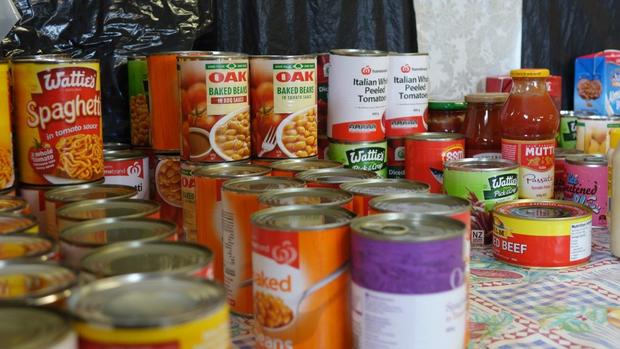
Scarcity of food for Pasifika communities during lockdown

By Sela Jane Hopgood, RNZ.co.nz. Republished with permission.

Several organisations in New Zealand supporting Pasifika families with basic necessities during alert level 4 lockdown are seeing greater numbers requesting help.

A Pasifika-led social services organisation, Pasifika Futures, said since lockdown began last month, they have handed out 12,242 packages of support through their 28 partners across Aotearoa, New Zealand.

Chief executive of Pasifika Futures and Pasifika Medical Association, Debbie Sorenson.
Photo: Supplied.

The support includes food packages, blankets, children activities and mental health support.

Its chief executive officer Debbie Sorensen said these packages are definitely more than what was handed out last year when the country was first in alert level 4 lockdown.

“This year we have spent around $4.8 million worth of funding on Pasifika families around Aotearoa.

“To put this in context, last year through all of the lockdown, we only did a little bit over 10,000 packages of support to families, so at the moment we’re running at about a thousand packages a day, which is far in excess of what happened last year,” Sorensen said.

The majority of the support packages have been distributed to Auckland based families.

Pasifika Futures were incredibly busy in the first week of lockdown and said that they had a backlog of families waiting for support.

“Over the weekend we worked very hard to clear that backlog, but before that families were having to wait 24 to 36 hours for help,” Sorensen said.

“That’s a very long time for a family to wait if they don’t have the essentials and that causes distress and anxiety.

“Extremely grateful for our teams up and down the country for delivering as fast as they can to these families.”

RNZ understands that the government has not called for a state of national emergency during alert level 4. Sorensen said last year in level 4, the country had declared a state of national emergency, which meant food support was available.

“This year is different, and all organisations are under pressure to provide food packages and support for families.

“We see this in the supermarkets in Auckland where some have had to close early to allow time for staff to replenish stock – even the supply chains are under pressure,” she said.

Sorensen explained that because there are a high number of Pasifika people testing positive for Covid-19, which means they must self-isolate, that has led to the high demand of support for food as they cannot go to the supermarket.

“As of this week we are supporting 1354 Pasifika people who are in self-isolation and 152 people who are in quarantine,” she said.

One of the 28 partners Pasifika Futures supports is the South Waikato Pacific Islands Community Services Trust.

No caption
Photo: RNZ / Alexander Robertson

Chief executive officer Akarere Henry said they have helped 120 Pasifika families in their rural community with food vouchers, firewood and baby and children necessities.

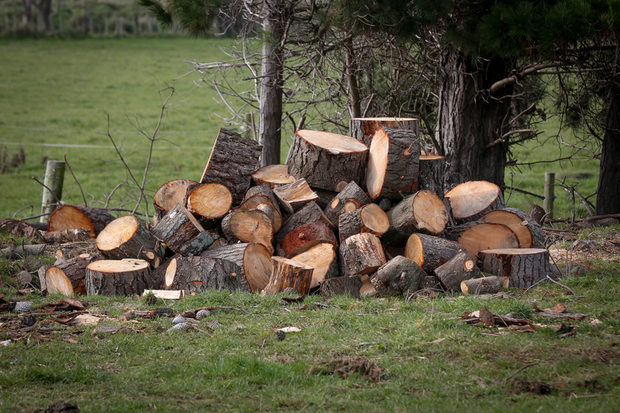
“That is the nature of the environment we live in here in South Waikato, we are heavily dependent on being able to enforce various heating models and for us it’s normally firewood.

“With the level 4 restrictions the ability to go out in the bush, to be able to get wood is limited together with finding reputable firewood merchants.

“We have seen a high demand for nappies, baby products and formula this lockdown.

“We have come across many families with children who relied on their children to go school and have the free breakfast and lunch that’s on offer,” Henry said.

“When those two items are taken away from the daily management and budgeting to now having everyone at home, it has added real pressure for those families.”

‘Lockdown is the opposite of who we [Pasifika] are’

The Society of St Vincent de Paul or St Vinnies said that three days into alert level 4 lockdown this month, they handed out 720 food parcels to families in need – majority from the Pasifika community.

General manager Delphina Soti said that increased to 1116 food parcels between the 23 to 28 August 2021 and as of this week they have distributed around 250 food parcels a day.

“This time last year we were doing 350 to 400 food parcels a week, so it has been a sharp increase since then.

“It has hit the Pasifika community harder now because they are at the centre of the outbreak.

“Pasifika families are communal, and lockdown is the opposite of who we are.

“The families survive by being in the community, in sharing, so when you go into lockdown, you can’t ask the aiga [family] up the road for help, you can’t go to church collective, you can’t send your child to school to be supported by those free lunches.

“Psychologically it’s had a huge impact on these families,” she said.

McAuley High School in Ōtāhuhu, South Auckland.
Photo: Google Maps

St Vinnies have been asked by the Ministry of Social Development to provide support to families from McAuley High School – one of the schools that has had a few students test positive for Covid-19.

“We’ve been doing phone calls with the families as a follow up to connect with them after the food has been sent out.

“What we are hearing is fear – the fear of not being in control, the fear of not having enough and the fear of having to stand in those queues.

“Our Pasifika families have been encouraged to go get tested, but on top of testing for Covid-19, they’re thinking of things like will they have enough petrol to wait in line.

“A lot of Pasifika families juggle looking after kids as well as their elderly parents and find this time quite hard because they’re all confined in their houses,” she said.

no caption
Photo: RNZ / Tom Furley

Soti said they are experiencing a backlog with families waiting between 24 to 48 hours for a food parcel.

She urges who are outside St Vinnies’ periphery in Onehunga to seek help from their local food banks, to help ease the pressure on volunteers and protect them from the spread of the virus.

“We prioritise families we have connected with in the past because we’re about building relationships.

“We are committed to serving McAuley students and their families during this time.

“Anyone isolating that is in St Vinnies central Auckland periphery, they become priority and their food parcels can be distributed within 24-48 hours,” Soti said.

The demand for support is expected to increase in Auckland, with alert level 4 set to last until 14 September. Cabinet will consider next steps for the region on 13 September.

Covid-19 update: 75 new community cases in NZ today

By RNZ.co.nz. Republished with permission

There are 75 new cases of Covid-19 in the community, the Ministry of Health has reported.

Speaking at today’s government briefing, Director-General of Health Ashley Bloomfield said one of the new cases was in Wellington and the rest in Auckland.

The Wellington case is a household contact, had been in isolation, and remains asymptomatic. Dr Bloomfield said it showed the importance of remaining in isolation and having the day 14 test.

Yesterday 49 new cases were reported, a fall from Monday.

Dr Bloomfield said there was no cause for alarm with a rise in cases from yesterday.

He said the R value, based on the latest modelling continues to be promising. There is a 90 percent probability it remains under 1, showing the lockdown is continuing to work and chains of transmission are being broken.

Bloomfield said with yesterday’s cases, 57 percent were contacts of an existing case and 75 percent did not create any exposure events.

There are 32 people in hospital. Eight are in intensive care and three are on ventilation. All are in Auckland hospitals.

Demand for testing in Auckland remains strong with more than 6500 tests yesterday across the Auckland region.

About 40 supermarkets across Auckland are being added to the locations of interest, Bloomfield said. The events are deemed to be low risk but people who have been there should watch for symptoms.

Wastewater testing results show no unexpected detections, and a sample from Moa point in Wellington has retuned a negative result for the first time since 18 August.

Testing in Northland suggests the region will be able to move to alert level 3 tomorrow night, he said.

Overnight most of the country, from the southern outskirts of Auckland south, changed from alert level 4 to 3. For many that’s meant takeaway coffees, and take-out are back on the menu, and many providers have improvised to find ways to open while following the new rules.

Auckland is in level 4 until 14 September, and Northland is likely to step down to level 3 from 11:59pm on Thursday. Here’s a reminder of the rules at alert level 3 and alert level 4.

Police have set up five checkpoints on the southern outskirts of Auckland, to check those travelling across the region’s border are allowed to. So far, they said compliance has been good, with only minimal delays for travellers.

Speaking to Morning Report today, Dr Bloomfield said to keep vaccination rates high, if extra vaccines can’t be secured through September, the vaccination roll-out may be slowed in the rest of the country to maintain a high rate in Auckland.

He rejected criticisms Auckland hospitals were not well- prepared for large numbers of Covid-19 patients, and said builders were at work in two Auckland hospitals, including work to create a designated Covid-19 patient area.

Auckland Mayor Phil Goff is urging residents to get Covid-19 vaccinations, with the rollout now open to everyone over the age of 12, and the Delta variant affecting people of all ages.

He says a higher level of community vaccination is the key to beating the disease, preventing deaths and paving the way to open the border.

Contact tracing locations of interest continue to be updated, and can be checked here.

Taufoou Lamipeti to reappear in a court in Australia facing attempted murder charges

A Tongan man appeared in court in Queensland charged with attempted murder following stabbings in Stanthorpe.

The 21-year-old Ta’ufo’ou Lamipeti got into an altercation with the two men before stabbing them with an undisclosed object at a Wallangarra Road home in March.

The alleged victims, aged 21 and 30, were transported to Princess Alexandra Hospital with serious back and chest injuries, the Herald Sun reported.

They were later reported to be in a serious but stable condition.

Lamipeti was taken into custody a short time later.

He was charged with one count each of attempted murder, acts intended to cause grievous bodily harm, and common assault.

Defence lawyer Clare Hine told the Warwick Magistrates Court she was still waiting on final pieces of evidence from the prosecution, including DNA from the alleged weapon and medical reports for the alleged victims.

Mr Lamipeti will remain in custody until his next court date which was last week August 25.

.

Early democracy crusader who led PSA strike and tried to topple Tu’i’onetoa dies

The senior politician who tried to topple Prime Minister Pōhiva Tu’i’onetoa – and was due to appear in court next month – has died in Tonga.

Deputy Prime Minister Hon. Vuna Fā’otusia. Photo/Kalino Lātū

Former Deputy Prime Minister Sione Vuna Fā’ostusia, 68, had been ill for some time.

He was one of the leaders of Tonga’s reform movement and a colourful character off the political stage as well as on it.

Fā’otusia was a member of the Tongan Public Servants Association and head of the association’s strike committee in 2005. The strike drew support from students, teachers, health workers and some Parliamentarians, as well as Prince Tu’ipelehake. The strike lasted six weeks and is considered one of the key moments in the development of democracy in Tonga that ultimately led to the reforms of 2010.

The former Deputy Prime Minister was counsel to the Shipping Corporation of Tonga, owners of the Princess Ashika, which sank with heavy loss of life in 2009. Four people were found guilty of manslaughter in the subsequent trial.

In 2014 he became Minister of Justice in the Cabinet of Prime Minister Akilisi Pōhiva. He was re-elected to Parliament in 2017 and re-appointed to Cabinet. As Justice Minister Fā’otusia appointed the first Tongan judge to the Supreme Court of Tonga.

Following the death of ʻAkilisi he supported Tuʻiʻonetoa for the role of  Prime Minister and left the Democrats to join the new People’s Party. He was made Deputy Prime Minister and Minister for Justice and Prisons.

Two years ago he was charged with wrongfully interfering with the course of justice and using threatening language in a dispute over a cow. He was acquitted in December 2019, but an appeal returned the matter to the Supreme Court. He was due back in court on September 16.

In December last year MP for Tongatapu 2, Sēmisi Sika filed a motion for a vote of no confidence in Hon. Tu’i’onetoa on December 10.

The vote of no confidence detailed a list of concerns, including the allocation of road building contracts, Covid-19 preparedness and what was seen as selective government support for businesses.

Fā’otusia signed the petition and then resigned from Cabinet. He cited concerns about what he saw as the undue influence of disgraced former MP ‘Etuate Lavulavu on the Prime Minister and the cost of the government’s prayer and fasting excursions to the outer islands.

The motion was defeated 13-9 in January this year.

The Prime Minister has continued to be dogged by his relation to Lavulavu and his wife, a Cabinet Minister, who were convicted and sentenced to jail in the Supreme Court for fraud.

As a politician Fā’otusia was helpful to the press and generous with his time. On his door of his office was written in Tongan: “You can walk in, there is no need for you to knock and ask for permission to see me.”

Off the political stage, his personal life was colourful and he was known for his numerous liaisons. The late ‘Akilisi Pōhiva once joked that Fā’otusia has everything he needed to sit in the Prime Minister’s chair, but ne needed to get married first.

While ‘Akilisi praised and hailed him for his strong commitment to democracy and his personal support, he hesitated sometime because of Fā’otusia’s marital status, something that was not seen as reflecting well on him from a Tongan cultural or Christian perspective.

Fā’otusia finally married last year when he turned 67.

Benefits for migrants to end today – ‘What happened to our fabled kindness?’

By RNZ.co.nz. Republished with permission

Emergency benefits for migrants are being axed from today – and advocates say the timing could not be worse.

NZISA president Afiqah Ramizi.
NZISA president Afiqah Ramizi. Photo: Supplied

The Ministry of Social Development has been providing benefits to migrants since it took over from a Red Cross support scheme last year.

The founder of migration thinktank The Fair Initiative, Charlotte te Riet Scholten-Phillips, said migrants pay the same taxes and should be allowed benefits because Covid-19 had created extraordinary circumstances.

“It’s very disappointing that the government has decided to stop these benefits when there’s obviously still a need,” she said.

“It’s distressing to hear constant reference to the ‘team of 5 million’ and how our wonderful essential workers are contributing to our Covid response, but when the migrants in that team need help we’re cast aside.

“How is it that one moment we’re part of the ‘team’ or ‘essential’ and the next it’s OK to force migrants into poverty and possible homelessness – is this what New Zealand is now? What happened to our fabled kindness?”

Among temporary visa holders are an estimated 25,000 international students, who are limited to working 20 hours a week.

The International Students Association (NZISA) was told by the Ministry of Social Development that emergency benefits were only available to temporary visa holders as a short-term solution while they arranged to return to their home countries or found work.

Advice on the Ministry of Social Development website says those still needing support should contact their embassy.

NZISA is also upset that a hardship fund is only available to domestic New Zealand students, when it was offered to international students during last year’s lockdown.

Some were struggling to find work, especially as they were not allowed to work full-time unless they’re supermarket staff, said its president Afiqah Ramizi.

“Normally international students would be funded either by the family members, or by scholarship,” she said. “The problem with the majority who are funded by their family members is that other countries are in a worse position due to Covid-19.

“International students also have told us that they have not received any responses from their embassies, when they reach out for support at this time.

“It’s bad timing that the benefits expire now. We did request for more time, we asked for at least the cover at level 4 and 3.”

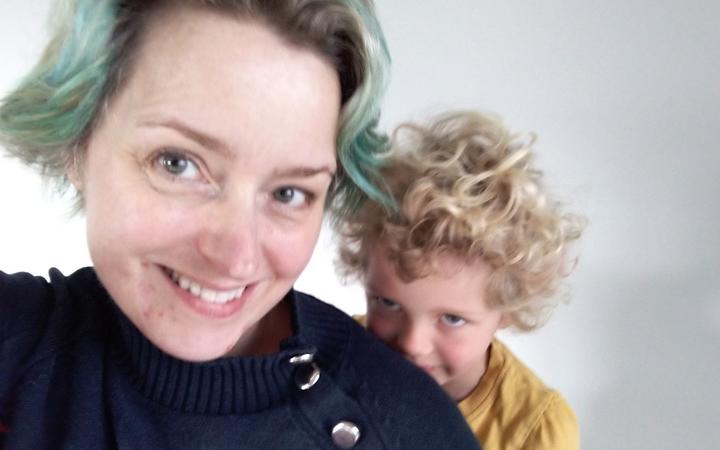
Association of New Kiwis Aotearoa president Charlotte te Riet Scholten-Phillips and her daughter.
Association of New Kiwis Aotearoa president Charlotte te Riet Scholten-Phillips and her daughter. Photo: Supplied / Charlotte te Riet Scholten-Phillips

She said it was a lot to ask of students to return to their home countries – forfeiting the money they had paid for their courses, and the time they had spent on uncompleted studies – and returning to countries where Covid-19 was a very real danger.

“NZISA is extremely disappointed at the government’s and education providers’ inaction and the lack of support for international students during this time of crisis,” Ramizi said.

“We pay extensive international student fees, support local economies, and contribute to the New Zealand job market. At the same time we are cut off from our families who are also struggling abroad.

“This disparity between the support given to international students and domestic students continues to drive a wedge between our communities. It goes to show that international students aren’t a valued community.

“Immigration New Zealand could model the Canadian government’s approach in removing the 20-hour cap for all international students working in priority sectors over lockdown.”

MSD said those migrants receiving an emergency benefit will get their final two days of payment in the week beginning 6 September.

Group general manager of client service delivery Kay Read said people who need further support or repatriation advice should contact their Embassy, High Commission or Consulate.

“MSD’s Community Connectors will also be available to help temporary visa holders who are currently receiving an Emergency Benefit to help them engage with foreign missions, and other available community and non-government organisation support,” Read said.

“Immigration New Zealand (INZ) is also continuing to provide funding through the INZ Repatriation Fund. This fund assists people who are in hardship and need help with paying for travel to return to their home country.”

MSD said any decision to extend the availability of benefits would be for ministers to consider.

In a statement, the Ministry of Education said the $1 million International Student Hardship Fund was set up in May 2020 and it had been distributed to about 4000 students.

“The Hardship Fund for Learners helps tertiary education organisations provide temporary financial assistance to domestic tertiary learners who face hardship due to the Covid-19 pandemic,” said the Ministry of Education’s group manager tertiary Belinda Himion.

“Since the return to alert level 4, officials have been meeting regularly with peak body organisations, including international student leaders, to understand and respond to the needs of the sector.”

FAKAMATALA FAKATONGA

Fakangata he ‘aho’ ni ‘a e vahe penefiti ne ma’u ‘e ha kau folau mai ki Nu’u Sila mei he ngaahi fonua’ kau ai ‘a Tonga, ka ne nau fihia heni ‘o ‘ikai lava foki tu’unga ko e fakataputapui ‘o e Kōviti’. Kuo fakaanga’i lahi ‘a hono ta’ofi ko ‘eni ka kuo pehē mei he pule’anga Nu’u Sila’ ko kinautolu ‘oku kei fiema’u tokoni’ ke nau fetu’utaki ki he’enau ‘ōfisi konisela’ pea ki he kau Tonga’ ko ‘Atalanga ‘e fai ki ai ‘a e fetu’utaki’. Ko e vahe penefiti ‘eni ne ‘iloa ko e Emergency Benefits pea’ ne ‘atā ia ki he kau ngāue ma’u ngofua ngāue fakataimi, kau ako mo kinautolu visa ‘eve’eva mai’.