Saturday, April 4, 2026
Home Blog Page 351

NZ south of Auckland to shift to level 3 at midnight Tuesday

By RNZ/Radio New Zealand and is republished with permission.

All of New Zealand south of Auckland will move to alert level three at midnight Tuesday, but Auckland is likely to stay at level 4 for two weeks, the prime minister has confirmed.
27082021 PHOTO: ROBERT KITCHIN/STUFF
L-R:  
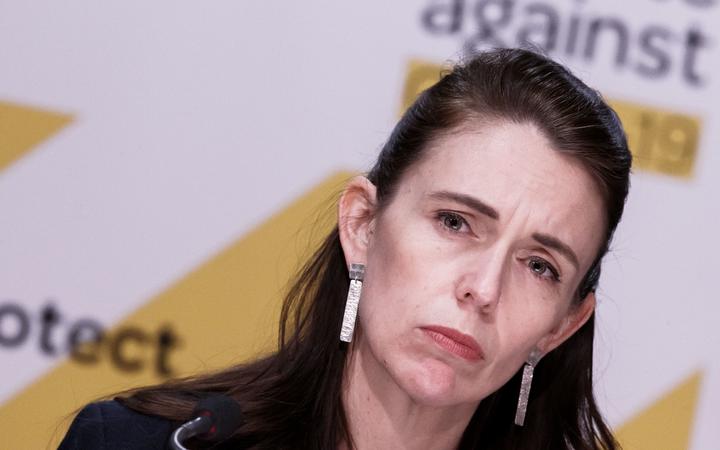
Prime minister Jacinda Ardern and Director General of Health Dr Ashley Bloomfield hold the Post Cabinet Covid 19 lockdown update to inform New Zealand of a shift to level 3 on Wednesday.

Photo: Pool / NZME

Auckland and Northland will remain at level 4 for at least another week, with decisions on that to be considered on Monday.

Jacinda Ardern and Director-General of Health Ashley Bloomfield spoke this afternoon about Cabinet’s decision to change the country’s lockdown status.

Watch it here:

Ardern said today’s decision would “put us in the best possible position to give as much certainty as we can”.

She said it was likely at this stage Auckland would remain at level 4 for a further two weeks.

“We will need to be confident we’ve stamped it out and have cases contained and isolated.”

Northland was being included because of a recent case in Warkworth and the government was concerned about northbound journeys, but Northland was unlikely to be kept in the same position as Auckland in the long term, Ardern said.

She said one of the exposure sites in Warkworth, while closed to the public, was a relatively large workplace.

The larger exposure site in Warkworth had another site further north, with staff moving between the two locations. Bloomfield and Ardern both confirmed that was part of the reason behind the decision to keep Northland in alert level 4 along with Auckland.

‘Every New Zealander can play their part’

Ardern said we “may be seeing the beginning of a plateau of cases” based on the case numbers today.

“But caution is still required.”

It was clear from the outbreak that Delta was more infectious and moved more quickly, she said.

“Of the cases reported yesterday, roughly half were household contacts. Unfortunately we know from Australia that household members are almost universally becoming infected with Covid-19, that means you can expect our numbers to continue for some time as household contacts continue to test positive.”

Public health units were observing very fast infection times with Delta, but it did not change the fact the strategy right now was elimination and “every New Zealander can play their part in that”, Ardern said.

Of the new cases reported yesterday, only 10 had any new exposure events, “and some of these were pre-lockdown”. Lockdown compliance was very high, she said.

“Lockdown is making a difference.

“We know Covid’s not going away quickly, but out strategy can evolve.”

Ardern said previously levels 4 and 3 had been used to reduce spread, but now, level 4 was being used to do the bulk of the heavy lifting.

The alert level for districts outside Auckland was due to expire tonight, but the prime minister said there were two reasons the rest of the country was being kept at level 4 for three extra days.

The first was the confidence of an almost 14-day cycle since cases were discovered, the second was because of the cases in Wellington.

“We also have those contacts in the south and that full two-week transmission cycle is very very helpful in terms of our confidence.”

There was also the wastewater result in Christchurch, and further tests would give more confidence over that, Ardern said.

She gave a reminder of the alert level rules, which can be found here.

She said checkpoints would be in place, and no one will be able to move between alert levels without an exemption. Police have been working to make sure the boundaries work as smoothly as possible, she said.

Employers that will be affected should seek an exemption.

“If you are not an essential worker, you are not able to cross the boundary.”

Today, the Ministry of Health revealed there were 70 new cases of Covid-19 in the community.

In a statement, the Ministry of Health said there were 19 community cases in hospital, including one in ICU. All were in a stable condition.

The total number of cases linked to the current community outbreak was 347 – 333 in Auckland and 14 in Wellington, the ministry said.
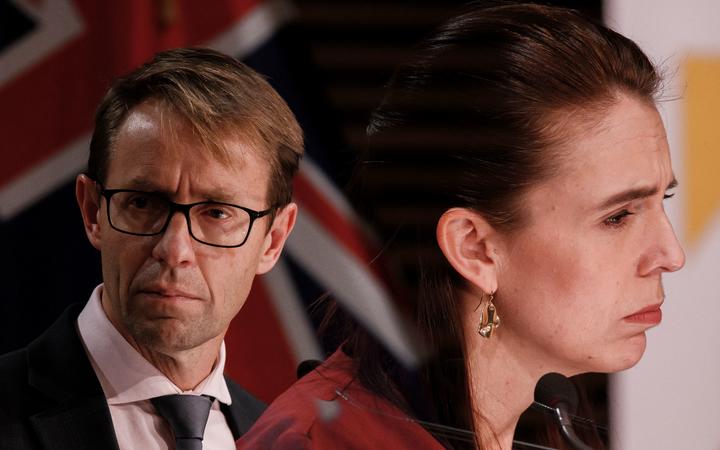
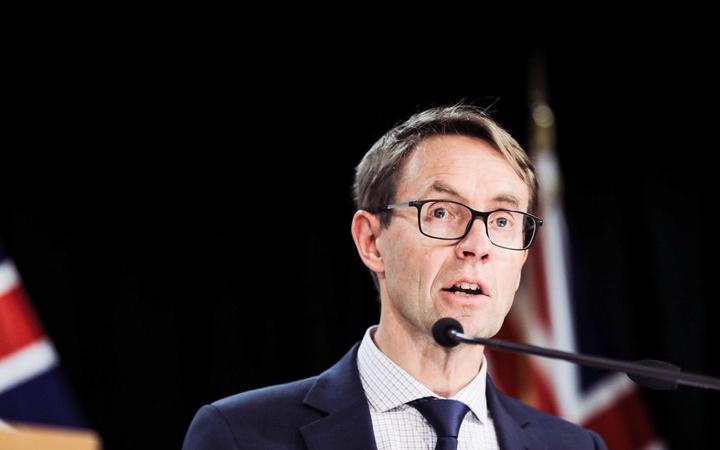
Prime Minister Jacinda Ardern, followed by Director-General of Health Dr Ashley Bloomfield.

Director-General of Health Dr Ashley Bloomfield and Prime Minister Jacinda Ardern. Photo: Stuff / Robert Kitchin
Covid-19 quarantine facilities under more pressure as case numbers increase

By RNZ/Radio New Zealand and is republished with permission.

New Zealand’s Covid-19 quarantine hotels are under increasing pressure with more than 200 infected with the virus and predictions the number could hit 1000.

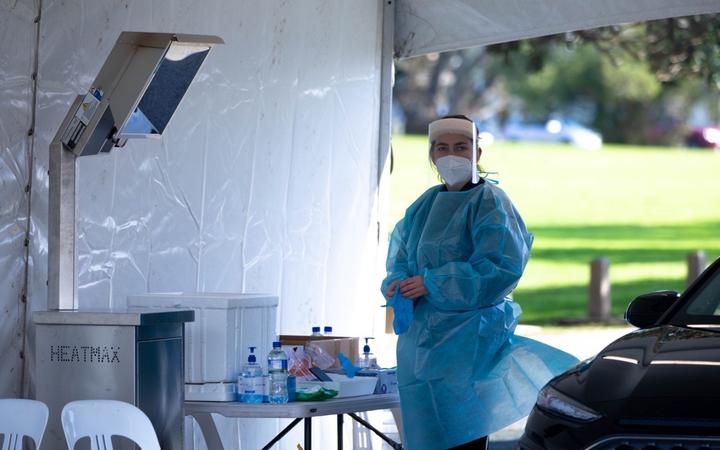
A health worker at the Devonport Covid-19 testing station.

A health worker at the Devonport Covid-19 testing station, the Auckland suburb where the first community case was detected. Photo: RNZ / Marika Khabazi

The government has suggested if it runs out of spaces people may have to isolate at home.

Covid-19 Response Minister Chris Hipkins yesterday said they can cope with the number of Covid-19 cases New Zealand is seeing over the next week or so but if it continues beyond that decisions will need to be made.

He said that could include investigating whether people who are in New Zealand and get Covid-19 should isolate at home rather than in MIQ facilities.

The total number of cases in the community jumped by 62 yesterday to reach 210.

Professor Shaun Hendy, who is a Covid-19 modeller at the University of Auckland, said the current size of the outbreak far exceeded his initial calculations.

He said most of the cases being reported were still people who became infected prior to lockdown.

“This is telling us: we have got quite a large outbreak on our hands.”

Hendy’s initial modelling suggested up to 120 cases could have been circulating in the community before the level 4 restrictions kicked in.

He said he now thought that number could be as high as 300 given the number of young people infected and the “super-spreader” church service in Māngere.

“We’re really looking at an outbreak now that is similar to one that we dealt with in March and April last year … which was of the order of about 1000 cases.

“That’s kind of the scenario we’re looking at at the moment.”

Hendy said, as such, Aucklanders should prepare to remain under level 4 for a similar length of time as last year: at least a month.

“Aucklanders are used to it now. We do have to ride it out.”

The numbers would hopefully begin to stabilise this week and eventually fall away, Hendy said.

“From today on, we should start to see a larger proportion of cases coming from infections after the shift to level 4 and those numbers should be much fewer.”

However, Hendy noted that people were also likely to have passed the virus on to others in their household which could keep the numbers inflated for a while.

He said he remained confident that New Zealand could once again eliminate Covid-19.

“There is light at the end of the tunnel.”

Bloomfield: Ministry of Health always intended to disclose vaccine error

By RNZ/Radio New Zealand and is republished with permission. 

Director-General of Health Dr Ashley Bloomfield says officials were always planning to tell patients about a mistake that meant they may not have received the Covid-19 vaccination they thought they had.

No caption

Director-General of Health Dr Ashley Bloomfield. Photo: RNZ / Samuel Rillstone

RNZ revealed yesterday that the Highbrook vaccination centre found five doses left over on 12 July.

That meant five of the 732 people vaccinated that day may have been injected with a harmless saline dose instead. Saline is used to dilute the vaccine once it has thawed.

Dr Bloomfield told Morning Report authorities were waiting for scientific advice on what to tell people.

“There was always the intention to tell people,” he said.

“We were getting advice around whether or not we offered people a further dose.

“There was some question about that, because of the uncertainty about whether anyone had missed out in the first place.

“I’m completely committed to open disclosure on these events.”

Bloomfield said all 732 people will get sent an email or have a letter couriered to them and there will be a follow-up phone call outlining their options.

“There’s a group of about 25 people in that overall group who haven’t had a second dose, so that’s been expedited so they can have that second dose in the next couple of days.

“Everybody in the group will have had at least one full dose and and five people may have had a slightly more diluted dose, about a 20 percent dose, because there is some residual vaccine left in the empty vials. Only five doses were being drawn up from each of the vials at that time, on that day.”

A third dose can be arranged further down the track if people wanted that, he said.

The Ministry of Health has since confirmed another possible vaccine mistake, this time at the Wigram vaccination clinic in Christchurch, where vaccine stock did not match the number of doses administered.

Bloomfield said it was a similar case but the clinic was doing a reconciliation much more regularly so the error was picked up immediately.

The vaccination centre was able to identify the six people affected, confirm they hadn’t received a dose and offer them a further vaccination.

Te Rōpū Whakaurutā, the national Māori Pandemic group, co-leader Dr Rawiri Jansen would like to see technical reporting on what happened at the Highbrook vaccination centre.

He told Morning Report between five and seven doses are being pulled out of vials, so one possibility would be the exact number of doses being extracted from each dial was not recorded accurately. If that was the case, it might not translate into having a vial left over and people not receiving a dose.

“I think it’s really important to get some expert, technical reporting on those possiblities.”

Alert levels

Officials are working out options for Auckland remaining in the highest alert level longer than the rest of the country, Bloomfield said.

“We will be wanting so see case numbers level off and then start to drop within the next couple of days.

“That will be the most telling thing in terms of how long Auckland will be in alert level 4.

“We would also want to be clear that any new cases were close contacts of exisiting cases or from a location of interest.

“We will be looking to make sure there are no cases popping up elsewhere in the community that we can’t link to the outbreak.

Officials have been doing work on the option of Auckland remaining in level 4 with the rest of the country in level 3, he said.

“There’s been a lot of work amongst all the agencies over the last week on what an internal boundary between Auckland and the rest of the North Island would look like, and what sort of travel would be permitted across the boundary, and how that would be enforced.”

Cases in Wellington have all been linked to existing cases, and the cluster did seemed well contained, he said.

Booster shots

Bloomfield said officials were considering the issue of booster injections for those who received their Pfizer vaccines at the start of the year.

Data from Britain has suggested protection offered by two doses of the Pfizer vaccine against Covid-19 dropped from 88 percent to 74 percent within five to six months of the second injection.

It suggested a similar drop in protection from the AstraZeneca vaccine from 77 percent to 67 percent at four to five months.

Experts have told RNZ booster shots are not needed right now, but may be in the long term.

Immunisation Advisory Centre director and GP Dr Nikki Turner said immunity may lessen over time, prompting the need for a top up, or the virus might mutate so much a reformulated vaccine is needed.

Bloomfield said the ministry’s technical advisory group is looking at overseas evidence “which is emerging almost on a daily basis”.

There was enough vaccine to get started on third doses, he said.

Evidence on vaccinating under 12-year-olds is not expected until the end of the year.

NCEA exam two-week delay a ‘breathing space’ for students

By RNZ.co.nz. Republished with permission

Principals say the decision to delay NCEA and Scholarship exams by two weeks will give students much-needed breathing space.

The Education Ministry told schools overnight the exams would start on Monday 22 November and finish on Friday 14 December, two weeks later than the original schedule in recognition of the disruption caused by the alert level 4 lockdown.

“Over the last week, community cases of Covid-19’s Delta variant have caused disruption to thousands of secondary school students around New Zealand and is adding to students’ anxiety. It has therefore been agreed to change dates and processes around some assessments – including end of year exams and portfolio submissions,” the ministry’s bulletin to schools said.

It also indicated further changes might be made such as reintroducing Learning Recognition Credits, once it was clearer how long the lockdown would last.

Secondary Principals’ Association president Vaughan Couillault said the announcement was especially helpful for students who were working on portfolios for art and technology subjects.

“The additional two weeks will provide much needed breathing space for preparation for external exams but quite importantly for those students that have not been able to get their hands on their portfolios … it does create some breathing space for those students,” he said.

Couillault said the decision to put back the exams had been made more quickly than last year’s decisions to delay exams.

“Last year the right decision was made but it took us a little while to get there. This year we’ve dusted off that playbook by the looks of things and we’ve got the information out to people fairly promptly.”

Couillault said he did not expect exams could be delayed any further than two weeks because they would run too close to the Christmas holidays and that would make marking difficult.

He said schools were much better at switching to remote learning than they were last year but it was hard to get some students to do the work.

“What we are finding is whilst our connectivity issues have been addressed somewhat we still are having some engagement issues getting particularly senior students to engage with that online space, so whilst they may now have the means it’s about addressing the motivation,” he said.

Couillault said government agencies were discussing the possibility of further NCEA changes, such as providing extra credits.

He said he believed it was very likely changes such as the extra credits would go ahead.

Seatbelt laws unjust says veteran journalist as MP’s bill urges Parliament to lower fines

Tonga’s seatbelt laws were “a joke”, veteran journalist Kalafi Moala said today.

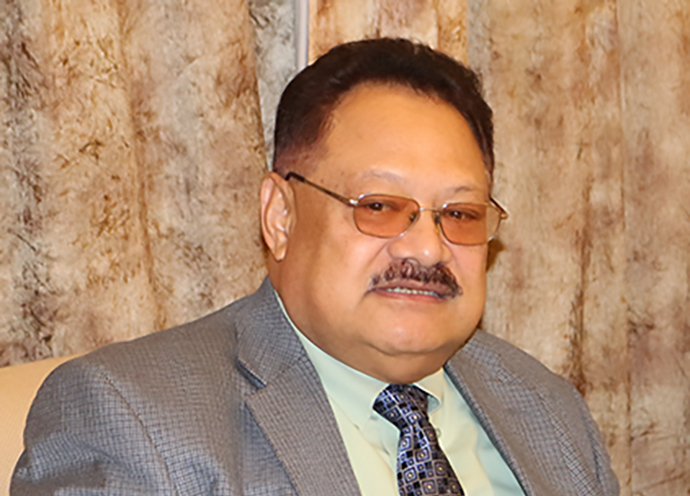
Kalafi Moala. Photo/Kalino Lātū

Moala made the remarks after Ha’apai MP Veivosa Taka submitted a private members’ bill to reduce seat belt fines from TP$500 to TP$200.

In February we reported that Chief Magistrate Folau Lokotui told Attorney General Linda Folaumoetu’i he had no discretion to impose fines lower than $500 for traffic violations.

This contradicted an earlier official statement that courts would decide the exact amount of money for them to pay after considerations of their circumstances and defences.

A new traffic law introduced by disgraced former Minster of Transport ‘Akosita Lavulavu included the compulsory wearing of seatbelts, made the use of mobile phones while driving illegal and mandated that cars cannot be used without a registration plate.

Moala said the current traffic law was unjust and lacked common sense.

Children must also be seated when a vehicle is in motion, and they can no longer sit on the driver’s lap.

The law had been widely criticised by the public from the outset both in the local news and social media.

Some believed the seatbelts law did not consider the fact that pick up trucks had been used to transport people in Tonga for a long time. They claimed that these vehicles appeared to have rarely been involved in road accidents.

There have also been complaints that the emphasis of the laws has been misplaced. Some have argued that too much emphasis has been placed on seat belts when it should have been on speed and drink driving, which is regarded as the main cause of death on the road.

Late last year photos of vehicles in Ha’apai shared on social media showed pick up vans full of people standing in the back while the vans were moving.

Moala said the strict enforcement of seat belt laws, for those in the front seats of a vehicle, did not apply to those riding in the back seats.

“This law further becomes a joke when there are no regulations that forbid riding an open truck,” the veteran journalist said.

“I have seen every day driving into town, pick-up trucks in which the driver and front seat passenger wear seat belts, and yet those riding at the back of the truck, not only have no seat belts but are standing and partly hanging out of the truck.

“They would be killed or seriously wounded in an accident. It is horrific to see this scene daily in Nuku’alofa, with children as many as eight to 10 standing up in the back of a truck, while the driver and front seat passenger are secured with seat belts. How can we penalize those who don’t wear seat belts in the front seats of a vehicle, while we have no regulations for all other passengers, even at the back of a pick-up truck?”

As we reported in a commentary in February, an alternative to heavy fines is for Tongan courts to adapt a New Zealand practice of using community laws to impose non-financial and non-custodial sentences on people convicted of certain offences, including some traffic violations.

These sentences can include community work and being confined to home.

Covid-19: Ministry of Health confirms another possible vaccine mistake

By Charlie Dreaver of RNZ.co.nz. Republished with permission.

The Ministry of Health has confirmed there has been another instance where people were given the wrong dose of the Pfizer vaccine.

It follows the revelation that there were five people out of 732 who may have been injected with harmless saline solution instead of a Covid-19 shot at the Highbrook Vaccination Centre on 12 July.

Saline is used to dilute the vaccine once it has thawed.

After the incident was reported by RNZ, the Ministry of Health said it would contact all those who potentially got just saline, within 24 hours.

The Covid-19 vaccination programme’s national director Jo Gibbs said there was also an incident at the Wigram vaccination clinic in Christchurch where vaccine stock did not match the number of doses administered.

“During the full-day clinic, six vaccinations were administered with a very low dose of vaccine.”

The incident occurred as a result of a vaccinator picking up a tray of six syringes that had not had the correct vaccine drawn into them, she said.

“As a result of the investigation into this event, we know the affected cohort in this case is only six people because records show it occurred between 1.20pm and 1.40pm that day.”

Gibbs said all six people have been contacted by the DHB and a clinical plan was developed for each person.

Four people were receiving dose one and two people receiving dose two on 14 July.

They have since been given another dose of vaccine.

Woman ‘disgusted’ she wasn’t told of possible vaccination mistake

A woman immunised at the Highbrook Vaccination Centre in Auckland is disgusted she had not been told she may have been given just saline instead of the Pfizer vaccine.

Fiona Tolich, who was vaccinated on the 12 July said she was “disgusted” she had not been told about the mistake by the ministry.

She believed the ministry had no intention of telling her.

“You can’t tell me they’ve taken five weeks talking to experts when internationally they were able to make the right call on the same day that it happened.”

Tolich’s partner is an essential worker and she has an underlying health condition.

She has so far only had one Covid-19 injection.

She said she can understand a mistake being made, but not knowing about it until now is appalling.

“People have a right to know what is being put in their body and they have a right to honesty and to me this screams of a lack of honesty and integrity and a lack of ethics.”

She wants an apology from the ministry and an explanation.

Meanwhile, Health and Disability Commissioner Morag McDowell said she will be contacting the ministry about the incident.

“Consumers have the right to be fully informed about what may have happened to them.

“I understand that the Ministry of Health is working to resolve this matter and I expect that this will include informing the people who could have been affected by the error.”

She said she will writing to the ministry to understand the actions being taken and to remind them of her expectations regarding the right of consumers to open disclosure.

Concern mounts for 140 Tongan workers stuck in NZ lockdown

This story by Kalino Lātū was first published by Te Waha Nui

One hundred and forty Tongan seasonal workers are stuck in Auckland’s snap lockdown and concerns have been raised more than 60 others have absconded in New Zealand since the Covid-19 restrictions of last year.

A repatriation flight was meant to leave for Tonga today, August 25, but was cancelled due to lockdown.

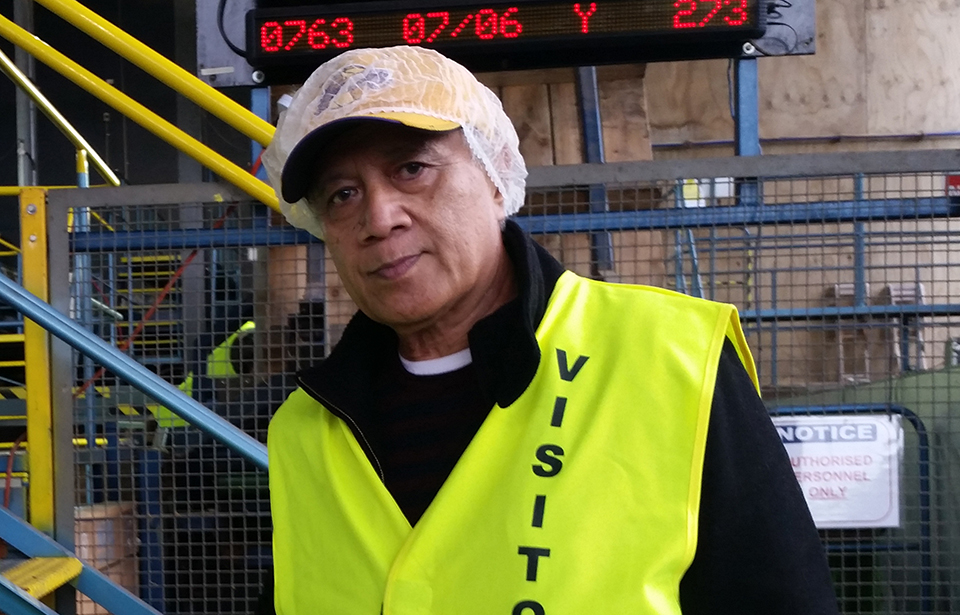
The Tongan government’s liaison officer in New Zealand, Sefita Hao’uli. Photo/Kalino Lātū

The Tongan government’s liaison officer in New Zealand, Sefita Hao’uli, said nine Recognised Seasonal Employer (RSE) workers were currently in Auckland.

The flight’s rescheduling would depend on when New Zealand’s lockdown was lifted.

Hao’uli said a plan was in place to approach the Ministry of Social Development to help the returnees if the lockdown dragged on.

New Zealand will stay in alert level 4 lockdown until at least midnight on Friday, and Auckland will stay locked down until at least midnight on Tuesday next week.

Absconding 

Meanwhile, 66 Tongan RSE workers have allegedly absconded from their workplaces in breach of their contract agreements and work permits, Te Waha Nui can now reveal.

The reasons behind their escape included a lack of repatriation flights since border closures last year.

Some married while in New Zealand and have moved on with their new families.

They also included workers who just gave up on their jobs and did want to return home.

Hao’uli said Immigration New Zealand had advised to urge the absconders to return to Tonga on their own.

The revelations came while Tonga is being excluded from this year’s iteration of the RSE scheme because the kingdom could not get its RSE workers home at the end of the season.

The Tongan Government said it did not have enough MIQ facilities to host the RSE workers at the same time with other repatriated citizens.

Green light

However, Hao’uli said it appeared New Zealand would soon give Tonga the green light for the scheme, although this has not been confirmed yet.

He said the Ardern Government had announced earlier this month that RSE workers from Tonga, Samoa and Vanuatu would travel to New Zealand without undergoing a two-week stay in managed isolation.

“We presume it will be in October the RSE workers could start coming from Tonga,” Hao’uli told TWN.

He said if that happened, more Tongan RSE workers would be expected by December.

“What New Zealand really wanted is for Tonga to make sure they will return their workers home at the end of the season to avoid causing any problems here.”

In June, a Tongan RSE worker, Hiko Lynch, was stabbed to death while two of his friends were seriously injured during a fight outside a nightclub in Blenheim.

He hadn’t been able to return home between seasons because of Tonga’s restriction on repatriated flights.

Seven hundred Tongan RSE workers are currently in New Zealand, according to Hao’uli.

NRL virtual training programs focus on Pacific

By RNZ/Radio New Zealand is republished with permission. 

NRL’s Game Development Manager in Tonga, Tavake Fangupo, is hopeful training programs being run virtually by the NRL and Australian Defence Force will boost confidence in coaches in the region.

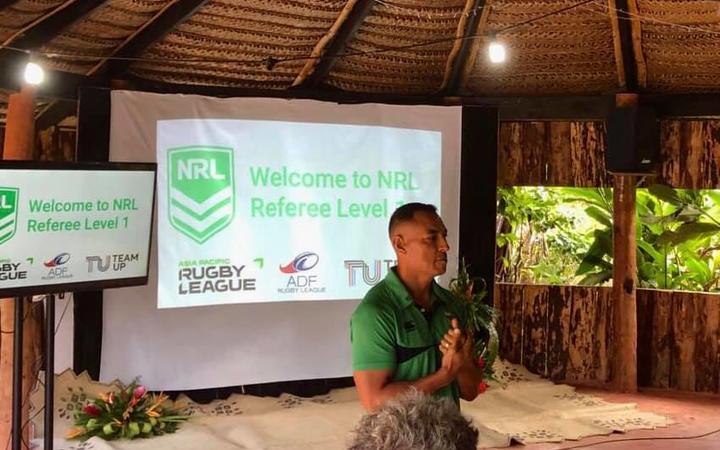
NRL and ADF take virtual coaching to Tonga.

NRL and ADF take virtual coaching to Tonga. Photo: NRL in Tonga

Over 70 players, coaches and officials in the country participated in a five-day course to ensure participants are exposed to the game and other opportunities despite Covid-19.

This is the third virtual sports programme the NRL have provided virtually because of the pandemic, with sessions covering coaching, refereeing, nutrition, first aid, CPR and strength and conditioning.

While a new governing body for rugby league is still to be established in Tonga, Fangupo said the courses are a great way to educate officials and to provide opportunities to some of the smaller islands.

No caption

Photo: NRL in Tonga

“We have three outer islands, Vava’u, Ha’apai and Eua. We pretty much try to get the ones in the outer islands to attend because they’ll probably never get that opportunity,” he said.

“Coaches and referees and sports trainers here are able to translate that to to the local coaches or referees and sports trainers [because there is] obviously the language barrier.”

“But the idea is to help coach and educate local coaches and it’s worked really well. Touch wood my biggest concern was that we might have internet issues, but we’re quite fortunate that wasn’t an issue.”

Initially the courses have been for rugby league, but the long-term goal is for other sports to get involved as well, he added.

“We had netball join us this year for the first time, it’s normally just rugby league but we reached out to netball to see if they wanted to participate.”

“A lot of them have never experienced anything like that before so it was quite good for them to be part of it. This is an ongoing partnership that we’ve got with the Australian Defence, so we want other sports to have that opportunity to join also.”

NRL Pacific Program Manager, Michael Asensio, told NRL.com that an increase in trained coaches will create positive role models in the region.

“An increase in trained coaches will create positive role models and give Tongan participants the best chance to be exposed to the game and experience the many social and health benefits,” he said.

“We’re incredibly proud of the important work of the men and women of the ADF and look forward to working together to achieve positive outcomes for Tongan communities.”

Director general of the Australian Defence Force Sports Cell, Brigadier Phil Winter, told the league website the partnership with the NRL has helped strengthen the relationship between Australia and its Pacific neighbours.

“Sport provides a ‘universal language’ and the virtual program for Tonga is designed to teach leadership, gender equality, respect, nutrition and healthy living.”

“The virtual sports program also provides an opportunity to demonstrate the enduring ADF partnership with HMAF of Tonga, and reinforce shared values through sport.”

Covid-19 numbers: 62 new cases in the community today

By RNZ.co.nz. Republished with permission

There were 62 new cases of Covid-19 in the community reported in New Zealand in the past 24 hours, Director General of Health Ashley Bloomfield has confirmed.

Dr Bloomfield and Covid-19 Response Minister Chris Hipkins are now providing an update in regards to the current outbreak.

Watch the update here:

A record 80,000 New Zealanders got a vaccine yesterday, while testing numbers also reached a record high – nearly 50,000 across the country.

This morning RNZ revealed Aucklanders may have been administered a dose of saline solution instead of the Pfizer vaccine when they attended the Highbrook vaccination centre last month.

A senior health official confirmed five doses had remained at the end of the day and didn’t tally up with records, so the possibility some people hadn’t received the correct vaccine dose couldn’t be ruled out.

The Ministry of Health has not contacted any of those potentially affected.

Meanwhile, New Zealand is staying in alert level 4 lockdown until at least midnight on Friday, and Auckland until at least midnight on Tuesday.

Covid-19 vaccine mistake in Auckland sparks investigation

By RNZ.co.nz. Republished with permission

Five Aucklanders who turned up for their Covid-19 vaccine last month may have got a dose of saline solution instead but the Ministry of Health still has not told them.

The ministry still has not been able say what will be done to ensure those affected will receive two full Pfizer doses.

RNZ was alerted because of concerns there could be vulnerable people in the community who wrongly believe they are fully vaccinated.

The mistake happened at the Highbrook vaccination centre in Auckland and RNZ understands the problem was discovered at the end of the day, when staff realised there was an extra vaccine vial left over.

This has been confirmed by the Ministry of Health, which said “the vaccine stock didn’t match the number of doses administered”.

There were 732 people vaccinated that day, made up of people in groups 1, 2 and 3.

Those groups include border workers, high-risk frontline health workers, over 65s and those with health conditions that make them more vulnerable to Covid-19.

Some would have been getting their first dose, others their second.

National director for the Covid-19 vaccination and immunisation programme Jo Gibbs said five doses were unaccounted for at the end of the day.

“It could have been due to some vaccinators getting more than the regular number of doses out of some vials and forgetting to record this. An alternative that we can’t rule out is the possibility that some people didn’t receive the correct vaccine dose,” she said.

RNZ understands the vaccination centre could not determine who the five people affected were.

Typically, a vial of the Pfizer vaccine contains multiple doses which is then diluted using saline solution once it has thawed on site.

RNZ has been told it is possible that those people could have received very little vaccine or just saline solution instead.

It is thought the likely scenario is that an already used vial had saline solution added.

Gibbs said the wrong dosage would not have harmed the patient and that “these types of situations occur from time to time”.

A full review has since been undertaken, she said.

“We are working through that report to determine our next steps, including discussing with other jurisdictions their response when similar events have occurred,” she said.

Gibbs said the ministry had a “principle of open communication with any patients involved”.

However, when asked if that has means those patients potentially affected have been informed, the ministry confirmed they are yet to be contacted.

“We are still gathering the information needed to fully understand the situation and provide any advice or support that might be needed.

“We will be communicating with people who may have been affected when that work is complete,” she said.

For live Covid-19 updates

The Code of Health and Disability Services Consumers’ Rights gives all consumers the right of open communication with a provider.

“A consumer should be informed about any adverse event, ie, when the consumer has suffered any unintended harm while receiving health care or disability services.

“An error that affected the consumer’s care but does not appear to have caused harm may also need to be disclosed to the consumer. Notification of an error may be relevant to future care decisions.”

A disclosure should include acknowledgement of the incident, an explanation of what happened, how it happened, why it happened and, where appropriate, what actions have been taken to prevent it happening again, it said.

Australians offered extra shot

A similar instance has occurred in Australia at Rockhampton Hospital in Queensland last month.

It resulted in six people receiving an ultra-low dose of the vaccine and may not have been vaccinated.

All 159 people who received the vaccine that day were contacted within a week and were offered a repeat dose.