
Saturday, April 4, 2026
Home Blog Page 357

How far should vaccination passports go – and what rights do NZers have?

By RNZ/Radio New Zealand and is republished with permission. 

With greater numbers of people being vaccinated and countries looking to reopen borders safely, the introduction of some form of vaccine passport seems increasingly likely.

No caption

A Covid-19 vaccination centre. Photo: Facebook

For New Zealand, where the elimination strategy has been largely successful but which remains vulnerable to border breaches, proof of vaccination may well be a condition of entry.

Health Minister Chris Hipkins has said this would be “almost an inevitability” within the next year. Air New Zealand is one of a number of airlines already trialling the IATA travel pass initiative.

Some countries are also requiring “health passes”, mandatory proof of vaccination or a negative test, including for indoor events (such as sports games and concerts) and hospitality – triggering anti-restriction protests in the process.

In Britain, the Royal Society has warned of the potential of vaccine passports to restrict the freedoms of some individuals, or to create a distinction between individuals based on health status.

Furthermore, vaccine passports use sensitive personal information, and recent cyber attacks on health sectors in New Zealand and overseas are a reminder that data security is not always guaranteed.

Vaccine passports aren’t new

We should remember, however, that freedom of movement across borders has been routinely regulated throughout history. Modern passports for international travel have been in use for over 100 years.

Proof of vaccination is nothing new, either. Some countries have required certificates for yellow fever vaccination for a number of decades, and the World Health Organization’s “yellow card” vaccination document is familiar to many international travellers.

In New Zealand, immunisation registers document vaccination records for public health purposes. And in Australia, a “No Jab No Play/No Jab No Pay” policy governs eligibility for child welfare payments.

Rights and freedoms in a public health emergency

The right to freedom of movement is recognised in the Universal Declaration on Human Rights and the International Covenant on Civil and Political Rights, as well as in other core UN human rights treaties that New Zealand has accepted.

The New Zealand Bill of Rights Act also includes the right to freedom of movement.

But border closures and lockdowns clearly demonstrate that this right can be limited, although this “must be necessary and have a legitimate aim, be proportionate and be based in law”.

In reality, any requirement that citizens use vaccine passports or passes will involve balancing various rights.

Competing rights and duties

Limiting the right to freedom of movement can be justified on the grounds of public health. The International Covenant on Economic, Social and Cultural Rights actually requires states to prevent, treat and control epidemic diseases as one means of ensuring the right to the highest attainable standard of health.

Because the New Zealand Bill of Rights Act also permits demonstrably justifiable restrictions on the right to freedom of movement, the various Covid-19 measures adopted by the government under the Health Act had to meet that requirement.

And Te Tiriti o Waitangi underpins the principle of active protection that “requires the Crown to act, to the fullest extent practicable, to achieve equitable health outcomes for Māori”.

While the New Zealand Bill of Rights Act does not contain a right to privacy, one of aims of the Privacy Act is to give effect to international obligations and standards, including the International Covenant on Civil and Political Rights.

No grounds for discrimination

Any initiatives to introduce vaccine passports or health passes must be underpinned by the right to be free from discrimination, as provided for in international human rights law, as well as the New Zealand Bill of Rights Act. The Human Rights Act prohibits discrimination on the basis of physical illness.

These requirements extend to the private sector, with particular rules at play around the provision of goods and services and access by the public to places, vehicles and facilities – an exception to the latter being the risk of infecting others with an illness.

But it’s not only a question of avoiding discrimination. Just as there have been questions about equitable access to Covid-19 vaccines themselves, universal access to the digital technology underpinning passports or passes presents a challenge.

More generally, as a recent UN report warned, “big data and artificial intelligence are entrenching racial inequality, discrimination and intolerance”.

Ultimately, it will be a balancing act, not a case of absolutes.

Digital vaccination certificates will help in the effort to reopen borders and protect public health. But there are significant implications for our rights as individuals. Careful and transparent decisions will be crucial.

* Claire Breen is a professor of law at the University of Waikato
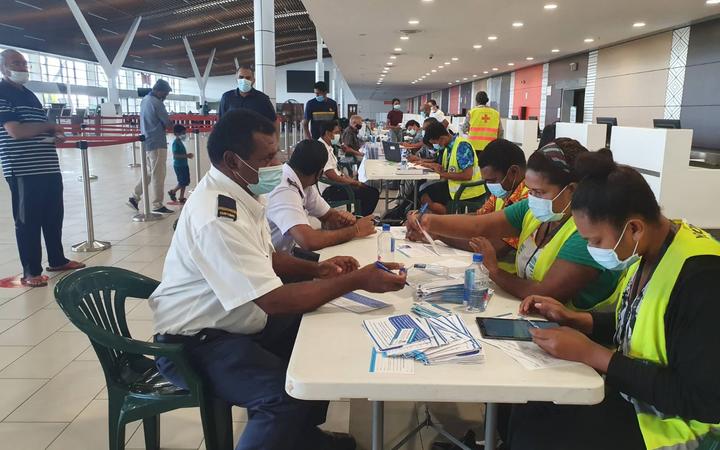
Covid-19 situation worsening in Fiji

By RNZ.co.nz. Republished with permission

Eight days into the new month and there is not much evidence of any improvement to Fiji’s Covid-19 situation.

The latest figures from the start of August show huge increases when compared with the same period in July.

By the end of July, Fiji’s Ministry of Health and Medical Services had recorded 25,363 new infections and 218 deaths for the month.

According to government figures, the country started July with 3503 infections but by the month’s end, 21,707 people were living with the Delta strain of the coronavirus.

But only eight days into August and the health authorities have reported more than 6500 new infections, which is twice the 1743 reported for the same period last month.

In terms of deaths, August has already registered 57 lives lost compared to nine in July.

In his update for 7 August, Permanent Secretary for Health Doctor James Fong had announced 682 new cases and six more deaths for the 24-hour period to 8am.

While most of the deaths have been the elderly, there continues to be an upward trend of younger Fijians.

Last night, an 18-year-old woman from Suva had died at home from the virus.

“Her family reported that she had a cough five days prior to her presentation,” Dr Fong said. “She was not vaccinated.”

In the same period last month, a 21-year-old man from Malake died of Covid-19. He was from an island off of Rakiraki in a small sugar-cane farming town almost 150 kilometres north west of the capital Suva.

“He was declared dead on arrival by the attending medical officer at the Rakiraki Sub-Divisional Hospital. This means that he died at home or on his way to the hospital. His family reported that he had shortness of breath one day prior to presentation,” Dr Fong said.

“He received his first dose of the vaccine in early May. He did not receive the second dose of the vaccine. This means that he was not fully vaccinated.”

..

.. Photo: Fiji govt

Other deaths to younger patients included a toddler who died this month and a 15-year-old who passed away last month.

Dr Fong also noted alarming increases of new infections in the Western Division of the country which had dramatically reduced its cases to close to zero after the initial April outbreak.

He said there was “evidence of community transmission in that division.

“We are also recording increasing numbers of people with severe disease and deaths in the west. The northern and eastern divisions currently have no active cases.”

The government’s strategy

Vaccination continues to be the main strategy of the government’s response with the rollout gaining ground despite increasing reluctance among the indigenous and Christian population.

By 7 August, the Health Ministry said it had administered the first dose of vaccines to 87.3 percent of the target population (600,000) while 30.4 percent were fully vaccinated.

Although the ministry no longer conducts contact tracing in the community, the seven-day daily test average is 3234 per day or 3.5 tests per 1000 population.

That puts the country’s daily test positivity rate at 32 percent. The World Health Organisation threshold for an out-of-control pandemic is a daily test positivity rate at five percent which Fiji had passed in June.

There are now 24,070 active cases in isolation, with a quarter of them at home due to a lack of hospital beds.

Just one Delta Covid-19 case could prompt lockdown – expert

By RNZ/Radio New Zealand and is republished with permission.

A public health expert says the highly transmissible Delta variant of Covid-19 could prompt a local lockdown with even one community case in New Zealand.

Otago University Professor Nick Wilson said of the the 25 Covid-19 cases currently in managed isolation and quarantine, “most” are likely Delta.

The Delta variant, originally identified in India, is almost twice as contagious as the original Covid-19 strain that came out of Wuhan, China, according to the American Society for Microbiology.

Last Friday, the US Centres for Disease Control and Prevention reported that fully vaccinated people can become infected and transmit the Delta variant, unlike other variants. It described this as “concerning” and a “pivotal discovery”.

“Delta has really changed the situation quite substantially,” Wilson said.

If a case of Delta was found in the community in New Zealand, Wilson said the government would rapidly have to determine if there was an identifiable border connection. If there was any uncertainty about this or how long the chain of transmission was, he said the government would move quickly.

“There would have be some very fast decision making to consider a local lockdown, and that is the approach that we’ve seen working in Australia. If it’s done fast and hard and quick, it may mean that a lockdown in a city or town can be restricted to just a matter of days.”

Wilson said the transmissibility of Delta meant MIQ facilities should have infection prevention control at the “absolutely best level possible”. He said there has been progress in reducing MIQ-related risk, with vaccination of workers and work on improving ventilation.

“With the very high infectiousness of this Delta variant, we may need to do even more. That would be things like absolutely avoiding people mixing in exercise areas and smoking areas, which still occurs,” Wilson said.

Covid-19 Minister Chris Hipkins this week revealed 44 percent of port workers have not had a single dose of the vaccine, which he attributed to “misinformation”.

Wilson said the fact border workers are unprotected is a real concern.

“We know we’ve had problems at the border before with infections occurring in seafarers arriving from overseas.”

Wilson said something has to change here – either the vaccination rate or the workers.

“This is an area that a lot more should have been done, to get those vaccination levels in port workers increased. And to seriously look at when those workers, if they refuse vaccination, actually moving them from those particular at risk jobs to other jobs where they won’t be exposed.”

Dame Val to carry NZ flag at Olympics closing ceremony

By One News / TVNZ. Republished with permission

Dame Valerie Adams will cap off her storied Olympic career in fine fashion, by leading out the New Zealand team for the closing ceremony at the Tokyo Olympics.

The 36-year-old has been named as the flagbearer for the closing ceremony by the New Zealand Olympic Committee.

It will be the first time Adams has carried the flag in her 17-year Olympic career dating back to Athens 2004.

Last week, Adams won bronze in the women’s shot put, adding to her gold medals in 2008 and 2012, and silver in 2016.

In the announcement broadcast on Facebook, New Zealand’s chef de mission Rob Waddell said Adams had been an “incredible contributor to the Olympic team values” and “laid a foundation for so many athletes”.

Upon being named, Adams said she was “very humbled and honoured” to be named as the flagbearer.

“It’s been an amazing Games for us and I’m looking forward to walking out there with pride and holding the flag up high,” Adams said.

The closing ceremony begins at 11pm Sunday (NZ time).

Police investigating suspected wooden raft found on beach where cocaine washed up in Vava‘u

Police are investigating whether or not there was a connection between a wooded raft they have seized and the packages of cocaine worth of more than TOP$4 million washed up in Vava’u recently.

Detective Acting Deputy Commissioner Halatoa Tāufa said the raft was discovered on the Ha’alaufuli beach on which the cocaine packages washed up.

He denied allegation on social media that the raft was used to transport the cocaine.

The allegations were made under a picture of the raft which was shared to Facebook.

The seizure of the raft and the cocaine last week came after a cargo ship was spotted anchoring off the island’s coast last year.

Hōleva Town Officer Uele Moala said the presence of the ship at the time was suspicious. He said it was claimed the ship was awaiting a pilot but that was strange to happen in that particular sea area.

He said he complained to the authority about the incident.

Police have made several arrests last week following the discovery of the cocaine which included seven people in Vava’u and one from Tongatapu. The suspects included Tongans and foreign nationals.

They were expected to appear in the Magistrate Court in Neiafu tomorrow August 9.

Families of teens killed in Timaru crash wake to ‘nightmare that won’t go away’

By One News/TVNZ

A South Canterbury community is reeling from the aftermath of last night’s fatal crash which killed five Timaru teenagers. A sixth boy, who was the driver, is also in hospital with serious injuries.

The overloaded sedan crashed into a power pole at the intersection of Seadown Road and Meadows Road in Washdyke, north of Timaru; hitting it with such force that the car split in two.
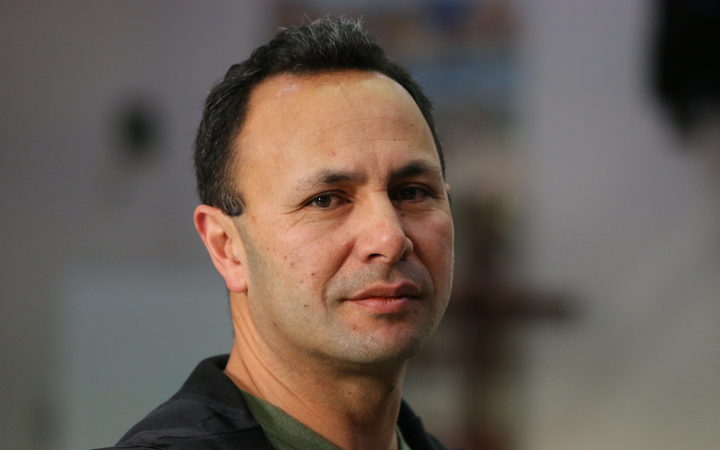
Inspector Dave Gaskin this morning told media five passengers, aged 15 and 16-year-old, were found dead on arrival with one having been riding in the car boot.

“The vehicle involved was a Nissan Bluebird, and apparently it hit a power pole with such force that it broke in half, spreading debris down the road,” Gaskin said.

Having crammed into the car without enough seats, Gaskin said that he doesn’t believe many, if any, of the boys were wearing a seatbelt.

It is also not known whether any of the boys had their drivers license, let alone their full license, he said.

“With the young men being 15 and 16 and the driver only being 19, you would expect he probably doesn’t have his full license.”

Gaskin noted their deaths will have been a significant blow for the tight knit community of Timaru, adding that he had known one of the boys involved.

“Timaru is a very small community, and I’m sure this is going to touch a lot of people. I knew one of the boys, I know the family of one of the boys.

“It is a tragedy and it will reverberate in our community for some time.”

The 19-year-old being treated in Timaru Hospital is “surrounded by family” and is yet to be interviewed by police.

According to Gaskin, police had been out patrolling the area earlier that night following reports of a boy racer in the area.

While he confirmed these teens weren’t the vehicle in question, the crash had happened at a notorious intersection.

“This is not unusual for these intersections – Meadows Road and Seadown Road. It is a wide intersection with long straights and it is a favourite for those who wish to carry out antisocial road user activity.”

A full crash investigation will be carried out, however, it does appear speed and potentially alcohol were a factor in the crash.

“It is pretty clear that there are a number of contributing factors, obviously speed, appears alcohol may have been involved and there were six people in the vehicle, there’s only five lots of seatbelts.”

Police are asking for anyone who may have seen the Nissan Bluebird last night, with the registration UI17799, to contact them on 105.


Four people injured in gang-related Ōtāhuhu incident

Police are investigating after four people were injured in a gang related disorder event at Fort Richard Road, Ōtāhuhu, just before 1:30pm today.

The Rebels Gang with police following a stabbing incident in the South Auckland suburb of Ōtāhuhu this afternoon. Source: 1 NEWS (TVNZ)

On arrival Police located two injured males in a vehicle.

They were both transported to Auckland Hospital by ambulance – one in a serious condition and one in a minor condition.

The man in a serious condition is undergoing surgery this afternoon.

Two further males presented themselves at Middlemore Hospital and are being treated for injuries which Police believe eventuated from the same incident.

No arrests have been made as yet however a large number of Police are in the Fort Richard Road and Sturges Park area speaking to people and conducting inquiries into the incident.

Police would like to reassure the community that this appears to be an isolated incident.

There is nothing to suggest this is connected to recent gang tensions in the area.

Anyone who witnessed the incident, or has any information which may assist, is asked to contact Police by calling 105 and quoting event number P047459560.

Pacific Islands Forum marks 50th anniversary

By RNZ.co.nz. Republished with permission

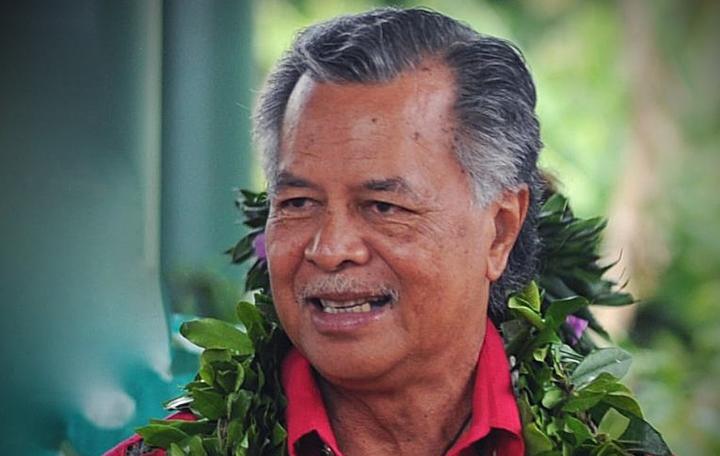
The Secretary-General of the Pacific Islands Forum, Henry Puna, says today’s meeting will honour the leaders who set up the organisation, 50 years ago.

The leaders of the Cook Islands, Fiji, Nauru, Tonga and Samoa together with Australia and New Zealand met in Wellington from 5th-7th August 1971. This was the first South Pacific Forum meeting.

At the time, the only regional organisation established was the South Pacific Commission which was created in 1947.

The leaders of the newly independent island nations understood the external influences that existed in that regional body, which included colonial powers. It was clear another forum was needed.

Pacific Islands Forum secretary general, Henry Puna.
Pacific Islands Forum secretary general, Henry Puna. Photo: Forumsec

The Forum’s membership has increased from the original seven founding members to also include the Federated States of Micronesia, French Polynesia, Kiribati, New Caledonia, Niue, Republic of the Marshall Islands, Palau, Papua New Guinea, Solomon Islands, Tuvalu and Vanuatu.

In 1999, the South Pacific Forum transformed into the Pacific Islands Forum.

“Today is a very special occasion, it’s a time of reflection, a time of honouring the legacy of our leaders who have gone before us, and honouring their wisdom in setting up this organisation back in 1971 in Wellington.

While they dealt with a range of issues at the time, issues that directly affected the lives of Pacific peoples, they had particular focus on trade, tourism, shipping and education,” he said.

“Those issues are still very important today for us but of course the world has changed a lot in 50 years and it’s a credit the values of the organisation that we have been able to change with world and come up with new priorities, that are of real importance to the region, such as climate change for example,” he said.

“And for me, one of the greatest achievements we have made as as a region, working together, moving forward, hand in hand, was the achievement at Cop21 in Paris in 2015, when the whole world signed up to the Paris Agreement.

For me, that was the defining moment in our collective effort as the Pacific Islands Forum.

Pacific regionalism

There’s a need for Pacific regionalism and leadership on the climate and Covid-19 crises,” according to a Pacific academic.

Auckland University associate professor Damon Salesa said the forum is faced with its biggest crises in its 50 years.

Auckland University associate professor of Pacific studies,Toeolesulusulu Damon Salesa.
Toeolesulusulu Damon Salesa Photo: RNZ Pacific/Koroi Hawkins

“The next few decades are the critical moments for Pacific regionalism particularly around things like climate change, where the region has a global role and not just a regional one.

He also says the rise of ‘new actors’ in the Pacific means the need for regionalism now is even more important than there was in the past.

“We are seeing the re-emergence of in the Pacific the feelings about China playing a bigger role in the Pacific, so it’s great to see the US playing this bigger role but we know that that’s one of the things in the back of everyone’s minds,” he said.

The US President, Joe Biden, addressed the online meeting. He was invited by Fiji’s Prime Minister, Frank Bainimarama, the Forum’s incoming chair.

Salesa is calling on the United States to help persuade Micronesia to return to the Pacific Islands Forum.

$50/week boost in benefits was rejected for Budget

By Sarah Robson for rnz.co.nz. Republished with permission

Cabinet ministers considered giving beneficiaries a full $50 a week boost in this year’s Budget, just-released documents reveal.

But they ultimately decided against it, settling instead on a two-stage increase, with a $20 hike this year, to be topped up next year to the levels recommended by the Welfare Expert Advisory Group in 2019.

Once fully implemented in April 2022, that means main benefit rates will increase by between $32 and $55 a week.

A suite of documents, released today, detail the various options weighed up by ministers in the lead-up to the May Budget.

The original proposal was for a $25 a week increase, but Prime Minister and Minister for Child Poverty Reduction Jacinda Ardern sought further advice on a $50 a week increase, with options to implement it in full or in two stages.

In a joint report in March, officials said a larger increase to benefits would help significantly with the Government’s goals to improve income adequacy, improve child well-being and reduce child poverty.

“It would support more ambitious targets for the second round of the three-year child poverty targets and ensure greater progress towards the 10-year targets.

“A $50 per week increase to main benefits would roughly double the reductions in child poverty on the before-housing-cost primary measure relative to a $25 per week increase.”

But because of the hefty price tag, officials warned there would be trade-offs with other spending priorities and implications for financial incentives to study and work.

In another report, Treasury advised against a $50 a week increase, saying it should progress, at most, with a $25 a week in this year’s Budget.

In that report, Treasury said there was a risk, without an accompanying increase to in-work support for families with children, a $50 benefit increase could weaken work incentives.

There would also be a mismatch with student support, which could disincentivise people from moving into study.

And without any support going to low income families not on a benefit, a number of children living in poverty would miss out on any additional support.

While there were options to mitigate some of those adverse impacts, they would come at a significant cost, Treasury said.

The decision ministers landed on, with a two-stage increase to bring benefits up to the levels recommended by the Welfare Expert Advisory Group in 2019, was not without its own problems.

Officials said the increases only partially met the group’s recommendations, because they did not take into account the subsequent indexation increases that would have occurred if benefits were increased immediately in 2019.

The documents show cabinet ministers were provided with adjusted figures for the group’s recommended benefit increases, that brought them to 2021 levels.

In a December 2020 report, Treasury said a “significant income support package will likely be needed at least every term to enable meaningful progress towards the child poverty targets”.

But officials also warned that tackling child poverty would require action in other areas.

“Employment, where viable, is one of the most effective routes out of poverty for families.

“Policy settings should help parents into employment and address barriers to employment such as childcare and/or transport costs. Tackling these barriers is more important given the disadvantages some groups, such as women, may face in the labour market following Covid-19.

“Rising housing costs are a significant driver of lower-living standards for some families. Addressing housing costs will improve material well-being for children.”

Other documents showed the Government had considering announcing a $25/week increase to benefits before Christmas last year, but officials suggested this could be pursued as part of the 2021 Budget process.


Support among police for carrying arms at highest level in decade, survey shows

By Ben Strang, Police reporter. This story appeared on RNZ.co.nz. Kaniva News republished RNZ.co.nz in partnership 

A biennial survey run by NielsenIQ of almost 6000 Police Association members shows 73 percent support for general arming of the police constabulary, the highest level in a decade.

Support is even higher among frontline officers, with road policing at 79 percent, general duties police at 77 percent, and other uniformed operational roles at 74 percent.

The survey found one in four general duties officers were threatened with a firearm last year, while one in eight officers overall were threatened with a gun.

The last time support for general arming was at these levels was in 2010, the year after senior constable Len Snee was shot dead during the Napier siege.

It was also two years after sergeant Derek Wootton was killed by a fleeing driver, and sergeant Don Wilkinson was shot dead.

This year’s survey comes after constable Matt Hunt was shot and killed in Auckland in 2020, and David Goldfinch was also injured in the incident.

Police Association president Chris Cahill said the message from members is clear – they do not believe the current availability of firearms is sufficient for their safety.

Last week Police Commissioner Andrew Coster ruled out a move towards the general arming of police officers.

He was commenting after Eli Epiha who murdered police officer Matthew Hunt was found guilty of the attempted murder of Goldfinch.

Coster said safety of the front line was top of mind for the police leadership who were looking at “whole system settings” to keep police as safe as possible.

“It’s tempting to want to reach for a single solution that would be the magic wand.

“I’m pretty clear that general arming is not that magic wand.

“If we look internationally, there’s no jurisdiction you would point to to go they’re so much safer than us because they carry firearms.”

In April, RNZ reported that dozens and sometimes hundreds of frontline police officers have been told to carry guns on average once a week in recent months, as fears around gun violence escalate.

Some of these temporary arming orders – where all frontline officers can be armed – can span entire districts and last for days, usually while police investigate a shooting or other violence.

Heed officers’ opinion – Police Association

Cahill said support among frontline staff should be listened to by decision makers.

“They’re the ones who are really at the coalface,” Cahill said.

“It’s easy for many of us, myself included, to say this is a really big move and it will fundamentally change the way we police in New Zealand, but these are the officers that are actually facing the fundamental changes that have already occurred in society.

“Those changes around risk to them and risk to members of the community out there because of firearms, so their opinion is the most important, I think.”

Cahill said the figures showing one in four frontline officers had been confronted with a firearm in the past year were concerning, and matched up with figures on the number of staff suffering from post traumatic stress.

He said the mental distress being caused on the job was rising as firearms crime was rising.

The association has almost 11,000 members among the 14,000 strong police staff, including 99.2 percent of the constabulary.

The greatest opposition to general arming came from senior levels of the police, or those whose main duty is administration, planning or support, with support for arming as low as 25 or 29 percent.

But according to the survey, wider public support is in the majority, with 57 percent in favour of general arming.

That is a drop from 2019, when 61 percent were in favour.

Cahill said with staff and the public generally on board for the arming of police officers, Commissioner Coster, needed to make a decision.

Cahill is concerned at what he said is a blurring of the line between politicians and the police.

“I think you’ve got to be realistic to say something like this will always have a political edge to it and will always be something that will be debated politically, but it needs to be remembered that in the end it is an operational decision for the commissioner.

“But I think on a more wider basis we have to be really careful that politics aren’t pushing further and further into operational police decisions and that’s something we’ll be watching closely.”

The association cited comments from Prime Minister Jacinda Ardern over previous years, including a November 2019 tweet to rapper Tom Scott, when she said of general arming: “Won’t happen while I’m in this job. That we do get a say in”.

Cahill said Ardern should not have a say.

“It does worry me. I think there has definitely been a blurring of the line between politicians and police independence, and that needs to be looked at.

“The bottom line is, the prime minister will not make this decision because it’s not her decision to make.”