Home Blog Page 356

Everyday activities won’t be available to the unvaccinated – Jacinda Ardern

By RNZ.co.nz.

If you are not vaccinated, there will be everyday things you will miss out on, the prime minister says.
No caption
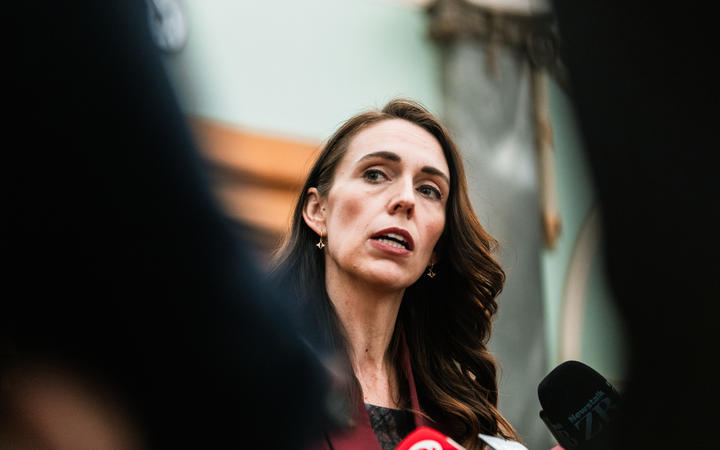
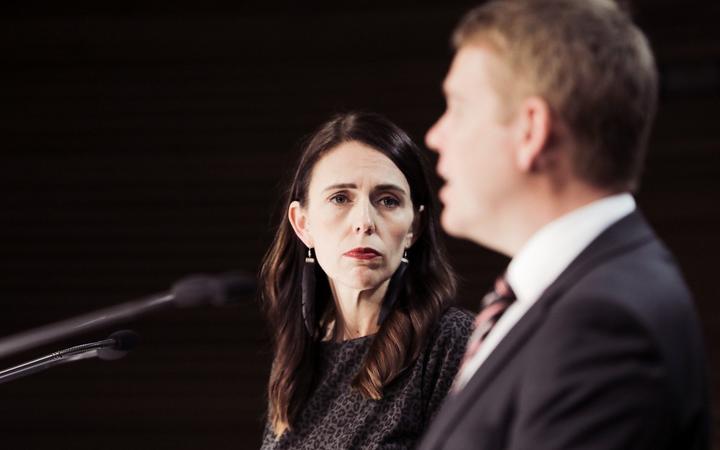
Prime Minister Jacinda Ardern says the framework will provide people with greater clarity moving forward. Photo: RNZ / Samuel Rillstone

new Covid-19 response framework is being finalised and will be released on Friday, providing people with greater clarity, Jacinda Ardern said.

“It will become very clear to people that if you are not vaccinated there will be things that you miss out on, everyday things that you will miss out on,” Ardern told Morning Report.

“It’s about both rewarding people who have gone out and done the right thing but also keeping away people who are less safe.”

She said by the time the framework is ready to move to, the government is confident vaccine certificates will be ready.

It’s like an alert level system, she said.

“We’ve always said once we’re vaccinated it will be different, so we need to therefore design what that looks like.”

Ardern said the government is drawing some distinctions though, they don’t want an environment where people can’t access necessary goods and services to maintain their lives.

“We can’t say someone can’t get health services, medical needs, pharmacies, food.”

The government is supporting providers who are providing incentives for people to get vaccinated, she said.

“Anything that they identify will work for their community has our backing.”

Ardern said domestic travel is being looked at separately from the framework to be announced Friday, and work is being down to see if there is a way to safely allow movement.

“But that would have a number of checks around it – is there a way that we can use vaccine certificates but also acknowledge that even if you’re vaccinated it is still possible for you to have asymptotic Covid.”

The border is putting a lot of strain on Auckland the more time is it needed, she said.

“At the same time, the rest of New Zealand wants to remain… Covid free or be in the position to extinguish Covid cases as they arrive. So we’ve got to balance those two needs.”

Epidemiologist Rod Jackson told Morning Report the government needs to go hard on those who just haven’t yet got around to getting a vaccine – “With no jab, no job, no fun”.

The second group of people who aren’t vaccinated however, don’t trust the system, he said.

“And for those we have to find the people that they trust.

“The only game in town is to buy time until we get everyone vaccinated.”

The government has signalled a vaccination target will be part of the soon to be announced framework.

Jackson says if 95 percent of the population is vaccinated, there will be death, disease and hospitalisations for the last five percent.

“Those were the 5 percent who were the first to get Covid in Europe last year, those are where most of the deaths are, those are where most of the hospitalisations are…For the rest of us, we’re all going to get Covid again.

He said people don’t realise that.

“There’s two ways to get vaccinated. You either get vaccinated by the virus, and that’s brutal, one in 10 hospitalisations in this latest outbreak. If you get Covid after you’ve been vaccinated it will happen slowly because the vaccine is fantastic for dealing with severe disease but it only slows down infection.”

Slowing down infection is the key problem a vaccinated population faces, he said.

“Because Covid spreads so rapidly, even if the vaccine has reduced your risk of going to hospital from one in 10 to one in 100. That is still one in 100 of a lot of people if Covid is spreading rapidly.”

A flexible approach is needed, he said.
Government to announce new Covid-19 approach on Friday

By RNZ.co.nz. Republished with permission.

The government will announce a new ‘Covid-19 protection framework’ on Friday for when the country is at a higher vaccination rate.

Jacinda Ardern looks at Chris Hipkins
Prime Minister Jacinda Ardern and Covid-19 Response Minister Chris Hipkins. Photo: RNZ / Samuel Rillstone

RNZ understands ministers were due to consider a traffic light-like system New Zealand could move to once the population is highly vaccinated.

It could mark the next phase, away from using alert level restrictions, to a mix of protective measures in the event of outbreaks.

That could include mask use, gathering limits, social distancing, proof of vaccination and scanning.

It could be some months before it would be ready to be implemented.

Ardern, however, would not confirm if the Covid-19 protection framework will be a ‘traffic light system’.

Covid-19 Response Minister Chris Hipkins told Checkpoint there was still a lot of detail to work through with the plan.

“We need to make sure any targets we set are having the desired effect. It’s not just about saying, it’s 90 percent across the board, we actually have to look at making sure that we don’t have high concentration pockets of unvaccinated people within the community.

“There will be vaccination targets and it will be clear what kind of levels of vaccination we’ll be needing before we can move into a different type of approach to managing Covid-19.

“Every vaccination that happens over the next few weeks is going to help us step towards having greater degrees of freedom. Once we hit the target, we don’t want to stop there either.”

Hipkins said the 90 percent vaccination rate will feature “prominently”.

“There’s a lot to be set out, there’s a lot of detail we’ve been working our way through that will all be confirmed and all the details put together so that people will really understand how all of the working parts fit together.”

Hipkins said he was hoping Auckland students could return to school this year.

He said planning work was underway for safe return to classrooms and he would be detailing that plan in the coming days.

“I’ve made a commitment that by the middle of the week I will be sending out more details,” Hipkins said.

“We haven’t made final decisions, we are working through the details. One of the things that we’re looking at of course is what’s possible in terms of staggering school start times, potentially staggering the groups of students that we have back in schools so that we can get kids back in school.

“I’m particularly conscious of senior high school students, that exams are looming for them.

“We are working through that with the education team and with the health team because we’ve got to reconcile those two things.”

———— FAKAMATALA FAKATONGA NOUNOU ——————-

‘Oku ngali na’a ngāue’aki ‘e he pule’anga ‘a e founga fo’ou ko e maama hala pule’anga’ pe traffic light system ke ne fetongi ‘a e lock down pe loka fakafeitu’u’ tu’unga he  Koviti-19.

‘E peheni e ngāue ‘a e founga ko ‘eni’. Ko e maama lanumata’ ‘oku ‘uhinga ia meimei ‘e ‘ikai ha toe fakangatangata ia ki he fefononga’aki’, fakataha’anga’ mo e lele ‘a e ngaahi pisinisi’. ‘E fai hono na’ina’i e kakai’ ke malu’i e ngutu’ mo e ihu’ (face covering) ka he’ikai ke tu’utu’unia pau ‘eni, fiema’u ke ngāue’aki ‘a e sikeni QR, pea ko e ngaahi fakataha’anga lahi ‘e fiema’u ‘a kinautolu kau ki ai ke ‘i ai ha fakamo’oni ne ‘osi huhu malu’i kinautolu.  ‘E ngāue’aki ‘a e fakataputapui lanumata’ ki he taimi ‘e lava ai ‘o fakamama’o e kau puke ‘o ka mafola ‘a e Koviti-19.

Ko e maama lanu moli’ leva   ‘e fiema’u e kakai’ ke tui ‘a e masikii’ (face masks). ‘E kei ava pe ‘a e ngaahi ngāue’anga’ mo e ngaahi fale koloa taautaha’, ka ‘e ala ke fakangatangata ‘a e kakai ke nau  ‘i ai’. ‘E lava pe ke ava foki mo e ngaahi pinisi talitali kakai’, ngaahi fale lotu’, mo e ngaahi feitu’u fakataha’anga kehe’, pea ‘e fiema’u ‘a e feohi vā mama’o’ (social distancing) pea ke ‘osi huhu malu’i ‘a kinautolu ‘e kau ki ai’.

Kapau leva ‘e mātu’aki  fakalalahi e mafola ‘a e Koviti-19 ‘o tu’u faingata’a’ ki he ngāue ‘a e tafa’aki kotoa ki he Mo’ui’, ‘e ngāue’aki leva ‘a e maama lanu kulokula’. ‘E fakangatangata heni ‘a e fakataha’anga taautaha’ pea mo e fefolau’aki fakafeitu’u’. ‘E kei ava pe ngaahi ako mo e ‘ū fale koloa’ ka ‘e lava ke fakangatangata honau tokolahi’, lava ke kei ava pe mo e ngaahi pisnisi talitali kakai’ ka ke fakahoko pe ia ‘aki hano talitali e kakai ‘i ha tēpile ‘e tu’u he matapā hū’anga ‘e ‘ikai ngofua  ha hū ki loto pea ‘e fiema’u foki e kau kasitomaa’ ke ‘osi huhu malu’i.

Builders call for mandatory vaccination in construction sector

By RNZ.co.nz. Republished with permission.

It could be time for the government to hammer home compulsory vaccination for construction workers, according to a building industry group.

The Master Builders Association wants all building and construction sector workers covered by a mandatory immunisation order like the health and education sectors.

It comes hot on the heels of an apartment block construction site in central Auckland being named as a location of interest after a Covid-19 positive person was there over several days.

Master Builders Association chief executive David Kelly told Checkpoint that there was a lot of feedback coming in from commercial and residential contractors saying they were confused as to what they could and could not do.

On most construction sites there is the lead contractor and all the subbies such as painters and plumbers.

“Trying to line up all the different trades is very very difficult and then a number of those specialist trades move from site to site so this just leads to a recipe for confusion.”

He said if something went wrong, such as at the building site in Auckland, everything had to grind to a halt.

“We just need clarity and everyone knows what the rules are.”

Kelly said some clients are saying they don’t want tradespeople who are not vaccinated so contractors want to know what their legal position is.

It’s made worse by people having to wait a few weeks for tradies and then feeling pressured to have an unvaccinated person do work in their home.

“But they’re very uncomfortable so again we think it’s only fair to clients, particularly homeowners, that they know that the people coming into their homes – they’re not going to expose them [to Covid-19].”

The vaccination rate in the construction sector is about 80 percent currently, and may have risen on Super Saturday, but Kelly believes the last 15 percent will be hard to convince.

He said contractors are telling him it is not an anti-vaccination attitude but rather that some of the young ones, in particular, don’t want to be told what to do.

Kelly was not concerned there would be a hostile reaction to a vaccine mandate.

He did not believe there is the same culture in Aotearoa compared with Melbourne, where there were protests over compulsory vaccinations.

As for masks on building sites, it was disappointing that some tradies were not wearing them properly and he is among those trying to spread the message.

Pacific Forum welcomes NZ climate aid boost, urges collective action

By Johnny Blades of RNZ.co.nz. Republished with permission.

The head of the Pacific Islands Forum says New Zealand’s climate aid boost augurs well heading into COP26, and is pushing all developed countries to meet climate funding commitments made in Paris in 2015.

New Zealand announced today that it is committing NZ$1.3 billion dollars over four years to support countries most vulnerable to climate change. Over half of the money is to go to the Pacific.

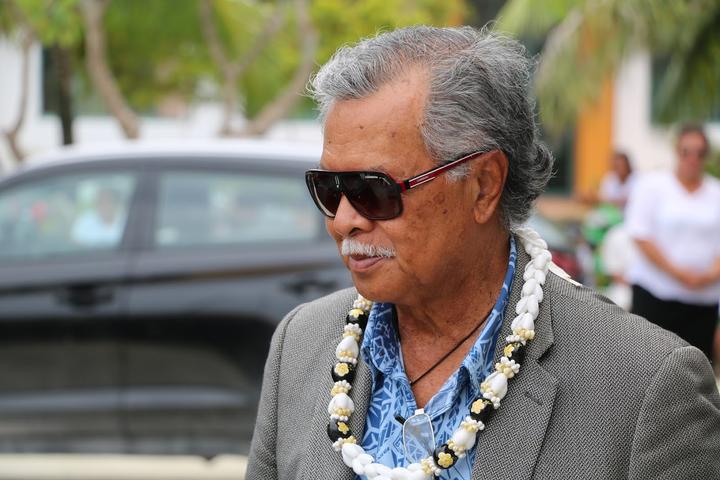
The prime minister of the Cook Islands, Henry Puna.
The prime minister of the Cook Islands, Henry Puna. Photo: RNZ / Jamie Tahana

New Zealand’s Climate Change minister James Shaw described it as finance that is necessary to support some of the most vulnerable countries in the world to adapt to the effects of climate change.

After all, New Zealand committed to making such finance available as part of it signing up to the Paris Climate Agreement in 2015.

With the aid announcement coming ahead of the UN’s Climate Change Conference in Glasgow, at the end of this month, Shaw hopes it can help repair some of the frayed consensus around the Paris Agreement.

“Because the fact is that the developed world has not delivered on that commitment to collectively mobilise US$100-billion a year (in annual climate finance).”

“That has led to a suspicion and a breakdown in relationships between the wealthier countries of the world, of which New Zealand is one, and the other countries.”

The Pacific Forum’s secretary-general, Henry Puna, is heartened by the level of support.

“I’m totally ecstatic on behalf of the region at the New Zealand announcement,” he told RNZ Pacific.

“Yet at the same time, urgent ambitious climate action and finance are the two hinges open on a net zero, 1.5 degree future. But time is running out.”

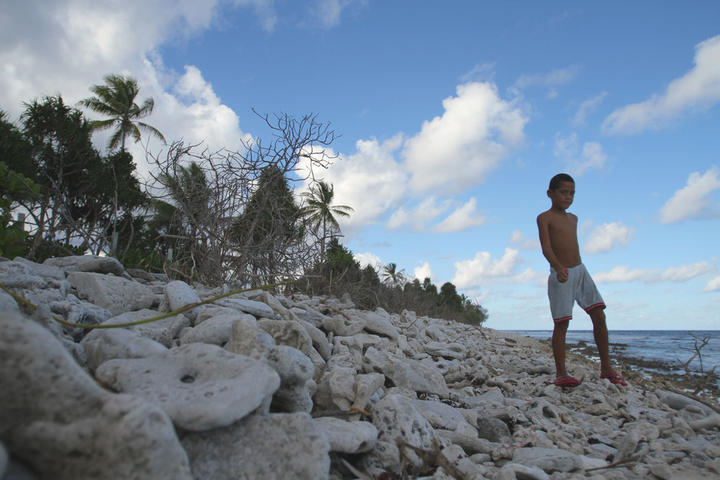
Tuvalu is highly susceptible to rises in sea level brought about by climate change.
Tuvalu is highly susceptible to rises in sea level brought about by climate change. Photo: UNDP/LUKE MCPAKE

Puna said he was hopeful that all developed countries will finally fulfill the funding commitments that they made in Paris but have largely failed to meet.

“And I think the US has already set the tone; and the announcement – although not on the same issue – by China that they’re also coming to the party, think augurs well for COP26.

He said the Pacific Islands region’s representatives would be heading to Glasgow in hopeful but resolute mode.

“But we’re certainly going there with full determination to try and talk to developed countries to support the commitments that we already made in 2015 in Paris.”

According to Shaw, the climate funding will be directed in three areas: to support adaptation efforts; to support Pacific countries to reduce carbon emissions themselves; and to support climate change capacity and capabilities – this could include investment in ocean science, and preparing for climate-related migration.

Finance allocation to be Pacific-led, needs-based

Shaw said the funding will be on top of New Zealand’s existing aid programme.

The government is not yet being too prescriptive on categorisation of the adaptation efforts it will finance, with Shaw saying they will prioritise on the basis of need.

He said New Zealand would be guided by Pacific Islands governments on where the climate aid is best directed.

“Last year the Fijian prime minister asked our government for help, as it undertakes the massive task of moving 42 villages further inland, away from rising waves,” Shaw explained.

“Many villages in low-lying countries like Tuvalu, Tokelau and Kiribati have no further inland that they can go. They must adapt to the massive changes that are upon them.”

But Dr Luke Harrington, a senior research fellow at The New Zealand Climate Change Research Institute, says in terms of the country’s overseas aid contributions the aid boost is not enough

“All OECD countries have a target of about 0.7 percent of our gross national income. New Zealand sort of sits at the moments at about 0.27 percent. So that’s about an annual shortfall of 1.2 billion dollars.”

However, Shaw said the funding boost could make a real difference.

“The Cook Islands estimate that about 25 percent of their annual budget is spent on climate-related costs – whether that’s cleaning up after the last cyclone or trying to build stronger and better infrastructure and housing to resist the next cyclone.”

Still, the minister conceded that the new climate aid package was no substitute for significant reductions to carbon emissions, and on this front as well, few countries have done what is required.

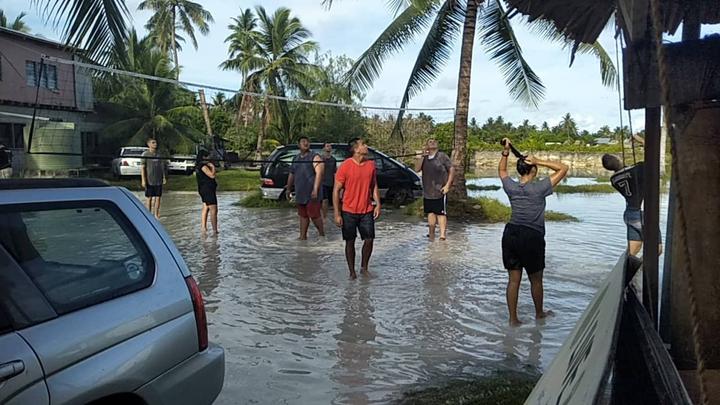
King tide in Tarawa, Kiribati, Friday 30 August 2019.
King tide in Tarawa, Kiribati, Friday 30 August 2019. Photo: Pelenise Alofa, KiriCAN

Man facing charge over party on North Shore

By RNZ.co.nz. Republished with permission.

Police have today arrested a 28-year-old man, alleged to have held a gathering at a Redvale property over the weekend in breach of Covid-19 restrictions.

In a statement tonight, police said the man had been charged with failing to comply with the Covid-19 Public Health Response (Alert Level Requirements) Order.

He is due to appear in North Shore District Court on 22 October.

Footage has been circulating on social media of a house party on the North Shore, attended by dozens of young adults.

The party has been widely condemned, including drawing admonishment from Prime Minister Jacinda ardern and Director-General of Health Dr Ashley Bloomfield earlier today.

Police received multiple complaints from the public, including a noise complaint in the early hours of Sunday morning.

The police statement said they would not tolerate this type of breach of alert level restrictions and would like to thank those members of the public who reported the matter to them.

Enquiries are continuing and more charges may be laid.

Tahiti’s Flosse on home detention

By RNZ.co.nz. Republished with permission.

French Polynesia’s former president Gaston Flosse has been sentenced to six months’ home detention for filing an incomplete declaration of assets and interests in 2014.

Flosse should have been jailed but because he is 90 years-old, he can serve his sentence with an electronic bracelet at home in Tahiti.

Last month, the court in Paris heard that he had omitted to declare a $US1.1 million stake in a property company, $US260,000 in a savings account and 138 art works estimated to be worth almost $US300,000.

The prosecution said given his previous convictions, Flosse should be jailed for a year, fined $US50000 and banned from any political office for five years.

Although the court found his offending to be serious, he was only given a six-month sentence as well as the fine.

While Flosse can appeal, his defence lawyer expressed general satisfaction with the verdict, saying his client wasn’t found guilty of concealing any enrichment.

The defence had admitted there were errors and omissions, but no intention to defraud.

Flosse has several corruption convictions and has been banned from holding office since 2014 when he was stripped of his seat in the French Senate and then lost the French Polynesian presidency.

His last conviction for abusing public funds came in Tahiti in December when he and the current president Edouard Fritch were fined and ordered to jointly settle a water bill of $US820,000.

The scheme to supply a few homes for free but to make the public pay was arranged by Flosse and continued by Fritch in their roles as mayors of Pirae.

Man charged with murder following South Auckland shooting

Police investigating the death of a man on Saturday evening, who died after arriving at Middlemore Hospital with critical injuries, have today charged a man with Murder.

Misiona Talafu Petelo, aged 19, from Papatoetoe, died following a shooting incident which occurred earlier on Saturday evening on Massey Road in Mangere.
Police have been providing support to his whanau at this difficult time.

Earlier today a 31-year-old man was arrested after handing himself into Police.

He has been charged with Murder and will be appearing in the Manukau District Court tomorrow.

Police enquiries are ongoing however as the matter is now before the courts, Police are not in a position to comment further.

Northland to move to level 2; Auckland to stay in level 3 step 1 for two weeks – PM

By RNZ.co.nz. Republished with permission.

The prime minister has announced Cabinet’s decision on changes to alert levels for Auckland, Northland and parts of Waikato.

The government will announce a new ‘Covid-19 protection framework’ on Friday for when the country is at a higher vaccination rate.

On Wednesday, Covid 19 Response Minister Chris Hipkins will provide up-to-date advice on schools reopening.

“We know that, in the future, we cannot ask people to live week by week not knowing when things will change,” Ardern says.

Ardern says it appears the people who travelled in Northland have not spread Covid-19 further.

Northland will move to level 2 at 11.59pm on 19 October.

For Waikato, “the situation is different”.

“While the cases remain broadly linked, this linking is often occurring after the positive results are being returned.”

Ardern says there is a need to act with caution in the Waikato after positive cases and wastewater testing came back positive.

Parts of Waikato in level 3 will remain there with a review on Friday.

For Auckland, Ardern acknowledges its been a long time to be living with restrictions.

“But those restrictions have made a huge difference, they’ve helped us to keep case numbers as low as possible while we continue to vaccinate people.

“We need to keep going with both tools: our restrictions and vaccinations, because with Delta we cannot rely on just one.

“If we get this right, if we keep case numbers low while we vaccinate people, then it makes it easier for us to keep control of Covid while we ease restrictions in the future.”

Ardern says non-compliance with level 3 rules has been one of the biggest contributors to new cases.

Auckland will remain in level 3 with current restrictions for another two weeks.

She says any easing of restrictions over this time will not work towards the plan of minimising cases will vaccination rates increase.

There are now Covid-19 cases across 124 suburbs of Auckland.

She says the alert level 3 rules in Auckland are the toughest restrictions in place anywhere in the OECD at the moment.

Ardern acknowledged experts suggesting a level 4 circuit breaker for Auckland but says public health advises it would be unlikely to reduce case numbers “because of the nature of the outbreak and compliance has been an issue”.

On staying at level 3: “I know this is hard and I want to acknowledge the ongoing impact on Auckland businesses of staying at level 3.”

She says an enhanced business support package for Auckland is being worked on, which will be revealed on Friday.

The rest of New Zealand will remain at level 2.

Director-General of Health Dr Ashley Bloomfield says so far, there have been no positive cases that have come out of protests in Auckland. “Not as yet, our hope is there aren’t.”

Vaccine rollout update

Bloomfield expects that in two weeks’ time 80-85 percent of Aucklanders will be fully vaccinated. He says bookings are no longer a good forecasting system as walk-in vaccinations are popular.

Bloomfield says they have nearly finalised advice on getting an alternative vaccine for people who are willing to be vaccinated but refuse to have the Pfizer vaccine.

Ardern says there is a need to remove any barrier that is inhibiting vaccine reaching Māori health providers.

She says no one should be having to crowdfund for mobile vaccination clinics, the government just needs to direct resources to the right place.

Ardern says the government is working to recognise that people overseas have been vaccinated against Covid-19, particularly with vaccines other than Pfizer.

There were 60 new community cases of Covid-19 announced today – 57 in Auckland and three in Waikato.

RNZ understands ministers were also due to consider a traffic light-like system New Zealand could move to once the population is highly vaccinated.

It could mark the next phase, away from using alert level restrictions, to a mix of protective measures in the event of outbreaks.

That could include mask use, gathering limits, social distancing, proof of vaccination and scanning.

It could be some months before it would be ready to be implemented.

Ardern, however, would not confirm if the Covid-19 protection framework will be a ‘traffic light system’.

Chiefs, Bay of Plenty Māori All Blacks back Sean Wainui dies in car crash

By Newstalk ZB

Chiefs, Bay of Plenty and Māori All Blacks back Sean Wainui has died in a car crash in Omanawa, near Tauranga, on Monday morning.

Sean Wainui has died at the age of 25. (Photo / Getty)

Bay of Plenty police issued a statement this morning saying one person had died after a single-vehicle crash at McLaren Falls Park.

Police were notified that a car had crashed into a tree at around 7:50am. A family member confirmed to NZME that the 25-year-old father Wainui was the driver.

The sole occupant of the vehicle died at the scene. The Serious Crash Unit attended the scene, and enquiries into the circumstances of the crash are ongoing.

Tauranga City Council said in a media statement the park would be closed today due to the crash and emergency services were at the scene.

A St John spokeswoman said two ambulances were called to the scene.

Wainui played 53 games for Taranaki before shifting to Bay of Plenty this year. He also played 44 games for the Chiefs, nine for the Crusaders and represented New Zealand Māori since 2015.

In June he scored five tries in a Super Rugby Transtasman victory over the Waratahs, the first player to ever do so in Super Rugby history.

Five Head Hunters gang members arrested after Auckland shooting

By One News. Republished with permission.

Five Head Hunters gang members have been arrested after a shooting at a New Lynn, West Auckland, address on Sunday.

The five men, aged between 22 and 40, were located at a Henderson address by police and taken into custody.

All are due to appear in the Waitākere District Court on Monday and have all been charged with unlawful possession of a firearm.

A man remains in a serious condition in hospital following the incident.

Police remain at the scene at two addresses – both at a New Lynn residential address and at an industrial address on View Road in Henderson.

The investigation remains ongoing and police said they cannot rule out further charges being laid.