By Simon Mercep, ONE News/TVNZ. Republished with permission.
The Ministry of Health has relaxed its ban on families viewing a body at a funeral home before burial or cremation – but there are still teething problems with the new rules.
1 NEWS reported on Sunday that the current Alert Level 4 lockdown has a stricter rule, meaning that once a funeral director collects a body the family will not see their loved one again.
Funeral directors said they had heard from around the country that people were breaking their bubbles and gathering to view a body at home, before it was collected by a funeral director.
A range of conditions are attached to the new set of rules. Families must be from one bubble and wear masks but are not allowed to touch the body.
Funeral directors must be in the viewing room with families and also be fully vaccinated.
Funeral Directors Association president, Gary Taylor, said that overall, the relaxed rule was a good move.
But he acknowledged that many would struggle with condition that they not touch a body, particularly for families where “their cultural background requires them to be close to and with the deceased”.
“It’s going to be a challenge, but I think it’s a challenge that’s worth taking on, rather than where we were, where they weren’t allowed to be there at all,” he said.
Taylor added that many funeral directors were not yet fully vaccinated and so were not in a position to carry out viewings under the new guideline.
He said the association had asked the Government over several months to give funeral directors priority for vaccinations. So far, those requests had not been agreed to.
“We’ve been asking for preferential vaccinations since the last lockdown, and we haven’t been given this… and now funeral directors have got to be vaccinated in order to carry out these viewings,” he said.
Following Wednesday’s rule change to funeral home visits, the association renewed its call for members to be vaccinated as essential workers.
“We’ve gone back to the Government again and asked, ‘look, can you get us on that priority vaccination list … so that we’re able once again to allow as many families as possible to be involved in the viewing process.'”
1 NEWS has sought a response from the Ministry of Health on the new rules, and on the vaccination priority for funeral directors.
FAKAMATALA FAKATONGA
‘Oku ‘i ai ‘a e ki’i fakangaloku ‘a Nu’usila ‘i he’ene lao ki hano ‘āfia ha me’afaka’eiki pe putu lolotonga ko ‘eni ‘oku ‘i he lēvolo faa’ ‘a e loka ‘a ‘Okalani’ kae tolu ‘a e toenga’. ‘A ia ko e ngaahi fāmili na’a nau nofo pe he feitu’u ‘e taha pe papolo (bubble) lolotonga e loka’. Kuopau ke nau tui masikī (mask) ka ‘e ‘ikai ngofua ke nau ala ki he pekia’. Kuopau ke ‘i ai ha kau talēkita putu ‘i he loki ‘o e me’afaka’eiki’ fakataha mo e kau fāmili’ pea kuopau foki ke nau ‘osi huhu malu’i kotoa.
Several organisations in New Zealand supporting Pasifika families with basic necessities during alert level 4 lockdown are seeing greater numbers requesting help.
A Pasifika-led social services organisation, Pasifika Futures, said since lockdown began last month, they have handed out 12,242 packages of support through their 28 partners across Aotearoa, New Zealand.
Photo: Supplied.
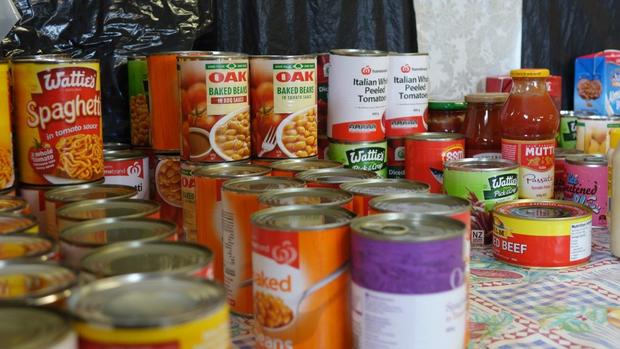
The support includes food packages, blankets, children activities and mental health support.
Its chief executive officer Debbie Sorensen said these packages are definitely more than what was handed out last year when the country was first in alert level 4 lockdown.
“This year we have spent around $4.8 million worth of funding on Pasifika families around Aotearoa.
“To put this in context, last year through all of the lockdown, we only did a little bit over 10,000 packages of support to families, so at the moment we’re running at about a thousand packages a day, which is far in excess of what happened last year,” Sorensen said.
The majority of the support packages have been distributed to Auckland based families.
Pasifika Futures were incredibly busy in the first week of lockdown and said that they had a backlog of families waiting for support.
“Over the weekend we worked very hard to clear that backlog, but before that families were having to wait 24 to 36 hours for help,” Sorensen said.
“That’s a very long time for a family to wait if they don’t have the essentials and that causes distress and anxiety.
“Extremely grateful for our teams up and down the country for delivering as fast as they can to these families.”
RNZ understands that the government has not called for a state of national emergency during alert level 4. Sorensen said last year in level 4, the country had declared a state of national emergency, which meant food support was available.
“This year is different, and all organisations are under pressure to provide food packages and support for families.
“We see this in the supermarkets in Auckland where some have had to close early to allow time for staff to replenish stock – even the supply chains are under pressure,” she said.
Sorensen explained that because there are a high number of Pasifika people testing positive for Covid-19, which means they must self-isolate, that has led to the high demand of support for food as they cannot go to the supermarket.
“As of this week we are supporting 1354 Pasifika people who are in self-isolation and 152 people who are in quarantine,” she said.
One of the 28 partners Pasifika Futures supports is the South Waikato Pacific Islands Community Services Trust.
Photo: RNZ / Alexander Robertson
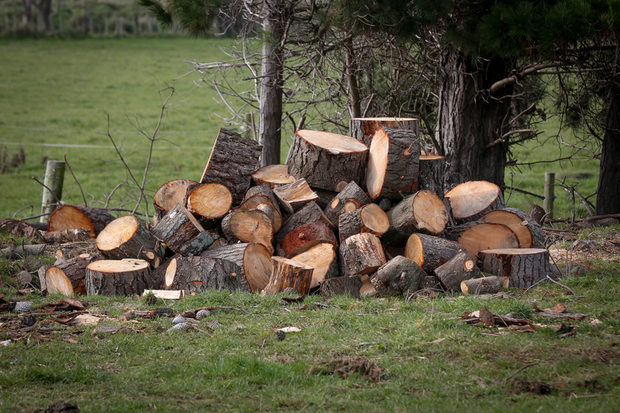
Chief executive officer Akarere Henry said they have helped 120 Pasifika families in their rural community with food vouchers, firewood and baby and children necessities.
“That is the nature of the environment we live in here in South Waikato, we are heavily dependent on being able to enforce various heating models and for us it’s normally firewood.
“With the level 4 restrictions the ability to go out in the bush, to be able to get wood is limited together with finding reputable firewood merchants.
“We have seen a high demand for nappies, baby products and formula this lockdown.
“We have come across many families with children who relied on their children to go school and have the free breakfast and lunch that’s on offer,” Henry said.
“When those two items are taken away from the daily management and budgeting to now having everyone at home, it has added real pressure for those families.”
‘Lockdown is the opposite of who we [Pasifika] are’
The Society of St Vincent de Paul or St Vinnies said that three days into alert level 4 lockdown this month, they handed out 720 food parcels to families in need – majority from the Pasifika community.
General manager Delphina Soti said that increased to 1116 food parcels between the 23 to 28 August 2021 and as of this week they have distributed around 250 food parcels a day.
“This time last year we were doing 350 to 400 food parcels a week, so it has been a sharp increase since then.
“It has hit the Pasifika community harder now because they are at the centre of the outbreak.
“Pasifika families are communal, and lockdown is the opposite of who we are.
“The families survive by being in the community, in sharing, so when you go into lockdown, you can’t ask the aiga [family] up the road for help, you can’t go to church collective, you can’t send your child to school to be supported by those free lunches.
“Psychologically it’s had a huge impact on these families,” she said.
Photo: Google Maps
St Vinnies have been asked by the Ministry of Social Development to provide support to families from McAuley High School – one of the schools that has had a few students test positive for Covid-19.
“We’ve been doing phone calls with the families as a follow up to connect with them after the food has been sent out.
“What we are hearing is fear – the fear of not being in control, the fear of not having enough and the fear of having to stand in those queues.
“Our Pasifika families have been encouraged to go get tested, but on top of testing for Covid-19, they’re thinking of things like will they have enough petrol to wait in line.
“A lot of Pasifika families juggle looking after kids as well as their elderly parents and find this time quite hard because they’re all confined in their houses,” she said.
Photo: RNZ / Tom Furley
Soti said they are experiencing a backlog with families waiting between 24 to 48 hours for a food parcel.
She urges who are outside St Vinnies’ periphery in Onehunga to seek help from their local food banks, to help ease the pressure on volunteers and protect them from the spread of the virus.
“We prioritise families we have connected with in the past because we’re about building relationships.
“We are committed to serving McAuley students and their families during this time.
“Anyone isolating that is in St Vinnies central Auckland periphery, they become priority and their food parcels can be distributed within 24-48 hours,” Soti said.
The demand for support is expected to increase in Auckland, with alert level 4 set to last until 14 September. Cabinet will consider next steps for the region on 13 September.
There are 75 new cases of Covid-19 in the community, the Ministry of Health has reported.
Speaking at today’s government briefing, Director-General of Health Ashley Bloomfield said one of the new cases was in Wellington and the rest in Auckland.
The Wellington case is a household contact, had been in isolation, and remains asymptomatic. Dr Bloomfield said it showed the importance of remaining in isolation and having the day 14 test.
Dr Bloomfield said there was no cause for alarm with a rise in cases from yesterday.
He said the R value, based on the latest modelling continues to be promising. There is a 90 percent probability it remains under 1, showing the lockdown is continuing to work and chains of transmission are being broken.
Bloomfield said with yesterday’s cases, 57 percent were contacts of an existing case and 75 percent did not create any exposure events.
There are 32 people in hospital. Eight are in intensive care and three are on ventilation. All are in Auckland hospitals.
Demand for testing in Auckland remains strong with more than 6500 tests yesterday across the Auckland region.
About 40 supermarkets across Auckland are being added to the locations of interest, Bloomfield said. The events are deemed to be low risk but people who have been there should watch for symptoms.
Wastewater testing results show no unexpected detections, and a sample from Moa point in Wellington has retuned a negative result for the first time since 18 August.
Testing in Northland suggests the region will be able to move to alert level 3 tomorrow night, he said.
Auckland is in level 4 until 14 September, and Northland is likely to step down to level 3 from 11:59pm on Thursday. Here’s a reminder of the rules at alert level 3 and alert level 4.
Police have set up five checkpoints on the southern outskirts of Auckland, to check those travelling across the region’s border are allowed to. So far, they said compliance has been good, with only minimal delays for travellers.
He rejected criticisms Auckland hospitals were not well- prepared for large numbers of Covid-19 patients, and said builders were at work in two Auckland hospitals, including work to create a designated Covid-19 patient area.
Auckland Mayor Phil Goff is urging residents to get Covid-19 vaccinations, with the rollout now open to everyone over the age of 12, and the Delta variant affecting people of all ages.
He says a higher level of community vaccination is the key to beating the disease, preventing deaths and paving the way to open the border.
Contact tracing locations of interest continue to be updated, and can be checked here.
A Tongan man appeared in court in Queensland charged with attempted murder following stabbings in Stanthorpe.
The 21-year-old Ta’ufo’ou Lamipeti got into an altercation with the two men before stabbing them with an undisclosed object at a Wallangarra Road home in March.
The alleged victims, aged 21 and 30, were transported to Princess Alexandra Hospital with serious back and chest injuries, the Herald Sun reported.
They were later reported to be in a serious but stable condition.
Lamipeti was taken into custody a short time later.
He was charged with one count each of attempted murder, acts intended to cause grievous bodily harm, and common assault.
Defence lawyer Clare Hine told the Warwick Magistrates Court she was still waiting on final pieces of evidence from the prosecution, including DNA from the alleged weapon and medical reports for the alleged victims.
Mr Lamipeti will remain in custody until his next court date which was last week August 25.
The senior politician who tried to topple Prime Minister Pōhiva Tu’i’onetoa – and was due to appear in court next month – has died in Tonga.
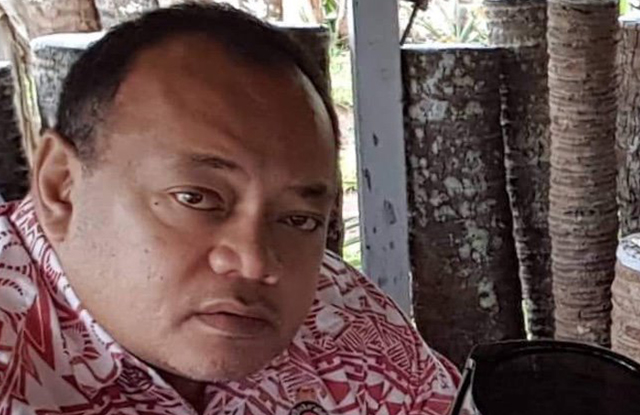
Deputy Prime Minister Hon. Vuna Fā’otusia. Photo/Kalino Lātū
Former Deputy Prime Minister Sione Vuna Fā’ostusia, 68, had been ill for some time.
He was one of the leaders of Tonga’s reform movement and a colourful character off the political stage as well as on it.
Fā’otusia was a member of the Tongan Public Servants Association and head of the association’s strike committee in 2005. The strike drew support from students, teachers, health workers and some Parliamentarians, as well as Prince Tu’ipelehake. The strike lasted six weeks and is considered one of the key moments in the development of democracy in Tonga that ultimately led to the reforms of 2010.
The former Deputy Prime Minister was counsel to the Shipping Corporation of Tonga, owners of the Princess Ashika, which sank with heavy loss of life in 2009. Four people were found guilty of manslaughter in the subsequent trial.
In 2014 he became Minister of Justice in the Cabinet of Prime Minister Akilisi Pōhiva. He was re-elected to Parliament in 2017 and re-appointed to Cabinet. As Justice Minister Fā’otusia appointed the first Tongan judge to the Supreme Court of Tonga.
Following the death of ʻAkilisi he supported Tuʻiʻonetoa for the role of Prime Minister and left the Democrats to join the new People’s Party. He was made Deputy Prime Minister and Minister for Justice and Prisons.
Two years ago he was charged with wrongfully interfering with the course of justice and using threatening language in a dispute over a cow. He was acquitted in December 2019, but an appeal returned the matter to the Supreme Court. He was due back in court on September 16.
In December last year MP for Tongatapu 2, Sēmisi Sika filed a motion for a vote of no confidence in Hon. Tu’i’onetoa on December 10.
The vote of no confidence detailed a list of concerns, including the allocation of road building contracts, Covid-19 preparedness and what was seen as selective government support for businesses.
Fā’otusia signed the petition and then resigned from Cabinet. He cited concerns about what he saw as the undue influence of disgraced former MP ‘Etuate Lavulavu on the Prime Minister and the cost of the government’s prayer and fasting excursions to the outer islands.
The motion was defeated 13-9 in January this year.
The Prime Minister has continued to be dogged by his relation to Lavulavu and his wife, a Cabinet Minister, who were convicted and sentenced to jail in the Supreme Court for fraud.
As a politician Fā’otusia was helpful to the press and generous with his time. On his door of his office was written in Tongan: “You can walk in, there is no need for you to knock and ask for permission to see me.”
Off the political stage, his personal life was colourful and he was known for his numerous liaisons. The late ‘Akilisi Pōhiva once joked that Fā’otusia has everything he needed to sit in the Prime Minister’s chair, but ne needed to get married first.
While ‘Akilisi praised and hailed him for his strong commitment to democracy and his personal support, he hesitated sometime because of Fā’otusia’s marital status, something that was not seen as reflecting well on him from a Tongan cultural or Christian perspective.
Fā’otusia finally married last year when he turned 67.
Emergency benefits for migrants are being axed from today – and advocates say the timing could not be worse.
NZISA president Afiqah Ramizi. Photo: Supplied
The Ministry of Social Development has been providing benefits to migrants since it took over from a Red Cross support scheme last year.
The founder of migration thinktank The Fair Initiative, Charlotte te Riet Scholten-Phillips, said migrants pay the same taxes and should be allowed benefits because Covid-19 had created extraordinary circumstances.
“It’s very disappointing that the government has decided to stop these benefits when there’s obviously still a need,” she said.
“It’s distressing to hear constant reference to the ‘team of 5 million’ and how our wonderful essential workers are contributing to our Covid response, but when the migrants in that team need help we’re cast aside.
“How is it that one moment we’re part of the ‘team’ or ‘essential’ and the next it’s OK to force migrants into poverty and possible homelessness – is this what New Zealand is now? What happened to our fabled kindness?”
Among temporary visa holders are an estimated 25,000 international students, who are limited to working 20 hours a week.
The International Students Association (NZISA) was told by the Ministry of Social Development that emergency benefits were only available to temporary visa holders as a short-term solution while they arranged to return to their home countries or found work.
Advice on the Ministry of Social Development website says those still needing support should contact their embassy.
NZISA is also upset that a hardship fund is only available to domestic New Zealand students, when it was offered to international students during last year’s lockdown.
Some were struggling to find work, especially as they were not allowed to work full-time unless they’re supermarket staff, said its president Afiqah Ramizi.
“Normally international students would be funded either by the family members, or by scholarship,” she said. “The problem with the majority who are funded by their family members is that other countries are in a worse position due to Covid-19.
“International students also have told us that they have not received any responses from their embassies, when they reach out for support at this time.
“It’s bad timing that the benefits expire now. We did request for more time, we asked for at least the cover at level 4 and 3.”
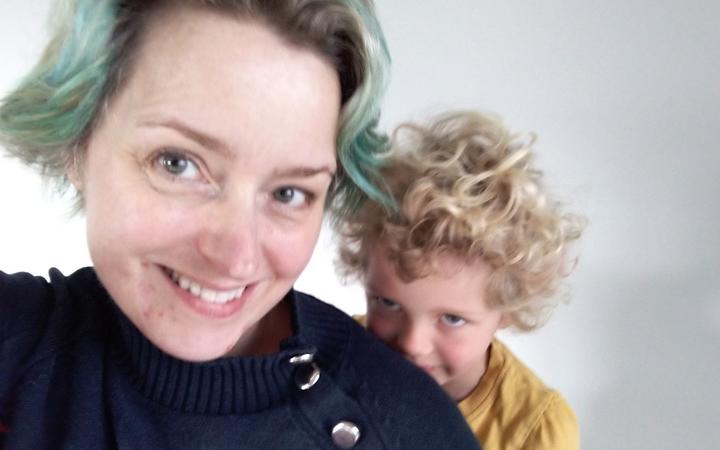
Association of New Kiwis Aotearoa president Charlotte te Riet Scholten-Phillips and her daughter. Photo: Supplied / Charlotte te Riet Scholten-Phillips
She said it was a lot to ask of students to return to their home countries – forfeiting the money they had paid for their courses, and the time they had spent on uncompleted studies – and returning to countries where Covid-19 was a very real danger.
“NZISA is extremely disappointed at the government’s and education providers’ inaction and the lack of support for international students during this time of crisis,” Ramizi said.
“We pay extensive international student fees, support local economies, and contribute to the New Zealand job market. At the same time we are cut off from our families who are also struggling abroad.
“This disparity between the support given to international students and domestic students continues to drive a wedge between our communities. It goes to show that international students aren’t a valued community.
“Immigration New Zealand could model the Canadian government’s approach in removing the 20-hour cap for all international students working in priority sectors over lockdown.”
MSD said those migrants receiving an emergency benefit will get their final two days of payment in the week beginning 6 September.
Group general manager of client service delivery Kay Read said people who need further support or repatriation advice should contact their Embassy, High Commission or Consulate.
“MSD’s Community Connectors will also be available to help temporary visa holders who are currently receiving an Emergency Benefit to help them engage with foreign missions, and other available community and non-government organisation support,” Read said.
“Immigration New Zealand (INZ) is also continuing to provide funding through the INZ Repatriation Fund. This fund assists people who are in hardship and need help with paying for travel to return to their home country.”
MSD said any decision to extend the availability of benefits would be for ministers to consider.
In a statement, the Ministry of Education said the $1 million International Student Hardship Fund was set up in May 2020 and it had been distributed to about 4000 students.
“The Hardship Fund for Learners helps tertiary education organisations provide temporary financial assistance to domestic tertiary learners who face hardship due to the Covid-19 pandemic,” said the Ministry of Education’s group manager tertiary Belinda Himion.
“Since the return to alert level 4, officials have been meeting regularly with peak body organisations, including international student leaders, to understand and respond to the needs of the sector.”
FAKAMATALA FAKATONGA
Fakangata he ‘aho’ ni ‘a e vahe penefiti ne ma’u ‘e ha kau folau mai ki Nu’u Sila mei he ngaahi fonua’ kau ai ‘a Tonga, ka ne nau fihia heni ‘o ‘ikai lava foki tu’unga ko e fakataputapui ‘o e Kōviti’. Kuo fakaanga’i lahi ‘a hono ta’ofi ko ‘eni ka kuo pehē mei he pule’anga Nu’u Sila’ ko kinautolu ‘oku kei fiema’u tokoni’ ke nau fetu’utaki ki he’enau ‘ōfisi konisela’ pea ki he kau Tonga’ ko ‘Atalanga ‘e fai ki ai ‘a e fetu’utaki’. Ko e vahe penefiti ‘eni ne ‘iloa ko e Emergency Benefits pea’ ne ‘atā ia ki he kau ngāue ma’u ngofua ngāue fakataimi, kau ako mo kinautolu visa ‘eve’eva mai’.
A strange object which washed up on a Tonga beach on Sunday has sparked debate online leaving locals baffled and bemused.
Photo of the buoy which was first seen by many as mysterious/ Photo by Katea Retreat Beach (Facebook)
Photos of the mystery object quickly appeared on social media and ideas about its origins came pouring in from around the world.
Some who shared the images online yesterday said they have posted them because they need this mystery solved.
The posts have gotten hundreds reactions and shares as well as responses yesterday, including some who warned that the object might bring disaster to the country.
Some locals claimed there was a “dangerous warning” sticker inside the object.
Some alleged it was a small homemade submarine used to transport illicit drugs in the sea.
However, another photo was posted to Facebook this morning with a woman standing by the object appears to have resolved the puzzle.
The photo with caption was posted by the katea Retreat Beach.
“Look what washed up on Katea Retreat Beach!” the caption goes.
“Our friends first noticed it Sunday morning on a beach walk. We called the Mua Police Station to investigate because it’s something we never saw before and they arrived on the scene Sunday morning.
“From their investigation, the police contacted the Marine department and the Ministry of Fisheries. Together they determined last night that it is Bouy #11 which marked the barrier reef on the south side of Tongatapu and broke off from its anchor. They are working on repairing the bouy and moving it back to its proper location”.
FAKAMATALA FAKATONGA
Ne ‘i ai ha tailitili hono ma’u ‘a e me’a ngalikehe ko ‘eni hangē ha mīsini ‘i he matātahi Fu’amotu’. Lahi e vavalo ki ai pea ni’hi nau tukuaki’i na’a ko ha ki’i vakauku ne ngāue’aki ki hano fetuku ‘o e faito’o konatapu’. Ka ‘oku ha mai ‘eni ha tā he pongipongi’ ni ‘o pehē kuo mahino mei he kau ma’u mafai’ ko e fo’i poe pe ia ne ngāue’aki ‘i tahi ke ne tala e ngata’anga e hakau’, ka ne motu ia mei hono taula’.
The Covid-19 Vaccine Independent Safety Monitoring Board believes a woman’s death may have been caused by myocarditis, a rare side effect of the Pfizer vaccine.
It is being treated as the first case in New Zealand where a death in the days after vaccination has been linked to the Pfizer Covid-19 vaccine.
In a statement, the Ministry of Health (MOH) said the board noted that there were other medical issues occurring at the same time which may have influenced the outcome following vaccination.
The case has been referred to the coroner, who is investigating. The cause of death has not yet been determined.
Myocarditis is an inflammation of the heart muscle, which can reduce the heart’s ability to pump blood around the body and cause rapid or abnormal heart rhythms.
A viral infection usually causes myocarditis.
The ministry said the benefits of vaccination with the Pfizer Covid-19 vaccine continued to “greatly outweigh the risk of of both Covid-19 infection and vaccine side effects, including myocarditis”.
“In New Zealand, adverse events following vaccinations are reported to the Centre for Adverse Reactions Monitoring (CARM). All cases with a fatal outcome are referred to the CV-ISMB for review. CARM provides as much information on the case as possible for the clinical experts on the CV-ISMB (the board) to help them in their consideration of whether there was a link to vaccination.
“This is the first case in New Zealand where a death in the days following vaccination has been linked to the Pfizer Covid-19 vaccine. While CARM has received other reports of deaths in someone recently vaccinated, none are considered related to vaccination.”
Covid-19 Independent Safety Monitoring Board Dr John Tait told Checkpoint there had been 32 reported cases of myocarditis in New Zealand after receiving the Covid-19 vaccine.
He said there had also been cases of anaphylaxis – an allergic reaction to the vaccine.
“Very small numbers of true anaphylaxis, because it can be sometimes quite hard to distinguish,” he said.
“Other potential complications which have not necessarily come up with the vaccine – tinnitus… and a few other ones…
“In terms of specific adverse reactions to this vaccine, it’s very difficult to determine which is a result of the vaccine or which would have resulted otherwise.”
At a post-Cabinet media briefing this afternoon, Director-General of Health Ashley Bloomfield emphasised the side-effect was rare and it was much more common with a Covid-19 infection.
“The risk of myocarditis after the vaccine is much lower than the risk of myocarditis after being infected with Covid-19.” he said.
“The safety profile of this vaccine is very very good.”
Bloomfield said he signalled the possibility of the rare side effect when it became known, and if people have symptoms such as heart palpitations, shortness of breath or chest pain they should seek medical support.
An international expert in vaccines agreed the risks of serious harm from Covid-19 were far greater than any risk from Covid-19 vaccines.
Otago University professor Peter McIntyre, who advises the World Health Organisation, said the condition is a rare side-effect.
“Even though this is tragic and we all wished it hadn’t happened, that risk is very tiny compared to the risk we’re facing from Covid,” he said.
McIntyre said people should call a doctor if they have chest pain or trouble breathing after being vaccinated.
More than 3.33 million doses of the vaccine have been administered in New Zealand to date (to 11.59pm on 29 August).
Tait said it was “important to thoroughly investigate significant and serious adverse events related to vaccination”.
“We want to ensure that the outcomes from this investigation are widely available for others to learn from. The findings will be published to increase the scientific knowledge about vaccine-induced myocarditis.”
Tait, like the MOH, advised continuing to use the Pfizer Covid-19 vaccine, saying the board remained confident about it.
The board told the MOH of the death to ensure healthcare providers were vigilant and aware of signs of myocarditis and pericarditis.
Symptoms include new onset of chest pain, shortness of breath and an abnormal heartbeat.
Anyone with those symptoms in the days after being vaccinated must seek medical attention, the board said.
The board extended its sympathies to the woman’s family and friends.
Further details cannot be released while the coroner investigates.
FAKAMATALA FAKATONGA
Mate ha fefine ko ha fuofua keisi ‘eni ‘i Nu’u Sila’ ni tukuaki’i ko e ola tamaki ‘eni ‘o e huhu’aki ‘o e faito’o ki he Koviti ‘a e kautaha Pfizer. ‘Oku fakatupu ‘eni ‘e he alangamahaki ko e Maikataitisi pe ko ha takakula he uoua ‘o e mafu’ ‘a ia te ne fakatupunga ha holo ‘a e ivi malava ke pamu ‘e he mafu’ ‘a e toto’ pea ‘e ala fakatautu’u ai ‘a e tā ‘a e mafu’. Angamaheni ‘oku tupu ha vailasi mei he Maikatatisi’. Ko hono faka’ilonga’ ‘oku kau ai ‘a e mamahi ‘a e fatafata’, nounou ‘a e mānava mo e fetō’aki ‘a e tā ‘a e mafu’. Kae ‘i he taimi tatau kuo pehē ‘e he kau mataotao he faito’o’ ‘oku fu’u kei fakalilifu ange pe tāmate ‘oku fai ‘e he Kōviti’ ‘i he Maikatātisi’ pea ‘oku kei hulu ‘ānoa ange pe lelei ‘oku ‘omi ‘e he faito’o ‘a e Pfizer ke ne tau’i ‘a e Kōviti’ ‘i he olatamaki tātāmotaha kuo fai ‘e he maikatātisi’. Meimei ‘oku ‘ikai hao ha faito’o ta’e ‘i ai ha’ane uesia kovi ki he sino ‘o e tangata’ pea ‘oku hoko ia ‘i he ngaahi makatu’unga kehe hangē ko ha ni’ihi kuo nau puke he ‘alēsia (allergy) ‘o kovi kia kinautolu ia ha fa’ahinga faito’o, pea ‘oku fa’a ‘eke ‘eni ‘e he toketaa’ ‘i he taimi lahi ‘o ha faito’o ‘oku ‘oange ki ha mahaki – ‘a ia ko e ‘eke pe ‘oku ‘alēsiki (allergic) ki ha fa’ahinga me’akai pe faito’o.
Prime Minister Jacinda Ardern and Director-General of Health Dr Ashley Bloomfield are set to announce alert level decisions for Auckland and Northland.
Watch live from about 4pm:
Ardern announced on Friday that New Zealand south of the Auckland boundary would be moving to alert level 3 from 11.59pm on Tuesday. Cabinet confirmed this decision today and Ardern says this will be for at least a week, to be reviewed at Cabinet next week.
Northland will likely join the rest of the country at alert level three from 11:59pm on Thursday, Ardern says.
Cabinet has also confirmed Auckland will remain at alert level four until 14 September. Cabinet will consider next steps for the region on 13 September.
Ardern says level 4 “is making a difference”.
“The job is not yet done and we do need to keep going.”
For Auckland and Northland, Ardern says the cases in Warkworth were found late in the lockdown and were not equivalent to the cases in Wellington, where cases were monitored and did not appear to have spread.
“We just haven’t had that level of time for the cases we’re concerned about in Warkworth, and with possible contacts beyond. Once we have that same level of reassurance in Northland we feel safe to move alert levels.
She says the government is awaiting test results from wastewater in Northland, and tests from people who were at locations of interest. If they all came back clear Northland could move to alert level 3 at 11.59 pm on Thursday.
“Just an indication here if all those tests come back clear,” she says.
Ardern says if New Zealand had not moved into alert level 4, estimates of the number of new cases today could have been about 550.
“The more we do to limit our contact, the faster we will exit these restrictions,” she says.
“Auckland is doing a huge service for all of us. And not just now, but throughout this pandemic. It’s Auckland that has maintained our gateway to the world, that has done a lot of the heavy lifting in welcoming Kiwis home safely, that has worked hard to keep Kiwis safe when there has been an outbreak. Auckland has done it tough.”
Ardern says the government is considering further restrictions under level 4 to prevent transmission occurring at the workplace. “It is a privilege to be open at level 4,” she says.
She says New Zealand has about 840,000 doses of the vaccine in the country, and has been receiving about 350,000 each week.
“Our planning has been for the programme to administer 350,000 doses per week. We have the supply and infrastructure to do this sustainably over a long period of time.”
There has been an increase in demand, she says, and the government is working to reach that but falling short would merely mean falling back to the government’s earlier plans.
“If we are unable to do this then the worst-case scenario is we pull back to our planned volumes … contrary to the reporting, we are not running out of vaccine.”
Speaking about today’s case numbers, Bloomfield says while it is 30 fewer cases than yesterday, it is just one data point. However, he says 52 percent of the 83 cases reported yesterday were household transmission, and 72 percent did not create any new exposure events.
“So of those cases reported yesterday … only 28 percent are considered to have been infectious in the community, which may simply have been a visit to a supermarket … or may be an essential worker.
He says 101 of the total cases are essential workers, just four of them who have been infectious in the workplace and seven who were infected in the workplace.
All of the new cases announced today were detected in Auckland.
Ardern says it’s too soon to say if daily case numbers have peaked.
The DHB apologised last night over the move, acknowledging it was not the DHB’s policy, nor a requirement, and that it had affected trust and confidence with its Pacific communities.
This story by Kalino Lātū was first published by Te Waha Nui
The Tongan Government has slashed funding for non-government schools it says have misspent aid earmarked for teachers’ salaries, a study of the kingdom’s parliamentary record has shown.
Minister of Education, Siaosi Sovaleni. Photo/Facebook
The Minister of Education, Siaosi Sovaleni, told Parliament in July some schools were using the money for office staff, which was not allowed under the funding agreement.
Sovaleni, who did not identify the schools, said auditors did not find any fraudulent activities.
However, Cabinet had this year decided to slash funding “equal to the money they allegedly misspent, paying them only the remainder”, Sovaleni told the House in Tongan, according to Hansard of July 14 this year.
In February this year former Prime Minister Lord Sevele revealed the funding scheme had been withheld by the Ministry of Education and Training for more than three years from some church schools because they misspent it.
Sevele asked the Government to help fix it to help the schools.
New Zealand aid stops
New Zealand stopped its aid for Tonga’s non-government teachers in 2016, the same year Tonga’s Auditor General uncovered fraud in the government school funding scheme, leading to a Cabinet Minister and her husband being jailed for six years last month.
Akosita Lavulavu and her husband ‘Etuate Lavulavu plundered NZ$348,806.57 from the Tonga Education Support Programme II when they operated the ‘Unuaki ‘o Tonga Royal Institute.
New Zealand’s Ministry of Foreign Affairs and Trade contributed NZ$4,458,606 through the TESPII scheme, via a grant to the Government of Tonga, from 2013 to 2016.
“A proportion of this funding went to school grants, which included assistance to non-government schools,” a spokesperson told Te Waha Nui.
These funds were managed by Tonga’s Ministry of Education and Training under terms set out in the Grant Funding Arrangement.
New Zealand’s current education support to Tonga is focused on numeracy and literacy outcomes for students, as well as education policy.
New Zealand has a record of putting a stop to its aid funding to Tonga when controversies arise.
In 2013 New Zealand’s foreign minister said he would withhold tourism funding to Tonga until a plane gifted by China was certified by a respected international authority, despite China insisting it was safe.