Home Blog Page 381

Critical blood shortage in Fiji

By RNZ/Radio New Zealand and is republished with permission.

Blood stocks all across Covid-19 stricken Fiji are critically low and volunteers have had to reach out to their personal contacts to ask for blood donations.

Although the Fiji National Blood Service has a regular pool of blood donors which kept blood supply sufficient, the current challenges of the country’s Covid outbreak is keeping donors away, which is a huge problem for the country’s three largest hospitals.
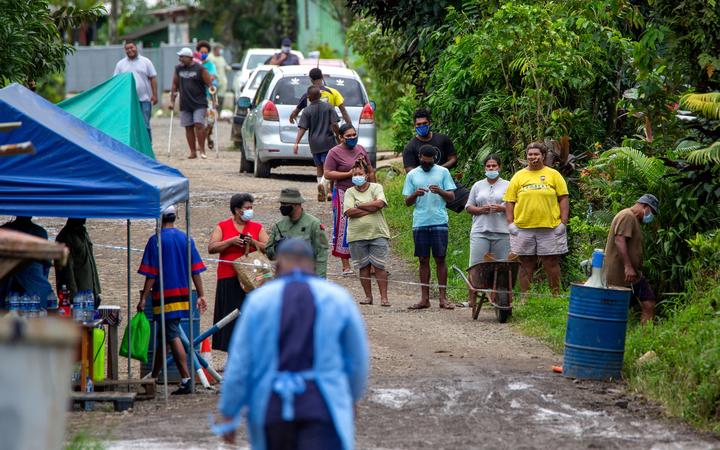
Residents look on as police check people are wearing face masks in Suva,  as a worsening outbreak of the Covid-19 coronavirus Delta variant has overwhelmed the South Pacific nation's largest hospital.

Residents look on as police check people are wearing face masks in Suva, as a worsening outbreak of the Covid-19 coronavirus Delta variant has overwhelmed the South Pacific nation’s largest hospital. Photo: AFP or licensors

The Fiji Red Cross Society’s Neomai Kafoa, who is the focal point for its Covid-19 work, said the situation was so serious that they had 85 volunteers on the phones urging friends and family to donate blood.

“So it’s quite critical at this point. The need for blood is dire, if I can say, right across the country. And this is further exacerbated because of the fact that there’s sort of fear around approaching medical facilities to donate blood.

“So there was a sort of generally a shortage there. And now it’s worse because of the situation,” Kafoa said.

“At this point, there is no specific target. We’re trying to get people to at least come forward and donate. So that’s the first point is to just bring people forward to donate.”

In the past, the work of the Red Cross to drive blood donations was mainly limited to awareness activities leading up to World Blood Donor Day which falls on the 14th of June.

But Kafoa said with Covid-19 they noticed the government became overwhelmed and was having to make regular community requests for blood donations, so they offered to help the Fiji National Blood Service.

“So our volunteers are already trained in specific areas of health and those volunteers are the ones that we’ve identified for this particular task. And they have undergone training as well for the blood drive to further support that work,” she explained.

“And so these volunteers, what they do is that we’ll have to call around and get blood donors and they’ll liaise with our divisional teams who then liaises with the Ministry of Health to be able to provide locations for these blood drives to happen.”

Reaching out

There have been times in the past when the Fijian Blood Bank has been depleted and patients at government facilities have had to reach out to their family members to donate blood.

But according to the Red Cross, which is the government’s community blood drive partner, current shortages are exarcebated by public fear of contracting Covid-19 at government health facilities.

The organisation says it is working to ensure blood donors know of safe locations where they can donate blood.

“The obvious fear from the public is if I go to this particular facility, I might catch it. So while the arrangements are there, the gap we feel is that people are not getting sufficient information so they’re not really identifying the places that they need to go to be able to do that.

“So the support that we are providing is also to be able to identify venues that people can go to, to be able to give blood and getting that information to everyone is where the issue is,” Kafoa said.
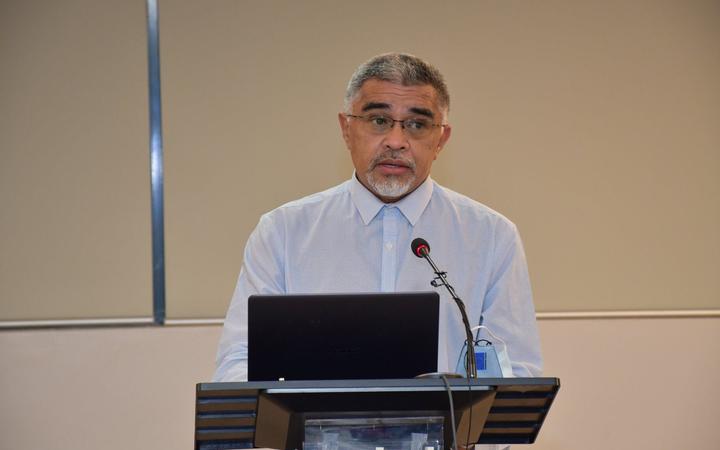
Dr James Fong.

Dr James Fong. Photo: Fiji govt

Meanwhile, Fiji’s Permanent Secretary in the Ministry of Health James Fong has been stressing the importance of donating blood and reminding the public that COVID-19 can’t be transmitted by blood transfusion.

“The virus is transmitted from the respiratory tract as droplets and to a smaller extent as airborne in confined spaces. It is not transmissible in blood,” Dr Fong said.

“As such we need asymptomatic people to donate blood. Even in this COVID times, blood still is essential. The child we saved in Kadavu through Medivac this week was save by blood transfusion and Surgery.”

In the first eight days of August, Fiji has recorded over seven thousand (7198) new infections and 60 Covid-19 deaths. There are currently over 24,000 (24,138) active cases of Covid in the community.

Since the current outbreak began in April there have been more than 300 covid-related deaths and close to 37,000 confirmed cases of Covid-19.

The government continues to resist imposing a national lockdown, insisting that its mass vaccination program is the only way out of the outbreak.

Police hunt for Maserati used in Auckland hit and run

By RNZ/Radio New Zealand is republished with permission.

Police are investigating a hit and run incident in Auckland where a motorcyclist was hit to the ground and knocked unconscious by a Maserati.

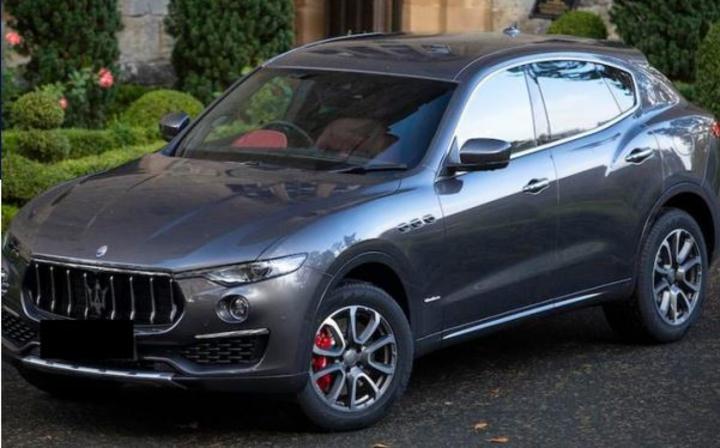
Maserati Levante

Not the actual vehicle. Photo: Supplied / NZ Police

Police said the victim was on his motorbike waiting to turn right when a person driving a Maserati – believed to be a dark-coloured Levante model – hit him and immediately left the scene.

The incident happened on 8 July 2021 about 10.18pm on Great South Road at the intersection with Greenlane East.

Constable David Smith said the motorcyclist suffered serious injuries and the incident could have been much worse.

“Along with being knocked unconscious, the victim also sustained leg injuries and we are lucky that we are not dealing with more serious injuries or worse, a fatality,” Smith said.

“The offending vehicle was tracked on CCTV driving in the Penrose area prior to the crash. We also believe during the crash it has sustained damage to its right side and possibly its front.

It is also missing part of its right wing mirror cover.

“Police are asking our community if they know who this driver is or who the vehicle belongs to, to please get in touch with us as soon as possible.

“This driver has hit someone, injured them and then driven off with no regard for their safety so it is imperative that we identify and locate them so they can be held accountable for their actions.”

Fair Go: Three NZ Post customers puzzled over lost parcels

By ONE News and is republished with permission. 

It might have a fancy new logo and a jazzed up website. It might spend millions on becoming “future focused with sustainability plans”.

But NZ Post’s customers have come to Fair Go with some pretty basic, old-fashioned gripes, summed up as “what’s happened to my post — and why can’t NZ Post help me find it?”

Christine had two parcels make it safely all the way from China to Auckland. It was NZ Post’s job to get them from Auckland to Greymouth but they never arrived, and Christine says she got mixed messages from NZ Post as to their fate.

NZ Post has now apologised and offered Christine compensation, but has been unable to say what actually happened to the parcels.

Annette sent a cake by NZ Post courier from Stratford to New Plymouth. The overnight courier didn’t get to the destination the next day, or the day after that.

First Annette was told not to worry as the cake was in the chiller, then she was told it had been damaged and destroyed.

Annette complained to NZ Post that they had no right to destroy her property. But NZ Post says Government health rules say damaged food cannot be delivered or returned — it must be disposed of.

She was originally denied compensation because the cake was a perishable item, but the company has now also compensated and apologised to Annette.

They say perishables like food should be sent using a specialist courier service.

Bernie sent a parcel to Italy during the months of Covid-19 shutdowns and delays last year.

Due to problems at Customs, the parcel was eventually returned to Aotearoa, but it then ping-ponged between two mail centres in Auckland, and then back and forth to Porirua several times.

Bernie desperately tried to simply have it delivered to his home, but it took weeks of chasing up NZ Post before it happened.

NZ Post said the initial problems were caused by glitches involving codes on the parcel and then a scanner problem, and then the difficulties of trying to track down Bernie’s parcel among tens of 1000s.

They are spending $170 million dollars on a massive upgrade, which they say will mean quicker responses and better outcomes for the likes of Annette, Christine and Bernie.

NZ Post simply has to remember to make sure its priority is its customers, Bernie says.

Person shot in south Auckland

BY RNZ.co.nz. Republished with permission

A person is in a serious condition following a shooting in Auckland.

Emergency services were called to a house on Whimbrel Road in the suburb of Flat Bush after 1pm today after reports a firearm had been discharged.

They said a vehicle was seen leaving the property just before officers arrived.

A person was found with a gunshot wound and they were taken to hospital.

Investigations are continuing.

MMA fighter Fau Vake attack: Man sentenced to home detention

by RNZ.co.nz. Republished with permission

A man who admitted punching a young MMA fighter in the head three times who later died in hospital has been sentenced to six months’ home detention.

Ofa He Mooni Folau at the High Court at Auckland on 10 August 2021. He was sentenced to six months home detention.
Ofa He Mooni Folau at the High Court at Auckland today. Photo: RNZ / Marika Khabazi

Ofa He Mooni Folau is one of four men charged in relation to the death of Fau Vake, a 25-year-old rising MMA fighter.

Folau, 29, is not alleged to have been responsible for Vake’s death, but did admit punching him and his brother three times each after leaving a central Auckland bar early one Sunday morning in May.

He pleaded guilty to two charges of assaulting with intent to injure.

The three other men charged have interim name suppression, and have pleaded not guilty and will go to trial next year.

One is charged with manslaughter.

Fau Vake
Fau Vake died in hospital. Photo: Instagram / Fau Vake

More to come…

Tonga confirms next vaccination stages, Pfizer for pregnant women

By RNZ/Radio New Zealand and is republished with permission. 

Tonga’s Ministry of Health has confirmed a schedule of when Covid-19 vaccines will next become available for the Kingdom.

To start, a consignment of 10,000 doses of AstraZeneca Covid-19 vaccines is scheduled to arrive tomorrow.

Health workers offering Covid-19 vaccinations in Tonga.

Photo: Supplied / Tonga Ministry of Health

Tomorrow’s doses are funded by the Australian Government thorugh the COVAX facility and will be sent to Ha’apai.

Another batch of Covid-19 vaccines is expected to arrive around mid to late August, funded by Japan.

Ministry of Health CEO Dr Siale ‘Akau’ola says these vaccines will be used to vaccinate people living at Tongatapu, Eua and the Niuas.

More vaccines, including Pfizer doses, funded by New Zealand, are planned for rollout in Tonga at the end of August or towards the last quarter of the year.

Dr ‘Akau’ola said these vaccines will be used to vaccinate anyone else in Tonga who may have missed out in the early vaccination stages.

Pfizer vaccines to be used for pregnant women and youth

Tonga has confirmed that Pfizer vaccine doses sent from New Zealand will be used for the youth aged 12 to 17 years and pregnant women.

The Ministry of Health CEO Dr Siale ‘Akau’ola told local media that if there are pregnant mothers who wished to be vaccinated with AstraZeneca vaccines now, they won’t be turned away.

Tonga’s vulnerability to impacts of Covid-19 infection in terms of non-communicable disease risk factors remains high.

Dr ‘Akau’ola said that combining these two risks, make the risk for an unvaccinated pregnant woman extremely high.

He explained that concluded that the risk of the Delta variant of Covid entering Tonga from Fiji was increasing, and that if an outbreak happened in Tonga, it could be too late to vaccinate pregnant mothers to protect them.

Dr ‘Akau’ola said their only chance was to get vaccinated while Tonga is still Covid-19 free.

He said data on the safety of Covid-19 vaccine to pregnancy was being continuously collected and analysed. Results so far have not shown any significant short term adverse effects.

However, the WHO is advising countries that are choosing to give vaccines to pregnant women, to first consider if the risk of getting Covid-19 is greater than the risk of adverse events from getting the vaccine, which has so far been shown to be extremely low.

How far should vaccination passports go – and what rights do NZers have?

By RNZ/Radio New Zealand and is republished with permission. 

With greater numbers of people being vaccinated and countries looking to reopen borders safely, the introduction of some form of vaccine passport seems increasingly likely.

No caption

A Covid-19 vaccination centre. Photo: Facebook

For New Zealand, where the elimination strategy has been largely successful but which remains vulnerable to border breaches, proof of vaccination may well be a condition of entry.

Health Minister Chris Hipkins has said this would be “almost an inevitability” within the next year. Air New Zealand is one of a number of airlines already trialling the IATA travel pass initiative.

Some countries are also requiring “health passes”, mandatory proof of vaccination or a negative test, including for indoor events (such as sports games and concerts) and hospitality – triggering anti-restriction protests in the process.

In Britain, the Royal Society has warned of the potential of vaccine passports to restrict the freedoms of some individuals, or to create a distinction between individuals based on health status.

Furthermore, vaccine passports use sensitive personal information, and recent cyber attacks on health sectors in New Zealand and overseas are a reminder that data security is not always guaranteed.

Vaccine passports aren’t new

We should remember, however, that freedom of movement across borders has been routinely regulated throughout history. Modern passports for international travel have been in use for over 100 years.

Proof of vaccination is nothing new, either. Some countries have required certificates for yellow fever vaccination for a number of decades, and the World Health Organization’s “yellow card” vaccination document is familiar to many international travellers.

In New Zealand, immunisation registers document vaccination records for public health purposes. And in Australia, a “No Jab No Play/No Jab No Pay” policy governs eligibility for child welfare payments.

Rights and freedoms in a public health emergency

The right to freedom of movement is recognised in the Universal Declaration on Human Rights and the International Covenant on Civil and Political Rights, as well as in other core UN human rights treaties that New Zealand has accepted.

The New Zealand Bill of Rights Act also includes the right to freedom of movement.

But border closures and lockdowns clearly demonstrate that this right can be limited, although this “must be necessary and have a legitimate aim, be proportionate and be based in law”.

In reality, any requirement that citizens use vaccine passports or passes will involve balancing various rights.

Competing rights and duties

Limiting the right to freedom of movement can be justified on the grounds of public health. The International Covenant on Economic, Social and Cultural Rights actually requires states to prevent, treat and control epidemic diseases as one means of ensuring the right to the highest attainable standard of health.

Because the New Zealand Bill of Rights Act also permits demonstrably justifiable restrictions on the right to freedom of movement, the various Covid-19 measures adopted by the government under the Health Act had to meet that requirement.

And Te Tiriti o Waitangi underpins the principle of active protection that “requires the Crown to act, to the fullest extent practicable, to achieve equitable health outcomes for Māori”.

While the New Zealand Bill of Rights Act does not contain a right to privacy, one of aims of the Privacy Act is to give effect to international obligations and standards, including the International Covenant on Civil and Political Rights.

No grounds for discrimination

Any initiatives to introduce vaccine passports or health passes must be underpinned by the right to be free from discrimination, as provided for in international human rights law, as well as the New Zealand Bill of Rights Act. The Human Rights Act prohibits discrimination on the basis of physical illness.

These requirements extend to the private sector, with particular rules at play around the provision of goods and services and access by the public to places, vehicles and facilities – an exception to the latter being the risk of infecting others with an illness.

But it’s not only a question of avoiding discrimination. Just as there have been questions about equitable access to Covid-19 vaccines themselves, universal access to the digital technology underpinning passports or passes presents a challenge.

More generally, as a recent UN report warned, “big data and artificial intelligence are entrenching racial inequality, discrimination and intolerance”.

Ultimately, it will be a balancing act, not a case of absolutes.

Digital vaccination certificates will help in the effort to reopen borders and protect public health. But there are significant implications for our rights as individuals. Careful and transparent decisions will be crucial.

* Claire Breen is a professor of law at the University of Waikato

Covid-19 situation worsening in Fiji

By RNZ.co.nz. Republished with permission

Eight days into the new month and there is not much evidence of any improvement to Fiji’s Covid-19 situation.

The latest figures from the start of August show huge increases when compared with the same period in July.

By the end of July, Fiji’s Ministry of Health and Medical Services had recorded 25,363 new infections and 218 deaths for the month.

According to government figures, the country started July with 3503 infections but by the month’s end, 21,707 people were living with the Delta strain of the coronavirus.

But only eight days into August and the health authorities have reported more than 6500 new infections, which is twice the 1743 reported for the same period last month.

In terms of deaths, August has already registered 57 lives lost compared to nine in July.

In his update for 7 August, Permanent Secretary for Health Doctor James Fong had announced 682 new cases and six more deaths for the 24-hour period to 8am.

While most of the deaths have been the elderly, there continues to be an upward trend of younger Fijians.

Last night, an 18-year-old woman from Suva had died at home from the virus.

“Her family reported that she had a cough five days prior to her presentation,” Dr Fong said. “She was not vaccinated.”

In the same period last month, a 21-year-old man from Malake died of Covid-19. He was from an island off of Rakiraki in a small sugar-cane farming town almost 150 kilometres north west of the capital Suva.

“He was declared dead on arrival by the attending medical officer at the Rakiraki Sub-Divisional Hospital. This means that he died at home or on his way to the hospital. His family reported that he had shortness of breath one day prior to presentation,” Dr Fong said.

“He received his first dose of the vaccine in early May. He did not receive the second dose of the vaccine. This means that he was not fully vaccinated.”

..

.. Photo: Fiji govt

Other deaths to younger patients included a toddler who died this month and a 15-year-old who passed away last month.

Dr Fong also noted alarming increases of new infections in the Western Division of the country which had dramatically reduced its cases to close to zero after the initial April outbreak.

He said there was “evidence of community transmission in that division.

“We are also recording increasing numbers of people with severe disease and deaths in the west. The northern and eastern divisions currently have no active cases.”

The government’s strategy

Vaccination continues to be the main strategy of the government’s response with the rollout gaining ground despite increasing reluctance among the indigenous and Christian population.

By 7 August, the Health Ministry said it had administered the first dose of vaccines to 87.3 percent of the target population (600,000) while 30.4 percent were fully vaccinated.

Although the ministry no longer conducts contact tracing in the community, the seven-day daily test average is 3234 per day or 3.5 tests per 1000 population.

That puts the country’s daily test positivity rate at 32 percent. The World Health Organisation threshold for an out-of-control pandemic is a daily test positivity rate at five percent which Fiji had passed in June.

There are now 24,070 active cases in isolation, with a quarter of them at home due to a lack of hospital beds.

Just one Delta Covid-19 case could prompt lockdown – expert

By RNZ/Radio New Zealand and is republished with permission.

A public health expert says the highly transmissible Delta variant of Covid-19 could prompt a local lockdown with even one community case in New Zealand.

Otago University Professor Nick Wilson said of the the 25 Covid-19 cases currently in managed isolation and quarantine, “most” are likely Delta.

The Delta variant, originally identified in India, is almost twice as contagious as the original Covid-19 strain that came out of Wuhan, China, according to the American Society for Microbiology.

Last Friday, the US Centres for Disease Control and Prevention reported that fully vaccinated people can become infected and transmit the Delta variant, unlike other variants. It described this as “concerning” and a “pivotal discovery”.

“Delta has really changed the situation quite substantially,” Wilson said.

If a case of Delta was found in the community in New Zealand, Wilson said the government would rapidly have to determine if there was an identifiable border connection. If there was any uncertainty about this or how long the chain of transmission was, he said the government would move quickly.

“There would have be some very fast decision making to consider a local lockdown, and that is the approach that we’ve seen working in Australia. If it’s done fast and hard and quick, it may mean that a lockdown in a city or town can be restricted to just a matter of days.”

Wilson said the transmissibility of Delta meant MIQ facilities should have infection prevention control at the “absolutely best level possible”. He said there has been progress in reducing MIQ-related risk, with vaccination of workers and work on improving ventilation.

“With the very high infectiousness of this Delta variant, we may need to do even more. That would be things like absolutely avoiding people mixing in exercise areas and smoking areas, which still occurs,” Wilson said.

Covid-19 Minister Chris Hipkins this week revealed 44 percent of port workers have not had a single dose of the vaccine, which he attributed to “misinformation”.

Wilson said the fact border workers are unprotected is a real concern.

“We know we’ve had problems at the border before with infections occurring in seafarers arriving from overseas.”

Wilson said something has to change here – either the vaccination rate or the workers.

“This is an area that a lot more should have been done, to get those vaccination levels in port workers increased. And to seriously look at when those workers, if they refuse vaccination, actually moving them from those particular at risk jobs to other jobs where they won’t be exposed.”

Dame Val to carry NZ flag at Olympics closing ceremony

By One News / TVNZ. Republished with permission

Dame Valerie Adams will cap off her storied Olympic career in fine fashion, by leading out the New Zealand team for the closing ceremony at the Tokyo Olympics.

The 36-year-old has been named as the flagbearer for the closing ceremony by the New Zealand Olympic Committee.

It will be the first time Adams has carried the flag in her 17-year Olympic career dating back to Athens 2004.

Last week, Adams won bronze in the women’s shot put, adding to her gold medals in 2008 and 2012, and silver in 2016.

In the announcement broadcast on Facebook, New Zealand’s chef de mission Rob Waddell said Adams had been an “incredible contributor to the Olympic team values” and “laid a foundation for so many athletes”.

Upon being named, Adams said she was “very humbled and honoured” to be named as the flagbearer.

“It’s been an amazing Games for us and I’m looking forward to walking out there with pride and holding the flag up high,” Adams said.

The closing ceremony begins at 11pm Sunday (NZ time).