The deaths of two people after receiving the Covid-19 vaccine have been reported to the Centre for Adverse Reactions Monitoring (CARM).
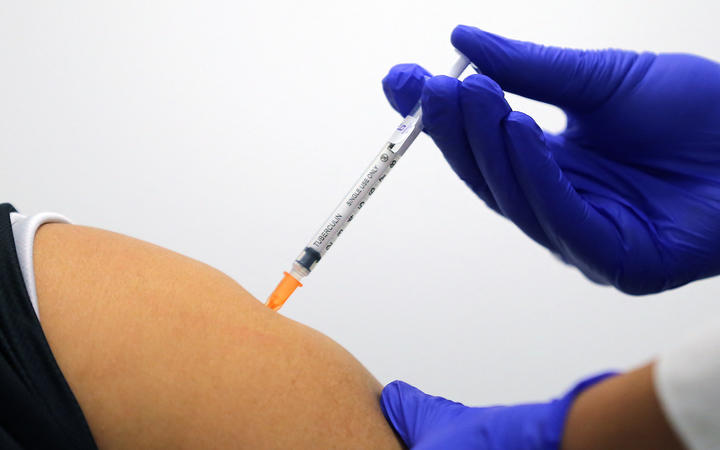
A dose of the Pfizer-BioNTech vaccine is administered. Photo: AFP
Ministry of Health says medical staff involved in both cases do not believe the deaths are related to the administration of the vaccine and the deaths have been reported out of “an abundance of caution”.
A spokesperson said they extended their sympathies to the family and friends of the two people who have died.
Medsafe reports adverse reactions to Covid-19 every Wednesday to CARM, but will report them promptly if there is a safety concern.
The Health Ministry said it remained confident the Pfizer vaccine was safe and effective.
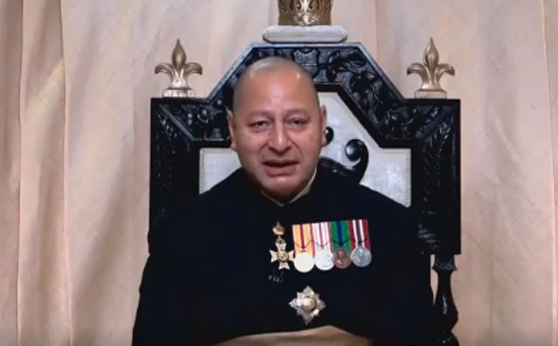
King Tupou VI said this morning he was dissatisfied that both the government and parliament did not keep to their promises to address his concerns over the country’s economy, education and health issues.
King Tupou VI address the nation. Photo/Screenshot
The king was fed up with the House and the government saying they gave him the same responses every year without doing anything further to resolve these issues.
He was concerned about the terrifying challenge “pole fakalilifu” of illicit drugs.
His Majesty said the government appears to have done nothing or did not do enough such as increasing the budget for the war on drugs.
He said Police and its stakeholders should be a priority.
He also criticised the government’s involvement in running economic enterprises, something he said that in democratic countries, that was the responsibility of private sectors.
The king said government boards should focus on the financial results for the shareholders and leave the daily operations to people who have been specially trained to do the job.
His Majesty said the government should be cautious in appointing its board of directors as some of them have no experience at all in the kind of works with which the boards were dealing.
“If the country’s economy was good why there was a fall in the value of the currency?” he asked.
He said the government did not support privates businesses which provide local food products and services. The king said this may have helped control the rise in Tonga’s international debts obligations.
He said every year the Members of Parliament have campaigned under the banner of honesty but the king has questioned the Cabinet ministers’ roles to submit annual ministerial and parliamentary reports.
“The Parliament failed to oversee the government of the day’s daily businesses and therefore the taxpayers and the people of the country, who have voted in the Members of Parliament, should vote prudently (“fakapotopoto”) as you were the ones who voted in this government, which is now in the House”, the king said.
The king has raised his serious concerns this morning while he was addressing the nation during his livestream opening speech to mark the beginning of the mid-year parliamentary session 2021.
Ko e Tōfolofola’
Tō folofola huufi ‘o e Fale Alea ‘O Tonga, 6 ‘o Me 2021.
‘Oku ou fakafeta’i ki he ‘otua ‘oku tu’u ai e lelei ‘a Tonga pea mo ‘ene tauhi ma’ae kakai ‘o e fonua. ’oku laumalie lelei ai ‘a e ‘eiki sea ‘o e falealea, ‘eiki palemia , moe kau minista ‘o e kapineti , kau fakafofonga ‘o e hou’eiki nopele, pea pehe ki he kau fakafofonga ‘o e kakai.
‘Oku ‘ikai fakafiemalie ‘a e ‘ikai ke fakahoko ‘e he fale ni ha ngaue, hili ‘a e ngaahi palomesi moe tali ‘i he huufi ‘o e falelalea ‘i he ta’u takitaha. koe ta’u kotoa ‘oku tataki atu ‘a e tokanga ki ngaahi makatu’unga ‘e tolu, ko e mo’ui lelei, ako , moe tu’unga faka’ekonomika ‘o e fonua. ka koe ta’u kotoa koe tali tatau pe kae ‘ikai ke ai ha ngaue makehe ‘e fakahoko.
Kimui ni mai na’e tataki e tokanga ki he pole fakalilifu ‘o e faito’o konatapu. ka ‘oku ha mai ‘oku si’is’ii pe, ‘oku te’eki ke ai ha ‘inasi e vahe’i makehe he fale ni pe koe pule’anga ke fakafepaki’i ‘aki ‘a e pole faingata’a ko eni. ‘oku totonu ke fakamu’omu’a heni ’a e potungaue polisi moe ngaahi va’a ‘oku nau fengaueaki fakataha.
Kuo fuoloa ta’u koe tokolahi e kau fakafofonga ‘o kau ai e ni’ihi e faleni ‘oku nau taumu’a‘aki ‘a e fili ki he fale ‘a e kaveinga ‘o e faitotonu.koe fe leva ’a e ngaahi fakamatala ngaue fakata’u ‘a e kau minister koe ha ‘oku to’o ai ‘e he pule’anga ‘a e ngaahi faingamlie mei he sekitoa fakatupu koloa taautaha ‘a ia ‘oku tefito ai ‘a e ngaahi no mei muli. ‘oku matuaki mahu’inga ke mahino koe ngaue ‘a e pule’anga ke fakalele ‘a e puleanga kae ‘ikai koe kau he ngaahi pisinisi.
Kuo tu’o lahi ‘ene feinga ke fakalele ‘a e ngaahi ngaue ‘a ia ‘i he ngaahi fonua fakatemokalati koe fatongia ia ke fakahoko he ngaahi pisinisi.
‘Oku fiema’u ke fakatokanga’i lelei ‘a e ngaahi poate ‘a e pule’anga koe’uhi koe poate ‘e ni’ihi ‘oku fakahoko ‘a e fakalele faka’aho ‘o e ngaue ‘e he kau memipa ‘o e poate ‘a ia ‘oku si’isi’i ‘enau taukei ‘i he mala’e koia. ka ‘oku fiema’u ke tokanga ‘a e poate ki he ola fakapa’anga ma’ae kau ma’u ‘inasi, kae tuku ‘a e fakalele ‘o e ngaue faka’aho ke fakahoko ia he kau ngaue kuo ‘osi teu’i mo taukei ngaue.
Kapau ‘oku fakafiemalie ‘a e tu’unga faka’ekonika ‘o e fonua pea koe ha leva ‘oku holo ‘a e mahu’inga ‘o ‘etau pa’anga ‘o fakatatau ki he pa’anga ‘o e ngaahi fonua muli ‘oku tau fefakatau’aki.
‘Oku toe hiki moe ngaahi mo’ua mei he hu koloa mei muli ka na’e mei lava pe ke holo ‘i hono ngaue’aki ‘a e me’atokoni ‘oku fakatupu fakalotofonua ka ‘oku ‘ikai foki ke tokoni’i lahi ia ‘e he pule’anga .koe tokolahi ‘o e ngaahi ngaue’anga fakalotofonua ko ‘eni ‘oku nau tu’u ‘i he mo’ua lahi pe kuo nau tapuni.
‘Oku ‘ikai ke fakahoko ‘i he fale ni ‘a ‘ene ngaue koe vakai’i lelei ‘a e ngaahi ngaue ‘a e pule’anga ‘o e ‘aho, koia ‘oku taau ke vakai’i lelei ‘e he kau totongi tukuhau moe kakai ‘o e fonua ‘a ia ‘oku nau fili ‘a e kau fakafofonga falealea, kenau fakahoko fakapotopoto ‘enau fili he koe pule’anga ‘oku ‘i fale ni koe pule’anga ia na’a mou fili ai.
By TVNZ / One News and is republished with permission
Fiji has recorded a Covid-19 death – a man who was confirmed to have the virus just yesterday.
The 55-year-old was in intensive care at Lautoka Hospital and military and police have surrounded and locked down the facility, with around 400 staff and patients quarantined inside.
He had been in hospital for a surgical procedure on April 19.
It’s believed he infected two doctors there who tested positive in the last two days.
According to FBC News, the source of the man’s infection remains unknown but he has refused swabs and tests on two occasions.
Unions are worried that doctors and nurses will move to Australia following the government’s freeze on public sector salaries.
Under new government rules, three-quarters of people working in the public sector are unlikely to get a salary bump until at least 2024.
No government employee earning over $100,000 a year will get a pay rise until 2024. And those with salaries with between $60,000 and $100,000 will need to prove exceptional circumstances.
It’s not only bureaucrats in Wellington – it includes border workers, hospital staff, prison guards and social workers.
Sarah Dalton of senior doctors’ union The Association of Salaried Medical Specialists said it was a poor decision by the government.
“It’s not a reasonable ask for our health workforce to say ‘hey, just go backwards. But by the way, can you run these extra clinics, can you deal with these overloaded emergency departments, can you cope with this not fit-for-purpose building?’ It’s just too many things, and it suggests that this health workforce isn’t valued,” Dalton said.
Even minimal inflation, Dalton said, will have people behind by at least 5 percent in the next few years. Rent costs and interest rates are expected to rise too.
Nurses Union spokesperson Glenda Alexander said, in places like Auckland, $60,000 – the wage freeze threshold – doesn’t go far.
“There are lots of people in that zone who are very much struggling to make ends meet.”
However the Taxpayers Union said restraint in the public sector is exactly what is needed right now, describing public debt post-Covid as “ballooning”.
Spokesperson Louis Houlbrooke said the private sector had been feeling it the last year and the public sector should also make some sacrifice.
“While $60,000 isn’t a huge salary, it comes with a level of job security that you wouldn’t see in the private sector. So a pay freeze is a pretty small price to pay for that, especially when you consider it’s only for three years.
But Alexander said many in the public sector had already offered a lot.
“Our nurses responded when required, right at the outset of this pandemic, and have been making a huge contribution to keeping our border safe, dealing with the returnees… they’ll feel like this is a bit of a slap in the face.”
She said this might actually be the final push for some to leave for Australia.
“I think if the borders were more open, this would be a deciding factor,” she said.
“Before Covid struck a lot of our nurses were going to Australia even for a six-month period to pay off mortgages and earn much more. That could be an enticement now.”
Dalton thought the same. She said Australia already paid 40 to 60 percent more for specialists, so this freeze might just send talent packing.
“We certainly hope it doesn’t exacerbate it, but it absolutely might. We think not even allowing people to keep pace with inflation and the cost of living is a really poor way to treat a critical workforce that the Minister of Health has already acknowledged has significant shortages,” Dalton said.
Public Service Minister Chris Hipkins said the sector needed to show restraint, as others in the private sector continued to feel the effects of the pandemic, and the move would help preserve public sector jobs.
The National Party has already condemned the move, saying nurses are not responsible for the government’s incompetence.
“The government needs to reconsider and reverse immediately this pay freeze and take responsibility for out of control public sector growth,” Mark Mitchell said.
Ousted Cabinet Minister ‘Etuate Lavulavu’s use of the name ‘Etuate Fakaleitī in his response to a question from Kaniva News has been criticised for belittling the LGBT community.
‘Etuate Lavulavu
He was also criticised for using another name in his response as ‘Etuate Ta’emali or ‘Etuate Unmarried.
The name ‘Etuate is Tongan for Edward. The word fakaleitī comes from the English word lady (leiti) and the addition of the prefix faka at the front to make it fakaleitī means a gay man.
The names ‘Etuate Fakaleiti and ‘Etuate Ta’emali have negative connotations in Tonga of decrying the importance of gay people and unmarried men being treated equally with straight men and married people.
As Kaniva News reported last week, Lavulavu was responding after we asked him whether he was the person to whom Prime Minister Pōhiva Tu’i’onetoa contacted to write the response to our questions. The Prime Minister appeared to have mistakenly sent to us an e-mail he intended to send to a person called Etuate, presumably for ‘Etuate to answer Kaniva’s queries.
Lavulavu, who is no stranger to courts, controversy or convictions did not deny it. Instead, he was evasive, swearing, dismissive and said there were many people called ‘Etuate.
In his response he said: “It can be Etuate Hafoka, Etuate Manuefetoa, Etuate Uata, Etuate Tuionetoa, Etuate Havea, Etuate Kuila, Etuate Kavenga, Etuate Taukolo, Etuate Hopoi , Etuate Cocker, Etuate Tupou, Etuate Tutoe, Etuate Fakaleiti, Etuate Taufalele, Etuate Taemali, Etuate Ta’e’iloa, Etuate Afeaki and just like many ‘Etuate there were also uu-etuate and uu-sione”.
The phrase uu-sione with which Lavulavu ended his list of names is known in Tongan as kapekape fakapoto or a calculated making up swearing words. It’s a mixture of the swear word ‘us_ and the name Sione to make it sounds he was referring to the plural form of name Sione by adding the sign of plural form word ‘ū at the front of the name, but the speaker’s intention was clearly swearing.
When Kaniva News shared the story about Lavulavu’s response last week, commentaters quickly blasted it as his mockery of gay men and unmarried people.
A commenter suggested that Lavulavu should be punished.
Another said he appeared to think he was above the law.
The criticisms of the Deputy Chair of the Tonga People’s Party came while the LGBT community was mourning the death of the Tongan human rights and LGBT activist Polikalepo Kefu.
His brutal killing last Friday night has sent shock waves across Tonga and overseas.
Kefu was known for his work with Tonga’s Red Cross, the local media association and as a voice for youth.
He was also president of the local LGBTQI+ rights group and always a staunch support of local movements which fight for the right of gay people.
Last year Lavulavu attacked Tonga’s crisis centre for women (WCCC), saying its service was not needed in Tonga.
He reportedly said the organisation was only operating to get funding to help its employees and staff.
WCCC is the largest and most effective service provider to women and children in Tonga who are victims or survivors of violence.
WCCC’s Director ‘Ofa Gutteinbeil Likiliki was reported by local media as saying “It is a real shame that ‘Etuate Lavulavu made this political statement making baseless claims.”
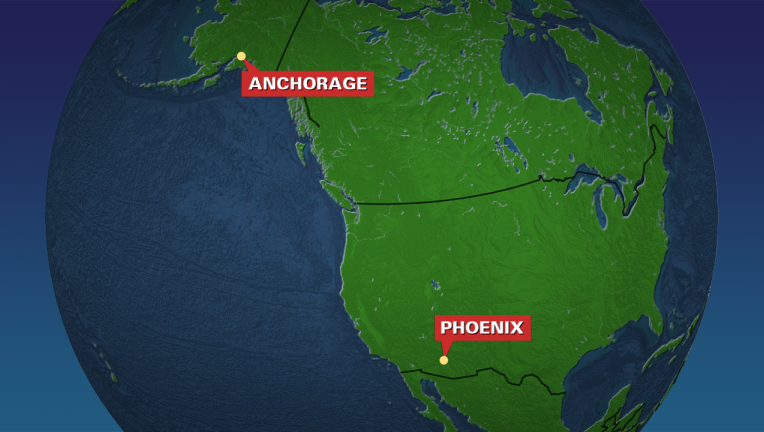
An Arizona man has been indicted in Alaska on a federal charge of abusive sexual contact involving a 16-year-old girl who was seated next to him on a flight from Phoenix to Anchorage, federal officials said.
Kepueli Talaiasi, 58, of Mesa allegedly touched the girl, a stranger, as she sat in a middle seat between him and his adult son, who slept during most of the flight Monday, according to an indictment issued April 29 and a memo filed by the U.S. Attorney’s Office for Alaska.
The office asked the federal court to order the continued detention of Talaiasi, saying he posed a threat to potential seatmates if he boarded an aircraft to return to Arizona pending trial.
The girl managed to pass a message to her father who was in an another row of seats on the plane and he contacted the flight crew, which separated the girl from Talaiasi, the office said.
Talaiasi was arrested after the plane arrived in Anchorage, the office said.
According to the memo, Talaiasi during in an interview with the FBI “acknowledged having bad thoughts upon seeing the minor next to him, and described the devil tempting him” and said he “had given in to the temptation….”
Online court records didn’t list an attorney for Talaiasi who might comment on his behalf.
“If convicted, Talaiasi faces a maximum sentence of up to two years in prison, followed by five years to lifetime supervised release. Under the Federal Sentencing Guidelines, the actual sentence imposed will be based upon the seriousness of the offense and the prior criminal history, if any, of the defendant,” stated the U.S. Attorney’s Office for Alaska.
Three men have pleaded not guilty to murder following the death of Māngere grandmother Meliame Fisi’ihoi.
Meliame Fisi’ihoi, 57, died when she was shot at her home on Calthorp Close, Favona. Photo/Facebook
Police said the 57-year-old was watching television in the early hours of the morning when she heard a noise.
They said she was shot when she approached her lounge window.
She died on January 15, 2020.
Today, Falala’anga Momooni Iongi, Viliami Mounga He Ofa Iongi and Manu Hori Iongi entered not guilty pleas to charges of murder at the High Court in Auckland.
The public gallery was packed during the brief appearance this morning.
The trio were remanded in custody by Justice Sally Fitzgerald until July 7, 2021, with a trial date set for May 2022.
Pacific women in New Zealand have the highest rates of antenatal and postnatal depression, yet low numbers get help. Sela Jane Hopgood asks why.
Suliana Katoa could hardly recognise herself as postnatal depression took over. Photo: RNZ / Claire Eastham-Farrelly
Warning: This story includes verbal abuse scenes and discusses suicide.
Suliana Katoa is at home in Tāmaki Makaurau with her three children, watching Coco the movie, when she considers suicide.
It is raining hard. Suliana’s husband and parents have just headed off to ako hiva (church choir practice).
She grabs a basket full of washing to fold on her bed. She glances at her newborn lying peacefully in his cot and her eldest daughter, who is cuddling a bowl of popcorn.
Suliana spies her two-year-old son sitting on the floor with his milk and cookies.
“Be careful, please don’t spill your drink – tokanga’i ho inu na’a mahua,” she warns him.
But Michael Glacchino’s soundtrack captivates him and he starts to wiggle and hum along to the music. He gets up and begins to dance along to the upbeat rhythm, imitating the scenes of the movie.
Suliana has one eye on the load of washing and one eye on her son as he dances near his glass of milk. She repeats herself, “Watch out, son. Your drink is on the floor.” But he carries on moving from one end of the bedroom to the other, eyes glued to the TV screen.
She folds the washing, robotically, as her mind drifts away, thinking of what a difficult week she has had mentally.
“Nobody cares about me. I feel like a failure as a mother. I don’t know what I’m doing as a mother. I’m not good enough. Why can’t my family and friends be considerate of how hard I’m working? Looking after three kids is so hard,” she thinks.
Suliana is a community health worker for Plunket and a part of her recognises that these thoughts might be the result of postnatal depression, but even thinking she might be mentally unwell fills her with shame, so she shakes off the idea.
“I’m afraid of making mistakes and letting other people down. What if I end my life?”
“Mum!” Suliana’s son calls out, breaking her train of thought. He has knocked over his glass and milk is seeping into the carpet.
Suliana starts screaming. She is so loud her voice almost drowns out the heavy rain belting against the window.
“What did I tell you?” she yells at him.
She gets down to his level and stares at him. She points her finger in his face and threatens him with a hiding.
He barely recognises Suliana, who is usually cheerful, warm and nurturing. He runs to the corner of the room, lifts his hands over his ears and sobs uncontrollably.
Suliana can’t breathe properly. She walks out of the bedroom and heads outside, where the rain continues to fill the dark evening. She can hear her son crying, but she doesn’t care. She has no urge to check on him. It’s like it’s her body, but there is a stranger inside.
Eventually she goes back into the house. Her son has crawled into bed to cuddle up with Suliana’s daughter. He’s confused and sobbing.
Suliana looks at her son and seeing him so helpless, she feels her heart shatter into a million pieces.
She breaks down and cries. She picks her baby up out of his cot and takes him to the bed, where she sits down and embraces all her children, holding them close to her, while tears run down her face.
Why Pasifika mothers have high rates of perinatal depression
While Suliana may have felt alone that night, antenatal and postnatal depression is common among Pasifika women. In fact, they have higher rates of antenatal (during pregnancy), postnatal (after birth) and perinatal (both) depression than any other ethnic group in New Zealand. Despite that, experts say Pasifika mothers are less likely to seek treatment for their depression.
At Auckland’s Lotofale Pacific Mental Health Service, there is framed tapa art on the walls and a chapel off the waiting area. There are also information pamphlets in various Pacific languages. Dr Sara Weeks, a consultant psychiatrist who specialises in maternal mental health, says postnatal depression is more than just feeling stressed.
Dr Sara Weeks says perinatal depression is much more severe than stress Photo: RNZ / Claire Eastham-Farrelly
“It’s actually a medical condition where your brain sort of runs out of the chemicals that needs to keep going or runs low on them and so things like sleeping, eating, concentrating and even loving people, just don’t work like they would usually do.
“It’s not something you just deal with and get through like the stress of a crying baby or a barking dog, who all need feeding – you feed them all, you get on with it and they feel better. With depression, you’re likely to crumple into a heap and just not be able to do the task,” she says.
The 2019 Growing Up in New Zealand longitudinal study found 23 percent of Pacific women experienced symptoms of perinatal depression, compared with 8 percent of European women and about 14 percent of all other women combined.
Pasifika women who had experienced unfair treatment by a health professional in their lifetime were 66 percent more likely to suffer from postnatal depression, compared with Pacific women who did not report these experiences.
But why do Pacific mothers have such high rates of depression?
Dr Siale ‘Alo Foliaki is a child psychiatrist and clinical lead for the child mental health services at Counties Manukau District Health Board. He is also clinical lead for the clinical cultural liaison services at Vaka Tautua, a national “by Pacific, for Pacific” health and social services provider.
The Tongan doctor says historically Pacific cultures respond to the arrival of a newborn baby by being very present and ensuring that the mother does not get fatigued. The way families live near each other, such as in villages, supports this.
“You would have your immediate and extended families keep the mother company, help with the chores, hold the baby so the mother gets rest and it’s clearly a very protective means of care,” he says.
But migration often leads to the fragmentation of cultural support and the ways family have traditionally offered support can be disrupted, he says.
It’s also significant that the number one risk factor for antenatal and postnatal depression is having previously had depression.
Dr Foliaki says research into the migrant Pacific community shows if people have migrated to New Zealand after the age of 18, their mental health statistics are better than the European population as well as Pacific people who are born in New Zealand or migrated to the country before the age of 12.
Another risk factor for perinatal depression is a difficult relationship with a spouse or father of the child, Dr Foliaki explains.
Pacific peoples in New Zealand are twice as likely as non-Pacific people to have committed a serious crime against a family member, according to Pasefika Proud, which is a family violence prevention campaign.
“If there are inter-parental conflict or an unsettled relationship, then that’s going to have a significant impact on the wellbeing of the mother,” Dr Foliaki says.
Why a broken mind is like a broken arm
If Pasifika mothers have such high rates of perinatal depression, why do experts say they aren’t getting help at the same rates as other women?
In general, Pacific peoples access all mental health help at lower rates than others. The New Zealand Health Survey shows Pacific peoples experience very high rates of unmet need for care compared to the total NZ population. Thirty-three percent of Pacific peoples (and 29 percent of the total population) report not seeing their primary care practitioner when needed, with most of this unmet need (20 percent of all Pacific people, 15 percent of the total population) being related to cost.
Dr Foliaki says he’s seen many Pasifika mothers who have been diagnosed with antenatal and/or postnatal depression and their families hadn’t recognised what was going on and didn’t know how serious depression was.
Dr Siale ‘Alo Foliaki Photo: Supplied
“They’re no longer enjoying any of the social interactions, they can’t sleep, they can’t eat, there’s a lot of negative thinking, their self-esteem/confidence drops away, they’re not bonding with the child, and actually without talking about it, they’re feeling alone.
“Things can get so bad that they don’t want to wake up in the morning, and I would argue, how many families, in particular Pacific families, would recognise that cluster of symptoms and say to themselves, hey I think my wife or sister might be depressed?”
Even if depression is recognised, in many Pacific cultures, there is enormous stigma and shame around mental health issues, he says.
“Often the culture interprets depression as a failing on behalf of the family. A young person may have a very caring and organised household (for example mum and dad are still together, grandparents are around to help and there’s support for the new mum), but that doesn’t necessarily mean that she is going to be protected by mental health issues like depression,” Dr Foliaki says.
“From a Pacific point of view, if you get depression, it means the family didn’t do what it was meant to do in terms of caring for the family and there’s shame in that and that shame translates into poor help seeking behaviours.”
But Dr Weeks says it is vital to seek treatment. A mother who has untreated perinatal depression cannot only suffer unnecessarily herself but can have a profound impact on her children right up to adulthood.
“It has extreme effects on the children, leading to both behavioural and cognitive disturbance. For example, they may not be learning that well in school,” she says.
“Unfortunately, there is the risk of taking your own life, and there are some people who develop postpartum psychosis, where you can start to believe things that aren’t actually true and that can increase the risk of taking your own life or even harming other people including children.”
Treatment usually involves medication or therapy (such as counselling) or both. Complimentary therapies, such as exercising, or practicing mindfulness may also be used.
Dr Weeks describes treating postnatal depression using a broken arm analogy.
“Your arm is functioning fine and then something happens, for example you break a bone. It could be that your muscles are not that strong or there was some damage done in childhood or genetically, you have less strong bones, but something happens, and it breaks, so you go get a plaster on it and the bone heals underneath,” she says.
“The medication used for broken brains (perinatal depression) helps you function while your own brain heals underneath.”
Feeling ‘normal’ again
Suliana’s mum arrives home from ako hiva first and finds her daughter crying, surrounded by her children. Suliana tells her mother how a glass of milk spilled on the floor. But when her husband arrives home, she faces up to what’s really been going on.
Suliana confided in her husband about what she had been feeling Photo: Supplied / Tiare Illustrations
Suliana’s mum looks after the children, while Suliana’s husband takes her to see a doctor in Ōtara. She tells the doctor about how distressed she’s been and fortunately, a maternal mental health specialist is rostered on and she helps Suliana unpack her thoughts and feelings.
She goes through a questionnaire with Suliana. “Are you suicidal?” it asks and Suliana starts crying again, pouring out how she felt during pregnancy and after the birth of her son.
She was excited and grateful to have another blessing on the way, but she was also overwhelmed, stressed and anxious, more so when she learnt that she was having another boy.
“Bringing up my daughter was relatively easy compared to my second child, my son,” she tells the specialist. “He’s such an active person and, I think, for me, knowing I was going to have another boy, I couldn’t stop thinking about how we were going to manage two active bodies in our busy household.
“It got to a point where I was so tired of feeling hopeless and not knowing what to do, that I wished I could just sleep and never wake up.”
She’s prescribed an antidepressant medication, Sertraline, but she’s not keen. “Nah, I think I should be alright without the medication,” she tells the specialist.
After the appointment, Suliana feels strange – disorientated, but also calmer.
She goes home. Suliana’s husband nudges her to take the medicine and in the end she does, starting on the lowest dosage. A mental health team begins regular visits to her home, checking how she is.
Soon she starts therapy and realises the depression started when she was pregnant.
Within a few weeks, she begins to feel normal again.
She starts doing other things to help herself. She does a course on mindfulness, and it helps her understand ways to control and navigate her thoughts and feelings and to be present.
Soon after she begins feeling better, Suliana logs into her Facebook account. ‘What’s on your mind?’ appears on her computer screen.
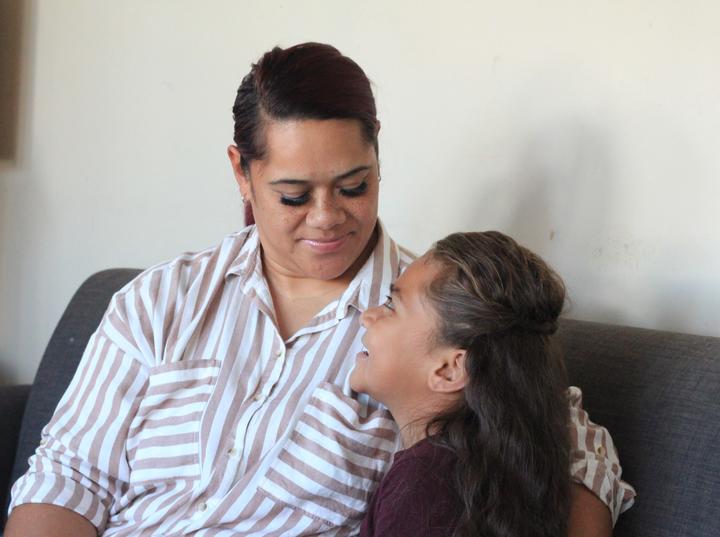
Suliana and her daughter Photo: RNZ Pacific / Sela Jane Hopgood
She begins typing: “Please share my story to help our fellow Pacific Island people understand that antenatal and postnatal depression is not a joke”.
And then she types out her story. Suliana couldn’t speak about her experience while she was lost in darkness. She was scared she’d be viewed as a failure as a mother. But now she wants to reach out to as many Pasifika mothers as she can, to let them know that it is ok to seek help for your mental health.
“If you are feeling the signs that I have shared or have read about the symptoms published by the Ministry of Health, please see your GP straight away or reach out to the mental health support services that are out there,” she says.
“There is no shame in admitting that you are mentally not well.”
*This story was made possible by the Mental Health Foundaiton of New Zealand and Frozen Funds Charitable Trust
Where to get help:
Need to Talk? Free call or text 1737 any time to speak to a trained counsellor, for any reason.
Suicide Crisis Helpline: 0508 828 865 / 0508 TAUTOKO (24/7). This is a service for people who may be thinking about suicide, or those who are concerned about family or friends.
A woman who conned two other clients out of TOP$20,000 in a car sale fraud received suspended sentence for 24 months.
‘Ana Toe’umu Latu pleaded guilty to two counts of obtaining by false pretences.
She advertised a car for sale and a customer paid the money for it.
Pretending it was still hers she sold the same car to two other people.
The court was told that in February 2020 Latu advertised a 2007 Toyota Corolla Rumion for $9,800.00 on a Facebook page that has the name “Tonga Garage Sale”.
Part of the deal was that the customer has to make a deposit because this vehicle was to be imported from Yokohama, Japan and to cover freight fee and customs duty.
A woman by the name of Musie Funaki bought the car. She first paid the deposit then paid the balance before the car arrived in Tonga in early June 2020. .
Latu then advertised the car again on the Facebook page.
The court judgement said two other customers, Malaea Tonga’uiha was induced to pay $9,800 while Litiola Lutui paid $11,426.66.
On 15 August 2020 Miss Lutui and her partner went to see the car but it had gone. They found out that Miss Funaki had it and that they had been conned.
Both Lutui and Tongata’uiha reported Latu to the police.
In sentencing Latu Justice Cooper said: ” Miss Latu was of hitherto good character. I take into account what she told probation about falling victim to a fraud herself and her money problems that arose from that.
“I also note that she cares for her mother in law who is very poorly and wheel chair bound
“I have considered a number of cases in relation to fraud, value and sentence tariff”.
“Because of her cooperation and lack of previous convictions I am just persuaded that her remorse is true because of her guilty plea and so I suspend her sentence.
“Her sentence is one of 17 months’ imprisonment, suspended for 24 months.
If during that time she commits any offence punishable by imprisonment she stands to be sentenced for this offence as well as the new offence”.
She must also serve 180 hours community service to be completed at the direction of her probation officer.
Doctors are being inundated with requests from over 65s who thought they could get their vaccine from this week – but can’t.
File photo. Photo: AFP / Steven Saphore
The government’s roll out plan says group 3 will be vaccinated “from May” – that is over 65s who do not fall into earlier groups, and people with conditions that make them more susceptible to Covid-19.
But the Ministry of Health says for most in the group of 1.7 million, the call-ups would not begin until the end of the month.
Auckland GP John Cameron said his surgery was flat out doing flu jabs and almost everyone was asking about Covid-19 too.
There was a lot of confusion, with many understandably assuming being eligible “from May” meant from the start of the month.
“From a punter’s perspective, they want to know – am I going to get a vaccine, how am I going to be informed that I am going to get a vaccine – is it coming in the mail, is it coming from the DHB, is it coming from the ministry, is it coming from my general practitioner?” he said.
It was frustrating that most GPs knew little more than their patients did, he said.
His surgery was considering sending out an expensive all-patient text.
“Just to say, ‘guys, we will let you know as soon as we know but we don’t know at the moment’,” he said.
Other GP surgeries from Auckland to Invercargill have told RNZ they have also been overwhelmed with requests.
Every DHB was doing things differently – with the ministry setting the overall strategy.
Gisborne-based Tairāwhiti DHB said it would do entire small, remote towns at once regardless of age.
Waitematā DHB chief executive Dale Bramley said Auckland’s DHBs knew their populations best and would follow the government’s guidance – with flexibility.
For example, if a whānau brought a kaumātua and kuia in to be vaccinated, and the younger members were ready too, they would try to do them at the same time, he said.
Dr Cameron said, to vaccinate as many people as possible, it was best to avoid missed opportunities.
If a nervous person or someone who did not visit often was in a surgery, that was often a great chance to give them their shot, he said.
“They don’t have to come back, they don’t have to rebook, they don’t have to do anything else. It’s done then and there,” he said.
In a statement, the ministry’s Covid-19 immunisation director, Jo Gibbs, said the rollout plan was a guide and she expected DHBs would have started to vaccinate those in the general over 65s group by late May.
Most people would receive an invitation but they would be staggered, she said.
Under the government’s roll out plan, everyone under 65 not covered by other groups is likely to start getting their vaccine in July.

 The 55-year-old was
 Kepueli Talaiasi, 58, of Mesa allegedly touched the girl, a stranger, as she sat in a middle seat between him and his adult son, who slept during most of the flight Monday, according to an indictment issued April 29 and a memo filed by the U.S. Attorney’s Office for Alaska.