Wednesday, February 4, 2026
Home Blog Page 52

‘One at a Time’: Deputy PM jokingly warns Toumo’ua and Hu’akavameiliku against colliding in Parliament during heated corruption debate 

 
The former Minister of Infrastructure, Sevenitiini Tomo‘ua, erupted in fury during a parliamentary session on Wednesday, shouting in the House after Deputy Prime Minister Taniela Fusimālohi questioned the Speaker about the status of Parliament’s Anti-Corruption Committee. 

“Ke ke ha‘u fakailifia‘i ‘a hai heni! “Ke ke ha‘u fakailifia’i ‘a hai heni!”, Toumo‘ua repeatedly challenged Fusimālohi in Tongan, saying who are you threatening here.  

Fusimālohi appeared calm and never in his statements showed any signs of threatening.  

During the livestreamed debate, Fusimālohi told the Speaker, “I want the public listening to know they can file complaints with the Speaker and Parliament against any MP suspected of corruption.”  

It follows his initial question for the Speaker to clarify the status of Parliament’s anti-corruption efforts.

He further urged that citizens should be permitted to approach the House under the committee’s authority to demand explanations or information from MPs or other individuals under suspicion. 

The Deputy Prime Minister’s remarks appeared to have provoked Toumo‘ua, before Hu‘akavameiliku joined his former minister in attacking Fusimālohi, a reflection of lingering tensions between the former and current governments. 

Hu‘akavameiliku had resigned abruptly in December, preempting an expected no-confidence motion that he was unlikely to survive. 

Recently, Fusimālohi revealed that he had spotted an Auditor General’s performance report in the queue for bulk approval by the House without debate on its contents. He requested that the report be tabled for discussion. 

Millions of COVID fund missing record

The report revealed that the Auditor General found no record of how $60 million in COVID funds was spent. The Hu’akavameiliku government was in power when the funds were dispersed.

The revelation triggered heated debates in the House, which later spilt over into the media. Hu‘akavameiliku claimed the records were held by the Treasury, a claim the Minister of Finance denied. 

During yesterday’s exchanges in Parliament, Hu‘akavameiliku challenged Fusimālohi to clarify whether he was accusing him of corruption, saying he could submit a formal complaint with the House, but Fusimālohi seemed undeterred. 

Toumo’ua disagreed with Fusimālohi about allowing public complaints to be launched with Parliament, stating that they should take their issues to court or the police instead.

The Minister of Lands informed the House that he chaired the Parliamentary Anti-Corruption Committee and that meetings had been held during its establishment. However, the chief clerk of Parliament advised them to wait until the Anti-Corruption Commission was set up. 

At one stage during the heated exchange, both Hu‘akavameiliku and Toumo‘ua rose simultaneously from their seats to criticise Fusimālohi, leading the Deputy Prime Minister to humorously caution them to take turns rising from the seats to avoid colliding.  

India-Pakistan conflict escalates: Missile strikes kill 26 in Pakistan-Controlled Kashmir; Islamabad calls It ‘Act of War’

Tensions between India and Pakistan reached a dangerous new level early Wednesday as India launched missile strikes into Pakistani-controlled territory, killing at least 26 people, including a child.

The Indian defence ministry said the strikes – named “Operation Sindoor” – were part of a “commitment” to hold “accountable” those responsible for the 22 April attack in Pahalgam, Indian-administered Kashmir, which left 25 Indians and one Nepali national dead, according to the BBC.

Pakistan’s Prime Minister Shahbaz Sharif condemned the attack as an “act of war,” raising fears of a full-scale military confrontation between the two nuclear-armed neighbours.

The strikes targeted multiple locations in Pakistan-administered Kashmir, causing significant infrastructure damage and civilian casualties.

The long-running dispute over Kashmir, along with accusations of cross-border terrorism, has been the primary source of conflict between India and Pakistan for decades.

The only exception was the 1971 Indo-Pakistani War, which was triggered by the Bangladesh Liberation War rather than Kashmir-related tensions.

In response to the latest strikes, Pakistan’s military has reportedly taken retaliatory action, though details remain unclear. The situation remains volatile, with both nations on high alert and the risk of further escalation looming large.

Global powers have swiftly called for restraint, warning of catastrophic consequences if the conflict spirals out of control.

The United States urged “immediate de-escalation and dialogue,” while China, a key ally of Pakistan, stressed that “both sides must exercise maximum restraint.”

United Nations Secretary-General António Guterres emphasised the need for a ceasefire to prevent a humanitarian disaster. Analysts warn that any further military engagement could have devastating consequences, particularly given both countries’ nuclear capabilities.

As the crisis unfolds, the international community watches with growing concern. Diplomatic efforts are underway to prevent a wider war, but with emotions running high and military forces mobilised, the path to de-escalation remains uncertain. The world waits anxiously for developments in what could become one of the most dangerous geopolitical flashpoints in recent history.

(Sources: Reuters, AP, Al Jazeera, BBC)

Injuries after bus hits tree in South Auckland

By 1news.co.nz

Eight people were injured after a bus with school students on board crashed into a tree in southern Auckland this morning.

Police said the crash occurred at around 8.45am on Elliot Street in Pahurehure, Papakura, when a bus hit a tree.

St John said it assessed eight people at the scene, with three taken to Middlemore Hospital.

Two of them were in a serious condition and one was moderate.

Emergency services at the scene of a crash on Elliot Street in Papakura.
Emergency services at the scene of a crash on Elliot Street in Papakura. (Source: 1News)

“Two other patients self-transported to a local medical centre, in a moderate condition.

“The remaining three patients were assessed and treated at the scene.”

Auckland Transport confirmed the bus involved was operating on the 377 route between Papakura and Park Estate.

Rosehill School told parents the bus was carrying some of its students when the crash occurred.

“Senior leadership went to the site as soon as possible to work alongside emergency services to support students on-site,” the email to parents read.

The front of the smashed bus pictured on Elliot St.
The front of the smashed bus pictured on Elliot St. (Source: 1News)

“We will continue to support whānau during this time. As usual, in times of high emotion, our guidance team will be available to offer counselling and assistance to our students.”

Police said it was carrying out an examination at the scene, and asked the public to avoid the area if possible.

Auckland Transport said it would work closely with emergency services and its contracted bus operator, Ritchies, to “ensure this incident is thoroughly investigated”.

“This will have been a distressing incident for everybody onboard the bus and AT will be reaching out to passengers today to offer our support,” AT director for public transport and active modes Stacey van der Putten said.

Yellow-bellied sea snake washes up near Great Barrier Island

By Taylor Rice, Digital Reporter and is republished with permission

A “highly venomous” yellow-bellied sea snake was found dead by a member of the public over the weekend on Rangiahua/Flat Island, near Aotea/Great Barrier Island.

A file image of a yellow-bellied sea snake
A file image of a yellow-bellied sea snake (Source: 1News)

Department of Conservation project manager Sarah Dwyer said the snake was found on Saturday.

“Thankfully, the snake was reported immediately to DOC and is now at the DOC office on Aotea. The snake will be sent to Te Papa for their collection.”

This latest sighting is not the first of its kind in recent times.

The snake is now at the DOC office on Aotea.
The snake is now at the DOC office on Aotea. (Source: Department of Conservation.)

On April 27, 1News reported a yellow-bellied sea snake was discovered alive on a beach north of Auckland.

When DOC arrived at the location, however, it said the snake was dead after it appeared to have been bitten by a dog and “hit with something”.

A live snake had also been found near Hokitika on the West Coast in recent weeks.

It was expected more sightings would occur, due to storm events in the warmer waters to the north of New Zealand where the snakes generally live.

Dwyer said sea snakes and kraits were occasional visitors to New Zealand’s waters but they were considered a native species under the Wildlife Act 1953.

“This is because they arrive here naturally from time to time on ocean currents — rather than by human transportation.

A live yellow-bellied sea snake has washed ashore at Omaha Beach, north of Auckland.
A live yellow-bellied sea snake has washed ashore at Omaha Beach, north of Auckland. (Source: Department of Conservation)

“It is therefore illegal to kill or harass a sea snake, or possess one or any part of one without a permit.”

Dwyer said sea snakes and kraits were highly venomous but they were “docile creatures”.

“There is no record of anyone in New Zealand being bitten.”

DOC marine science adviser Karen Middlemiss said snakes generally didn’t last long after arriving in New Zealand.

“The waters are far too cold, so when they do wash up on the beaches, they don’t survive very much longer than a couple of days.”

If someone found a sea snake or krait, Dwyer recommended to “keep well away” and call 0800 DOC HOT.

100 Tongan pilgrims arriving in Vatican to support Cardinal Mafi as Conclave begins for new Pope 

About 100 Tongan pilgrims started arriving in the Vatican to support Cardinal Soane Patita Paini Mafi as preparations begin for tomorrow’s election of a new Pope. 

‘Ekitoni Vaiangina with Cardinal Mafi, He said it was an incredible opportunity to take a photo with Cardinal Mafi ahead of the conclave. Photo/’Ekitino Vaiangina

Cardinal Mafi, the Bishop of Tonga, is one of only two cardinals from the Pacific islands chosen to participate in the historic vote.  

A total of 133 cardinals will gather in the Sistine Chapel for the conclave, the term used by the Vatican to describe the closed-door assembly where cardinals elect the next Pope. 

The Tongan pilgrims expressed their pride in Cardinal Mafi’s role, highlighting the rare Pacific representation in the papal election process.  

The conclave begins tomorrow, Thursday, 8 (NZ time), amid global anticipation of the selection of the next leader of the Catholic Church. 

Catholic member Eikitino Vaiangina told Kaniva News that he and approximately 30 other Catholics from New Zealand had arrived, with more on their way. 

He shared a photo with Cardinal Mafi earlier, noting it was an opportunity to take a picture with him before the conclave election.

He said that there were 99 pilgrims scheduled for their visit to the Vatican.

How does the Conclave work? 

According to Vatican News, the term “Conclave” comes from two Latin words: cum (with) and clavis (key). In Church terminology, it designates both the secluded place where the papal election is held, and the body of Cardinals convened there to elect the new Pope.

Formally established in 1274 by Pope Gregory X, the upcoming Conclave starting on  May 7 to elect  the 267th Pope will be the 76th in the form we know today, which was established by Pope Gregory X in 1274, and the 26th held under the gaze of Michelangelo’s Last Judgment in the Sistine Chapel. 

Over the centuries, various reforms gradually shaped the procedure for the election of the Pope. The first significant changes were introduced by Pope Nicholas II in 1059 with the Bull In nomine Domini, which specified that only cardinals could elect the Roman Pontiff. 

Before that, the Successor of Peter was chosen with the participation of the ecclesial community: clergy assessed candidates proposed by the faithful, and the bishops chose the Pope. External influences and interferences from political powers, of course, played a major role in the election, often hindering the electoral process. 

In 1179 Pope Alexander III promulgated  the Constitution Licet de vitanda introducing the requirement of a two-thirds majority — a key element that remains today. 

The Voting Process 

Each cardinal, in order of precedence, writes the name of their chosen candidate on the ballot, folds it, holds it aloft so it is visible, and carries it to the altar. There, a chalice is placed with a plate covering it. 

Each elector says aloud, in Italian:  
“Chiamo a testimone Cristo Signore, il quale mi giudicherà, che il mio voto è dato a colui che, secondo Dio, ritengo debba essere eletto”. 
(“I call as my witness Christ the Lord, who will be my judge, that my vote is given to the one whom I believe should be elected according to God”.) 

The cardinal then places the ballot on the plate and uses it to drop the vote into the chalice, bows to the altar, and returns to his seat. 

Cardinals who are present but unable to walk to the altar due to illness give their folded ballot to one of the scrutineers, who brings it to the altar and deposits it in the same manner, without reciting the oath again. 

These are the words printed on each ballot that the 133 cardinal electors will use to choose the 267th Roman Pontiff. The ballot is rectangular, with the top half bearing the Latin phrase and the bottom half left blank for the cardinal to write the name of their chosen candidate. The ballot is designed to be folded in half – a detail prescribed by the Apostolic Constitution Universi Dominici Gregis

Ballot Distribution  

Each cardinal elector receives at least two or three ballots, distributed by the ceremonial officers. Then, the senior cardinal deacon draws lots to appoint three scrutineers (to count the votes), three infirmarii (to collect votes from ill cardinals), and three revisers (to verify the count). If any of those selected are unable to fulfil their roles due to illness or other reasons, new names are drawn in their place. This stage is known as the pre-scrutiny. 

Before voting begins, all non-electors – including the secretary of the College of Cardinals, the Master of Papal Liturgical Celebrations, and the ceremonial officers – must leave the Sistine Chapel. The senior cardinal deacon then closes the doors, opening and closing them only as needed, such as when the infirmarii go to collect the votes of ill cardinals and return. 

The “Room of Tears” 

Once a Pope is elected, he will be led to the “Room of Tears”, a small room next to the Sistine Chapel where he dons the white papal vestments for the first time. 

Tongan viral sensation wows viewers with hot pot feat and rifle coconut shots – Is a Guinness World Record next?

A social media star from Vava‘u is taking the internet by storm with a series of jaw-dropping stunts that blend traditional Tongan toughness with modern viral flair.

Siaki Lonitenisi first captured attention by casually gripping a scorching-hot cooking pot, fresh off an open flame, barehanded, not once but twice, without flinching.

Then, he upped the ante by shooting down drinking coconuts with a rifle, hitting every target with perfect precision. Clips of his feats have sparked a wave of challengers attempting to replicate his skills.

Not content with just one amazing stunt, Lonitenisi demonstrated his sharpshooting skills by knocking down three breadfruit with his rifle, without missing a single shot.

His most audacious stunt came when he snatched a beehive mid-livestream, causing the swarm to flee rather than attack, prompting his now-famous declaration as “taki ‘o e vaotaa” (leader of the jungle).

Now, fans are challenging the Tongan star to aim even higher by attempting a Guinness World Record.

While Guinness World Records confirms there’s no existing category for gripping scorching hot pots, deeming it too dangerous, Lonitenisi is proving some records are made to be broken—or invented. There is also no specific Guinness World Record for shooting down coconuts from coconut trees.

The suggestion comes after similar records were set, including one by a Pakistani man, Muhammad Rashid (Pakistan) in Karachi, Sindh, Pakistan, who smashed 43 green coconuts with the head in one minute on 12 November 2023.

The most coconuts smashed with one hand is 148, and Muhamed Kahrimanovic (Germany) achieved this on the set of Lo Show Dei Record in Milan, Italy, on 21 February 2022.

Social media is buzzing with ideas for potential records Lonitenisi could attempt. Could he set a new mark for the fastest coconut shooting?

With his growing online following and demonstrated skills, many believe he has what it takes to put Tonga on the world record map.

His fans are certainly ready to cheer him on if he does.

The Guinness World Record for the heaviest monarch was held by King Tāufa’āhau Tupou IV of Tonga, who died in 2006. At his peak, he weighed 209.5 kg (462 lb).

PM Eke meets US Deputy Secretary as America pushes $1,000 deportation incentive for undocumented migrants

EDITOR’S NOTE: This story has been updated to reflect only factual information meant to be reported. We apologise for any inconvenience caused by the previous version.

The Trump administration has announced a new measure offering undocumented immigrants in the U.S. a $1,000 (NZ$1,676) incentive to leave the country voluntarily.

The Department of Homeland Security stated that the program would also provide travel assistance and reduce deportation risks for those who use the CBP One app to declare their intent to return home.

The move marks a significant escalation in the administration’s immigration enforcement policies, prioritising mass deportations in recent months.

Tonga Prime Minister

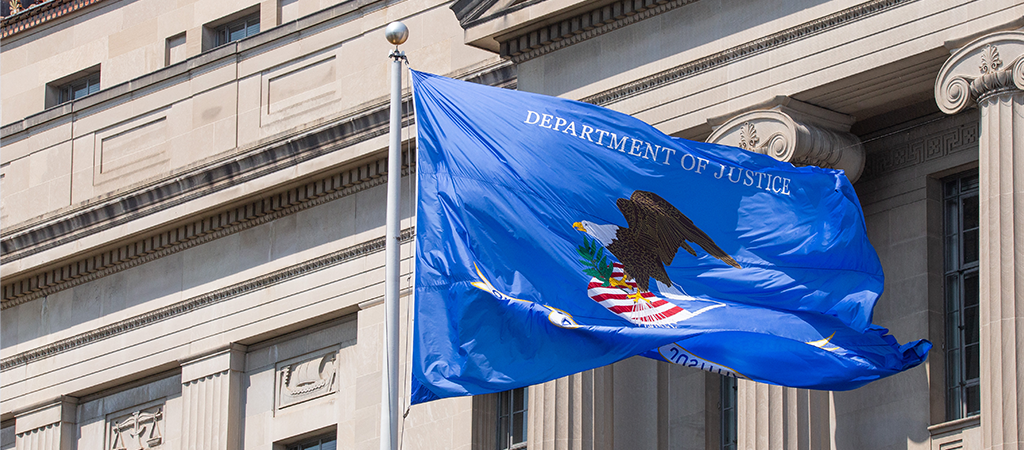
Meanwhile, in a separate diplomatic engagement, U.S. Deputy Secretary of State Christopher Landau met with Tongan Prime Minister Dr ‘Aisake Eke and Pacific Islands Forum (PIF) Secretary General Baron Waqa to reinforce the U.S. commitment to the Pacific region.

Prime Minister Eke, is the current PIF Chair, and Baron Waqa is PIF Secretary General.

The Deputy Secretary highlighted that the United States, as a Pacific power, remains committed to engagement with the region and looked forward to deepening cooperation on a range of issues to secure a free, open, and prosperous Pacific region.

The Deputy Secretary, Prime Minister, and Secretary General also discussed expanding opportunities for strengthening commercial ties to promote durable, long term economic growth and development that benefits both Americans and Pacific Islanders.

Tonga government bans unauthorized access to ‘Ata island, warns of legal action

The Tongan government has issued a stern warning prohibiting unauthorised access to uninhabited Crown lands, including the remote ‘Ata Island, effective immediately.

The Ministry of Lands, Survey, Planning, and Natural Resources released a public notice on May 6, 2025, emphasising strict enforcement of existing land laws to protect these areas.

‘Ata Island, located approximately 160 kilometres (99 miles) south-southwest of Tongatapu, is designated as Crown Land under the Land Act, placing it under the direct authority of the Minister for Lands.

The notice clarifies that Tongan citizens must obtain written permission from the Minister before landing, occupying, or using the island for any purpose, including filming, research, or tourism.

Foreign nationals face even stricter regulations: entering or using ‘Ata Island without a permit is a criminal offense, punishable by fines, imprisonment, or deportation.

The government also requires foreign entities to secure additional approvals, such as environmental and immigration clearances, before accessing uninhabited Crown lands.

Violators will be removed immediately and may face legal penalties, including revocation of future permits. The ministry has urged the public to report any unauthorised activities on ‘Ata Island to the authorities in Nuku’alofa.

This move underscores Tonga’s commitment to preserving its uninhabited islands and enforcing sovereign control over its natural resources. Officials cite concerns over environmental protection and illegal activities as key reasons for the crackdown.

For further inquiries or permit applications, contact the Ministry of Lands, Survey, Planning, and Natural Resources in Nuku’alofa.

Homicide investigation after man dies in Auckland’s Manurewa

By 1News Reporters

A homicide investigation has been launched after a man died in the south Auckland suburb of Manurewa this morning.

(Source: 1News)

Emergency services were called to the property on Mahia Rd just before 10am after it was reported that a man was “seriously injured”.

A man was found by police in a “critical condition” and died at the scene.

“Police are continuing to gather information from the scene, and there will be an increased police presence in the area,” Detective Inspector Shaun Vickers said.

“A scene examination will continue throughout today as we work to understand the exact circumstances surrounding this tragic incident and who was involved.”

Vickers said police would be working to identify and locate any persons of interest.

“Police would ask anyone who saw what happened, who has not yet spoken to us, to please get in touch.”

Anyone with information was asked to call police on 105.

More than 25kg cocaine seizure leads to four arrests across NZ

By 1News Reporters

More than 25kg of cocaine has been seized and four men arrested following an joint investigation into the importation of the drug into Christchurch.

More than 25kg of cocaine was seized at Lyttelton Port.
More than 25kg of cocaine was seized at Lyttelton Port. (Source: NZ Police)

Police and Customs received information about a “significant importation” of cocaine that had come through Lyttelton Port on March 29.

Search warrants were then executed across the country by specialist teams to support investigators with evidence gathering.

Four men, aged between 30-36, have been arrested in Christchurch, Wellington, Tauranga and Auckland as a result of the six-week investigation.

They will face multiple charges, including possession of cocaine for supply and burglary, and will appear in various district courts across a range of dates.

Detective Senior Sergeant Phil Sparks said the seizure equated to more than 250,000 doses of cocaine and $9 million of harm.

“That is an enormous amount of damage and misery that had been heading into our communities that has now been halted through this investigation.”

Sparks said the success of the investigation was partly down to the “excellent partnership” between Customs and the police.

“We continue to have a focus on engaging with businesses and supporting their legitimate services by keeping them safe with prevention advice to deter drug trafficking organisations’ attempts to exploit their people and premises.”

Customs acting investigations manager Rachael Manning said the investigation resulted from quick action and close collaboration between the agencies as well as industry partners.

“We know that transnational and serious organised crime groups are actively targeting New Zealand to drive up both demand and supply of illegal drugs such as cocaine for maximum profit. They’re using every method possible to exploit any vulnerabilities within international supply chains, whether that’s at seaports, in secure areas or on vessels themselves.”