Wednesday, February 25, 2026
Home Blog Page 69

Suspected illegal sea cucumbers in Vava’u as gov’t weighs harvesting ban extension

A town officer in Vava’u is investigating after discovering a cooler and a pile of rotten sea cucumbers.

Suspected sea cucumbers discovered in Hōleva, Vava’u. Photo/Uele Moala

Holeva Town Officer Uele Moala said he would file a complaint with the Police.

He cautioned the suspect about their interactions with the police.

He took photos of the stuff and shared them on Facebook.

The discovery follows reports last week that Tonga might extend its ban on sea cucumbers to give them more time to restock. 

The ban has existed since the 2010s, with the latest being 2022. 

Local media have reported Fisheries Ministry CEO Dr Sione Matoto as saying the expected lift in the ban was uncertain, citing a recent survey. 

Matoto reportedly confirmed that the ban on harvesting currently remains in place. 

The government’s decision to continue suspending the harvesting of this resource, which is considered a delicacy in parts of Asia, will allow stocks to recover following overfishing. 

Concerns about this highly priced species have arisen since the beginning of their fishing practices in the 1980s, particularly after several fishers died while using scuba hookah diving equipment.

The government later announced that sea cucumbers must only be collected by wading and free diving. 

It also banned using artificial breathing apparatus, including SCUBA and hookah, to harvest sea cucumbers.

The law states that anyone possessing sea cucumbers in a boat carrying artificial breathing apparatus is committing an offence.

Govt faces hurdles in Lulutai airlines potential sale as retirement funds hang in balance 

The Eke government faces mounting challenges in its bid to privatize the national airline, 

Officials are working out ways to help repay millions of dollars in loans from retirement funds and other government accounts, including an Australian grant allocated to the airlines by the previous administration, before any sale can proceed.

The controversial airline has been a point of contention since its inception in 2020, with critics warning it would plunge the government into debt, as happened with Royal Tongan Airlines, which collapsed with $30 million in debt after being forced to cease operations in 2004. 

The Minister of Public Enterprises Piveni Piukala announced yesterday that the government is reviving the airline, ensuring its fleet becomes operational in an effort to cover costs and position the carrier for potential buyers.  

He warned that if the government sold Lulutai Airlines in its current state, there would be no way to recover any costs, forcing a complete write-off, including the retirement funds loaned to the carrier.  

The aircraft has received various investments, including $21 million from the government and extra funding from Australian aid.

Piukala has announced that Lulutai has recently applied for a quick government subsidy to assist its recovery efforts.

He argued that the subsidy would be less costly to taxpayers than leaving Lulutai to fend for itself. 

“Hopefully by next week all three aircraft, including the Twin Otter, Saab 340 and Y12, will operate”, he said. 

The Saab was immobile after striking a cement block in December last year while on wet lease, and the attempt to claim insurance had been stalled.

The Y12 was a gift from China, but it faced significant mechanical issues and stopped operating.  

The Lulutai purchased the Twin Otter, which was commissioned in December 2023. It also encountered several mechanical issues.

The former Hu’akavameiliku government borrowed approximately $4.5 million from the Retirement Fund to purchase the Twin Otter.

Auditor reports 

The Minister said the Auditor General’s report for 2022/2023 was expected to be released soon, which can assist the government in its final decision about Lulutai Airlines.  

One issue that previously drew significant attention to Lulutai was last year’s revelation that the government did not own the airline, despite having invested over $20 million in it.  

As Kaniva News previously reported, the Auditor General stated he could not locate the share certificate to prove government ownership of Lulutai. 

 “These certificates are to be completely kept and filed. They are to be consistent with the independent confirmations from the Ministry of Public Enterprises” according to its original Financial and Compliance Audits reports for 2020/2021 and  2021/2022, the Auditor General’s office made this comment on Lulutai Airlines. 

“Audit issue still outstanding from previous years – No confirmation of government shares from the companies listed above. The Audit has no proof of the government ownership of these companies”. 

Former Prime Minister Hu‘akavameiliku previously stated that the Ministry of Finance had received the certificate, but he did not respond to our request for a copy. 

Homicide probe after man found with stab wounds dies in south Auckland

By 1News Reporters

A homicide investigation is underway after a man found with “critical injuries consistent with stab wounds” died at a property in Auckland’s Manurewa overnight.

Police at the scene on Marr Road in Manurewa.
Police at the scene on Marr Road in Manurewa. (Source: 1News)

Police were called to a property on Marr Road shortly after midnight following a report that a person had been injured.

“Police and Ambulance attended and located a man with critical injuries consistent with stab wounds who, despite medical attention, died at the scene,” a police spokesperson said.

An investigation was launched to determine the circumstances of the man’s death.

“Residents in the area can expect to see an increased Police presence in the area today.”

Police said it wanted to hear from anyone who witnessed the incident or had information to assist the investigation.

Those with information were asked to call 105.

Victoria Sabrina Kalapa sentenced to home detention for tax offences exceeding half a million dollars 

An Auckland woman has been sentenced to home detention after diverting company funds into her personal account to evade PAYE deductions owed to Inland Revenue.

Victoria Sabrina Kalapa, a 36-year-old Auckland woman, has been sentenced to 12 months of home detention for serious tax offences stemming from her management of Gold Standard Scaffolding Ltd (GSSL).  

The sentencing took place on April 2 at the Auckland District Court.  

Kalapa was found guilty of aiding her company in failing to remit Pay As You Earn (PAYE) deductions to Inland Revenue, despite overseeing substantial financial transactions that led to significant personal gains.  

As the sole director and shareholder of GSSL, which operated from 2019 until its liquidation in 2023, Kalapa was responsible for managing the company’s finances alongside her husband, who acted as the operating manager.  

An investigation by Inland Revenue, initiated in July 2023, uncovered troubling evidence. Records revealed that GSSL had received deposits totaling $4.5 million over four years, with nearly equal amounts being withdrawn.  

Shockingly, more than $2 million in “drawings” was transferred to Kalapa’s personal bank accounts, alongside reported “wages” totaling almost half a million dollars.  

Documents presented to the court highlighted that from November 2019 to April 2023, GSSL failed to transfer any PAYE payments to the Inland Revenue, except for a minimal payment of $500.  

Despite the company’s substantial bank balance, Kalapa prioritized personal withdrawals over fulfilling her company’s tax obligations. Inland Revenue’s investigation revealed that the total unpaid PAYE tax assessed against GSSL stands at $558,884.58, with additional late fees pushing the total liability over $560,000.  

Although Kalapa sought an instalment arrangement with Inland Revenue, the agreement collapsed due to missed payments, further complicating her legal issues.  

The court not only imposed home detention but also ordered Kalapa to pay reparations of $13,000 at a rate of $50 per week, reflecting the seriousness of her financial misconduct.  

This case serves as a stark reminder of the legal responsibilities business owners hold in managing tax obligations and the consequences of failing to comply with these requirements. 

Princess Mata‘aho first royal member to pursue doctoral research, exploring Tonga’s cultural diplomacy through monarchy and fish legends 

Princess Halaevalu Mata‘aho Tuku‘aho is pursuing doctoral research at the Australian National University, concentrating on the significant role of the Tongan monarchy in shaping the nation’s cultural diplomacy and the origins of fish legends.


Her Royal Highness Angelika Lātūfuipeka Halaevalu Mataʻaho Napua ‘Okalani Tukuʻaho. Photo/Victoria Museum

King Tupou VI and Queen Nanasipau‘u Tuku‘aho’s eldest daughter was the royal family’s first member to pursue a doctoral degree.  

Her study delves into historical landmarks associated with King George Tupou I and the rich narratives surrounding Tongan fish legends.  

The Princess aims to promote and preserve Tongan cultural values globally, engaging knowledge holders and utilizing digital media, a statement said.  

Princess Mata‘aho is currently conducting her doctoral research at the Department of Pacific Affairs (DPA) at the Australian National University (ANU).  

“Her research focuses on the role of the monarchy in shaping Tonga’s cultural diplomacy, particularly through historical landmarks associated with King George Tupou I and the origins of fish legends”, it said.   

Knowledge holders of specific landmarks and fish legends are expected to participate in the Princess’s research.  

“Her project underscores her deep-rooted sense of cultural heritage and commitment to preserving Tongan traditions”, it said. 

King Tupou I 

King George Tupou I was one of Princess Mata’aho’s great-great-great-grandfathers. He is revered as the founder of modern Tonga. He unified the kingdom under one formal government, championed Christianity, and introduced Western reforms.  

Most significantly, he liberated commoners from the oppressive control of feudal chiefs by abolishing serfdom and establishing Tonga’s first constitution in 1875, which guaranteed their freedoms.  

His legacy has been celebrated as the foundation of modern Tonga.

Fish legends 

Fishes hold considerable significance within Tongan culture and traditions, where they serve as mythological symbols.  

Several species, including tuna (ʻatu), sharks (‘anga), and eels (tuna), are imbued with mythological importance and are associated with various traditional fishing practices.  

While some customs may no longer be practiced today, the communal fishing technique known as ‘uloa’ remains significant in contemporary studies.

This method has been utilized as a research framework, especially in the health sector, effectively capturing Tongan interpretations and understandings of mental distress.

Man jailed for filming multiple women and girls in bathrooms

By Yvonne Tahana, 1News Reporter

An Auckland man who used hidden cameras to secretly film his female friends, colleagues, children and teenagers in vulnerable positions has been sentenced to four years in prison.

Micah Te Ahu Fala.
Micah Te Ahu Fala. (Source: Supplied)

Micah Te Ahu Fala, who had never previously appeared in court, now has an extensive rap sheet.

The agreed court Statement of Facts makes for unsettling reading and reveals the extensive scale of the offending.

Police found 236 videos and 1119 screenshots or images and there were known to be 22 victims of his crimes.

The 41-year-old pled guilty earlier this year to 42 charges, including possessing objectionable material, making objectionable publications, making an intimate visual recording and possession of intimate visual recordings.

1News understands Crown lawyers have struggled to find anything comparable to the scale of Fala’s offending, which happened over a period of nine-and-a-half years.

“The defendant operated small spy cameras, concealed in bathrooms to capture intimate visual recordings of his victims, entering the bathrooms, removing their clothing, showering, drying and dressing themselves and on occasions using the toilet,” the statement of facts said.

“Police investigations subsequently found evidence of the purchase of four spy cameras from Trade Me and eBay.”

It said the recordings and images were predominantly captured in bathrooms at nine different locations, including “a property where Mr Fala filmed through the window”.

He also faced three charges of sexual conduct with a child under 12, related to him stroking a child victim’s foot.

“The police also located hundreds of recordings of female feet amongst the defendant’s seized digital files. The feet belonged to at least three of the victims and were recorded without their knowledge or consent.

One recording shows the defendant stroking the feet of a 10-year-old victim as she slept. This child has been the victim of multiple intimate visual recordings.”

Fala organised the recordings into folders under each of the respective victim’s names.

And he knew how to use technology to surreptitiously watch victims.

“On some occasions he accessed the devices under the pretence of improving security on the device. On other occasions he would access the devices when they were left unattended,” the court document said.

Operation Frost

The offending was uncovered by police’s Operation Frost, led by Auckland City’s Child Exploitation Team, which started investigating in September 2023.

In July this year, Detective Sergeant Rick Veacock said: “These are serious allegations, involving covertly made intimate visual recordings and objectionable publications.”

He said at the time that search warrants had been carried out at addresses at locations across the North Island in June, leading to the arrest of the man.

When Fala plead guilty in February, Judge Kevin Glubb entered convictions on each charge and remanded him in custody. His name suppression continued until today’s sentencing but has now been lifted.

US Embassy issues ‘no excuses’ warning to Tongans on visa violations, lifetime ban possible

The US Embassy in Fiji has issued a clear and alarming message regarding visa violations to residents in the Pacific, including Tongans.  

Individuals who overstay their U.S. visas could face a permanent ban on re-entering the United States, the Embassy said in a statement.  

This strongly worded warning appears to be the first direct message from the US Embassy targeting Tongans and other Pacific islanders since the Trump administration’s deportation crackdown policy began earlier this year.

The warning underscores the seriousness of visa compliance and the potential consequences of violations.  

It said the consular officers have full access to immigration histories and will be able to identify any past violations.  

The embassy stressed that there is no such thing as an “honest mistake” when it comes to visa regulations.  

Travelers are reminded that it is their responsibility to adhere to the terms of their visas, or they could be subject to criminal prosecution in addition to the risk of a lifetime ban.  

The warning follows Tonga’s Prime Minister Aisake Eke’s opposition to Donald Trump’s immigration crackdown. Eke stated that the influx of deported migrants will only exacerbate the kingdom’s existing challenges.

Dr. Eke expressed concerns that Mr. Trump’s plans to expel migrants might bring more deportees with criminal records to Tonga’s shores. 

The latest update from US media regarding the deportation crackdown reports that the government relies on tattoos and social media posts as sufficient grounds for deportation to a third country.

They also said that as many as four in five immigrants at risk of deportation from the United States are Christian, according to a new report that calls on their fellow believers to consider the impact of the Trump administration’s aggressive deportation policies. 

The report says about 10 million Christians are vulnerable to deportation, and 7 million U.S. citizens who are Christian live in households where someone is at risk of deportation. 

The report, under the auspices of major Catholic and evangelical organizations, draws on a range of data, including percentages of religious affiliation in various migrant and national populations and on an advocacy group’s analysis of U.S. census data on migrants. 

Tonga’s youngest Chief Magistrate replaces one of the longest-serving predecessors 

Tonga has appointed its youngest female judge as the new chief magistrate.

Chief Magistrate Loupua Kuli

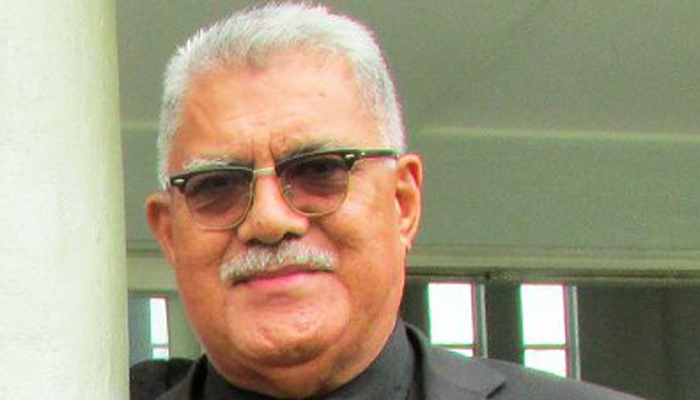
Loupua Kiola Kulī, 50, has been promoted to the new position after four years of service as a senior magistrate since 2020. 

Effective March 28, she has replaced former Chief Magistrate Sione Folau Lokotui, who retired last month.

Lokotui retired on March 27 after 15 years of service, having served approximately 55 years as a civil servant, mainly at the Ministry of Justice.

Kulī was presented with a gold medal during the USP 2010 graduation as part of her LLB qualification awards.  

In 2016, she graduated with a Master of Laws. 

She is the daughter of Mafi Kiola of Houma, Tongatapu, and Sūlia Kiola of Ha’afeva, Ha’apai. 

Kulī is married to Ma‘afu Kulī of Lapaha and they have children. 

Suspect in Tonga bank 15 kg drug case does not flee country; trial expected this month: Police Minister 

The court hearing for the suspect in the 15 kg meth haul seized by police from his office at the National Reserve Bank of Tonga and his home is anticipated this month.  

Tevita, 39, was arrested along with his sister, Ana Seini Kolokihakaufisi, 37.  

However, as reported by Kaniva News last year, ‘Ana has been discharged on apparent mental health grounds. 

They were arrested by Police with 5.73kg of the illicit drug at their family residence at Kolofo’ou, while a further 9.927kg was seized from Tēvita’s office at the NRBT. 

The Minister of Police recently confirmed Tevita’s whereabouts after he was questioned during a press conference.  

He said that Tevita was on curfew while awaiting his trial.

The February 2024 arrest has recently sparked widespread curiosity among the online community, as reports emerged that government officials, who were allegedly being investigated for involvement in inappropriate activities and drug dealings, were fleeing the country.

As Kaniva News previously reported, a suspended senior police officer who was under investigation had fled to the United States.

Senior Police Officer Pita Tahitu‘a was suspended after complaints following alleged inappropriate workplace behaviours. 

Last year, a Tongan government authority stated it would inform its international counterparts after a prison officer involved in drug-related activities fled the country.

The revelation came amid an investigation into the Prison authorities’ alleged involvement in “accepting bribery and aiding and abetting trafficking of illicit drugs into prisons”.  

“This is a grave violation of the good order and security of the prison”, His Majesty’s Prisons at Hu‘atolitoli said last year. 

1962 report reveals NZ Catholic Bishop’s restrictions on English drama over Tongan faiva as Polyfest celebrates 50 yrs in Auckland 

A recently unearthed 1962 article from Tonga’s Taumu‘a Lelei newspaper reveals how a New Zealand priest actively discouraged English theatrical performances, urging Tongans to preserve their faiva fakafonua (traditional performances) instead.  

Polyfest 2012. Photo/Kaniva Tonga News

This discovery comes as Auckland’s Polyfest marks its 50th anniversary, a vibrant celebration where Tongans, Māori, and Pacific Islanders in New Zealand perform their indigenous cultural haka and singing entertainment.  

Dr Felise Tāvō, currently translating the church’s history in Tonga from French into Tongan and English, shared a copy of the Catholic newspaper’s article on Facebook this week.  

The article reported that the Catholic bishop at the time, understood to be John Hubert Macey Rodgers from New Zealand, stated his desire to change the usual entertainment performed at the Catholic schools’ prize-giving night.  

According to the article, it was customary for the schools to present English dramas and entertainment during the event. Still, the bishop wanted the students to be taught about their indigenous faiva or faiva fakaTonga.  

The article noted that the bishop aimed to instill in the students a sense of value for their faiva fakaTonga and help them understand the importance of their culture. 

It said that as a result, various schools were told to each practice various faiva groups, including me’etu’upaki, lakalaka, mā‘ulu‘ulu, and tafi.  

Ban on faiva  

The revelation revives efforts in Tonga to ban faiva fakaTonga, which were considered heathen.

These efforts resulted in a law enacted during the reign of King Tupou I, known as the 1850 Code, which stated, “Dancing and heathen customs are strictly forbidden.”

Tongan scholars, such as Professors Futa Helu and Sione Latukefu, argued that the law was enacted under the influence of Wesleyan missionaries, who prohibited dancing according to their doctrines.

However, the legislation was subsequently rescinded, and many faiva practices originally classified as heathen were either banned or reformed to align more closely with Christian principles.

The Catholic priests were recognized for preserving the faiva fakaTonga, especially among the people of Lapaha in Tongatapu, where the first French missionaries were stationed.

The esteemed chief Tuku‘aho, who was not a Catholic, is credited with creating the lakalaka performance.

Since Tuku‘aho’s death in 1897, the residents of Tatakamotonga have consistently worn black clothing as their performance attire to honour his memory and that of his son, Tungi Mailefihi.   

Polyfest festival  

Polyfest is an annual festival in Auckland, New Zealand, showcasing the performing arts of Polynesian culture.  

Established in Ōtara in 1975, it has grown to become one of the largest Polynesian festivals globally.  

The event celebrates its 50th anniversary this year.  

The official programme for Polyfest started with a flag-raising ceremony in South Auckland today. 

After the flags were aloft, a powhiri welcomed the participants to the Manukau Sports Bowl. 

Over four days, more than 60 schools and thousands of performers will take to the stages to celebrate an array of cultures.