Home Blog Page 81

Lulutai Airlines ‘flying, operative, breaks even’ as PM calls situation ‘exciting’ following gov’t review

NUKU’ALOFA, TONGA –The Tongan government has affirmed the operational viability of state-owned Lulutai Airlines, describing the carrier as fully functional.

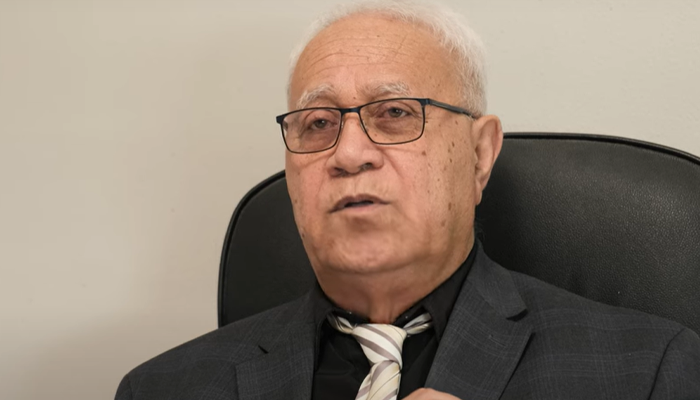
The Deputy Prime Minister stated that Lulutai is “operative”, “flying” and “break even,” describing the successful review in Tongan as: “ko ē e ngāue ko ē na’a mau fai ki he Lulutaí ko eni kuo si’i mo’ui kuo puna holo.”

Break even, he meant the airline is generating just enough revenue to cover costs without turning a significant profit.

The remarks came amid mounting scrutiny of the former Hu’akavameiliku government’s airline management, accused of making multimillion-dollar decisions without parliamentary transparency.

Critics highlighted controversial purchases like last year’s Twin Otter aircraft, which shocked the public and raised questions about fiscal oversight.

Potential Foreign Buyers

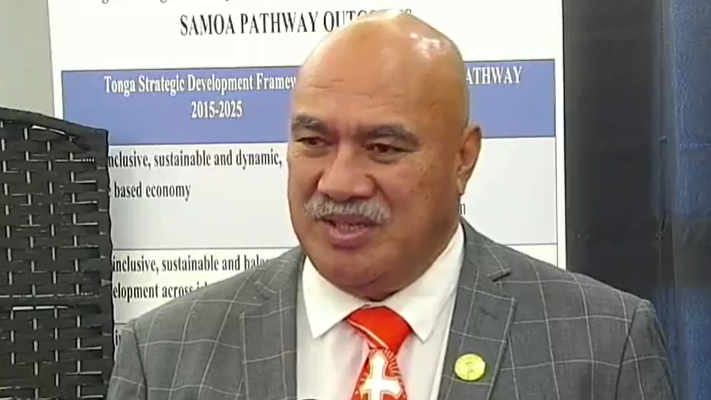
Prime Minister Aisake Eke , also serving as the Finance Minister, confirmed the new budget allocates no funding to Lulutai and ruled out government loans, citing “interest from foreign potential stakeholders” in acquiring shares. 

“This is exciting, and we’re exploring partnerships,” he said, without naming interested parties.

He expressed in Tongan that this was an exciting (“fakafiefia”) new phase, as there had never been an airline like this before, referring to the previously government-sponsored airlines.

Controversial Investments Collapse

Lulutai Airlines has plunged into deep debt following controversial investments totaling approximately $50 million, according to the Minister of Public Enterprises.

This includes government funding and the use of Australian budget support. The airline also secured a $4.5 million loan from the National Retirement Fund Board to purchase a new $14 million Twin Otter. Reports indicated that the Board acquired equity in Lulutai Airlines under the terms of the agreement.

Despite these substantial investments, the carrier continued to face significant challenges, including an insurance company’s refusal to replace its SAAB 340 aircraft that crashed in December 2024.

Government Review

When Prime Minister Eke’s government took office earlier this year, it vowed to conduct comprehensive reviews of all government ministries and state-owned entities. At the time, only one of Lulutai Airlines’ three aircraft – the Twin Otter – remained operational.

The new administration terminated then-CEO Poasi Tei, who had been appointed by the former Hu’akavameiliku government after Tei lost his parliamentary seat due to an electoral bribery conviction.

In an effort to revive the airline, the government hired Tevita Palu, the Real Tonga aviation engineer, as the new CEO.

The Public Enterprises Minister said at the time that privatisation was impossible because Lulutai’s poor condition deterred potential buyers, and previous investments would be wiped out.

Aviation Transparency Demands

While the airline’s performance data remains undisclosed, the government’s update offers hope—a turning point for Tonga’s troubled domestic aviation sector, which has grappled with service failures and allegations of secrecy since Chatham Airlines left in 2013.

Tourism and aviation experts – including those from the IMF and World Bank – consistently maintain that no government-operated airline could survive in Tonga.

Their cited reasons include the small domestic market, political instability, high aircraft maintenance costs, and volatile fuel prices.
Lulutai Airlines, launched in 2020 to boost domestic connectivity, has faced operational challenges. Opposition members argue its financials remain opaque, demanding audits of past expenditures.

Deputy PM questions $36m fund sourcing as budget risks depleting local Sports levy amid PM’s support for Pacific Games

NUKU’ALOFA, TONGA – Tonga’s Deputy Prime Minister, Taniela Fusimālohi, has raised concerns over mounting financial pressures for the Pacific Games 2031, revealing that unforeseen costs, initially overlooked, now threaten critical renovations.  

It follows critics arguing that Tonga shouldn’t have hosted the Games, given its donor-dependent budget and remittance-reliant economy.

According to Parliamentary Hansard number 20 of June 2025, Fusimalohi said in Tongan, “Time passed, and unforeseen costs emerged—costs that had never been considered initially.”

He confirmed a levy is being collected to bolster the recurrent budget but admitted uncertainty over securing the full $36 million needed for upgrades. “This cost being talked about, $36 million, no one knows whether the government will secure it for the renovation,” he added.  

The official Tongan transcript of Deputy PM Fusimālohi’s parliamentary remarks is reproduced verbatim below:

“‘A ia ko e ‘uhinga foki ia ‘e Sea he koe’uhí ‘e ‘alu atu pē e taimi mo e hā hā mai ‘a e ngaahi fakamole ia na’e ‘ikai ke fai ha fakakaukau ki ai ‘i he kamata’anga. Pea ko ‘eni ‘i he tu’unga ko ‘eni ‘oku ‘i ai ‘a e levy ‘oku tānaki ‘oku liliu foki ia ‘o ‘alu ia ki he recurrent, pea ko e ‘uhinga ia ko ē ‘a e ngaahi fakamalanga ‘i he kuohili, ko e financial outlay ko ē ki he sipoti ko e me’a ia ke fai ‘i he ‘aho ni.  Ko e cost ko ‘eni ‘oku talanoa ki ai ‘a e 36 miliona hei’ilo pē ‘e ma’u ia ‘e he Pule’angá ke fai’aki ‘a e renovation.”  

The English version of Fusimālohi’s statement has been edited for clarity and conciseness.

The remarks follow Sports Minister Sinaitaka Tu’itahi’s disclosure in Parliament the same day that the government is actively seeking $26 million to upgrade sports facilities ahead of the Games.

The Minister stated that she was exploring donor funding options while partially relying on the levy revenues.

An estimate from the Tonga Association of Sports and National Olympic Committee (TASANOC) outlines potential earnings from marketing and athlete housing, Minister Tu’itahi said. 

Games Benefit Doubts

However, Fusimālohi pushed back, revealing that TASANOC intended to redirect local sports levy funds to finance the Pacific Games during its next six-year preparation, raising doubts about national benefits.

Fusimālohi stated that TASANOC has not yet explained the economic benefits Tonga will receive from the Pacific Games.

As Kaniva News reported last week, Prime Minister Dr ‘Aisake Eke reaffirmed his government’s commitment to hosting the event, originally secured under former PM Hu’akavameiliku’s administration.

“We fully support Tonga’s role as host, as that was part of our development,” he told lawmakers, though questions linger over funding shortfalls.  

Levy Benefits Local Sports 

The sports levy was originally initiated by ‘Akilisi Pohiva’s administration in 2017 to fund the 2019 Pacific Games, before Pohiva later revoked Tonga’s hosting rights.

However, the levy was retained to fund local sports and continued by successive administrations.

A delegation from Fiji and the Pacific Games Council recently visited Tonga to assess preparations, with officials expecting a formal update on the kingdom’s hosting status and financial plans by October.   

The financial challenge is compounded by Tonga’s heavy reliance on foreign aid, a dependency that forced the country to withdraw from hosting the 2019 Pacific Games in 2017.  

At the time, then-Prime Minister ʻAkilisi Pōhiva expressed concerns about potential misuse of funds, leading to the revocation of the hosting permit.   

Secret Deal Backlash

Tonga’s successful bid to host the Pacific Games 2031 surprised many, having been secured through the efforts of former Prime Minister Hu’akavameiliku without parliamentary approval. 

Reports indicate that to appease the Pacific Games Council following Tonga’s withdrawal as the 2019 host, the Hu‘akavameiliku government struck a confidential deal with the Council—a move that angered critics, especially since Tonga was favorably positioned in its legal dispute with the Council at the time.  

Shovel attack victim narrowly escapes as attacker flees before police arrival in Tonga

A shocking shovel attack was caught on camera, showing a violent assault on a Tongan road before the attacker fled just as police arrived.

A screengrab from social media footage shows the moment a man strikes another with a shovel on a Tongan road before fleeing the scene

The footage, believed to have been filmed in Tongatapu, shows a group of youths brawling before one man suddenly strikes another in the head with what appears to be a shovel.

The shirtless victim collapses onto the road as the attacker immediately flees, throwing the weapon aside.

It was unclear whether he was injured or not, but a woman was seen helping him stand up and leading him to the roadside.

One person is seen picking up the discarded shovel while leading another man away from the scene.

A police van was seen approaching the attack and stopping at the scene, just before the attacker had fled.

An officer jumps out and gives chase, but the assailant has already escaped.

It remained unclear whether police apprehended the attacker.

The victim’s condition remains unknown, and authorities have yet to confirm whether any arrests have been made.

Kaniva News has been unable to independently verify the exact location of the incident or the identities of those involved.

However, the livestreamed video has sparked concern over youth violence and police response times in the area.

Witnesses at the scene claimed tensions had been escalating before the attack.

Tonga Police crack down on crime; 50 arrested in weekend operation

Nuku’alofa, Tonga – The Tonga Police confirmed the arrest of 50 individuals over the weekend.

The operation, which targeted high-risk activities, apprehended six females and 44 males, ranging in age from 16 to 57.

The majority of arrests were linked to public intoxication and driving under the influence (DUI) of alcohol, offences that police say endanger both perpetrators and the broader community.

Authorities emphasised that such behaviours undermine public safety and will not be tolerated.

A spokesperson for Tonga Police stated that these enforcement actions are part of a broader strategy to uphold the rule of law, particularly during weekends when alcohol-related incidents peak.

“We reaffirm that such behaviour will not be tolerated, and our operations will continue to focus on those who choose to act in defiance of the law,” the spokesperson said.

Gratitude for Public Support

Tonga Police also appreciated law-abiding citizens who contribute to a safer society.

“We remain firmly committed to working in partnership with the public to build a safer, stronger, and more law-abiding society for all..”

The police reaffirmed their commitment to working alongside the community to foster a safer, stronger, and more law-abiding society.

For further inquiries, contact the Tonga Police Media & Public Relations Office at 740-1614.

Police charge 21-year-old Kahoua female driver over dangerous driving captured on video

Tonga Police have arrested and charged a 21-year-old female driver from Kahoua in relation to a reckless driving incident that gained widespread attention on social media on 12 June 2025.

It follows Kaniva News’ recent report of a driver dangerously circling a Nuku’alofa roundabout, causing traffic disruptions amid honking from other vehicles.

A Facebook video appeared to show a female driver and passengers taking part in the dangerous act.

The Police said the video depicted a minibus dangerously circling the Taufa’ahau’s Bypass roundabout multiple times, with passengers visibly encouraging the behaviour.

Following a police investigation, the driver was located and arrested on 13 June 2025, Police said.

The matter is scheduled to be heard in court on Wednesday, 2 July 2025.

Tonga Police remind all members of the public to act responsibly on our roads.

“Reckless driving endangers lives and will not be tolerated. Public safety remains our highest priority.”

Trump weighs travel ban against Tonga amid document fraud, visa overstay problems

Tongan travellers may face new U.S. entry restrictions as the White House considers unprecedented bans. 

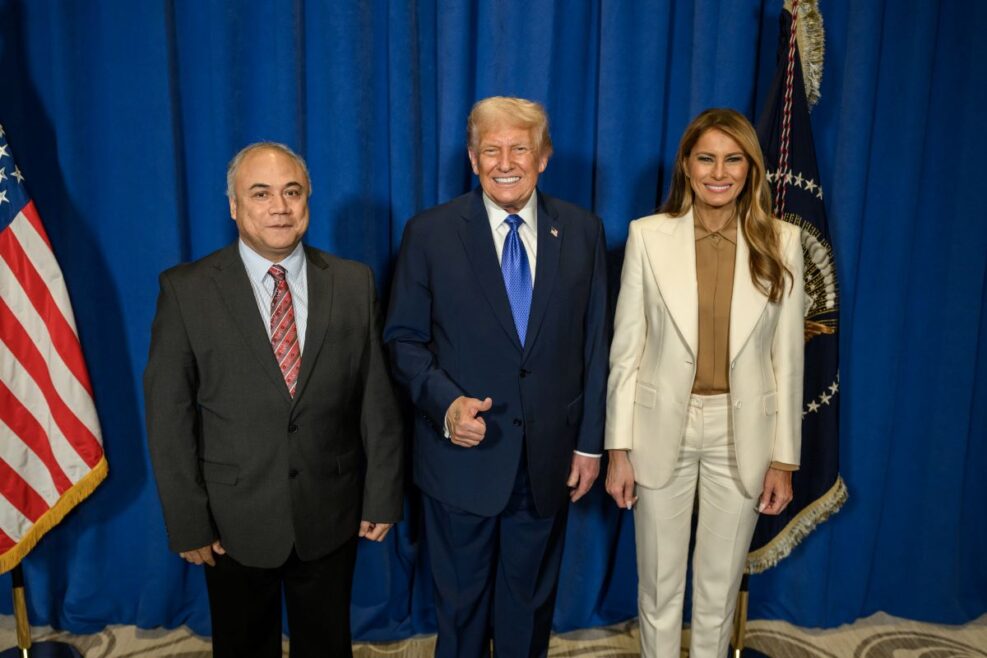
President Trump (L) and Prime Minister Eke

A new administration memo has outlined several reasons for the potential ban, including insufficient government-issued identity documents, high rates of visa overstays, and concerns about widespread government fraud.

Some nations were flagged for offering citizenship through monetary investment without residency requirements, while others were criticised over alleged “antisemitic and anti-American activity” by their citizens in the U.S.  

The newly listed countries are deemed non-compliant with U.S. benchmarks.

The US State Department memo, which The Washington Post reviewed, said it “was signed by Secretary of State Marco Rubio and sent Saturday to U.S. diplomats who work with the countries.”

The Post requested clarification and details from the administration, but has not yet received them.

The memo said “the governments of listed nations were being given 60 days to meet new benchmarks and requirements established by the State Department. It set a deadline of 8 a.m. Wednesday for them to provide an initial action plan for meeting the requirements.”

According to the Post, the memo identified varied benchmarks that, in the administration’s estimation, these countries were failing to meet. Some countries had “no competent or cooperative central government authority to produce reliable identity documents or other civil documents,” or they suffered from “widespread government fraud.” Others had large numbers of citizens who overstayed their visas in the United States, the memo said.

Other reasons included the availability of citizenship by monetary investment without a requirement of residency and claims of “antisemitic and anti-American activity in the United States” by people from those countries. The memo also stated that if a country was willing to accept third-country nationals who were removed from the United States or enter a “safe third country” agreement, it could mitigate other concerns.

For years, travelling to the U.S. has been a major concern in Tonga because applicants face high costs, including trips to Fiji to apply for a visa at the US Embassy there.

It was one of the key issues Tonga used to negotiate the establishment of a U.S. Embassy in Nukuʻalofa last year. 

In 2020, the US Census reported that 78,871 people in the US have Tongan ancestry.

One study described the Tongan community in the States as “a struggling Tongan immigrant population”.  

Research by Tongan scholar Vanesa Tu’i’one and others, published by the National Library of Medicine, says Tongans have among Los Angeles County’s lowest per capita incomes, and more than one in four Tongan Americans (28.5%) in Los Angeles County live below the Federal Poverty Level. 

The countries facing scrutiny in the memo: Angola; Antigua and Barbuda; Benin; Bhutan; Burkina Faso; Cabo Verde; Cambodia; Cameroon; Democratic Republic of Congo; Djibouti; Dominica; Ethiopia; Egypt; Gabon; Gambia; Ghana; Ivory Coast; Kyrgyzstan; Liberia; Malawi; Mauritania; Niger; Nigeria; Saint Kitts and Nevis; Saint Lucia; Sao Tome and Principe; Senegal; South Sudan; Syria; Tanzania; Tonga; Tuvalu; Uganda; Vanuatu; Zambia; and Zimbabwe.

The expanded ban follows the Trump administration’s initiation of a large-scale operation that has resulted in the arrest and deportation of many Pacific islanders. 

As Kaniva News reported previously, among the 1.4 million people at risk of deportation from the US, over 561 are former citizens of Fiji, 151 are Tongans, and 57 are Sāmoans. 

That report which was also published by other Pacific island media, alarmed leaders in Tonga, Fiji, Sāmoa, Papua New Guinea, and the Marshall Islands, all of which are already struggling to integrate a significant number of deportees, many of whom have been convicted of serious drug-related and violent crimes in the United States, Australia, and Aotearoa New Zealand. 

Dr ‘Aisake Eke, Tonga’s Prime Minister, early this year expressed concern over Trump’s immigration policies, stating that the influx of deported migrants would worsen Tonga’s existing challenges.

It has been estimated that about 30 criminals have been deported to Tonga each year since 2010. 

Eke said he was concerned about the potential impact of the US immigration crackdown on Tonga.

Tongan couple arrived as visitors granted NZ residency after wife’s dialysis emergency

Auckland, NZ – Tongan nationals Patrick Sese Takau and his wife, Lolohea Faonelua Takau, have been granted New Zealand residence visas after a gruelling two-and-a-half-year journey marked by medical hardship and an immigration battle.

Koli Vənisi (R), Director of Pacific Immigration & Consultancy Limited, who successfully advocated for the Takau family’s residence visa under humanitarian grounds.

The couple arrived in New Zealand from Tonga on 14 November 2022 to visit their children, grandchildren, and extended family.

However, their plans took a devastating turn just weeks later when Lolohea was rushed to the hospital in December of the same year.

Diagnosed with a severe kidney condition, she was forced to undergo dialysis three times a week, leaving the family in distress.

Facing the prospect of separation or returning to Tonga, where consistent dialysis treatment is difficult to access, the Takau family turned to Koli Vānisi and his Auckland-based Pacific Immigration & Consultancy Limited for help.

The firm lodged a residence visa application on humanitarian grounds, arguing that Lolohea’s survival depended on New Zealand’s healthcare system and that deporting the couple would tear their family apart.

After months of legal efforts, the Immigration Protection Tribunal ruled in their favour, and the Associate Minister of Immigration approved the visas as an exception to standard immigration rules.

In a letter dated 19 May 2025, Immigration New Zealand confirmed:

“I am pleased to advise that the Associate Minister of Immigration has now considered the Tribunal’s decision and on 15 May 2025 granted your client and family member a residence application, resident visas as an exception to residence instructions.”

The visas were finalized on 11 June 2025, allowing the elderly Tongan couple to remain in New Zealand permanently.

Contacting Kaniva News, Vənisi stated: “This decision recognizes our services and our ability to help members of our community who are struggling with immigration needs.”

Tongan lesbian wins NZ asylum in first refugee case of its kind

A Tongan woman has won the right to live in New Zealand after the Refugee Tribunal ruled she faced a well-founded fear of persecution in Tonga due to her sexual orientation as a lesbian.

This is believed to be the first time a Tongan citizen has successfully claimed refugee status in New Zealand due to persecution for being LGBTQ+.

The Tribunal overturned an earlier decision by a refugee and protection officer, who had declined her refugee or protected person status application.

The ruling identified her only as “EU (Tonga)” for privacy reasons.

In its ruling, the Tribunal found that the appellant would be at risk of serious harm if she returned to Tonga because of her identity as a lesbian.

Under Article 1A(2) of the Refugee Convention and section 129(1) of New Zealand’s Immigration Act, the Tribunal recognised her as a refugee, stating she qualified for protection due to the danger she faced in her home country.

While the Tribunal granted her refugee status, it determined she did not meet the criteria for protected person status under the Convention Against Torture (CAT) or the International Covenant on Civil and Political Rights (ICCPR).

Tonga sodomy law

In Tonga, gay couples cannot legally formalise their relationships, as civil unions are prohibited.

The Criminal Act  section 136 about Sodomy and bestiality says:

“Whoever shall be convicted of the crime of sodomy with another person or bestiality with any animal shall be liable at the discretion of the Court to be imprisoned for any period not exceeding ten years and such animal shall be killed by a public officer. (Substituted by Act 9 of 1987)”.

In 2016, the then-former Chief Justice Charles Cato sentenced and jailed Sione Iketau, with the final 12 months being suspended after the prisoner was convicted of sodomising a child under the age of 12.

Petition in Tonga

The news follows petitions organised in Tonga last year urging the king to revoke his appointment of the new Chief Judge after it was revealed that the judge’s LGBTQ+ lifestyle conflicted with Tonga’s constitution and the country’s conservative Christian values.

Tonga’s top judge sounds alarm over rising machete attacks while sentencing ex-soldier 

Tonga’s Lord Chief Justice has issued a stern warning over the kingdom’s growing epidemic of machete violence while sentencing a former soldier for a drunken blade attack in Lapaha.  

Tonga’s Chief Justice Malcolm Bishop. Photo/Australian High Commission Tonga (cropped)

In a landmark ruling that laid bare the court’s hardening stance, Chief Justice Malcolm Bishop declared the weapon’s frequent appearance in alcohol-fueled brawls demanded urgent judicial intervention. 

In sentencing 26-year-old Seteone Mu’asika, Mr Bishop said: “What is serious about your case is the use of a machete, which is becoming more frequent in the Kingdom.”

“The Courts must do all they can to stamp out this invidious practice because let the facts be faced, a machete is a lethal weapon.  

“It could cause catastrophic and indeed fatal damage, the fact that no such damage was caused here is not determinative of the final outcome of the case because the Courts must do all it can to stamp out the increasing use of machetes during disagreements.”  

Chief Justice Bishop then sentenced Mu’asika to six months in prison with a conditional suspension for inflicting serious bodily harm during a machete attack.

The court heard how Mu’asika struck 17-year-old Fe’ofa’aki Pouono in the back during an alcohol-fueled altercation. 

READ MORE:

Makapaeo machete attacker loses appeal, 7.5-year sentence upheld 

Man sentenced to over two years in prison for Tongatapu machete attack 

Seven-year jail term for Vava‘u man who attacked two men with a machete 

Both Mu’asika and co-accused Sōane Tātola pleaded guilty, though the court was informed that Tātola had escaped jurisdiction and remained at large.   

According to prosecution evidence, the confrontation followed separate drinking sessions, with an initial fistfight between Tatola and the victim earlier in the evening.  

The situation later escalated when Mu’asika, armed with a machete, and Tatola, wielding a broken bottle, approached Pouono near the village bakery. 

Justice Bishop detailed how Tātola first stabbed Pouono with the broken bottle before Mu’asika chased the victim and struck him with the machete.  

“It was then that you pursued him with a machete and as he was attempting to mount the fence, you struck his back with the machete. He fell to the ground but managed to get up and escape. You then quit.” 

Justice Bishop stated that Pouono’s wounds were caused partially by Mu’asika and partially by Tātola. He then said: “So far as you were concerned, I am satisfied that the injury sustained to his back was consistent with the assault by the machete fortunately no serious injuries ensued, and he was treated conservatively.” 

While acknowledging the injuries were not life-threatening, Justice Bishop emphasised the attack’s inherent danger.

In his sentencing remarks, Justice Bishop acknowledged mitigating factors in Mu’asika’s background: “I have read quite a lot about you to your credit, and I am told that you have assisted in the suppression of public disorder in your community and you are in a de facto relationship and have two children. I am also told that you partially take care of your mother financially.” 

The Chief Justice noted the defendant’s military service and respectable family standing: “You used to be a soldier and were raised in what I am told and accept is a respectable family well known in the community and as I indicated earlier as you have assisted in the maintenance of good order in your community.” 

However, Justice Bishop clarified the limitations of such considerations: “I have considered the comparable authorities helpfully submitted by the prosecution and your learned counsel but as I have previously stated and as the Court of Appeal recently confirmed they are to be regarded as yardsticks rather than strict tumplines, as each case must be decided on their own in fact.” 

As part of Mu’asika’s sentence, the court imposed a 12-month suspended prison term for two years, conditional upon completing a life skills and anger management course administered by the Salvation Army, or an equivalent program as directed by the Probation Office.

Israel Warns ‘Tehran Will Burn’ in retaliation for Iranian missile attacks; IDF reveals names of killed nuclear scientists

Israeli Defence Minister Israel Katz issued a grave warning to Iran on Saturday, declaring that “Tehran will burn” if the Islamic Republic continues firing missiles at Israel.

The threat came in response to Iran’s overnight ballistic missile barrage on Friday, which killed at least three people and wounded dozens more.

Katz accused Iranian Supreme Leader Ayatollah Ali Khamenei of holding his own citizens hostage, warning that Tehran’s residents would “pay a heavy price” for attacks on Israeli civilians.

The missile strikes marked Iran’s first direct military assault on Israeli territory, escalating long-simmering tensions between the two nations.

According to military reports, Iran launched a combination of drones and ballistic missiles in retaliation for Israel’s recent attacks on Iranian nuclear and military facilities.

Air-raid sirens sounded across northern Israel and the Israeli-annexed Golan Heights during the assault, with authorities urging civilians to take shelter in protected areas.

Iranian missiles have struck Israel’s top military headquarters in central Tel Aviv, according to local and international media.

The Kirya compound — home to the Israeli military’s central command and the Ministry of Defence — is often referred to as Israel’s “Pentagon”

Scientists’ Identities Revealed

In a related development, the Israel Defence Forces (IDF) publicly identified nine Iranian nuclear scientists who were assassinated in covert operations targeting Tehran’s atomic program.

The scientists killed had decades of cumulative experience in the development of nuclear weapons. The scientists include Fereydoun Abbasi and Ahmad Reza Zolfaghari Daryani, experts in nuclear engineering; Akbar Motalebi Zadeh, an expert in chemical engineering; Saeed Barji, a materials engineering expert; physics experts Mohammad Mahdi Tehranshi, Mansour Asgari, and Amir Hassan Fakhahi; Abd al-Hamid Minoushehr, a reactor physics expert; and Ali Bakhouei Katirimi, a mechanics expert.

The military stated these scientists had played key roles in advancing Iran’s nuclear weapons capabilities. The list includes experts in nuclear engineering, physics, chemical engineering, and reactor physics, among other critical fields.

The IDF says that it has killed nine Iranian nuclear scientists and experts. Previously, the Israeli military said it killed six during the initial wave of strikes it launched against Iran on Thursday night.

Israel now says the nine were killed “at the beginning” of the operation.

Separately, an Israeli military official has said the Esfahan and Natanz nuclear sites have been significantly damaged in strikes, according to reports from the Reuters news agency.

The IDF’s disclosure appears to be a strategic move, underscoring Israel’s determination to cripple Iran’s nuclear ambitions even as direct conflict between the two nations escalates.

The official tells Reuters that over 150 targets in Iran have been attacked. Most drones and missiles that have been launched towards Israel have been intercepted, the official says.

Meanwhile, Iran has warned the United States, United Kingdom and France not to help Israel stop Tehran’s retaliatory strikes, according to Reuters news agency, citing Iranian state media.

Reports say that Tehran would target military bases and ships located in the region if the three countries provide support to Israel.