Home Blog Page 295

Saulala loses Tongatapu 7 as Supreme Court finds  bribery proven, voids election results

Sione Sangster Saulala, who won the Tongatapu 7 seat in the last election, has joined former Prime Minister Pohiva Tu’I’onetoa  in having his election annulled by the Supreme Court.
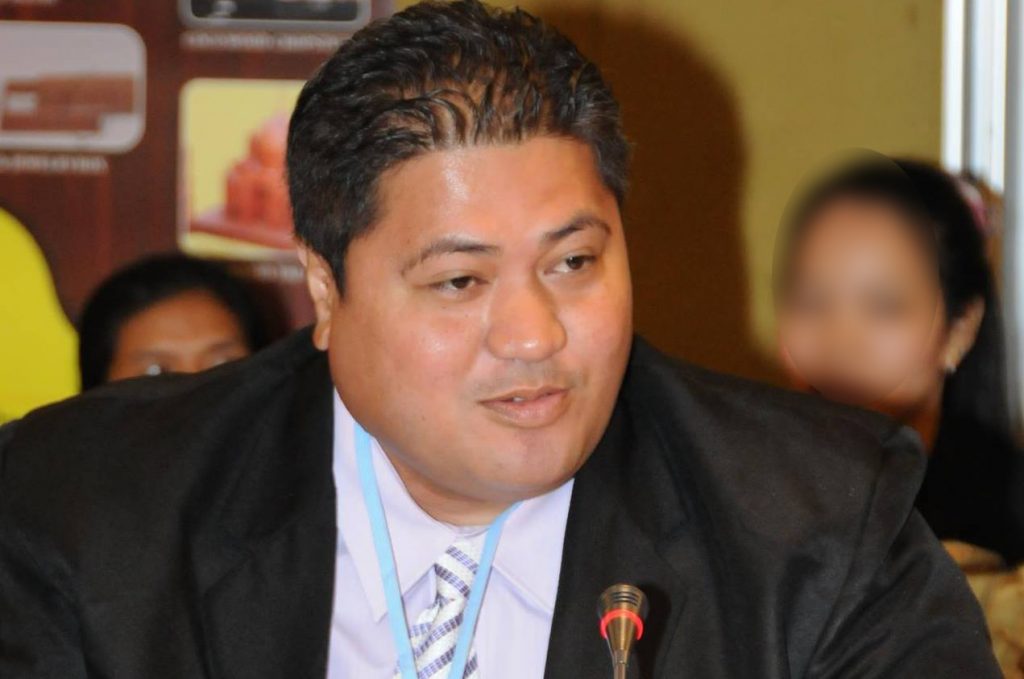
Minister of Internal Affairs Sangstar Saulala. Photo/Supplied

Lord Chief Justice Whitten found Salala guilty of bribery following a complaint by Paula Piukala, who stood unsuccessfully in the election.

Saulala was appointed Minister of Internal Affairs by the incoming government.

Mr Piukala alleged that:

On September 28 2021 Saulala gave Hengihengi Kolo, of Tofoa, $100.

On November 16 last year Saulala gave $20 and a box of chicken to ‘Ahio  Tauelangi of Pea and others.

On November 10 indirectly gave, via his wife,  a bag of groceries to ‘Ahio Tauelangi.

Some time before November 8, Saulala asked the then Prime Minister for help with his campaign by bringing forward Government planned roadworks in the area between Pea and Tokomololo, which works were undertaken in the first half of November 2021.

Piukala said that in each instance, Saulala did so in order to induce the recipients of the money or gifts to vote for him.

Lord Chief Justice Whitten found the first and second claims proved and as a result, Saulala was found guilty of bribery at the election.

Accordingly, Saulala’s election on November 18 was declared void.

The court awarded costs against Saulala.

In the first claim, Hengihengi Kolo said in a deposition that on September 28 last year Saulala gave him TP$100 in two TP$50 notes at tyre repair shop in Tofoai. After discussing the elections  Hengihengi and Saulala shook hands. Hengihengi said he felt something placed in his hand. He looked and saw that Saulala had put money in his hand. Hengihengi asked him what it was for. Saulala told him that the money may be of assistance to his family and reminded Hengihengi to remember him during the election. Hengihengi told Saulala to take his money, but Mr Saulala laughed and walked over to his vehicle, insisting that Hengihengi keep it.

The judge ruled that the first claim had been proven

With regards to the second claim, ‘Ahio Tauelangi said that on November 16, 2021, while he was speaking with some other people, Saulala’s vehicle stopped, and he joined the conversation. He told them that he went to drop off a box of chicken to the community police at Tokomololo. Saulala then offloaded a box of chicken for ‘Ahio and the others to distribute amongst themselves. Just before he left Saulala gave ‘Ahio a TP$20 note. When ‘Ahio tried to return it, Saulala insisted that he keep it for ‘anything he wanted to buy’ and then drove off.

‘Asaloni Tamale, who was present during the incident,  told the court ’Ahio did not want the chicken. ‘Asaloni interpreted ‘Ahio’s remark as him not wanting the chicken because it was “meant only to buy his vote.”

The court found the second claim had been proven,

In regard to the third claim, Piukala claimed that Saulala’s wife gave valuable gifts in the form of bags of groceries and shopping to people in Pea, including ‘Ahio Tauelangi’s family, within three months of the election. Tauelangi said that on November 10 his grandchildren told him that Saulala’s wife Kilistina was visiting with plastic bags of groceries.

Saulala denied that the groceries his wife gave to ‘Ahio were from him or on his behalf. He deposed that his wife was one of the distributors of the groceries on the date in question on behalf of a local organisation and that the groceries fall into the same category as the assistance he and his wife had been giving ‘Ahio over the years.

The third claim was found not proven.

In terms of the fourth claim Tevita Faletau gave evidence about roadworks performed in the first half of November 2021 at the area of Pea up to the border with Tokomololo. He said that Mema Latu, whom he described as Saulala’s “campaign agent in Tokomololo” told him that the road work was done by the Government “to render support” for Saulala’s election campaign. Tevita said that he supported Saulala in the elections because of what Mema had told him.

Latu said the roadworks were already on the repair program of the Ministry of Infrastructure although the timing of the repairs was uncertain. Saulala had asked the Prime Minister to bring the work forward which the Government agreed to do. Latu said he asked Saulala to ask the Prime Minister to bring the roadworks forward because he knew the works had been scheduled, but had been delayed. He considered that, as Deputy Chairman of the Tokomololo Community Council, it was his responsibility to make the request. Mema denied that the works were done to support Mr Saulala’s campaign.

Saulala denied making the request in order to ”court the favour of the voters” in that area. He said that he did not receive a response to his request and that the works “were just done.” He suggested that his request may have been granted because he “was respected as a previous Minister.”

The fourth claim was rejected.

As a result of the first and second claims having been proved, Saulala was found guilty of bribery at the election.

“Accordingly, it is hereby declared that the election of Sione Sangster Saulala as the representative of the Tongatapu 7 constituency, is void,” Lord Chief Justice Whitten said.

If I had wanted to buy votes I would have made sure they got the money, former PM tells court, but judge says bribery occurred, voids election

Prime MInister Dr Pōhiva Tu’i’onetoa. Photo/Kalino Lātū (Kaniva News)

If he had wanted to buy votes he would have ensured they got the money, former Prime Minister Dr. Pohiva Tu’i’onetoa told the Supreme Court.

Defending himself against allegations that TP$50,000 had been offered to a women’s group as a bribe, Dr. Tu’i’onetoa described it as a “misunderstanding.”

The Supreme Court has declared former Prime Minister Dr. Pohiva Tu’i’onetoa’s election to Tongatapu number 10 Electoral District last year  void.

Judge N.J.Cooper said Dr. Tu’i’onetoa had committed bribery in breach of Section 1 (a) of the Electoral Act 1989.

Section 21 (1) Electoral Act says that every person commits the offence of bribery who, directly or indirectly, by himself or by any other person on his behalf gives any money or valuable gift to or for any elector, or to or for any other person on behalf of any elector or to or for any other person, in order to induce any elector to vote or refrain from voting.

A reference to giving, lending, agreeing to give or lend, offering, promising or promising to procure or try to procure, any money or valuable gift fell under this category.

A petition was brought to the court by Kelekolio Taniela Kiu, who stood unsuccessfully for the election, challenging the result and alleging that Dr. Tu’i’onetoa committed two acts of bribery.

Kiu sought to have the election declared void.

On October 1, 2021 there was an event at Houmaniutao to showcase the handicrafts of the Women’s Association of Tongatapu 10.

Guests included Dr. Tu’i’onetoa, the then Prime Minister and Minister for Public Enterprises and leader of the Paati ‘a e Kakai; the People’s Party, and also the Minister for Finance, Tevita Lavemaau.

Kiu claimed that TP$50,000 was offered to the Women’s Group of Tongatapu on behalf of Dr. Tu’i’onetoa to influence voters.

Witnesses in support of Kiu said that at the entrance to the Niutao event one of the Prime Minister’s banners was displayed. Political pamphlets were handed out.

The group had previously approached the government for financial help, but been told there was no money, so the announcement of a grant of TP$50,000 by Hon. Lavemaau was greeted with shock.

Some witnesses regarded the event itself as well as the announcement of the money as political campaigning.

They were suspicious that there was in fact no money because there was no systems for grants in place and could take up to a year for applications for grants to be processed and paid.

One of the witnesses, Mele ‘Amanaki,  secretary general for the Public Services Association and interim Secretary General of the Seven Sector Association, which represent the interests of groups including fisheries, livestock, handicrafts, tapa making and roadside vendors.

She said the Minister for Finance said the cheque would be sent the following week.

Members of the Handicraft Association had complained to her and she checked the budget. She told them there was nothing there and that the Minister had obviously been lying.

On October 28 Hon. Lavemaau made another speech in which it was stated that conditions had to be met and that the organisation would need aims and a budget and a timeline to fulfil them by.

He said it was not his duty at the Lapaha event to provide all the details, nor was it important for him personally to do so.

He insisted many other groups had received funds, but when asked could not name a single one.

In his defence, the former Prime Minister said he had no idea what the Finance Minister was going to say, so he had no reason to discuss that speech with him. He was being spontaneous and showing his warmth.

He was always under the impression that the women’s group  knew how a grant worked. If he wanted to buy their votes he would have insured, they got the money.

Had they approached him directly he would have been aware of any issues; of any misunderstanding. He did not simply let Mr. Lavemaau mislead the people. Silence on his part was not his endorsing what Mr. Lavemaau said.

The money had to come in the form of a grant and he had assumed it had been paid. The first time he suspected that was not so, was when he was served the petition. Then he understood there had been a misunderstanding.

‘Afā wharf

The second case involved the opening of the ‘Afā Wharf

Witnesses who were at the opening of the wharf said they heard the former Prime Minster say he had made the wharf happen and asked the people present to vote for him because of this.

Dr. Tu’i’onetoa agreed he asked for votes at the opening in his speech. The work he did was something the public could trust him about.

Witnesses told the court the ‘Afā wharf had been made a priority  by the government. Because of shortages of materials and Covid restrictions, workmen had to labour around the clock to finish the project. The court was told the directions about completing the wharf, including the deadline for completion and opening,  came from the Prime Minister’s office.

Work on the project was carried out by the Ports Authority, despite a warning from the  Solicitor General that its involvement was  unlawful because the Authority had no remit in relation to the outer islands ports.

Judge Cooper found that the offer of TP$50,000 constituted a bribe because it sought to influence a clearly defined group of people. The construction of the wharf benefitted everybody in Tongatapu 10 and beyond and so did not constitute bribery.

“I make a declaration that in accordance with the findings in this judgement Dr. Pohiva Tu’i’onetoa committed bribery on one occasion in breach of section 1 (a) of the Electoral Act 1989,” Judge Cooper said.

“In respect of this, pursuant to section 32 of the Electoral Act 1989 1 make a declaration that the election of Dr. Pohiva Tu’i’onetoa on 18th November 2021 as the People’s Representative for the Tongatapu number 10 Electoral District is void.

“Pursuant to section 37 of the Electoral Act 1989 1 shall forthwith certify this result to the Speaker of the Legislative Assembly.”

Disgraced former PM Pōhiva Tu‘i‘onetoa loses seat through electoral petition: reports

Tongatapu 10 Member of Parliament, former Prime Minister Pōhiva Tu’i’onetoa, has lost his seat in Parliament after a Supreme Court decision this afternoon.

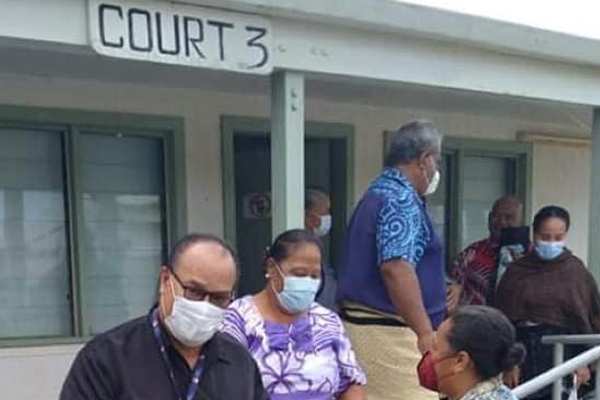
Former Prime Minister Pōhiva Tu’i’onetoa (L) outside court this afternoon after Justice Cooper announced his decision. Photo/Supplied

He has been found guilty of alleged bribery and corruption and his 2021 election victory was declared null and void, according to local news media reports.

Kaniva News is expected to report the full verdict by Justice Nicholas Cooper when the copy of the judgement becomes officially available.

The court decision came after Tu’i’onetoa was dumped by majority of his former Cabinet ministers leaving him to unsuccessfully fight to retain his premiership seat in December.

The court decision today also came after Justice Copper sent former MP and Cabinet Minister ‘Etuate Lavulavu and his wife, former Cabinet Minister and MP ‘Akosita Lavulavu to jail for fraud.

Tu’i’onetoa had been strongly accused of being too close with ‘Etuate while Tu’i’onetoa was Prime Minister.  

‘Etuate told media he was the one who masterminded Tu’i’onetoa’s successful campaign to become prime minister.

Ironically, Tu’i’onetoa’s losing his seat was the latest after ‘Etuate was disqualified as MP by a Supreme Court decision in 2016. He was found guilty of electoral bribery and corruptions and later dismissed as Cabinet Minister.

Chinese company’s aviation hub plans for Solomon Islands

This story by ABC appeared on RNZ.co.nz. Kaniva News  collaborates with RNZ.

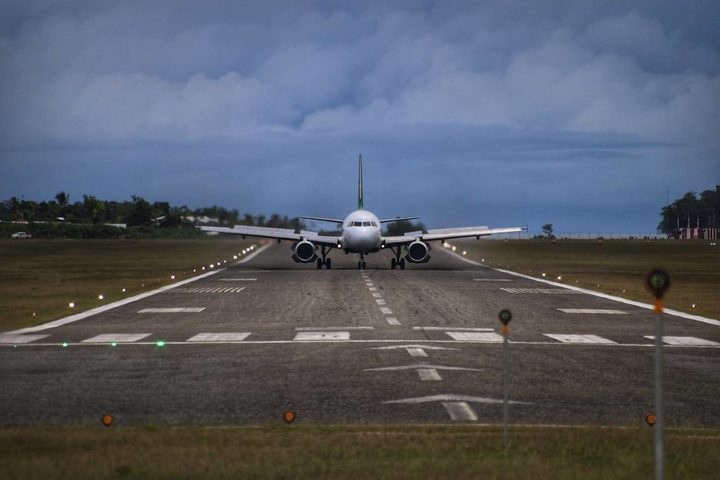
One of China’s largest defence and aerospace companies promised to upgrade almost three dozen airstrips in Solomon Islands as part of an ambitious plan to transform the Pacific Islands country into an “aeronautical hub” for the region.Airlines Airbus A320 lands at Munda airport, Western Province, Solomon Islands.

Solomon Airlines’ current sole international aircraft, an Airbus A320. Photo: lasafotografix

In return, the Solomon Islands government said it would purchase six aircraft from AVIC Commercial Aircraft, a subsidiary of the Chinese state-owned defence behemoth which has built small and medium-sized aeroplanes to be sold to developing countries.

The proposed exchange was laid out two-and-a-half years ago in a memorandum of understanding (MOU), which has been obtained by the ABC.

The document was signed by Solomon Islands Minister for Communication and Aviation Peter Shanel Agovaka at Yanliang, near Xi’an in central China, in November 2019, only a few months after the Pacific Island country switched diplomatic recognition to Beijing from Taiwan.

Chinese state media reported that the minister also delivered an address at a major aviation conference which AVIC hosted in Yanliang, hailing cooperation with the company as an “opportunity and way forward” for Solomon Islands.

However, it does not appear that either AVIC or the Solomon Islands government pushed ahead with any of the initiatives in the MOU after signing it.

Solomon Airlines chief executive unaware of deal

Solomon Airlines currently operates only one international aircraft – an Airbus A320 – and has not moved to buy any new planes from the Chinese firm.

It runs three smaller Twin Otter and one Dash 8 aircraft for domestic routes.

When the ABC contacted the chief executive of Solomon Airlines, Brett Gebers, he said he was unaware of the agreement.

“I discussed this MOU with the board and, as it has not yet been presented to the board, the chairman said that he will contact the MCA [Ministry of Communication and Aviation] to find out more about it,” he told the ABC.

“I was half-heartedly invited to accompany a group of MPs to China around this time in 2019 but nothing ever came of it. There was mention of looking at aeroplanes.”

That stands in stark contrast to the sweeping vision laid out in the MOU, which declares: “Solomon [Islands] wishes to be part of the regional airline concept where Honiara would receive direct flights from China and become a regional hub.”

“For this vision, Solomon [Islands] needs to acquire new planes, such as MA600/MA700 and Y-12 aircraft and refurbish airfields,” it said.

The MA600 is a relatively new turboprop plane which AVIC Commercial Aircraft has already sold to a number of countries, including Laos and Benin.

The MOU said the sale would “depend on the further negotiations on price and concessional terms” and would require “ultimate approval of the board of Solomon Islands and the government of Solomon Islands”.

The MOU also laid out an ambition to upgrade almost three dozen airstrips across Solomon Islands, and said the purchase of planes would be “in combination and is linked to facilitating the upgrade of Solomon Islands domestic airfields in two phases.

“For Phase One, up to 15 airfields; for Phase Two, the remaining 20 airfields”.

But again, there is no evidence that any of this work has begun.

Covid-19 may have stalled plans

The MOU was one of six agreements signed by Solomon Islands and China in the aftermath of Honiara’s decision to abandon its relationship with Taiwan and establish diplomatic ties with Beijing.

Earlier this month, China and Solomon Islands announced they had signed a security pact, stoking regional fears that Beijing might be intent on establishing a military presence in the Pacific Island nation.

Graeme Smith from the Australian National University told the ABC there was a “great deal of urgency in the [aviation] agreement … far more urgency than you find in many MOUs between China and the Pacific”.

He said the plan likely stalled because of the pandemic, which smashed the global airline industry and shut down most air travel into both countries.

“I suspect mainly what stopped it from happening is Covid-19, because it was signed in November 2019 [just before the pandemic] and all the time lines … would have gone quickly out of the window,” he said.

“The requirements for this agreement to kick in would have required both a visit to China by the Solomon Islands side and a visit to Solomon Islands from the Chinese side, both of which would have been very difficult to manage after February 2020.”

Dr Smith said AVIC may have sensed a commercial opportunity to sell planes to Solomon Islands on favourable terms which were effectively subsidised by Chinese state financial institutions.

But he said there was also a clear “strategic push” animating the MOU.

“In the first instance, this is a state-owned enterprise responding to a signal from its government to do things that are strategically in line with China’s goals,” he said.

Dr Smith believed it was also worth noting that AVIC’s commercial arm was deeply intertwined with the Chinese military, which might have an interest in scoping out airfields and other facilities in Solomon Islands.

“Defence planners (in Australia) might be somewhat concerned at the involvement of this company. I think their concerns might be how readily information could be conveyed back to the Chinese military through this commercial enterprise,” he said.

“But we’re getting into the realm of speculation. Is this company going to build a base in Solomon Islands? Probably not, it’s not really what they do. But certainly, they have extremely strong ties to the Chinese military.”

Several countries are already working on airport infrastructure in Solomon Islands.

Australia and New Zealand have agreed to upgrade runways on Taro Island near Choiseul Bay and Seghe Airport on the New Georgia Islands, while New Zealand has previously funded airport upgrades at the towns of Munda and Gizo.

Japan and the World Bank are also currently funding an upgrade of the runway of Honiara International Airport.

The ABC has tried repeatedly to contact both Agovaka and AVIC Commercial Aircraft for comment, but neither have yet responded.

ABC

Tonga: NZ medical team notices signs of post-traumatic stress disorder

By Fīnau Fonua of RNZ.co.nz and is republished with permission.

Mental health is a concern in Tonga, as the country’s struggle to recover from the January volcanic eruption has been made even more difficult by the current Covid-19 restrictions. New Zealand’s Pacific Medical Association says that people are starting to show signs of post-traumatic stress disorder.

The Hunga Tonga-Hunga Ha’apai volcanic eruption was a one-in-1000-year disaster. The resulting tsunami and ash cloud fallout have devastated the Kingdom. Waves up to 15 metres high destroyed hundreds of homes and wiped out entire villages. Miraculously only three people were killed.

Misa and his team of mental health specialists have been in Tonga since March 30 to assist with humanitarian efforts. His team focuses on training nurses and social workers for mental health rehabilitation, an area of health that is underdeveloped in Tonga.

“So far, we have delivered six training sessions with 134 participants, 99 online and 34 face to face. We provide support to the NGO and counselling services,” said Misa.PACMAT nurse Mary-Rose Muller with children from Mango Island

PACMAT nurse Mary-Rose Muller with children from Mango Island Photo: Supplied

“We teach techniques in breathing, getting enough sleep, exercise and talking therapies.

“Mental well-being is something that is not freely talked about in Tonga because you’re expected to be strong. Just pray and you’re expected to be fine. I teach them that our mental well-being like our physical well-being is real. You can be physically all right but mentally unwell. Stress does not discriminate, it affects everybody.”

Misa said the Hunga Tonga Hunga Ha’apai eruption was a highly traumatic event that caused huge amounts of stress and anxiety. He said there have been signs of post-traumatic stress disorder, particularly in children who suffer panic attacks triggered by loud sounds, reminiscent of the volcanic explosion.

According to Nasa, the sound was so loud that it could be heard from as far away as Alaska.

“They described it as deafening, and it triggered a lot of stress and anxiety,” he said.

“Every time there is thunder, kids would cover their ears, and run and hide. Look for a table or something to hide under. Like the kids will be out playing but as soon as there is thunder, their life is no longer there.”

This stress has been further exacerbated by the recent outbreak of Covid-19. Tonga has been under lockdown since February with heavy restrictions on movement and business closures, Misa said.

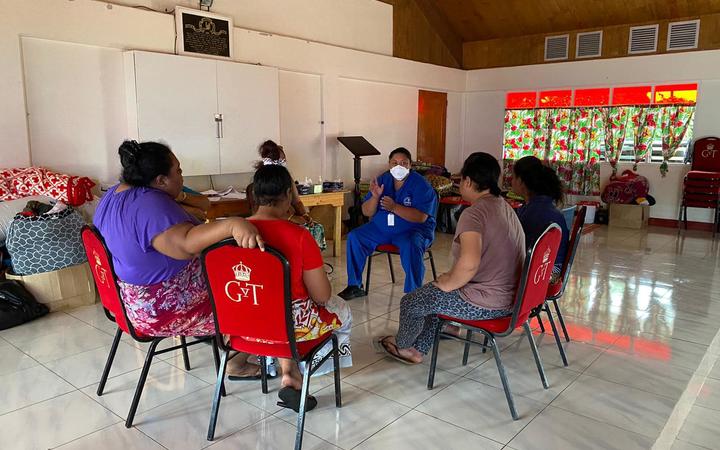
“The people are already traumatised by the event of January 15 and now you have Covid-19 which has ordered more stress. People get that the Ministry of Health is just trying to contain Covid-19 to protect our vulnerable, but it doesn’t take away the fact that it is a mental challenge.”PACMAT nurse Seini Faleata in a therapy talk with women from Atata,

PACMAT nurse Seini Faleata in a therapy talk with women from Atata, Photo: Supplied

“Stress is inevitable so you have to learn how to manage it instead of reacting to it inappropriately. Sitting idle during lockdown makes you vulnerable.”

Nuku’alofa Rotary Assistant Governor, Peter Paulsen, echoed Misa’s observations.

Paulsen has been coordinating donations from Rotaries around the world. He said that the disaster had a traumatic effect, especially in the days following the eruption.

“We have sliding doors in the house and it creates a slight rumbling sound reminiscent of the explosion. Whenever I’d open the door, people downstairs would say ‘is that you Peter?’ to make sure it’s me and not the volcano.”

“There was a definite sensitivity. About nine days after the explosion, there was a day of heavy thunder and several people rang me to confirm that the sounds in the sky were thunder and not an eruption, because I live by the coastline where the horizon over the Hunga Tonga-Hunga Ha’apai volcano is visible.

Stress shows in many ways and different degrees. You notice your ability to process information, to think things through it affected,” Paulsen said.

Minister denies Lord Sevele could benefit from his appointment to Reserve Bank board

Minister of Finance Tatafu Moeaki has denied that Lord Sevele could seek benefits to businesses to which he is connected through his appointment to the Reserve Bank of Tonga.

Minister of Finance Tatafu Moeaki

As Kaniva News reported earlier, Lord Sevele has ties to Rowena Financial Services, from which he resigned as a director in 2020.

His wife is currently listed as the company director.

Kaniva asked the Minister whether it was a good idea to bring Sevele onto the board to participate in making decision that could affect exchange rates and policies and laws related to matters that could benefit him personally.

“This is not true,” Hon. Moeaki replied.

“A copy of Rowena Financial Services company registration was sent to NRPT and it was clear Sevele’s directorship was ceased in 2020.”

The Minister said everything was fulfilled through legal advice, including independent legal advice for NRBT. The board was told if there was any evidence to counter it should be taken to him, but nothing was provided.

He said it was just an allegation and the government’s power would be better used to independently operate the board.

Kaniva also asked Hon. Moeaki whether there had been any breach of the guidelines on conflict of interest laid down in items 88 to 96 of the Cabinet Manuals.

Rowena Financial Services is registered with the Tonga Business Registry. The director is Lord Sevele’s wife Ainise and the shareholder is their daughter Marianne Rowena Tohi.

The National Reserve Bank of Tonga Act says directors should not vote on any issue related to “any agricultural, commercial, financial, industrial, professional or other interests with which they or any person with whom they have personal, family, business or financial relations may at any time be directly or indirectly connected.”

The Finance Minister said the government had taken legal advice from the Attorney General and no law was beached.

“The important thing for the NRBT board is the need for better operation and financial activities,” he said.

Reiterating his previous comments, the Minister said times were difficult and businesses, agriculture and fisheries were all affected. Obtaining loans was extremely difficult.

“There is a need for experienced businesspeople to facilitate bank services including imports and the strength of our currency,” he said.

Hon. Moeaki denied reports that he had been questioned by the Reserve Bank’s board about his insistence on appointing Lord Sevele because of his links to Rowena Financial services.

Reliable sources told Kaniva board members had queried the appointment.

They said Moeaki was provided with a legal opinion last year to justify their querying the appointment.

This was a legal opinion given to the former Tu’i’onetoa government to cancel its proposal to appoint Dr ‘Aisake Eke as director of the NRBT board although his name was already removed from the company’s directorship. The board advised the Tu’i’onetoa government with the legal opinion that Dr ‘Aisake Eke had a registered business, which was contrary to the NRBT law. The government and the NRBT agreed on the opinion and Dr Eke was not appointed.

Kaniva’s sources said Dr Eke’s case was the same as Lord Sevele’s and they were baffled by the Minister’s insistence on his appointment.

Teens could fail basic literacy, numeracy NCEA standards – report

By RNZ.co.nz and is republished with permission.

Initial testing indicates some teens will fail compulsory NCEA standards because they don’t use capital letters and full stops and don’t know how many minutes are in an hour.

No caption

Photo: RNZ / Richard Tindiller

The new standards, one for numeracy and two for literacy, become a must-pass co-requisite for the certificate of achievement next year.

But assessment reports show that a test run last year found many teenagers cannot write without intrusive spelling, punctuation and grammar errors, and cannot correct a text to ensure tenses, verbs and pronouns are right.

It also found measurement and geometry are areas of weakness, and markers were worried by the number of students who did not know there were 60 minutes in an hour.

The standards are being introduced because a study revealed 40 percent of students who get NCEA level 2 are not functionally literate or numerate.

Secondary Principals’ Association president Vaughan Couillault said the mistakes were a worry, but could be explained by the timing of the test last year and who sat it.

“It’s probably a case of was the sample size in the trial indicative of the population, what time in terms of lockdowns and school disruptions was it taken – a number of factors that could have contributed to those little eyebrow-raising bits of feedback,” he said.

Couillault said there would be a lot riding on a wider trial run that would involve more schools and students, to be held in June.

“If it’s a co-requisite, as it is, and people perform poorly in it, then that is going to be problematic.

“So it is something that particularly at the secondary level that we need to pay acute attention to,” he said.

Education academic Michael Johnston is a senior fellow at the New Zealand Initiative and worked on the study that first identified teens’ poor literacy and numeracy.

He said the standards looked well designed to prove that students could read, write and do maths well enough to function in society.

“Looking at the numeracy assessment I can see lots of questions about reading maps, about calculating prices on the basis of weight and things like that. Those all look very valid skills to be testing in a numeracy assessment,” Dr Johnston said.

“Likewise the reading assessment and the writing assessment look to be assessing the kinds of things that people would need to be able to do in everyday life.”

He said it would be interesting to see how many students passed the tests given New Zealand’s declining results in major international tests.

Association of Teachers of English vice president Pip Tinning said teachers were familiar with the sort of errors the marking reports highlighted.

“Those comments have come up historically in a number of reports with a lot of different writing assessments, so they’re not super new. I’ve been teaching for nearly 25 years, interestingly I’m not seeing it personally as much as I used to,” she said.

Tinning said both primary and secondary teachers tried to teach children to write well, avoiding grammatical errors and use punctuation correctly.

“It’s something that’s been looked at forever. So it is something we do consistently look at. We are trialling new things. I’m not sure whether I would be confident to say we are doing it better, but we are constantly looking to improve how we do teach those areas,” she said.

Tinning said the trials in June and September this year would give teachers a better idea of how many students would pass the test.

She said poor literacy reflected a society that did not value reading and writing as worthwhile activities.

“If you sit and read or you sit and write, we look at it now as a self-indulgence and it needs to be something that is part of who we are and what we do.”

Fiji’s general election contest expected to heat up

By RNZ.co.nz and is republished with permission.

Campaigning officially got underway in Fiji on Tuesday but no official date has been announced for the general election.Electoral Commission Chairperson in Fiji Mukesh Nand

Electoral Commission Chairperson in Fiji Mukesh Nand Photo: Electoral Commission Fiji

Electoral Commission chairperson Mukesh Nand announced the start of campaigning and explained that under Fijian law the start of the campaign period was one month before the earliest date that the election writ could be issued by President Ratu Wiliame Katonivere, which is May 26.

Nand said he would also launch the Candidates Handbook that explains various campaign rules in detail.

In a statement, Nand urged political parties to go through the Handbook and the Electoral Act and familiarise themselves with the rules.

“It is of utmost importance that political parties do not mislead voters or engage in unlawful activities such as vote-buying and bribery in order to manipulate or win support,” Nand said.

President of Fiji Ratu Williame Katonavere

President of Fiji Ratu Williame Katonavere Photo: Twitter

Meanwhile the director of the Lowy Institute’s Pacific Islands programme Jonathan Pryke said the political landscape in Fiji this year was very different from the general election five years ago.

Pryke said the battering Fiji’s tourism-reliant economy had taken during the pandemic had severely impacted voters and deep divisions among opposition groupings would make it very difficult to accurately predict election results.

“It’s going to be hotly contested. It’s going to be very interesting to see. Let’s see how it plays out. I think there will be a lot of personality politics thrown into the middle, but I hope that there is a lot of focus as well on these big policy issues that are going to define Fiji’s economic and development trajectory for the next decade,” he said.

The only detail about the length of the campaign period is that it must end 48 hours prior to the date when the general election is announced.

Jonathan Pryke, Director of the Pacific Islands Program at the Lowy Institute.

Jonathan Pryke, Director of the Pacific Islands Program at the Lowy Institute. Photo: Supplied

Pryke said it is very different from other jurisdictions in the Pacific region including Australia and New Zealand.

“You know when you call the start of an election campaign you also will typically set the date for the election itself. So you know in Australia we are in the middle of an eight-week election campaign right now which will lead to a late May election. Whereas in Fiji we still don’t know the date. It could be as late as January or early as June,” Pryke said.

Air NZ moving head office to Auckland Airport to cut costs

By RNZ.co.nz and is republished with permission.

Air New Zealand will relocate its head office to Auckland Airport, leaving the central city.The Air New Zealand head office will be relocated to Auckland Airport by 2024.

The Air New Zealand head office will be relocated to Auckland Airport by 2024. Photo: Air New Zealand

The company has announced it will refurbish its airport campus and build a new 10,000sq/m hangar at the site.

The airline said the move will centralise its operation, future-proof its infrastructure and reduce property costs.

The majority of the company’s staff are based in Auckland and those based at its existing Fanshawe Street head office are expected to move to the airport in 2024.

Air New Zealand chief executive Greg Foran said it has spent the past two years looking at how it can set itself up for success.

“We know we work best when we work together and we have plenty of under-utilised space at the airport campus to make that happen.

“We’ll be creating an environment where the people who plan our future work alongside those who operate our aircraft and work with our customers every day.

“Globally, this way of working is delivering exceptional results for customers and shareholders, and this is the right time to get ready for a move as we prepare for the global recovery in aviation.”

Foran said the company has more space than it needed in the Auckland central city and was already paying for a precinct at the airport that had more than enough room.

“With building costs increasing and our CBD leases coming to an end, this is the time to get started on the work to bring our people together,” he said.

Moving the city office to the airport would cut costs by 20 percent over 15 years, the airline said.Air New Zealand's operations centre.

Air New Zealand’s operations centre. Photo: Air New Zealand

It said the office’s lease will end in 2027 and it’s exploring sub-lease options.

The new engineering facility – called Hangar 4 – was first announced in 2019 and will be the largest single span timber arch aircraft hangar in the Southern Hemisphere, Air New Zealand said.

It would also be sustainable, with a six-star green rating.

“We’re confident that our long-haul operation will return so investing now in a new hangar that will be large enough to house a 787 and two A320s side-by-side in one space makes complete sense.

“Our existing hangars were built in the 1960s and 1980s and, while they have served us well, our fleet has changed over the decades. We now have a need for a more modern, innovative structure that takes energy use and other sustainability factors into account,” Foran said.

Construction of the hangar will begin this year.

Family of Tongan officer who fell in Solomons hopes his remains will come home one day

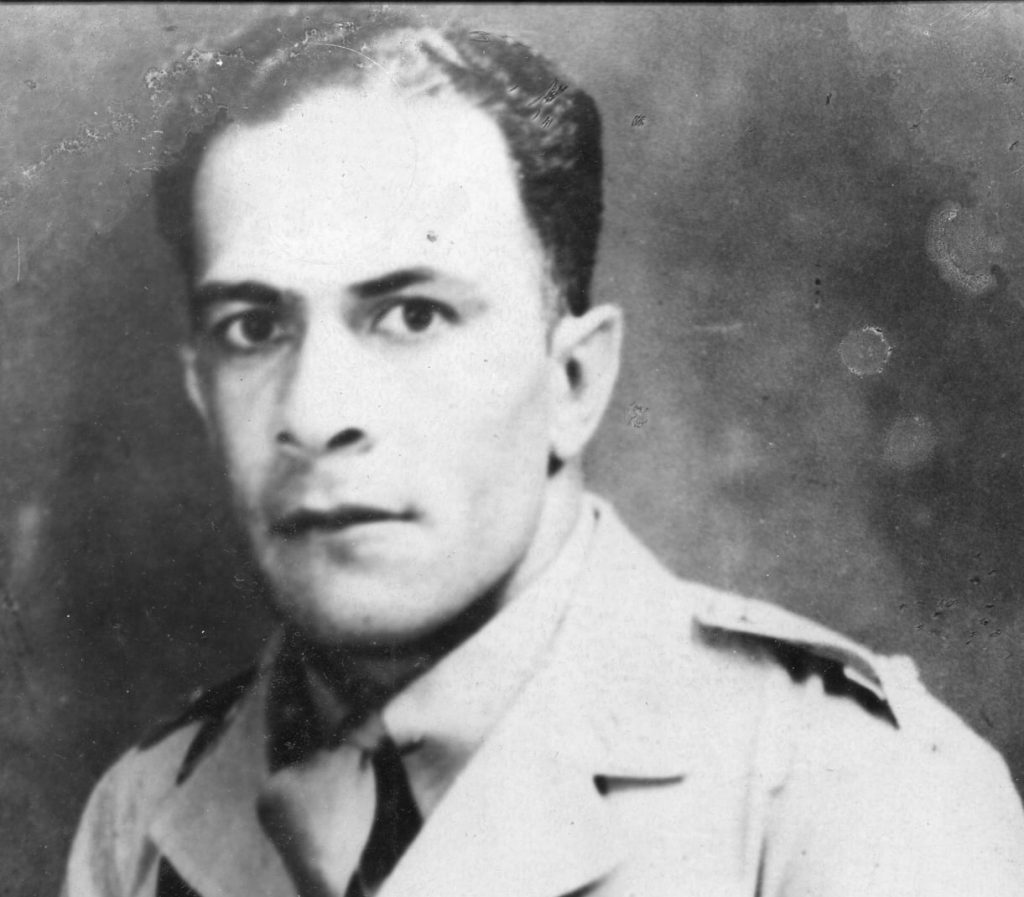
The family of Henelē Taliai, a Tongan officer killed in the Solomon islands during the Second World War hope that one day his remains will be sent back to Tonga.

Lt Henelē Taliai

But they feel the government has forgotten him.

“Today my Dad remembers his older brother Lt Henele Taliai, who was killed in action in the Solomon Islands,” his nephew ‘Ikani Taliai  wrote on Anzac Day.

“The Army Camp in Tonga, Taliai Camp, was named after him by Her Majesty Queen Salote.

“He was killed alongside New Zealand Lieutenant Ben Masefield and the song “Taio” was written in remembrance of the two of them by Siotame Mataele, a soldier and friend to them both.”

‘Ikani said Masefield’s remains had  been repatriated to New Zealand, but his uncle’s remains were still in the Solomon Islands.

“One day we will get him back home.”

In 2018 the then Prime Minister, ‘Akilisi Pōhiva revealed that Lt Taliai’s younger brother, the Rev. Siupeli Taliai, had written to Lord Ma’afu, the then Minister responsible for His Majesty’s Armed Forces, asking the Tongan Government to repatriate the soldier’s remains.

Hon. Pōhiva said at the time the government would discuss the request as a matter of urgency.

Henelē served with the First Commando Fiji Guerrillas in the Solomon Islands during the campaign to drive the Japanese out of South Georgia.

Lieutenant Taliai was killed by machine gun fire on July 12, 1943 when a commando patrol, edging along the beach towards Munda, ran into a heavy concentration of Japanese troops.

In her thesis on the Tongan military forces, historian Amanda Lee said he was regarded as a loved and admired young officer by the troops he commanded.

The commando patrols, made up of Tongans, Samoans and Fijians, were known to the Americans as the South Pacific Scouts. They made a key contribution to the Allied advancement during the campaign, serving as scouts and flanks for the American troops.

The commandos had a reputation for bravery and an adept understanding of the Pacific environment they were fighting in.

As a young man he was a keen rugby player and represented Tonga in test matches against Fiji.

His father and grandfather were both Methodist ministers. He was an outstanding athlete at  Tupou College, where he captained the cricket and rugby teams and was senior prefect.

The official British history of the Islands campaign, Among Those Present, said he was confident the Tongans would give a good account of themselves if ever they got into action.

“We were famous warriors in the old days and were feared all over the South Pacific,” he was quoted as saying.

“We’re a bit out of practice, but we think we can pick it up again.”