There are 51 new community cases today, including four in Waikato, the Ministry of Health says.
There was no media conference today.
In its statement, the Ministry said two of the Waikato cases were linked to earlier cases and they are investigating any links the other two may have.
“One lives in Hamilton and the other has an address in Kihikihi. It is possible that the Kihikihi case is the source of the wastewater detections in Te Awamutu, however this has not yet been confirmed.”
It said 28 of today’s 51 cases are linked, of whom 18 are household contacts, and 23 remain unlinked with investigations continuing.
The Ministry also said it could also confirm that there is one household in the area Wellsford with cases, after two positive detections in wastewater.
“Wellsford residents are urged to remain vigilant and get tested if they have any symptoms.”
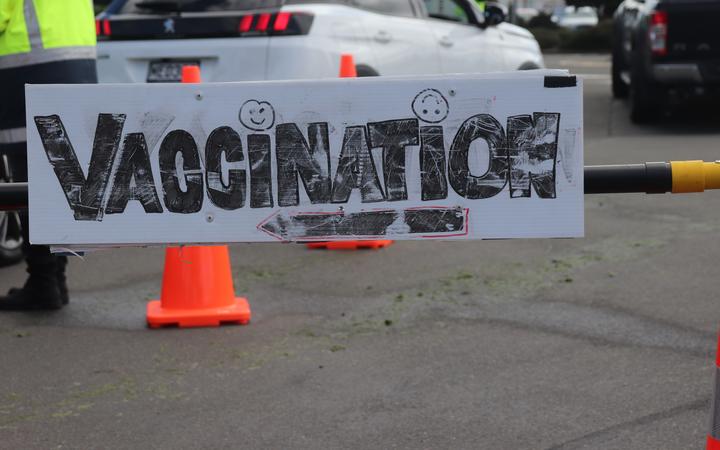
The Ministry said this afternoon the official count for yesterday’s Super Saturday Vaxathon saw the number of vaccinations just break the 130,000 mark, with 130,002 doses given – 39,025 first doses and 90,977 second doses.
ANALYSIS:By Ian Kemish, The University of Queensland. This story appeared on Asia Pacific Report website. Kaniva republished Asia Pacific Report news with permission.
Things were looking very bad three months ago for both Papua New Guinea and Fiji. The two Pacific countries were each looking very vulnerable to the covid delta variant, albeit in different ways.
On July 10, PNG recorded its first official delta case, and the nation’s health professionals were soon warning the combination of very low testing rates, high percentage of positive tests and an extremely slow vaccine rollout provided a “recipe for a major spread”.
Fiji was already in the thick of it at the time. After the deadly delta strain entered the country via a quarantine breach in April, per capita infection rates became the highest in the world in the middle of the year.
Daily infections reached more than 1800 in mid-July – a huge number for a country of only 900,000 people. The crisis caused 647 deaths.
By contrast, PNG is in the grips of a major wave, with less than 1 percent of the total population fully vaccinated. PNG is trailing much of the world.
Why have two Pacific countries, which share Melanesian cultural connections, handled their vaccine rollouts so differently?
Not a matter of geography or vaccine supply Fiji’s daily infection rate today is 4 percent of what it was at the peak, and it’s falling. Less than 50 new cases are currently being reported on average each day.
In PNG, the official infection rate is now averaging just under 300 new cases a day, but this drastically understates the reality of what is happening in the country.
It’s not simply a vaccine supply issue. At this stage of the global crisis, PNG, like Fiji, has received substantial vaccine deliveries — principally from Australia, New Zealand and the COVAX vaccine delivery initiative.
In fact, thousands of PNG’s early deliveries went to waste because the health authorities were unable to use them. The PNG government has recently made the best of a bad situation by re-gifting 30,000 vials donated by New Zealand to Vietnam.
We can also set aside any suggestion Australia, as the major regional donor, is somehow favouring one country over the other.
PNG’s geography does present some challenging physical barriers to distributing vaccines – its legendary mountainous terrain and the remoteness of many of its inhabitants are well known.
But companies from Digicel to South Pacific Brewery manage to penetrate the most inaccessible areas with their products despite these difficulties. And the authorities manage to deliver the vote across the nation every five years in what is one of the world’s most extraordinary democratic exercises.
With its own rugged terrain and dispersed populations across multiple islands, Fiji has also faced major physical impediments to its vaccine rollout.
The major difference: leadership and belief We get closer to the problem when we think in terms of trust, understanding and belief.
Fijians have embraced the vaccination rollout almost as one, following the guidance of their medical authorities and falling in line with the firm “no jabs, no job” policy of its prime minister, former military commander and coup leader Voreqe Bainimarama.
In PNG, the term “vaccine hesitancy” understates the problem. One survey earlier this year showed worrying low willingness to take the vaccine, and another survey of university students showed a mere 6 percent wanted it.
These dramatically contrasting pictures cannot be explained fully through differences in education standards, or the quality of medical advice and attention.
To be sure, Fiji leads PNG in these respects — Fiji has 99 percent literacy compared to just over 63 percent in PNG, according to the latest available figures. And while Fiji’s medical system has its challenges, the decline in PNG’s health services due to chronic lack of investment puts it in a very different category.
In PNG, trust in leadership has flagged following decades of frustration with growing wealth inequality and concerns over governance and transparency.
I know how quickly Papua New Guineans tap into what’s happening in neighbouring Australia, too. They will have seen how the public debate in Australia has dented confidence in the AstraZeneca brand — the mainstay of their own vaccine supply.
But perhaps most troubling of all is the sense that many Papua New Guineans have developed a fatalistic belief that covid is just another health challenge to add to the litany of other serious problems facing the country, among them maternal mortality, malaria and tuberculosis.
It’s almost as if they believe this is all somehow PNG’s lot. But it doesn’t need to be.
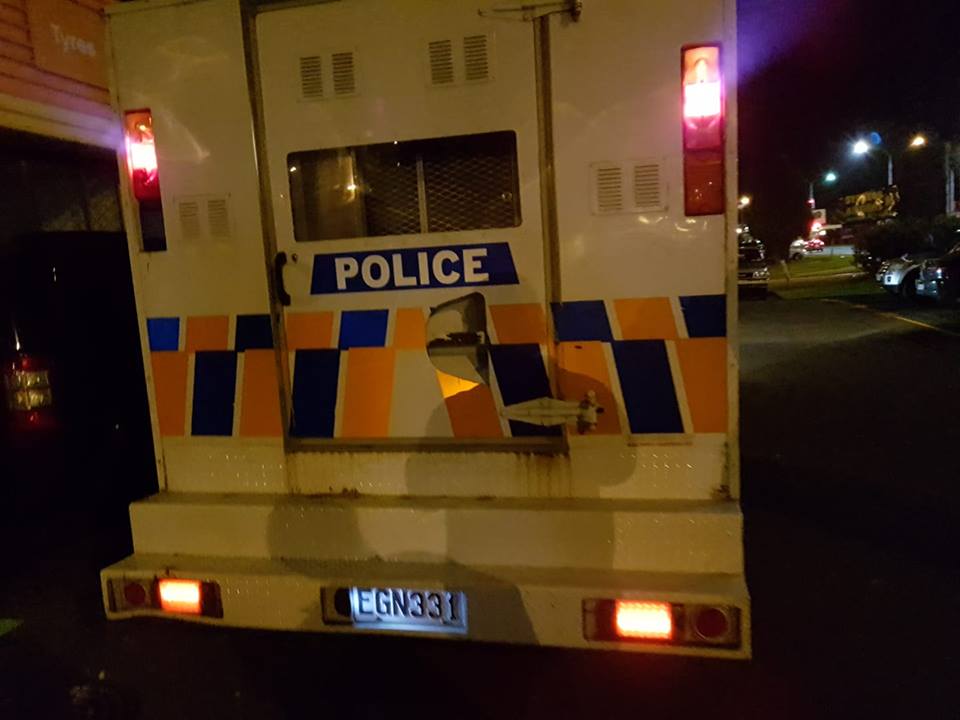
Counties Manukau Police have launched a homicide investigation after a man with critical injuries arrived at Middlemore Hospital in a private vehicle just before 8.30pm last night.
Counties Manukau Police. Photo/Kaniva Tonga
The man died shortly after arriving at hospital.
An investigation is underway including the examination of the vehicle he was taken to hospital in.
Police are working through the notification process to ensure whānau are advised.
Initial indications are the man may have been with others in Māngere just before 7pm.
There will be a Police presence in Māngere today as investigators speak with people who may have witnessed anything of significance to the inquiry.
Anyone with information is asked to contact Police on 105 and quote file number 211016/7357.
Information can also be provided anonymously via Crime Stoppers on 0800 555 111.
By Michelle Cooke of RNZ. Republished with permission.
As Aucklanders begin to meet up with family and friends outside, vaccinated people are having to decide if they want to see people who aren’t, leading to some new conversations.
It is a decision other people in New Zealand will also have to make if – and more widely suspected, when – Delta reaches them (if they haven’t decided already).
While people around the world have been confronted with these choices for some time, for most of us in New Zealand, it is the first time we are having to make these decisions.
Will I see my family and friends if they are not vaccinated? Will I go to a social gathering if people there might not be vaccinated?
Some people are taking to social media to declare their decisions or ask for advice: Some are wondering if they should let anti-vax family members visit their homes, some are questioning if they should send their children to school camp, some are declaring their wedding will now only be for people who are vaccinated, some say they’ve had to let go of their cleaner, while others are offering small jobs around their homes – but only if you’ve had two jabs.
Sisilia Eteuati has decided to only get together with people who are vaccinated. The Auckland lawyer lives with her parents, another family member, and her two children and niece who are too young to get the vaccine.
“We feel very clear about the importance of vaccination to protect all New Zealanders particularly Māori and Pasifika populations who have statistically worse health outcomes,” Eteuati said.
“We have recently met outdoor masked with a very small number of others and have chosen to do this with people I know are vaccinated and pro vaccination.”
Early case makes a stand
Jenene Crossan was one of the first people in New Zealand to have Covid-19, which was detected after she returned from overseas in March last year. She lives with her mum, who is unwell, and there are two others in the household who are immunocompromised, including herself.
Crossan’s family collectively decided they would not be seeing people who were not vaccinated and communicated their rationale “empathetically” to other family, friends and contacts.
“It’s a tough decision to make because I have friends who aren’t [vaccinated]. I have tried a lot of alternative therapies to try and get my immune system back on track and a number of those providers are choosing not to and unfortunately I won’t be able to see them and it makes me sad, because they’ve been great, but I can’t put myself and my family at risk at the moment.”
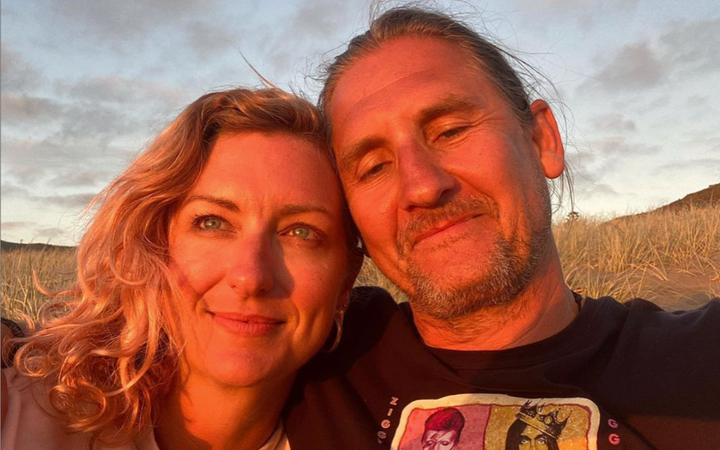
Jenene Crossan and her husband Scottie Chapman. Photo: Supplied
Aucklander Harjeet Chatha is the president of a Catholic bowling club and also organises monthly bowling events for a Meetup social group. She said she made the decision that from now on only people who are vaccinated will be able to attend, and she communicated this to members.
“I said ‘please ensure you’re vaccinated’ because I felt people needed to know.
“A lot of people I know said they want to come only if others have been vaccinated.”
The note on the social group’s Meetup page didn’t go down well with one member, who left as a result.
For Crossan, the feedback has been mostly positive.
Some responded to her message explaining why they weren’t getting vaccinated, two said they wouldn’t be, and some described why they were hesitant. Crossan directed one to some resources, and they ended up getting their first dose.
Share reasons for decision – psychologist
Dr Jess Berentson-Shaw Photo: supplied
Health psychologist and The Workshop co-director Dr Jess Berentson-Shaw said these conversations provide an opportunity to encourage those who are not vaccinated to get their vaccine.
“For some people it does freak them out before, but what we know from research, is when people you trust and who you share either a lived experience or a clear value set with, when they recommend you get vaccinated, people are a lot more likely to get vaccinated.”
People first need to decide for themselves or as a group, about the sort of risk they are willing to take.
“And there’s a little bit of weighing up ‘am I prepared to take the risk I might get Delta or am I just going to have a hardline no, we’re a fully vaccinated sort of situation here’.”
Then they need to convey to people the reason behind their decision.
“That you’ve made that decision from a values-basis, not a kind of like ‘we think you’re bad, we’re making a judgement about you, we think you’re wrong’. It’s very much ‘this is about me and this is about what I value and for all of these reasons I’ve decided that we won’t [be with] people who are not vaccinated. You 100 percent can make your own decisions, I’m not making any judgement call on that. This is what I value and this is what matters to me and this is the decision I’ve made’.”
While we’re now in the “crunchy period”, Berentson-Shaw believes this time will be relatively short-lived.
“Once people are vaccinated and we’ve got those numbers up we’ll have some shared knowledge and shared experience and understanding of about how to have some of these hard conversations in the future.”
The two Tongan brothers who were gunned down outside their home in the United Stated were laid to rest yesterday Friday 15 (PST).
Suitileilani Mēsui (L), Manasi Atiai Mesui
The burial services for Suitileilani, 21 and Manasi Atiai Mēsui, 26, were held at Sunset View Cemetery, El Cerrito, California.
Authorities previously said the men apparently got into some kind of confrontation with some other men and were shot on September 27. They were pronounced dead at the scene, East Bay Times reported.
Police have yet to update their media statements after they said the suspects fled on foot before police arrived on the scene.
Police are trying to determine what the confrontation was about, the paper reported.
“The killings are the 101st and 102nd being investigated as homicides by police this year. Last year at this time police had investigated 76 killings as homicides,” it said.
Police and Crime Stoppers of Oakland are offering up to $20,000 in reward money for information leading to the arrests of the suspects in both the double killing and the shooting that wounded four people. Anyone with information may call police at 510-238-3821 or 510-238-7950 or 510-238-3426 or Crime Stoppers at 510-777-8572.
With daily Covid-19 case numbers climbing, there is mounting concern from health workers about the strain that could be put on ICU capacity. But it’s not just the immediate hospitalisations that are a cause for worry, said Massey University Professor John Potter.
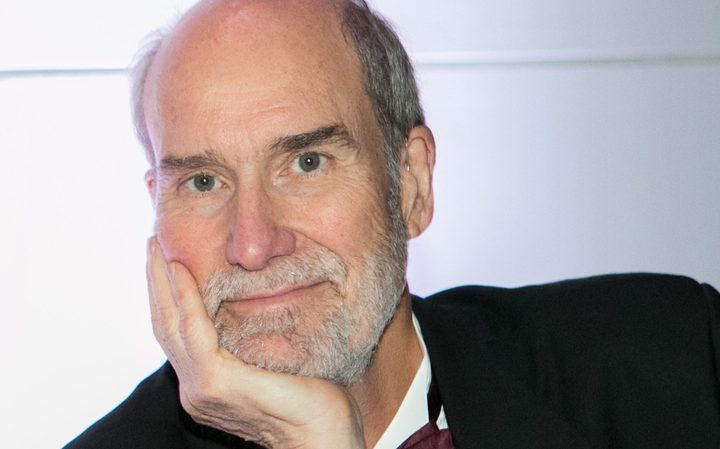
Massey University Professor John Potter. Photo: Supplied
Potter, a professor at Massey’s Research Centre for Hauora and Health who was Chief Science Advisor to the New Zealand Ministry of Health from 2016-2019, said if Covid-19 becomes endemic to New Zealand it could cause massive wider problems for the health system.
“Two hundred and seventy thousand Covid survivors, and they followed them, and between a third and a half had symptoms three to six months later,” Potter said speaking today to Saturday Morning.
“And those are a wide variety of symptoms that are indicative of the fact that this particular virus infects a lot of different parts of us. It’s not just a respiratory virus.”
“It’s a virus that gets into lots of organs and has downstream consequences that are really nasty for a lot of people.”
Long Covid symptoms can include breathing problems, abdominal symptoms, fatigue, pain, anxiety and depression.
Victims can have myalgia, pain in the muscles, which can present similar to chronic fatigue syndrome.
“Abnormal breathing persists in a decent percentage of people almost 20 percent of people because of damage to the lungs,” Potter said.
“Some people have headaches and cognitive symptoms which tells us that it does damage to the brain.”
More than 10 percent end up with pain in various places of the body, and anxiety and depression were found in almost a quarter of people in the long Covid study.
“People also get something a little like what people have called chemo brain where you’ve got symptoms where your brain is fuzzy, it’s not functioning at the level you’re used to having it function.”
The symptoms are very different than the ordinary influenza, Potter said.
“Flu has occasionally you get a post-viral malaise. The flu people generally get, it’s vile, it’s lousy, it kills people … but generally people recover fully after flu.”
Long Covid symptoms were first described more than a year ago by ordinary people getting together in groups on social media and elsewhere.
“It was first picked up more than a year ago by a really good article in The Washington Post,” he said.
The new UK study is a “really important contribution to our understanding,” Potter said.
“But there’s still an awful lot to understand. We don’t know how long this persists.”
“It’s clearly different from anything like the flu.”
Similarities to Covid-19 can be found in the respiratory illnesses of the 2002-2004 SARS outbreak in China and MERS in 2012 in the Middle East.
“These are both coronaviruses and our Covid … this is the third that we know we’ve encountered with this kind of nastiness.
“But coronaviruses are also part of our common cold sources. There are lots of different viruses that cause cold.”
The Delta variant mutation of Covid-19 has led to new waves and spread throughout the world, including New Zealand. Potter said nobody knows for sure if Covid-19 will mutate further, but there are concerns.
“Here’s a very good reason why it won’t become more benign. This particular version of this particular coronavirus, the Delta variant, has an R1 (reproduction rate) of about 6. That means that the numbers go up very rapidly. It spreads itself really, really rapidly. And that’s our problem with it.
“For any virus variant to replace this one, it’s got to be even more infectious than this one.”
“If it mutates away from being infectious it won’t compete with this one, so this will be the dominant one continuously.”
“If you want a comparison, malaria is endemic in tropical parts of the world. Every year there are more than 200 million cases of malaria, and over 400,000 deaths and two-thirds of those are in children under 5. So there are 750 deaths a day from children under 5 from malaria. And malaria is endemic.”
“Germany and the UK are currently more than 80 percent vaxxed and yet the UK has got about 30,000-plus cases a day and 130 deaths. Germany has done better, bigger population, it’s got 8000 cases a day and about 60 deaths.
“That would translate into New Zealand terms, at 80 percent vaccination, somewhere between 500 and 2500 a day and 5 to 10 deaths a day.
“This isn’t formal modelling,” Potter noted. “This is just saying if we compare ourselves to Germany and the UK that’s the kind of numbers we’re going to face.”
Long term, Potter said that if we don’t penetrate all communities equally with vaccines we’re going to face ongoing problems.
“We’re going to end up with a new kind of inequity that I’ve begun to think of as the jabs and the jab-nots. We are going to be in trouble because this will spread rapidly in areas where there is no vaccination.”
“It’s certainly not a replacement for vaccination and it’s not a cure,” Potter said. “All it does is it stomps on the virus hard enough that you don’t get such a big viral load.”
However, it’s not all doom and gloom, Potter said.
“I don’t think we’re going on forever. The good news is again … the general response from the population is massive. More than 80 percent of the eligibles at the moment have taken their first jab. A huge proportion of those will take their second jab.
“We’ve got four-fifths of the population already voting with their feet. A lot of them doing it for the common good, for the family good, for the whānau good.
“All of that’s just fabulous, and it speaks to us. The PM was absolutely right about the team of 5 million. Yes, we’ve got a few people who don’t want to play the game, but generally, people are right on side and really doing everything they can to make this work properly.”
“We’re the country that other people look to to give them hope,” Potter said, despite recent setbacks.
“I think one wheel is wobbling. I remain optimistic because the general sense is that we can still ring-fence this.
“If we have to crank the levels back up, fine. I appreciate that means pain and misery for some people. But it’s mostly mental pain and misery, it’s not gonna be the physical disease of Covid-19.
“That’s the reason for everybody to go out and get vaccinated ASAP.”
———- FAKAMATALA FAKATONGA —————
Kōviti Mā’uloloa pe Long Covid. ‘Oku mahino ‘eni ‘oku ‘ikai ko e puke pe he Koviti’ pea iku ‘o te sai pea pehē kuo’ te hao leva ‘o mo’ui lelei pe foki pe ‘o nōmolo leva. ‘Ikai. Ko hono ha’aha’a’ ‘oku ‘amo atu ia ‘i he nunu’a ‘o e fuluu’ (flu). Manatu ko e ongo mahaki ko ‘eni’ ‘oku fakatupu lōua pe kinaua ‘e he vailasi’. Ka ko e puke he fuluu’ ko ‘ene ‘osi pe hono faito’o’ pea ‘i he angamaheni’ ko ‘ene ‘osi ia pea ma’a e vailasi mei hoto sino’ ‘i ha ngaahi vaa’i taimi pau. ‘Oku kehe ‘a e Koviti’ ia koe’uhī ko e maumau pe kafo ne fakatupu ‘e he vailasi’ ki he ‘ōkani he sino’ hili ha mahino kuo ake ha taha ‘o hao mei he mate’ pe puke’ ‘e fe’ao ia mo ha ni’ihi ‘i ha taimi lōloa. Ko e me’a ‘eni kuo ui ko e Koviti Mā’uloloa pe Long Covid. ‘Oku toe mahino foki ko e uesia ‘a e Kōviti’ ‘oku ‘ikai fakangatangata pe ia ki he ma’ama’a he sino’ ‘o hangē ko e fuluu’. ‘Oku ope atu ‘ene maumau ‘ana a’u ki he ‘uto’, uoua’ hangē ko ha’ate ongo’i fetengetenga’i. Pea ‘oku mei lahi ‘a e Koviti Mā’uloloa kia kinautolu ‘oku ‘ikai mo’ui lelei honau sino’ kae toe mo’ua ia ‘i ha ngaahi mahaki kehe pea nau toki ma’u ‘a e Koviti’. Ngaahi fakaikiiki ki he feitu’u mo e ma’u’anga tala ki he fakamatala nounou ko ‘eni ‘oku ‘asi atu pe ‘i ‘olunga he fakamatala ‘Ingilisi’.
The Super Saturday Vaxathon that has seen around 130,000 people vaccinated in one day has exceeded expectations, the prime minister says.
Photo: RNZ
The target for the day was 100,000 but this number was reached by mid-afternoon, and the prime minister set a new target of 150,000.
The number of vaccinations delivered has seen the country’s previous daily record of 93,350 jabs smashed.
Events were staged all around the country with coverage screening live on TV1, TV3 and Māori TV.
The Ministry of Health will release final figures tomorrow.
The numbers
129,965 people vaccinated by 9.45pm (a provisional figure)
41 new community cases, 21 unlinked to existing cases
40 of the cases are in Auckland, 1 in Waikato
31 people are in hospital, six in intensive care
2 cases in managed isolation
Prime minister thrilled with response
Prime Minister Jacinda Ardern praised New Zealanders for turning out in record numbers to protect whānau and loved ones.
“Super Saturday has exceeded expectations and has ensured as a country we are more protected from Covid-19,” Ardern said.
“The passion and energy shown across the country reminds of just how hard everyone is working to keep each other safe. Just as we stayed home last year to save lives now we are getting vaccinated to protect the team of 5 million.”
She said Aotearoa could become one of the most vaccinated countries in the world, if the momentum can be carried on.
From donuts to dancing, from care packs to home appliances – businesses and volunteers joined forces across the motu to ensure thousands who came along to be vaccinated also had the chance to be fed and/ or take home a gift as well as be entertained.
People took the chance to be vaccinated whether it was on a marae, a netball court or a Dreamliner and by 3pm the government’s target of 100,000 had been met.
Ardern announced the milestone: “Amazing news! So, Aotearoa, we have now had 100,019 vaccinations today which is awesome. But let’s not stop there.
“Let’s go for 150! Let’s go big or go home.”
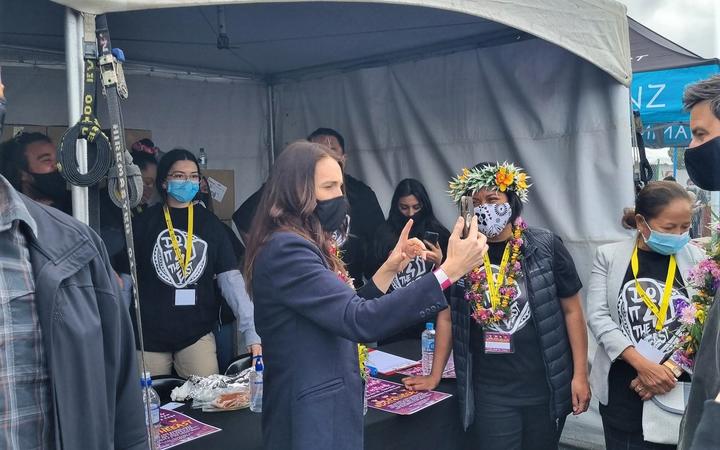
Prime Minister Jacinda Ardern at an event organised by young people in Porirua. Photo: RNZ / Kirsty Frame
The prime minister who toured various vaccination sites in the capital jumped aboard the Delta Buster Bus which has just started vaccinating in Lower Hutt. She posed for selfies and met health workers at several venues, including Sky Stadium.
Director-General of Health Dr Ashley Bloomfield was also among the cheerleaders, delighting those at Cannons Creek with an informal dance routine.
Around the nation
In Auckland, Maungakiekie MP Priyanca Radhakrishnan said the Super Saturday vaccination centres in her electorate were busy and people had fun.
She said there had been lots of activities including spot prizes, barbecues, sausage sizzles and cultural performances.
Radhakrishnan said people also shared why it was important for them to get vaccinated.
“Many spoke to me about the need to protect their family members, some of the more vulnerable family members they have.”
People also spoke about attending funerals, caring for their loved ones and wanting to get back to a sense of normality, she said.
Auckland Mayor Phil Goff toured vaccination sites around the city and was impressed by the positive mood.
“It’s actually quite uplifting to see queues of people lining up to get their vaccination, in a kind of a celebratory spirit too.”
He said it was particularly encouraging to see so many young people choosing to be vaccinated.
In Northland, a vaccination site at a Te Tai Tokerau marae saved locals long drives to get immunisations today.
The clinic at Mōkau marae near Whangaruru managed to vaccinate 30 people per hour this morning and over lunch.
Visitors were served hangi, fry bread and donuts, given care packs with soap and masks, and kai packs to take home.
Ngātiwai trustee Rōpata Diamond said the marae site was much more convenient than hours spent on a round trip to town.
The site welcomed everyone from teens to people in their 90s. Diamond said many rangatahi came for their first shot because their “nanas told them too”.
Many schools hosted events, including Nelson Intermediate, which has a high population of Māori and Pasifika.
Public health charge nurse manager Nicola Thompson said whānau have been coming to the event to support each other, and some brought their children to be vaccinated too.
Pacific people turn out
At an event organised by the Tongan Health Society in Onehunga, the society’s chief executive, Glenn Doherty, said they had been giving about 100 doses per hour.
He said the event showed how Tongans are rallying together for the community.
One of the organisers involved with a Pasifika-youth-led vaccination fair in Porirua said community-focused outreach gets the best turnout.
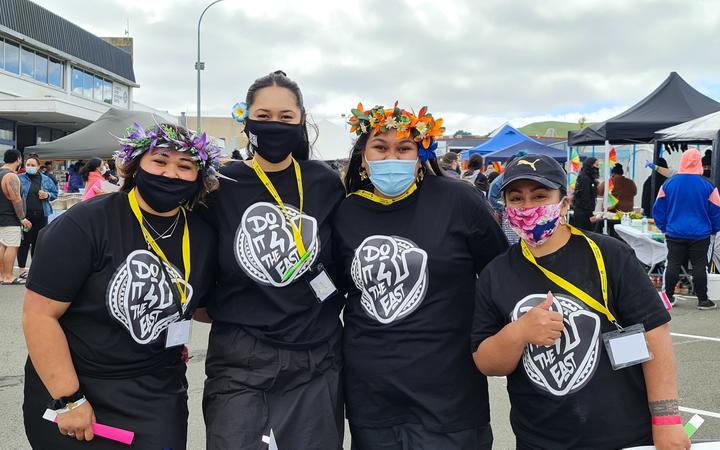
The fair run by local teenagers and young adults in the suburb of Cannons Creek drew hundreds of people.
The outdoor event had live performances, food, games and raffles next to the vaccination tent.
Festival volunteer Louis Ariu-Woolley said making vaccinations accessible and fun is the right approach for communities.
The youth-led ‘Do it 4 the East’ Photo: Moera Tuilaepa-Taylor
Protest organisers to be prosecuted
About 2000 people attended an anti-lockdown protest rally at the Auckland Domain today.
Relieving Auckland City District Commander Superintendent Shanan Gray said in a statement that the protest breached alert level 3 restrictions, which limits gatherings to weddings, funerals and tangihanga to no more than 10 people.
While police did not make any arrests, several organisers will be prosecuted in the coming days, he said.
Another woman who travelled to Northland tests positive
A third woman, who was with the two women who travelled to Northland, has tested positive for Covid-19.
The other women also tested positive for the coronavirus, and the Ministry of Health said all three are in a quarantine facility.
The Ministry of Health does not belive the latest case was infectious while in Northland but have identified five of her contacts in Auckland.
Samoa extends quarantine period
The Samoa government has decided to increase the quarantine period for incoming passengers from 14 days to 21 days because of the spike in community cases of the Covid-19 Delta variant in New Zealand.
This was confirmed by the Director General of the Ministry of Health, Leausa Dr Take Naseri, at a news conference, where he added that the Delta variant has an incubation period of 28 days and it can transmit on the first or the last day.
Some 249 passengers who arrived on September 30, and are due to be released next week, will be asked to self isolate in their homes for a further seven days.
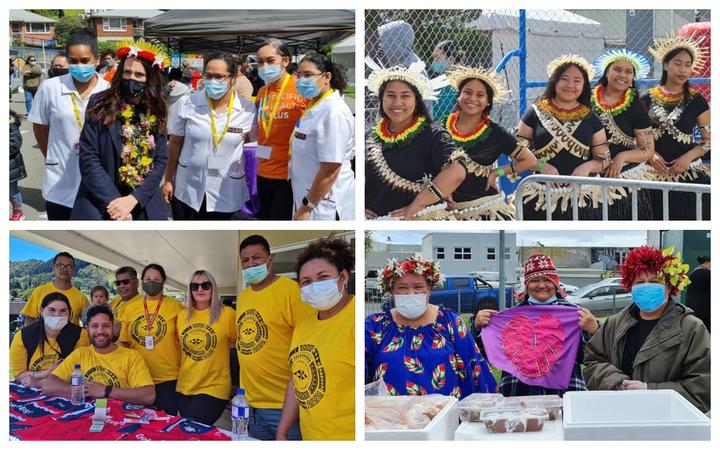
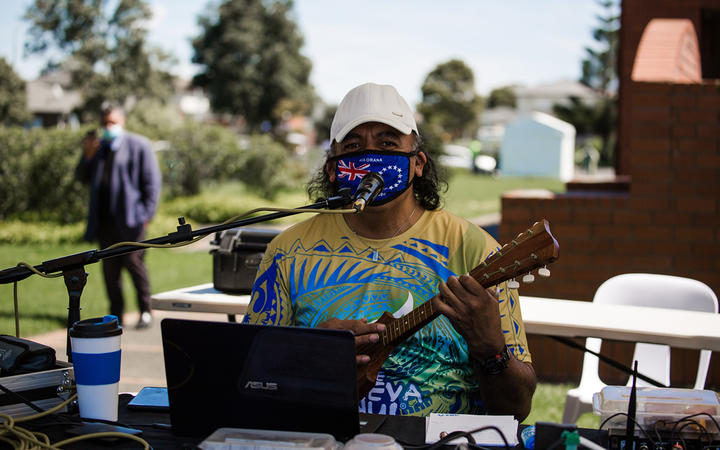
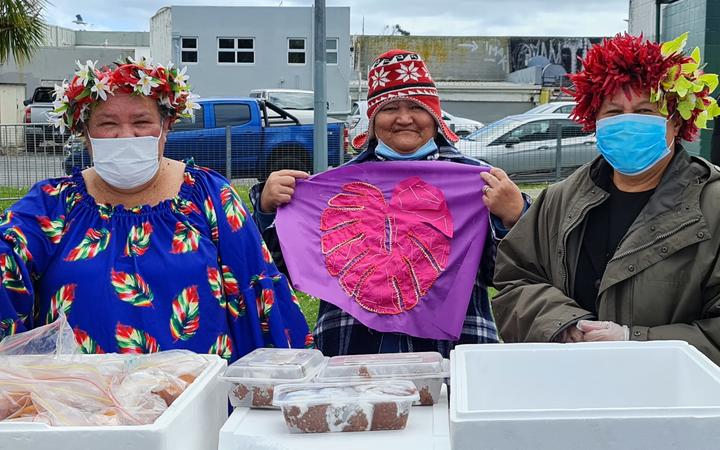
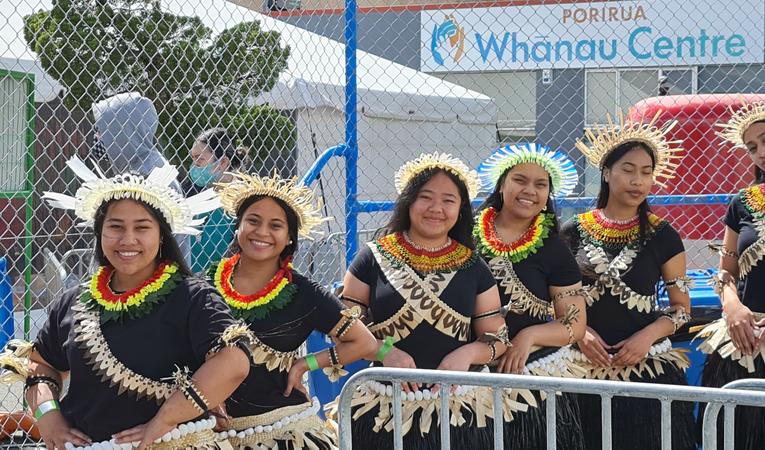
There was a street festival vibe to many Pasifika-organised Vaxathon events around the country today.
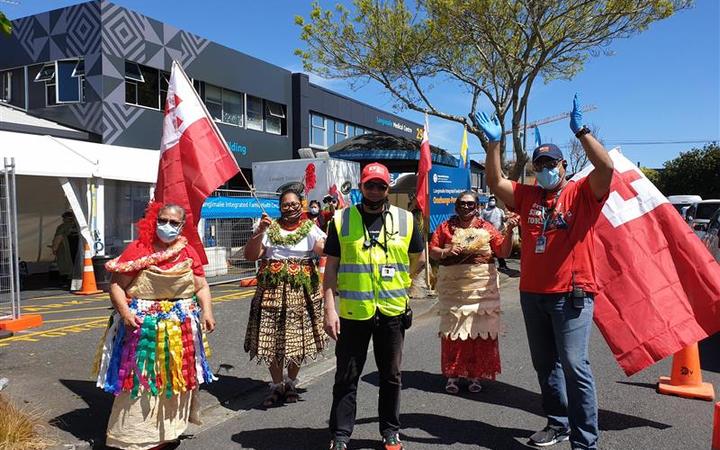
Langimalie Supervax Event in Onehunga, Auckland run by the Tongan Health Society. The society’s CEO Dr Glenn Doherty (middle) says they’re giving 100 doses per hour. Photo: RNZ / Liu Chen
Thousands of Pacific people have taken the chance to be vaccinated against Covid-19 – with organisers going out of their way to make many events as much fun as possible.
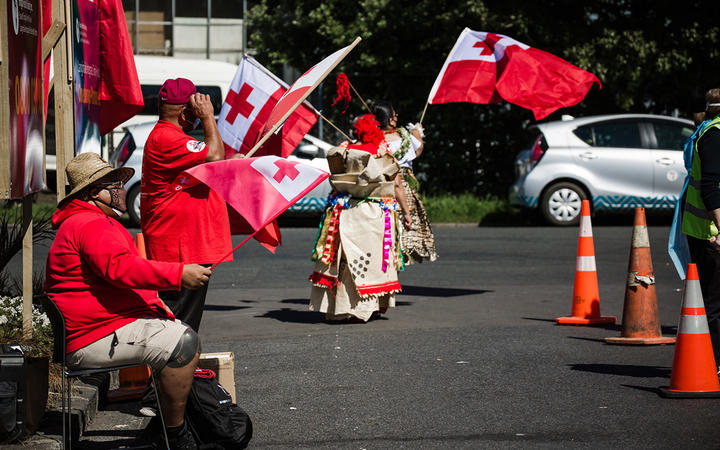
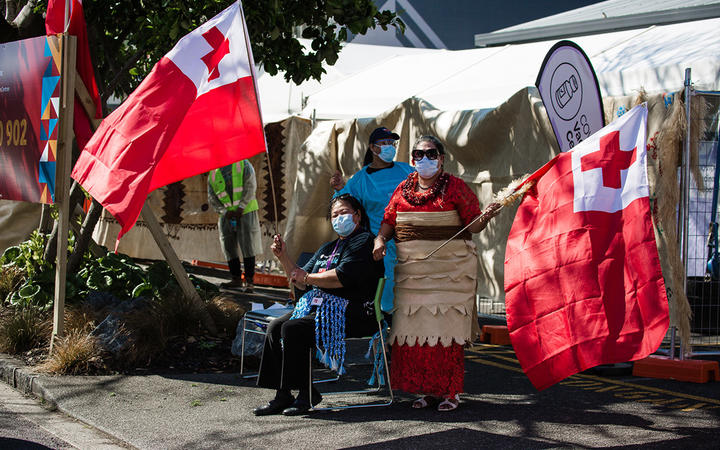
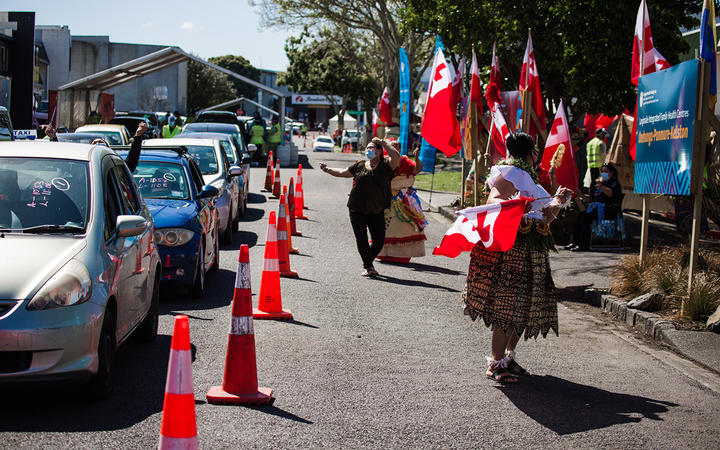
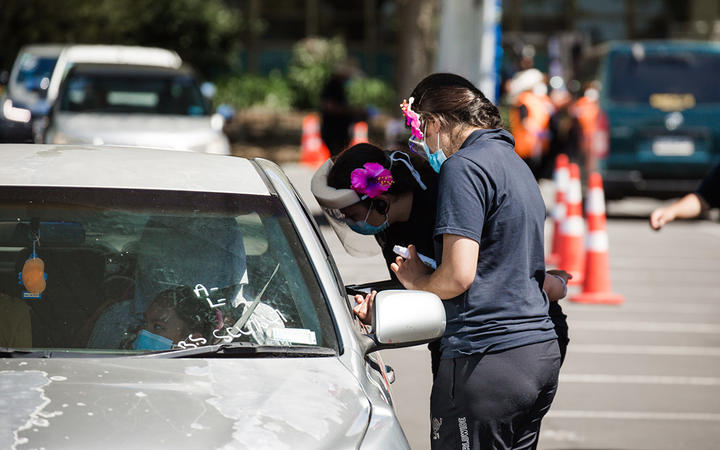
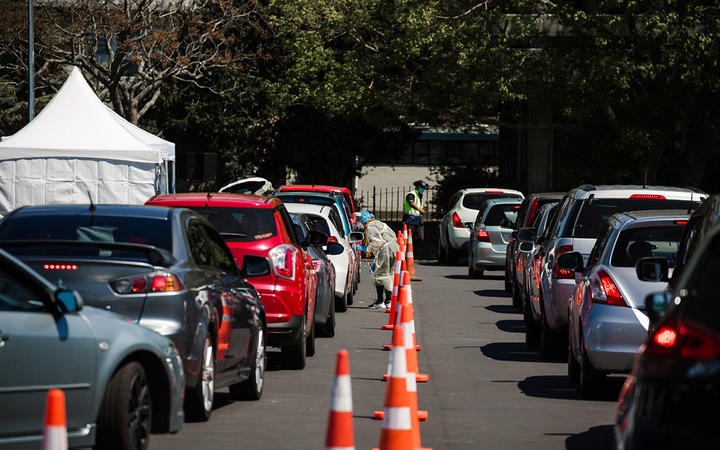
In Onehunga at the Langimalie Supervax Event long queues of cars held occupants waited to be vaccinated, while outside people danced in the streets, waving Tongan flags, and brightening the mood of all those around them.
At the Langimalie Supervax Event in Onehunga, organised by the Tongan Health Society. Photo: Coconet TV / Penina Momoiseā
At the Langimalie Supervax Event in Onehunga, organised by the Tongan Health Society Photo: Coconet TV / Penina Momoiseā
Dancing in the street at the Langimalie Supervax Event in Onehunga. Photo: Coconet TV / Penina Momoiseā
The Tongan Health Society chief executive, Dr Glenn Doherty, said they were giving 100 vaccine doses per hour at the event.
In Ōtara, while the vibe was more chill, long lines still snaked slowly around the MIT carpark as large numbers waited for their doses.
Lines of cars stretch out at the MIT carpark in Ōtara for the Super Saturday vaccination event Photo: Coconet TV / Penina Momoiseā
A big response from the community in Ōtara to the Super Saturday vaccination event Photo: Coconet TV / Penina Momoiseā
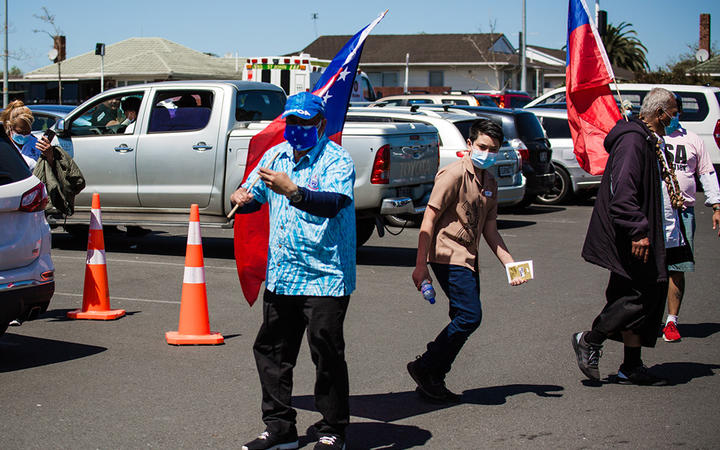
The Samoan flags were waving at the Super Saturday vaccination event at the Browns Road netball courts in Manurewa, with those turning up getting a dose of Siva Samoa with their vaccine.
A man waving a Samoan flag and blue face covering dances at the Browns Road netball courts in Manurewa. Photo: Coconet TV / Penina Momoiseā
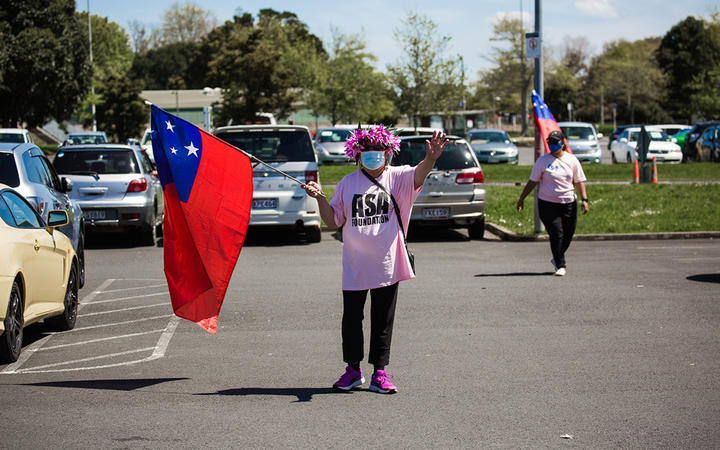
One of many Samoan flags waved at Manurewa Super Saturday event Photo: Coconet TV / Penina Momoiseā
The Samoan community there gave out food parcels, sanitary products and petrol vouchers.
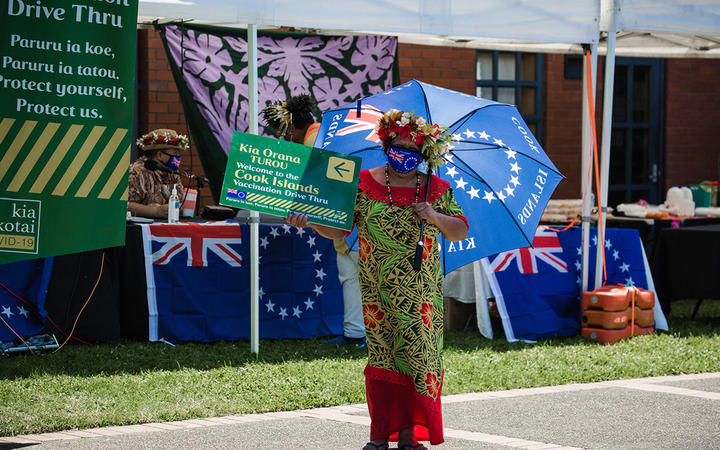
In Māngere, at the LDS church on Robertson Road, it was all about Kuki Airani culture.
Welcome to the Cook Islands Vaccination Drive-Thru Photo: Coconet TV / Penina Momoiseā
Entertainment at the Cook Islands Māngere Vaccination Drive Thru. Photo: Coconet TV / Penina Momoiseā
The ‘Do it 4 the East’ youth-led vaccination event in East Porirua’s Cannons Creek featured live music and performances, raffles, food and basketball.
Cultural performances at Cannons Creek in East Porirua Photo: Moera Tuilaepa-Taylor
Delicious food on offer at Cannons Creek Super Saturday event Photo: Moera Tuilaepa-Taylor
Cannons Creek Super Saturday Photo: Moera Tuilaepa-Taylor
It was there that crowds got to watch the Director General of Health, Dr Ashley Bloomfield, spread his legs to the much loved Roimata.
When Prime Minister Jacinda Ardern asked people who they got vaccinated for, they replied “The East!”
In the South Island, members of the Nelson Tasman Pasifika Community Trust were at the whānau day at Nelson Intermediate School.
Around 100 people there had received the Covid-19 jab by midday.
Nelson Tasman Pasifika Community Trust chair Sonny Alesana said reaching out on social media is helping to boost the number of Pasifika vaccinated in the top of the South Island.
*Additional reporting by Penina Momoiseā from The Coconet TV.
The New Zealand Nurses Organisation (NZNO) has accepted the latest pay offer for staff working in district health boards.
Striking nurses outside Christchurch Hospital in June. The NZNO called off strike action in August as the country went into lockdown Photo: RNZ / Nate McKinnon
Of its 32,000 members who work in DHBs, 83 percent voted yes in balloting that finished at midday today.
Negotiations had lasted 15 months.
Lead advocate David Wait said he was pleased DHBs took the advice of the Employment Relations Authority after mediation last month and finally put forward an acceptable offer.
“It is great to receive something that both addresses pay issues and makes important progress towards safe staffing.
“Most of the pay increase comes in the form of downpayments on our pay equity settlement, a separate process due for completion by the end of November, but the early lump sum payments are substantial.
“We also have a DHB contractual obligation to safe staffing, with a legally enforceable escalation pathway when members’ concerns aren’t addressed. Together with new employment commitments these are steps towards addressing the staffing crisis and making nursing an attractive profession again.”
The ratified agreement is back dated to 1 August last year, and will run until the end of October next year.
Wait said members remained wary of their employers’ promises, and how DHBs responded regarding safe staffing over the next year would play a big role in the next collective agreement negotiation
Health Minister Andrew Little said he was pleased that there was a settlement that both groups could support.
“This deals with the immediate issue of making sure nurses get a pay rise, but I also acknowledge that we still have to conclude their pay-equity claim.
“Nurses have been under-paid and under-valued for a long time, and the Government is committed to doing something about it.”
He said nurses were rightly concerned abut staffing levels and action was being taken to recruit nurses into those vacant positions.
Three people have died and a fourth person is in hospital after a boat flipped at Auckland’s Manukau Harbour this afternoon.
Manukau Harbour Photo: RNZ / Jessie Chiang
Police, the Westpac Rescue Helicopter, Maritime NZ, St John Ambulance, the Coastguard, and local lifesavers all responded at about 4.40pm, after the boat carrying the group overturned near the bar.
Police say all four people were found in the water but three died at the scene.
The person who survived suffered serious injuries and has been flown to hospital.
Police say inquiries are continuing.
Two people died in separate incidents in Manukau Harbour last weekend. Both deaths have been referred to the Coroner.