This story appears on RNZ.co.nz. RNZ reports are republished by Kaniva Tonga in partnership.
Authorities working to contain a tomato plant disease are hopeful exports can resume to some countries before the season starts in October.
Photo: Thomas Martinsen/ Unsplash
Last month the Ministry for Primary Industries stopped exports to six countries after Pepino mosaic virus (PepMV) was found on plants here.
The countries – Australia, Thailand, Fiji, Tonga and New Caledonia – consider the disease a quarantine risk. The sixth country, Japan, is only partially closed, and is still taking fresh New Zealand tomatoes.
The disease can affect the yield of crops and delay fruit growth.
It was found on plants in an Auckland greenhouse in April.
MPI response controller David Yard said PepMV is now in four glasshouses and work was continuing to control the spread.
“The key efforts will be in preventing the spread between different operations between different greenhouse complexes, and particularly between indoor and outdoor tomato growing units.
“We will be looking at having on-farm biosecurity plans for individual operators. Those will include measures such as good hygiene around equipment, and properties, for example, keeping equipment sterilized, keeping records of peoples movements, around the farm and onto other properties.”
“We’ll also be looking at the cleaning of equipment that’s shared between businesses such as crates that they use to transport the fruit between firms and retail, Yard said.
He is hopeful the export ban to some countries will be lifted before the season starts in October.
“I think it’s important so the exports can continue to many markets, including our largest market for fresh tomatoes, which is Japan, which came in at about 43 percent of the 2020 volume.
“We’re going to have continued discussions with markets where restrictions remain, hopefully with the aim of reopening trade ahead of the export season in October,” he said.
“Discussions are ongoing, but we cannot give any guarantees because they’re on a case-by-case basis with each country.”
Yard said tomato growers who think their plants may have the disease should contact the Ministry for Primary Industries on 0800 80 99 66.
By One News/TVNZ and is republished with permission
Victoria will cautiously exit its statewide lockdown, but health authorities say the war with the highly-infectious Delta coronavirus variant is not over.
A man wearing a protective face mask walks through Melbourne CBD, outside the iconic Flinders Street Railway Station. (file photo). Source: istock.com
Premier Daniel Andrews has announced the lockdown – the state’s fifth in 17 months – will lift at 11.59pm today, local time, scrapping stay-home orders and the five-kilometre travel limit.
“It’s not over. We’ve got to be vigilant against this virus, the Delta strain, in the days and weeks and months ahead until we get as many people vaccinated as we possibly can,” he told reporters today.
Under the eased restrictions, schools can welcome back students for all year levels, hospitality venues can reopen for seated service and outdoor gatherings are allowed for up to 10 people.
Live music venues, dance classes and gyms can also throw open their doors with a strict density limit of one person per four square metres.
But many onerous restrictions will linger as health officials remain wary of the Delta variant that sparked the shutdown.
“We’re on the cusp of containing our second Delta outbreak, this one being a really significant one with close to 200 cases” Chief Health Officer Brett Sutton said.
“But we can’t call it mission accomplished yet.”
Victorians won’t be able to have visitors to their home and masks remain compulsory indoors and outdoors.
In addition, no crowds will be allowed at sports events or theatres and visitors to snow fields must carry proof of a negative test within 72 hours of arrival, unless they are a child under 12.
The restrictions will remain in place until August 10.
READ MORE
Victoria’s lockdown avoids ‘world of hurt’ – authorities
With the situation worsening in NSW, four local government areas will be thrown out of the border bubble.
Residents of Wagga Wagga, Hay and Lockhart and Murrumbidgee councils won’t be able to freely cross into Victoria from Wednesday.
Andrews said he didn’t enjoy locking out the four communities but “there’s a refusal to lock people in Sydney into Sydney, so I have no choice but to make these changes”.
The statewide lockdown was called on July 15 and initially slated to run five days before it was extended to 11.59pm on Tuesday, as contact tracers struggled to chase down people before they turned positive.
Ten new local Covid-19 cases were reported in Victoria today, all linked to current outbreaks and in isolation for their entire infectious period.
With no cases spending any time in the community for three days, no new exposure sites have been listed since Saturday.
There are now 190 infections linked to the outbreak, which was seeded by a Sydney removalist crew who passed the virus on to residents of Maribyrnong’s Ariele Apartments and a separate family who returned from NSW.
The state’s COVID commander Jeroen Weimar said one of the removalists had been handed a AU$200 (NZ$210) fine for not wearing a mask, in line with health directions.
“I’m pleased we can draw a line under this incident as we start to draw a line under the subsequent outbreak,” he said.
After reviewing the health department’s investigation, Victoria Police said there was no evidence of other offending and would not take any further action.
“This matter is closed from a police perspective,” a spokesman said.
More than 24,000 test results were received in the 24 hours to midnight, while 15,677 vaccine doses were administered at state-run sites during the same period.
A careful reading of the ruling Tu’i’onetoa’s Tonga People’s Party’s (PAK) manifesto appears to support claims that Democrat constituencies are being punished.
Prime Minister Pōhiva Tu’i’onetoa. Photo/Kalino Lātū
Democrat supporters have long complained about the roading programme, which has been mired in controversy since it was revealed that contracts have gone to friends of the government, including PAK bigwig and convicted criminal ‘Etuate Lavulavu.
Recently they have complained that the only constituencies that are regarded as a priority for the roading project are those which voted for the PAK.
Voters in Nuka’alofa, which makes up by parts of Tongatapu 1, 2, 3 and 4, wonder why the capital’s roads are being left to deteriorate.
There has been outrage as people have begun to feel they are the victims of an outrage using taxpayers’ money to reward only government supporters.
However, the evidence has been sitting in plain sight since the manifesto was published last year: If you voted for the government, you will get your roads repaired by the end of next year.
If you voted for anybody else, you will just have to wait.
These constituencies are not due to be finished before the end of 2023:
While the road schemes are listed in the PAK manifesto as being the product of the Ministry of Lands and Natural Resources others are not. Among the government’s proposed schemes are several kilometres of bridges, all of which are labelled as “Hon. Akosita Lavulavu Projects.” It is unclear whether the name of the recently jailed Minister of Infrastructure will remain.
FAKAMATALA FAKATONGA
‘Oku paaki he menifesitō pe tohi palani ngāue mo konisitūtone ‘a e Paati ‘a e ‘Eiki Palēmia’ Pōhiva Tu’i’onetoa ko ‘ene polokalama tanu mo ngaahi hala laui miliona oku fai ai ‘a e vālau’ ‘oku fakamu’omu’a pe ‘a e ngaahi vāhenga ne nau fili ia mo ‘ene kapineti’ ki Fale Alea’. Ko e toenga’ toki vakai ia. Pea ‘oku hoko ai heni ‘a e ngaahi vālau he ‘oku tautea’i ‘a e ngaahi vāhenga ia ne ‘ikai ke nau fili he PAK, ka i he taimi tatau ko e pa’anga tukuhau ‘oku fai’aki ‘a e tanuhala filifilimānako ko ‘eni’ ko e pa’anga ‘a e ngaahi vāhenga’ kotoa ‘ikai ko ha pa’anga pe ia ‘a e PAK pe ‘ū vāhenga pe ko ē ne fili PAK ke nau fakapale fakatonutonu holo’aki. Lolotonga ‘oku lisi ‘i he menifesitō ko ‘eni ko e tanu hala ko ‘eni ko e fou mei he Potungāue Fonua’ mo e Savea’ ko e toenga’ e ngaahi polōseki ‘oku lisi ai’ hangē ko e ngaahi hala fakakavakava ‘oku ‘asi ia ko e polōseki ‘a Akosita Lavulavu. ‘Oku ‘ikai mahino pe ‘e toe liliu ‘o to’o e hingoa ‘o Akosita’ he kuo ngāue pōpula ia pe ‘e kei fakakakala’aki pe.
By One News/TVNZ and is republished with permission
A health worker who recently gave birth is among nine people who died from Covid-19 in Fiji.
Source: 1 NEWS
The government also confirmed 626 new cases of Covid-19 for the last 24 hours to 8am yesterday.
That compares to 684 infections and five deaths in the previous 24-hour period.
Health Secretary Doctor James Fong said the 44-year-old pregnant woman from Suva presented to a medical facility on July 16 with shortness of breath and chest pain.
She was taken by a medical team to the Colonial War Memorial Hospital and was assessed by specialists, he said.
“Her baby was safely delivered by emergency Caesarean section two days later. Sadly, her condition worsened and she died five days after admission on 21 July,” Dr Fong said.
READ MORE
Fijian settlement reeling from Covid-19’s devastating impact
The other victims are:
* A 72-year-old man from Muanikoso in Nasinu who died at home on 23 July.
* A 50-year-old man from Suva died at home on 25 July.
* A 61-year-old woman from Tacirua presented to a health facility in severe respiratory distress. She was taken to the Colonial War Memorial Hospital. Her condition worsened and she died 11 days after admission on 24 July. Her family reported that she had a cough, fever, shortness of breath and a reduced appetite one week prior to her going to the health centre.
* A 62-year-old man from Suva died at home on 24 July.
* A 60-year-old woman from Vatuwaqa in Suva also died at home on 24 July.
* A 75-year-old man from Nausori presented to a medical facility in severe respiratory distress on 24 July. His condition worsened and he died on the same day.
* A 74-year-old man from Nasova in Suva died at home on 24 July.
* A 53-year-old man from Naitasiri died at home on 23 July.
Dr Fong said 79 cases of the latest Covid patients are from the western division while the rest are from the Central Division.
Seven other people who tested positive to Covid-19 had died however Dr Fong said their deaths were not caused by the virus but due to “serious pre-existing medical conditions”.
“There have now been 186 deaths due to Covid-19 in Fiji, with 184 of these during the outbreak that started in April this year,” Dr Fong said.
“The ministry also has recorded 94 positive patients died from the serious medical conditions that they had before they contracted Covid-19 and these were not classified as caused by the virus.”
Meanwhile, Dr Fong said some people are more focused on undermining the ministry’s efforts to combat Covid-19.
His comments come amid a video that surfaced on social media recently, which showed how dead bodies were being kept at the country’s main hospital, the Colonial War Memorial Hospital’s temporary morgue.
The video showed a container located outside the mortuary full of dead bodies.
“Fortunately, together with our private sector partners, we have expanded our morgue space to address this issue,” Dr Fong said.
“This supportive effort by Suva Morgue Services highlights the positive spirit that is well appreciated by the Ministry of Health and Medical Services.”
He said there was group tasked by the ministry to facilitate funerals of Covid patients.
Dr Fong said the seven-day average of new cases per day is 1046 or 1182 cases per million population per day.
He said with the high numbers of new daily cases, the ministry was also seeing increasing cases of severe disease and deaths.
Fiji now has over 17,000 active cases in isolation.
This story appears on RNZ.co.nz. RNZ reports are republished by Kaniva Tonga in partnership.
Young people are at “considerable risk” from the Delta variant of Covid-19, an expert warned after the death of a Sydney woman in her 30s.
The woman, from the Sydney CBD, had no pre-existing conditions. She died at Royal Prince Alfred Hospital overnight.
A woman in her 70s from south-west Sydney also died at Campbelltown Hospital.
There have been eight Covid-related deaths in NSW during this current outbreak.
Nobel Prize-winning immunity and infection expert Peter Doherty said Covid-19 was much less a disease of the elderly than had previously been the case.
“It’s very sad that a young woman should die from Covid, or from anything for that matter,” Doherty said.
“But I think it highlights that particularly this Delta variant that’s circulating now is really quite problematic in younger people.
“The message is that young people are at considerable risk and at higher risk than with the earlier variants of Covid.
“Young people shouldn’t think they’re at no risk or even minimal risks. Because it’s going to kill.”
New South Wales Premier Gladys Berejiklian warned young people could fall victim to the “cruel disease”.
“If anybody thinks this is a disease just affecting older people, please think again,” she said.
“Again, I want to extend my heartfelt condolences to those families, their loved ones who are grieving today, but please note that younger people without pre-existing conditions can also fall victim to this cruel disease.”
Thirty-eight of the new cases were in the community while infectious and a further 24 cases were in the community for part of their infectious period.
NSW Health’s Jeremy McAnulty said a teenager was one of 43 people currently in intensive care in NSW.
He said of 43 people in intensive care, one was a teenager, seven were in their 20s, three were in their 30s, 14 were in their 50s, 12 were in their 60s and six were in their 70s.
“So this is affecting people of all ages with very serious disease,” Dr McAnulty said.
Professor Doherty warned that patients would “never be the same” after leaving intensive care.
“After you’ve been hospitalised and in ICU, and you’ve had a lot of damage, probably heart and lung damage, and so forth, your life will never be the same,” he said.
The president of the NSW Australian Medical Association said the death of the woman in her 30s was a “really strong reminder” of how serious an illness Covid-19 was.
“Any death from Covid-19 is tragic, and particularly one of someone taken so young, I think is a really strong reminder to all of us that Covid-19 is a serious illness,” Danielle McMullen said.
“We know it’s been really hard on young people, I’ve had lots of feedback from younger patients that they’re really keen to get vaccinated.
“And it’s been frustrating that those who know that they can be affected by Covid haven’t had access to a vaccine.”
Dr McMullen urged young people to consider asking for the AstraZenica vaccine.
“I think it’s important that people have that discussion with their GP who they trust to work through the pros and cons and come up with the best decision on an individual basis.”
Several leading opposition politicians in Fiji have been arrested following their criticism of government moves to amend land legislation.
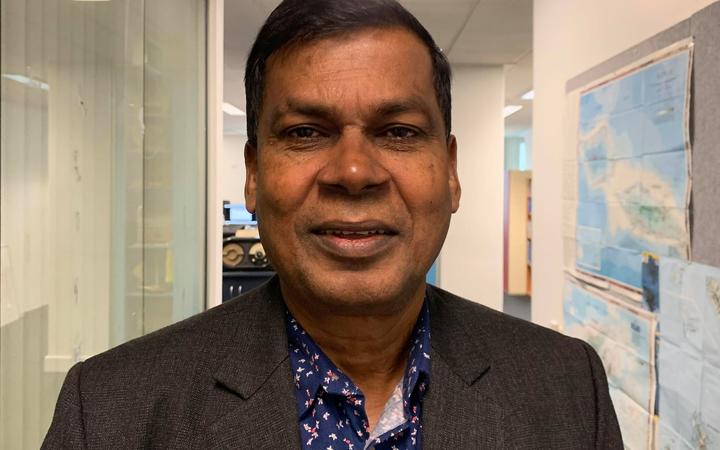
The deputy leader of the opposition in Fiji and NFP president Biman Prasad. Photo: RNZ Pacific/ Koroi Hawkins
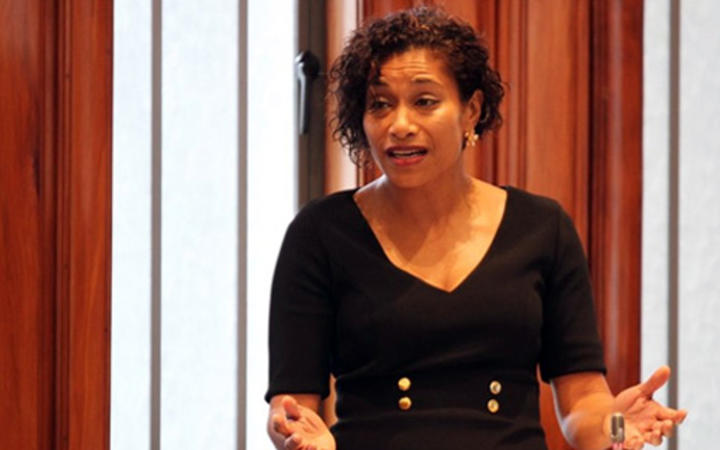
The National Federation Party leader Professor Biman Prasad, Sodelpa Party MPs Lynda Tabuya and Adi Litia Qionibaravi, as well as former prime minister Sitiveni Rabuka, were among those taken in by police in Suva today.
It was confirmed to local media by Acting Police Commissioner Rusiate Tudravu, and reported by some of the MPs themselves on social media.
En route to the police station, Prasad posted on Facebook that he was wanted in relation to his party’s criticism of government moves to amend the iTaukei Land Trust Act in parliament in recent days.
The moves have met with criticism from opposition parties and human rights advocates who claim the Fiji First government has not consulted properly over the bill.
At least seven politicians have been taken into custody, including those who have been vocal over the government’s handling of the Covid-19 crisis in the country.
Police have not yet found the illegal firearm used in an attack in Haveluloto in which a man had been allegedly shot in his arm earlier this month.
The accused Timote ‘Aho’atu has been remanded in custody after he appeared in court recently for allegedly shooting Siaosi Na’a.
Na’a was shot at least once in his arm with what local media have described as a prohibited type of pistol.
He was taken to hospital before he was later discharged.
The accused and the victim were known to each other. They became involved in a drunken fight in Havelu which led to ‘Aho’atu’s injury, the Kakalu ‘O Tonga Newspaper reported
It appears Na’a was seeking revenge later after the fight.
‘Aho’atu reportedly told Police he threw the prohibited gun into the sea.
Two men have appeared in court charged with murder, over a drive-by shooting at a Melbourne pool hall in February.
Ikenasio Tuivasa
Father-of-five Ikenasio Tuivasa was fatally shot while he was standing outside the All Star Lounge in Ravenhall with his family and friends just after midnight on January 27.
A 24-year-old Endeavour Hills man was also shot and seriously injured during the incident.
Hoppers Crossing man Nikola Latuhoi, 26, and Sekomain Vave, 26, of Cairnlea, appeared in Melbourne Magistrates Court on Wednesday charged with murder and intentionally causing serious injury.
The court heard text messages need to be translated as part of the prosecution case.
Latuhoi is facing car theft and drug charges, while Vave is also facing a drug charge.
The men are in custody, did not apply for bail, and will return to court in November.
But it’s not the competition or the threat of Covid-19 that’s giving the Oceania gold medalist sweaty palms.
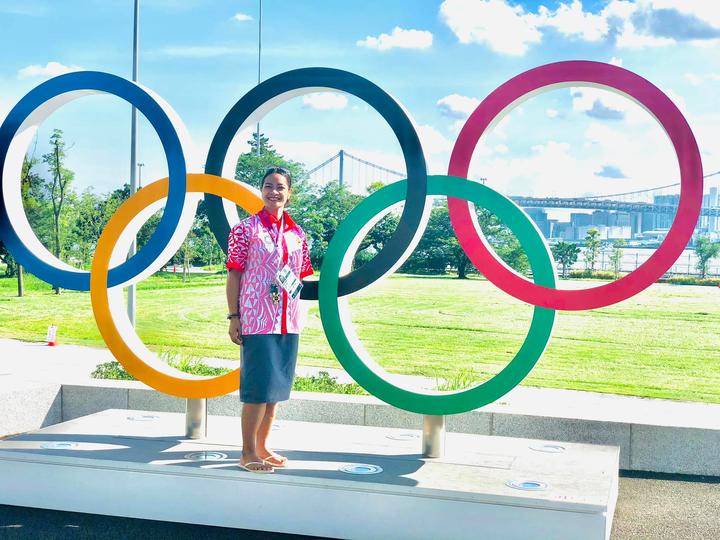
The Tongan taekwondo star will walk out as Tonga’s flagbearer in front of an estimated worldwide audience of somewhere between 1 and 2 billion people. Photo: Supplied.
On Friday, the 21-year-old from Fua’amotu will walk out as Tonga’s flagbearer in front of an estimated world-wide audience of somewhere between 1 and 2 billion people.
That’s daunting enough, she admits. But having to follow in the footsteps of Pita Taufatofua whose shirtless entrance in Rio five years ago “broke the internet” has raised the stakes and the pressure is on.
“When the Chef de Mission announced that the one officially chosen to be the flag bearer was from taekwondo I was like ‘oh yeah, it will be Pita,’ but to my surprise they said it would be me. I was really happy and honored, but I was also quite shocked,” she said.
“I’m really excited but a bit nervous too because this is really new for me. I’ve been to many competitions before, but this is my first Olympic Games and I’m just thankful really for the opportunity to be representing my country and that they trust me to be the flagbearer.”
Paseka said there’s some relief though, with her team mate and mentor walking alongside her.
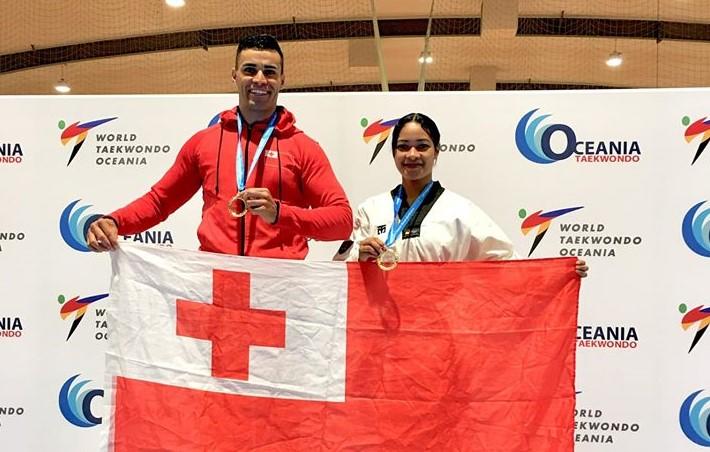
Tonga’s Pita Taufatofua and Malia Paseka qualify in taekwondo for the Tokyo Olympics. Photo: Pita Taufatofua
“Pita and I will be the flag bearers together so it’s good that I have him because he can tell me what to do and stuff… I’m actually happy to have him and my coach Master Paul [Sitapa] because they’re really good at all the advertising and those things,” she quipped.
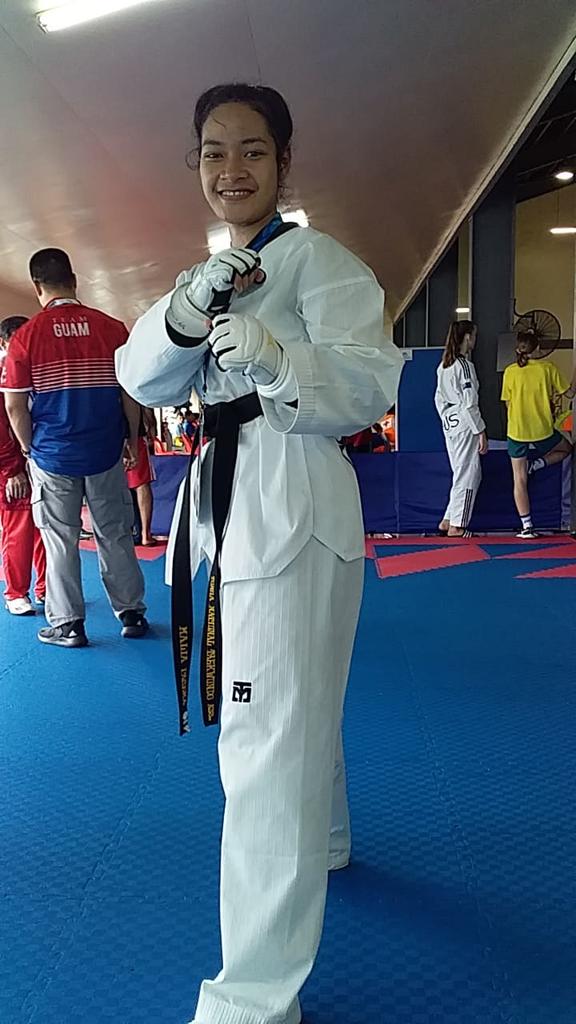
Paseka will be Tonga’s first female Olympian to compete in Taekwondo.
Photo: Supplied
She qualified early last year by winning gold in the Women’s 67kg division at the World Taekwondo Oceania 2020 Olympic Qualifications tournament held in Australia. She also claimed gold and bronze medals at the 2019 Pacific Games in Samoa.
But the road to Tokyo hasn’t been easy.
Covid-19 meant overseas training programmes were terminated, and her Australian based coaches were forced to train her virtually. The lack of resources didn’t help either, she explained.
“Being a local women on the island training for [the Olympics] there have been much great challenges because you don’t have much things. We didn’t have much equipment needed for training, there isn’t very many women who can be my opponent when training and sometimes even people aren’t supportive because they might see it as a dangerous sport.”
“But in Tonga, money is not really a big problem, your heart is, and what you give and how you commit to the sport is what’s important… all I can say is life is quite challenging sometimes but you got to get used to it and fight for your dreams.”
Luckily for her, Master Paul’s younger brother, who is also a master in the sport, was in the country to help her prepare for the Games.
“Master Paul and Pita were in Australia and they were trying to get me to Australia but because of Covid I couldn’t get there. I would say I was very lucky because Master Paul’s little brother was in Tonga so he became my coach and I’m so thankful for him.”
“It was good because I was able to coach with him in person but then Master Paul was also sending his training schedules for us to follow and I’m here now, I’m where I’m meant to be and it’s really something I could have only ever dreamed of.”
Training aside, she also needed to convince her parents that she would be safe to travel to Japan.
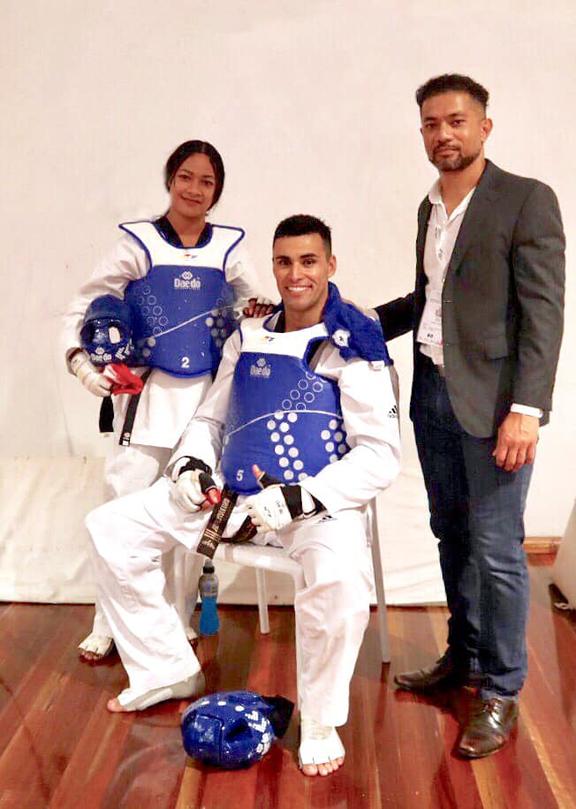
Tonga’s Maila Paseka, Pita Taufatofua and coach Master Paul Sitapa. Photo: Pita Taufatofua
“It was quite hard for them to accept me to come here because of Covid and everything that is going on and my mum and dad didn’t agree for me to come here at first.”
“Even though they didn’t want me to come, they wanted to encourage me and support me with my dreams and they’re always calling me and checking in on me so I’m grateful they let me come in the end.”
Paseka admits there were many times where she felt like giving up, but thanks to the support of Taufatofua and Sitapa, she’s gained not just a team of friends, but family.
“They’re really special. We’re not a team, we’re family and they’ve really been an inspiration because it has been really hard, it’s been really difficult, but these guys they never left me. They always encourage me to be strong and have just been really positive through it all.”
“For them to arrive here and be [reunited] finally with them here in Japan it really has just made this whole experience better already because I wasn’t even sure if they would make it, so I’m lucky to have them here by my side.”
Now Paseka is more prepared than ever on the task ahead and she’s aiming for gold.
“I’m hoping to bring home some medals for Tonga, but at the end of the day it’s not all about winning and losing.”
“For me to be here, to be representing my country, to be part of the 2021 Tokyo Olympics, it’s really an honour and there’s only a few who get this opportunity and so I’m very blessed.”